 By Kelvin
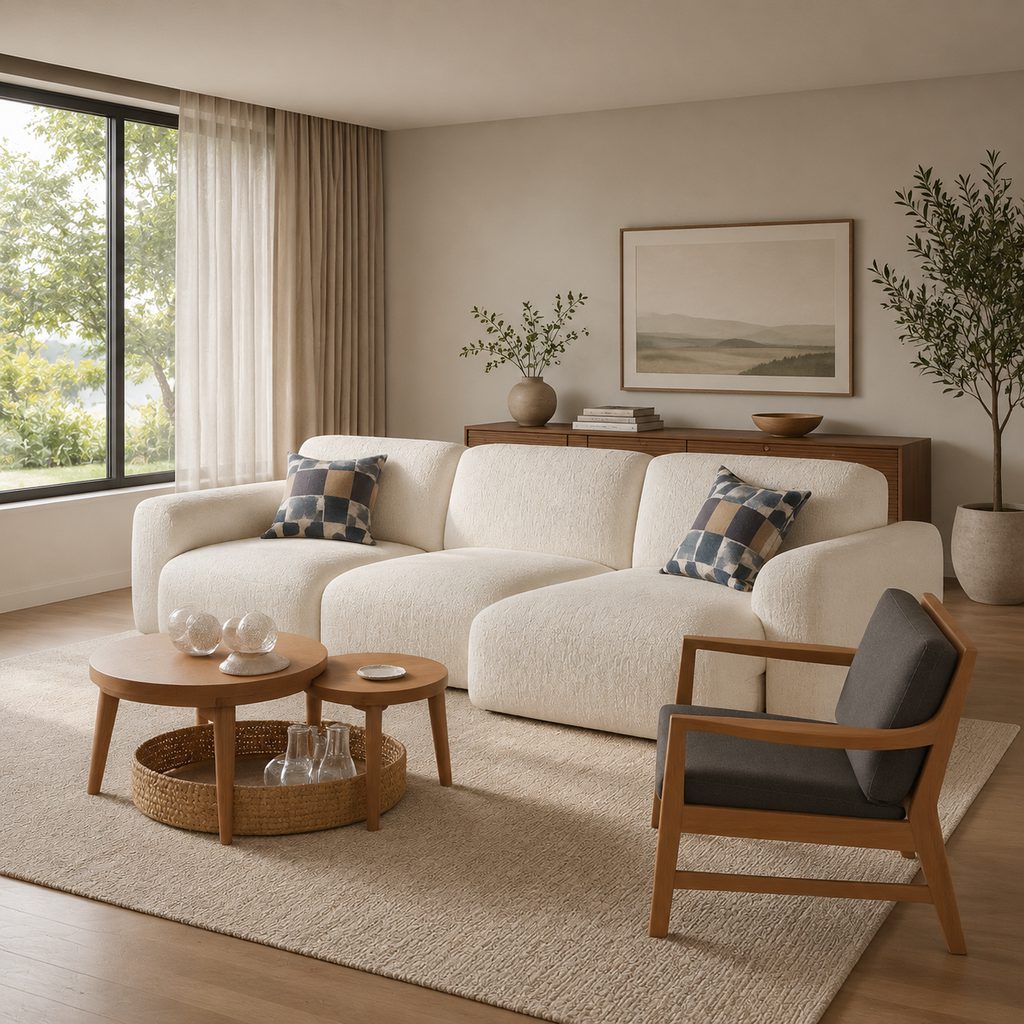
Low ceilings can make a living room feel cramped, especially when tall furniture, bulky seating, and poorly placed lighting compete for visual space. The right design choices can make the room feel more open without changing its actual height. These low ceiling living room ideas focus on choosing furniture with balanced proportions, arranging seating to preserve clear sightlines, and using colors, curtains, and lighting to create a more spacious feel. Whether your living room has an 8-foot ceiling or a smaller footprint, a few practical adjustments can make everyday living more comfortable.
Table of Contents
1. How Can You Make a Low-Ceiling Living Room Feel More Open?
To make a low-ceiling living room feel more open, focus on three things: keeping the main furniture visually grounded, allowing more of the walls to remain visible, and drawing the eye upward with carefully placed vertical elements. You do not need to make every piece of furniture smaller. Instead, choose shapes and arrangements that leave enough visual breathing room.
Start with these principles:
- Keep the visual center low: Lower sofa backs, streamlined media consoles, and furniture with simple bases help prevent the room from feeling top-heavy.
- Preserve open sightlines: Avoid placing tall cabinets or oversized chairs where they block windows, artwork, or views across the room.
- Create vertical movement: Floor-length curtains, tall mirrors, and vertically oriented artwork encourage the eye to move upward.
Low-profile furniture is particularly useful because it leaves more wall space visible above seating. However, the lowest sofa is not automatically the right one. Compare low-profile couch designs by overall height, seat height, and cushion support rather than relying on appearance alone.
2. Choose Furniture by Proportion, Not Height Alone
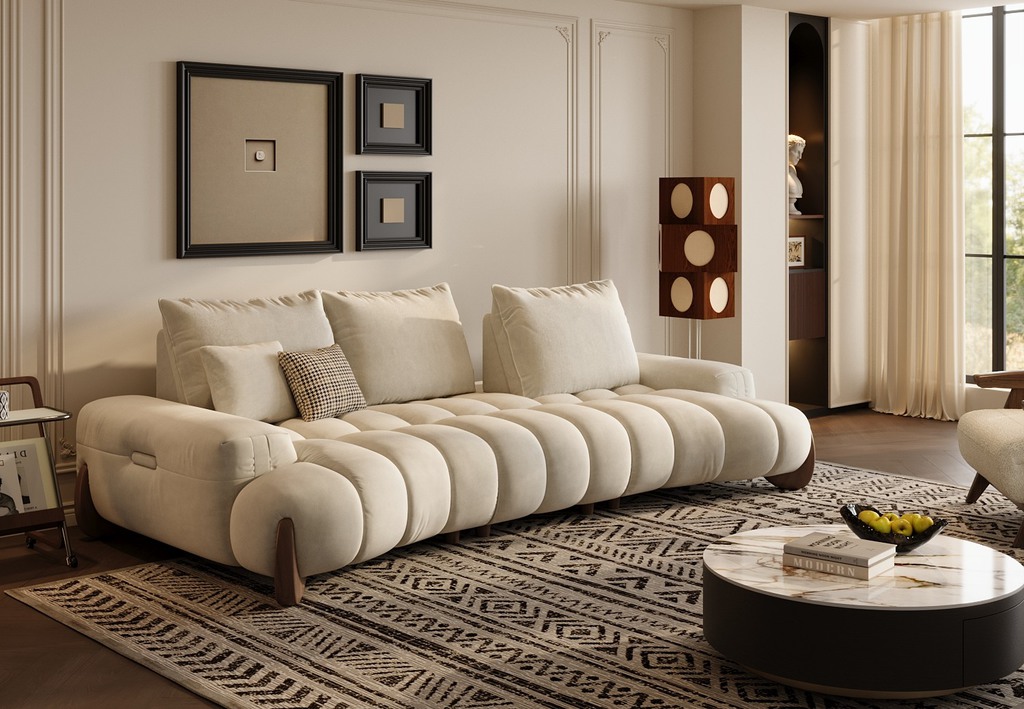
Furniture has a major influence on how a low ceiling feels, but overall height is only one part of the decision. Seat depth, arm thickness, leg design, and the amount of visible space beneath a piece all contribute to its visual weight. The goal is to create a coordinated arrangement that feels grounded without making the room uncomfortable or undersized.
Select a Sofa With a Lower Visual Line and Comfortable Support
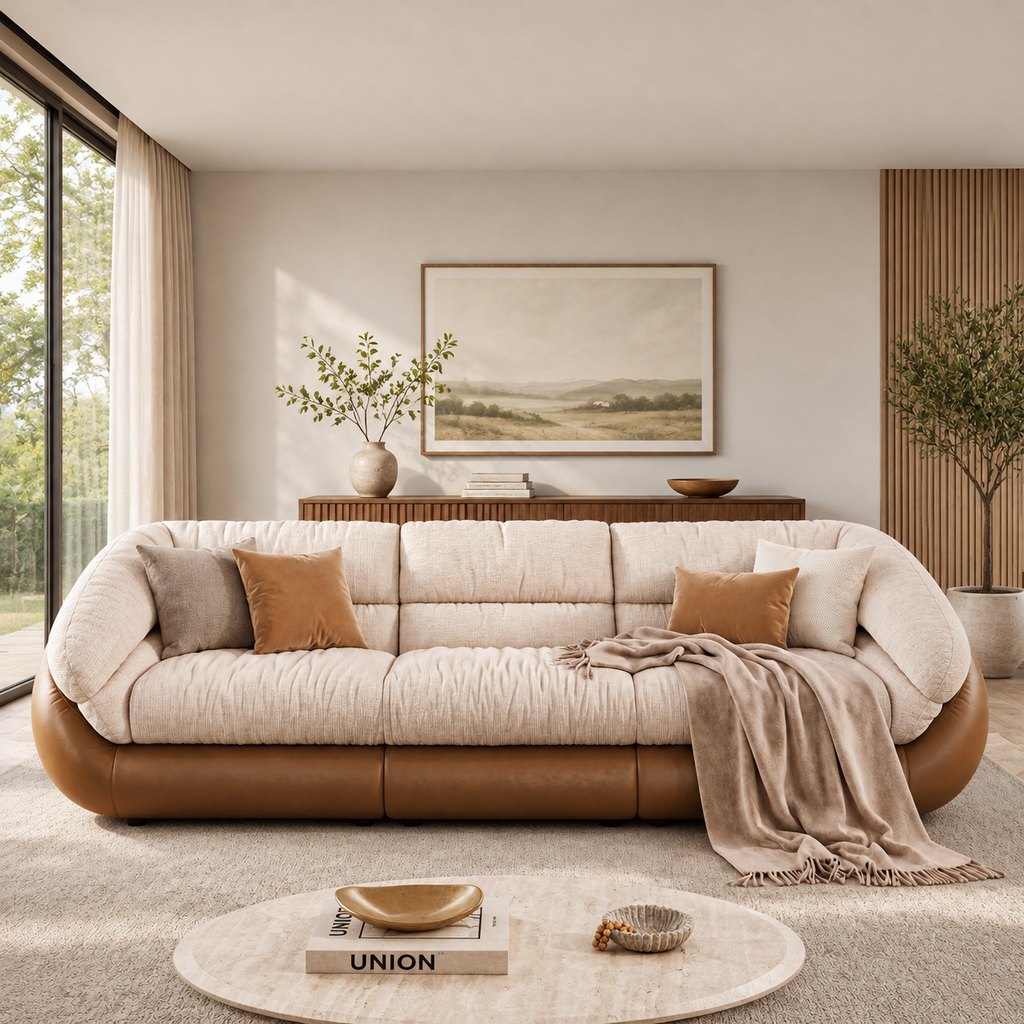
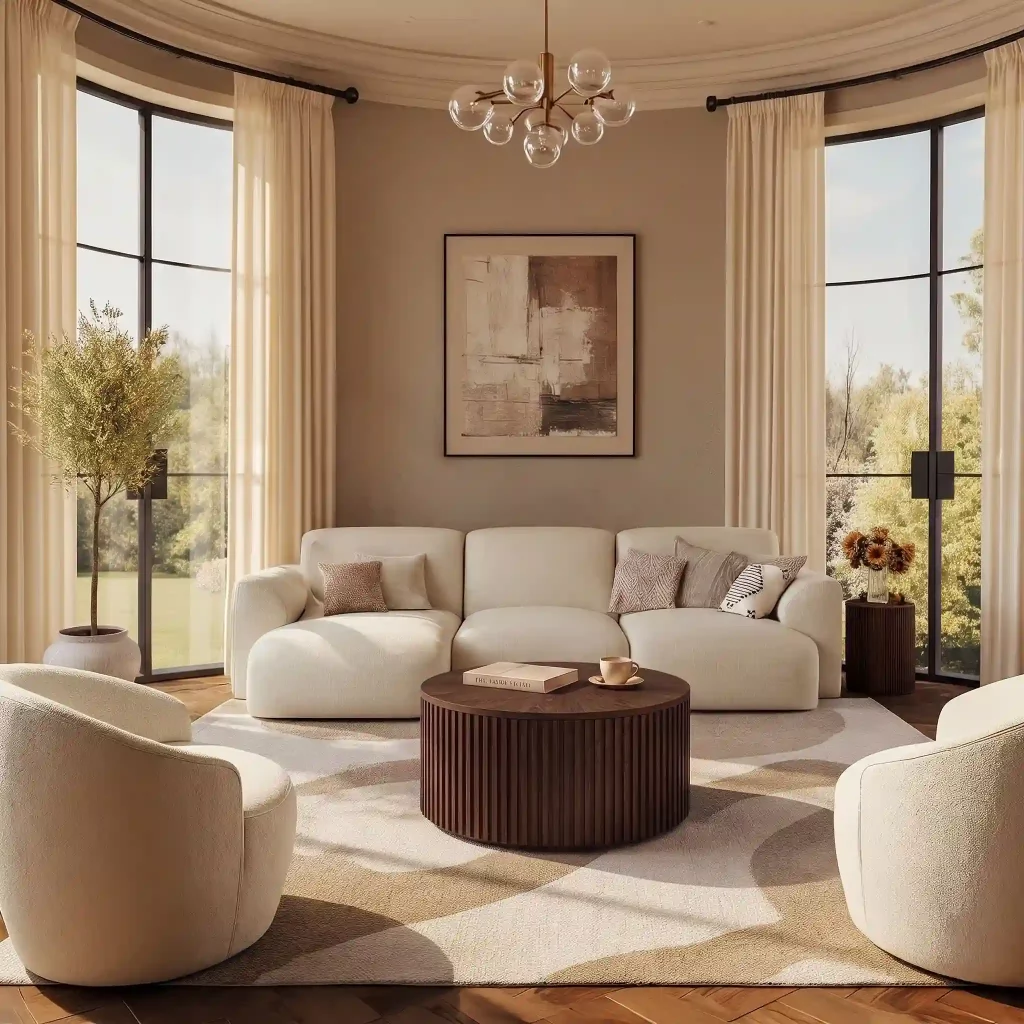
A sofa with a lower backrest can leave more of the wall visible, helping the living room feel less enclosed. Slimmer arms, a simple base, and a balanced seat depth can also make a large sofa appear less bulky.
However, do not choose a sofa based on back height alone. Check:
- Overall height: Compare the sofa with nearby windows, wall art, and other architectural features.
- Seat height: A very low seat can make standing up harder, particularly for older adults or people who prefer a more upright sitting position.
- Seat depth: Deeper seats encourage lounging, while moderate depths generally make upright sitting easier.
- Armrest thickness: Oversized arms can make the sofa look heavier and reduce usable seating width.
For a multipurpose room, flexibility can matter as much as the sofa’s silhouette. The Aurora Power Sofa Bed offers an adjustable seat depth from 27 to 45.5 inches, allowing it to shift from everyday seating to deeper lounging. Its 18-inch seat height and short 2-inch legs create a grounded base. At 33.5 inches overall, it is not an ultra-low sofa, so check its back height against your windows and sightlines before choosing it.
Aurora Power Sofa Bed
Powered depth adjustment adds lounge space without a separate pull-out frame.
👍 Best for: Daily lounging with occasional guest use
✨ 27–45.5-inch adjustable seat depth
✨ Water- and scratch-resistant chenille
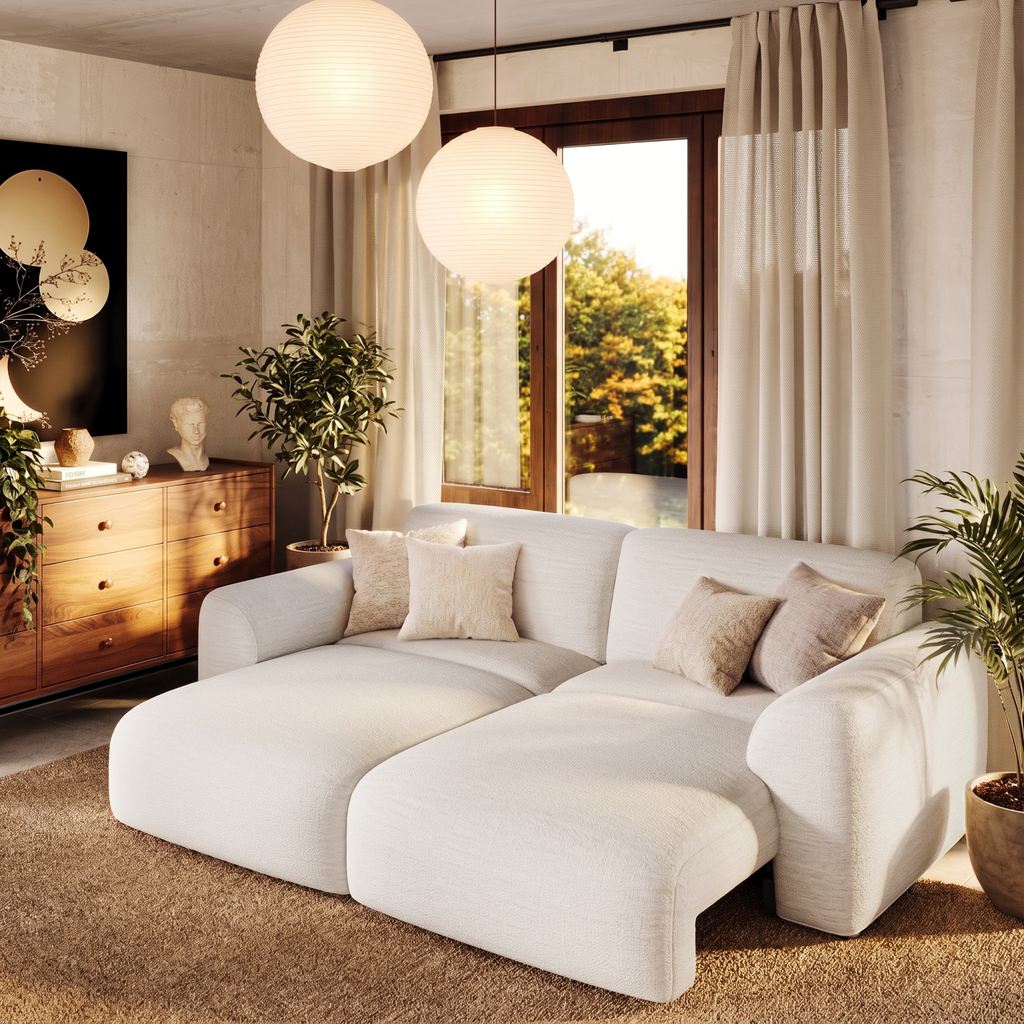
For households that want more ways to use one living room, power sofa beds that adapt to everyday living can provide everyday seating and additional lounging or sleeping space without requiring a separate guest bed.
3. Arrange Furniture to Keep Sightlines and Walkways Open
Even well-proportioned furniture can make a room feel crowded when it is placed poorly. A good layout should keep the main seating area connected while leaving enough space to move between the sofa, coffee table, TV stand, and doorway. This matters particularly in small living room low ceiling ideas, where floor space and vertical space need to work together.
Start by identifying the room’s main focal point, such as a TV wall, fireplace, or large window. Position the sofa so it supports that focal point without blocking natural light or creating a tall visual barrier in the middle of the room.
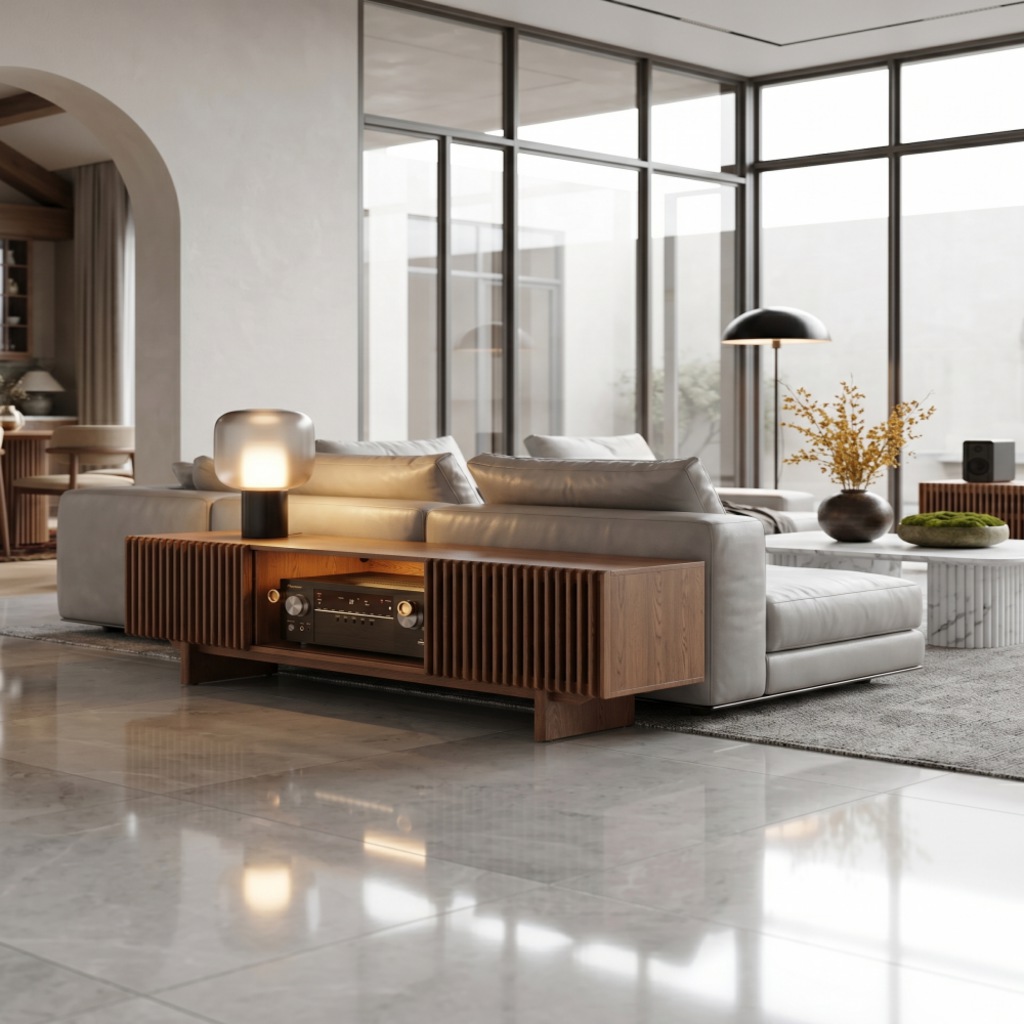
A few practical layout adjustments can help:
- Keep the main walkway clear instead of filling every corner with furniture.
- Avoid placing tall storage cabinets directly beside low seating if they create an abrupt height difference.
- Use a rug to connect the sofa and accent chairs into one seating area.
- Leave visible floor space around furniture legs when the room allows it.
For everyday circulation, a walkway of approximately 30–36 inches is a useful starting point. Leave around 18 inches between the sofa and coffee table so people can reach the surface without making the passage unnecessarily tight. Adjust these clearances to your room and household needs.
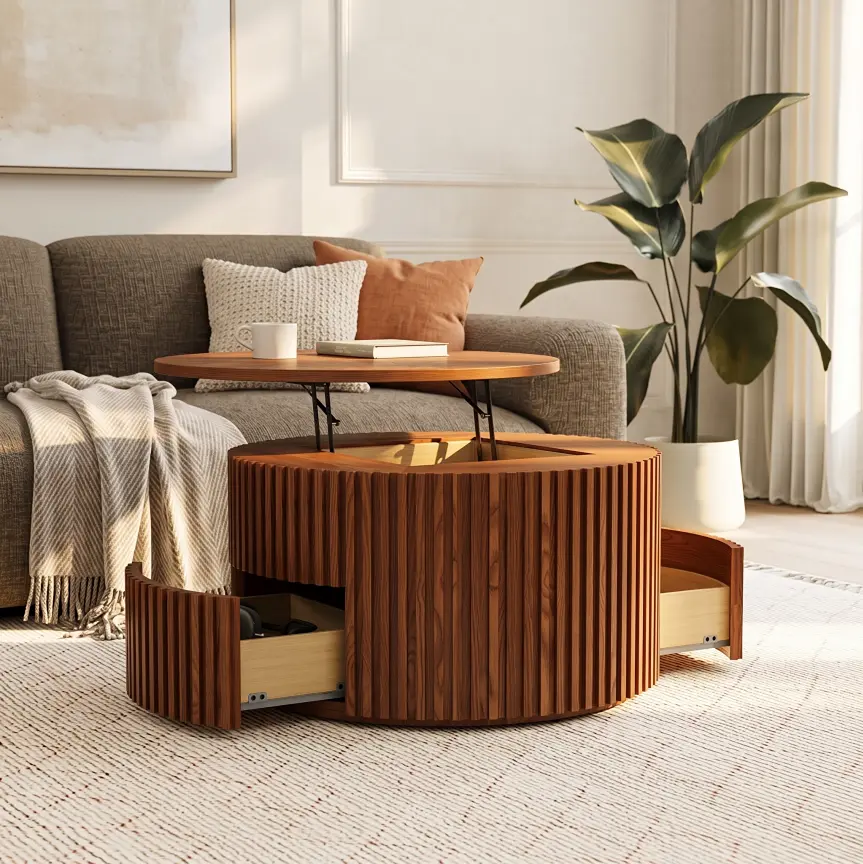
A round coffee table can also make movement around seating easier because it has no sharp corners. The Silva Lifting Top Round Coffee Table combines a compact round footprint with two storage drawers. Its top lifts when you need a higher surface for a laptop or meal, then returns to its lower position for everyday use. This is useful when you want functional storage without adding another cabinet.
Silva Lifting Top Round Coffee Table
A compact round footprint combines hidden storage with a raised work surface.
👍 Best for: Compact seating zones needing flexible surfaces
✨ 31.5-inch round tabletop
✨ Two storage drawers
4. Use Colors, Curtains, and Lighting to Make the Ceiling Feel Taller
Furniture controls much of the room’s visual weight, but the walls and ceiling determine how that furniture is perceived. For low ceiling living room design ideas, the most effective decorating choices create visual continuity, draw attention upward, and avoid adding unnecessary objects near the ceiling. These three areas offer practical ways to improve the room without changing its structure.
Create Visual Continuity With Wall and Ceiling Colors
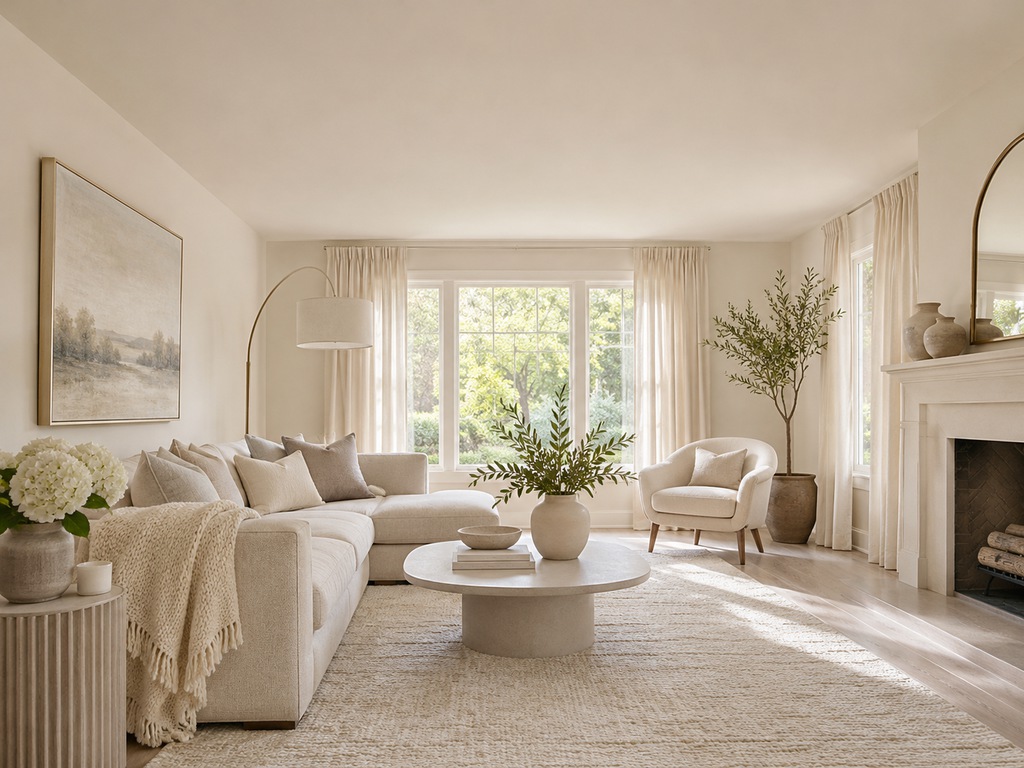
Light colors can help reflect natural light and reduce strong visual boundaries between the walls and ceiling. White, warm ivory, pale beige, and soft gray are useful options, especially in rooms with limited daylight.
You can also consider painting the walls and ceiling in similar shades. This creates a more continuous appearance instead of drawing attention to where the walls end and the ceiling begins.
Dark colors are not automatically unsuitable. A darker accent wall can add depth, particularly in a well-lit room. The key is to avoid using too many contrasting color blocks that divide the room visually.
Use Vertical Lines to Draw the Eye Upward
Vertical details help counterbalance the horizontal proportions of low furniture.
Consider:
- Hanging curtains closer to the ceiling rather than directly above the window frame.
- Choosing floor-length curtains that create one continuous vertical line.
- Using vertically oriented artwork or narrow wall mirrors.
- Adding subtle vertical wall panels or striped patterns.
For example, in a living room with wide windows and a low sofa, curtains mounted near the ceiling can make the window treatment appear taller without taking up additional floor space.
Avoid overly heavy curtain rods, thick valances, or layered treatments that create another bulky horizontal line above the windows.
Layer Lighting Without Crowding the Ceiling
Large pendant lights and low-hanging chandeliers can make an already low ceiling feel closer. Instead, distribute light across different parts of the room.
- Flush-mount lights: Sit close to the ceiling and provide general illumination.
- Wall sconces: Add light without taking up floor space or creating a low-hanging fixture.
- Floor lamps: Introduce vertical height while directing light toward seating or darker corners.
- Indirect lighting: Soft light directed toward walls can reduce harsh shadows and make the room feel more balanced.
You do not have to rely on one bright ceiling fixture. A combination of ambient, task, and accent lighting usually gives you more control over how the room feels throughout the day.
5. What to Check Before Buying Furniture for an 8-Foot Ceiling
An 8-foot ceiling is a useful reference point when planning a living room, but it does not mean every piece of furniture must stay below a particular height. The right choice depends on the room’s width, window placement, furniture dimensions, and how you use the space.
If you are researching how to make an 8 foot ceiling look higher, check these measurements before ordering:
- Actual ceiling height: Measure from the finished floor to the ceiling. Account for beams, soffits, and any lower sections.
- Sofa overall height: Compare the backrest with window sills, artwork, and other furniture.
- Seat height and depth: Make sure the sofa supports your usual sitting position rather than choosing an unusually low seat just for appearance.
- TV stand height: Check the console and screen together so the TV remains comfortable to watch.
- Furniture depth: Include the space needed for extended seating, drawers, and doors.
- Walking clearance: Make sure the layout still works when all furniture is in its normal position.
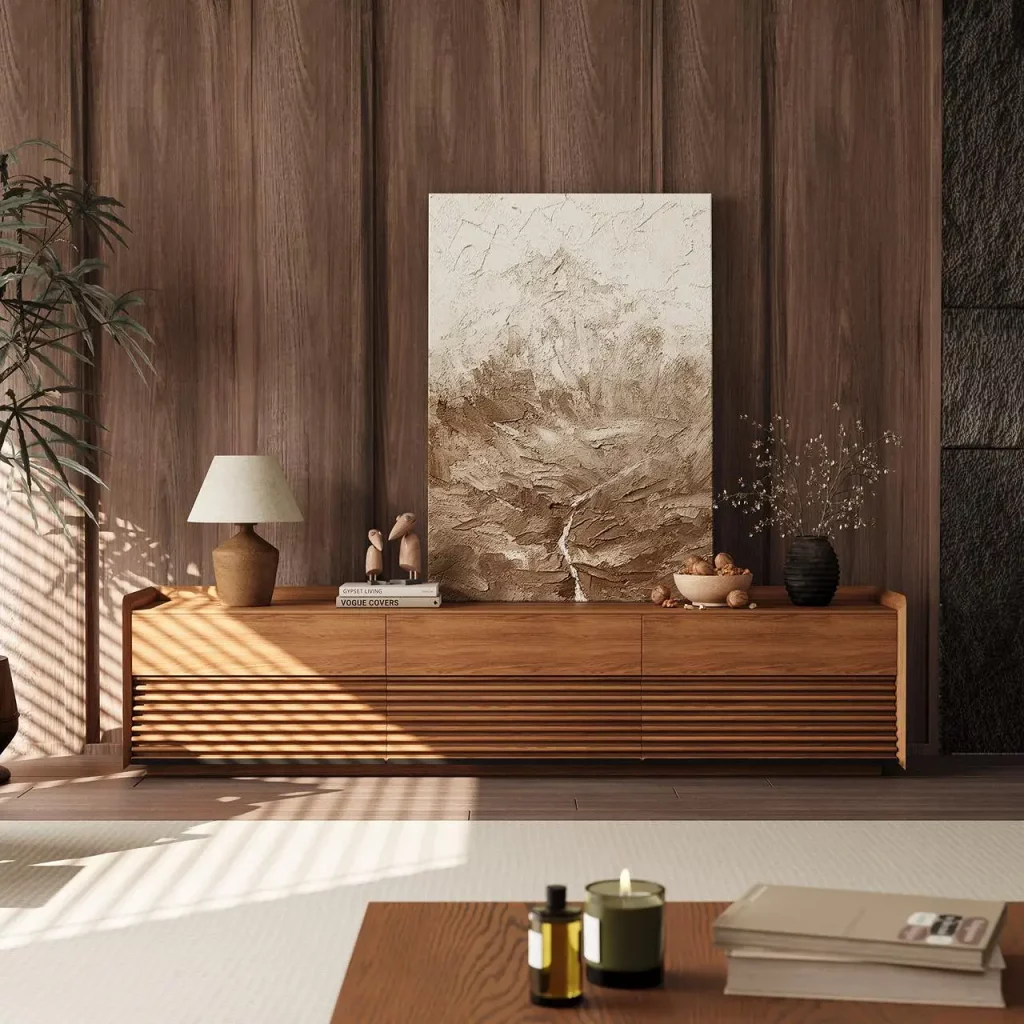
The TV stand deserves particular attention because a wide, low console can balance a large screen without making the media wall feel unnecessarily heavy. The Ansel Mid-Century TV Stand has a 19.29-inch cabinet height, six drawers, and adjustable LED lighting. Its long walnut profile works well beneath a wall-mounted TV, while the storage keeps smaller electronics and accessories out of sight. Check the console width against your screen and available wall space before ordering.
Ansel Mid-Century TV Stand
A long walnut console anchors the media wall while keeping everyday storage organized.
👍 Best for: Low media walls needing closed storage
✨ Six storage drawers
✨ Six-level adjustable LED lighting
Before purchasing, measure your room for furniture, including the doorway, hallway turns, and the space required to use moving furniture. A sofa that fits against the wall may still be difficult to deliver or too deep for comfortable circulation.
Conclusion
The most effective low ceiling living room ideas focus on balance rather than making every piece of furniture smaller. A lower visual line, coordinated furniture proportions, open sightlines, and thoughtful lighting can make a room feel more comfortable without sacrificing everyday function. Start with the sofa and media area, then adjust the surrounding furniture, curtains, and colors to suit your actual ceiling height and room dimensions. The best arrangement is one that feels open while still supporting the way you sit, relax, and spend time at home.
Find the Right Living Room Furniture
Explore sofas, TV stands, and coffee tables for balanced layouts, comfortable seating, and everyday living.
Q&A
Is an 8-foot ceiling considered low for a living room?
An 8-foot ceiling is a common residential ceiling height, although it may feel low compared with rooms featuring taller ceilings. Whether it feels restrictive depends on the room’s proportions, natural light, beams, and furniture. A well-planned 8-foot room can still accommodate comfortable, full-size seating.
Can you use a ceiling fan in a low-ceiling living room?
Yes, provided the fan meets the manufacturer’s installation and blade-clearance requirements. A low-profile or flush-mount ceiling fan is generally more suitable than a downrod-mounted model. Check the finished blade height and make sure the fan does not interfere with overhead fixtures.
Are dark walls a bad idea for low-ceiling living rooms?
No. Dark walls can create depth and a cozy atmosphere, especially when the room receives enough natural or layered artificial light. To avoid a boxed-in effect, consider keeping the ceiling lighter, using reflective surfaces, and balancing dark walls with lighter upholstery or flooring.
Should you avoid tall bookcases in a low-ceiling living room?
Not necessarily. A narrow bookcase can draw attention upward and provide useful storage without occupying much floor space. However, a deep, bulky bookcase filled with objects may overwhelm a small room. Check its width, depth, and visual relationship with nearby seating.
Can a sectional work in a small living room with low ceilings?
Yes, if its overall dimensions suit the room. Look for a sectional with a moderate back height, manageable arm thickness, and a configuration that preserves the main walkway. Measure the full footprint, including any chaise or extended sections, before choosing a layout.


[…] height and window placement also play a role. Under low or standard 8-foot ceilings, a massive high-back couch can make the room feel shorter and …. In a space with tall ceilings and large windows, you can use a higher-back or deeper sofa to […]