 By Kelvin
Choosing between a chaise and an ottoman comes down to how you lounge and how much your living room needs to change. An ottoman vs chaise comparison should account for more than whether both let you put your feet up: one moves independently, while the other creates a dedicated extension of the sofa. This guide compares leg support, shared use, floor space, and buying checks. It also explains when a sofa bed makes more sense because you need the same seating area to support deeper lounging or an occasional overnight guest.
Table of Contents
Ottoman vs Chaise: What Actually Changes?
A sofa with a chaise has an extended seat that supports your legs in one continuous position. An ottoman is a separate upholstered piece placed near a sofa. Some chaise sections are reversible or modular, so check the configuration rather than assuming every chaise must stay on one side. The main difference is whether the leg support remains part of the sofa or can move independently.
| Buying question | Sofa with chaise | Sofa with ottoman |
| How are your legs supported? | On a continuous seat | On a separate surface, with a possible gap |
| Can the lounging spot move? | Depends on whether the chaise is fixed or reversible | Usually, if you can move the ottoman |
| Can two people put their feet up? | Usually one person uses the chaise | A wide ottoman may serve more than one person |
| What happens when guests arrive? | The extended seat remains in place | The ottoman can move; some models allow occasional seating |
| When does it take up floor space? | The extension occupies its position all day | The ottoman occupies space wherever you place it |
For ottoman vs chaise, the shortest useful answer is this: choose a chaise when one person regularly wants a settled, continuous place to stretch out. Choose an ottoman when the footrest needs to move between people or make way for other activities. Neither is automatically the smaller option while someone is using it.
Which Feels Better for the Way You Sit?
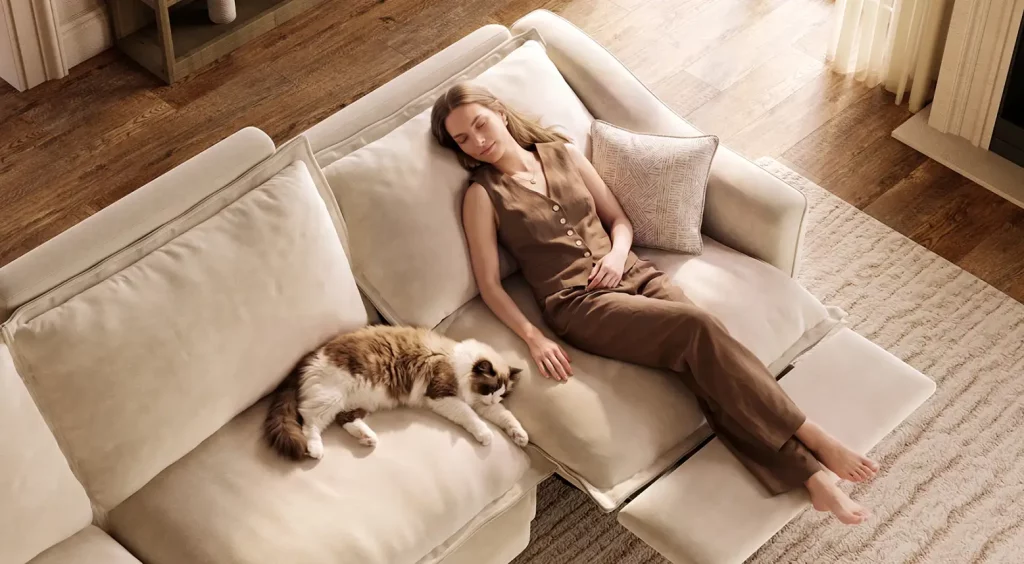
The more often you stretch out, the more the difference between continuous and separate leg support matters. If most people sit upright and only occasionally put their feet up, the ottoman’s other uses may matter more. Think about who claims the lounging spot on an ordinary weekday, then what happens when several people share the room.
When one person lounges in the same spot
A chaise keeps the seat and leg support together, so there is no ottoman to pull into position. That can feel more settled for someone who regularly stretches out to read or rest. Check the usable chaise seat depth, though: a long-looking sofa does not guarantee that a taller person’s legs will fit comfortably.
When people share the footrest
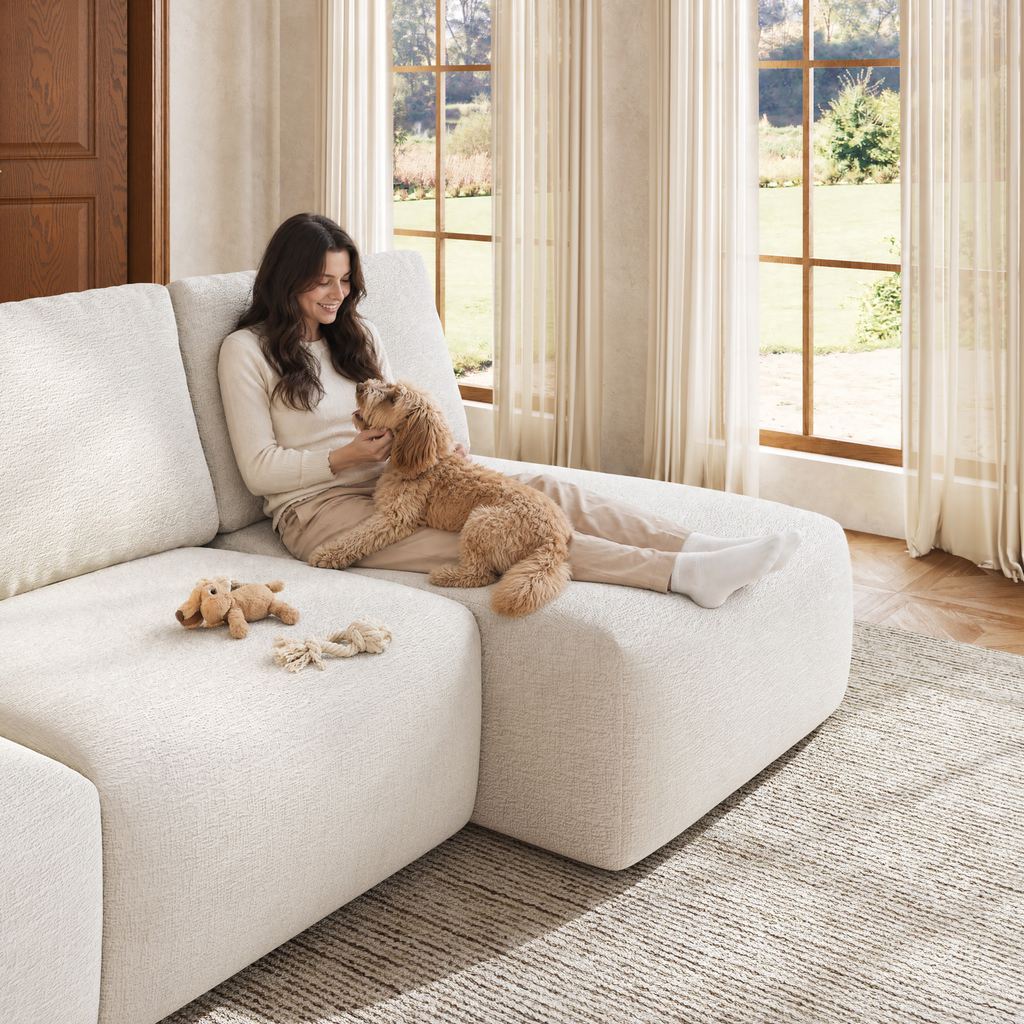
A wide ottoman can sit in front of different seats or give two people a place to rest their feet. Its comfort depends on its height and how close it sits to the sofa. If it is much lower than the seat or drifts away when you shift position, the gap becomes more noticeable. Some ottomans can also serve as occasional seats, but only if the specific model is designed for sitting.
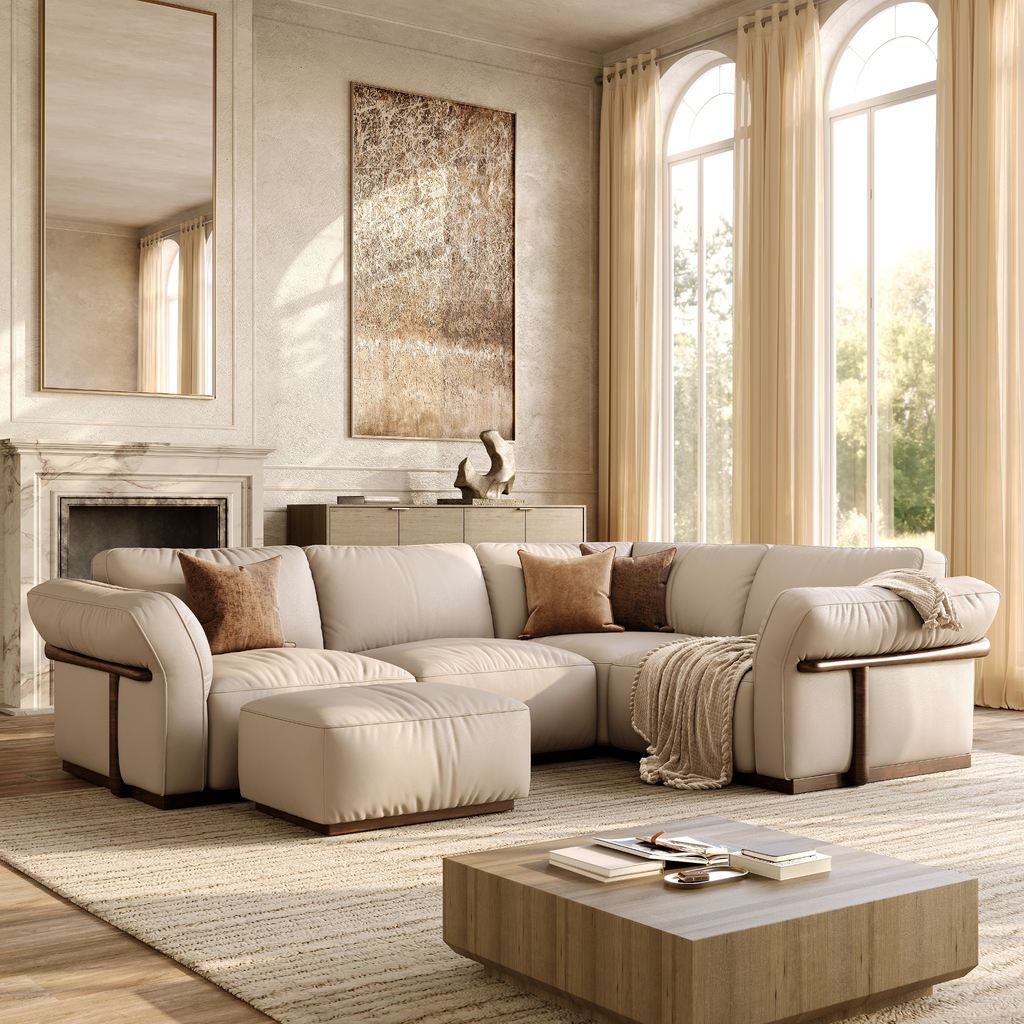
For a household still deciding between an ottoman or chaise, a configurable sofa can make the purchase less dependent on a guess about future habits. The Povison Cronus Modular Sofa offers configurations with an ottoman, a chaise-style arrangement, or both. That suits a living room where one person likes a dedicated lounging end but others want movable leg support. Its modular pieces and top-grain leather give buyers a coordinated setup; check the selected configuration’s included modules before ordering.
Cronus Modular Sofa
Modular construction lets you compare the included pieces before committing to one arrangement.
👍 Best for: Shared living rooms with varied habits
✨ Top-grain leather upholstery
✨ Ottoman and chaise-style options
Which Layout Works in Your Living Room?
The space question has two answers: how much floor the furniture occupies during lounging, and how much space it leaves at other times. An ottoman can clear a walkway when moved, but it needs somewhere useful to go. A chaise keeps its extension in one location, which works well if that location is already outside the main path.
For example, in a living room with a doorway beside the sofa, a chaise extending toward the door may interrupt the route every time someone passes. A movable ottoman can shift beside the sofa when people come over. If that ottoman spends every evening directly in front of the doorway, however, its flexibility has done little to solve the daily problem.
Before choosing a sofa with chaise or ottoman, mark both layouts on the floor:
- Mark the full chaise footprint, including the side where the extension would sit.
- Mark the ottoman in its usual footrest position and where it will go when moved.
- Walk the normal route between doors, seating, and the rest of the room in both setups.
A couch with chaise buying guide can help once you are leaning toward a chaise and need to settle its direction. Confirm whether the model you choose is fixed, reversible, or modular; those terms describe different levels of flexibility.
When Does a Sofa Bed Make More Sense?
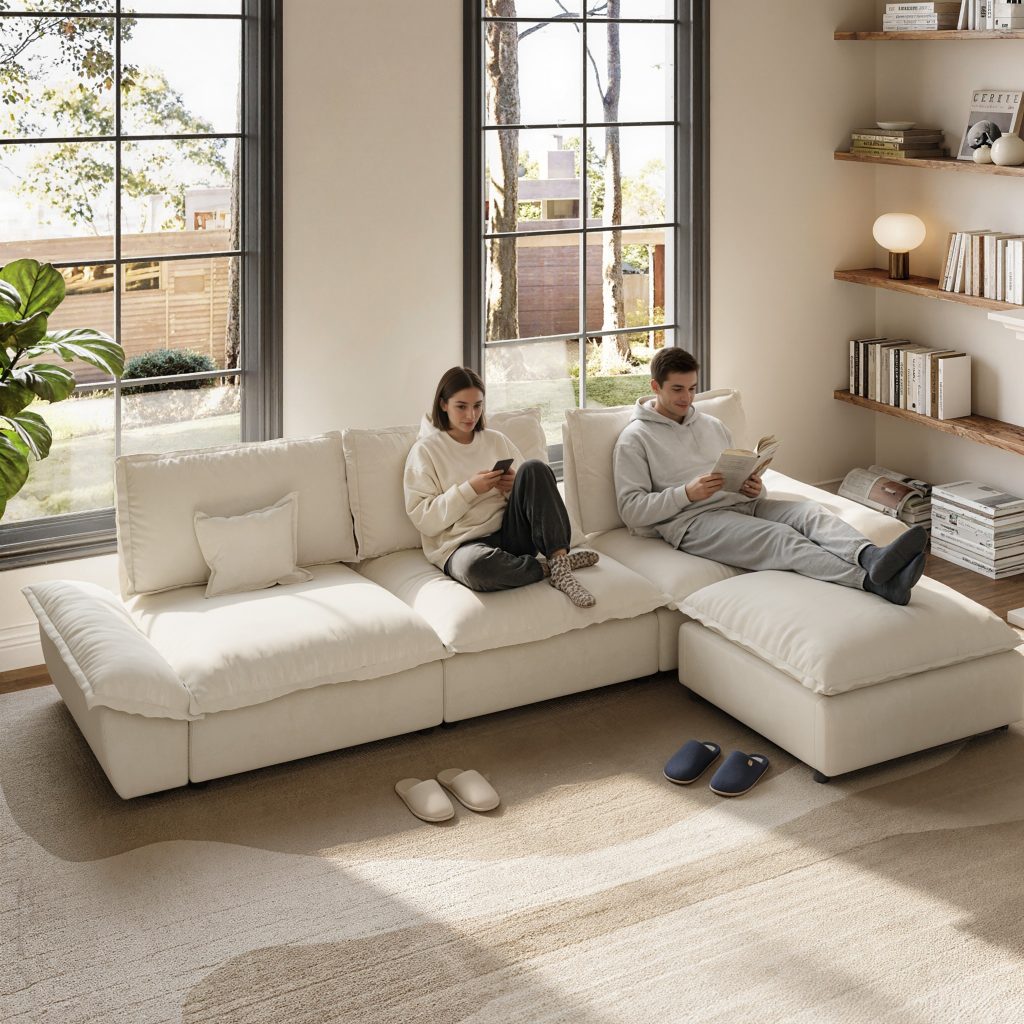
A sofa bed becomes relevant when putting your feet up is only part of the job. Neither an ottoman nor a standard chaise should be treated as a planned guest bed simply because someone can nap there. If the room needs regular seating, a deeper resting position, and occasional overnight space, compare a sofa bed as a third solution.
| Your main need | Start with |
| Move a footrest between seats or clear it away | Ottoman |
| Keep one continuous lounging spot ready | Chaise |
| Switch from seating to deeper lounging or occasional guest sleep | Sofa bed |
This is where ottoman vs chaise stops being the whole decision. In a living room that doubles as a guest space a few weekends a year, repeatedly rearranging an ottoman may still leave you without a useful sleep surface. A sofa bed can address that additional need, provided its full extension fits the room.
The Povison Aurora Power Sofa Bed fits a room where the preferred lounging side changes but a permanently projecting chaise would constrain the layout. Its powered seats can extend independently to create a chaise-like position on the side being used, then extend farther for resting or an occasional guest. The chenille upholstery and adjustable seat depth support daily seating as well as those changing positions; measure the space in front when fully extended.
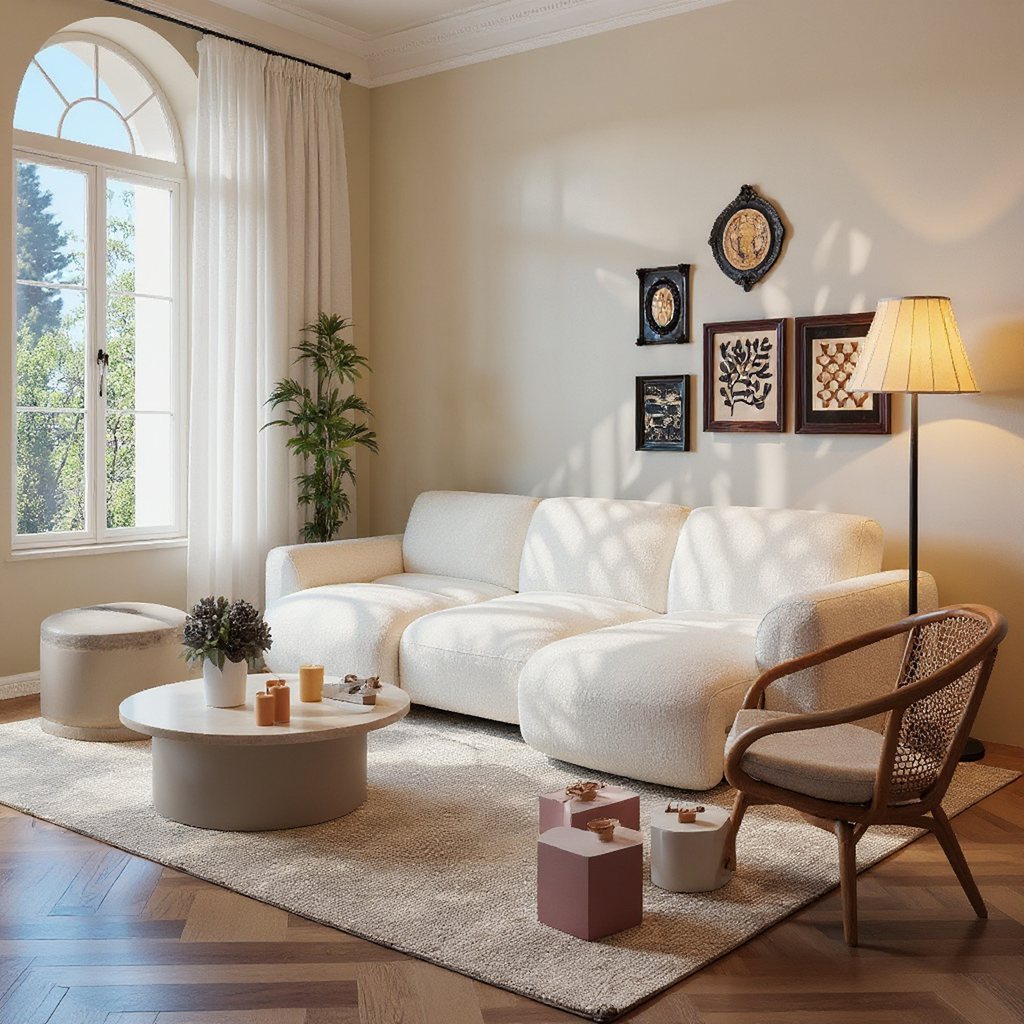
Aurora Power Sofa Bed
Create a lounging side when needed without choosing fixed chaise direction. Independent powered extension lets the seating area change with the room’s use.
👍 Best for: Flexible lounging and occasional guests
✨ Adjustable lounging depth
✨ Independently extending seats
What Should You Check Before Buying?
Once you know which option fits your habits, check the exact configuration, not just the styled photograph. A chaise, an ottoman, and an extended sofa bed occupy space differently, and product names do not always tell you which pieces are included.
- Measure the setup in use. Include the ottoman pulled toward the sofa, the chaise at its full depth, or the sofa bed fully extended.
- Verify the chaise side. Confirm whether it is fixed, reversible, or part of a modular layout.
- Match an ottoman to the sofa. Compare their top and seat heights, then check whether the ottoman is intended to support a seated person.
- Plan where movable pieces go. An ottoman only frees the path if it has a practical second position.
For a convertible option, small sleeper sofa layouts and open-space requirements matter most when the extended seat approaches a coffee table or doorway. Measure delivery access separately from the furniture’s final position.
Conclusion
The right ottoman vs chaise decision starts with your daily routine. Choose an ottoman when leg support needs to move between seats or make room for other activities. Choose a chaise when one person regularly wants continuous support in a settled spot. Measure each option while it is being used, since a movable footrest still occupies floor space. If the room must also handle deeper lounging or an occasional overnight guest, a sofa bed may solve the additional need. Check its fully extended footprint before deciding.
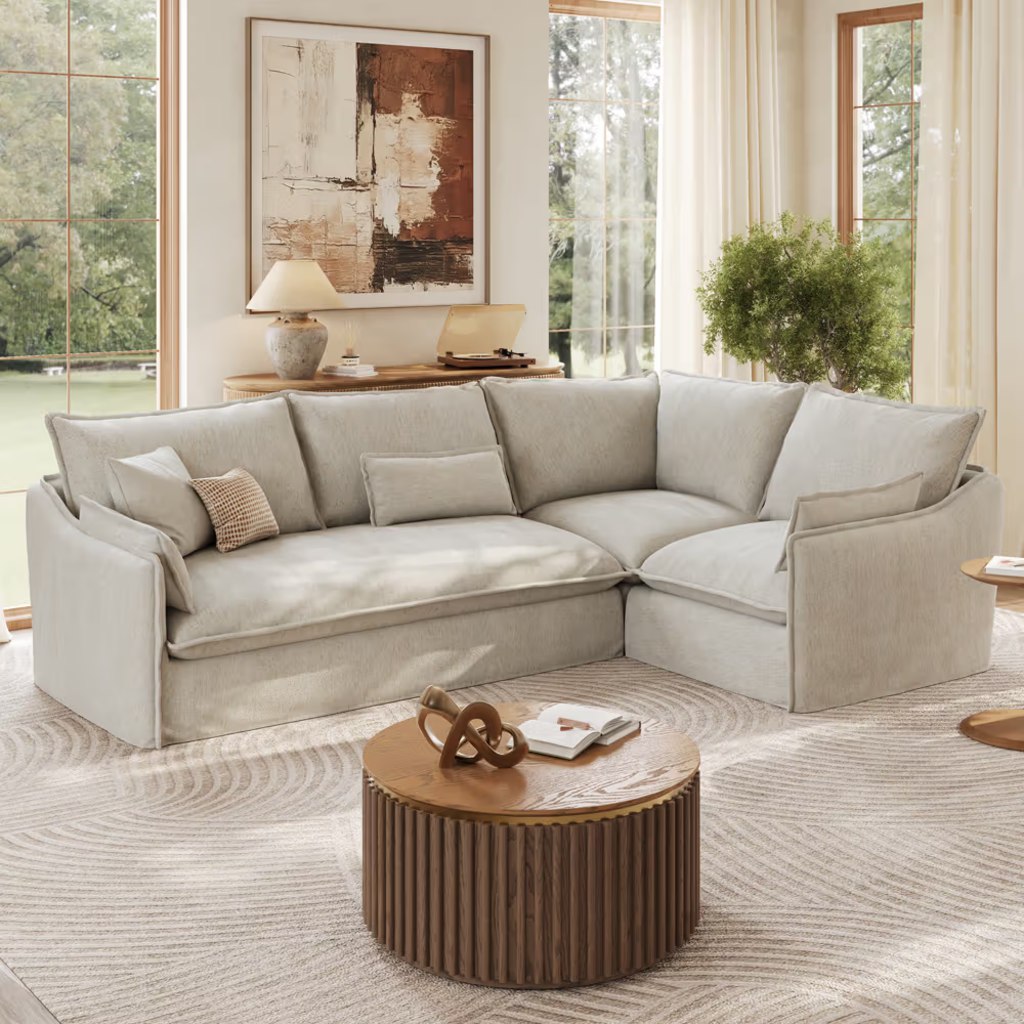
Settle into a dedicated lounging seat.
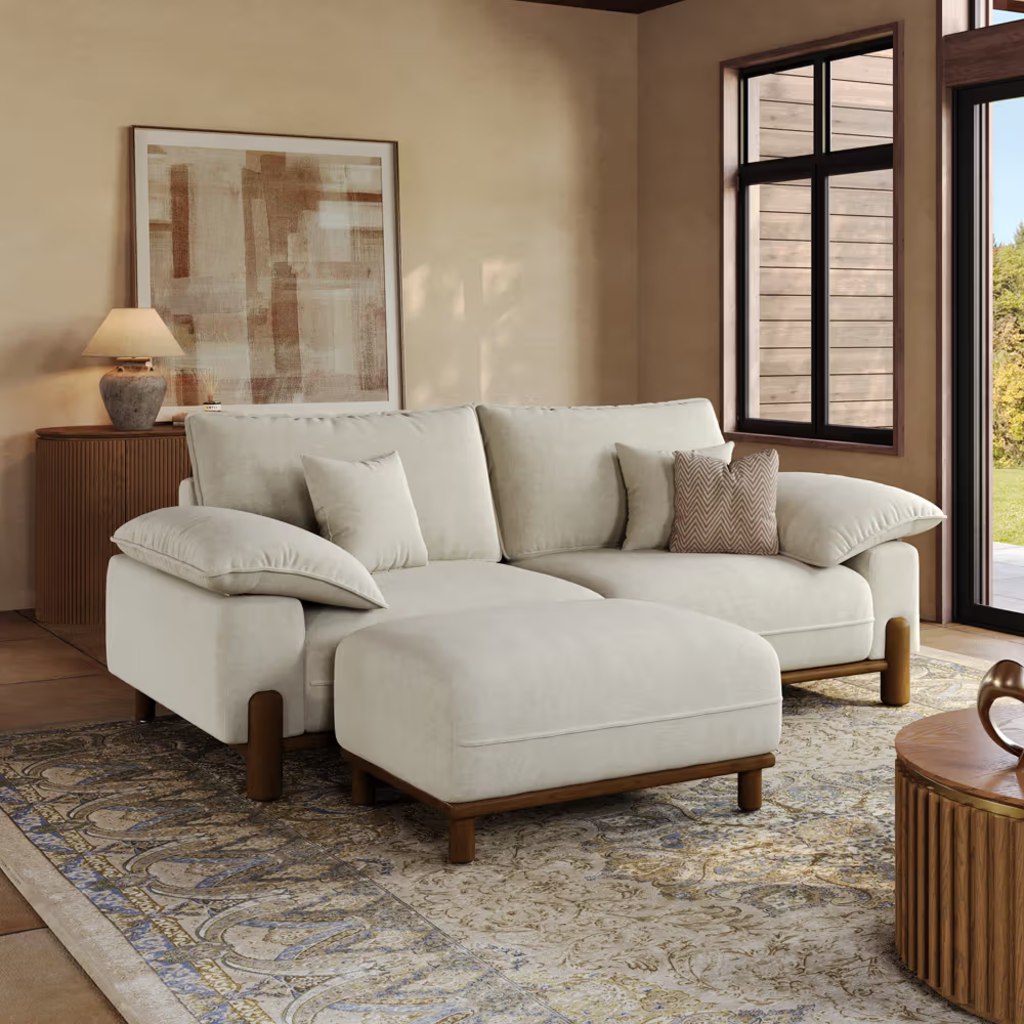
Move your footrest as the room changes.
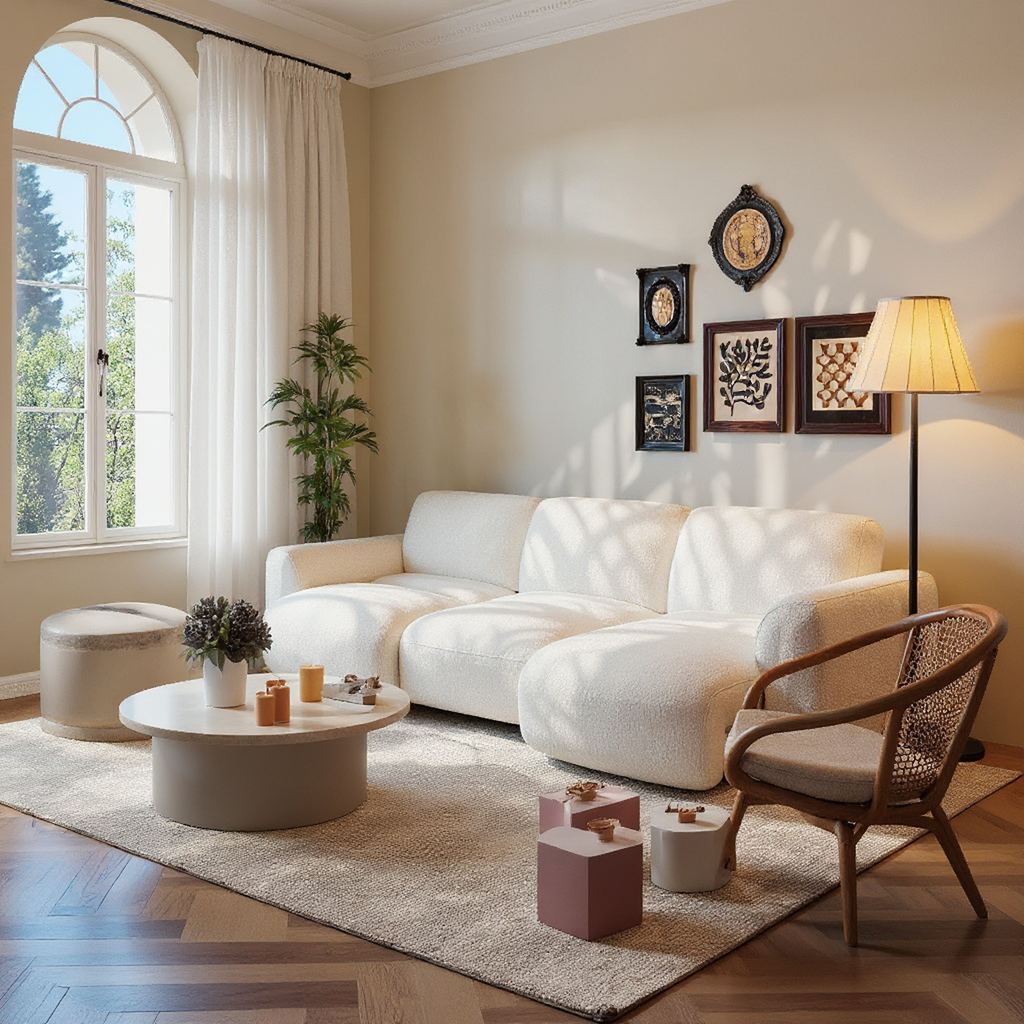
Sit, stretch out, or host an overnight guest.
FAQs
Can I add an ottoman to a sofa I already own?
Yes. Start by measuring your sofa’s seat height and the space where your legs naturally reach when seated. An ottoman with a similar top height will usually work better as a footrest than one that forces your knees sharply upward or downward. Check that its width does not block the seats other people use.
Can an ottoman safely seat an adult guest?
Only if the manufacturer identifies that ottoman as suitable for seating and provides an appropriate weight limit. A firm cushion or solid-looking base alone does not establish its intended use. If the specifications describe it solely as a footrest, plan on a chair for guests rather than counting it as an extra seat.
What if my ottoman slides away from the sofa?
First check whether the ottoman moves on the floor or whether adjoining sofa modules separate. The fixes differ. A floor-safe, removable grip may help the ottoman stay in place while preserving its ability to move. The right method also depends on the floor surface; ways to keep an ottoman from sliding address those differences.
Is a reversible chaise as flexible as an ottoman?
No. A reversible chaise may let you move the extended seat from left to right, but it does not necessarily become an independent footrest or clear the center of the room. Check how the modules connect and whether changing sides requires moving other pieces. An ottoman is more useful when you expect to reposition the footrest frequently.
Can I use an ottoman and chaise together?
Yes, if each serves a distinct seat or purpose and both fit while in use. For instance, one person may use the chaise while another uses the ottoman with a separate chair. Mark both positions on the floor first. If the ottoman only duplicates the chaise and crowds the walkway, the extra piece may add little value.


[…] the lounging. If your evenings look like one adult horizontal, one adult upright, and a TV running, a chaise couch handles that better than a regular sofa with a separate ottoman. The seat blends into the back, you don’t push furniture around to lie down, and pets and […]
[…] well in open living rooms because it creates a natural boundary without needing extra chairs. It can also replace an ottoman when you want a cleaner, more connected seating layout. The tradeoff is space: the chaise side needs a clear path beside it, or the room can feel […]
[…] an adjacent wall. Keep the inside of that turn open and place the main seating away from the bend. A movable chair or ottoman is usually easier to work around than a fixed chaise, which can turn the corner into a daily pinch […]