 By Stephanie
If you notice leather sofa puddling on a new or frequently used seat, the first question is usually whether the sofa is simply settling in or starting to fail. Light wrinkles can be a normal result of leather relaxing over cushioning, while a permanent dip, pulled seam, or loss of support points to a different problem. This guide shows you how to separate surface changes from cushion or structural issues, reduce visible pooling safely, and decide when routine care is enough—or when the sofa deserves a closer inspection.
Table of Contents
What Does Puddling Look Like on a Leather Sofa?
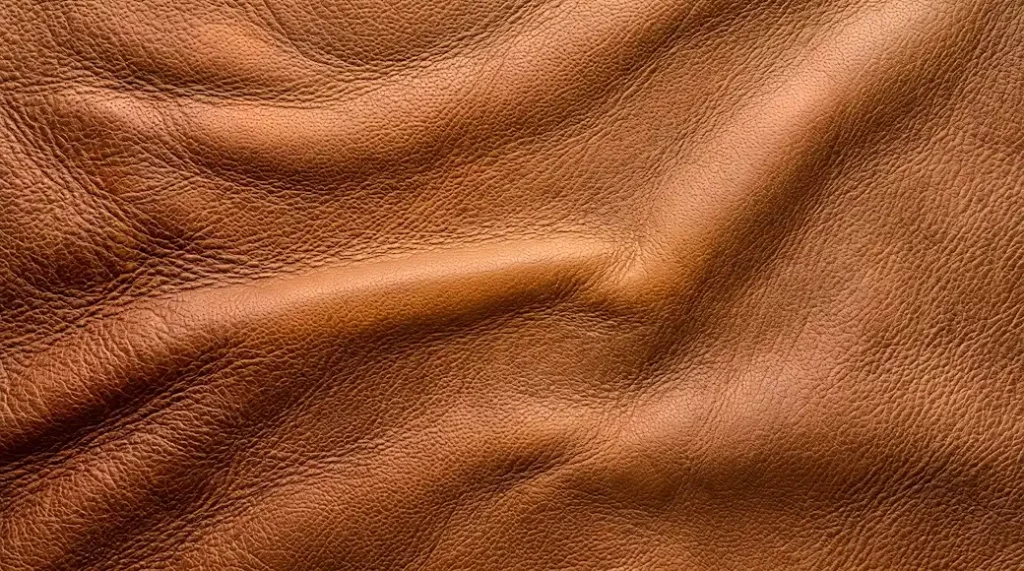
Puddling is the loose, rippled, or softly gathered appearance that can develop across a leather seat as the upholstery relaxes over the cushioning underneath. It often shows first where body pressure is concentrated, such as a favorite corner, the center of a wide cushion, or a frequently used chaise. The amount can vary from seat to seat because leather, cushioning, and daily use do not change at exactly the same rate.
Why Does Puddling Happen?
Puddling usually happens because the leather cover and the cushioning underneath respond differently to repeated pressure. How visible it becomes depends on more than the leather itself. Cushion softness, seat construction, panel size, and where you sit most often can all affect how much surface movement you see over time.
- Leather movement: Real leather is flexible and gradually relaxes in areas that receive repeated body pressure. Softer, more supple leather can make those changes easier to see.
- Cushion compression: Foam, fiber, or down compresses whenever you sit. Softer fills generally allow more movement under the upholstery, while firmer cushioning tends to hold a cleaner seat shape.
- Seat design and daily use: Wide seat panels give surface movement more room to show, while repeated use concentrates pressure in the same area. That is why a favorite corner may develop visible wrinkles earlier than a lightly used seat, even when both belong to the same couch.
Leather Sofa Puddling vs Sagging: How Can You Tell?
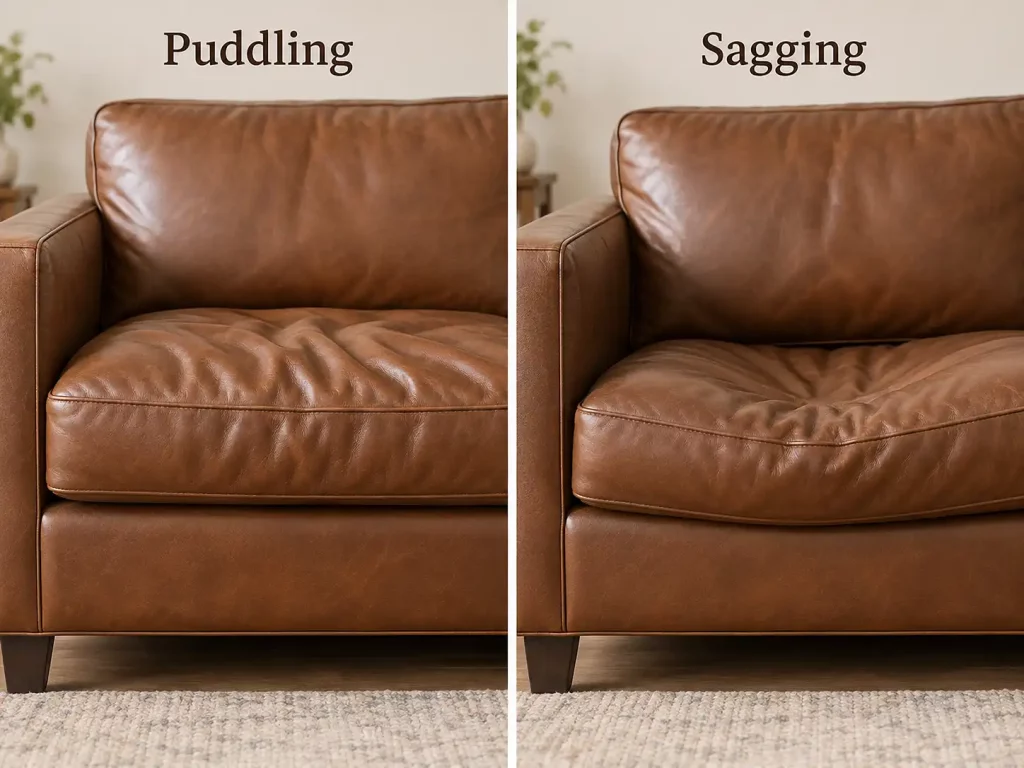
If you are asking “is leather sofa puddling normal,” check which layer of the seat has actually changed. Puddling primarily affects the leather cover. Sagging involves the cushion or support underneath losing shape or holding your body lower than it should. Instead of judging by the size of a wrinkle, work from the surface down.
| Layer to Check | Usually Normal | Warning Sign | Next Step |
| Leather surface | Soft ripples or loose-looking leather; seams remain aligned | Seams pull or twist, or the surface cracks or peels | Photograph the area and check the leather or upholstery issue |
| Cushion | Returns close to the height and feel of a neighboring seat | Permanent low spot, slow recovery, or noticeably deeper sinking | Inspect the cushion rather than treating the leather |
| Seat base | Feels level and supportive beneath the cushion | The empty seat deck dips, flexes, or feels weaker than nearby seats | Diagnose the support system |
A simple rule works well: if only the cover has changed, you are probably looking at puddling; if the cushion or base has changed too, the problem is no longer just cosmetic. Compare the affected seat with a similarly used neighboring seat rather than with an untouched display-like area.
If the weakness is below the upholstery, how to fix a sagging sofa is the more useful repair path.
How to Reduce Puddling Without Damaging the Sofa
Reducing visible puddling starts with the seat construction, not with pulling or tightening the leather. A removable cushion can be handled differently from a fixed seat, and not every removable cushion is designed to be flipped. Use the following sequence to make the safest adjustment for your couch.
Step 1: Identify How the Seat Cushion Is Built
Check whether the cushion is removable, reversible, or fixed in place. Look at the underside and the manufacturer’s care instructions before rotating or flipping it. A cushion that can be removed is not automatically reversible, and treating the wrong construction the same way can create uneven wear.
Step 2: Reshape the Seat Based on Its Construction
1. Removable and reversible: Rotate or flip the cushion where the manufacturer allows it, reshape loose fill, and alternate heavily used seats to distribute compression more evenly.
2. Removable but one-sided: Keep the cushion facing the intended direction. If matching cushions are interchangeable, rotating their positions may help balance use; otherwise, reshape the fill and return each cushion to its original orientation.
3. Fixed seat: Smooth loose leather gently from the center toward the edges with clean hands, and vary your seating position when possible. Do not pull the upholstery tight or use heat or steam.
The goal is to help the cushion recover and distribute use—not to force the leather back to a factory-tight surface.
Step 3: See Whether the Adjustment Helps
After reshaping the cushion or smoothing a fixed seat, let it return to its normal resting shape before judging the result. If the surface looks more even and the seat still feels the same in use, continue the same light maintenance as needed. If the appearance keeps changing together with how the seat feels, stop treating it as a surface-care issue and return to the surface–cushion–base check above.
What Should You Check Before Buying If Puddling Bothers You?
If visible wrinkles bother you, look beyond the words “genuine leather” or “top-grain leather.” Three product details tell you more about how the seat may look in daily use:
- Cushion construction: Foam, fiber, or down compresses whenever you sit, and different fills recover at different rates. As the cushion changes shape under body weight, the leather above it can temporarily have more surface area than it needs when the seat is unloaded.
- Seat panel design: Wide uninterrupted leather surfaces leave more visible room for movement, while seams, tufting, or smaller panels break up the surface.
- Expected leather character: Product pages that describe leather as very soft, naturally varied, or becoming softer with use may signal a more relaxed aging character rather than a permanently crisp surface.
This does not make one construction better than another. It helps you match the sofa to the look you want to live with. Buyers who want a very tailored seat should prioritize shape retention and structured upholstery; buyers who value sink-in comfort may be more comfortable with some visible leather movement.
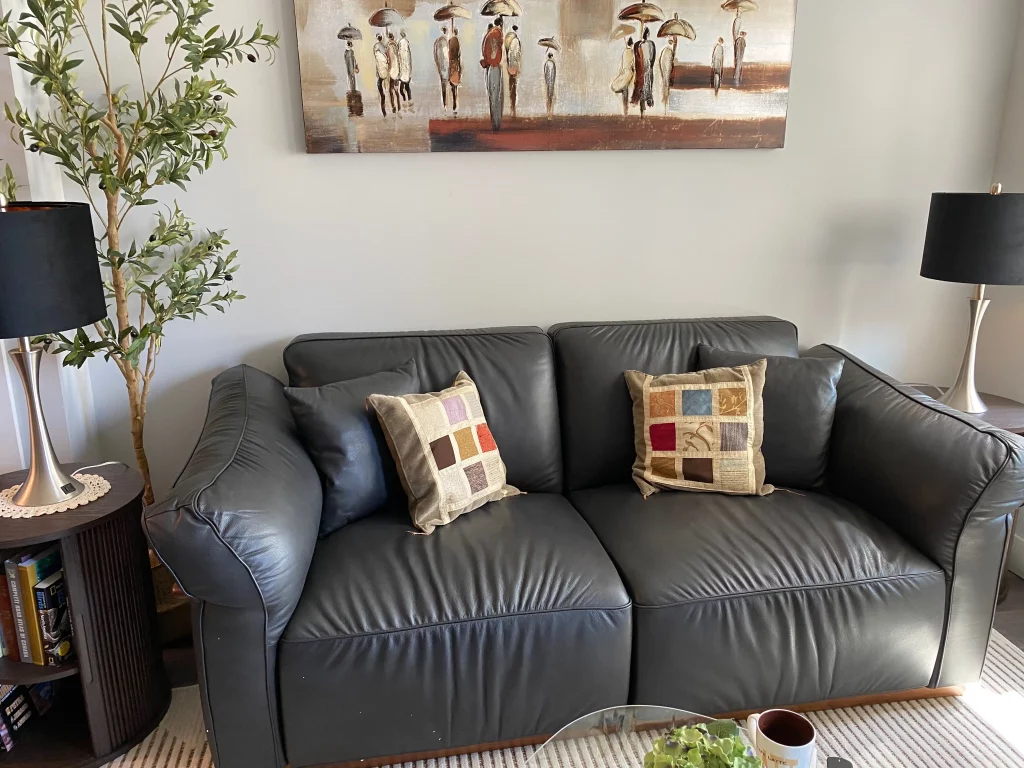
Softer construction can make sense when comfort matters more than keeping the seat visually crisp. The Cronus Genuine Leather Modular Sofa uses top-grain leather that becomes softer with use, paired with premium down for plush comfort and quick bounce-back. Its 26-inch seat depth leaves room to curl up or sit cross-legged, making it more aligned with relaxed lounging than with maintaining a consistently taut leather appearance.
Conclusion
Leather sofa puddling does not automatically mean the sofa is wearing out. First determine whether the change stops at the leather surface or extends into the cushion and support underneath, then match your care to the way the seat is built. If visible wrinkles matter to you when buying your next sofa, pay as much attention to cushion construction and upholstery design as you do to the leather itself.
FAQ
Does puddling affect a leather sofa warranty?
Warranty treatment varies by brand. Normal comfort wrinkles may not qualify as a manufacturing defect, so check the written policy before filing a claim. Photograph the sofa if the appearance changes quickly or is accompanied by an upholstery or support problem; that gives the retailer clearer evidence to review.
Does puddling get worse over time?
It can become more noticeable as a new leather sofa settles, but it does not necessarily keep increasing at the same rate. Continued concentrated use may create more visible surface movement. Track whether the change is gradual or unusually rapid; a sudden change is more useful to document and investigate than wrinkle size alone.
Do leather recliners puddle more than stationary sofas?
Not necessarily. Recliners repeatedly bend the upholstery where the seat, back, and footrest move, so wrinkles may appear around flexing areas that stay relatively flat on a stationary sofa. The reclining mechanism alone does not mean the leather will puddle more; the overall upholstery and cushion construction still matter.
Can faux leather develop a puddled look?
Yes. Faux leather can look loose when its cover stretches or the cushion underneath compresses, but that is not the same aging process as natural leather puddling. Peeling, flaking, bubbling, or separation of the surface layer should be treated as material damage rather than normal comfort wrinkles.
Can an upholsterer permanently remove leather puddling?
An upholsterer may reduce pronounced puddling by adjusting cushion fill, upholstery tension, or the underlying support. A permanently showroom-flat result is not realistic because leather and cushioning continue to respond to use. Professional help is most worthwhile when the looseness is severe, uneven, or continuing despite normal reshaping.


