 By Stephanie
If you searched what is ergonomic furniture, the short answer is furniture that fits the user instead of making the user adapt to the furniture. The harder question is whether a specific chair, sofa, or recliner actually fits you. This guide focuses on that second step: how to judge body contact, daily activity, and measurable product specifications before buying. That matters at home, where the same seat may be used upright for conversation, reclined for TV, or somewhere in between for reading.
Table of Contents
What Is Ergonomic Furniture?
Ergonomic furniture is furniture designed or selected to work with the user’s body, the activity, and natural changes in position. It should support the body where support is needed without forcing awkward reaching, slouching, or pressure points.
Adjustability is common in ergonomic office chairs and standing desks because it helps one product accommodate more users. But adjustability is not a requirement. A fixed dining chair can be an ergonomic fit when its height, depth, back shape, and relationship to the table suit the person using it.
The opposite is also true: a product can have several adjustable features and still fit poorly. The useful question is not “Does it say ergonomic?” but “Does this furniture fit the person and the task?”
What Makes Furniture Ergonomic? 4 Key Factors
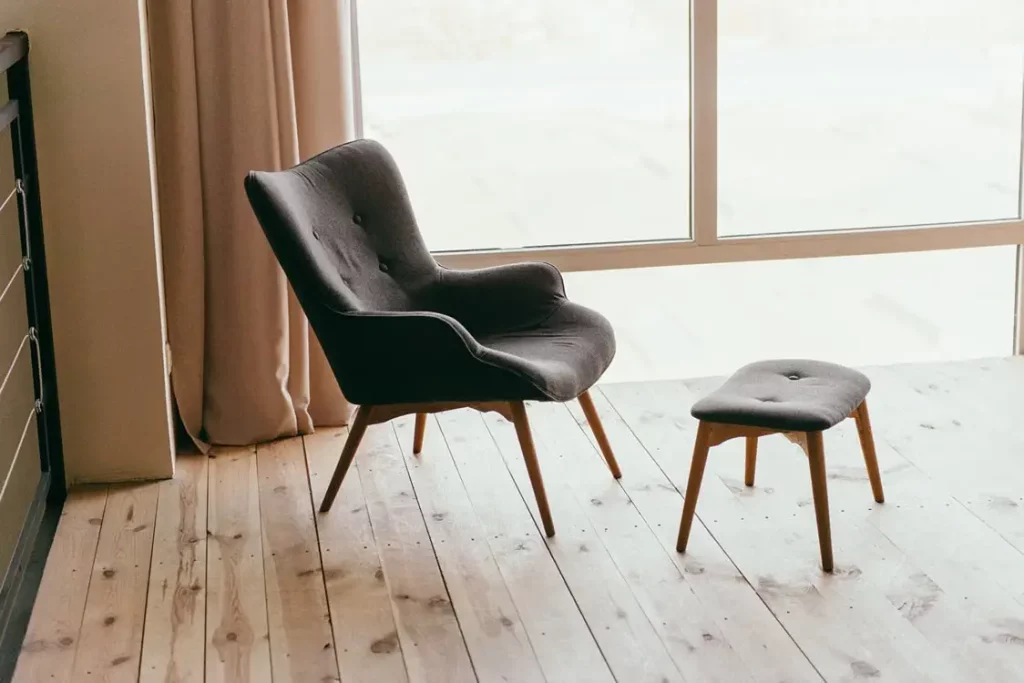
The simplest way to understand what makes furniture ergonomic is to separate four issues that are often mixed together: fit, support, movement, and task. A product does not need the maximum number of features in every category. It needs the right combination for its main user and everyday purpose.
| Check | What It Means | What to Look For |
| Fit | The furniture’s proportions work with the user | Seat height and depth, usable width, back height, reach |
| Support | The body is supported where the activity requires it | Back, thighs, arms, head, or legs as appropriate |
| Movement | The user can change position without fighting the furniture | Recline, swivel, adjustable back, or enough room to shift naturally |
| Task | The furniture works with surrounding surfaces and sightlines | Dining-table height, desk relationship, TV view, reading position |
Comfort and ergonomics overlap, but they are not the same thing. A deep, plush sofa can feel comfortable when you curl up, yet feel poorly fitted when you try to sit upright and your feet no longer reach the floor or your back cannot reach the backrest.
6 Checks to See If a Seat Fits You Properly
Product specifications tell you how large a piece is; your body tells you whether those dimensions work together. Test the furniture through contact points rather than asking whether one measurement falls inside a supposedly “ergonomic” range. A seat can have reasonable dimensions on paper and still feel wrong when several small mismatches occur at once.
When sitting, check six things:
- Feet or legs are supported for the activity instead of hanging without support.
- The seat edge does not dig into the backs of your knees.
- Your back reaches the backrest naturally without sliding forward or leaning far backward.
- Your shoulders stay relaxed rather than lifting to reach armrests or a tabletop.
- Your head and neck are not pushed forward when head support is intended.
- You can shift position and stand up naturally without getting trapped by deep cushions, oversized arms, or a fixed angle.
Red flags are just as useful as ideal measurements. If you have to perch on the front edge to eat, stack multiple pillows behind you to reach a sofa back, or raise your shoulders every time you use the table, the furniture-to-body relationship is probably wrong for that task.

Why Does Ergonomic Fit Change With the Activity?
Ergonomic fit is task-specific. Dining usually calls for a stable, relatively upright position that keeps the diner close to the table. Reading may need arm support and a comfortable neck angle. Watching TV often works better with more recline and support for the head and legs. Desk work adds another relationship: chair height has to work with the desk and screen.
A common home example is the same deep sofa used in two different ways. Someone may be comfortable reclining with their legs up on Saturday afternoon but struggle to sit upright with a laptop on Monday morning. The same logic explains what makes a sofa ergonomic: its geometry has to fit the sitter and the activity, not just feel soft.
Dining makes this relationship especially obvious because the chair and table function as a pair. A chair may feel supportive by itself but place the diner too low, too far back, or too close to the underside of the table. The practical checks in how an ergonomic dining chair fits the table and sitter are useful when dining is the main activity.
How Does Ergonomic Design Work in Home Furniture?
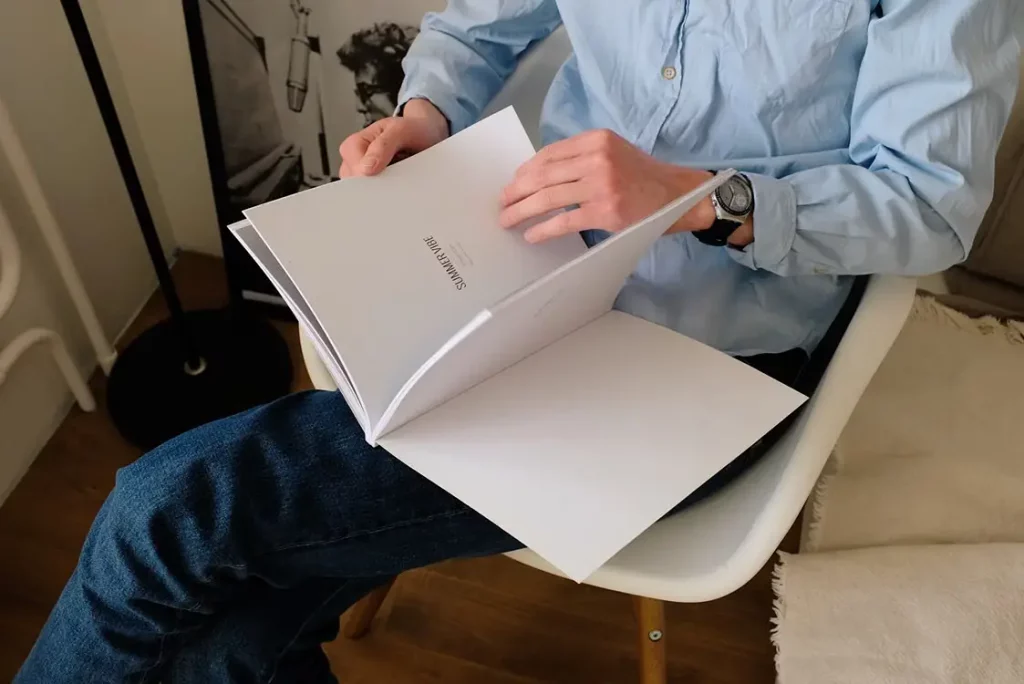
When shopping for ergonomic furniture for home, do not look for one special product category. The same principle can appear in very different ways: a recliner may change with the sitter, a dining chair may rely on fixed proportions, and shared seating may let two people choose different positions. The useful question is what problem each design solves.
Individual Seating for Reading and TV
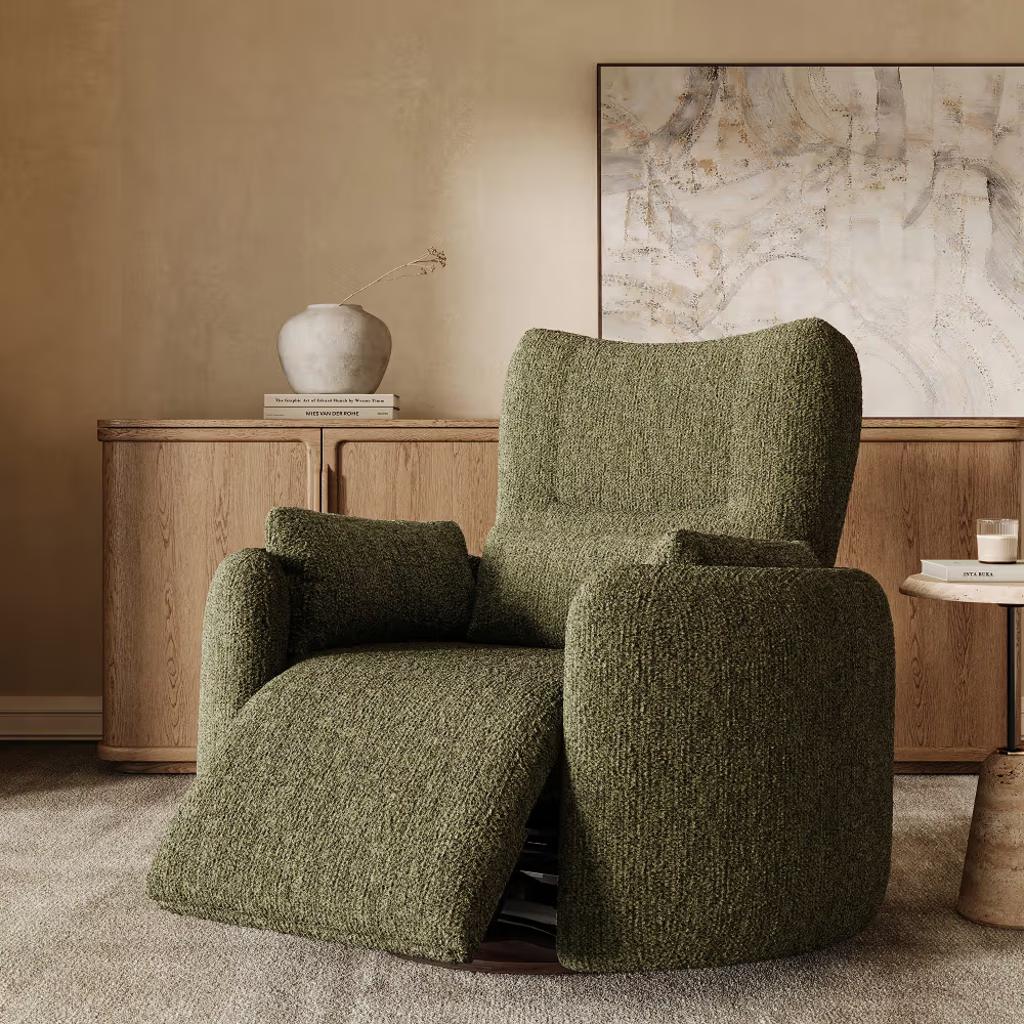
For a seat that needs to work for reading, TV, and conversation, the Oliver Swivel Power Recliner adapts without requiring you to move the whole chair. Its 90°–145° power recline lets you sit more upright with a book or lean back for TV, while the 270° swivel makes it easier to turn toward a screen or another person without twisting your body.
POVISON Oliver Swivel Power Barrel Recliner
A flexible single-seat option for homes where the same chair needs to support different activities throughout the day.
Fixed Dining Seating
At a dining table, ergonomic value can come from shape rather than motors. The Mid-Century Modern Upholstered Dining Chair pairs a contoured barrel back and high-resilience cushion with a 19.69-inch extra-deep seat, giving diners who prefer deeper seating more thigh and back contact during longer meals. Because that depth is generous for a dining chair, shorter users should compare it with a chair they already find comfortable before ordering.
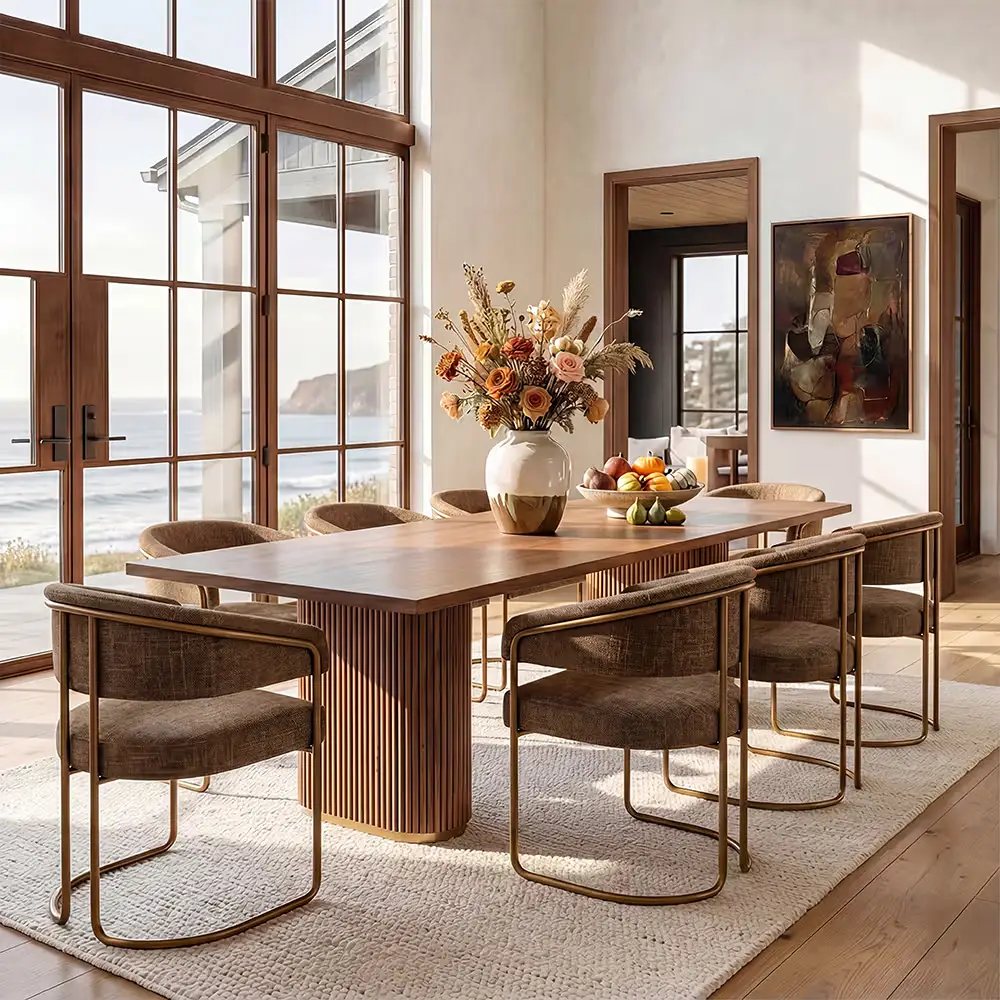
POVISON Mid-Century Modern Barrel Upholstered Dining Chair
A useful reminder that ergonomic seating can come from well-matched proportions, not just adjustable features.
Shared Seating for Different Preferences
When two people use the same sofa differently, independent adjustment matters more than having one fixed sitting position. The Ergopals Power Reclining Loveseat lets each person control their own seat across a 90°–145° recline range. One person can stay upright to read or talk while the other leans back, making the sofa easier to share without either user having to compromise on posture.
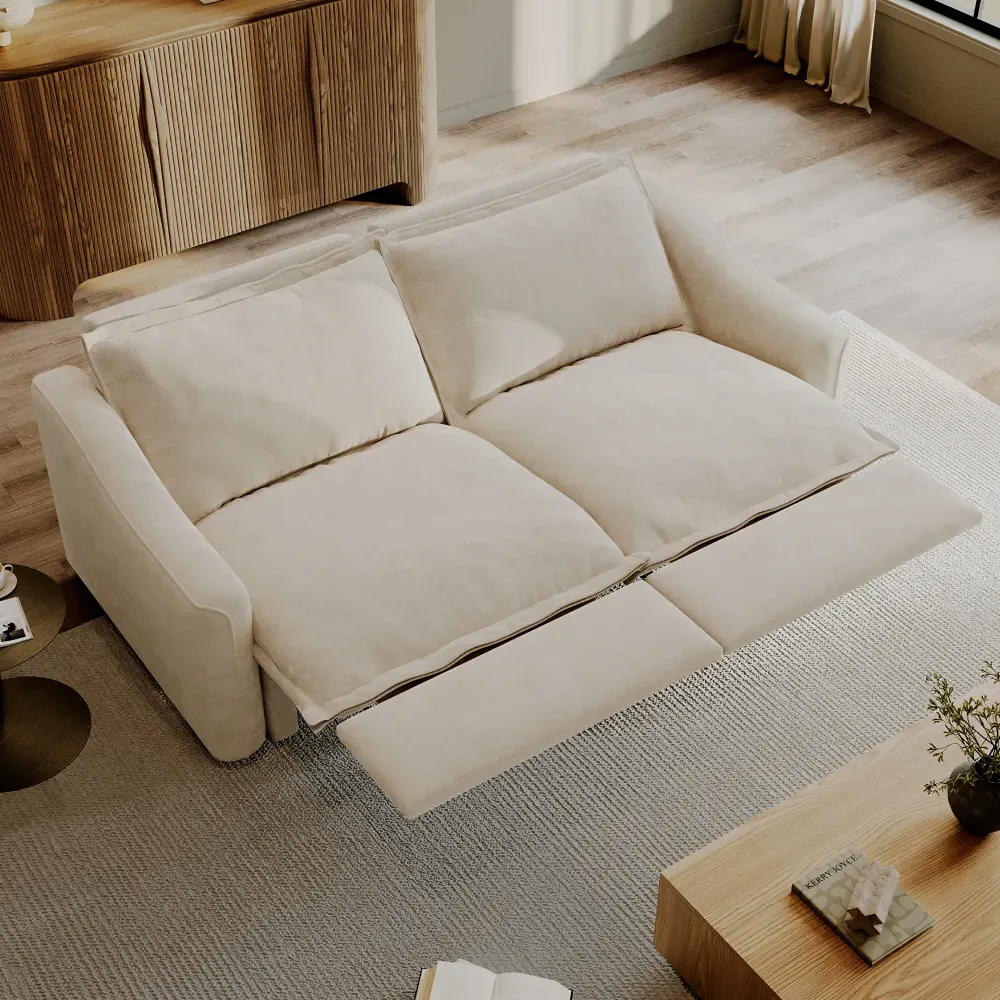
POVISON Ergopals Power Reclining Loveseat
Better suited to shared seating when two people rarely prefer the same sitting position.
How to Evaluate Ergonomic Furniture Online
Online photos can show shape, but they cannot confirm body fit. Compare products in a fixed order so attractive features do not distract from the measurements that affect everyday use.
- Define the main activity. Decide whether the piece is mainly for dining, TV viewing, reading, desk work, or lounging. The activity determines which dimensions and support features matter most.
- Measure a comfortable reference. Record the seat height, usable depth, and back height of furniture that already works for you. Seat depth is especially easy to misjudge online, so compare actual measurements rather than relying on labels such as “deep” or “standard.” POVISON’s explanation of how seat depth changes sitting and lounging comfort provides more specific guidance.
- Check actual specifications and adjustment ranges. Look for measurable dimensions and usable adjustment ranges instead of treating “ergonomic,” “oversized,” or “adjustable” as proof that the furniture will fit you.
- Check the furniture in the room, not just by itself. Recliners need enough open depth and wall clearance to extend, dining chairs need room to pull out, and sofas still need usable walkways. For reclining seating, recliner dimensions for body and room fit can help you check clearance and placement before ordering.
- Review return and warranty terms. Measurements reduce uncertainty, but they cannot fully predict how a seat will feel in use. Check return conditions and warranty coverage before ordering a large piece online.
Conclusion
The practical answer to what is ergonomic furniture is not “furniture with the most adjustments.” It is furniture whose dimensions, support, and movement fit the person and the activity. Start with how the piece will be used, compare its measurements with furniture that already feels right, and then decide which adjustable features add real value. For home seating, that approach makes it easier to distinguish useful ergonomic design from a label—and to choose furniture that works for dining, reading, watching TV, or relaxing in the way your household actually lives.
FAQs
Does upholstery material affect ergonomic fit?
Yes, indirectly. Very soft cushions can compress enough to change effective seat height and depth, while slick upholstery may allow more sliding. Start with seat dimensions and support, then consider how the material behaves under body weight. Upholstery alone does not make a piece ergonomic.
Is zero-gravity recline necessary for ergonomic seating?
No. Zero-gravity is one reclining position, not a requirement for ergonomic furniture. More important factors are whether the seat fits your body, supports the intended activity, and lets you change position comfortably. A well-fitted fixed chair can also provide effective ergonomic support.
Can cushions or footrests improve furniture you already own?
Sometimes. A lumbar cushion can fill a small gap behind the back, while a footrest can help when the seat is slightly too high. Accessories cannot reliably correct a seat that is far too deep, an unsuitable back angle, unstable construction, or a major size mismatch.
Are armrests necessary for ergonomic seating?
No. Armrests help when they support the forearms without lifting the shoulders or interfering with the task. Armless seating can work well when arm support is unnecessary. On dining chairs, also check whether the arms clear the tabletop and leave enough room to enter and exit comfortably.


[…] look for better ergonomics and features (Technavio, 2024). A dual motor recliner gives you those ergonomics in everyday use, not just in a […]
[…] depth toward the center of the room. Plan around the deepest setting and confirm that the furniture remains practical at intermediate […]