 By Stephanie
A living room can support block towers at 4 p.m. and feel calm again by 8 p.m. The simplest answer to how to store kids’ toys is to keep only the toys currently in use within easy reach, give each item a place it can be returned in one step, and move the rest into rotation. This guide centers on a five-minute evening reset that helps families manage toys without turning the living room into a permanent playroom. The goal is simple: make play easy during the day and make the room usable again at night.
Table of Contents
The Easiest Way to Store Kids’ Toys
The easiest toy-storage system gives parents and children fewer decisions to make at cleanup time. Start with the toys already in the living room instead of trying to organize the whole house. Remove anything broken, incomplete, outgrown, or no longer used.
Keep only the toys your child is actively using this week in the living room. Store the remaining age-appropriate toys elsewhere for rotation. This reduces the daily cleanup load without requiring the family to give away every toy that is not currently popular.
Give each active group one fixed storage boundary. That compartment becomes the limit. If it will not close easily or the contents must be stacked carefully, move some toys into rotation instead of adding another basket.
In compact homes, practical storage ideas for small spaces should protect open floor area instead of turning every empty corner into another toy drop zone. The goal is not to fill every inch of storage. Leave enough open space for a child to return toys without rearranging the contents or asking an adult to make room.
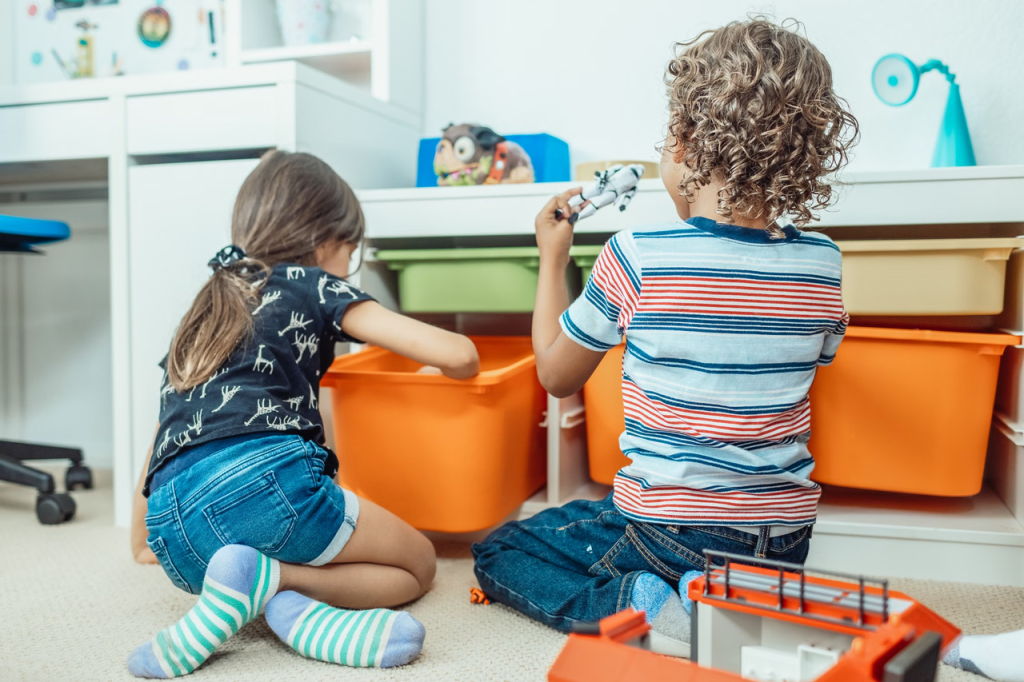
Build a 5-Minute Toy Reset That Works on Real Weeknights
A five-minute reset is not a rushed organizing session. It is a closing routine with a visible finish line and clear limits on what the family will—and will not—solve that evening. Set those boundaries first so no one has to make new storage decisions at the end of a long day.
Define What “Reset” Looks Like
“Clean up the living room” is too vague, especially for a young child. Define the finished state through conditions everyone can recognize:
- The main path between the entry, sofa, and kitchen is clear.
- The coffee table and at least one main seat are ready for adult use.
- Loose toys are inside their assigned storage boundaries.
- Every drawer and cabinet door closes without pushing or rearranging.
A quick phone photo of the finished room can serve as a visual reset card. It gives children a clear target without repeated instructions such as “keep cleaning” or “put everything where it belongs.”
The room does not need styled shelves or perfectly matched sets. The reset is finished when the shared space works again.
Handle Each Item Once
Avoid sweeping everything into a large basket and sorting it later. That handles each toy twice and creates another cleanup task. During the reset, touch each item once and send it to one of three places:
- Home: Return it directly to its regular drawer, cabinet, or basket.
- Park: Place one unfinished puzzle, build, or drawing on the designated project tray.
- Transfer: Put anything that belongs in another room into a small tote near the living-room exit.
Run the timer around household function rather than toy categories:
- 0:00–2:00 — Reopen the floor: Return toys blocking the main walking and play area.
- 2:00–3:30 — Reclaim shared surfaces: Clear the sofa, coffee table, and dining table edge.
- 3:30–4:30 — Park active work: Move one unfinished activity to the project tray. Complete, dismantle, or relocate the others.
- 4:30–5:00 — Close the room: Shut the storage, straighten the seating, and place the transfer tote by the exit.
Empty the transfer tote before the next play session. Otherwise, it becomes another permanent holding area.
Use the Reset to Find Storage Problems
Stop when the timer ends. Continuing until the room looks perfect hides the weaknesses in the storage setup.
Use what remains to diagnose the problem:
- Toys remain on the floor: The active collection may exceed the available storage.
- A drawer or cabinet remains open: Mark that compartment for the next capacity check.
- Several projects are still in progress: Reduce the number of activities that can remain active at once.
- Adults complete most of the work: The child may be facing too many decisions, heavy containers, or storage that is difficult to reach.
Do not reorganize the room that night. Wait until the same problem appears on two separate evenings before changing the system. This prevents an unusually busy day from triggering unnecessary purchases while still revealing recurring problems that need a real fix.
Give Each Storage Piece a Clear Role
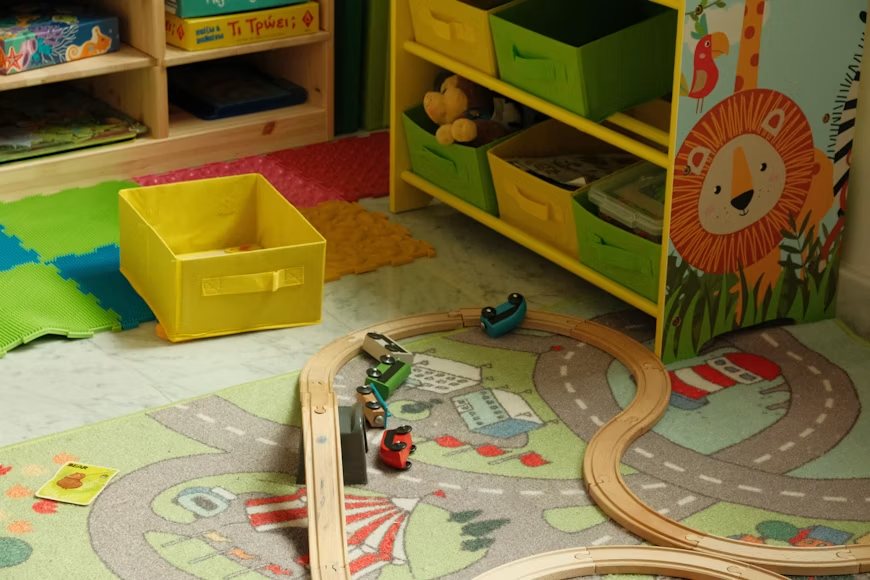
A shared living room becomes harder to reset when every cabinet turns into general overflow. Decide what each storage piece may hold before toys move inside. The easiest-to-reach furniture should contain only items children can return independently, while activities requiring setup, supervision, or small-part control need a separate adult-managed location.
Reserve Everyday-Access Storage for Child-Safe Daily Use
Everyday-access storage should hold only toys that are used regularly, safe for independent access, and simple enough for the child to manage without help. Limit this furniture to two or three active groups, so the contents remain visible and easy to reach.
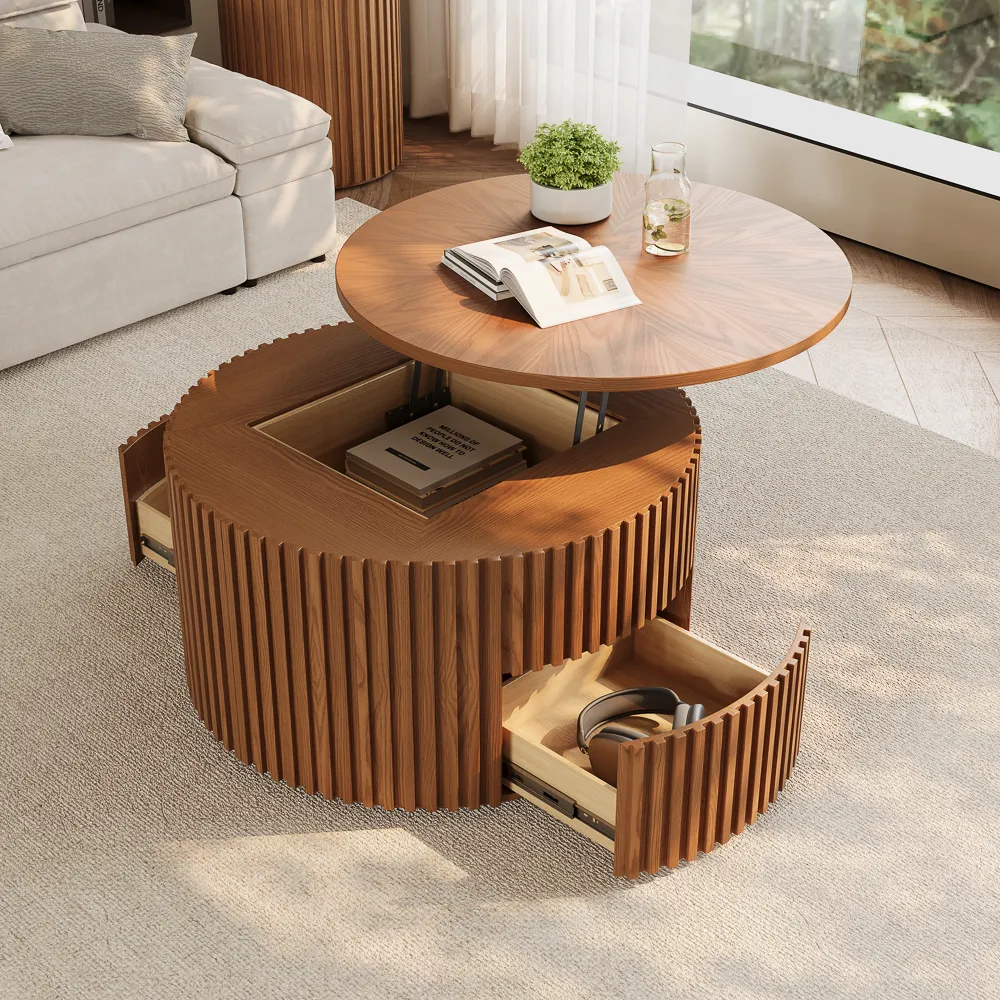
That role can be handled by furniture already at the center of the room, provided its compartments are assigned before toys move in. The Silva lift-top round coffee table can fill this role by keeping current daily toys in the main storage area while reserving the two drawers for remotes, chargers, or other adult essentials. Complete sets, small components, unfinished work, and items awaiting repair should stay elsewhere.
This division keeps the most accessible furniture useful without allowing it to become general overflow.
Use Adult-Controlled Storage for Supervised Activities
Adult-controlled storage is for activities that require setup, supervision, or restricted access. One complete activity kit should be easy to remove, carry to a work surface, and return in a single trip.
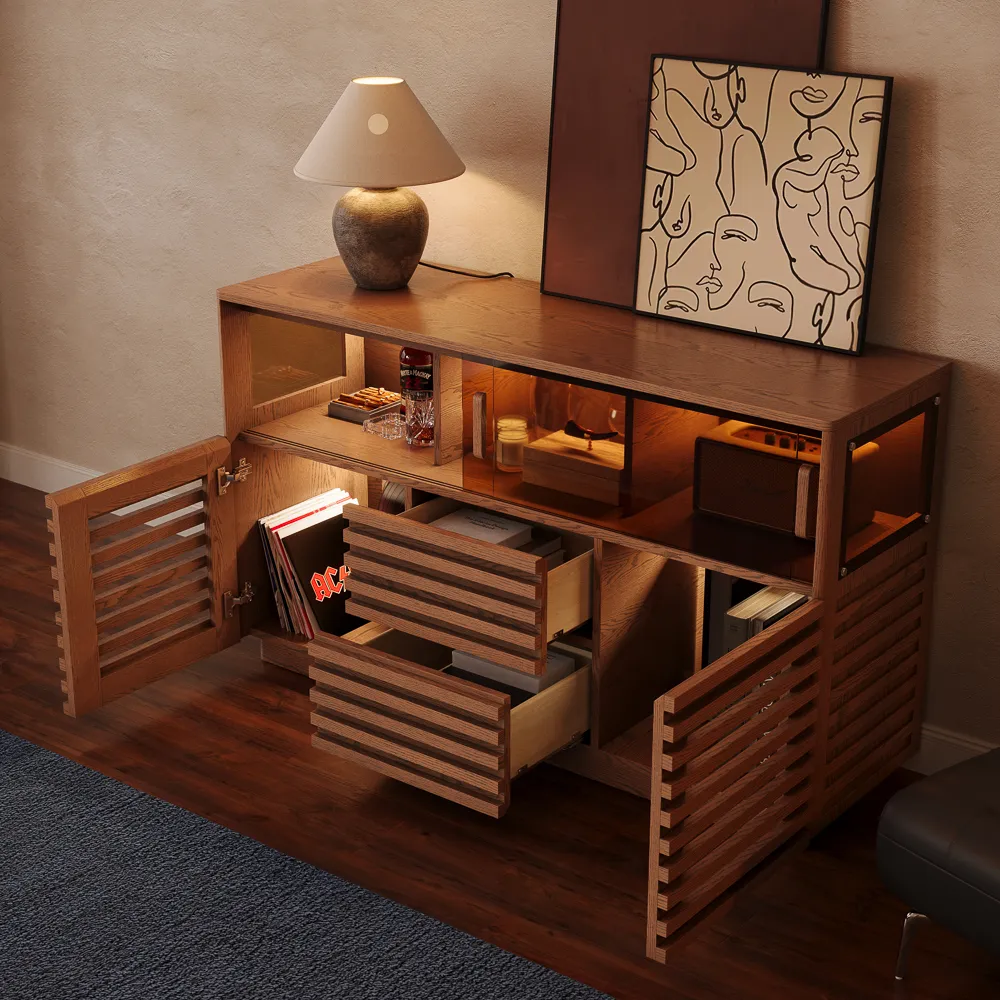
Adult-assisted activities need more than a separate container; they also need storage that controls access. The Selene LED slatted storage cabinet can keep removable activity caddies in closed cabinets while reserving designated drawers for batteries, adhesives, tools, and small components. The acrylic-front section can remain available for books or decor, so the cabinet does not read as children’s furniture.
Use adult-controlled storage when:
- A child needs help setting up or cleaning up;
- The activity contains small or age-restricted parts;
- Materials may stain or damage soft surfaces;
- Pieces must remain together as a complete kit;
- A younger sibling should not have unsupervised access.
If a child cannot safely begin, use, and put away an activity independently, it should not occupy everyday-access storage.
Choose Storage by Return Effort
Toy names do not reveal how difficult they are to put away. A stuffed animal and a 200-piece set may occupy similar space, but one can be returned in a single step while the other must stay complete. Choose storage by the number of actions required, the need for supervision, and whether the child can manage those actions safely.
Match the Container to the Return Effort
Use this comparison before choosing a container:
| Return effort | How to recognize it | Best storage response |
| One-step return | The toy can be placed directly into storage without preserving a set | Wide basket, low cubby, or shallow drawer |
| Two-step return | Pieces must first go into a pouch, tray, or inner box | Labeled inner container placed inside closed furniture |
| Adult-assisted return | The activity includes paint, batteries, tools, or age-restricted small parts | Removable caddy in adult-controlled storage |
| Bulky item | The toy cannot fit inside standard storage | One fixed floor boundary and a strict quantity limit |
Match small-part storage to the youngest child with access. Products intended for children under three that present choking, aspiration, or ingestion hazards because of small parts are banned under federal small-parts rules (U.S. Consumer Product Safety Commission).
Set a Clear Boundary for Bulky Toys
Keep only one bulky toy active in the living room at a time, whether it is a ride-on toy, play kitchen, dollhouse, or large building structure. Before another large toy enters the room, move the current one into rotation, relocate it, or remove it.
Give the active toy a defined floor boundary rather than allowing it to drift between the sofa, walkway, and dining area. If it regularly extends beyond that boundary, it is too large for the available shared space.
Keep the System Working After Week One
Respond to visible problems instead of vaguely “organizing regularly.” Once a week, make the smallest change that removes the repeated point of friction:
- Toys collect in one floor spot: Move everyday-access storage closer to that location.
- Children mix several labeled groups: Combine them into one simpler storage boundary.
- A bin must be emptied to find one item: Replace it with shallow storage or use inner pouches.
- Small parts disappear: Give each set a zipped pouch or lidded inner box.
- The reset exceeds five minutes: Remove one storage stop, container layer, or sorting decision.
- The transfer tote stays full for two days: Give those items permanent homes or remove the tote.
Adjust the setup in this order:
- Move the storage closer.
- Simplify the return decision.
- Reduce the number of active toys.
- Consider new furniture only after the first three changes fail.
Conclusion
Good toy storage does not erase family life; it gives the day a reliable closing routine. Keep only the toys currently in use within easy reach, store the rest for rotation, and make sure each item has a place it can return to without extra sorting. Use the five-minute reset to clear shared surfaces and reveal where the setup is failing. Start with the busiest area near the sofa, reduce what is stored there, and test the routine tonight. A calmer living room should come from fewer steps, not stricter cleanup rules.
FAQs About Storing Kids’ Toys
How often should toys be rotated?
Rotate toys when interest drops or everyday storage begins to feel crowded, not according to a rigid calendar. Swap only a few items at a time, so the change feels fresh without creating another large sorting project. A two-to-four-week rhythm may work, but the child’s play pattern is the better signal.
Do toy storage bins need labels?
Labels help when several people share cleanup duties. Match them to the child’s reading level, using one photo or one broad word per compartment. Skip the label when a container has one obvious purpose; unnecessary labels can turn a simple return into another classification decision.
Can this system work in a rental or small apartment?
Yes. For toy storage without a playroom, use freestanding multifunctional furniture and removable inner containers. Keep everyday-access storage compact, preserve the main walkway, and place toys that are out of rotation in a closet or another adult-managed area. Follow manufacturer instructions and rental rules when securing furniture.
How can toddlers and older children share storage safely?
Place toddler-safe toys that can be returned in one step in low compartments. Keep older children’s small parts, batteries, craft tools, and complex sets in adult-controlled storage. A removable box can travel to a table and return after use, preventing small components from remaining accessible throughout the day.


