 By Stephanie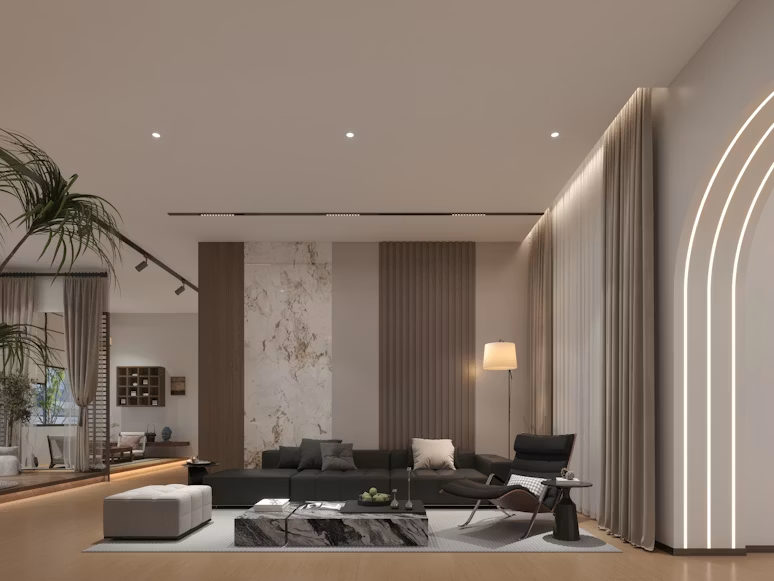
A luxurious home should make daily life smoother, not more delicate. When friends stop by on a warm summer evening, there should be room to sit, set down a drink, and clear the table without turning the house upside down. That is the real goal of luxury home interior design: a space that looks intentional in daylight, feels comfortable after dark, and supports the routines between those moments. This guide uses a practical system to turn that goal into better decisions about layout, furniture, materials, lighting, and storage.
Table of Contents
The Everyday Luxury System: Design for Real Life
The Everyday Luxury System starts with four everyday moments: arriving home, gathering with others, resetting the room, and winding down at night. When a space supports those moments, decisions about layout, furniture, lighting, and storage become easier—and the finished room feels elevated without looking overdesigned.
The Four Moments That Define an Elevated Home
A well-planned room should support four moments:
- Arrive: Keys, bags, shoes, and mail have a clear landing place instead of gathering on the nearest surface.
- Gather: People can sit comfortably, move around each other, and reach a table without shifting furniture first.
- Reset: After dinner, homework, or a movie, the room can return to order in a few minutes.
- Unwind: Lighting, seating, and visual noise can shift from active daytime use to a calmer evening setting.
These moments reveal whether a room is truly working. A dining table becomes more valuable when it can handle a Tuesday night meal and a long Saturday dinner. A media console feels more refined when it keeps remotes, cables, and everyday clutter out of sight.
Find Friction Before You Buy
Before choosing finishes or accessories, walk through the room at its busiest time of day. Notice where people pause, what collects on surfaces, and what gets moved out of the way. Those small points of friction usually matter more than another decorative object.
- Entry: Keys, bags, and mail need a reliable landing place.
- Sofa area: Drinks, books, chargers, and blankets should be within reach.
- Dining area: Chairs need room to pull back without blocking the path.
- TV wall: Cables, remotes, and gaming accessories need closed storage.
This quick audit gives every purchase a purpose. It shows where to invest in a durable anchor piece and where a simpler supporting piece will make the room work better.
How to Plan a Luxury Layout That Works Every Day
A refined interior starts with the floor plan, not the accessories. Before choosing art, pillows, or finishes, decide how people will move through the room and where everyday items will land. Good circulation is easy to overlook when it works, but it becomes obvious the moment a chair blocks a walkway or a coffee table makes the sofa hard to reach.
Start by identifying the room’s main job, then place its largest working piece first—usually the sofa or dining table. Mark the footprint with painter’s tape and live with it for a day. Check door swings, chair pull-back space, and the routes people use when carrying groceries, laundry, or drinks.
Use these measurements as practical starting points:
- Leave about 16–18 inches between a sofa and coffee table.
- Leave about 36–48 inches between a dining table and a wall or nearby furniture.
- Keep the main walkway clear instead of filling it with an extra chair, cart, or plant stand.
- Choose a rug large enough to connect the main seating pieces rather than floating in the middle of the room.
Then plan storage around real behavior. Chargers, remotes, papers, games, pet supplies, spare throws, and serving pieces should stay within one or two steps of where they are used. Closed storage keeps those high-churn items out of sight, while open shelves can hold a smaller number of objects with visual value. These living room layout ideas for better flow show how a sofa, coffee table, and TV wall can work as one usable zone instead of a collection of separate furniture pieces.
Choose Furniture Anchors That Support Real Life
Once the layout is clear, choose the one piece in each zone that will do the most work. This anchor should set the room’s scale, support its main activity, and make the rest of the furniture easier to choose.
In modern luxury interior design, one well-proportioned piece usually creates a stronger result than several competing statement pieces. Let the anchor lead the room, then keep the surrounding furniture lighter, quieter, and easier to move around.
Choose One Anchor Piece Per Zone
The best anchor depends on how the room is used. In a living room, it may be a comfortable sofa built for conversation and movie nights. In a dining area, it is usually the table because it shapes both the gathering experience and the flow around it.
Choose the anchor according to the room’s main need:
| Zone | Best Anchor When… | Keep Supporting Pieces… |
| Living room | Conversation, lounging, and movie nights are the priority | Lower-profile, movable, and visually lighter |
| Dining area | Meals and hosting need a clear center | Easy to move around and connected through material or color |
| Entryway | Daily clutter is the first problem you notice | Slim, closed, and clear of the main route |
| TV wall | Media devices and cables dominate the room | Simple enough to keep the room calm when the screen is off |
A room feels more elevated when the main piece has a purpose and everything around it helps that purpose come through.
Build the Dining Area for Weeknights and Hosting
In an open living-dining room, the dining table often has the biggest impact on how the entire space functions. It needs to support weekday meals, an occasional laptop session, and longer gatherings without tightening the route between the kitchen and the seating area.
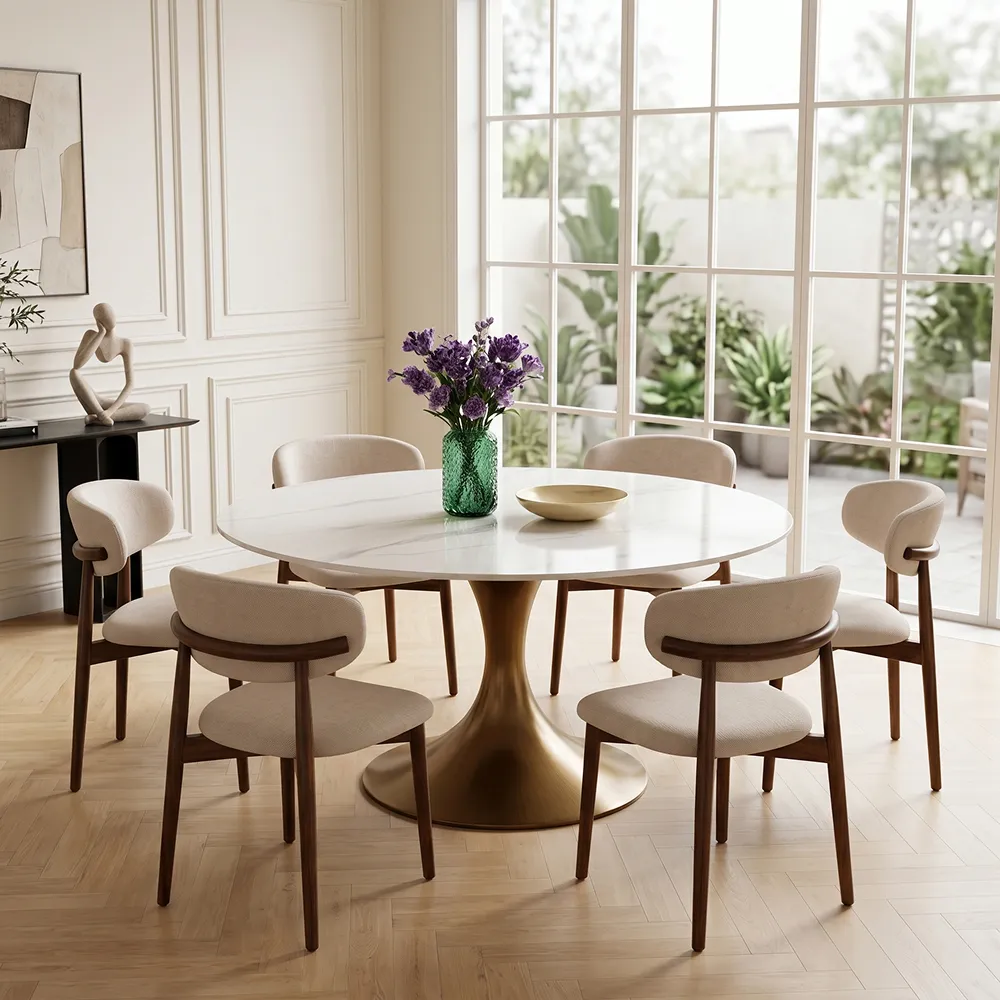
A round table works especially well when people enter the room from more than one direction. Its curved edge keeps corners out of the walkway, gives chairs more forgiving pull-back space, and helps the dining area feel connected to the sofa rather than separated from it.
For a room that needs both presence and practicality, the Tulora Round Glossy Sintered Stone Dining Table creates a clear gathering point without making the space feel formal or fragile. Its white glossy sintered-stone top and bronze stainless-steel base bring material contrast to an open-plan room, while the 59-inch size seats up to six for regular meals and casual hosting.
The heat-, scratch-, and stain-resistant surface also supports the way the table is likely to be used. On a July Friday evening, serving bowls, plates, and a chilled bottle can stay within reach without turning the setup into something that feels too precious to touch. When dinner ends, the rounded edge keeps the path to the sofa open, so the room can shift naturally from dining to conversation.
Layer Materials and Lighting Without Visual Noise
Materials and lighting decide whether a room feels flat, cold, or layered. They should reinforce the anchor rather than act like separate decorative events. The strongest rooms repeat a few finishes, then use light to shift the mood from morning to night.
Repeat a Three-Part Material Palette
Use three roles across the home: one warm material, one structured material, and one reflective accent.
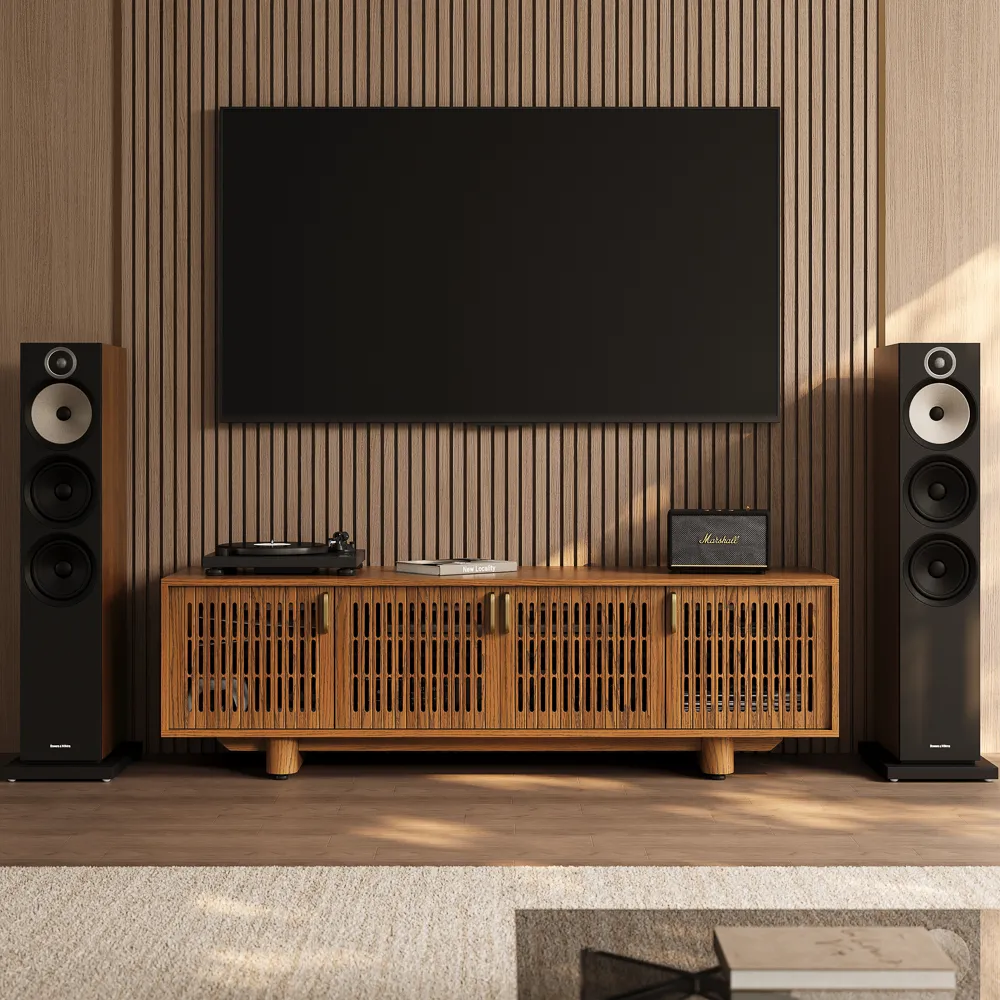
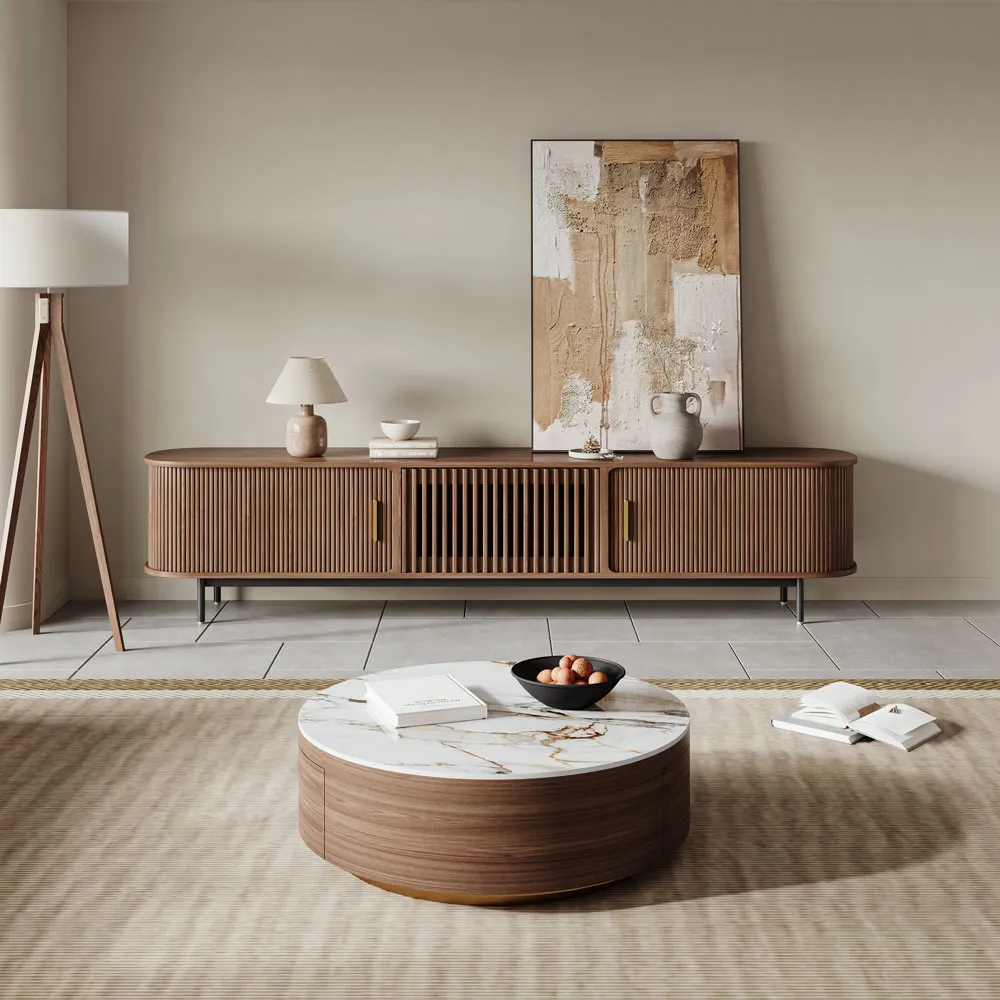
- Warm: Walnut, oak, leather, or woven fiber. Around a TV wall, warm wood softens the cool look of screens and electronics. The Arboren 17″ Deep Vented Rolling Media Console adds a walnut-colored finish that helps the media zone feel more connected to the room’s larger material palette.
- Structured: Sintered stone, ceramic, plaster, or matte lacquer. Structured materials give the center of a room more definition, especially when the seating area needs a strong but quiet focal point. The Modern Sintered Stone Coffee Table brings a clean stone surface to the seating area, while its built-in storage helps the room stay composed after daily use.
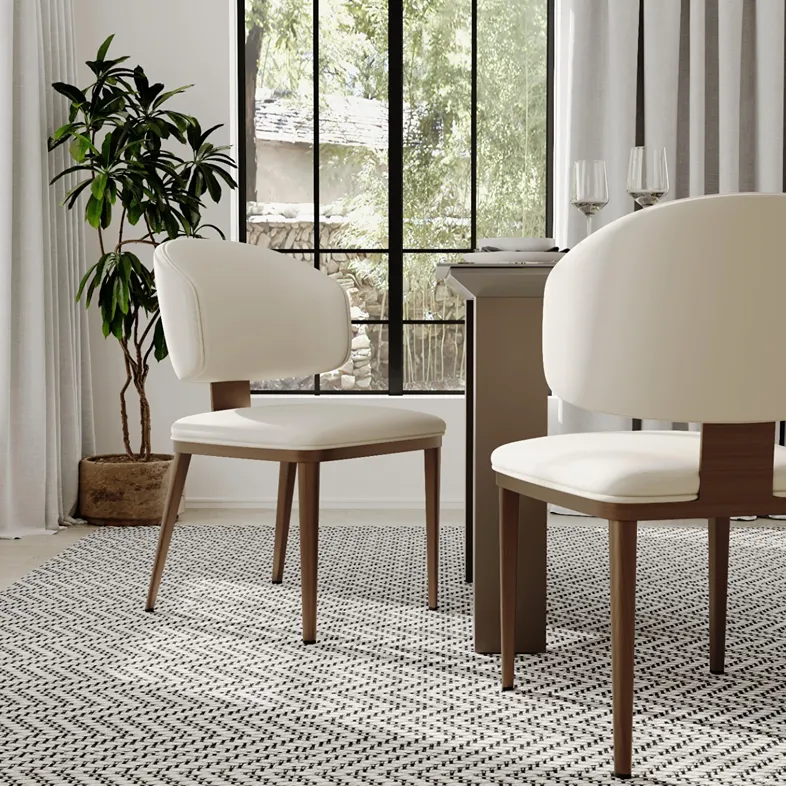
- Reflective: Bronze, aged brass, smoked glass, or soft black metal. Use reflective accents where they can catch light without becoming the loudest detail in the room. The Aurelia Modern Upholstered Dining Chairs bring in a subtle bronze detail around the dining table, while the beige upholstered seat keeps the space soft, comfortable, and easy to use for everyday meals.
Repeat the palette by changing proportions. Use wood in a media console, stone in a coffee table, and bronze in the dining table base; reverse the balance in the dining room. The result feels cohesive, not matched.
Light the Room by Activity
One overhead fixture can make a room bright, but it rarely makes it inviting. Plan light around what happens in each zone: reading, eating, watching TV, working, or talking after dinner.
Use three layers:
- Ambient light for movement through the room.
- Task light near a reading chair, side table, or dining surface.
- Accent light on a wall, shelf, artwork, or textured corner.
In summer, use sheers to soften glare rather than blocking daylight. At night, warm lamps at different heights make the room feel settled. These living room lighting ideas for different room types help plan around the sofa, TV wall, and dark corners—not ceiling light alone.
Finish the Room With Texture, Personality, and Visual Rest
Once the layout, furniture, and materials are working together, the final layer should make the room feel personal without making it harder to maintain. Start with larger elements that change the mood of the whole space—a textured rug, linen curtains, one substantial artwork, a throw, or a tall plant. These layers add warmth and depth without filling every surface with smaller objects.
Then add only a few details that feel personal, such as a framed family photo, a favorite travel object, or a ceramic lamp with character. The goal is not to make every corner decorative. It is to give the room enough personality while keeping it easy to reset after everyday life.
Before adding more decor, use a five-minute reset test:
- Clear one surface that has become a drop zone.
- Put remotes, chargers, and other high-churn items behind a door or inside a drawer.
- Remove one decorative item that does not add meaning or function.
- Move anything blocking the main path.
- Turn on only the lights needed for the moment.
If the room still feels calm after a normal day, the design is doing its job.
Luxury Interior Design Mistakes That Make a Home Feel Less Considered
A room rarely feels less luxurious because one item is inexpensive. More often, the problem is that too many choices compete for attention or make daily life harder than it needs to be. Keep surfaces useful, give furniture room to work, and choose materials that suit the way the household actually lives.
Another common mistake is giving every major piece a different visual language. A curved sofa, glossy table, bold rug, mirrored cabinet, and oversized chandelier may each look strong on their own, but together they can make the room feel busy rather than refined. Choose one statement material or silhouette per zone, then let the remaining pieces repeat quieter details such as wood tone, metal finish, or upholstery texture.
Before buying a new piece, ask:
- Can people move around it without having to squeeze by?
- Does it support the room’s main activity?
- Is the material practical for meals, pets, children, or frequent guests?
- Does it solve a storage need rather than create another surface to manage?
- Will it still look good after an ordinary week, not just after styling?
The strongest rooms are not designed for one perfect photo. They are designed to look composed after people have actually lived in them.
Conclusion
The most successful luxury home interior design does not announce itself through excess. It shows up in the ease of moving through a room, the confidence of one well-chosen anchor, and the relief of knowing that everyday clutter has somewhere to go. Begin with the four moments that matter—arrive, gather, reset, and unwind—then make every large purchase answer one of those needs. When layout, materials, light, and storage support real life, the home feels elevated on a quiet weekday and during a summer dinner with friends.
FAQs
Is Luxury Home Interior Design Possible in a Rental?
Yes. Focus on furniture, rugs, curtains, storage, and portable lighting instead of permanent finishes. A strong anchor piece, a limited material palette, and better lamp placement can make a rental feel intentional without altering walls or committing to a renovation.
How Much Should You Budget for One Room?
Spend first on the pieces that change function and scale: seating, a dining table, storage, or a rug. Invest more in anchor and less in accessories. A few durable layers create a stronger result than scattering the same budget across decor.
What Is the Best First Upgrade for a Builder-Basic Home?
Upgrade the room used most often. A better sofa and lighting plan can change a living room; a material-led table can change an open dining area. Choose the purchase that solves a daily frustration, such as poor seating, visible clutter, or weak nighttime light.
How Can You Keep a Luxury Room From Feeling Too Formal?
Pair polished materials with tactile ones: stone with linen, metal with wood, or a tailored sofa with a textured rug. Keep one or two surfaces open for daily use. Comfortable lighting and personal items make a polished room feel lived in.


