 By Stephanie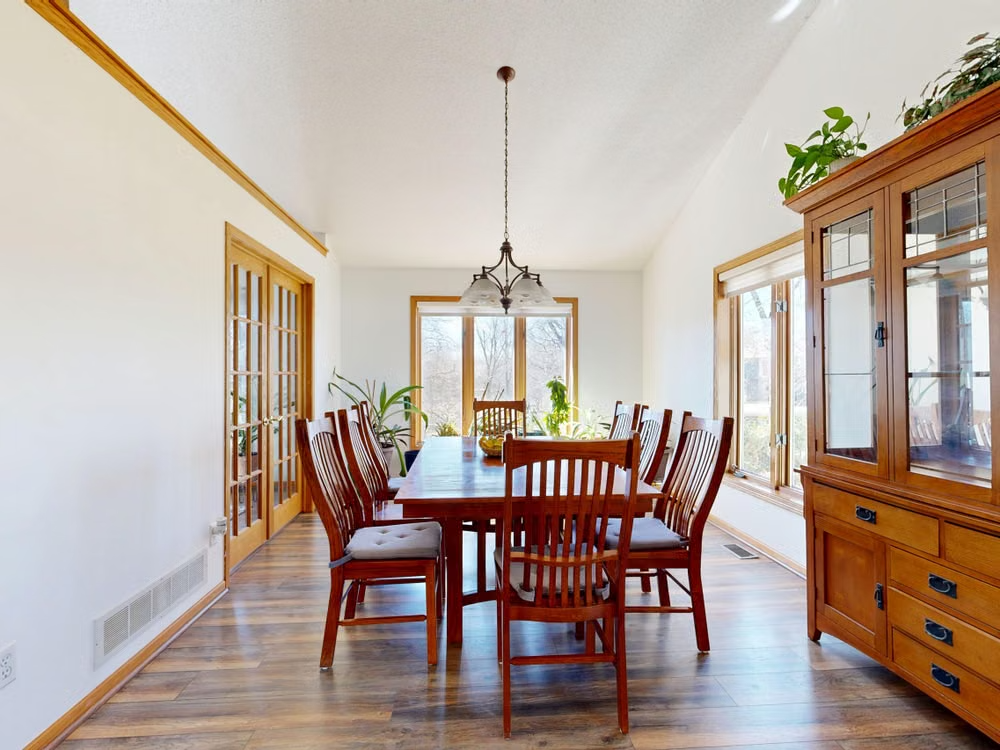
If you are asking what is a sideboard, the simplest answer is a long, low storage cabinet that keeps useful items close without making a room feel crowded. Traditionally, it held dinnerware in a dining room. Today, it can also organize blankets in a living room, bags in an entryway, or work supplies in an open-plan home. The right sideboard does more than fill an empty wall. It gives daily clutter a home, creates a practical surface for hosting, and adapts as your routine and rooms change.
Table of Contents
What Is a Sideboard?
A sideboard is easy to recognize once you focus on its function instead of its label. It sits low against a wall, stores everyday items behind doors or in drawers, and gives you a flat top for serving, display, or daily drop-zone use. The details may vary, but the basic job stays the same.
The Core Features of a Sideboard
A sideboard is usually wider than it is tall. Most designs have enclosed cabinets, drawers, shelves, or a mix of all three. That low, horizontal shape matters because it gives you storage without adding the visual weight of a tall cabinet.
Look for these four practical features:
- A long, low profile that works along a dining room, living room, or hallway wall
- Closed storage for items you do not want left in view
- A usable top surface for lamps, serving dishes, drinks, or a small display
- Flexible placement that lets the piece move with you from one room to another
A sideboard should feel like part of the room’s rhythm. It should help you set down a serving tray during dinner, clear board games after a movie night, or hide the everyday items that tend to collect on open shelves.
Why the Label Matters Less Than the Job
Furniture names overlap, so start with the job rather than the label. Ask what needs to go inside, which room needs storage, and what needs to happen on top. If the answer includes dinnerware, everyday clutter, or hosting supplies, a sideboard is likely the right category.
The same low cabinet may be called a buffet in a dining room, a credenza in an office, or a storage console in a living room. What matters most is whether its size, storage layout, and surface space support the way you use the room every day.
What Is a Sideboard Used For?
The answer to what a sideboard is used for depends on the room, but the purpose is consistent: it keeps frequently used items nearby while reducing visual clutter. A sideboard works best when it supports a real routine, not when it becomes another surface for things to pile up.
Dining Room Storage and Easy Hosting
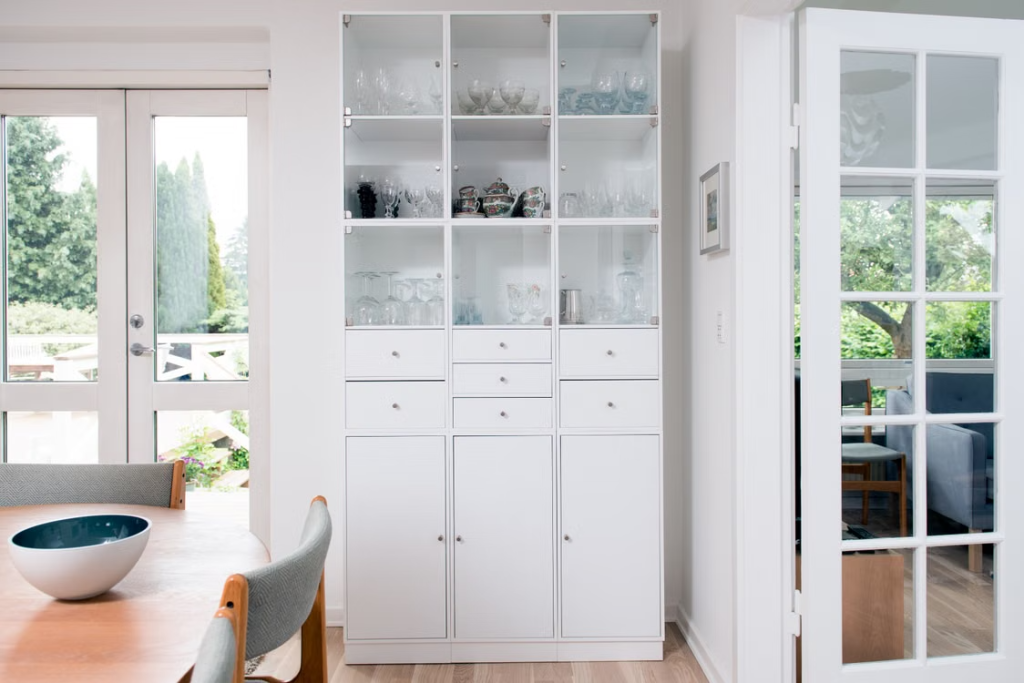
A sideboard for dining room use makes everyday meals simpler because it moves essentials out of kitchen cabinets and closer to the table. Plates, serving bowls, cloth napkins, placemats, candleholders, and extra glasses can all stay within reach.
During a relaxed summer dinner, a sideboard can hold chilled drinks, dessert plates, and a stack of linen napkins while the dining table stays clear for food and conversation. The top becomes a temporary serving station instead of a permanent decorating surface.
Use dining room sideboard storage for:
- Everyday plates and bowls
- Table linens and placemats
- Serving trays and large platters
- Wine glasses, coasters, and bottle openers
- Candles, matches, and small hosting supplies
A sideboard can support meals without being tied to one room. The difference between a sideboard and a buffet in a dining room matters most when you want storage that can later move to a living room, hallway, or office.
Living Room, Entryway, and Home Office Storage
In a living room, a sideboard gives loose items a place to disappear. It can hold blankets, board games, books, remotes, chargers, and toys that would otherwise end up on a coffee table or open shelf.
In a two-bedroom apartment, a low sideboard behind the sofa can hold weekend games, extra throw blankets, and a charging basket. By Sunday evening, the top may hold a lamp and a single vase, while everything else is back behind closed doors.
In an entryway, use it as a landing zone for keys, dog leashes, reusable bags, and seasonal accessories. In a home office, it can store printer paper, files, cables, and supplies without making the space feel like a supply closet.
The goal is simple: store items close to where they are used. That makes cleanup faster and keeps the room ready for everyday living.
Do You Need a Sideboard?
Before choosing a finish or door style, decide whether a sideboard solves a problem you actually have. The strongest furniture choices start with a clear task. A sideboard is worth considering when it improves storage, hosting, or visual balance without narrowing the way people move through the room.
Signs a Sideboard Will Make Daily Life Easier
A sideboard is usually a smart choice when several of these situations feel familiar:
- Your dining essentials are spread across multiple kitchen cabinets.
- Your living room has clutter but no place to hide it.
- A long wall looks empty but does not need a tall bookcase.
- You host friends or family and need a second serving surface.
- Your entryway becomes messy with bags, shoes, pet gear, or mail.
- You want one low cabinet that can keep serving a purpose when your layout changes.
Choose a sideboard when you need concealed storage and a practical top surface in the same piece. It is especially useful in open-plan homes, where visible clutter can make the entire room feel busy.
When Another Furniture Type Is Better
A sideboard is versatile, but it is not the best answer for every wall.
Choose a console table when you only need a shallow surface for keys, lamps, or décor. Choose a tall cabinet when vertical storage matters more than a low visual profile. Choose a media console when your main need is television support, cable management, ventilation, and easy access to devices.
A living room with a TV, game console, router, and soundbar needs more than hidden storage. It needs the right depth, cable access, and airflow. That is why the question of whether a sideboard can be used as a TV stand in a living room should be answered by checking the specific cabinet design, not just its appearance.
Choose the Piece That Solves Your Daily Friction
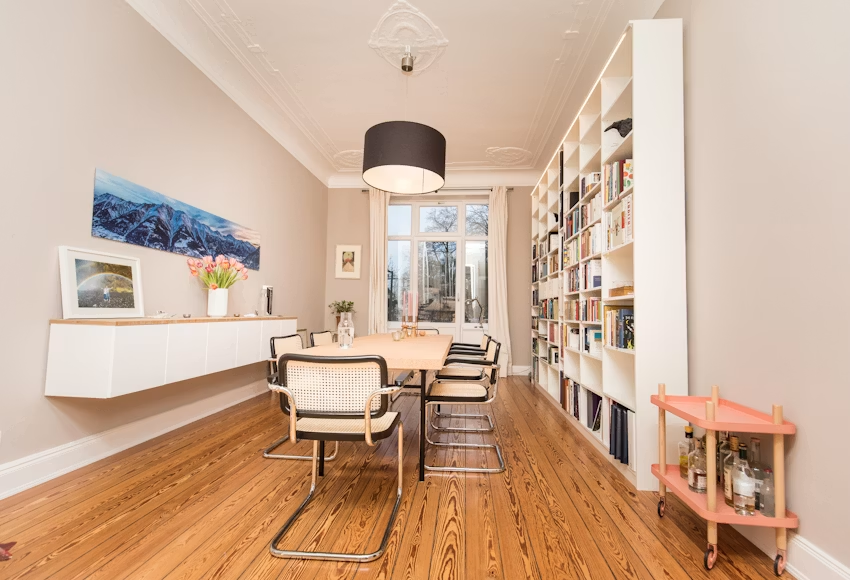
Low storage furniture can look similar at first glance, but the wrong choice often creates a problem later. A shallow console may not hide enough clutter, a media console may not work for dinnerware, and a buffet may feel too dining-specific once your needs change. Start with the activity that frustrates you most, then choose the furniture type that solves it.
Match the Furniture to the Problem
| If Your Main Need Is | Best Choice | Why It Fits |
| Hiding dinnerware, linens, games, or everyday clutter | Sideboard | It combines enclosed storage with a useful top surface and can move between rooms later. |
| Serving food and drinks near the dining table | Buffet | It is best suited to a dining room where hosting and meal service are the main priorities. |
| Keeping a low, polished storage piece in an office or quiet media wall | Credenza | Its lower profile helps the room feel open while still giving you concealed storage. |
| Creating a shallow drop zone for keys, lamps, or décor | Console table | It works in narrow areas where full cabinet depth would block the walkway. |
| Supporting a TV, router, game console, or soundbar | Media console | It is built around equipment access, cable routing, and ventilation. |
Plan for the Piece’s Next Room
A sideboard is often the better long-term choice when you expect your layout to change. It can begin in a dining room with plates and linens, then move to a living room for games and blankets or to an entryway for bags and seasonal items. That flexibility matters more than whether the retailer calls it a buffet, credenza, or storage cabinet.
How to Choose a Sideboard for Your Space
Once you know the room’s main job, the buying decision becomes clearer. Start with the wall, the walkway, and the items you need to store. Then choose a cabinet configuration that supports those needs without making the room harder to use or harder to maintain.
Use a Three-Part Fit Test
Before comparing finishes, check whether the sideboard works with the room in three ways: wall, work, and walkway. First, measure the usable wall space after accounting for outlets, vents, curtains, and door trim. Next, decide what the top surface needs to do—serve food, hold a lamp, organize daily drop-zone items, or display a few pieces. Finally, open the imagined cabinet doors and walk the route people use most often. If any one of these checks feels tight, choose a shallower, shorter, or more open furniture type.
Match the Storage Layout to Your Routine
Do not judge storage only by the number of doors. Think about what needs a quick home and what can stay tucked away.
- Drawers work best for napkins, coasters, keys, remotes, chargers, and small tools.
- Closed cabinets suit platters, board games, blankets, serving bowls, and pet supplies.
- Display sections work for glassware, books, or objects you actually want visible.
- Adjustable shelves help when your storage needs may change over time.
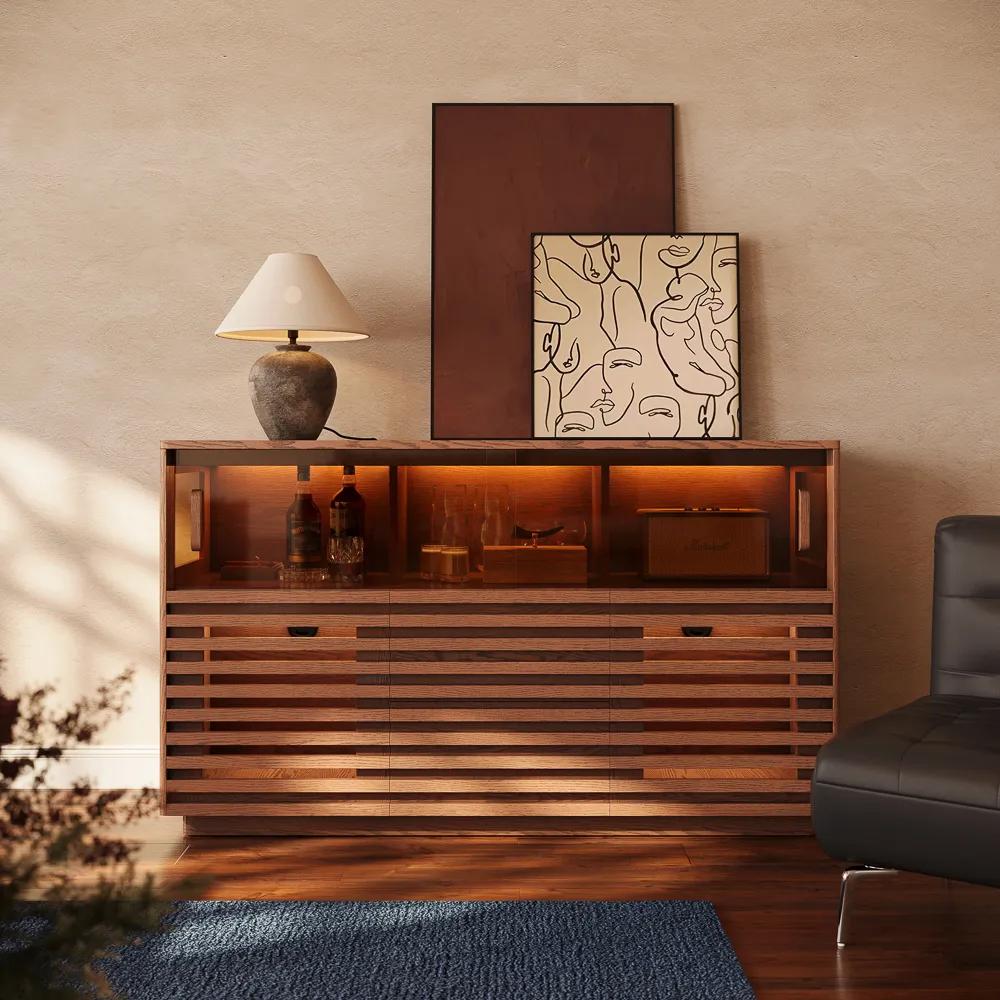
Once you know you need both quick-access drawers and concealed storage, look for a layout that gives each category a clear place. In an open-plan dining space, the Selene LED Horizontal Slatted Storage Cabinet combines drawers, enclosed cabinets, and acrylic-front display sections for napkins, serving pieces, larger dishes, and everyday glassware. Adjustable LED lighting softens evening meals, while the fully assembled design keeps setup simple.
Build Visual Continuity Without Buying a Matching Set
Your sideboard does not need to match the dining table exactly. Exact matching can make a room feel flat, especially when the table, chairs, and cabinet all share the same color and silhouette.
Instead, repeat one or two visual elements:
- A warm walnut, oak, black, or neutral undertone
- Rounded corners or slim legs
- A shared material detail, such as glass, stone, acrylic, or slatted wood
- Similar visual weight between the table and the cabinet
A large stone-top table may need a substantial sideboard with a grounded base. A small round table often looks better with a lighter cabinet that has softer edges or visible legs. The goal is connection, not duplication.
Conclusion
The right sideboard does not simply fill a wall. It makes a dining room easier to host in, a living room easier to reset, and an entryway easier to leave each morning. Start with the items that need a home, measure the space people actually use, and choose storage that fits your daily habits. When a sideboard holds what you need, hides what you do not want to see, and leaves room for life to move around it, it becomes one of the most useful pieces in the house.
FAQs About Sideboards
How Wide Should a Sideboard Be Compared With a Dining Table?
A sideboard does not have to be narrower than the dining table. A wider piece can work well on a long wall, provided it does not crowd end chairs, doorways, or nearby walkways. Prioritize clear movement around the table, then choose a width that feels balanced with the room rather than perfectly matched to the table.
Should a Sideboard Sit on a Rug?
It can, but the rug should be large enough to make the placement look intentional. Avoid resting only the front legs on a thick rug, which can make the cabinet feel uneven. If the sideboard shares a rug with the dining table, make sure chairs can still slide back easily.
Can a Sideboard Work as a Coffee Bar?
Yes. Use a drawer for filters, spoons, and napkins, and use a cabinet for mugs, tea, and extra supplies. Keep enough clear space on top for the coffee maker and daily setup. A nearby outlet matters most, while access to water simply makes refilling and cleanup easier.
How Much Space Should You Leave Around a Sideboard Behind a Sofa?
Leave enough room to walk comfortably between the sideboard and nearby furniture without making the seating area feel boxed in. The cabinet can store blankets, games, and chargers while holding a lamp or small display on top. Choose a lower profile when you want to keep sightlines open across the room.


