 By Charles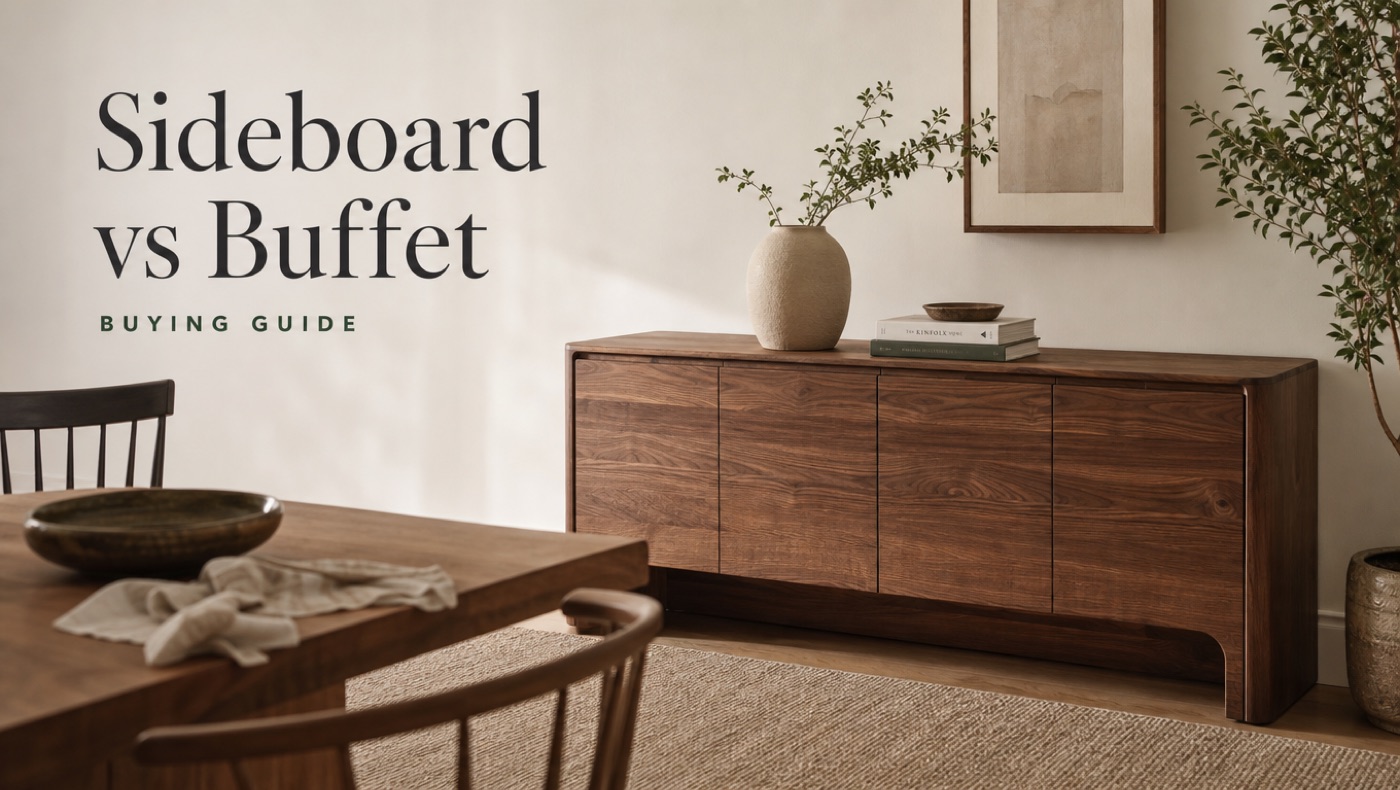
A sideboard and a buffet are very similar storage pieces, and the main difference is usually how and where they are used. A buffet is traditionally placed in a dining room for serving food and storing dinnerware, while a sideboard can appear in dining rooms, living rooms, hallways, or open-plan spaces.
In furniture design, the two terms often overlap. Both pieces usually have a long, low profile with cabinets, drawers, or shelves. They can store plates, linens, barware, books, electronics, board games, or everyday household items. A buffet may feel more tied to formal dining, while a sideboard is often treated as a more flexible cabinet.
Height and surface use can vary. A dining buffet should provide a comfortable serving surface and enough interior space for tableware. A living room sideboard may be chosen for visual balance, hidden storage, or as an alternative to a media console. If electronics are involved, check ventilation, cord access, and shelf dimensions before using it under a TV.
POVISON's storage cabinets and sideboards can work in several rooms depending on dimensions, finish, and door configuration. For a dining room, think about serving space and dish storage. For a living room, compare the sideboard with TV stands to decide which layout better supports media equipment.


