 By Stephanie
A round ottoman coffee table can make a living room feel calmer, softer, and more inviting — but only when it matches the way you actually live. It gives you a soft place to stretch out during a weeknight movie, then shifts into the center of a casual summer gathering with cold drinks, snacks, and a few extra guests. This guide helps you choose the right size, create a stable serving surface, plan the layout around your sofa or sectional, and decide when a hard-top table will make everyday routines easier for everyone in the room.
Table of Contents
Is a Round Ottoman Coffee Table Right for Your Room?
A round ottoman coffee table is a strong fit when the center of your living room should feel soft, flexible, and easy to move around. It works especially well when the sofa faces a TV, fireplace, or conversation area; the room is more square than long; and people often put their feet up or gather casually around the seating area.
Choose one when you want a centerpiece that can shift between a footrest, a tray-supported surface, and occasional extra seating. It is especially practical for relaxed movie nights, casual weekend visits, and living rooms where a hard-edged table would interrupt the main walking path.
Choose a hard-top table instead when the center of the room must function as a ready-to-use work, dining, or serving surface every day. The better choice is the one that supports the routine your household repeats most often.
What Size Round Ottoman Coffee Table Fits Your Sofa?
Getting the size right prevents most layout regrets. A round ottoman should be easy to reach from the main seats without narrowing the route to the TV console, kitchen, balcony, or doorway. Start with the usable seating zone, then test the footprint in the room before choosing a diameter, height, or storage style.
Measure the Usable Seating Zone
For a straight sofa, measure the width of the main sitting area. For an L-shaped sectional, measure the open center zone rather than the full corner-to-corner length. A chaise may extend the sofa visually, but it should not automatically force you into a larger ottoman.
Use these diameter ranges as a starting point:
| Sofa or Seating Zone | Suggested Ottoman Diameter | Best Use |
| 60–72 in. loveseat or compact sofa | 28–32 in. | Apartments and small TV rooms |
| 72–84 in. sofa | 32–36 in. | Most two- and three-seat sofas |
| 84–96 in. sofa | 36–40 in. | Larger sofas and open living rooms |
| Wide L-shaped sectional | 40–42 in. | Spacious centers with clear walkways |
A round piece should serve the people sitting around it, not fill every empty inch of rug. When the sectional creates a deep corner, use the same practical logic as a coffee table size for an L-shaped sectional: measure the seating people actually use, then protect the pathways around it.
Set the Clearance and Height
Once you have a target diameter, build in room to move. Keep 14–18 inches between the sofa seat edge and the ottoman. Closer to 14 inches works for a lounge-first setup; closer to 18 inches is better when people frequently pass through.
Use this quick measurement checklist:
- Leave 14–18 inches from sofa to ottoman.
- Keep 24–30 inches for a primary walkway.
- Choose an ottoman that sits at seat height or up to 3 inches lower.
- Avoid a very tall ottoman with a low-profile sofa; it will feel bulky and make leg positioning awkward.
The height matters more than it seems. A coffee table ottoman that is too low makes drinks harder to reach. One that is too high interrupts the relaxed, feet-up feeling that made you consider an ottoman in the first place.
Test the Footprint Before You Buy
Use painter’s tape to mark a 31.5-inch, 36-inch, or 40-inch circle on the floor. Sit on the sofa, stretch out your legs, walk past the circle, open nearby doors, and check whether a person can still enter the room without turning sideways.
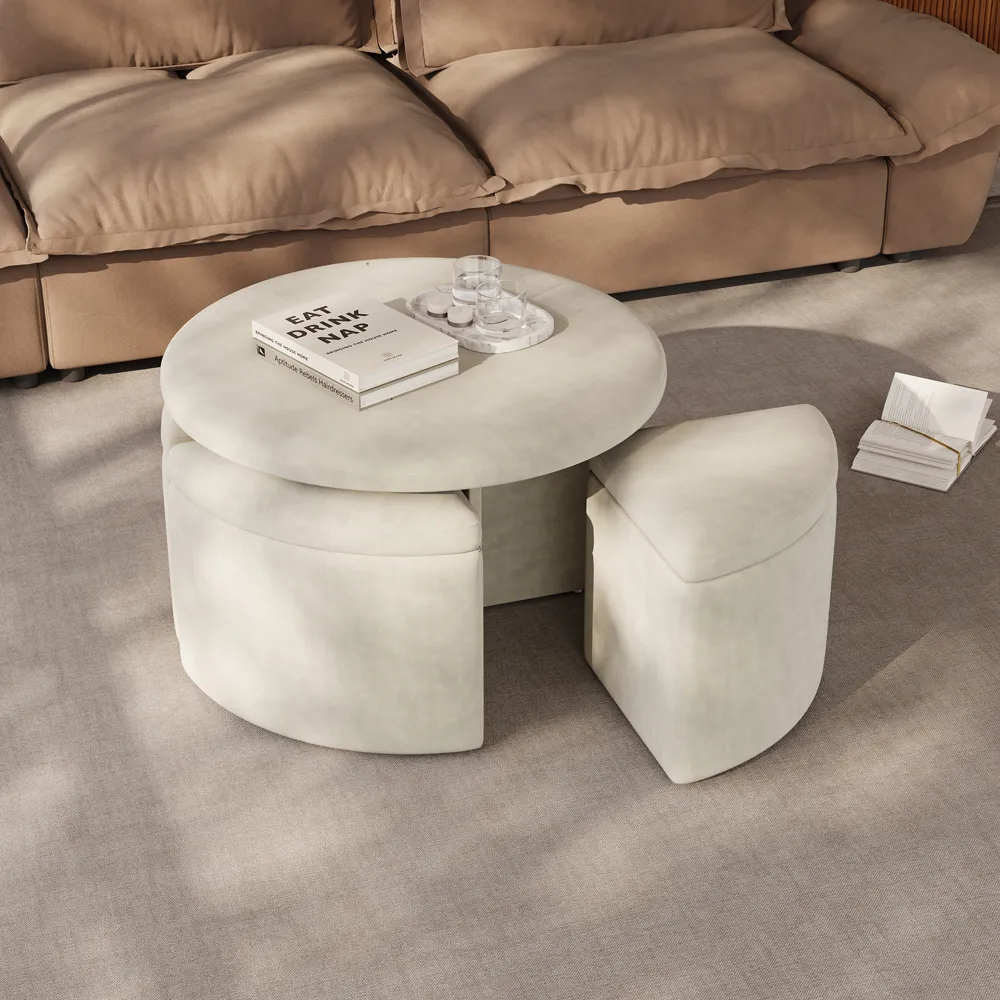
Once the tape test shows that a 31.5-inch circle keeps the route to the kitchen, balcony, or TV console clear, a compact centerpiece will usually work better than a larger table. That is where a Round Storage Ottoman Coffee Table makes practical sense: its built-in storage keeps throws and dog toys out of sight, while its beige pet-friendly, anti-scratch, waterproof fabric is better prepared for everyday spills during relaxed summer gatherings.
Choosing Between a Round Ottoman and a Lift-Top Coffee Table
Once you know the right diameter for your sofa or sectional, the next question is how you need that footprint to work every day. A round ottoman and a lift-top coffee table can take up similar space, especially in the 31.5-inch to 36-inch range, but they serve different routines. One prioritizes feet-up comfort and flexible seating; the other provides a stable surface that is ready for everyday tasks without extra setup.
| If Your Living Room Needs… | Better Choice | Why It Works |
| A place to stretch out during movies or conversations | Round ottoman | The upholstered top works naturally as a footrest. |
| Flexible seating for casual guests | Round ottoman | Clear the tray, and the surface can become an occasional extra perch. |
| A stable place for dinner, laptops, or puzzles | Lift-top coffee table | The rigid top supports everyday tasks without relying on a tray. |
| Easy access to remotes, chargers, and small essentials | Lift-top coffee table | Structured storage keeps frequently used items easier to reach. |
Choose a Round Ottoman for a Relaxed Shared Center
A round ottoman is the better choice when the living room is mainly used for unwinding, conversation, and casual hosting. It works especially well when people are more likely to put their feet up than open a laptop or eat a full meal in front of the TV.
Its advantage is flexibility. A tray can hold drinks and snacks during a movie night or a relaxed summer visit, then come off when someone wants to stretch out or when an extra guest needs a place to sit. Choose this option when comfort is the main priority and setting out a tray feels simple rather than inconvenient.
Choose a Lift-Top Table for Repeat Surface Tasks
A lift-top coffee table is more practical when the center of the room has to stay ready for daily tasks. If dinner plates, laptops, board games, or paperwork appear often enough that setting out and clearing a tray becomes a routine, a rigid raised surface will usually be easier to live with.
In an ottoman coffee table vs. standard coffee table decision, choose the option that removes the most friction from the way your household actually uses the room.
How to Use a Round Ottoman as an Everyday Coffee Table
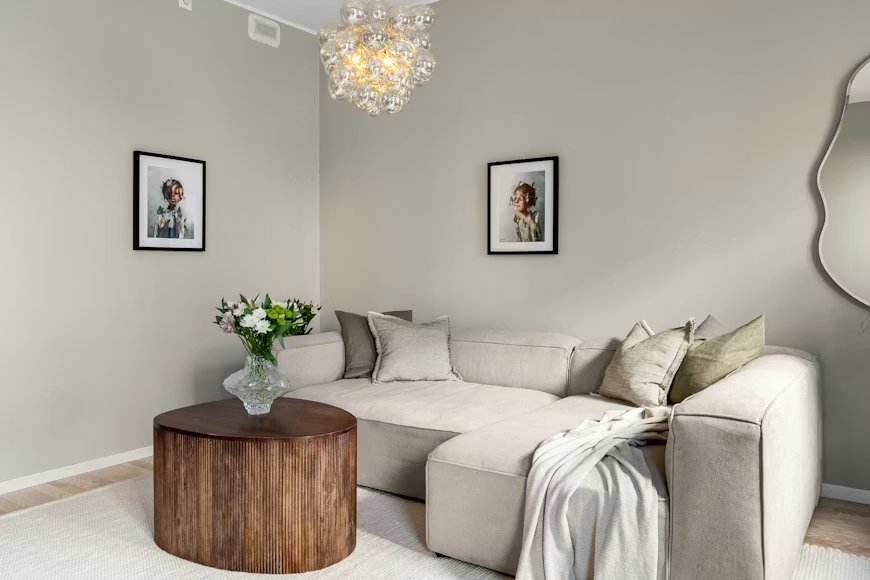
A round ottoman can handle drinks, remotes, and snacks when you create one stable landing zone instead of using the entire surface like a table. Choose one rigid tray with a flat, non-slip base, then place it slightly off-center so the remaining upholstered area stays open for feet or an extra guest.
A rectangular tray is often the most practical choice because it can hold several essentials without taking over the ottoman. Use it for:
- Drinks and coasters
- Remotes or game controllers
- A snack bowl or small plates
- One low decorative item, such as a vase or candle
For summer hosting, keep drinks, napkins, and snacks on the tray, but move hot food to a side table or dining surface. This setup works for a World Cup match, movie night, or relaxed weekend visit while keeping the seating area open.
After guests leave, clear the tray and return remotes, chargers, or small items to the storage compartment. Leave only one or two simple pieces on top between gatherings. A round ottoman works best when it can quickly shift back to what it does best: making the room feel comfortable and easy to use.
Best Layouts for a Round Ottoman Coffee Table
Once you know the right size and how you need the surface to function, place the ottoman where it supports the seating—not simply where the rug looks empty. The best layouts let each primary seat reach the tray comfortably, leave the main path clear, and keep the ottoman centered on the people using it rather than the room’s outer walls.
Small Sofas and Apartment Lounges
With a loveseat or compact three-seat sofa, start with the smallest diameter that passed your tape test. Center the ottoman on the rug, but keep enough space from the sofa arms for each seat to reach the tray comfortably. A side table near one armrest can handle overflow drinks, leaving the ottoman open for feet, snacks, or an extra guest.
Real-life moment: In a compact apartment, a taped 32-inch circle left enough room for a person to walk from the entry to the balcony without brushing against the sofa or turning sideways. The larger 40-inch circle made the room feel like the furniture was controlling the path.
L-Shaped Sectionals With an Open Interior Zone
A round ottoman works best inside the usable interior of an L-shaped sectional, not necessarily in the exact geometric center of the rug. Start by locating the point that both the main sofa and chaise can reach without leaning forward. Then shift the ottoman a few inches toward the longer seating side if that preserves a clearer pass-through to the kitchen or doorway.
In a compact sectional layout that also serves as a work zone, a round coffee table with storage for small spaces may be more practical than a tray-dependent ottoman.
Curved Sofas and Conversation Seating
A round ottoman is a natural match for curved sofas, two sofas facing each other, or lounge chairs grouped around a rug. It gives every seat a similar reach to the center while keeping the arrangement visually open.
For this layout, choose a lower profile and avoid an oversized diameter. The ottoman should connect the seating, not become a barrier between people trying to talk.
Conclusion
The right round ottoman coffee table is not simply the one that looks best in a styled room. It is the one that keeps the seating area comfortable, preserves the main walkway, and supports the routines your household repeats each week. Use the tape test before ordering, set up one stable tray zone, and be honest about how often you need a hard surface for meals or work. When comparing options that fit your layout and daily routine, the fully assembled living-room furniture at POVISON offers a practical place to start.
FAQs About Round Ottoman Coffee Tables
Does a Round Ottoman Need to Match the Sofa?
No. Match the overall visual weight instead. A large, textured sofa pairs well with a simpler ottoman, while a smooth neutral sofa can handle a more tactile fabric. Repeat one element—color family, wood tone, or metal finish—to make the room feel connected.
Can a Storage Ottoman Safely Hold Extra Seating?
Only when the manufacturer states that it is designed for seating or gives a weight limit. Do not assume every storage ottoman can support an adult. Hinges, lids, internal frames, and cushioning vary widely, so check product specifications before using it as a regular seat.
What Rug Size Works Best With a Round Ottoman?
Choose a rug large enough to hold the front legs of the sofa and any nearby chairs. The ottoman should sit fully on the rug with visible space around it. A rug that is too small makes the center piece look disconnected from the seating arrangement.
How Do You Keep a Tray From Sliding on an Ottoman?
Use a tray with a flat, rigid base and add a thin non-slip liner underneath. Avoid lightweight decorative trays with uneven woven bottoms. For drinks, choose a tray with raised edges and keep coasters inside it so they are always ready when someone sits down.


