 By Kelvin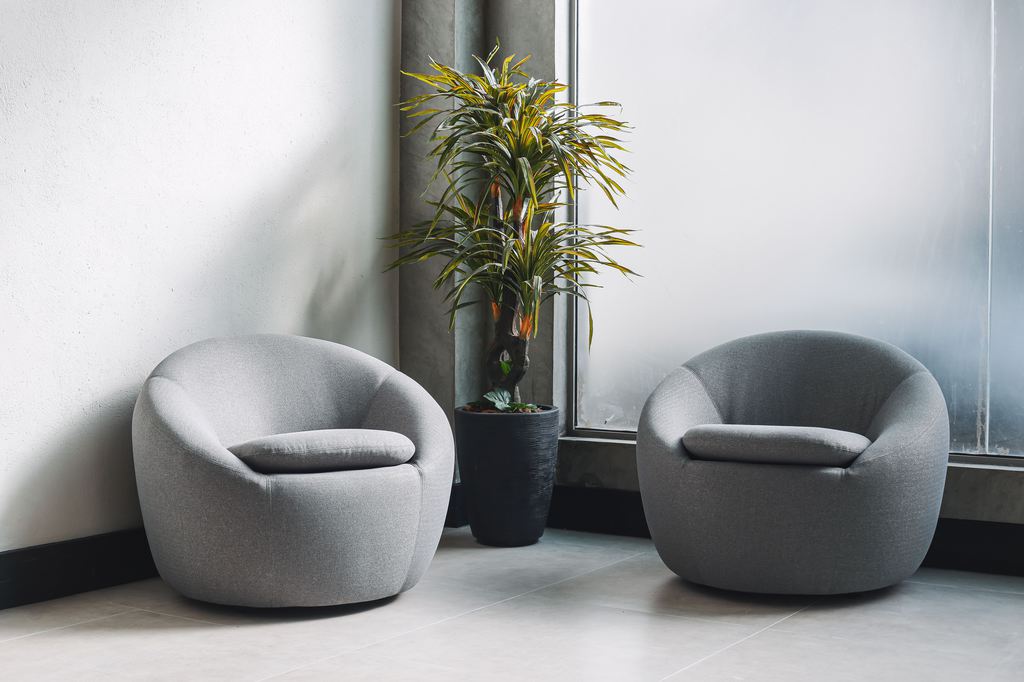
Introduction
What are swivel chairs, and do they actually make a living room easier to use? A swivel chair is a seat that turns on its base, allowing someone to change direction without dragging the whole chair across the floor. That sounds simple, but the decision matters most in rooms where people move between TV time, conversation, a window view, or an open kitchen. The right swivel chair can make one seat more useful. The wrong one can take up valuable room without solving a real layout problem.
Table of Contents
What Are Swivel Chairs?
Swivel chairs have seats that rotate on a central base while the base stays in place. In a living room, they may take the form of a barrel chair, lounge chair, compact occasional chair, or recliner. Some swivel chairs turn freely, while others have a limited rotation range or return to a forward-facing position after use, so it is worth checking the product details before choosing one.
“Swivel” describes how a chair moves, while “accent chair” describes the job it does in the room. A chair can be both: it may add flexible seating, balance a sofa, or give someone an easier way to turn between the TV and conversation area. This distinction is useful when deciding what an accent chair is and where to place one. Unlike office chairs, swivel chairs for living room use are typically upholstered and designed to feel like part of a complete seating group.
When Does a Swivel Chair Make More Sense Than a Stationary Chair?
A swivel chair is useful when changing direction is part of how the room works. It is not automatically better because it moves. Before choosing one, look at what the person sitting there will regularly need to face.
| Question to Ask | A Swivel Chair Makes Sense When… | A Stationary Chair May Work Better When… |
| How many focal points does the seat serve? | It needs to turn between the sofa, TV, view, or kitchen. | It will almost always face one area. |
| How formal is the seating group? | The room is relaxed, flexible, and used by family or guests. | The layout relies on strict symmetry and chairs should stay aligned. |
| What happens around the chair? | Its turning range stays within the seating area. | A door, walkway, side table, or curtain sits too close. |
| What is the main need? | The room needs one adaptable extra seat. | The room needs a fixed visual anchor or occasional seating only. |
For example, a chair placed beside the open end of a sectional may need to turn toward the sofa during a conversation, then toward the TV during a movie. In that spot, the swivel function does real work. A chair placed in a narrow den, where people constantly pass behind it, may be better as a compact stationary piece.
The best choice is not about room size alone. A small room can support a swivel chair when it solves a genuine direction-change problem. A large room may not need one if every seat already faces the same focal point.
How Does a Swivel Chair Change a Living Room Seating Group?
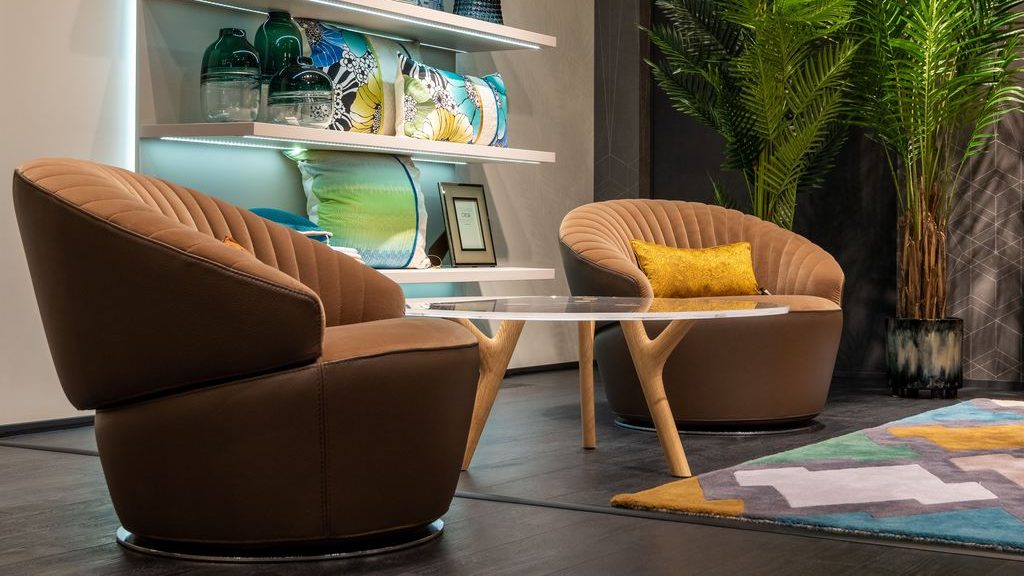
A swivel chair should do more than fill an empty corner. It can soften the edge of a large sofa, help one seating zone connect to another, or create an extra seat without adding another bulky couch. The most useful placement depends on how the room is used across an ordinary week, not how it looks in one staged photo.
Soften the Open End of a Sectional
A sectional can make a room feel comfortable and complete, but its open end may leave the seating group looking unfinished. One swivel chair placed near that opening can create a gentler transition than another straight-backed chair.
The chair does not need to match the sectional exactly. A rounded silhouette can soften a boxy sectional, while a lower-profile chair can keep a deep sofa from making the room feel too heavy. Angle it slightly toward the coffee table when the room is set for conversation, then let the swivel function handle the rest.
Connect the Sofa to an Open Kitchen or Dining Area
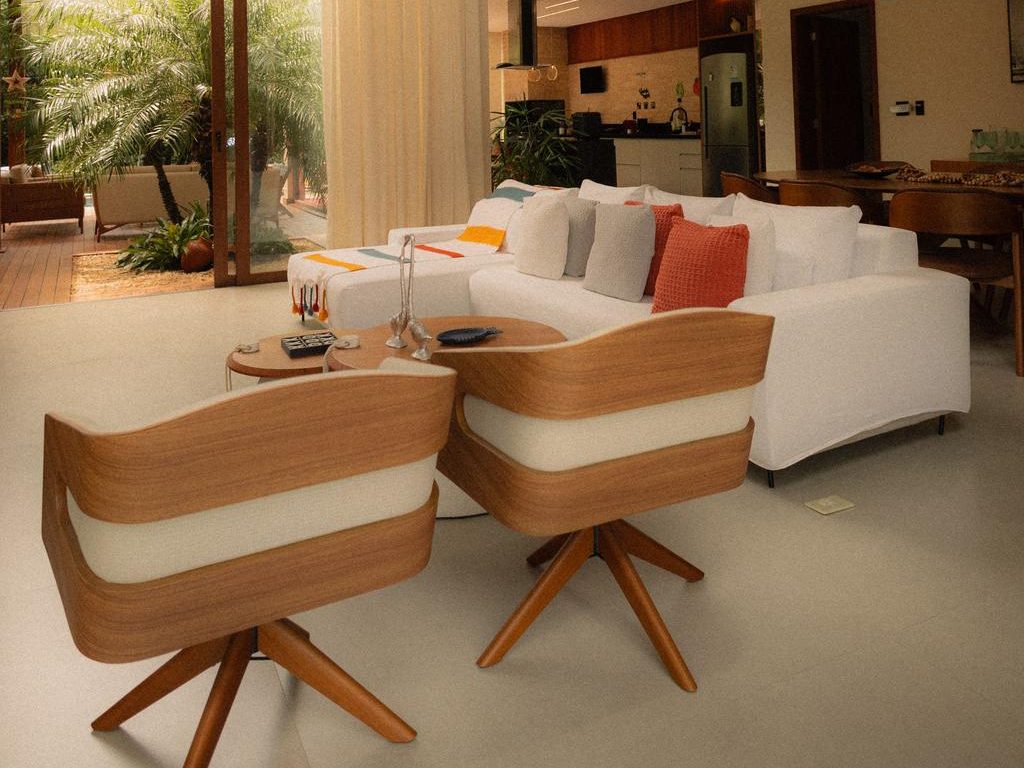
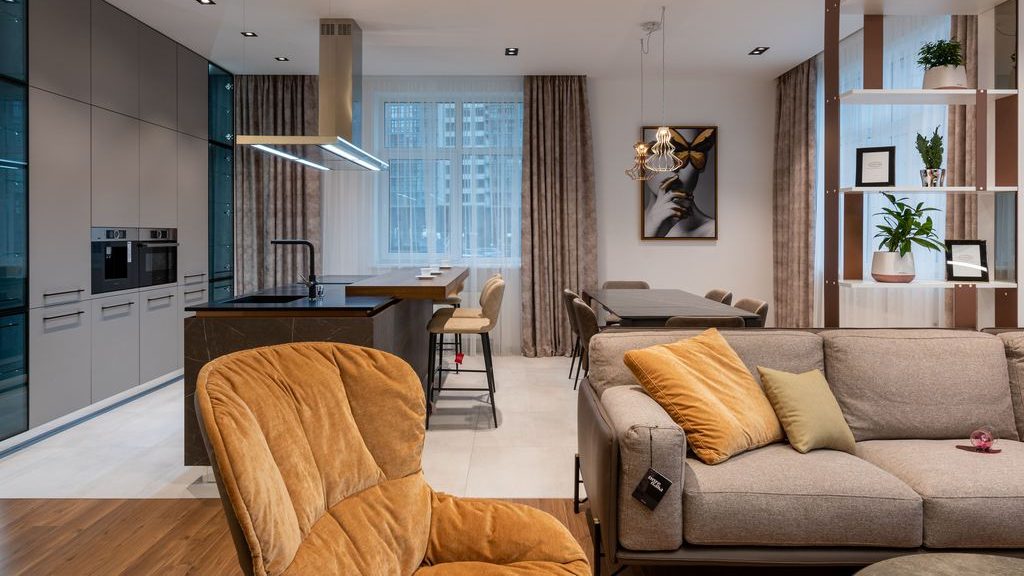
In open homes, the sofa may face a TV wall while the kitchen or dining area sits behind it. A fixed chair can leave one guest facing away from the rest of the room. Swivel chairs for living room layouts work well here because the sitter can join the conversation without moving the furniture.
During a casual dinner, someone can turn toward the kitchen while still remaining part of the living area. Later, the same chair can turn back toward the TV. These living room layout ideas for better flow work best when the main walkway goes around the seating group instead of through it.
Add a Flexible Seat Without Adding Another Sofa
A swivel chair can be a smarter addition than a loveseat when the room needs one more comfortable seat but does not have the width for another large piece. It gives a guest a place to settle in without closing off the coffee-table area or making the room feel like every wall is lined with upholstery.
This is especially useful in a family room where one person reads while others watch a show. The chair can face the lamp and side table during quiet time, then turn toward the group once the room becomes more social.
How Do You Size a Swivel Chair Beside a Sofa?
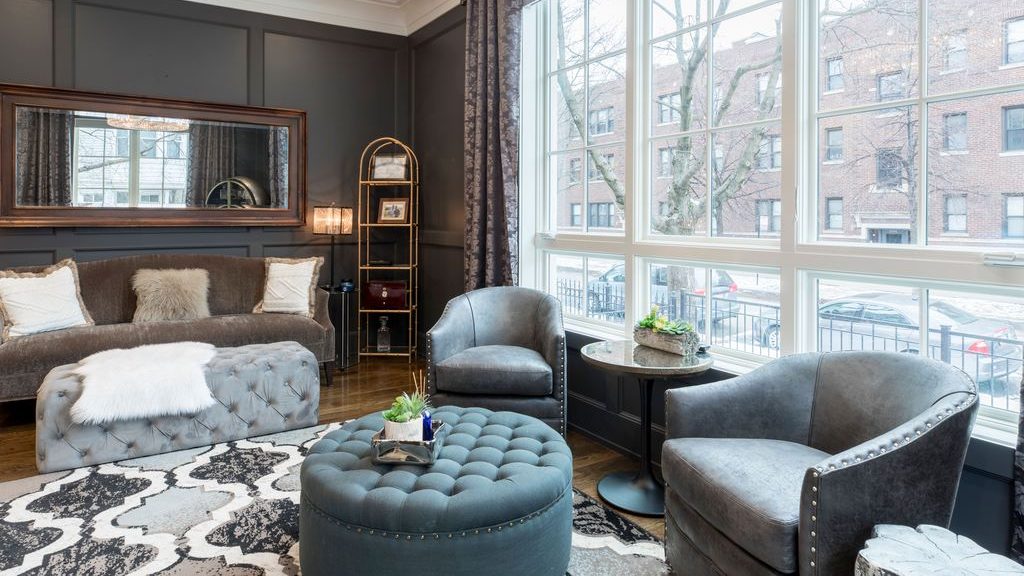
Sizing swivel chairs is not only about whether the chair physically fits. It is about whether its shape, height, and visual weight make sense beside the sofa already in the room.
Start with the outside dimensions, not only the seat size. Thick arms, a deep barrel shape, or a tall back can make a chair look much larger than the same chair appears online. It also helps to understand how wide a standard accent chair is, because outside width and usable seat width are not the same thing.
Check these relationships before ordering:
- Seat height: A chair that sits far higher or lower than the sofa can make conversation feel awkward and the arrangement look disconnected.
- Back height: A tall chair may overwhelm a low, lounge-style sofa, while a very low chair can disappear beside a high-backed sectional.
- Arm bulk: A chair with thick upholstered arms may need more visual breathing room than a slim-legged chair of similar width.
- Overall shape: Curved swivel accent chairs often soften long, straight sofas. Square, structured chairs can balance a softer or more rounded couch.
- Back view: In an open room, people may see the chair from behind. Look for upholstery and a silhouette that still feel finished from every angle.
A small loveseat often looks better with one compact chair than with two oversized barrel chairs. A deep sectional can support a more substantial chair, but it may still need only one. The goal is not perfect symmetry. It is a seating group that feels balanced without crowding the rug, coffee table, or main route through the room.
Should You Choose One Swivel Chair or a Matching Pair?
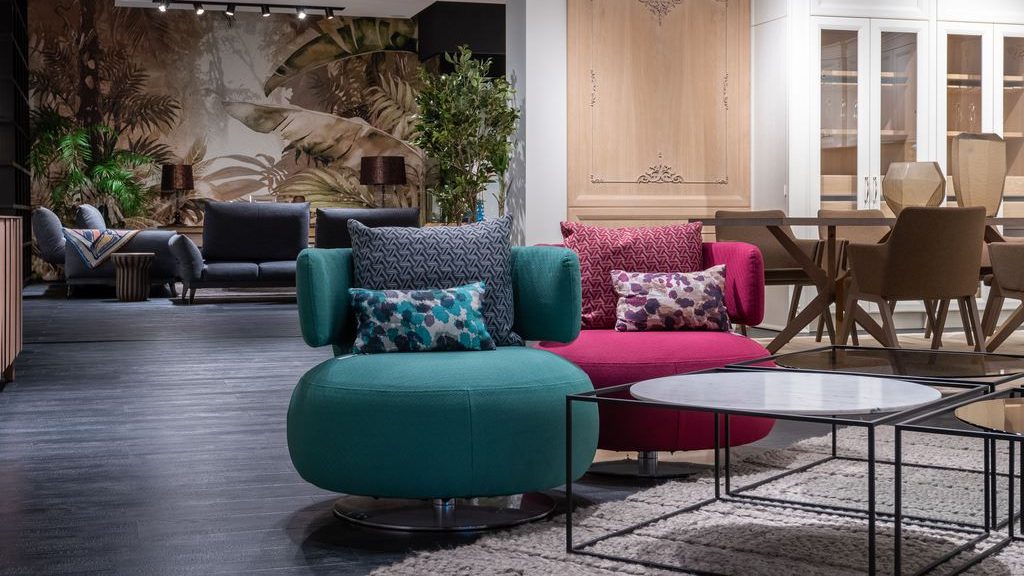
Choose one swivel chair when the room needs a flexible seat in one specific place. This works well beside a sectional, near a window, or at the edge of an open plan where a pair would make the seating group too wide.
Choose a pair when the sofa is the clear center of the room and there is enough space to create a full conversation area across from it. Two chairs can frame a coffee table nicely, especially in a larger room with a rug that grounds all the front legs.
A pair is usually not the right answer when:
- The main path to another room cuts through the seating group.
- The sofa is already very large or has a chaise.
- The chairs would force the coffee table too close to the sofa.
- One chair would sit in front of a window, door, or storage cabinet.
A matching pair does not have to be identical in fabric, but the chairs should share a visual connection. Similar seat heights, related colors, or matching silhouettes can make them feel intentional without looking overly coordinated.
What Type of Swivel Chair Fits the Way You Sit?
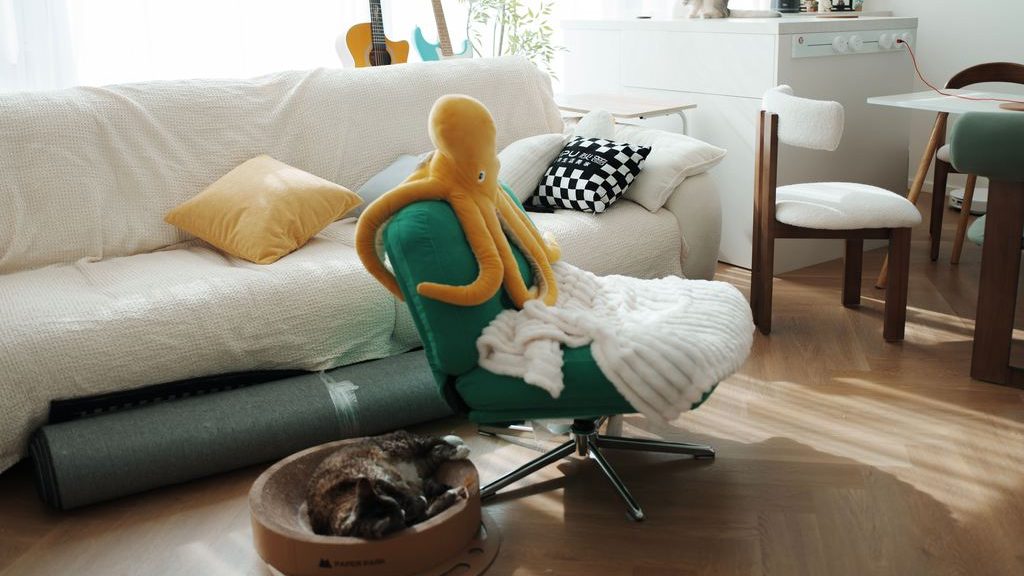
Different swivel chairs solve different problems. Choose the type based on how the seat will be used most often, rather than buying a mechanism that looks impressive but does not support your routine.
| Type of Chair | Best For | Consider It When… |
| Standard swivel accent chair | Conversation, TV viewing, and flexible seating | You want one chair that can turn toward more than one area. |
| Swivel barrel chair | Softer shapes and a more enveloping seat | Your sofa is straight-lined or your room needs a rounded counterpoint. |
| Swivel glider | Quiet movement in a reading area or nursery | Gentle back-and-forth motion matters as much as turning. |
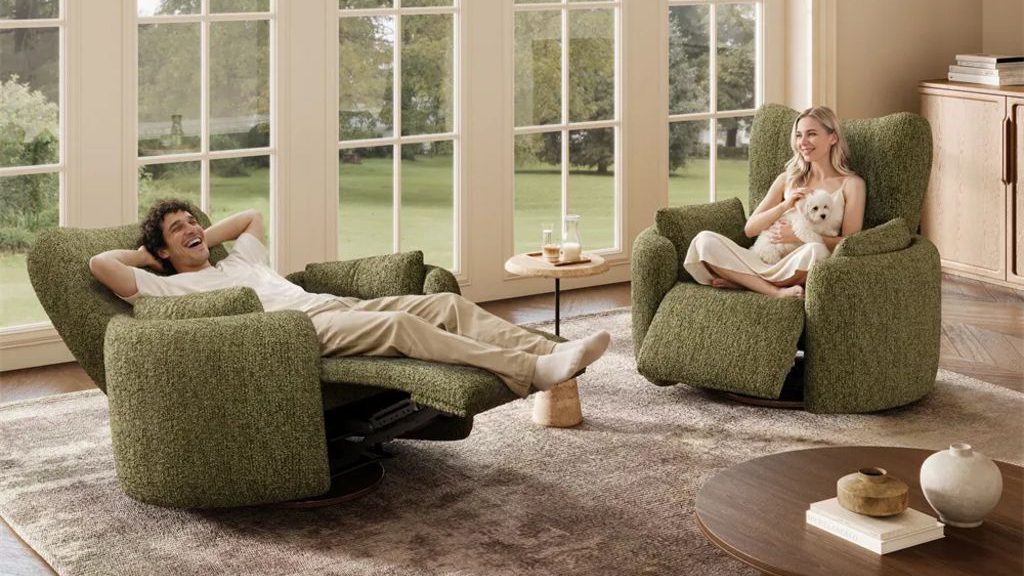
| Swivel recliner chair | Long TV sessions, reading, and deeper lounging | You need rotation plus supported reclining. |
Swivel recliner chairs belong in a different decision category from occasional chairs. They need more attention to mechanism, recline range, and daily comfort. A swivel recliner buying guide for modern living rooms is more useful once you know that reclining—not just rotating—is part of the way you want to sit.
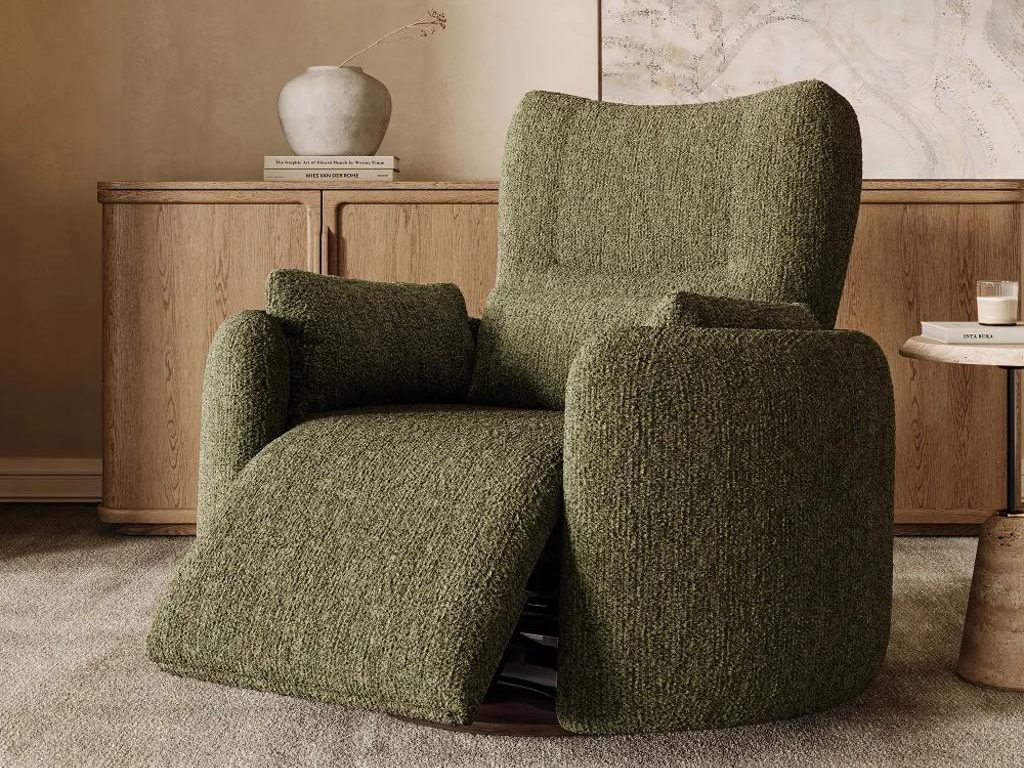
For a family room where one chair needs to handle a movie, a book, and a conversation at the kitchen island, the Oliver-Swivel Power Barrel Recliner offers a 270° swivel and a 90°–145° electric recline. Its 43.3-inch-wide, 23.5-inch-deep chenille seat gives one person a substantial lounge spot, so it belongs beside a roomy sectional or within an open seating zone rather than in a narrow pass-through.
Conclusion
What are swivel chairs really for? They are not simply chairs that spin. They are seats that make sense when one person needs to participate in more than one part of the room without moving furniture around. Choose one when it improves the relationship between the sofa, TV, conversation area, or view. Choose a stationary chair when fixed placement and visual order matter more. Once the chair has a clear role, the right size, shape, and level of motion become much easier to judge.
FAQ
Can a swivel chair sit on an area rug?
Yes, provided the rug lies flat and the chair’s base can rotate without catching on a raised edge or shifting the rug. A dense low- to medium-pile rug with a non-slip pad is usually easier to use than a thick, loose surface. Check the base shape and rug texture together before ordering.
Will a swivel chair scratch hardwood floors?
It can if dust or grit collects beneath the base, or if an unprotected metal edge repeatedly rubs against the floor. Check whether the chair has protective glides, and keep the contact area clean. A thin rug can also help when the chair will be turned frequently in the same spot.
How can I tell whether a swivel chair will feel stable?
A stable swivel chair should remain level when someone sits down, shifts weight, and turns normally. Before buying, check the listed weight capacity, look for a broad or well-supported base, and read reviews for comments about wobbling. Avoid using a chair on an uneven rug or floor without correcting the surface first.
What upholstery is most practical for a high-traffic swivel chair?
Performance fabric is often a practical choice for busy living rooms because it balances comfort with easier spot cleaning. Leather and microfiber leather can work well when quick wipe-down care is important. Loose weaves and heavily textured fabrics may need more caution around pets, rough denim, or frequent snagging.
Do swivel chairs become noisy over time?
They can, especially when dust builds up around the base, the chair sits unevenly, or a moving part begins rubbing. A light squeak may come from the floor or rug rather than the mechanism. Persistent grinding, resistance, or wobbling should be addressed through the manufacturer’s care instructions or service team.
Can a swivel chair base be repaired or replaced?
Sometimes, but only if the manufacturer offers replacement parts or service for that model. Before purchasing, review the warranty and ask whether the swivel mechanism can be serviced separately from the upholstery. A sealed or unsupported base can be more difficult and costly to repair later.
What should I check about delivery before ordering a swivel chair?
Confirm whether the chair arrives fully assembled, partially assembled, or requires in-home setup. Then measure doorways, elevator openings, stair turns, and the path from the entry to the room. A chair may fit beside the sofa but still be difficult to bring inside if its back or base cannot be separated.


