 By Kelvin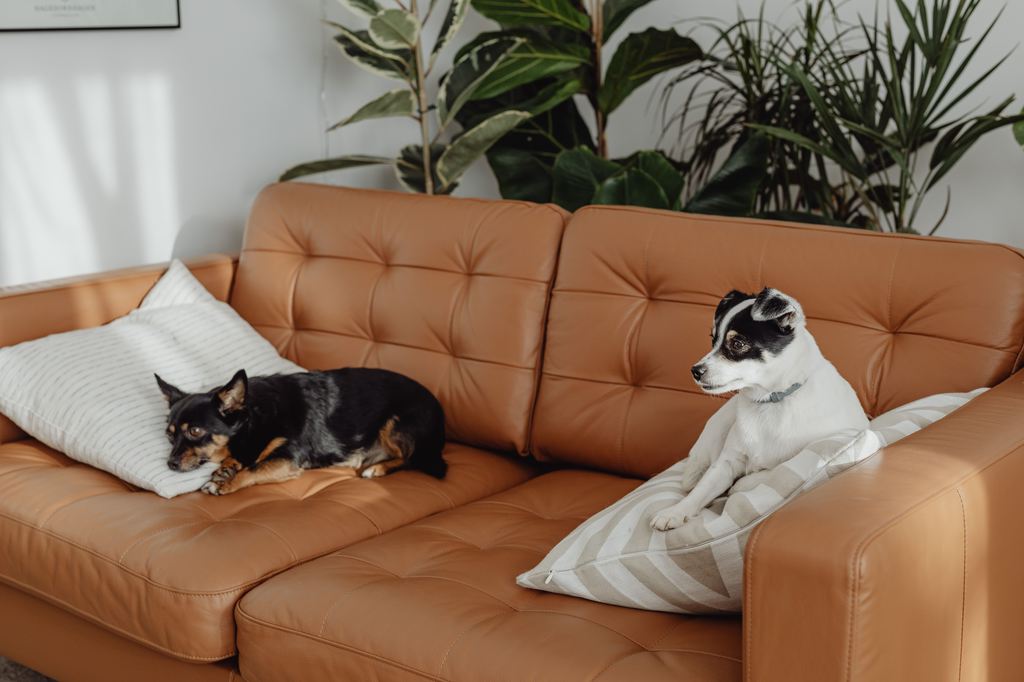
Introduction
Choosing between a performance fabric sofa vs leather sofa is less about which material sounds tougher and more about which one matches your family’s daily messes. Performance fabric usually suits homes with frequent spills, active children, or cats. Protected leather is often easier for pet hair, dust, odors, and fast wipe-down cleaning. This guide compares spills, scratches, maintenance, material grades, and visible aging so you can choose by real household behavior instead of a broad fabric-versus-leather rule.
Table of Contents
What Is Better for Families With Kids and Pets?
For most busy households, performance fabric is the more forgiving everyday option. Protected leather can be stronger when shedding, surface dirt, or odor control matters more than claw marks or soft texture. The answer to performance fabric vs leather sofa depends on the problem your family handles most often.
| Family Situation | Better Direction | Why | Verify Before Buying |
| Toddlers and frequent drink spills | Performance fabric | More tolerance for repeated small accidents | Care code, stain treatment, removable covers |
| Heavy-shedding dogs | Protected leather | Hair stays on the surface | Finish type, seams, scratch policy |
| Cats that climb or knead | Tight-weave performance fabric | Lower snag and scratch risk | Short pile, tight weave, swatch texture |
| Dust or odor concerns | Protected leather | Surface debris wipes away faster | Cushion gaps and non-leather panels |
| Light colors and soft lounging | Performance fabric | More color and texture choices | Cleaning limits and stain resistance |
Why Material Grade Matters More Than the Label
The useful comparison is not all fabric against all leather. It is well-specified performance upholstery against leather finished for regular use. Before choosing, identify how the surface is made, what cleaning it allows, and which damage the warranty excludes.
What Should You Check on Performance Fabric?
Performance fabric is a category, not one fiber. A dense, short-pile surface may resist snagging, while a loose, textured weave can still catch claws or hold crumbs.
Check:
- Fiber composition and weave
- W, S, W/S, or X care instructions
- Whether stain resistance is inherent or applied
- Abrasion and pilling information
- Whether covers are removable and washable
- Restrictions on protector sprays or household cleaners
When a listing uses “performance” without explaining what it resists, understanding what performance fabric is and how it works helps separate measurable features from a general marketing label.
What Should You Check on Leather?
Protected or pigmented leather is usually easier for family use than delicate aniline leather.
Confirm the grade, finish, care instructions, and which panels use real leather. Ask whether pet scratches, dye transfer, sunlight fading, or incorrect conditioning are excluded. Avoid treating bonded leather as a lower-cost version of durable top-grain leather; it can age very differently.
Which Material Handles Family Messes Better?
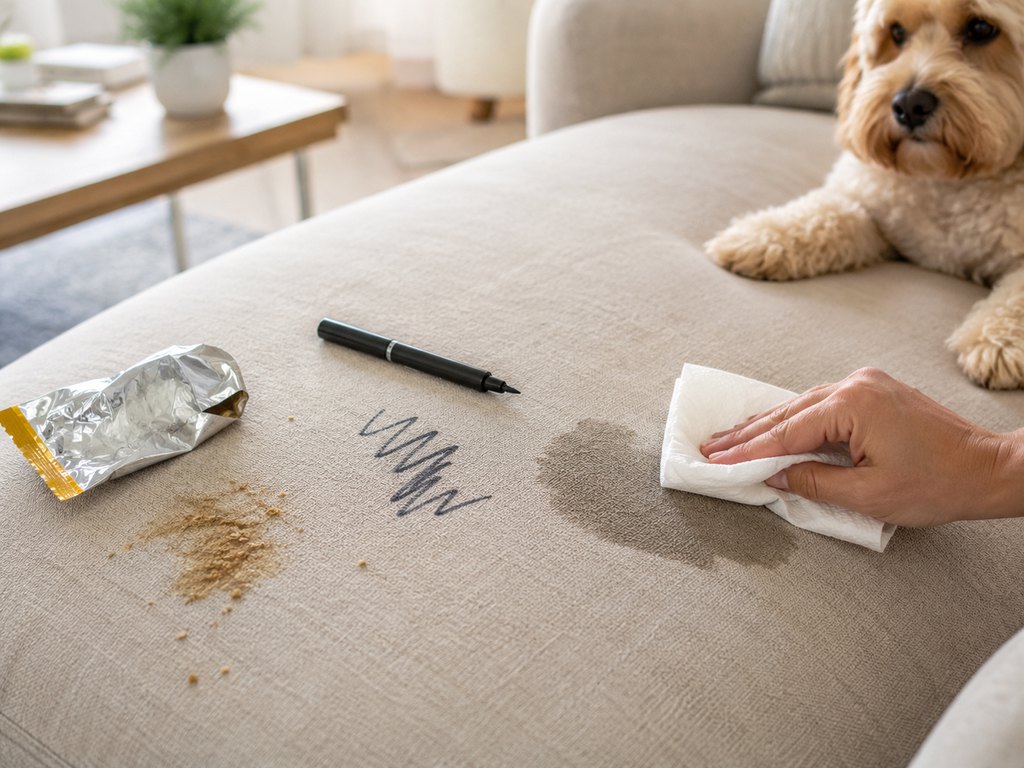
Different accidents create different problems. Water-based drinks test absorption speed. Grease and ink test stain release. Pet accidents test seams, cushion inserts, and odor control. The easiest sofa material to clean is the one that reduces the risk created by your most common accident.
Everyday Liquid Spills
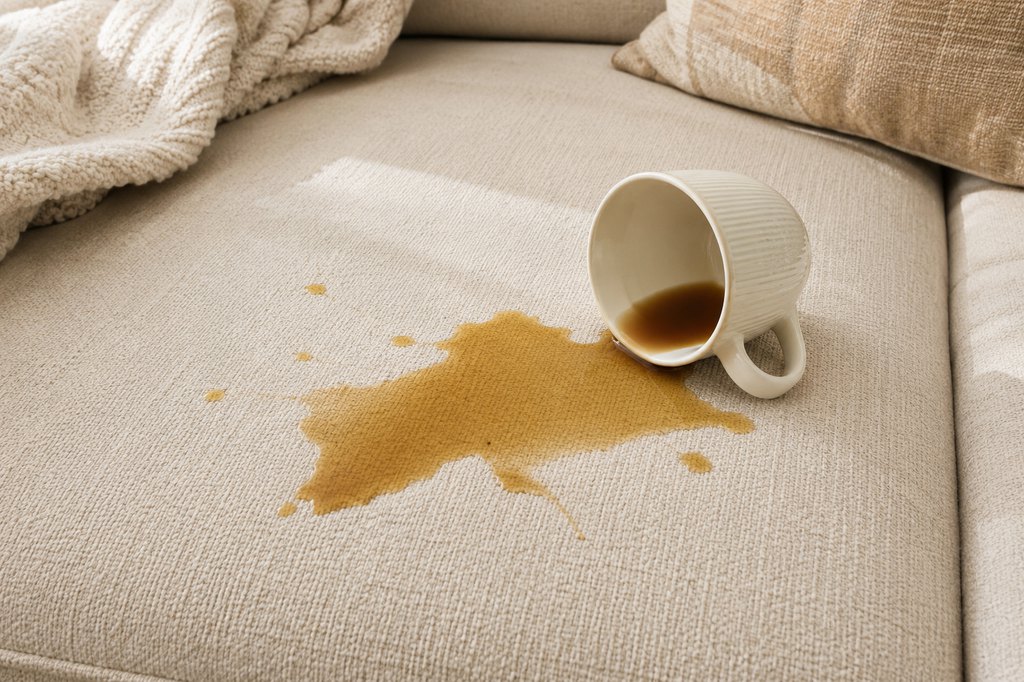
Performance fabric can be easier when juice, milk, soda, or coffee beads long enough to blot. The advantage disappears if liquid immediately enters the weave or if rubbing pushes it deeper. Follow the care code rather than assuming water is safe.
Protected leather is often faster to wipe, but liquid can move into stitching or cushion gaps. Clean the center first, then check the seams and space between cushions.
Grease, Ink, and Pet Accidents
Grease can cling to fibers and may darken absorbent leather. Ink, denim dye, sunscreen, and cosmetics can mark either surface and should not be treated with improvised cleaners. Pet urine is especially time-sensitive because odor may reach foam or backing even when the surface looks clean.
Removable covers improve access only when the manufacturer permits washing.
Hair, Dust, and Odors
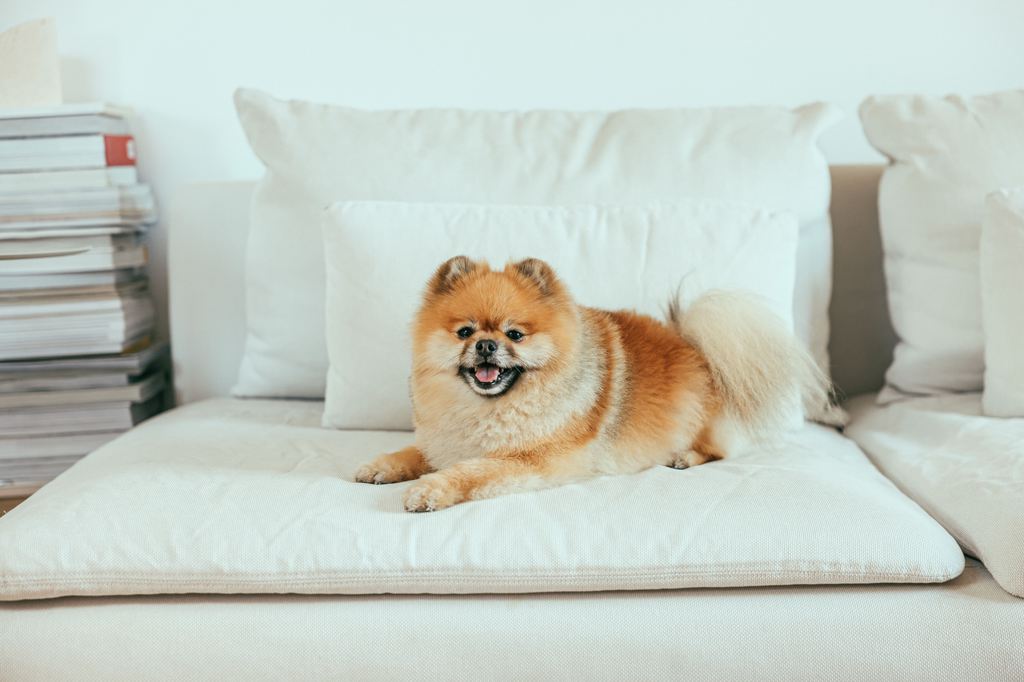
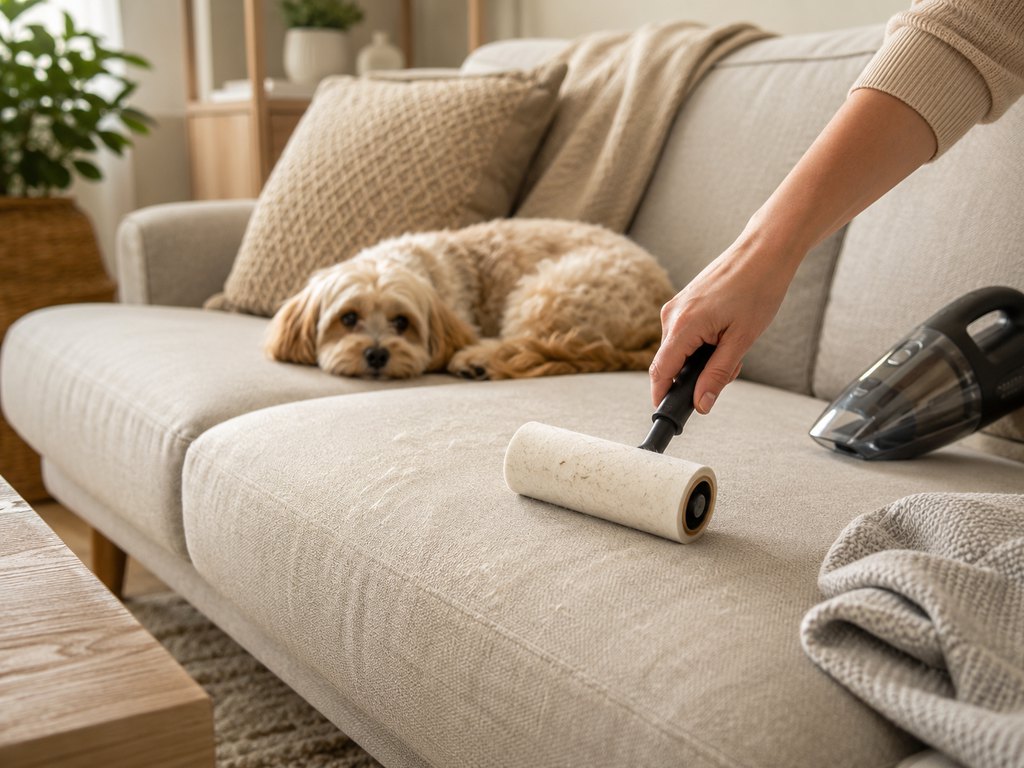
Leather usually releases loose pet hair faster because strands stay on top. Performance fabric varies: a smooth, short surface may vacuum easily, while textured upholstery may hold fur at seams.
Even wipeable leather cannot prevent smells if liquid reaches the insert. In fabric sofas, regular vacuuming and fast blotting matter more than the words “stain-resistant.”
How Do Kids and Pets Change the Choice?
Children, dogs, and cats wear a sofa differently. Dogs create fur, body oils, muddy paws, and pressure at cushion edges. Cats create punctures and snags. Children add repeated spills, crumbs, jumping, and frequent spot cleaning. Match the material to the dominant behavior.
What Works Better for Dogs?
Protected leather suits calmer dogs that shed heavily because hair and light dirt come off quickly. It is less reassuring for large dogs that launch onto the seat or turn sharply with untrimmed nails.
Tight-weave performance fabric may better handle repeated climbing, but it should have a short surface that does not trap hair. Households balancing fur, claws, drool, and muddy paws can compare the best sofa fabric for dogs with different wear risks instead of choosing only by breed size.

What Works Better for Cats?
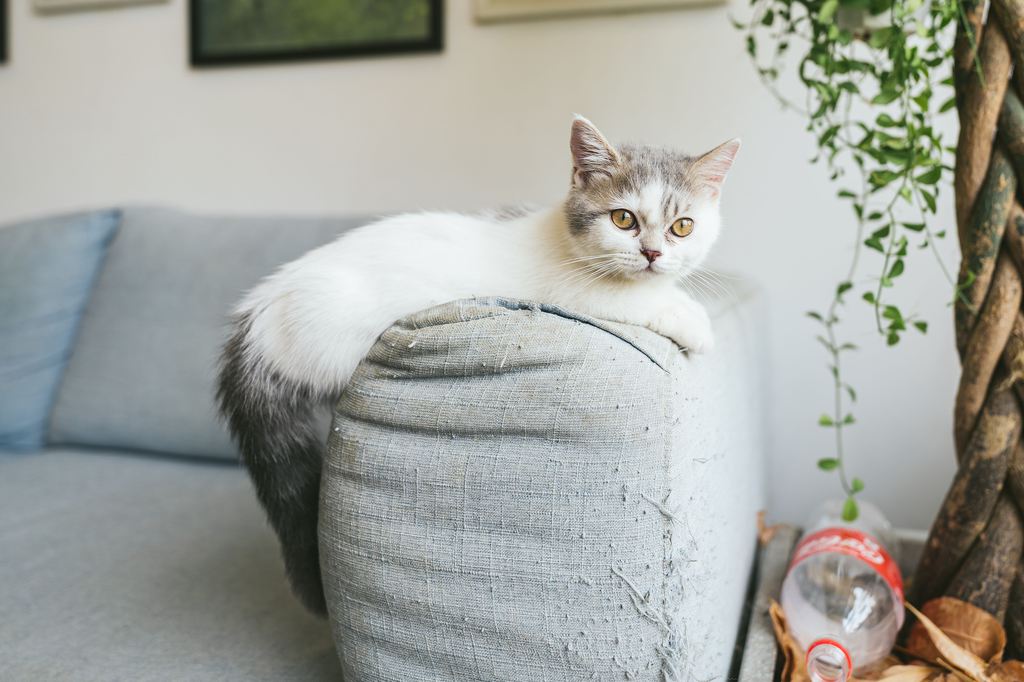
Smooth leather can show punctures and long claw lines. Loose fabric can pull into loops or frayed threads. A tight, low-pile performance fabric is usually the lower-risk direction when a cat regularly jumps, kneads, or uses sofa corners for traction.
Place a scratching post near the cat’s existing route. A washable throw over its preferred sleeping area can also reduce body oil and repeated friction.
What Works Better for Kids?
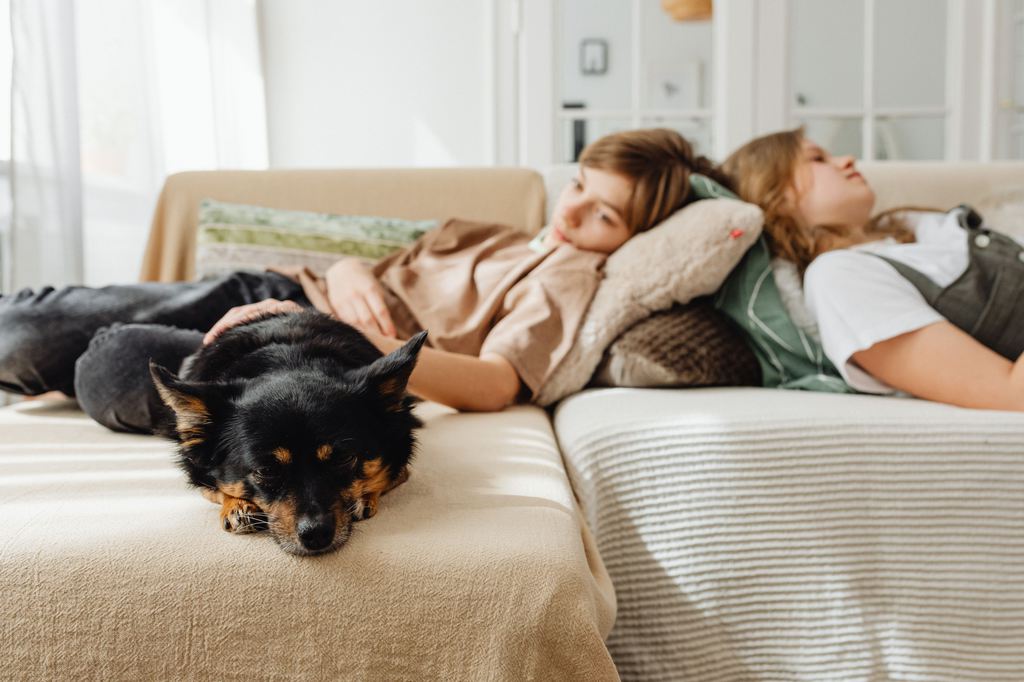
For children, upholstery is only one part of durability. Firm cushion edges, recoverable fill, removable covers, and accessible gaps can matter as much as stain resistance. Fabric may feel softer for play and naps, while leather makes loose crumbs and sticky fingerprints easier to see and remove.
A child spills cereal milk during breakfast, and the dog climbs onto the same cushion ten minutes later with damp paws. In that household, a forgiving surface and easy access around seams may matter more than whether the material looks pristine in a showroom.

Which Material Creates Less Weekly Work?
Weekly maintenance is more useful than an “easy-clean” promise. Performance fabric commonly needs vacuuming along seams, prompt spot treatment, and occasional deeper cleaning. Leather usually needs dusting or wiping, plus manufacturer-approved care.
Choose the routine your household will actually follow:
- Performance fabric when regular vacuuming and careful blotting feel manageable
- Protected leather when quick surface wiping matters and periodic care is acceptable
- Removable covers when deep-cleaning access matters more than a tailored look
- A material whose approved cleaners are easy to keep on hand
- A surface suited to the sunlight, heat, and pet traffic in its exact location
The lower-maintenance sofa is the one whose instructions fit your habits. A material that requires immediate treatment or specialist cleaning may become frustrating if spills usually sit unnoticed until the end of the day.
What Wear Will Your Family Notice First?
Both materials age, but they show different evidence of use. Instead of asking which sofa will look new forever, decide which type of aging you can accept.
How Does Performance Fabric Age?
Performance fabric may show pilling, flattened pile, embedded hair, stain shadows, or wear along piping and corners. Light, textured colors can disguise crumbs and lint but may make isolated dark stains more visible.
Inspect front seat edges, arm corners, and the cushion used by the same person or pet. Rotate reversible cushions when the design allows it.
How Does Protected Leather Age?
Leather commonly develops creases, sheen changes, scratches, and color variation at frequently touched areas. Textured or naturally varied surfaces may hide minor marks better than smooth, uniform leather.
Families that like patina may accept these changes. Those expecting a flawless surface may find leather stressful with active pets. Direct sunlight and nearby heat can also concentrate visible aging.
How Should You Choose the Right Sofa Material?
Start with the accident or behavior that happens every week, not the rare event that sounds most dramatic.
- Name the main risk: spills, claws, shedding, odor, or repeated cleaning.
- Compare only materials with clear grades, finishes, and care instructions.
- Check seams, cushion gaps, covers, and non-upholstery panels.
- Decide which visible aging you can accept.
- Confirm the maintenance routine before choosing a color.
- Review exclusions for pets, stains, sunlight, and cleaning products.
Upholstery should also be considered with support, room use, and cleaning access when deciding how to choose a sofa for family life. A durable surface cannot compensate for cushions that lose shape or a layout that blocks movement.
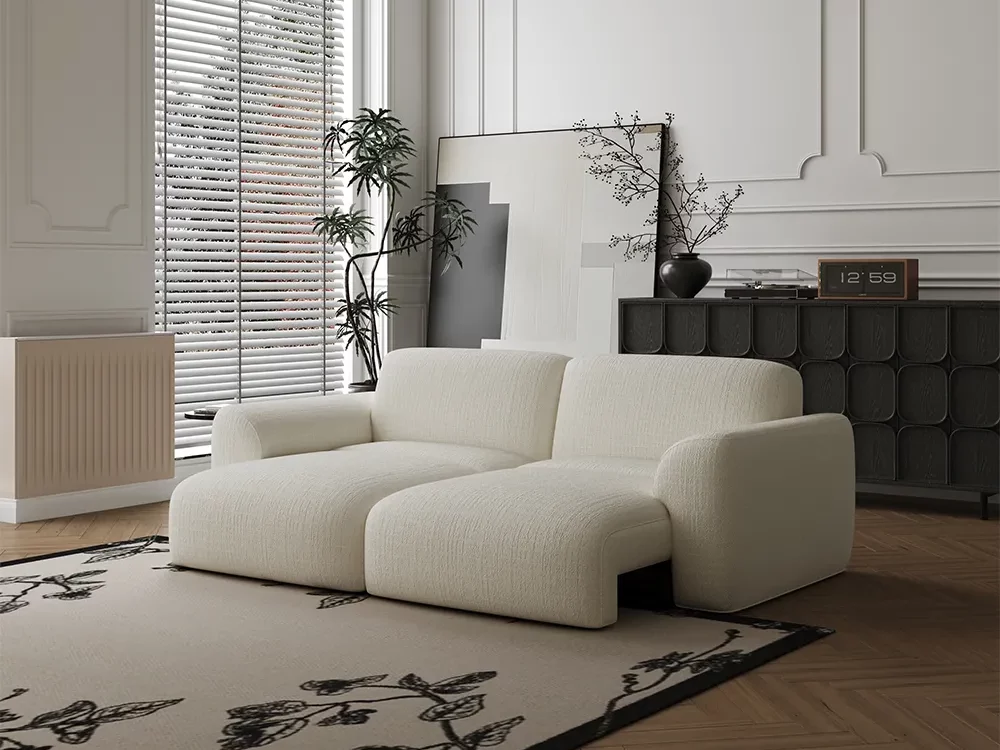
For families who have identified spills, pet claws, and flexible lounging as their main concerns, the Aurora Power Sofa Bed offers a relevant performance-fabric option. Its 100% polyester chenille is described as water-resistant and scratch-resistant, while the seat extends from 27 to 45.5 inches for everyday sitting or deeper lounging. The light upholstery still requires spot cleaning and protection from direct sunlight and heat.
Which Product Claims Should Families Question?
Material descriptions can sound reassuring without providing enough information to make a purchase decision. Families should look for specifications that explain what the upholstery resists, how it must be cleaned, and what types of damage remain possible.
Ask for clarification when a listing:
- Says “pet-friendly” without identifying scratch, stain, hair, or moisture performance
- Says “performance fabric” without fiber, care, or testing information
- Says “genuine leather” without the grade, finish, or covered panels
- Calls a surface waterproof without explaining seams and inserts
- Lists removable covers without saying whether they are machine-washable
- Promises easy cleaning but excludes common stains from the warranty
The performance fabric vs leather sofa decision should be based on specific construction and care information, not category labels alone.
Conclusion
The performance fabric vs leather sofa decision should begin with the mess your family manages most often. Tight-weave performance fabric usually suits active children, cats, and repeated small spills, while protected leather favors quick hair removal, surface wiping, and a structured appearance. Neither label guarantees durability. Compare fabric construction or leather finish, cleaning access, seams, warranty limits, and the aging you can accept. The right sofa is the one your household can maintain without treating every accident as an emergency.
FAQ
Should I Request an Upholstery Swatch Before Ordering?
Yes, especially for a light-colored sofa, textured weave, or home with cats. Rub the swatch with a dark cloth and lightly press it with a clean fingernail. When testing is permitted, place one water drop near the edge to check color transfer, snagging, and absorption speed.
Do Removable Covers Always Make a Sofa Easier to Clean?
No. Some removable covers are designed for cushion adjustment or professional cleaning rather than machine washing. Confirm the approved washing and drying methods, whether cleaning affects the stain-resistant finish, and whether replacement covers are available when one child’s or pet’s preferred cushion requires more frequent care.
What Sofa Color Hides Pet Hair and Crumbs Better?
Choose a mid-tone color reasonably close to your pet’s coat. Greige, mushroom, oatmeal, warm gray, and softly heathered fabrics usually disguise mixed light and dark debris better than solid white or black. Avoid deeply looped textures chosen only for camouflage because they may trap hair and complicate vacuuming.
Are Loose or Fixed Cushions Better for Kids and Pets?
Loose cushions can be lifted for cleaning, rotated to distribute wear, and replaced individually when replacements are available. Fixed cushions create fewer gaps for crumbs, toys, and pet hair but may limit access after spills reach the edges. Choose according to whether cleaning access or debris prevention matters more.
Can I Apply Fabric Protector to a New Performance Sofa?
Only when the manufacturer approves it. An aftermarket spray may change the upholstery’s color, texture, or breathability and interfere with its factory-applied treatment. It may also affect warranty coverage. Test any approved product on a concealed area before applying it across the visible cushions.


[…] still deciding between upholstery categories face a different decision in a performance fabric vs leather sofa for families with kids and pets; once performance fabric is already the goal, the mechanism should earn its extra cost and […]
[…] nearly pristine is important, stop searching for a supposedly tougher leather grade and compare performance fabric vs leather for families with kids and pets […]