 By Kelvin
Introduction
If you are searching for how to protect leather furniture from dogs, you probably want a realistic answer: yes, leather can work in a dog-friendly home, but it is not dog-proof. The biggest risks are usually claws, jumping, drool, muddy paws, and repeated wear in one favorite spot. This guide focuses on practical protection, not just cleaning after damage happens. You will learn which dog behaviors harm leather most, how to protect high-contact areas, when a leather couch with dogs makes sense, and when pet-friendly sofas may be easier for daily life.
Table of Contents
What Dog Damage Should You Protect Leather From First?
Before buying covers or leather care products, identify the exact type of damage your dog is likely to cause. A calm senior dog creates different risks from a puppy that digs before lying down. This section helps you prioritize the right protection instead of treating every dog problem the same way.
| Dog behavior or mess | What it can do to leather | Best first response |
| Long nails | Surface scratches, scuffs, finish marks | Trim or grind nails regularly |
| Jumping on and off | Worn cushion edges and armrests | Protect entry spots with a throw |
| Digging before lying down | Deeper claw marks in one area | Use a fixed blanket on the favorite spot |
| Drool and body oil | Dull patches or sticky buildup | Wipe quickly with a dry microfiber cloth |
| Muddy paws | Dirt in seams and surface staining | Wipe paws at the door and clean seams weekly |
| Accidents | Odor, staining, finish damage | Blot immediately and use leather-safe cleaner |
| Chewing | Tears, punctures, structural damage | Address chewing first before relying on leather protection |
The main takeaway is simple: nail care and spot protection matter more than covering the entire room. If your dog mostly naps quietly, a washable throw on the favorite cushion may be enough. If your dog launches onto the sofa after every walk, the front cushion edge and armrest need more attention.
How Do You Protect Leather Furniture from Dogs Every Day?
The best daily plan is simple enough to repeat. If protection feels complicated, it usually gets skipped. Instead of waiting for visible scratches or stains, build small habits around nails, high-contact zones, dog behavior, and low-moisture cleaning.
Keep Nails Short and Smooth
The clearest answer to how to protect leather furniture from dogs is to start with their nails. Long or sharp nails can mark leather when a dog jumps, stretches, turns around, or digs into the cushion before settling down.
Trimming helps, but grinding or filing creates smoother nail tips. Freshly clipped nails can still have sharp edges. A practical test: if you hear clicking on hard floors, or if the nail catches lightly when you run a finger over it, it can catch leather too.
For active dogs, check nails weekly even if you do not trim them every week. A quick nail check can prevent weeks of new scratches.
Protect High-Contact Areas, Not the Whole Sofa
You do not need to hide a beautiful leather sofa under a full cover all year. Most damage happens in a few repeated places: the cushion your dog always chooses, the front edge used for climbing, the armrest used as a step, and the corner where your dog curls up.
Use washable throws or pet blankets only where contact is frequent. Choose tight-weave fabrics that do not snag on nails. Avoid chunky knits, loose loops, rough backing, or dark covers that may transfer dye onto light leather.
In a real living room, this might look like one neutral throw tucked over the left cushion because that is where your dog sleeps during movie nights. The rest of the sofa can stay uncovered.

Give Your Dog a Better Resting Spot Nearby
Trying to keep a social dog far away from the sofa often fails because the dog wants to be close to the family. A better setup is to place a dog bed, mat, or washable blanket beside the sofa, not across the room.
Add a familiar toy or blanket so the spot feels intentional. Praise your dog when they use it. This is especially helpful for dogs that jump up because they want attention, not because they dislike their own bed.
For small or senior dogs, a low pet ramp can also reduce claw pressure from climbing and jumping.
Wipe Hair, Drool, and Paw Marks Before They Build Up
Leather is easier to wipe than many fabrics, but it still needs gentle care. Use a dry microfiber cloth for fur, dust, and light drool. For seams and crevices, use a soft brush vacuum attachment on a low setting.
Avoid soaking leather. Too much water can leave marks, weaken finishes, or push dirt deeper into seams. When cleaning needs more than a light wipe, the safest next step is learning how to clean a leather couch without damaging it, especially if you are dealing with paw stains, food residue, or unknown leather finishes.
Use Leather-Safe Conditioner or Protectant Carefully
Leather conditioner can help prevent dryness, but more product is not always better. Always check the care label first, then test any cleaner, conditioner, or protectant on a hidden area.
Do not use shoe polish, car leather products, alcohol-heavy wipes, bleach, ammonia, vinegar, or all-purpose sprays unless the furniture care instructions specifically allow them. These products can strip finishes, leave residue, or change the leather surface.
Which Leather Furniture Areas Need the Most Protection?
Many people ask how to protect leather couch from dogs and assume the answer is a full slipcover. In most homes, targeted protection works better. It keeps the room looking normal while guarding the places dogs actually touch the most.
Focus on these high-risk areas:
- Front cushion edge: where dogs push off when jumping down.
- Armrests: often used as steps, headrests, or lookout spots.
- Favorite nap corner: where body oil, drool, and friction collect.
- Cushion seams: where hair, grit, and crumbs settle.
- Back cushion top: common for small dogs who like watching out the window.
- Side near doors or windows: high excitement can lead to sudden jumping.
If your dog runs to the window whenever a delivery truck passes, do not place the leather sofa directly in that trigger zone. Moving the sofa a few inches, adding a washable rug nearby, or placing a dog bed between the sofa and window can reduce repeated claw impact.
What Type of Leather Works Best in a Dog Home?
Material choice matters, especially if you are buying a new leather sofa with dogs already in the house. The word “leather” alone is not enough. The finish, surface protection, color, and your dog’s behavior all affect how the furniture will hold up.
| Leather type or finish | Dog-home suitability | Why it matters | Best for |
| Protected or pigmented leather | Strongest everyday option | A protective surface coating helps resist stains and makes wiping easier | Homes with calm to moderately active dogs |
| Top-grain leather with protective finish | Good long-term choice | It offers a real leather feel with better durability when cared for properly | Dog owners who want leather but can maintain nails and cleaning |
| Semi-aniline leather | Works with caution | It has a more natural look but less surface protection than pigmented leather | Calm dogs that do not dig, jump hard, or drool heavily |
| Pure aniline leather | Not ideal for most dog homes | Scratches, stains, and moisture marks show quickly | Low-traffic rooms or pet-free areas |
| Bonded leather | Usually not recommended | It can peel, crack, or break down faster under daily pet use | Short-term or low-use furniture only |
| Faux leather / PU leather | Case by case | It wipes easily but may puncture, peel, or show claw marks that are hard to repair | Homes prioritizing easy cleanup over long-term repairability |
Medium brown, cognac, caramel, and lightly textured finishes usually hide small scuffs better than bright white or very dark black leather. If your dog has light fur, black leather may show hair every day. If your dog has dark fur, cream leather may show every mark.
A leather couch with dogs is most realistic when the dog is calm, nails are maintained, and the leather has a protective finish. If your dog digs hard before lying down, no leather finish should be treated as scratch-proof.
What If Your Dog Already Scratched the Leather?
Small marks do not always mean the sofa is ruined. The right response depends on whether the scratch is only on the finish or has cut into the leather itself. Do not start with aggressive scrubbing or random repair products.
- Light surface scuffs: Wipe away dust first, then gently buff the area with a clean microfiber cloth. Some minor marks on protected leather may blend after conditioning, but test the conditioner in a hidden spot first.
- Visible color loss: Use a leather repair balm or color-matched kit only if it matches the leather type and finish. A mismatched product can make the damaged area more noticeable.
- Deep cuts or exposed backing: Call a professional instead of trying to fill or recolor the damage yourself. Deep scratches usually affect more than the surface finish.
- Peeling or cracking: Check whether the material is bonded leather or faux leather. These surfaces can be harder to repair cleanly than protected real leather.
- Chewing damage: Treat this as both a furniture issue and a behavior issue. Chewing can damage the surface and structure, so repair alone may not prevent repeat damage.
- Repeated scratches in the same place: Add a fixed throw, move the dog bed closer, or adjust the room setup so your dog does not use that area as a launch point.
What Should You Check Before Buying a Leather Couch With Dogs?
If you are still shopping, think beyond the product photo. The best leather couch with dogs is the one that matches your pet’s real habits. A sofa that works for a quiet older dog may not work for two young dogs who wrestle indoors.
Before buying, check:
- Is the leather protected, pigmented, or semi-aniline?
- Does the product page explain care instructions clearly?
- Will the color hide your dog’s fur and minor scratches?
- Are the arms or cushion edges easy for your dog to climb on?
- Do you have room for a dog bed or ramp nearby?
- Are you willing to trim nails and clean weekly?
If the honest answer is no, fabric may be the smarter everyday choice. A pet-friendly couch buying guide can help compare material, cleaning, durability, and daily-use trade-offs before you commit.
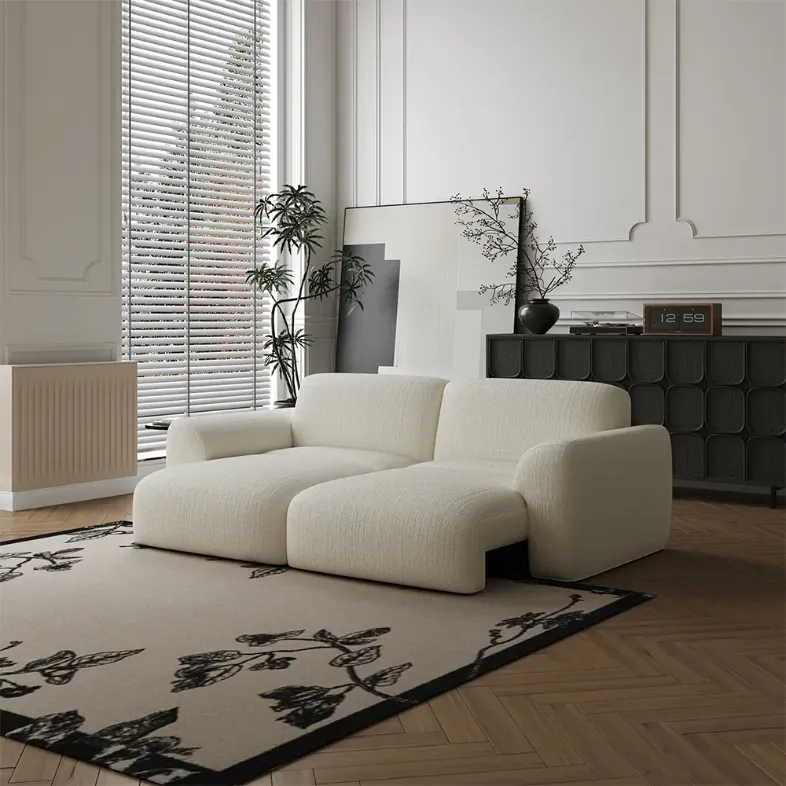
For homes where a dog likes to stretch out with the family but leather feels too delicate, the Aurora-Power Sofa Bed offers another route. Its chenille fabric is listed as water-resistant and scratch-resistant, and the 83″ wide two-seat design shifts from seating to lounge or sleep mode with one-touch adjustment. That flexibility suits small living rooms, movie nights, and homes where pets share the main sofa area.
Conclusion
Learning how to protect leather furniture from dogs comes down to matching protection to real behavior. Nails, jumping, drool, and repeated use in one spot cause most of the visible wear. Start with smooth nails, cover only high-contact zones, clean with low moisture, and choose protected leather if you are buying new. If your dog is a chewer, digger, or high-energy jumper, performance fabric may be the more practical choice. The goal is not a pet-free living room; it is furniture that can handle daily life with fewer surprises.
FAQ
Can couch covers damage leather furniture?
Yes, the wrong couch cover can damage leather. Avoid rough backing, rubberized non-slip pads, damp covers, and dark fabrics that may transfer dye onto light leather. Choose breathable, washable throws with a soft backing, and remove them regularly so moisture, crumbs, and trapped grit do not sit against the leather.
How often should I trim my dog’s nails for leather furniture?
Most dogs need nail checks every week and trims or grinding every few weeks. The best timing depends on growth, walking surface, and activity level. If you hear nails clicking on hard floors or feel sharp edges when touching the tips, they are long enough to scratch leather.
What leather color hides dog scratches best?
Medium brown, cognac, caramel, taupe, and lightly distressed finishes usually hide minor dog scratches better than white, cream, or glossy black leather. Match color to your dog’s fur when possible. Smooth dark leather can show light hair, while pale leather shows paw marks and dye transfer more easily.
Can dog drool stain leather furniture?
Yes, dog drool can stain leather, especially on light, aniline, or poorly protected finishes. Wipe drool quickly with a dry microfiber cloth instead of letting it dry in place. If the area feels sticky or dull, use a leather-safe cleaner sparingly and dry the surface right away.
Should I let my dog sleep on a leather sofa?
You can let your dog sleep on a leather sofa if you control the main wear points. Keep nails smooth, place a washable throw on the favorite cushion, and wipe the surface regularly. If your dog digs, drools heavily, or chews, create a nearby dog bed as the main resting spot.
When Should Dog Owners Choose Fabric Instead of Leather?
Dog owners should choose fabric instead of leather when a dog chews, digs aggressively, jumps with full force, or uses the sofa daily with muddy paws. In these homes, a best sofa fabric for dogs comparison can help match material to fur, claws, stains, and comfort before buying.


[…] more protected leather finish may work better if […]