 By Stephanie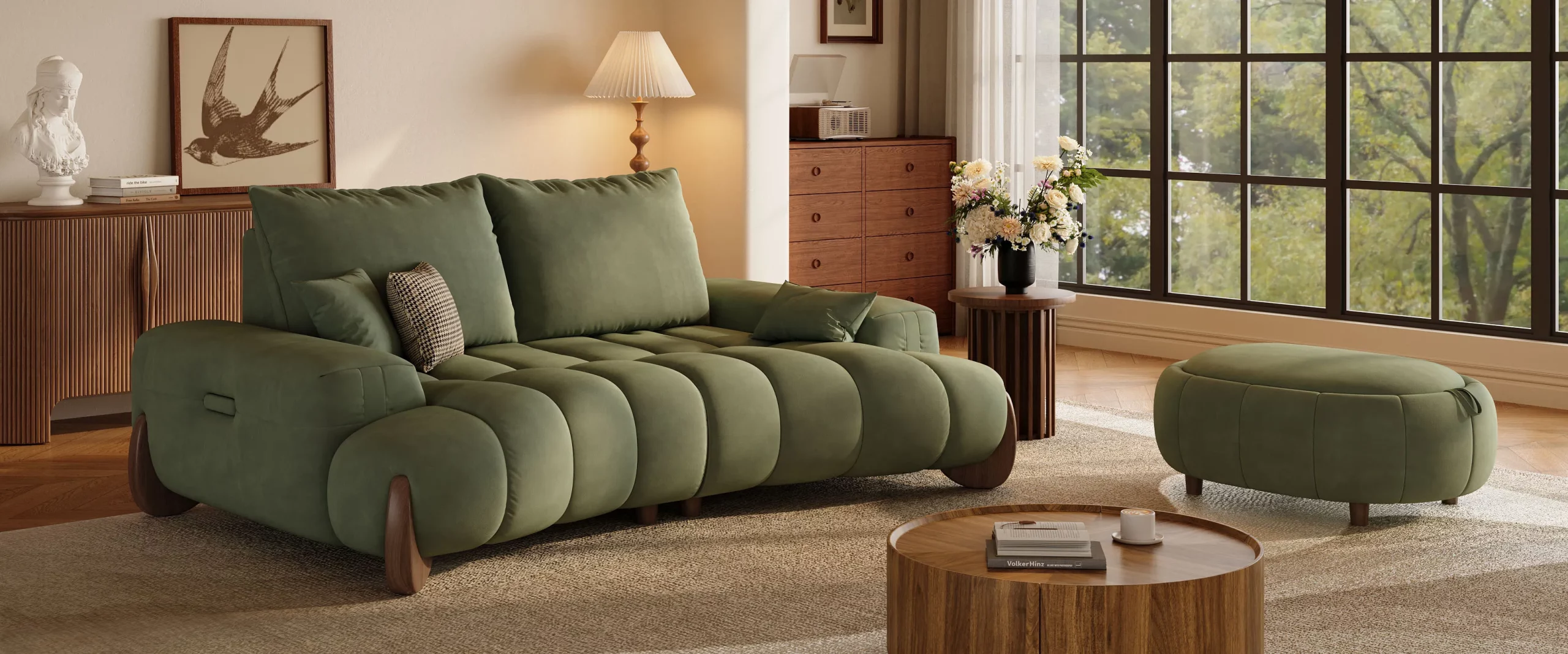
A nail polish spill on the couch feels urgent, especially when a bright shade lands on a favorite cushion before guests arrive. The safest response is rarely the fastest. To learn how to remove nail polish from couch upholstery without making the mark worse, first identify whether the polish is wet, dry, or gel, then check the sofa material. Fabric, microfiber, leather, faux leather, and suede have different limits. The goal is to lift away as much color as possible while keeping rubbing, moisture, and strong solvents to a minimum.
Table of Contents
First Steps After a Nail Polish Spill
The first few actions matter more than the cleaner you choose later. Rubbing can spread pigment, while excess liquid can carry color into the cushion fill or leave a tide mark around the spot. Start with dry tools, work slowly, and keep the spill contained until you know what the upholstery can handle.
Lift the Polish Before You Blot
For wet polish, use a spoon edge, plastic card, or dull plastic scraper to lift the thickest layer. Work from the outside towards the center. Then press a clean white cloth onto the remaining color and lift it straight back up, moving to a fresh part of the cloth after every blot.
Do not drag the cloth across the fabric. A red drop on a cream sectional can turn into a wide pink haze with one quick swipe during a Sunday pedicure. Gentle lifting keeps the polish close to the surface and makes it easier to manage.
Avoid the Fast Fixes That Spread the Stain
Skip these common mistakes:
- Scrubbing with a brush, sponge, or textured towel
- Pouring water, soap, or remover directly onto the cushion
- Using a hair dryer, steamer, or space heater
- Blotting with a colored cloth that could transfer dye
- Trying several cleaners in one session
If the spill is in piping, button tufting, or a deep seam, lift what you can and pause. Liquid can push polish into the cushion, where it is harder to remove and dry.
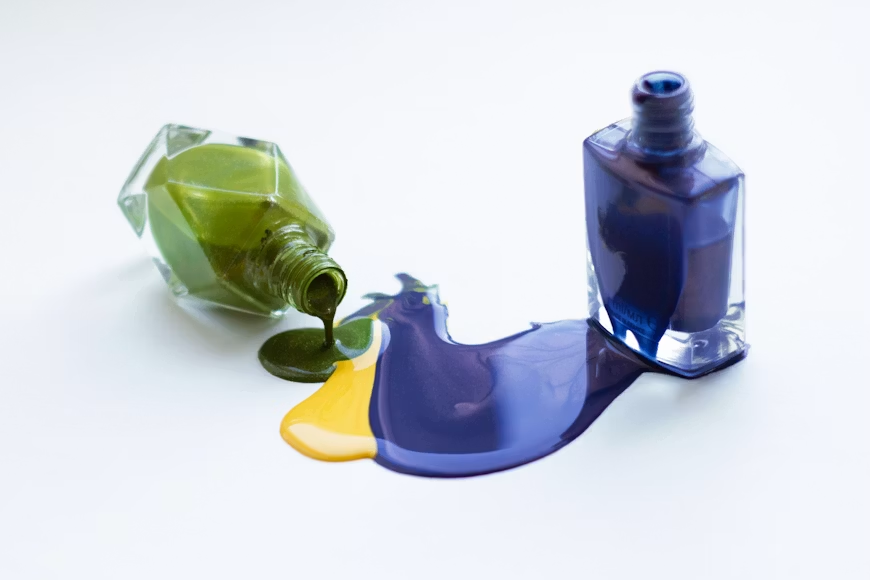
Nail Polish Remover and Upholstery Care Codes
Nail polish remover is not a universal couch cleaner. A care code tells you what type of upholstery cleaner the fabric may tolerate; it does not mean every household solvent is safe. Treat remover as a last-resort product, not a first move, and keep leather, faux leather, suede, velvet, and X-code upholstery out of the DIY solvent category.
Read the Upholstery Care Code First
Look for the tag under a loose cushion, on the sofa frame, or in the manufacturer’s materials guide. It sets the boundary for how far you should take home treatment.
| Care Code | Best First Move for Nail Polish |
| W | Lift and blot; use water-based cleaner only for light residue. |
| S | Use only a manufacturer-approved upholstery solvent after testing. |
| W/S | Start with the mildest, lowest-moisture option. |
| X | Remove loose flakes only; leave liquid treatment to a professional. |
Test any permitted product on a hidden section first. Stop if color transfers to the cloth, the fabric feels rough, or the test spot dries lighter. The same code-first rule matters when you clean a microfiber sofa using the correct care code.
What the Code Does Not Tell You
An S or W/S label does not automatically make nail polish remover safe. It does not identify the fabric’s dye, backing, coating, or finish, and many acetone-free removers still contain solvents made for nails—not upholstery. If the manufacturer does not name a suitable upholstery solvent, do not experiment on a visible cushion.
Acetone is highly flammable. Keep it away from candles, fireplaces, cigarettes, and pilot lights, and do not use it in a closed room without ventilation. NOAA’s CAMEO Chemicals lists acetone as a flammable solvent used in nail polish removers.
Removing Wet, Dried, and Gel Nail Polish
Once the label confirms that your upholstery can handle water-based products or approved upholstery solvents, move from damage control to targeted cleanup. Wet polish needs gentle lifting; dried and gel polish respond better to cold and careful physical removal. In each case, remove as much polish as possible before reaching for a cleaner.
Treat Wet Polish With Minimal Moisture
Lift excess polish, then blot remaining color from the outside inward with a clean white cloth. Press, lift, and switch to a clean area of cloth—never rub back and forth.
On W-code upholstery, a water-based cleaner may help with light residue after the polish has been physically removed. It will not dissolve nail polish, so avoid soaking the fabric or repeating the step until the cushion is over-wet.
Make Dried or Gel Polish Brittle With Cold
Put ice cubes in a sealed plastic bag, or wrap an ice pack in a thin cloth. Hold it against dried polish for a few minutes, keeping meltwater off the upholstery. Once the polish feels firm, lift the edge with a fingernail, plastic card, or spoon.
Work in tiny sections. Do not use metal tools, razor blades, tweezers, or aggressive picking. A small coral gel-polish dot on a navy sectional may look dramatic, but cold treatment can remove much of the visible color before any cleaner is needed.
Let the Cushion Dry Before You Reassess
Blot away moisture with a dry white towel and let the cushion air-dry completely. Do not sit on it while damp or speed things up with heat or direct sun. Fabric often looks darker when wet, and adding another cleaner too soon can create a ring around the original spot.
For light residue on an approved fabric, keep any follow-up low-moisture and limited to the affected panel—the same approach used to clean a couch without damaging upholstery.

Material-Specific Couch Care
Once the visible polish has been removed, the next step depends on what the upholstery looks and feels like afterward. A fabric sofa may need its pile reset, while leather may need its finish checked for dullness or color loss. Treat the remaining issue as a material problem—not as a reason to keep escalating the stain treatment.
Microfiber and Pet-Friendly Polyester
Microfiber often shows a “shadow” after cleanup because its fibers are lying in a different direction, not because polish is still present. After the area is fully dry, use a clean upholstery brush with soft bristles and brush the affected section in one direction. Then brush the surrounding fabric in the same direction so the pile blends evenly across the cushion.
If the spot looks darker from one angle but disappears when you smooth the fibers, the issue is likely pile direction rather than leftover stain. Do not keep treating it with cleaner. A brush, a dry microfiber cloth, and natural daylight are usually enough to tell whether the surface has returned to normal.
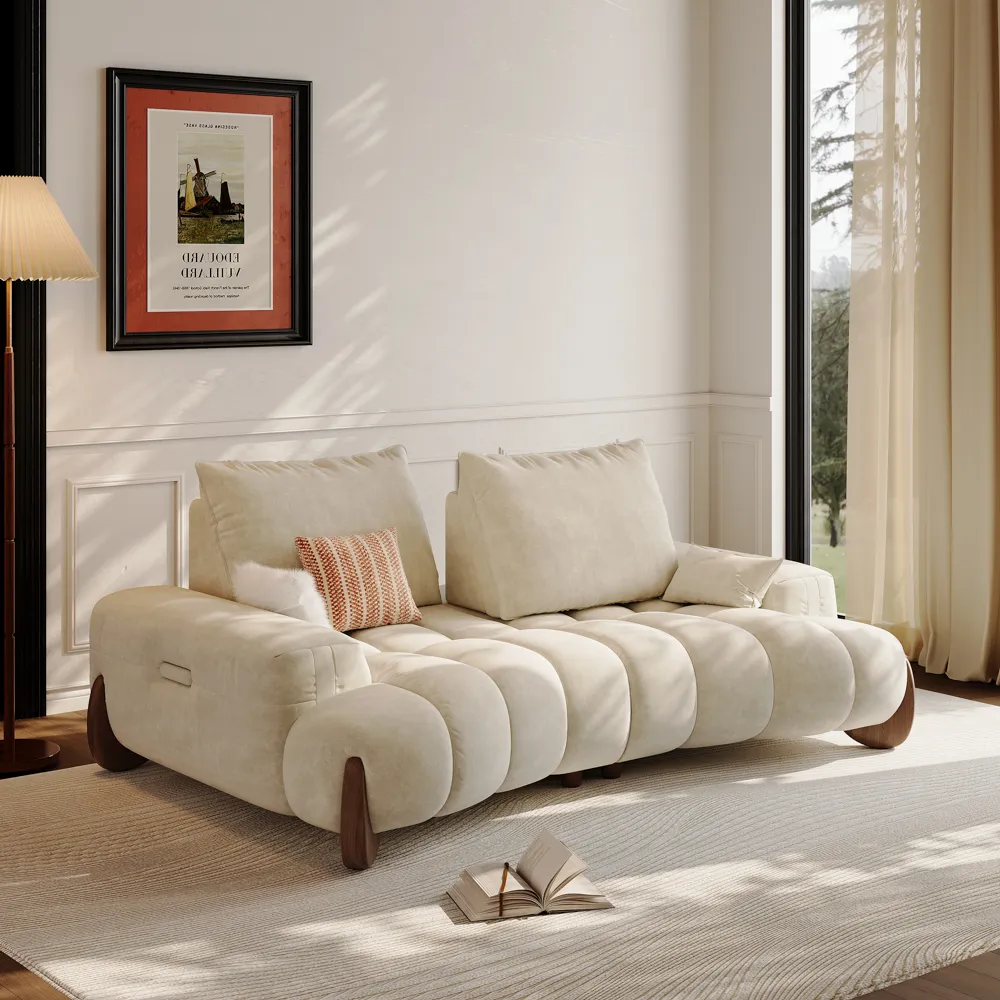
Short-pile polyester is easier to assess because the surface is smooth and uniform. On the pet-friendly fabric option of the Sofa with Adjustable Cushions, the upholstery is a soft, short-pile 100% polyester fabric designed for spot cleaning and dry-clean-safe care. Its care guidance also says “No chemicals,” so a small remaining shadow should be checked under daylight first rather than treated with another product.
Leather, Faux Leather, and Suede
Leather needs a finish check rather than more stain work. Look at the spot from the side under natural light. If it appears dull, lighter than the surrounding area, or slightly rough, the finish may have been affected. Do not try to blend the color with shoe polish, furniture wax, or household oil. A leather repair specialist can match the finish much more accurately than a DIY touch-up.
On faux leather, gently run a fingertip across the treated area. If the surface feels sticky, raised, or thinner than the rest of the cushion, the top coating may be compromised. Leave the area alone and avoid covering it with conditioner or polish, which can make a damaged coating look uneven.
For real suede, use a suede brush only after the area is fully dry. Brush lightly in one direction, then sweep across the surrounding panel to blend the nap. Microsuede may look similar, but do not use a suede eraser or stiff suede brush on it; synthetic fibers can fuzz or flatten.
When to Stop DIY Treatment
A successful cleanup does not always mean the stain disappears in one session. It means you avoid turning a small spill into a larger repair problem. Set a clear stopping point before you begin. When the material, stain depth, or reaction is uncertain, professional upholstery care is the safer next step.
Signs You Need Professional Help
Stop and contact an upholstery cleaner or repair specialist when:
- The spill is larger than your palm or has soaked through the cover.
- The fabric begins to fade, pill, stiffen, or form a ring.
- The care tag says X, is missing, or conflicts with the cleaner.
- The couch is real leather, real suede, velvet, silk, antique upholstery, or very light-colored fabric.
- Polish has settled into seams, piping, buttons, or cushion filling.
Share the sofa brand, a photo of the care tag, the polish type, how long it has been there, and every product already used.
Products and Habits to Skip
Avoid bleach, ammonia, hair spray, WD-40, abrasive scrubbers, and hot air. Do not cycle through remover, vinegar, dish soap, rubbing alcohol, and stain spray in one afternoon. Mixed residues can change fabric color and make professional treatment harder.
The same restraint helps with routine maintenance. A careful approach to caring for a leather couch without harsh chemicals protects its finish long after an accidental spill is gone.
Conclusion
Knowing how to remove nail polish from couch upholstery is not about finding the strongest cleaner in the cabinet. It is about making the safest next move. Lift and blot wet polish, use cold and patience on dried or gel polish, and let the care code set the limits for any follow-up treatment. Leather, faux leather, real suede, unknown materials, and X-code upholstery deserve a stop-first approach. Keep friction low, moisture controlled, and solvents limited, and you are far more likely to protect the sofa’s color, texture, and daily comfort.
FAQs About Nail Polish on a Couch
Is Glitter Nail Polish Harder to Remove From Upholstery?
Usually. Glitter can remain after the colored layer lifts, especially in textured fabric and seams. Once the area is dry, lightly dab loose glitter with tape wrapped around two fingers, sticky side out. Do not roll tape across leather, suede, velvet, or fragile pile fabric.
Does “Dry-Clean Safe” Mean I Can Use a Dry-Cleaning Solvent at Home?
No. “Dry-clean safe” means the material can tolerate professional dry-cleaning conditions. It does not mean every store-bought solvent is suitable for home use. Follow the upholstery code and manufacturer instructions, and use a professional when the product or fabric is not clearly identified.
Should I Remove the Cushion Cover and Wash It?
Only if the care label specifically says the cover is removable and machine washable. A zipper alone does not guarantee that. Many covers are designed for upholstery work or professional cleaning and can shrink, twist, or change color in a home washer.
What if the Stain Is Gone but the Spot Feels Stiff?
Let it dry completely before deciding it needs more treatment. Stiffness may come from polish or cleaner residue. Use only the care-code-approved method for a light follow-up blot. If the texture does not improve, avoid brushing hard or adding another solvent.


