 By Charles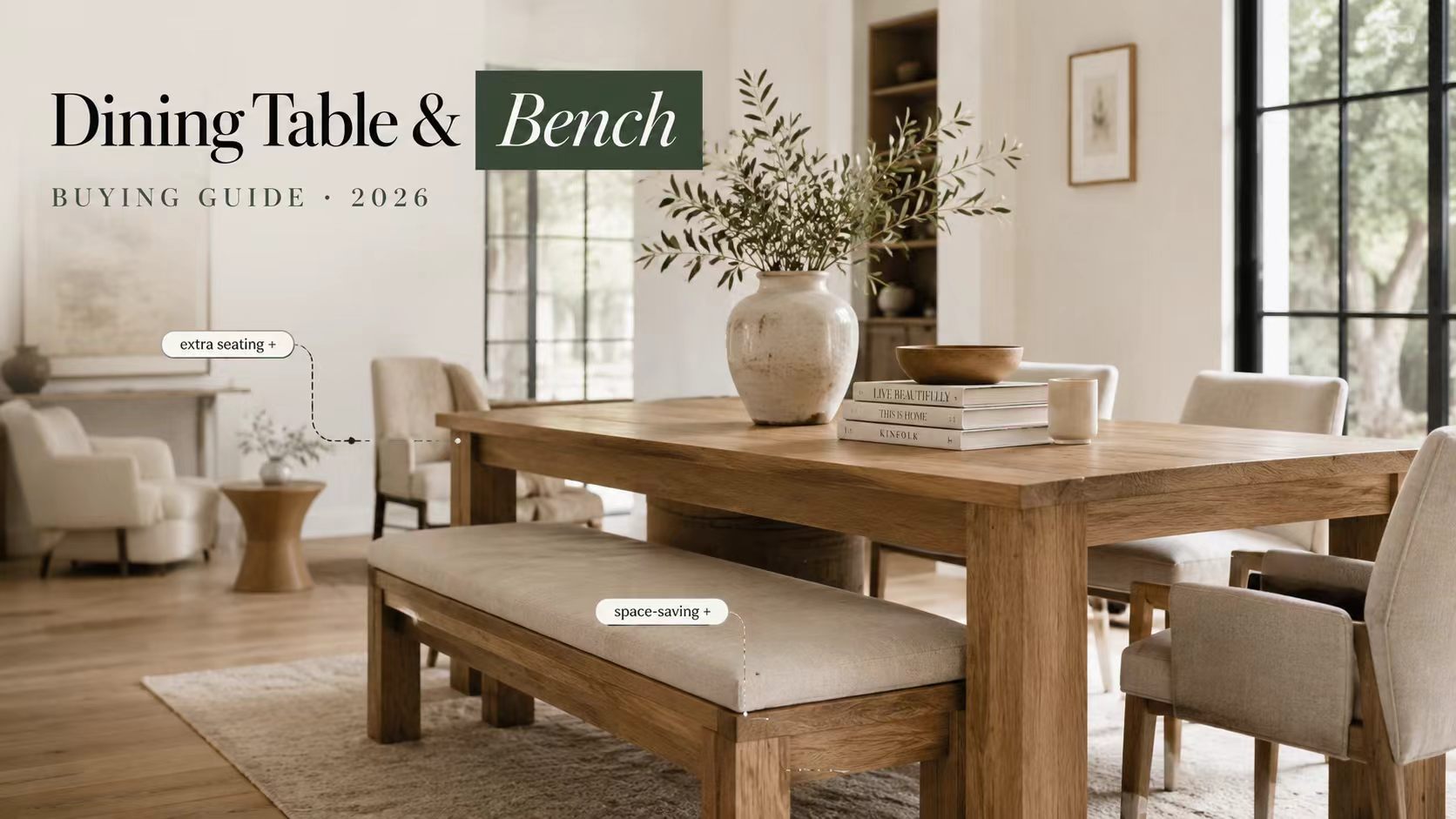
The first time I put a dining table with bench seating in our kitchen, I did it for one selfish reason: I was tired of counting chairs. Two kids, a dog who treats the table like her personal lookout, and a Sunday-morning pileup where everyone wants in at once. A bench let three people slide in where two chairs used to fight for floor space. That part worked. The part nobody warns you about? Climbing out of the middle seat while holding a full plate of pancakes. So before you commit, here’s what I learned after actually living with one — the wins, the annoyances, and who should honestly skip it.
Is Bench Seating Right for Your Dining Area?
A dining table with bench seating fits casual, high-traffic homes best — families with kids, breakfast nooks, and compact rooms where one long side sits against a wall. It seats more people per foot and frees up floor space. It’s the weaker choice for long, formal dinners, because benches have no back support and the inside seats are awkward to leave mid-meal.
That’s the short version. The longer version is about your room and your habits. Benches earn their keep when seating is flexible — a 48-inch bench holds two adults comfortably, or two kids plus whoever wanders in. They struggle when everyone needs to get up and down constantly, or when you’ve got the kind of three-hour dinners where back support actually matters.
Before you buy anything, do what I do with every piece of furniture: tape it out. Grab painter’s tape, mark the table footprint plus the bench depth on the floor, and walk the room. The NKBA’s kitchen and bath planning guidelines recommend at least 36 inches of clearance from the table edge to a wall when nobody walks behind diners, and closer to 44 inches where people pass. A bench shoved against the wall changes that math — you only need pull-out room on the open side. That single move is why benches win in tight rooms.
Best Homes for Dining Benches
Benches aren’t a universal upgrade. They’re a great fit for two specific households, and a frustrating one for everybody else.
Families With Kids
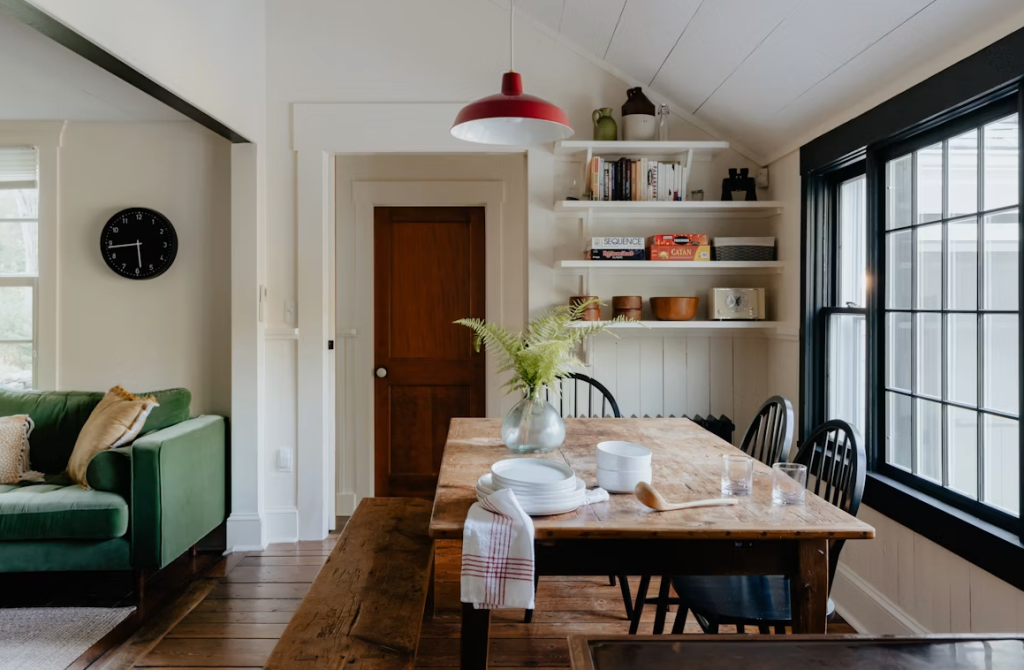
If you’ve got young kids, a bench is hard to beat for daily chaos. Kids pile on without the “that’s my chair” standoff, you can squeeze a fourth little body in at the last second, and a wipeable seat survives the daily yogurt situation. The bench I tested holds 330 lbs, which in real terms means two adults plus a kid climbing across to steal someone’s fries — no wobble, no creak.
One honest caveat, because this is the part I care about most. A backless bench has no edge to stop a toddler from tipping over the rear. My youngest leaned back to look at the dog once and nearly went off the back. It’s not a reason to avoid benches — it’s a reason to put little kids on the wall side or between adults, and to keep an eye on furniture stability in general. The CPSC’s furniture safety guidance for homes with young children is worth two minutes if you’re setting up a room kids will treat as a jungle gym.
Breakfast Nooks and Compact Dining Areas
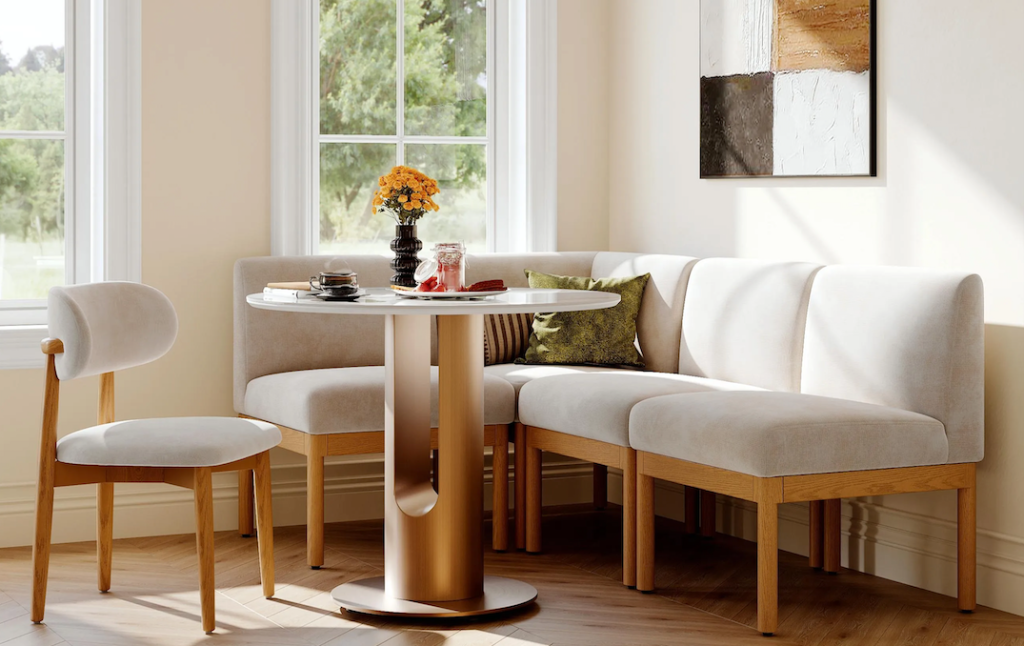
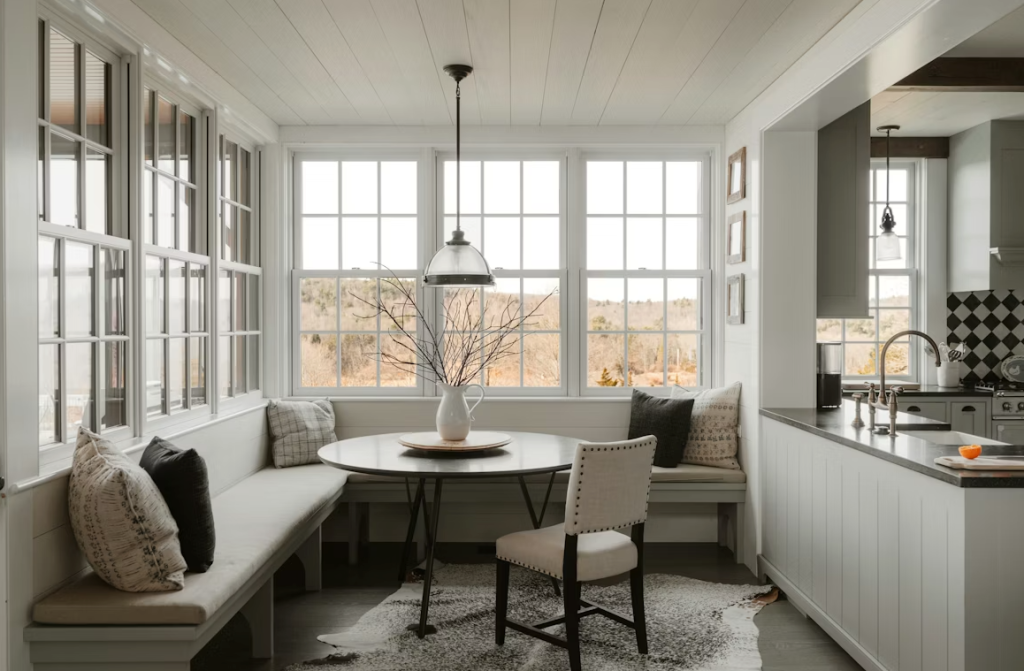
This is where benches genuinely shine. In a nook or a small dining zone, you push the bench against the wall or under a window, and it slides most of the way under the table when nobody’s sitting. That clears the walking path that chairs would otherwise block with their pulled-out backs. In a corner where two chairs felt cramped, a bench made the same spot feel open.
The trick is matching the bench to the table length and leaving room to slide in. I aim for a few inches of gap between the bench and the table apron so knees don’t catch. If your room is genuinely narrow, the shape of the table matters as much as the seating — something I get into more below.
Bench vs Dining Chairs
Here’s the honest side-by-side, based on living with both:
| Factor | Dining Bench | Dining Chairs |
| Space used | Slides under table; great against a wall | Each chair needs pull-out clearance |
| Seating flexibility | Squeeze in an extra person easily | Fixed count, one seat each |
| Back support | None (or a fixed back on banquettes) | Full back, better for long sits |
| Getting in and out | Awkward from the middle | Easy from any seat |
| Cleaning | One wipe across the whole seat | Around legs and seams |
| Best for | Kids, nooks, casual meals | Hosting, formal dinners, comfort |
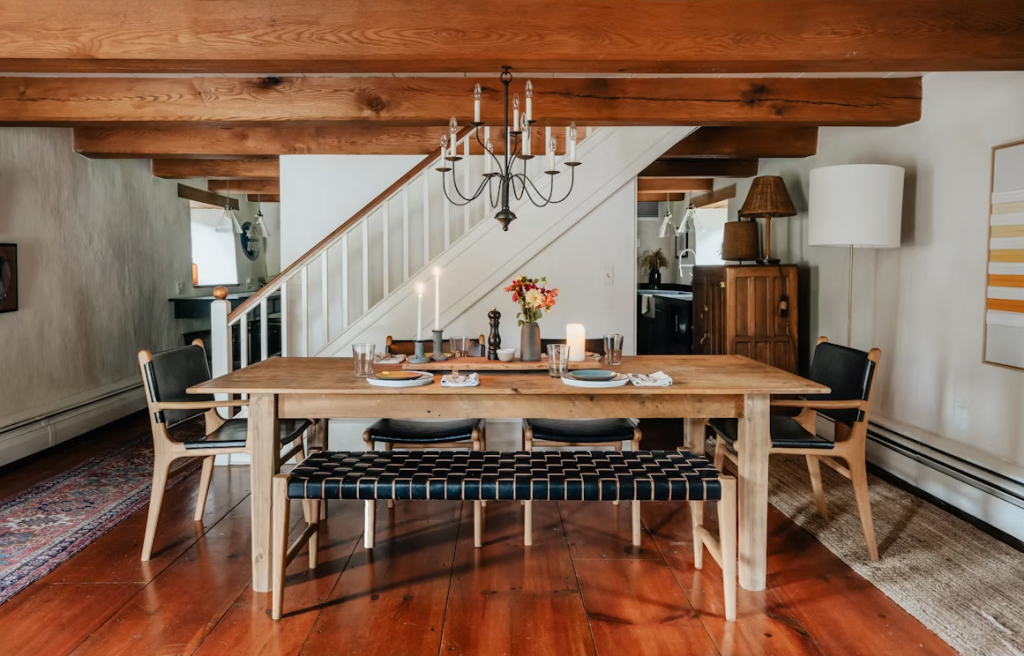
Most homes I’d actually steer toward a mix: a bench on one wall side, chairs on the open side and the ends. You get the space savings where it counts and the comfort where you need to get up. If you want that look to read as intentional rather than thrown-together, the seats need to share a finish family. That’s the case for buying coordinated rather than piecing it together — POVISON’s dining table sets pair a bench and chairs in matching tones so the room looks composed, not collected over three years from three stores.
Comfort, Storage, and Accessibility Trade-Offs
Let’s talk about the stuff product photos don’t show.
Back support. A bench is fine for a 20-minute breakfast and rough for a two-hour dinner. There’s no lumbar support, so you end up hunching or perching. Padding helps a lot here — a bare wood plank gets old fast, while a cushioned seat takes the edge off. The bench I’ve been using is a fully assembled POVISON dining bench with a faux-lambskin top on solid ash legs, and the padding is the reason my kids will actually sit through dinner on it. It’s still backless, though. No cushion fixes that.
Getting in and out. This is the real daily friction. From the middle seat, you’re either scooting everyone down or doing the duck-under-the-table shuffle. Against a wall, the inside diners climb across to get out. For a family that’s used to it, fine. For guests, it’s a small comedy every time.
Storage. Some benches have lift-up seats with storage inside — handy for placemats and kid stuff. Plenty don’t, including the one I use, so don’t assume. If hidden storage is a selling point for you, confirm it on the spec, not the photo.
Accessibility. Be realistic here. A low, backless seat you have to step over is genuinely hard for older relatives, anyone pregnant, bad knees, or anyone using a mobility aid. If that describes someone at your table regularly, put a real chair with arms at the easy-access end and save the bench for the kids’ side.
What Should You Check Before Buying Online?
You can’t sit in it before it ships, so the spec sheet is your test drive. Five things I check every time:
- Seat height and depth. Standard dining bench dimensions run about 18–20 inches tall and roughly 17.5 inches deep, sized to pair with a 28–30 inch table. Too tall and feet dangle; too deep and short legs can’t reach the floor.
- Length vs. table. A bench should sit 12–24 inches shorter than the table so it tucks in cleanly. A 42–60 inch bench seats two to three, depending on width.
- Weight capacity. Look for a real number. The bench I tested lists 330 lbs — enough for two adults and a pile-on. Vague “sturdy” claims tell you nothing.
- What’s actually in the box. “Dining set with bench” can mean table plus bench plus chairs, table plus two benches, or table only. Read the packaging list before you assume you’re getting a full set.
- Assembly and delivery. This is where I lean hard on ready-made. My bench shipped fully assembled — zero tools, out of the box and in place in minutes, no stripped screws on a Saturday. With a piece this size, check the carton dimensions and weight too, not just the finished size, and clear a path at least 30 inches wide to the room. Confirm the return window and warranty up front. A 48-inch bench is genuinely heavy; have a second person on hand for carry-in, or use a room-of-choice delivery option so it lands where you want it.
FAQ
Is a dining bench a good idea for a family with kids in a small kitchen or breakfast nook?
Yes, benches are often excellent for families with children because they allow flexible seating, make it easy to squeeze in extra people, and save floor space compared to multiple chairs. They work especially well pushed against a wall in compact areas. However, consider that backless benches offer no lumbar support and can be tricky for toddlers to climb over safely. They’re best if most of your meals are casual and relatively short.
How do I decide between using a full bench, a mix of bench and chairs, or all chairs?
A full bench is great for maximizing space and casual family use, but a mix (bench on one side, chairs on the other and ends) often provides the best balance. This gives you space savings where it matters most while keeping easier access and back support for adults or guests. Choose based on how often people need to get up during meals and whether anyone in your household needs extra comfort or accessibility.
How comfortable is daily use of a dining bench, and how can I make it better?
Benches work well for quick meals but can feel tiring for longer sits due to the lack of back support. Adding cushions or padded seat covers significantly improves comfort. The biggest daily challenge is getting in and out from the middle — many families get used to scooting or coordinating movement. Over time, choose a bench with a depth of around 17–18 inches and ensure it pairs well with your table height for better ergonomics.
What should I do if my dining bench feels unstable or uncomfortable after some use?
Check that the bench is on a level floor and that all connections are tight. For wobbling, adjust the legs or add anti-slip pads. If comfort becomes an issue, invest in quality cushions. Most quality benches have solid weight capacities (300+ lbs), but avoid overloading one area. If problems persist, reach out to the manufacturer, especially if it’s within the warranty period.
Conclusion
A dining table with bench seating is the right call if your home runs casual and crowded — kids, a busy nook, meals that are more “grab a seat” than “place setting.” It saves space, seats more, and wipes clean. It’s the wrong call if you host long dinners, need back support, or have people at the table who can’t easily step over a low seat. For most families I’d land in the middle: a bench on the wall side, chairs everywhere else, all in the same finish so it looks like you meant it. Tape out your room first, check the spec sheet honestly, and buy the seating that matches how you actually eat — not the one in the prettiest photo.
Related Reading:


