 By Kelvin
Introduction
A dining table can look unfinished when it is empty, but it can also feel crowded when the decor is too tall, too wide, or too hard to move. If you want practical dining room table decor ideas that help you decorate the dining table for everyday life, the goal is simple: create one attractive focal point while keeping the table ready for meals, homework, coffee, and casual gatherings. This guide focuses on practical table decor, not formal holiday tablescapes, so the center of the table looks intentional without becoming a display shelf.
Table of Contents
What Dining Room Table Decor Ideas Work Best in the Middle?
The best everyday dining table decor is easy to see, easy to move, and easy to live with. For most homes, one clear centerpiece works better than several small objects scattered across the table.
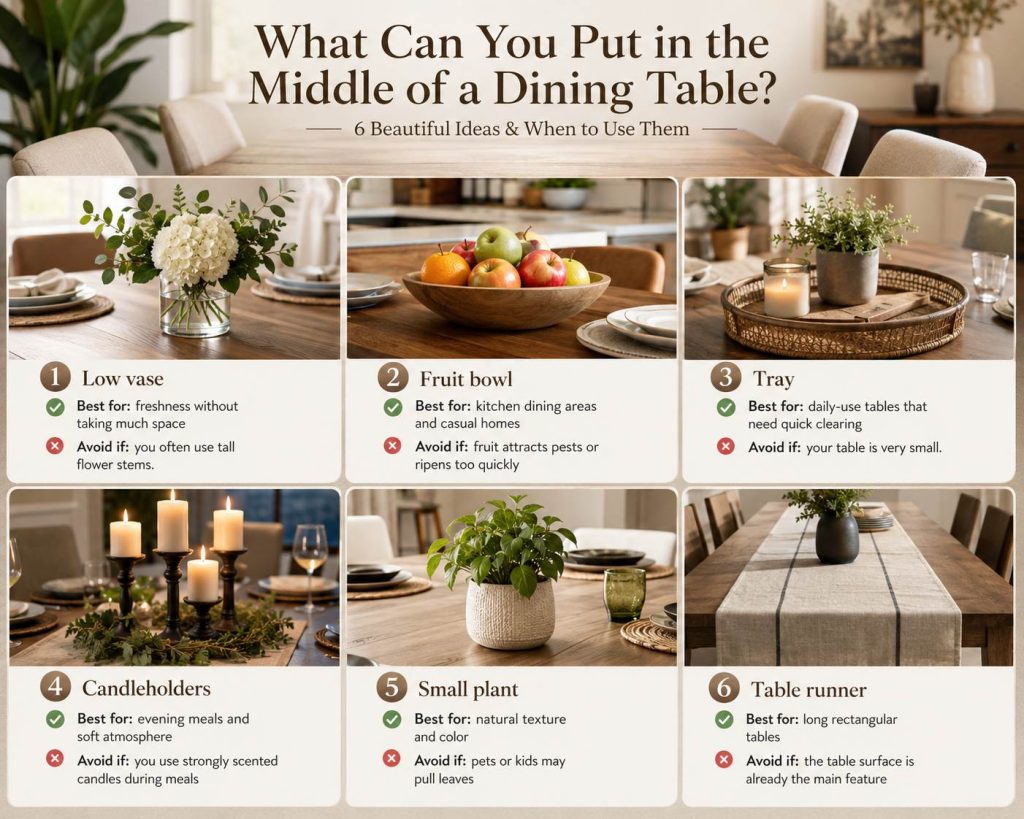
Good everyday options include a low vase, a shallow bowl, a tray, a small plant, a pair of candleholders, or a fruit bowl. These pieces give the table a finished look without making it difficult to sit down for dinner. If your dining room table is also where mail, laptops, and school papers land, choose decor that naturally claims the center so clutter has less room to spread.
Here is a simple way to compare everyday dining room table decor ideas before choosing the right centerpiece:
| Decor Item | Best For | Avoid If |
| Low vase | Freshness without taking much space | You often use tall flower stems |
| Fruit bowl | Kitchen dining areas and casual homes | Fruit attracts pests or ripens too quickly |
| Tray | Daily-use tables that need quick clearing | Your table is very small |
| Candleholders | Evening meals and soft atmosphere | You use strongly scented candles during meals |
| Small plant | Natural texture and color | Pets or kids may pull leaves |
| Table runner | Long rectangular tables | The table surface is already the main feature |
If you are decorating the dining room table for the first time, start with one object you already own. A ceramic bowl, a glass vase, or a wood tray can be enough. Many decorating ideas for a dining room table work better when they begin with restraint, then add detail only if the table still feels bare after you step back and look at the whole room.
How Do You Decorate the Dining Table for Everyday Use?
Everyday styling has to survive real routines. A setup that looks beautiful for a photo may fail if it takes five minutes to clear before every meal. The most useful approach is to build a small, movable arrangement that adds shape and texture while leaving the table ready for daily use.
Start With One Clear Centerpiece
Begin with one piece that gives the table a visual center. This could be a vase, bowl, tray, plant, or candleholder. The point is not to fill the whole table, but to make the center feel intentional.
For a 4-person table, one bowl or vase is usually enough. For a larger table, you can add two smaller objects near the main piece, but keep them visually connected. A vase, a small candle, and a shallow bowl on one tray will look more intentional than three unrelated pieces spread far apart.
Keep the Setup Easy to Move
A dining table used every day should have decor that can be moved with one hand. This is where trays are useful. A tray groups small objects, protects the surface, and makes it easy to clear the table before dinner.
For example, a family that uses the dining table for breakfast, work calls, and weeknight dinners may do better with a narrow tray holding a small vase and candle than with a full row of decorative pieces. Daily decor should also make it simple to clean dining table surfaces after meals, spills, or a quick coffee break.
Leave Space for Plates and Serving Dishes
A good rule is to keep the center arrangement narrow enough that place settings still feel comfortable. If people have to push the centerpiece aside every time they sit down, the setup is too large for daily use.
For regular meals, leave open space for plates, glasses, serving bowls, and hands. A centerpiece should support the table’s function, not compete with it. This matters even more in open-plan homes where the dining table may be visible from the living room but still needs to work hard every day.
What Decor Works Best by Table Shape and Size?
Table shape changes how the eye reads the centerpiece. A round table naturally pulls attention to the center, while a rectangular table needs decor that follows its length. The most useful dining room table decor ideas are not copied from a photo exactly; they adjust to the table’s shape, size, and daily function.
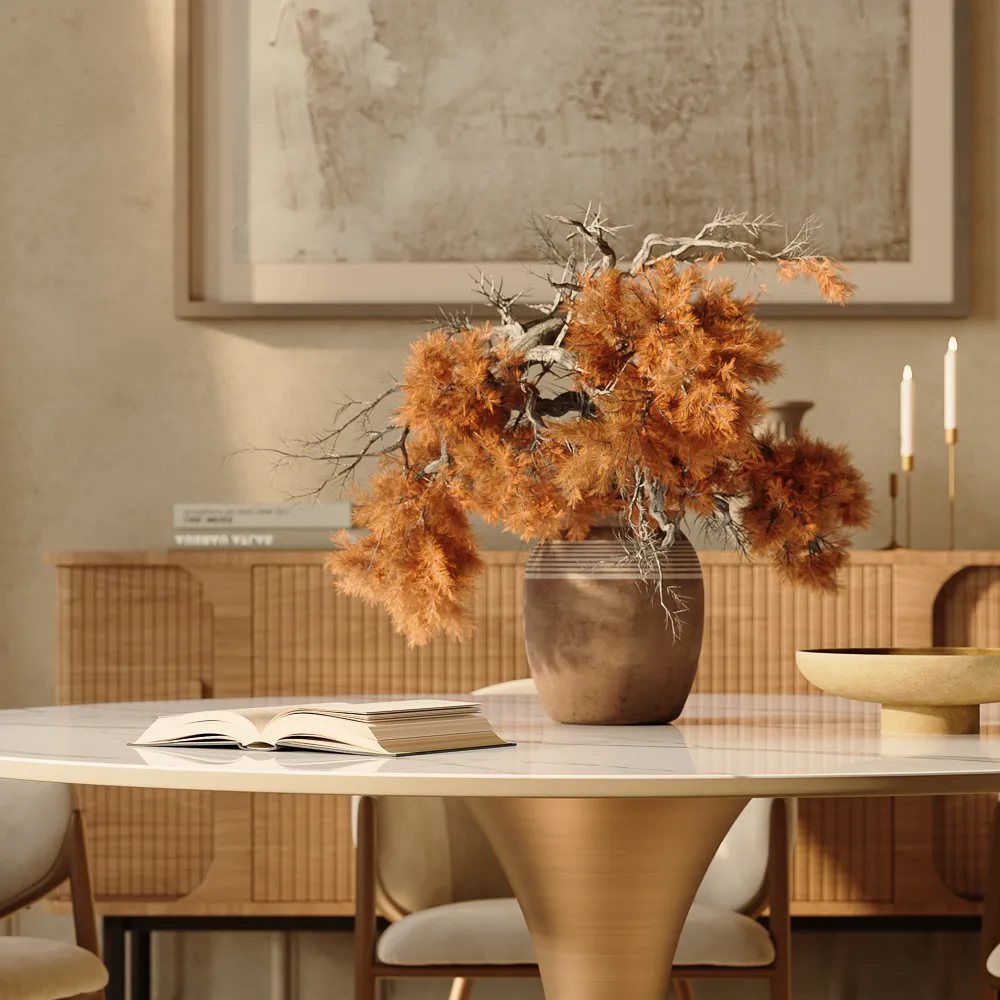
- Round dining tables: A round dining table usually looks best with one centered piece, such as a low vase, shallow bowl, small plant, or compact floral arrangement. Since every seat faces the middle, avoid decor that has a clear “front” and “back.” A rounded vase or bowl will look more balanced from every angle.
- Rectangular dining tables: A rectangular table can handle a longer arrangement. A runner, narrow tray, or three spaced objects can follow the length of the table without making the center feel empty. Keep the decor low for conversation, and avoid anything so wide that it crowds place settings or serving dishes.
- Oval dining tables: Oval tables work well with softer shapes. A curved tray, rounded bowl, or loose grouping of ceramics can echo the table’s edges. When decorating the dining table in an oval shape, avoid sharp, boxy arrangements that visually fight the curved outline.
- Small dining tables: Small tables need restraint. One slim vase, one low bowl, or one candleholder can be enough. If you add too many pieces, the table may look styled but become difficult to use. For apartments, breakfast nooks, or small dining corners, vertical but narrow decor works better than wide centerpieces.
- Extendable dining tables: An extendable table should use removable decor. A tray, bowl, or compact plant can stay on the table when it is small and move easily when guests arrive. This keeps the table flexible without making it look unfinished on normal days. This is also where a shape-based approach to choosing the right dining table can make everyday styling easier from the start.
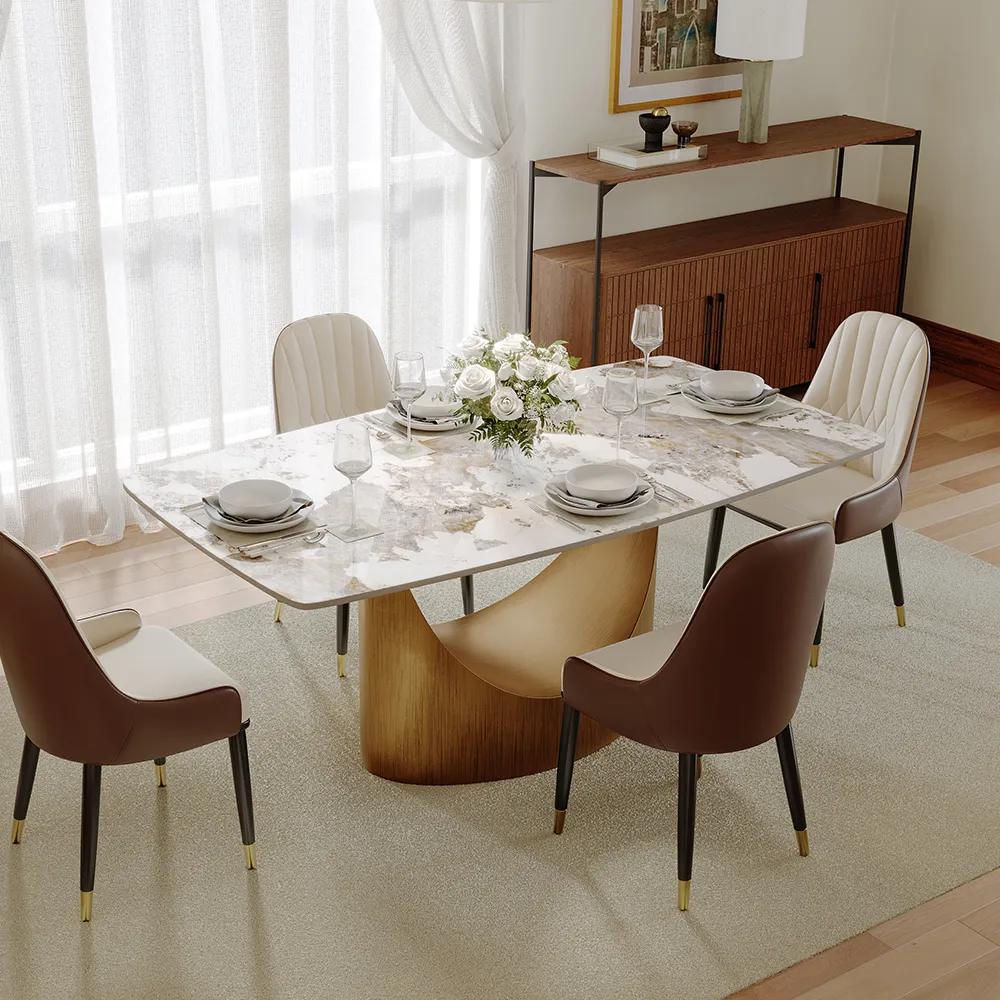
For a rectangular table that needs to look styled without losing everyday function, the Hobart-Rectangular Sintered Stone Dining Table fits the shape-based approach above. Its 63-inch tabletop gives a runner, narrow tray, or low centerpiece enough room to breathe, while the glossy sintered stone surface keeps the table easy to wipe after daily meals. The bronze metal base also adds visual weight without making the tabletop feel busy.
How Should the Table Material Guide the Decor?
The table surface is part of the decor. A wood table, stone table, glass table, and dark table do not need the same centerpiece. When the material already has strong visual character, the decor should support it rather than cover it.
A wood table usually looks good with ceramics, linen, woven trays, or fresh greenery. These pieces add softness and warmth without hiding the grain. A stone or sintered stone table often needs less decor because the surface itself may already have movement. One sculptural bowl or low vase can be enough.
Glass tables can feel visually light, so they often benefit from pieces with texture or weight, such as ceramic bowls, wood trays, or linen runners. Dark tables need contrast. Light ceramics, clear glass, pale flowers, or greenery can keep the surface from feeling too heavy. If you are comparing long-term use, maintenance, and surface behavior, comparing dining table materials can also help you understand which decor bases and protective layers make sense.
The key is not to hide the table. Let the material show, then add one or two pieces that make the surface feel more intentional.
What Mistakes Make a Dining Table Look Cluttered?
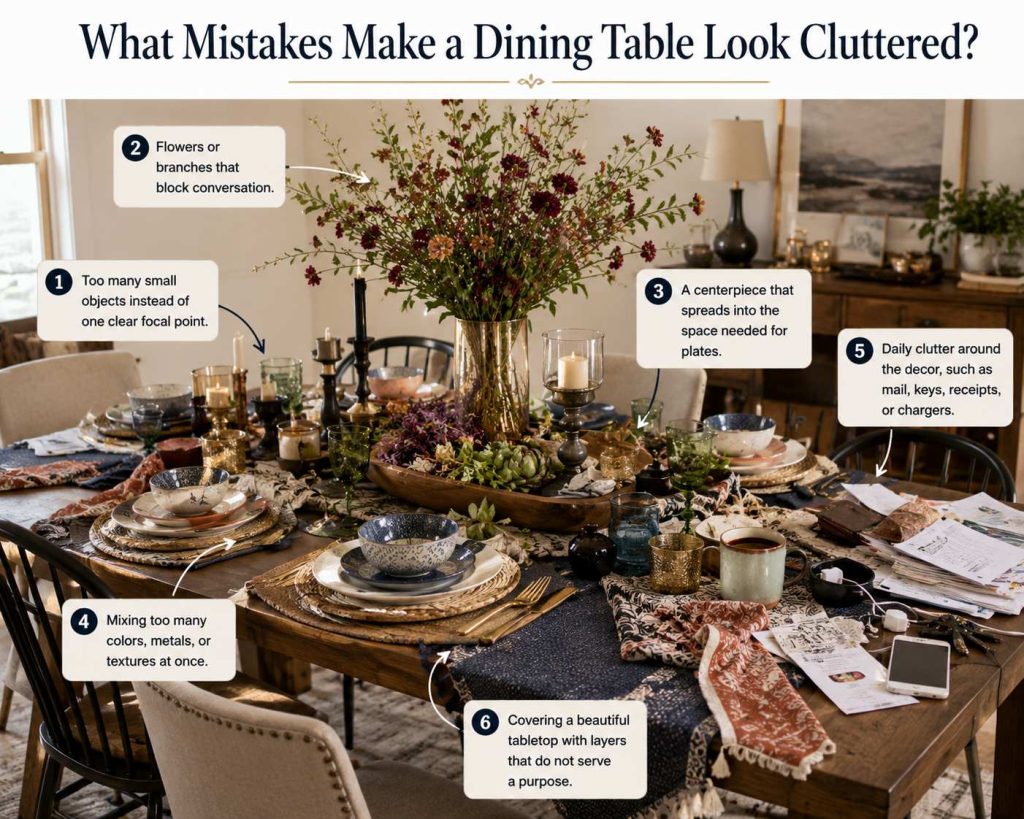
A cluttered table usually comes from too many small decisions, not one big mistake. The decor may be pretty on its own, but together it blocks the table’s function or makes the room feel busy.
Common mistakes include:
- Using too many small objects instead of one clear focal point.
- Choosing flowers or branches that block conversation.
- Letting the centerpiece spread into the space needed for plates.
- Mixing too many colors, metals, or textures at once.
- Leaving daily clutter around the decor, such as mail, keys, receipts, or chargers.
- Covering a beautiful tabletop with layers that do not serve a purpose.
Color contrast also matters. A black or dark table can look sharp and modern, but it needs lighter accents, greenery, or reflective pieces to avoid feeling heavy. The same idea applies to black dining table ideas, where balance often comes from lighter surrounding elements, not from adding more objects.
A simple final check helps: if the table looks better after removing one item, it was probably overdecorated.
Conclusion
The easiest way to decorate the dining table is to start with function, then add style. Choose one clear focal point, keep the arrangement easy to move, and match the scale to your table shape. A round table may need only one centered bowl, while a rectangular table can handle a runner or narrow tray. Materials matter too, because wood, stone, glass, and dark finishes each respond better to different textures. When the table still works for meals, the decor is doing its job.
FAQ
Should dining table decor stay on the table during meals?
Yes, but only if it is low, narrow, and stable. A small bowl, slim tray, or low vase can often stay during casual meals. Tall flowers, wide trays, scented candles, and fragile objects should be moved before eating so plates, serving dishes, and conversation have enough space.
How tall should dining table decor be?
Dining table decor should usually stay below eye level when people are seated. Low arrangements make conversation easier and keep the table functional. Taller branches or flowers can work when the table is not in use, but they should be easy to remove before dinner or hosting.
What kind of dining table is easiest to decorate every day?
A dining table with a simple shape, balanced proportions, and an easy-clean surface is usually easiest to decorate every day. Rectangular and round tables are the most flexible. Wood adds warmth, while stone or sintered stone surfaces often need fewer decorative pieces because the tabletop already has visual texture.
Should I choose dining table decor before or after buying a new table?
Choose the table first, then adjust the decor around its shape, size, and material. Decor can improve the look of a table, but it cannot fix a table that is too large, too small, or visually heavy for the room. The table should support your daily layout first.
How do I protect a wood or stone dining table from decor marks?
Use felt pads under vases, trays, bowls, and candleholders to reduce scratches. Wood tables also need extra care around moisture, so runners, coasters, and quick drying after spills are useful habits. If you use wood furniture often, safe methods for how to clean wood furniture can help prevent damage from overcleaning or harsh products.
Can dining table decor help a small dining area feel bigger?
Yes, but only when the decor is minimal and vertical rather than wide. A slim vase, small bowl, or narrow tray keeps the tabletop open and helps the room feel lighter. Avoid oversized runners, layered place settings, and large floral arrangements that visually shrink the dining area.


