 By Kelvin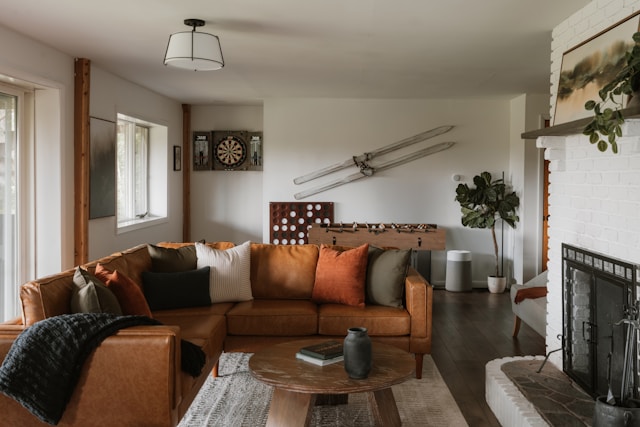
Introduction
Color does more than decorate a room; it changes how the space feels, functions, and welcomes people in. The best colorful living room ideas are not about using every bright shade at once. They are about choosing a palette that fits your style, then repeating colors through furniture, art, textiles, lighting, and small decor. Whether you love bold maximalist rooms, soft warm tones, or modern brown living room ideas with colorful accents, this guide will help you create a living room that feels expressive without feeling chaotic.
What Makes Colorful Living Room Ideas Feel Stylish?
A stylish colorful room starts with control. Instead of adding random colors piece by piece, choose one main color family, one supporting color, and one accent color. This gives the room energy while keeping it visually organized.
A simple formula is:
- Base color: the largest visual area, such as walls, sofa, rug, or wood tone
- Style color: the color that defines the mood, such as olive, blue, terracotta, blush, or mustard
- Accent color: the smallest but most noticeable color, used in pillows, artwork, vases, or lamps
Color also needs repetition. If you have a blue artwork, repeat blue in a pillow, book cover, or ceramic vase. If your sofa is brown, echo that warmth through wood furniture, leather details, or a patterned rug. The goal is not perfect matching; it is rhythm.
How Do You Choose a Color Palette That Matches Your Style?
Different styles need different color behavior. A modern room may use only two or three strong tones, while an eclectic room can handle more pattern and contrast. Before buying furniture or paint, decide what feeling you want: calm, warm, artistic, playful, elegant, or cozy.
| Style Direction | Best Palette | Best For | What to Avoid |
| Modern warm | Brown, cream, black, olive | Clean-lined homes with wood tones | Too many small bright accessories |
| Soft cozy | Terracotta, ivory, sage, blush | Relaxed family rooms | Flat beige without texture |
| Bold eclectic | Cobalt, pink, yellow, emerald | Art-filled spaces | Matching every color too closely |
| Minimal colorful | White, walnut, one bold color | Small or modern apartments | A room with no focal point |
| Retro earthy | Chocolate, rust, mustard, avocado green | Vintage-inspired interiors | Heavy dark tones without light balance |
Modern and Grounded
For readers searching for modern brown living room ideas, brown works best as a grounding color rather than the only color. Pair chocolate brown with cream walls, black metal lighting, and olive or dusty blue accents. The room still feels colorful, but the brown base keeps it mature and livable.
Soft and Warm
A soft colorful room does not need neon shades. Try blush with warm beige, sage with ivory, or terracotta with walnut. These palettes are especially useful when you want color but still want the room to feel calm at night.
Bold and Expressive
If your style is more creative, start with one dramatic piece: a blue sofa, an orange rug, a green accent wall, or oversized artwork. Then let the rest of the room support it instead of competing with it.
How Can You Add Color Without Making the Room Look Chaotic?
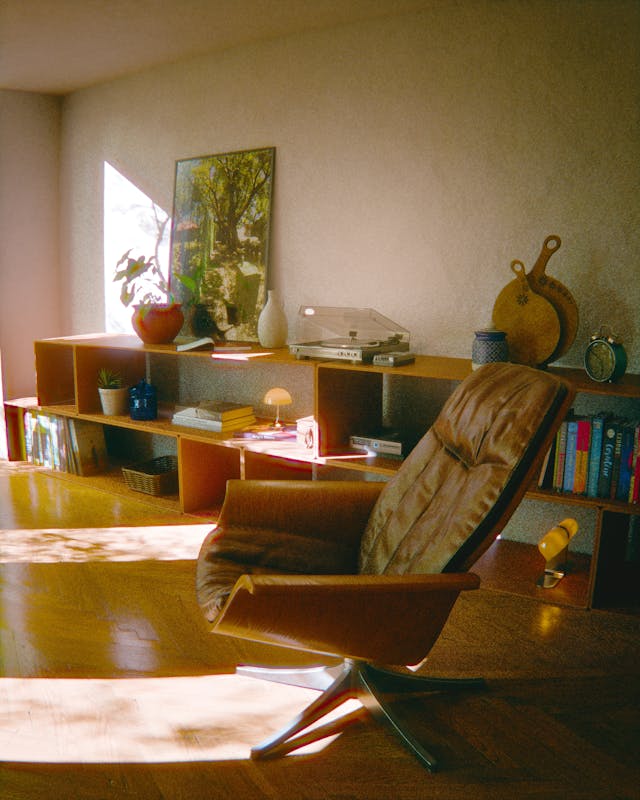
Color feels chaotic when every object fights for attention. A better approach is to build color in layers, from low-commitment decor to larger pieces. This also makes it easier to adjust the room as your taste changes.
Use this color commitment ladder:
- Low commitment: pillows, throws, books, candles, vases
- Medium commitment: rugs, curtains, accent chairs, lamps
- High commitment: sofa, wall paint, wallpaper, built-ins
Before choosing a colorful rug or accent chair, the room still needs a practical living room furniture layout that leaves enough walking space and keeps the main seating area comfortable.
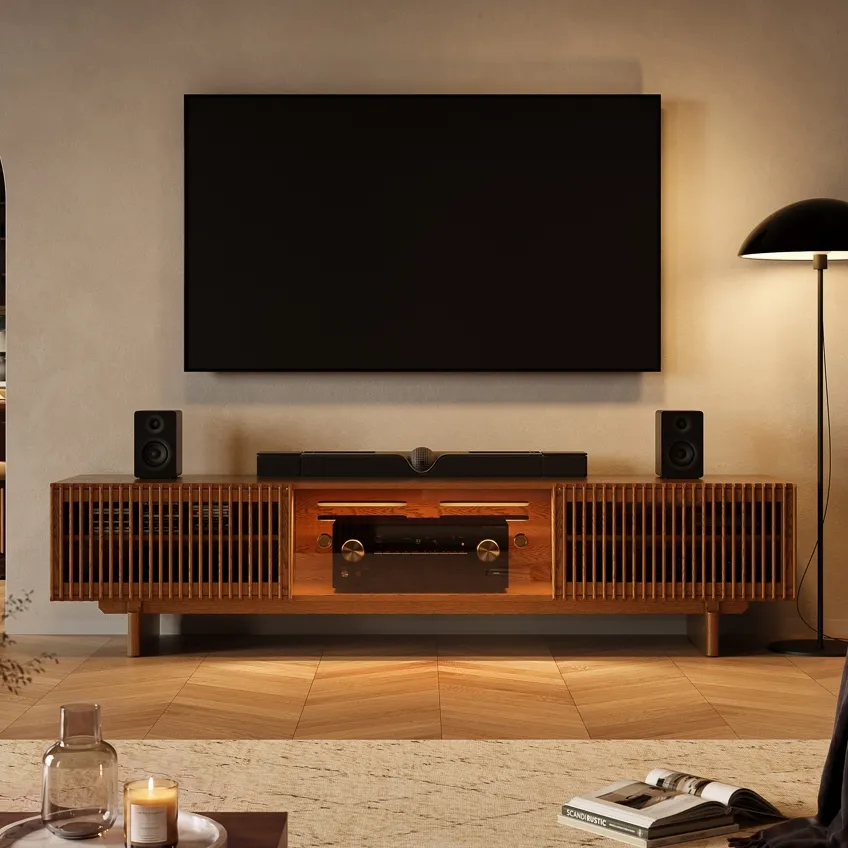
In a color-rich TV room, storage matters more than people expect. The Arboren 71” Mid-Century Modern TV Stand with Storage adds a walnut base that visually calms bright decor, while slatted doors, deep adjustable bays, rear vents, and lighting help keep media gear organized instead of becoming part of the clutter.
What Are the Best Colorful Living Room Ideas by Style?
The strongest colorful living room ideas usually begin with lifestyle, not color trends. A family movie room, a compact apartment, and an art-filled conversation space all need different levels of color, storage, and comfort. Use the sections below to match the palette to the way the room is actually used.
Modern Brown Living Room Ideas With Colorful Accents
Brown is one of the easiest foundations for a colorful room because it softens brighter accents. For example, a brown sofa can handle olive pillows, rust artwork, cream curtains, and a patterned rug without feeling overwhelming. This is where brown room design ideas become more modern: use contrast, texture, and clean silhouettes.
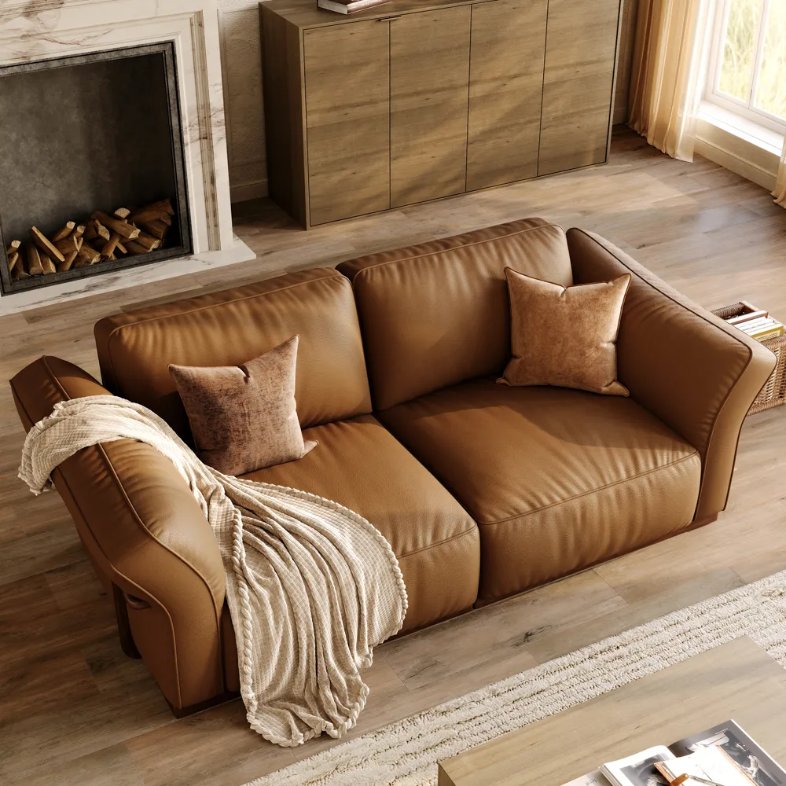
The Cronus-Brown Genuine Leather Modular Sofa with Solid Wood Frame fits this palette naturally, especially in a room with green plants, cream walls, and black-framed art. Its brown top-grain leather, solid wood frame, deep seat, and soft matte texture make it a strong anchor for colorful accents without making the room feel too busy.
Soft Warm Colorful Living Room Ideas
For a gentler look, use warm colors that feel close to nature. Terracotta, clay, sand, muted yellow, and sage create color without sharp contrast. These shades work well with linen curtains, wood tables, woven baskets, and cream upholstery.
A personal way to imagine this palette: on a rainy Sunday afternoon, a terracotta throw over a cream sofa, a warm lamp, and a sage vase on the coffee table can make the room feel styled without looking staged.
Bold Colorful Living Room Ideas
For bold style, pick one hero moment. It could be a jewel-tone sofa, a gallery wall, a patterned rug, or a painted ceiling. Keep the largest pieces connected by either color temperature or undertone. For instance, emerald, teal, and cobalt feel rich together, while mustard, coral, and rust feel sunny and warm.
The mistake is adding every bright item you like. Instead, repeat two or three colors across the room and let neutral space give the eye a break.
Small Colorful Living Room Ideas That Still Feel Open
Small rooms can be colorful, but the color needs breathing room. Choose light walls, one strong accent, and furniture that does not block movement. Round or low-profile pieces often make a compact space easier to navigate.
Compact homes benefit from small living room decorating ideas that focus on one visual anchor instead of several competing focal points.
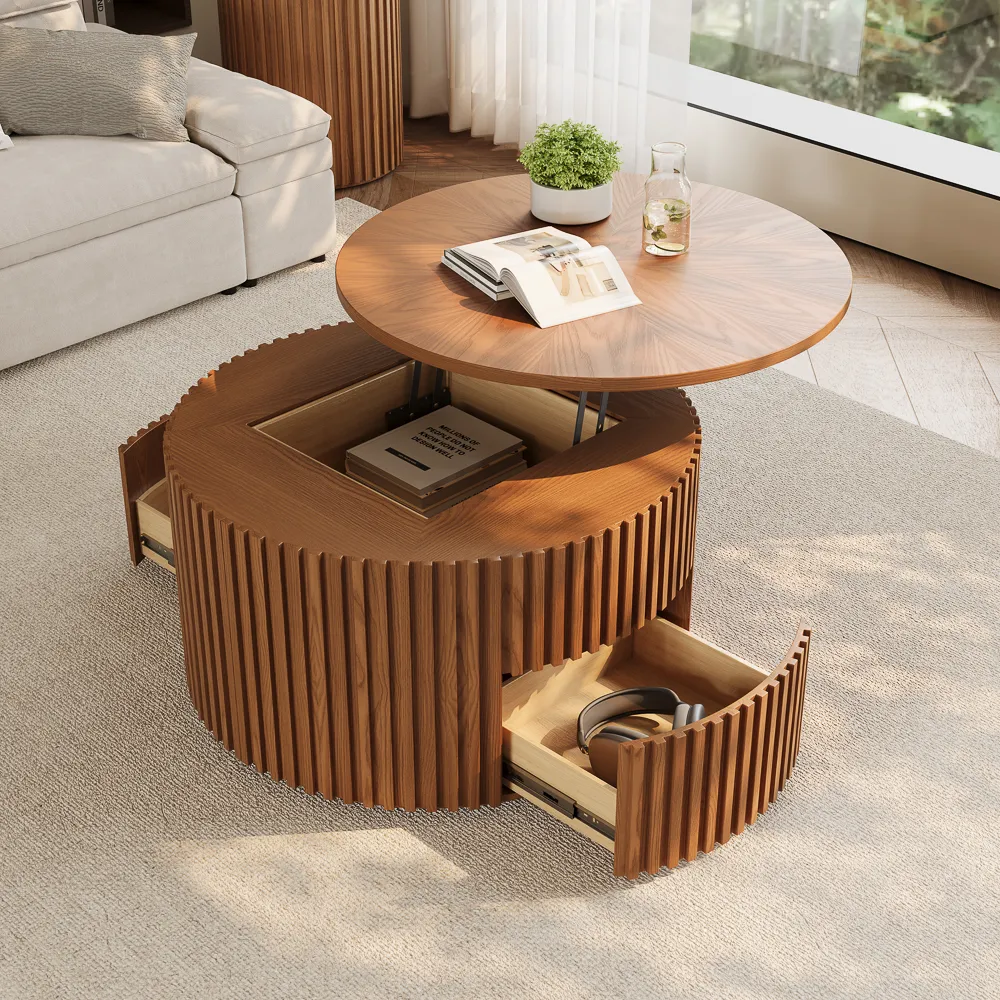
The Silva-31.5” Lifting Top Round Coffee Table supports this approach with a round walnut shape, hidden storage, drawers, a lift-top function, and no assembly requirement. It lets colorful books, trays, and remotes stay close without crowding the surface.
What Furniture Works Best in a Colorful Living Room?
Furniture should either anchor the color palette or introduce one controlled focal point. If your walls and rugs are colorful, choose quieter seating. If your walls are neutral, a colored sofa or accent chair can become the star.
Useful furniture choices include:
- A brown or cream sofa for a flexible base
- A colorful accent chair for lower-risk personality
- A walnut TV stand to ground bright decor
- A round coffee table to soften strong lines
- Closed storage to reduce visual clutter
Knowing the difference between a sectional vs sofa choice also helps, especially when color is not the only decision. Large colorful rooms may need a sectional to define the zone, while smaller rooms may feel better with a sofa and one expressive chair.
What Colors Go Best With Brown in a Living Room?
Brown pairs well with more colors than many people expect. For modern brown living room ideas, think of brown as a warm neutral, similar to walnut, leather, or coffee tones.
Strong pairings include:
- Brown + cream: bright, safe, and timeless
- Brown + olive: natural and modern
- Brown + dusty blue: calm with refined contrast
- Brown + rust: cozy and slightly retro
- Brown + blush: softer and more contemporary
- Brown + black: sleek, but best with enough light
The best brown room design ideas use more than one brown tone. Mix caramel, walnut, espresso, and tan so the room feels layered instead of flat.
What Mistakes Should You Avoid in a Colorful Living Room?
Avoid treating every color as equally important. If the sofa, rug, curtains, wall color, and artwork are all loud, the room may feel restless. Choose one or two stars and let the rest support them.
Also avoid ignoring undertones. A cool blue-gray wall may not pair well with a very warm orange-brown sofa unless you add a bridge color, such as cream, brass, or muted green. Lighting matters too. A color that looks soft in daylight may feel much stronger under warm bulbs at night.
I once saw a small living room change completely when the owner swapped five unrelated pillow colors for two repeated shades from the artwork. The room still looked colorful, but suddenly it felt intentional.
Conclusion
The best colorful living room ideas are not about being fearless with every color. They are about choosing the right color story for your style, space, and daily routine. A brown sofa, walnut table, cream wall, or neutral rug can become the base for brighter accents, while art, pillows, lighting, and plants bring in personality. Start with one color you already love, repeat it with intention, and let the room grow from there.
Colorful Living Room Ideas Q&A
What is the easiest way to make a living room more colorful?
Start with textiles and decor before changing large furniture. Pillows, throws, rugs, framed prints, lampshades, and ceramics can shift the mood quickly. Choose two colors from one inspiration piece, such as artwork or a rug, then repeat them in small doses around the room.
How many colors should a colorful living room have?
Most colorful rooms work best with three to five visible colors. The key is proportion. Use one dominant base, one or two supporting colors, and one accent. If every color appears in the same amount, the room can feel scattered instead of layered.
Are brown living rooms still modern?
Yes. Brown living rooms feel modern when paired with clean furniture lines, lighter walls, textured fabrics, and fresh accent colors like olive, dusty blue, rust, or soft pink. Brown becomes outdated only when the room uses one flat shade without contrast, light, or material variation.
What colors go with a brown sofa?
A brown sofa pairs well with cream, ivory, olive, sage, terracotta, rust, dusty blue, muted yellow, black, and soft pink. For a calm room, use cream and green. For a warmer room, use rust and brass. For a modern look, add black accents.
Can a small living room be colorful?
Yes, but use color strategically. Keep the largest surfaces lighter, then add one bold rug, artwork, chair, or sofa color. Round tables, hidden storage, slim legs, and clear walkways help a colorful small room feel open rather than crowded.


