 By Stephanie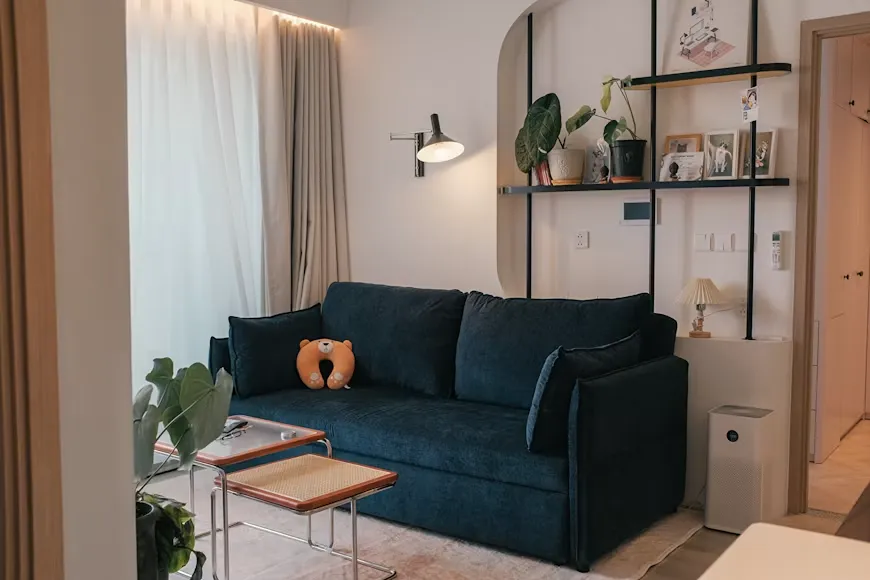
A blue sofa can anchor a living room beautifully, but it also makes every surrounding choice more noticeable. If you are wondering how to style a blue couch, start with the sofa’s specific shade, then work outward through the room’s largest surfaces and furniture before adding accessories. This approach helps you decide whether the space needs more warmth, contrast, or light instead of collecting disconnected decorating ideas. The goal is not to make everything match the couch, but to give the blue a clear role while the rest of the room supports it.
Table of Contents
How Should You Build a Color Palette Around a Blue Couch?
Before choosing pillows or decor, identify what kind of blue you are working with and how much visual weight it already carries. Navy, dusty blue, teal, and medium blue behave differently beside the same beige rug or walnut table. Start with the sofa, then decide whether the surrounding palette needs to brighten, warm, or deepen it.
Start With the Shade of Blue You Already Have
Deep navy and saturated blue sofas naturally attract more attention than pale or dusty blue upholstery. If the couch already carries strong visual weight, surround it with lighter surfaces and enough open space rather than repeating equally dark colors throughout the room.
A lighter blue sofa gives you more freedom to introduce deeper wood, charcoal, or brown because the couch itself contributes less visual weight.
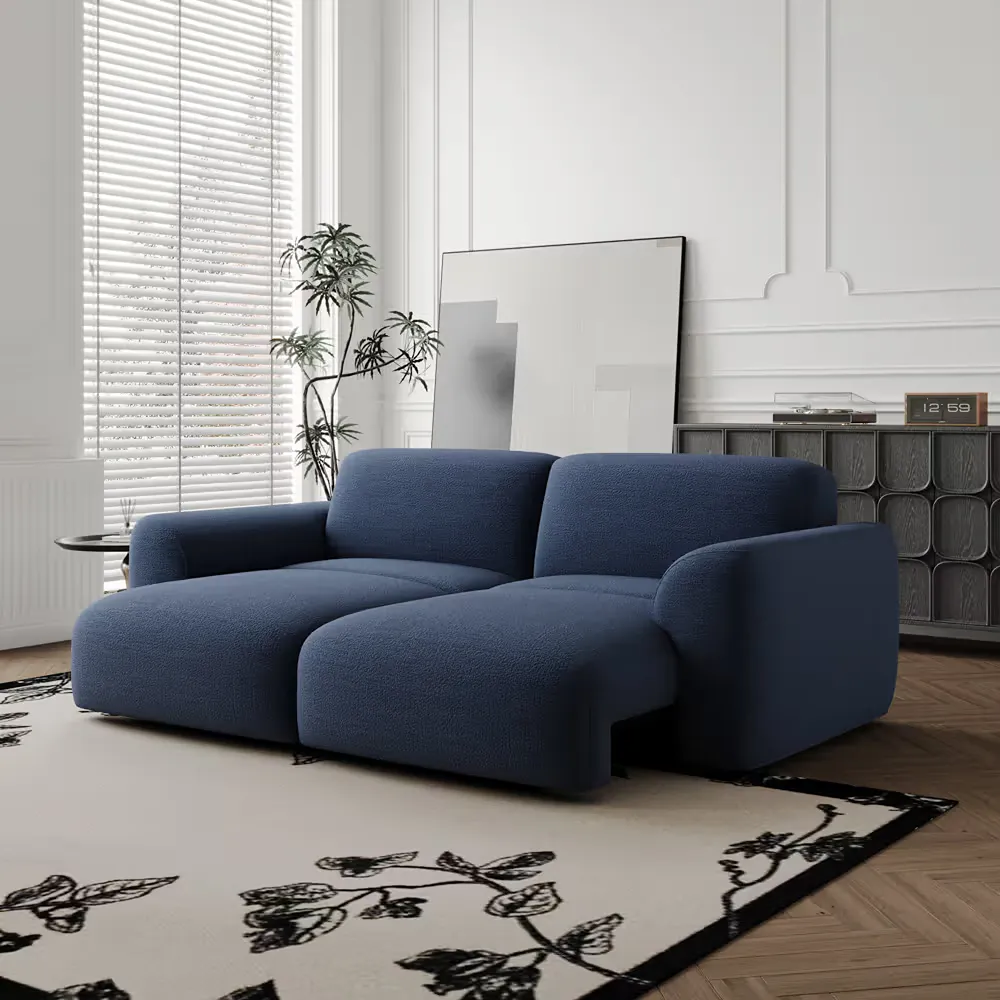
The POVISON Aurora Power Sofa Bed in navy blue chenille shows how a deep blue sofa can carry both color and texture. Its adjustable seat depth extends from 27 to 45.5 inches, giving you more room to stretch out when you want it. The matte performance chenille is also water- and scratch-resistant, making the rich navy upholstery easier to live with day to day. Pair it with cream, beige, or warm wood to keep the overall palette balanced.
Decide Whether the Room Needs Warmth or Contrast
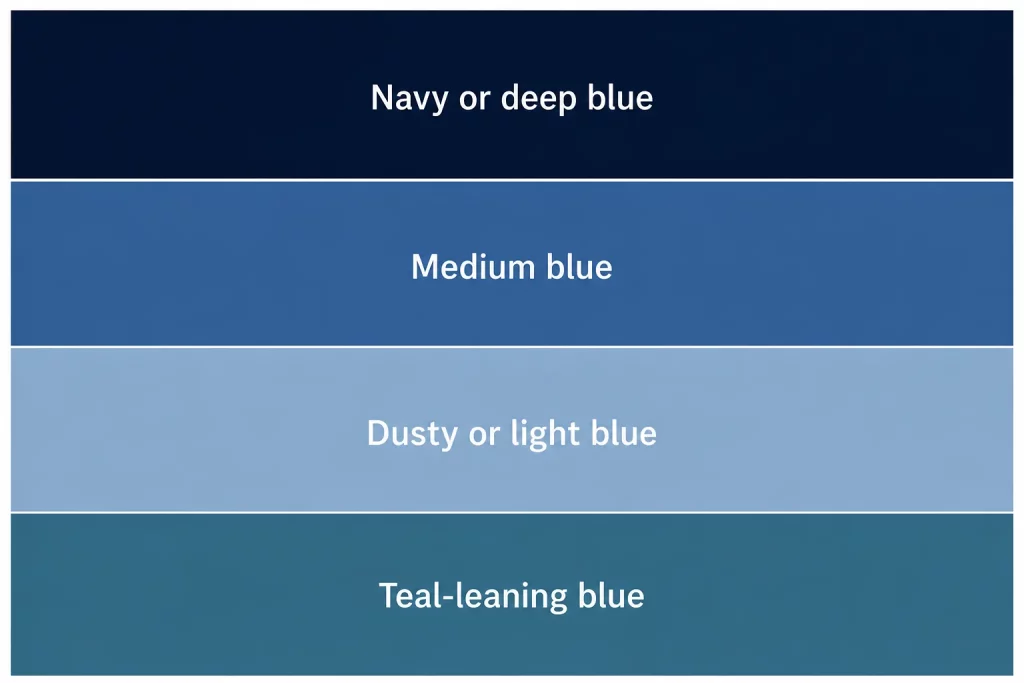
If you are asking what colors go with a blue couch, do not start with a universal list. Look at the sofa shade, available daylight, floor color, and other furniture first.
| Blue Couch | What the Room Needs | Start With |
| Navy or deep blue | More brightness | Cream, warm white, light beige |
| Navy or deep blue | More warmth | Walnut, caramel, tan |
| Medium blue | Soft contrast | Greige, beige, warm wood |
| Dusty or light blue | More depth | Medium wood, taupe, charcoal accents |
| Teal-leaning blue | Color balance | Warm neutral, brown, muted rust |
Warm and cool pieces do not need to match exactly. When several wood finishes already exist, understanding how to mix wood tones in a living room can help you coordinate their undertones rather than trying to buy every piece in the same finish.
What Should You Match First: Walls, Rug, or Furniture?
When planning blue couch living room ideas, make the largest visual decisions before the smallest ones. Walls and flooring surround the sofa, the rug connects the seating group, and major furniture controls the room’s visual weight. Pillows and accessories should refine those decisions rather than compensate for an unresolved color scheme.
Start With the Walls and Flooring
Start with the walls. A navy sofa in a room with limited daylight usually benefits from warm white, cream, light greige, or another pale neutral. A bright room with a medium blue sofa can handle a slightly deeper wall color because natural light keeps the combination from becoming visually dense.
Then look down. Flooring changes how the same couch reads. Warm oak can soften blue automatically, while cool gray flooring may make the room feel cooler. You do not necessarily need to replace either one; the rug can create a visual buffer between them.
A useful sequence is:
- Choose the wall direction based on daylight and sofa depth.
- Use the rug to connect or separate the sofa from the floor.
- Add major wood or upholstered furniture.
- Finish with textiles and smaller accents.
Use the Rug to Balance the Sofa
A rug should solve a specific relationship rather than simply contain a color you like.
With a dark blue sofa, an ivory, oatmeal, or beige rug lightens the seating area and creates separation from dark flooring. If the room already has plenty of pale surfaces, a warm patterned rug can introduce rust, tan, brown, or muted blue without making the couch feel isolated.
A rug that repeats some blue can also work, but the sofa and rug should remain visually distinct. If both are nearly the same dark navy, use a strong difference in pattern, texture, or value so they do not merge into one heavy block.
How Do You Choose Furniture That Works With a Blue Sofa?
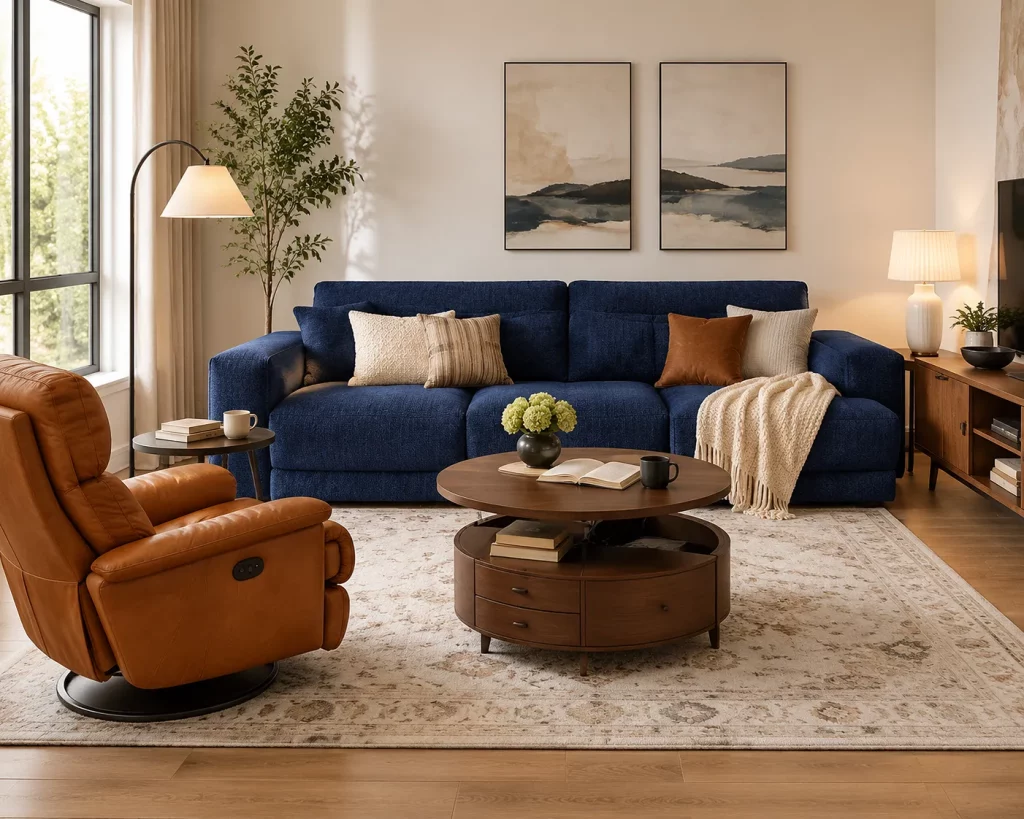
Once the large surfaces are settled, furniture should add what the couch does not. A large blue sofa may need warmth from wood, a lighter secondary seat, or quieter storage across the room. Check color, material, shape, and visual weight together rather than trying to match one finish exactly.
Warm the Room With a Wood Coffee Table
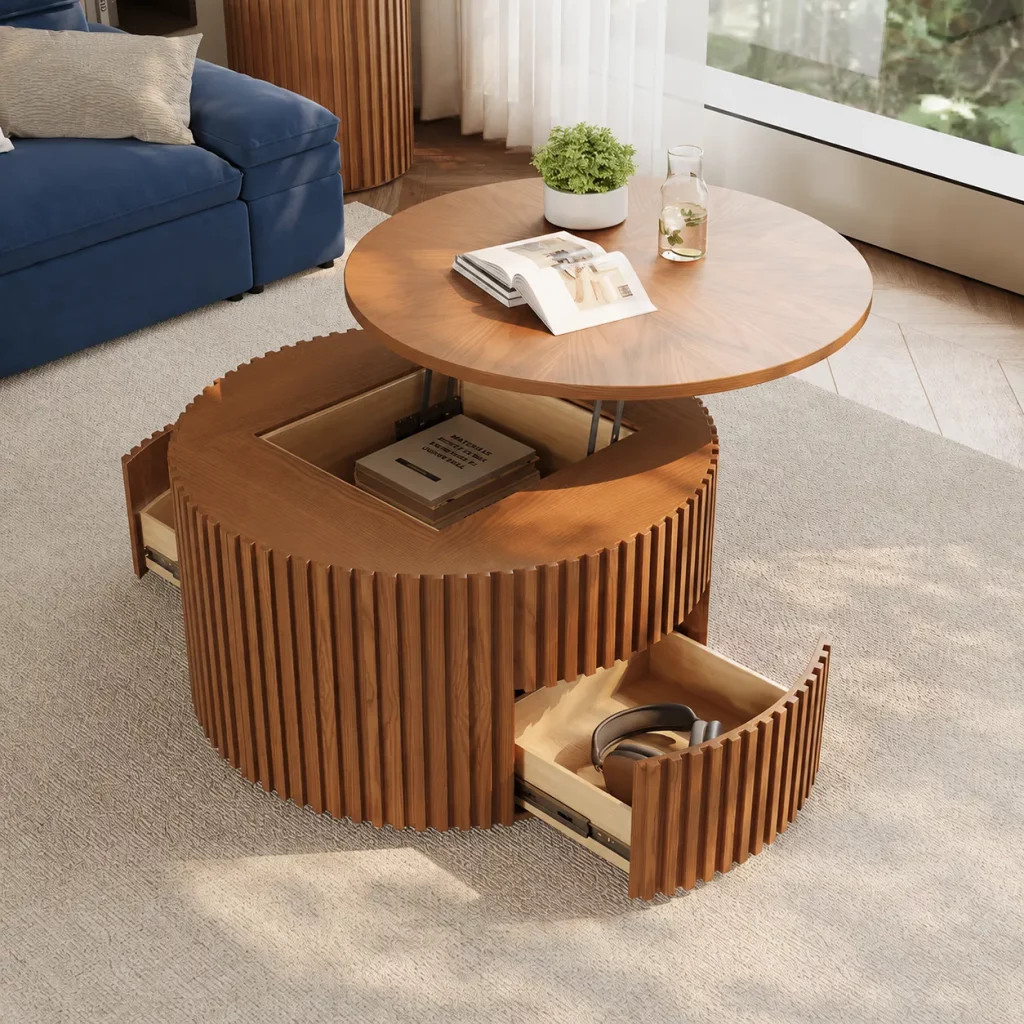
Warm walnut is especially useful beside navy and medium blue because it introduces brown without requiring another upholstered color. Shape matters as well. A round table can soften a large rectangular seating area and reduce the number of hard corners around a substantial sofa.
For a more compact seating area, the POVISON Silva Lifting Top Round Coffee Table adds warm walnut contrast without making the room feel heavier. Its 31.5-inch round shape softens the strong horizontal lines of a large blue sofa, while the lift top rises to 23.2 inches for laptop use or casual meals. Two drawers also keep everyday items off the surface, helping the seating area stay visually calm.
When multiple furniture styles are already present, the same principle extends beyond color. Understanding how to mix furniture styles without looking mismatched helps keep scale, shape, and visual weight connected even when the sofa, table, and chair come from different collections.
Add an Accent Chair Without Creating a Second Focal Point
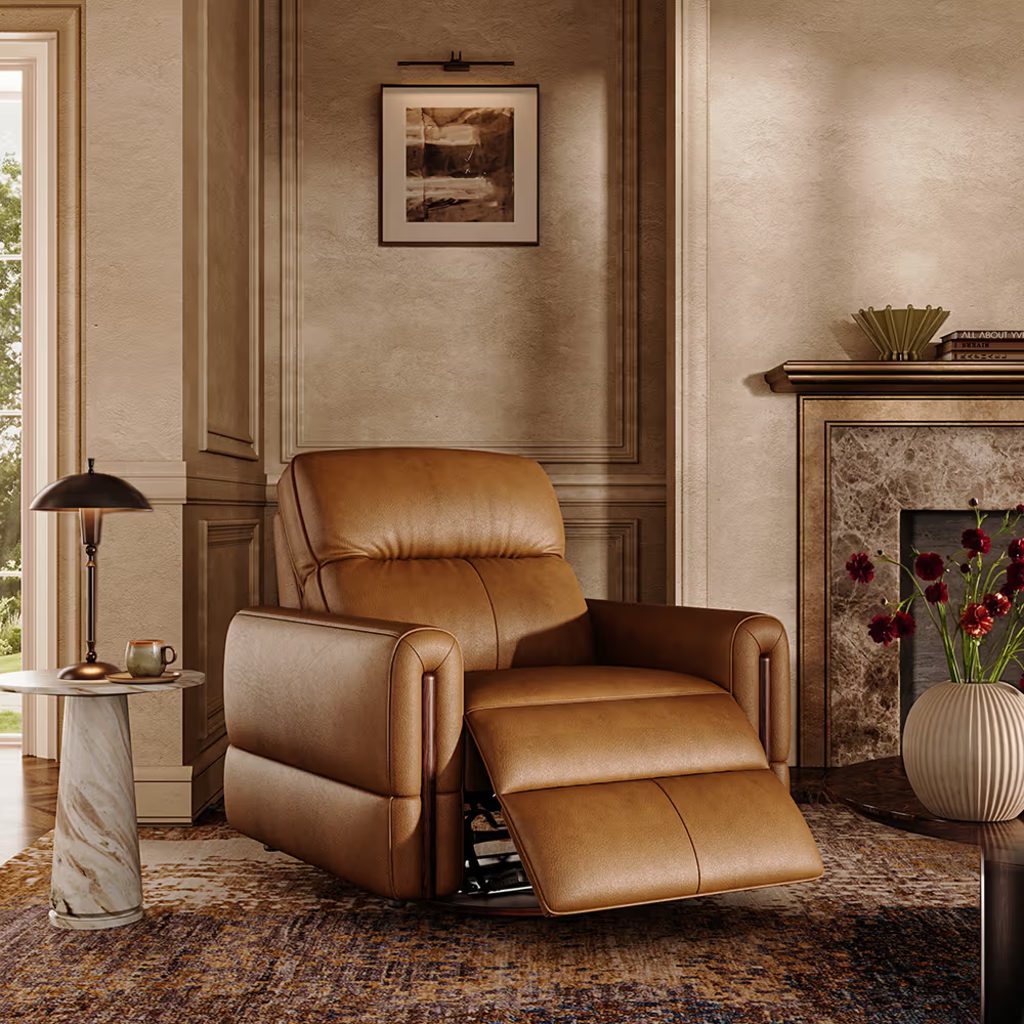
An accent chair beside a blue couch should usually support the seating group rather than compete with it. Cream and off-white are the quietest choices, while caramel or warm brown creates stronger contrast and connects naturally with walnut furniture.
For a room with enough space for a full-size secondary seat, the POVISON Swayford Plush Power Recliner adds warm caramel leather beside a blue fabric sofa, creating both color and material contrast. Its 270-degree swivel makes it easy to turn toward the TV or conversation, while the 90–130-degree power recline adds everyday comfort. At 41.3 inches square, it fits best in a more generous seating area.
Keep the Media Wall Quieter Than the Sofa
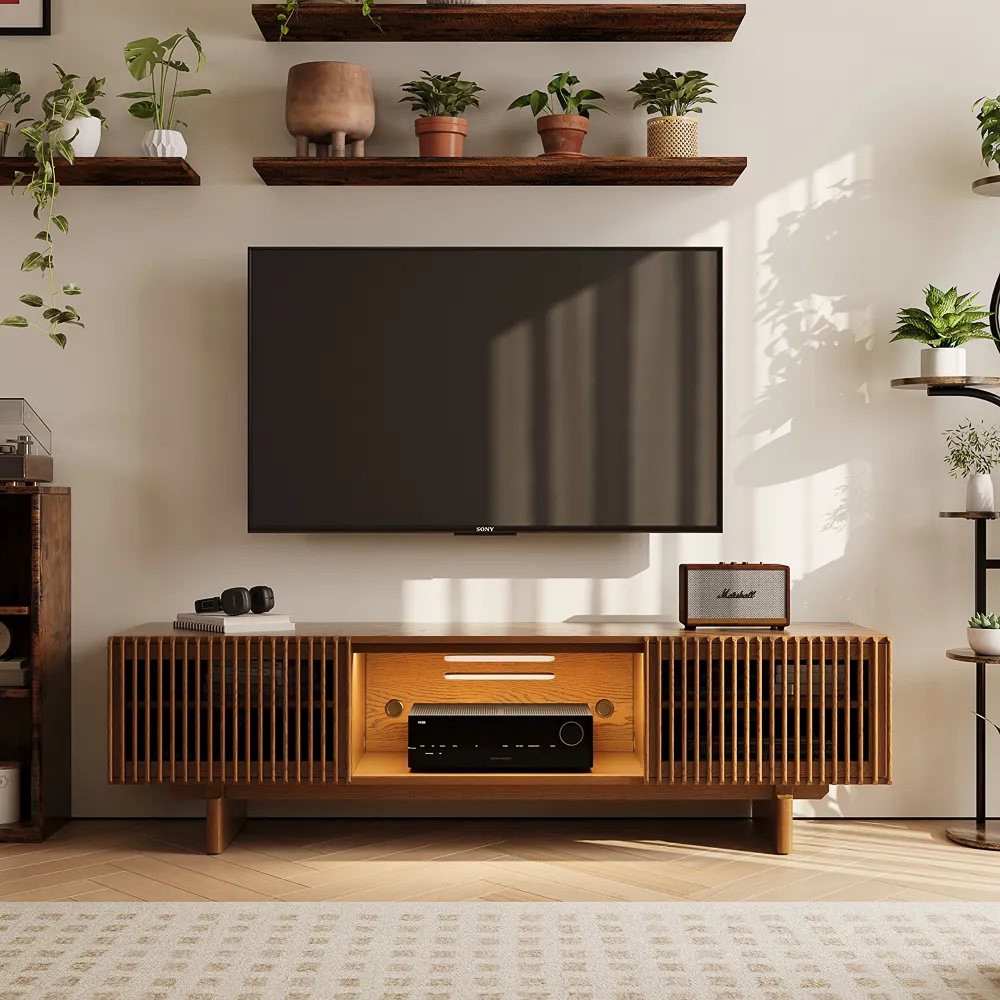
If the blue couch already anchors the seating side of the room, the media wall does not need another strong visual statement. Repeat a wood direction already used elsewhere and keep electronics, cords, and everyday media items from becoming part of the color scheme.
The POVISON Delven Verse Media Console gives the media wall a quieter role while still handling everyday electronics. Three storage cabinets keep equipment grouped, while six internal and three rear cable openings help reduce visible wiring. That makes it easier for the TV wall to stay organized and visually restrained instead of competing with a bold blue sofa.
If the television area still looks busier than the seating area, the issue may be surface clutter rather than color. Keeping TV stand decor organized without clutter helps preserve that quieter background role.
How Do You Keep a Blue Couch From Feeling Too Dark?
When a navy couch makes the room feel heavy, identify where the darkness is accumulating before changing the sofa itself. The problem is often contrast distribution rather than the color blue.
Check these areas in order:
- Floor-to-sofa contrast: If both the floor and couch are dark, use a noticeably lighter rug to separate them.
- Window area: Heavy dark curtains can reinforce the sofa’s visual weight, especially when the room has limited daylight.
- Furniture clustering: Avoid placing several dark tables, cabinets, or chairs immediately beside the sofa. Spread darker pieces across the room instead.
- Lighting direction: Add light near the seating area rather than relying only on a central ceiling fixture.
In a living room with gray flooring and one main window, for example, the sofa can remain navy while a lighter rug separates it from the floor and warm wood breaks up the cool surfaces. The goal is not to make the room pale—it is to prevent all of its darkest elements from collecting in one place.
What Finishing Details Make the Room Feel Intentional?
Once the sofa, rug, and main furniture are balanced, use accessories to reinforce the room rather than introduce another color scheme.
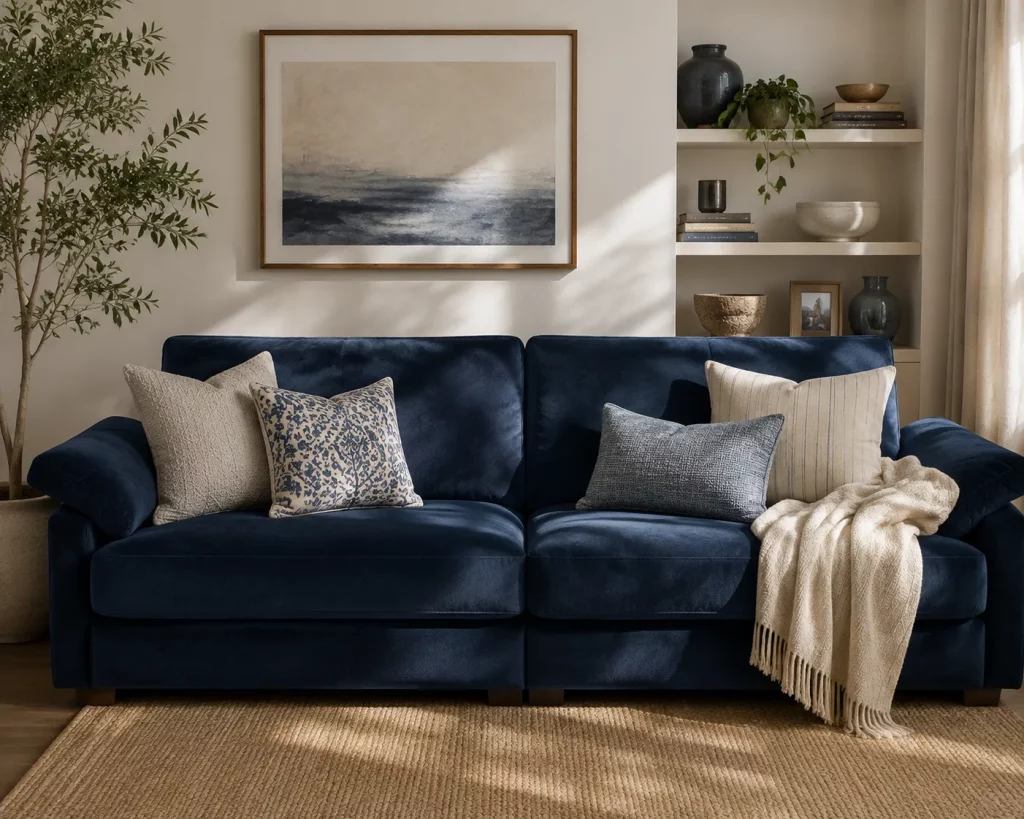
- Repeat blue selectively. One patterned pillow or artwork with a small amount of blue is usually enough to connect the sofa to the room.
- Add texture before more color. Linen, woven materials, ceramics, glass, or metal can add depth without making the palette busier.
- Vary finishes. Pair soft chenille or velvet-like upholstery with smoother accessories so the room does not become visually too plush.
Conclusion
A well-styled blue couch does not need every surrounding piece to match it. The strongest rooms give the sofa one clear role, then use lighter surfaces, warm materials, or quieter furniture only where they solve a visual problem. Once those larger relationships feel balanced, small accessories can stay simple. That is the most reliable way to make a blue sofa feel intentional rather than overly coordinated. If you still need a few pieces, POVISON offers coordinated living room furniture that can make completing the space a little easier.
FAQ
Can a Blue Couch Work With Black Furniture?
Yes, but the result depends on how much dark visual weight is already in the room. Black lamps, frames, or a slim side table can sharpen a blue sofa without overwhelming it. With a navy couch, avoid surrounding it with several large black pieces unless the walls, rug, and natural light are noticeably lighter.
What Metal Finishes Work With a Blue Couch?
Brass and warm gold make navy and medium blue feel warmer, while matte black creates a cleaner, more graphic contrast. Chrome and polished nickel suit cooler contemporary rooms. Keep one dominant metal direction across lamps, table bases, and hardware instead of introducing several unrelated finishes.
How Should a Blue Couch Work in an Open-Plan Room?
Use the sofa color as one anchor rather than repeating blue throughout the dining or kitchen area. Carry one supporting element—such as walnut, cream, or black hardware—into the adjoining zone. That connection makes the spaces feel related without turning the entire open plan into a blue color scheme.
How Do You Style a Blue Couch in a Small Living Room?
Keep the number of large colors and furniture masses limited. Use a lighter rug, choose one consistent wood direction, and add a secondary chair only when the walkway remains comfortable. Closed storage also helps because visible electronics, baskets, and small decor can make a strong blue sofa feel even more dominant.


