 By Stephanie
A small movie room needs seating that faces the screen without blocking doors, walkways, or other furniture. These small home theater seating ideas focus on practical arrangements that work in limited spaces, not just rows of oversized recliners. Start with how many people watch movies regularly, then consider the room’s shape and how much space each seat needs when fully extended. Below, you’ll find five layouts for different rooms and routines, along with a straightforward way to check whether your preferred seating will actually fit.
Table of Contents
What Seating Works Best in a Small Home Theater?
The first distinction is whether the furniture maintains the same footprint during use. Fixed sofas occupy a predictable amount of space, while reclining seats and sofa beds need additional room when extended. Use the comparison below to narrow your choices before deciding where the furniture should go.
| Seating Type | Best For | Main Consideration |
| Single Recliner | Solo viewing or a movie corner | Needs space to recline and possibly swivel |
| Reclining Loveseat | Couples watching movies together | Requires front clearance for the footrests |
| Fixed Sofa | Narrow or shallow rooms | Less flexibility for stretching out |
| Modular Sofa | Family viewing in shared living rooms | Corner seats may face away from the screen |
| Power Sofa Bed | Media rooms that also host guests | Extended depth may block walkways |
If you’re comparing the best home theater sofas, prioritize features you’ll use regularly rather than adding seats or functions the room cannot comfortably accommodate.
5 Small Home Theater Seating Ideas for Different Rooms
The following layouts start with the seating position people will use most often. Additional chairs, side tables, and modular sections come afterward. For each arrangement, consider how viewers will enter, sit down, and move around while someone else is watching. A layout should remain practical during everyday activities, not just when the room is empty.
1. One Recliner for a Solo Movie Corner
Best for: Small dens, bedrooms, or personal viewing areas.
A single recliner can create a comfortable viewing spot without requiring an entire sofa. Position it directly across from the TV, with enough space to extend your legs without hitting a cabinet or nearby furniture.
In a bedroom that doubles as a personal movie room, keeping the recliner slightly away from the bed can create two distinct areas. A slim side table can hold a drink or remote without taking up the space a full-size coffee table would need.
The Oliver Swivel Power Barrel Recliner suits a den used for both movies and conversation. Its 270-degree swivel lets you face the TV during a film, then turn toward the room without moving the entire chair. The power recline adjusts from 90 to 145 degrees, so you can sit upright for a quick show or lean back and relax during a longer movie. Its top-grain leather upholstery also provides a soft, supple feel for everyday lounging.
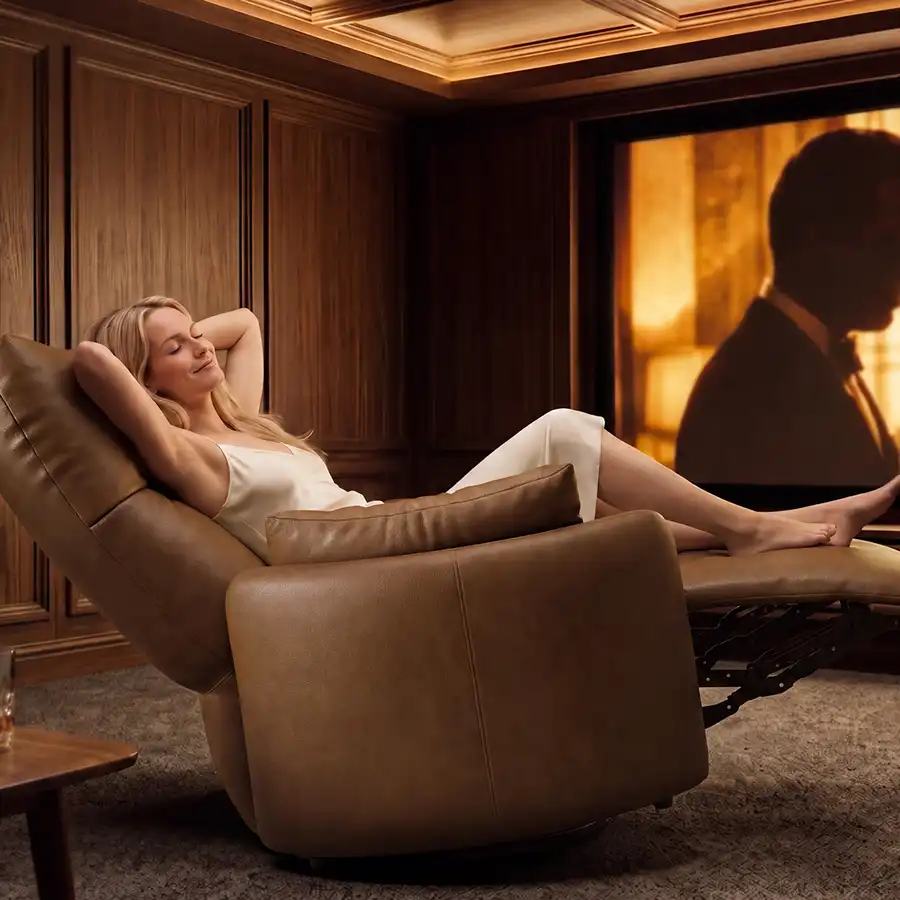
Oliver Swivel Power Barrel Recliner
A flexible choice for a personal movie corner, letting you face the screen or turn toward the room without rearranging furniture.
2. A Straight Reclining Loveseat for Two
Best for: Couples who regularly watch movies together.
For two people, a straight loveseat often makes more sense than separate oversized theater chairs. Center it on the TV where possible so both viewers can watch comfortably without turning toward the screen.
Leave the area in front free for reclining. If one person often gets up while the other remains seated, keep a clear route along the side they use most frequently.
For couples who prefer different reclining positions, the Benjamin Power Reclining Loveseat brings two power recliners together in a 77-inch-wide configuration. Each person can adjust their seat, while manually adjustable headrests provide additional head and neck support during longer movies. Its straight arrangement allows both viewers to face the screen while choosing their own reclining positions.
Before settling on this setup, check that the loveseat’s width leaves enough space to reach both seats.
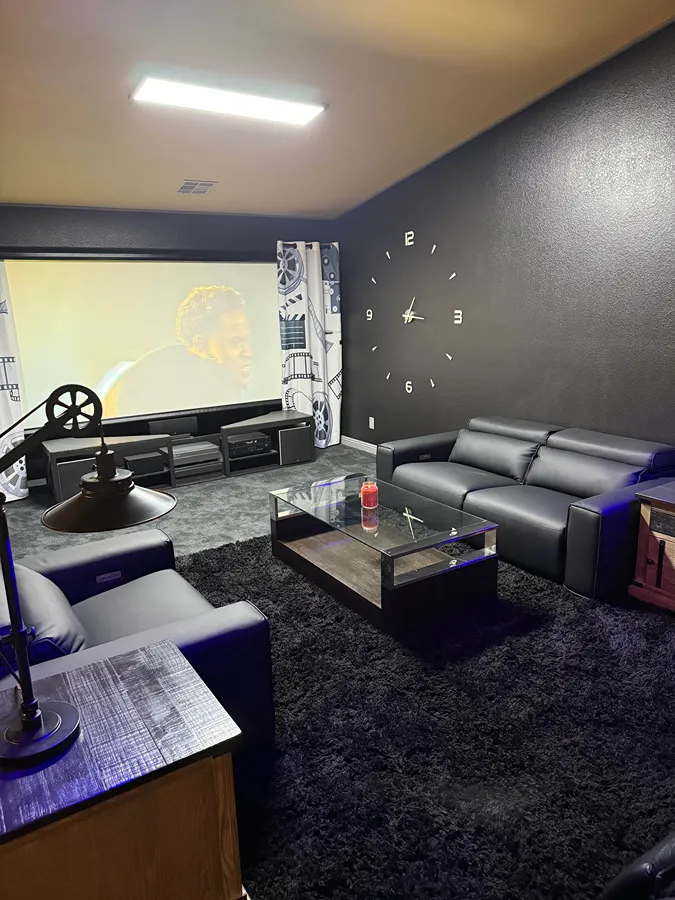
Benjamin Power Reclining Loveseat
A straight two-recliner setup keeps both viewers facing the screen while allowing each person to settle into their own comfortable position.
3. A Fixed Sofa for a Shallow Room
Best for: Narrow rooms without enough depth for reclining furniture.
A fixed sofa can be more practical than a recliner when the distance between the seating wall and TV is limited. Without an extending footrest, its footprint stays consistent during use.
Choose a loveseat or compact sofa with relatively slim arms. Position it directly opposite the screen, leaving the main walking route along one side.
In a shallow living room with a wall-mounted TV and a nearby kitchen entrance, this arrangement allows people to move between rooms without crossing the main viewing area. It also leaves more flexibility for a small coffee table or other everyday furniture.
For extra lounging comfort, add supportive pillows or a movable ottoman that can be stored when not needed.
Check the sofa’s overall depth before buying. Even without a reclining mechanism, an unusually deep frame can make a narrow room difficult to navigate.
4. A Corner-Based Modular Setup for Family Viewing
Best for: Square rooms or living rooms shared by several family members.
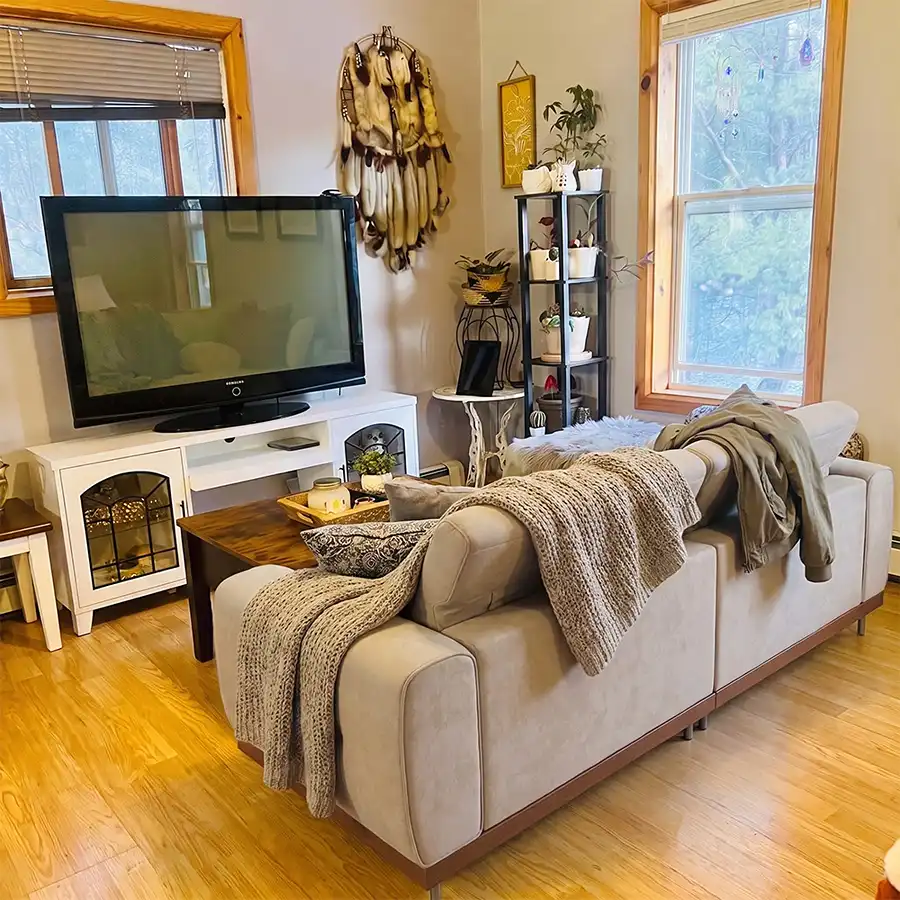
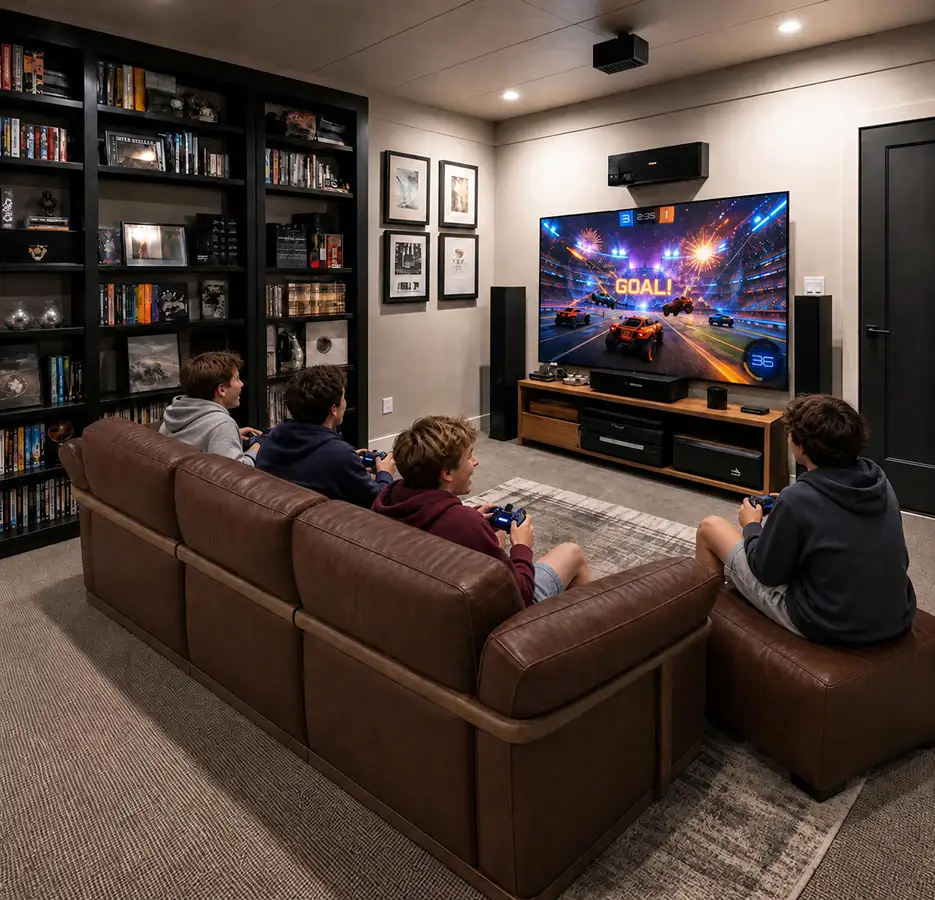
A modular arrangement works when the room needs seating for both movies and everyday activities. Instead of filling the entire space with a large U-shaped sectional, begin with a straight section facing the TV and consider adding a shorter return along an adjacent wall.
The forward-facing seats become the main movie-watching positions. The side section provides additional room for children to sit, stretch out, or join a conversation before the movie starts.
If everyone watches the screen for long periods, however, the corner seats may require uncomfortable head turning. In that case, a longer straight sofa may be more useful than an L-shaped configuration.
Keep the return section away from the doorway, and choose a modular design that can be rearranged if the room’s purpose changes. An extra module should provide seating someone will actually use, rather than simply filling an empty corner.
5. A Power Sofa Bed for a Multipurpose Media Room
Best for: Living rooms or guest rooms used for both movies and overnight stays.
When a movie room also hosts overnight guests, a sofa bed can replace the need for a separate guest bed. Unlike dedicated theater seating, it allows the room to serve different purposes without permanently assigning floor space to two large pieces of furniture.
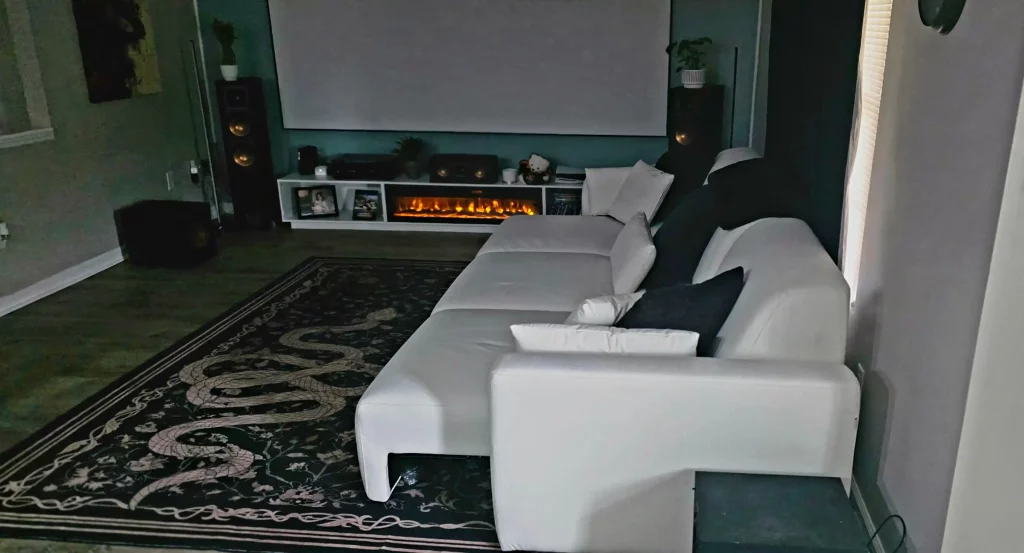
For a media room where the seating area needs to change throughout the day, the Aurora Electric Sofa Bed offers adjustable seat depth from 27 to 45.5 inches. Viewers can stretch out during a movie without adding a separate ottoman. Its soft chenille upholstery suits everyday lounging, but the 83-inch-wide frame needs a suitable wall, and the extended seating area must leave a usable route through the room.
The flexibility of sofa beds for media rooms is most useful when the room regularly serves more than one purpose. If the sleeping function is rarely needed and the extended sofa would block access to other furniture, a simpler seating arrangement may be more practical.
Aurora Power Sofa Bed
Ideal for a shared media room, with extra lounging space when it’s movie time and a compact sofa setup for everyday use.
How to Test Two Seating Layouts in a 10 × 12-Foot Room
Room dimensions alone won’t tell you where the sofa should go. In a small theater, a centered arrangement may look balanced but leave too little space to reach the seats. Comparing two positions within the same room helps reveal which layout actually works.
Start With the Screen and Doorway
Consider a 10 × 12-foot room with a TV on the 10-foot wall and an entrance along one side. Before positioning the sofa, identify which side people normally use to enter and whether the door opens into the seating area.
The goal is to preserve one usable route to the seats without placing the main viewing position at an uncomfortable angle.
Compare Centered and Off-Center Seating
A 77-inch-wide loveseat placed in a 120-inch-wide room leaves 43 inches of horizontal space.
- Centered: Approximately 21.5 inches remain on either side. Neither side provides a particularly generous passage.
- Offset: Placing the loveseat about 7 inches from one wall leaves approximately 36 inches on the other side, potentially creating a more usable route to the entrance.
These figures illustrate width only. They don’t establish whether either arrangement is suitable for a particular doorway or seating mechanism. If the loveseat has controls on the narrow side, make sure they’re still accessible.
Check the Layout With the Seats Open
A reclining loveseat takes up more floor space when extended than when upright. Check its fully reclined depth before buying, then make sure both footrests can extend without interfering with the TV wall, nearby furniture, or the entrance.
Compare the view from both seating positions as well. If moving the loveseat toward one wall creates an uncomfortable viewing angle, a narrower sofa centered on the screen may be a better solution.
Conclusion
The most useful small home theater seating ideas begin with how the room is actually used. Choose a layout that gives regular viewers a comfortable position facing the screen, then check whether the furniture leaves enough space for other activities. A sofa that fits against a wall may still be too large once reclining mechanisms or sleeping surfaces are extended. Comparing centered and off-center arrangements can reveal options that are easy to overlook. The right setup should make movie nights more comfortable without creating obstacles during the rest of the day.
Make Room for Better Movie Nights
Explore sofas and recliners for comfortable viewing, flexible seating layouts, and everyday living in smaller spaces.
FAQ
Is a Second Seating Row Worth Adding for Occasional Guests?
Usually not if extra viewers only visit occasionally. A second row permanently uses floor depth and may require a raised platform for clear sightlines. For infrequent movie nights, movable chairs can provide additional seating without changing the everyday layout, provided they don’t block entrances or walkways.
Is a Center Console Worth It in a Small Home Theater Loveseat?
A center console is useful if you want built-in cup holders and storage for remotes. However, it can increase the loveseat’s overall width and separate the seats. In a narrow room, compare the dimensions of console and non-console models before buying. A compact side table may offer more flexibility.
Can You Combine a Recliner and a Loveseat in a Small Theater?
Yes, if the loveseat remains the primary screen-facing seat and the recliner fits outside the main walkway. Position the chair slightly to one side, then check its fully extended footprint and viewing angle. If it blocks the entrance or requires awkward head turning, use the loveseat alone.
Can a Leather Recliner Sit Next to a Sunny Window?
Yes, but prolonged direct sunlight can affect both genuine and synthetic leather finishes. Use curtains or blinds during the brightest hours, and keep the furniture away from nearby heat sources. Follow the manufacturer’s care instructions rather than assuming a cleaner or conditioner suitable for genuine leather also works on synthetic upholstery.


