 By Jenny Smith
If you searched how to disassemble reclining sofa before a move, repair, or deep clean, the good news is that most reclining sofas can be broken down into smaller, easier pieces. In many models, the backrests come off first, and some sofas also let you separate seat sections or base rails. The safest approach is to identify the hardware before pulling anything, disconnect power on electric models, and label every bolt, clip, and wire as you go. That saves time now and prevents a frustrating reassembly later.
Table of Contents
What Parts of a Reclining Sofa Can You Dismantle?
Before you touch a screwdriver, it helps to know what usually comes apart and what usually stays fixed. That one check can prevent fabric damage, bent brackets, and wasted effort, especially when you are dealing with a powered model or a sofa that needs to fit through a narrow doorway.
Which parts usually come off first?
On most reclining sofas, the first removable part is the backrest. After that, some models allow you to separate seat units, center consoles, or lower rails from underneath. If the rear flap opens with Velcro or another removable closure, that is usually a sign the back can be removed; if the upholstery is fully stitched or stapled in a way that blocks access, the sofa may not be designed for full DIY disassembly. The same photo-first habit also helps when learning how to take apart a sectional sofa, because labeling pieces early makes reassembly far easier.
How does a manual reclining sofa differ from a power model?
The biggest difference is simple: a manual recliner usually has fewer parts to disconnect, while a power recliner adds wires, motors, and sometimes headrest or lumbar controls. In practice, the main difference between a power reclining sofa vs manual recliner is that a power unit needs to be unplugged and its connections labeled before you lift sections apart.
| Sofa type | Parts commonly removable | What to check first | Difficulty |
| Manual reclining sofa | Backrest, some seat sections, some base rails | Rear flap, clips, bolts, brackets | Low to moderate |
| Power reclining sofa | Backrest, seat modules, rails, some consoles | Power cord, quick-connect wires, motor area | Moderate |
| Modular reclining sectional | Backrests, individual modules, connectors | Section clips, brackets, layout labels | Moderate |
This comparison reflects how current brand guides describe manual, power, and sectional-style sofa construction: manual units are simpler, power units add electrical components, and modular layouts rely on connectors between pieces.

How Do You Disassemble a Reclining Sofa Step by Step?
Once you know the sofa is designed to come apart, the process is usually simpler than it looks. The safest approach is to remove the most accessible parts first, then reduce the size only as much as needed for moving, storage, or repair.
What tools should you prepare?
- Flathead screwdriver
- Phillips screwdriver
- Allen wrench or socket wrench
- Pliers
- Flashlight
- Painter’s tape and marker
- Small bags for screws and bolts
Step 1: Prepare the sofa and expose the hardware
Move the sofa away from the wall and clear enough space to work around it safely. Remove any loose cushions, then open the rear fabric flap if your model has one. This usually gives you access to the clips, levers, or brackets that hold the backrests in place.
Step 2: Remove the backrests
Locate the locking mechanism on both sides of each backrest and release it fully before lifting. If you are figuring out how to remove a recliner back, this is the key step: both sides must be free at the same time. Lift the backrest straight up with even pressure instead of twisting it from one corner.
I once helped move a large reclining sofa through a narrow stair landing, and removing the backs first made the entire piece feel surprisingly manageable. It turned a frustrating lift into a quick, controlled move.
Step 3: Separate the lower sections if necessary
If the sofa is still too large, tilt it carefully and inspect the underside for joining bars, bolts, or brackets. Remove only the parts needed to reduce the size. Many people searching how to take apart recliner furniture do not need a full teardown, just enough disassembly to clear a doorway or hallway.
Step 4: Label and store every part
Place all screws and bolts into labeled bags, and keep each section organized as you go. The same habit helps when learning how to take apart a sectional sofa, because clear labels make reassembly much easier.

How Do You Disassemble a Power Reclining Sofa Safely?
A power reclining sofa usually comes apart in much the same order as a manual model, so you do not need to repeat every step above. The main difference is the electrical system. Before removing any sections, focus on the power-specific parts that can be damaged more easily during moving or reassembly.
Key differences to pay attention to:
- Unplug the sofa first before touching any internal part.
- Trace and label every wire connection before disconnecting anything, especially if two plugs look similar.
- Look for quick-connect plugs instead of pulling directly on cords.
- Check around motors, headrests, and control units before lifting a section free.
- Bundle loose cables so they do not catch on brackets or rails during disassembly.
- Stop if a motor housing still feels attached, since forcing it can damage both wiring and the frame.
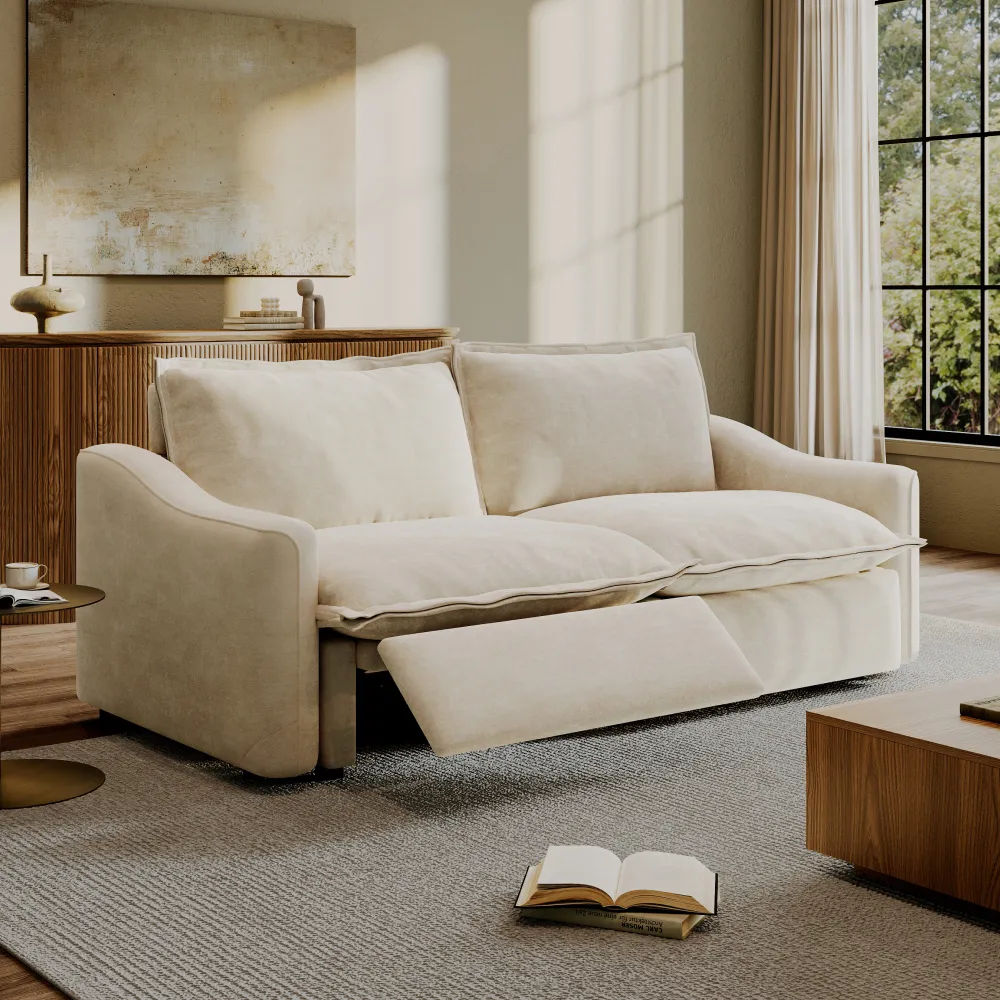
For example, theModern Power Reclining Loveseat Sofa reflects how fully assembled power sofas are often designed for easy setup and easier disassembly when needed, making them practical for everyday use, room updates, and future moves without adding unnecessary hassle.
What Should You Do If the Backrest or Base Will Not Come Apart?
This is where many people make damage happen. If the sofa is resisting, assume you missed a latch, bolt, or wire. Do not turn a stuck mechanism into a broken one. A careful pause is almost always faster than repairing bent hardware later.
Use this checklist before forcing anything:
- Recheck both sides of the backrest; one side may still be locked.
- Confirm the rear flap is actually removable and not stapled in place.
- Look underneath for hidden bolts joining seat sections or rails.
- On power models, make sure every visible connector is unplugged.
- Lift straight up, not diagonally.
- Stop if the bracket twists, fabric stretches, or a motor housing blocks movement.
If separate modules shift after reassembly, sectional connectors that latch adjacent pieces firmly together can help keep multi-piece seating aligned. And if you are dealing with stripped bolts, damaged wiring, very heavy frames, or tight stairs, that is usually the point to call a professional mover or technician instead of pushing your luck.
Conclusion
Disassembly is usually easier than it looks once you understand the order: remove the backrests first, reduce the size only as much as you need, and treat power components with extra care. If you searched how to dismantle reclining sofa, the safest answer is not to pull harder but to work smarter—check the flap, find the release points, label every part, and stop when the frame starts fighting you. Done carefully, the sofa becomes easier to move, easier to protect, and much less frustrating to reassemble in the next room or next home.
Q&A
These are the questions readers usually care about after the main steps are clear. They focus on small decisions that make the job easier, safer, and less annoying once the actual dismantling begins.
Can I disassemble a reclining sofa without turning it over?
Sometimes, yes, if the backrests release from the rear flap alone. But if you need to separate seat sections or remove base hardware, you usually need at least a partial tilt to inspect the underside. Use padding underneath to protect both the floor and the sofa fabric.
Should I bag screws by section or by step?
Bag them by section first, then note the step on the label. “Left seat rail,” “center console,” and “right back bracket” are more useful than “Step 2” or “Step 3” when you are putting the sofa back together a day or two later.
Is it normal for a reclining sofa to feel slightly loose after reassembly?
A small shift while you settle the frame can happen, but obvious wobbling is not normal. Recheck bracket alignment, tighten hardware evenly, and confirm the backrest clicked fully into place on both sides before using the recline function again.
Can I store dismantled reclining sofa parts in a garage?
Yes, but keep them dry, covered, and off bare concrete if possible. Bag hardware, protect exposed brackets, and avoid stacking heavy items on cushions or backs. For powered pieces, keep cords and connectors clean, dry, and clearly labeled before long-term storage.


