 By Hana
In 2026, your sofa is no longer just a place to sit—it’s your video-call background, kids’ fort, guest bed, and movie-night base, often all in the same week. Hybrid and remote work are still a regular part of many people’s jobs, so we’re spending more time living, working, and relaxing in the same space (Gallup, 2023). At the same time, homes and apartments are getting smarter but not always larger, which makes the choice between a modular sectional sofa and a traditional sectional crucial for comfort, flexibility, and a future-proof living room.
What Is a Modular Sectional Sofa in 2026?
How a Modern Modular Sectional Sofa Is Built
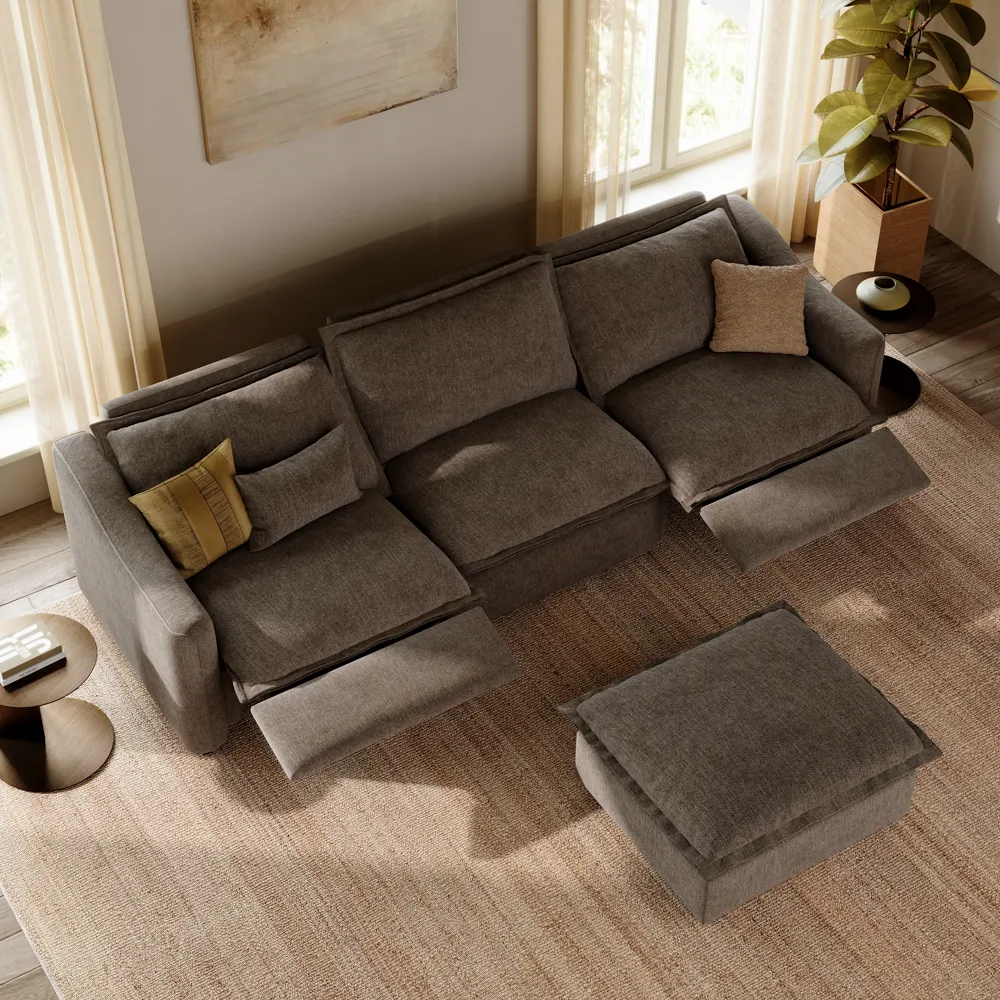
A modern modular sectional sofa is made from individual, movable sofa pieces—single seats, corner units, chaises, and ottomans—that lock together with clips, rails, or grippy feet. Instead of one heavy frame, you get modules you can detach, rotate, or rearrange, so today’s left-facing chaise can become tomorrow’s right-facing lounge. Many designs let you split a long run into two loveseats or pull out a single module as an accent chair. That’s why “modular sectional sofa” searches keep climbing: people want a sofa that adapts when life, roommates, or floor plans change.
Popular Modular Configurations – From Compact to Oversized Sectional
Modular sectionals come in familiar shapes like L-shaped and U-shaped, but also in pit-style layouts where pieces pull together into a giant lounging “sofa bed” for movie marathons. An oversized sectional usually means extra-deep seats, extra-wide overall width, or both—great for tall people or families who like to sprawl. In 2026, low-profile, deep-seat modular designs are favorites for home theaters and gaming corners, because you can nudge modules forward or back until the viewing distance is perfect, then pull them apart again for everyday living. If you’d like specific layout ideas and product picks, Povison’s best modular couch 2026 guide is a helpful place to start.
Pros of Modular Sectionals (And Their Hidden Cons)
The biggest win of a modular sectional sofa is flexibility. Modules are lighter, so they’re much easier to fit through narrow doors and elevators, and renters love that they can add more pieces as their household grows. If you move often, movable sofa pieces mean you’re almost guaranteed to make the new layout work. On the flipside, modular models can cost more upfront than some traditional sectionals, and cheaper designs may show visible seams or drift apart if connectors are weak. Modular is for you if you like rearranging rooms, use your living room for multiple purposes, or expect your life to change over the next few years.
Modular vs. Traditional Sectionals: A Side-by-Side Comparison for 2026
Before we dive deeper, here’s a quick at-a-glance comparison you could easily turn into an infographic:
| Feature | Modular Sectional Sofa | Traditional Sectional |
| Flexibility | High – movable pieces, layouts can change | Low–medium – fixed shape |
| Best For Room Types | Small, awkward, or evolving spaces | Stable layouts, larger fixed living rooms |
| Price Range | Often mid–high, but scalable over time | Wide range; some budget-friendly options |
| Maintenance & Moving | Easier to move and clean between modules | Harder to move; cleaning under frame is tricky |
| Entertaining & Guests | Break apart for extra seats or a sleep “pit” | Great for lounging, less configurable |
Flexibility, Layout, and Everyday Use
In open-concept living rooms, both styles can anchor the space, but modular shines when you need zones: you can swing a chaise to face the dining area during parties or detach a seat for a temporary home-office perch. In small apartments, the ability to reconfigure and tuck modules into corners can be the difference between cramped and cozy. For hosting, movable sofa pieces let you “break apart” the sectional into extra chairs, or push everything together into a giant nest for sleepovers and game nights—something a fixed traditional sectional can’t quite match.
Comfort, Durability, and Maintenance Over Time
Comfort, durability, and upkeep all come down to design details more than the label “modular” or “traditional.” What you’ll really feel is the cushion density and seat depth—both styles can offer deep, sink-in seats and generous chaises, while modular sectionals more often create those ultra-relaxed pit setups that feel almost like a bed. On durability, modular sofas depend on strong connectors between pieces, whereas traditional sectionals rely on a single, solid frame. Day to day, cleaning around movable sofa pieces is usually easier because you can slide a module out to vacuum. For either type, removable, washable covers or performance fabrics are your best friends, especially if you live with kids, pets, or both. If you want to dig deeper into fabric choices, Povison’s sectional sofas with durable fabrics guide breaks down materials in more detail.
Is a Modular Sectional Sofa Right for Your Lifestyle?
Best Fits for Modular – Families, Renters, and Space Curators
Modular sectionals are ideal if your life is in motion. Young families can start with a compact L-shape, then add modules as kids, pets, and toys appear. Renters or people who expect to move within two to five years appreciate that the sofa can shrink or stretch to match a new floor plan. Design lovers—the “space curators”—enjoy rearranging layouts seasonally without buying new furniture. When I moved from a two-bed condo to a townhome, a modular sectional simply split into two loveseats and a chaise; no last-minute sofa panic, just a new configuration in an afternoon.
When You Truly Need an Oversized Sectional (Modular or Traditional)
You probably need an oversized sectional if your household routinely piles onto the sofa for movie nights, you host big groups, or your open-plan living room feels visually empty with a standard couch. Check scale by comparing seat depth to your height, measuring room width, and leaving at least 30–36 inches for walking paths. If your space is small, resist the urge to overfill it: consider buying just two or three modular pieces now and leave room—and budget—to expand once you’ve lived with the layout for a while.
Style & Trend Considerations for 2026
In 2026, trends lean toward low, lounge-like modular pits, soft rounded edges, and textured neutrals that hide everyday wear. Modular sectionals double as design tools: swap a corner unit for an ottoman to open the room, or introduce a contrasting module in a bolder color instead of replacing the whole sofa. As new homes get smaller—average new U.S. single-family home size dropped to about 2,150 square feet in 2024, the smallest in 15 years (NewHomeSource, 2025)—modular layouts make it easier to refresh style without upgrading to a bigger house.

Buying Guide for Modular & Traditional Sectionals in 2026
Measure Your Space Like a Pro
Before you fall in love with any sectional, do a quick space audit. Start by measuring wall lengths, windows, doors, and any radiators or vents, then note stairways, elevators, and door clearances so delivery won’t be a nightmare. Map out your main walking paths and leave enough room to pass comfortably in front of the TV, cabinets, and chaises. If you’re considering an oversized sectional, mark its outline on the floor with painter’s tape and live with that footprint for a day. For a modular sectional sofa, go one step further and plan both an everyday layout and a “party” layout using movable sofa pieces, so you know it can flex for guests.
Frame, Cushions, and Fabric: What to Look For
For both modular and traditional designs, aim for a kiln-dried hardwood or high-quality engineered wood frame; those heavier pit-style setups need real structure. Cushion feel is personal, but medium-firm high-density foam often supports long work-from-sofa days better than ultra-squishy cushions. If you love a sink-in feel, a foam core wrapped in down or fiber can give you the best of both worlds. Fabric-wise, stain-resistant performance textiles have surged in popularity because buyers want low-maintenance, high-wear upholstery for busy homes (Furniture Today, 2025).
Smart Features, Sustainability, and Delivery Experience
Smart features are quietly becoming standard: hidden USB ports in arms, storage chaise modules for blankets and controllers, or adjustable headrests that make TV marathons kinder to your neck. Sustainability is another 2026 priority—look for FSC-certified wood, low-VOC finishes, and durable fabrics that won’t need replacing after a few years. On delivery, ask whether pieces arrive fully assembled or need light setup, how heavy each module is, and whether white-glove service includes room-of-choice placement. A modular sectional sofa usually arrives in more boxes, but each one is lighter and easier to maneuver than a single bulky frame. If you’re curious how integrated charging can work in real products, check out Povison’s picks in this USB-equipped sectional sofa 2026 guide.
Conclusion – The Best Sectional for Your 2026 Home
So which wins in 2026: modular sectional sofa or traditional sectional? If you value flexibility, expect life changes, or live in a space that might evolve, modular—with its movable sofa pieces and expandable layouts—will almost always serve you longer. If your room layout is stable, budget is tight, and you prefer a “set it and forget it” setup, a well-chosen traditional sectional can be the simplest, most cost-effective choice. Either way, measuring carefully, picking durable fabrics, and thinking three to five years ahead will matter more than any trend.
FAQs About Modular vs. Traditional Sectional Sofas
Are modular sectionals harder to keep together?
They don’t have to be. Good designs use metal brackets, slide-in rails, or wide friction feet to hold modules firmly in place. Sliding usually happens when the hardware is flimsy or mismatched to the flooring. Choose models with solid connectors, add non-slip pads on slick floors, and always re-lock pieces after you rearrange your layout.
Can I start small and expand a modular sectional later?
Yes, that’s one of the biggest perks. Many people begin with a simple three-piece L-shape, then add a chaise or extra seat once they know how they actually use the room. Just make sure the brand sells modules individually, and check whether they commit to keeping the same collection available for at least three to five years so new pieces will match.
What if I move or redecorate in a few years?
A modular sectional is easier to adapt to a new home: you can split a long run into two sofas, move a corner piece, or create a U-shape that frames a different focal point. Traditional sectionals are more of a gamble—if the new room is narrower or has different door locations, the fixed chaise side can suddenly be in the way. However, if you own your home and don’t plan to move, a classic traditional sectional you truly love can still be the best long-term value.


You made a great point about how our furniture needs have evolved. With more people spending time at home, sofas need to adapt to everything from video calls to movie nights. Do you think traditional sectionals will ever be able to offer this level of versatility, or is modular design here to stay?