 By Stephanie
A spare room can become a home office, guest lounge, playroom, or personal retreat without needing a complete renovation. The challenge is choosing a setup that fits your daily routine and leaves enough space to use the furniture comfortably. These flex room ideas cover eight practical ways to make extra space more useful, from family activities to occasional overnight guests. You’ll also learn how to choose furniture, plan around room dimensions, and avoid layouts that look appealing in photos but become inconvenient in everyday life.
Table of Contents
How Do You Choose the Right Flex Room Idea?
A flex room can serve different purposes, but not every activity works well alongside another. Before combining functions, consider whether they need the same floor space, lighting, or level of privacy. Some uses can happen together; others work better at different times.
| Activities You Want to Combine | What Makes Them Work | Potential Conflict |
| Office + Homework | Separate work surfaces and shared storage | Calls and homework may compete for quiet |
| Lounge + Guest Room | Seating that converts when visitors arrive | Sleeping furniture may block everyday access |
| Playroom + Family Lounge | Seating along the perimeter and clear floor space | Toys and large furniture can crowd movement |
| Media Room + Gaming | One organized equipment area | Multiple devices need power, ventilation, and cable access |
| Hobby Room + Reading | Dedicated work surface and separate seating | Messy projects can take over the relaxation area |
If two activities compete for the same space at the same time, separate them or choose a different pairing. A room doesn’t become more useful simply by adding another function.
8 Flex Room Ideas for Different Everyday Needs
These flex room ideas show how different activities can work within the same room, whether you’re arranging furniture for daily use or planning for occasional changes. Each setup explains where to place the main furniture, how to keep the room functional, and which limitations to consider before choosing a layout.
1. Home Office and Homework Station
Best for: Remote workers and families with school-age children.
Place the main desk near natural light, positioning the monitor to minimize screen glare. Keep shelves or filing storage along the wall rather than adding freestanding cabinets that reduce chair clearance.
If a parent works while a child studies, use two separate work surfaces when both need the room simultaneously. Shared storage can sit between them, but each person should have enough room to pull out a chair and use a laptop or notebook.
For video calls, choose a wall with a simple background and use curtains or a door to reduce distractions. A compact folding desk works for occasional homework, while a permanent workstation makes more sense for daily computer use.
2. Guest-Ready Lounge
Best for: Households that host overnight guests occasionally.
A spare room used only for visitors can sit empty most of the month. Instead of leaving a permanent bed in the center, arrange comfortable seating against a wall with a small side table and accessible storage for bedding. When guests arrive, the room can serve a different purpose without completely rearranging the furniture.
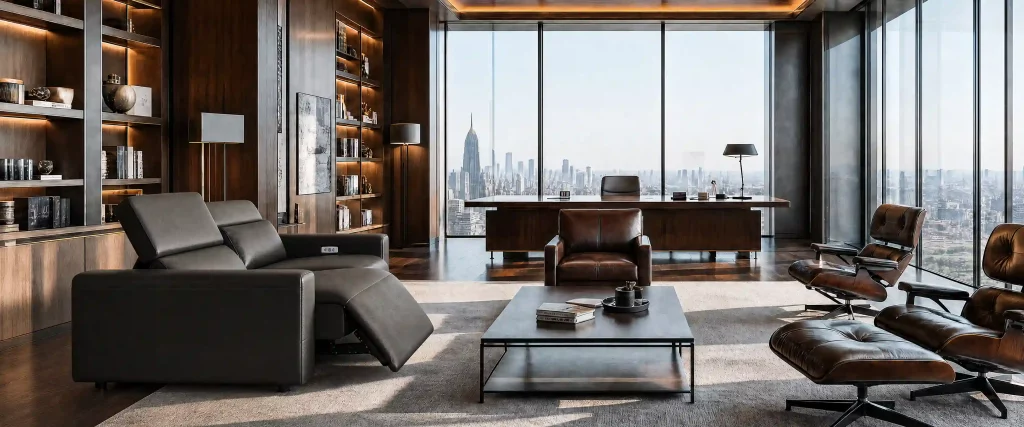
The Aurora Multifunctional Sofa Bed lets a room stay comfortable for everyday sitting and extend into a temporary sleeping space when guests arrive. Its power-adjustable seat depth ranges from 27 to 45.5 inches, while the wall-hugging design eliminates the need to pull the sofa away from the wall. At 83 inches wide, it still requires sufficient room to extend forward.
For frequent visitors, choosing a sofa bed for a guest room also means considering sleeping comfort, guest height, and how easily the room can be prepared for longer stays.
3. Playroom and Family Lounge
Best for: Families whose children’s activities change as they grow.
Keep the center of the room open for floor play, with low storage bins along one wall and seating outside the main activity area. Toys can be put away after playtime, allowing adults to use the same space for conversation or relaxation.
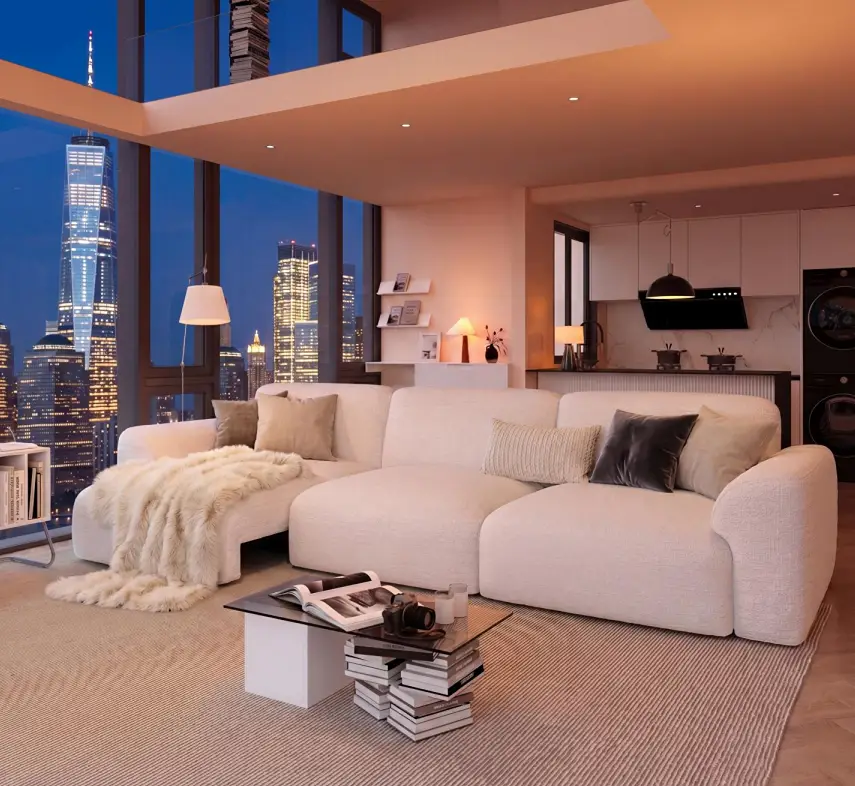
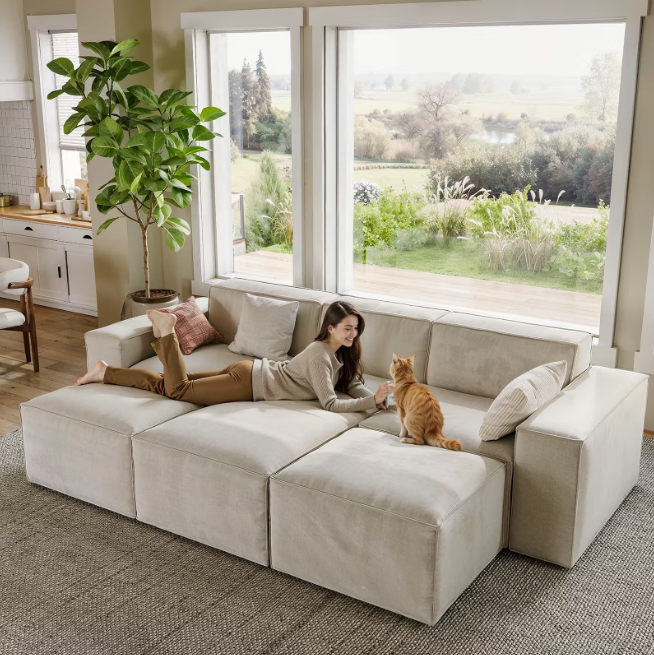
The Barrett Modular Couch offers a seating arrangement that can change as a playroom becomes a family hangout. Its modular sections can be rearranged when seating needs change, while water-repellent, scratch-resistant polyester helps with everyday spills and wear. At 83.86 inches wide, it works better along a dedicated wall than in a narrow play area.
4. Media Room and Gaming Den
Best for: Families who enjoy console gaming, streaming, and shared entertainment.
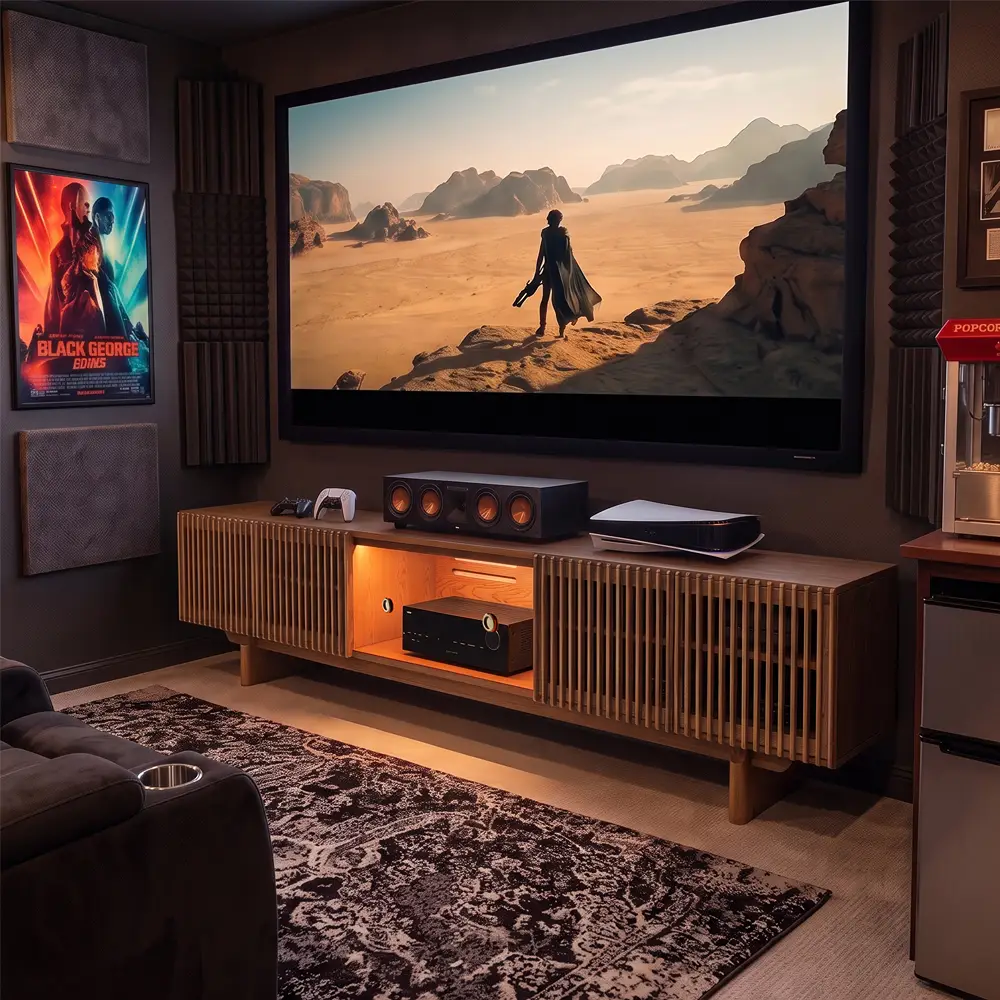
A media room can support both console gaming and family entertainment without requiring two separate setups. Keep the screen and electronics along one wall, with seating positioned for comfortable viewing and enough room for additional players when needed.
The Delven Verse Media Console keeps gaming consoles, AV receivers, and streaming equipment organized in one location. Its 18.3-inch usable interior depth accommodates many larger components, while six internal and three rear cable openings help keep connections out of the way. Slatted doors and rear ventilation support equipment operation without leaving everything exposed.
Before buying, measure your largest receiver or game console, including its cables and manufacturer-required ventilation space. A media cabinet should organize equipment without trapping heat or restricting access to connections.
5. Living Room and Casual Workspace
Best for: Households that need occasional laptop space without a permanent office.
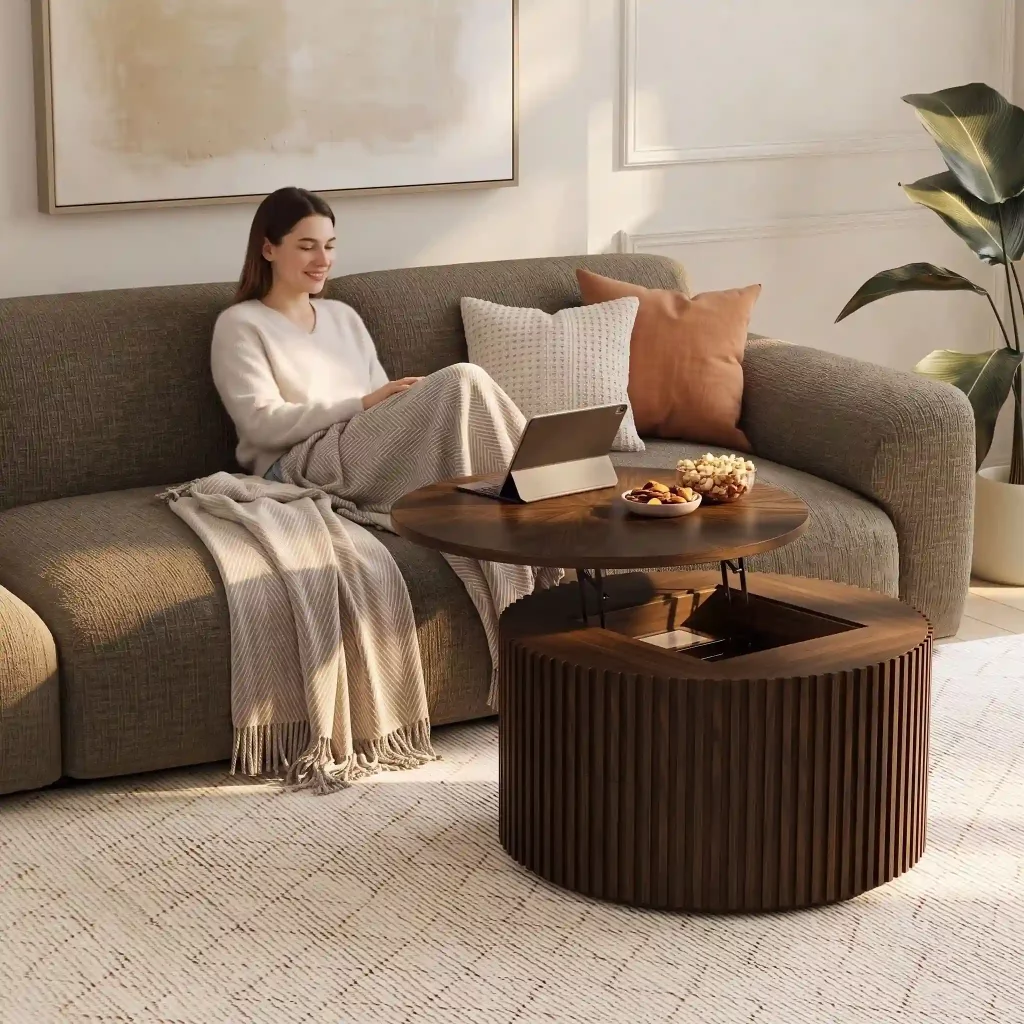
A living room can handle short work sessions without adding another desk. Keep the sofa as the main seating area, use a nearby outlet for charging, and select a coffee table that offers a usable work surface when needed.
The Silva Lift-Top Round Coffee Table provides a raised surface for occasional laptop work without adding a separate desk. Lowering the top returns it to everyday coffee table use, while two drawers keep chargers and small accessories close by. Its round, 31.5-inch footprint also avoids sharp corners, though you’ll still need room to operate the lift mechanism comfortably.
This arrangement works for checking email or handling brief tasks. For several hours of daily computer work, a properly sized desk and adjustable office chair provide a more suitable setup.
6. Home Gym and Yoga Space
Best for: People who exercise at home several times a week.
Start with open floor space rather than large fitness equipment. Place a yoga mat on the floor and move through your usual stretches, checking whether your arms or legs approach furniture, doors, or walls.
Store light equipment, resistance bands, and rolled mats in a wall-side cabinet or basket. Choose appropriate non-slip flooring protection for the exercises you perform.
If you use weights, keep them in secure storage away from children’s play areas. A room used primarily for yoga or stretching will generally benefit more from open floor space than additional seating.
7. Hobby and Craft Studio
Best for: Sewing, painting, model building, and other creative projects.
Choose a sturdy worktable large enough for your most common project. Place frequently used tools within reach, then organize materials by activity in labeled drawers or storage bins.
For painting or messy crafts, use a protective work surface and flooring that can be cleaned without special treatment. Task lighting is especially useful for detailed work.
Keep one section of the table clear between projects so the room remains usable for other activities. If supplies regularly cover the floor, prioritize additional storage over decorative furniture.
8. Library and Screen-Free Retreat
Best for: Reading, quiet hobbies, and time away from screens.
Arrange bookshelves against a wall and position a comfortable chair where natural light is available. Add an adjustable reading lamp for evenings and a compact side table within easy reach.
Use a rug, curtains, and upholstered seating to make the space more comfortable without overcrowding it.
A library doesn’t need a sofa, television, or several seating groups. One supportive chair and accessible storage may be enough. This setup is especially useful when the main living room is frequently occupied by other family members.
How Do You Make a Flex Room Layout Work?
A flex room needs to function beyond its everyday arrangement. Before buying furniture, test how the space changes between activities and what happens to the items that aren’t being used.
Use this three-step switching test:
- Set up the everyday layout. Mark where the main furniture will sit, including the space needed to use it. For a 10-by-12-foot room, an 83-inch sofa might fit along one wall, but that doesn’t guarantee enough room for other activities.
- Switch to the second activity. Mark the fully extended furniture footprint, move any items that would need relocating, and check access to doors and storage. Decide where the displaced items will go.
- Return to the original setup. Consider how much effort it takes to put everything back. If changing activities requires lifting heavy furniture, clearing an entire table, or moving items into another room, simplify the layout.
The goal is a room you can use in different ways without repeatedly dismantling its everyday setup.
What Should You Check Before Buying Flex Room Furniture?
Flexible furniture should make ordinary routines easier, not create additional work every time the room changes purpose.
Before purchasing, check these practical ownership details:
- Hardware and upkeep: For powered or lift-top furniture, check the warranty coverage, care instructions, and availability of replacement parts before buying.
- Cleaning: Does the upholstery or tabletop suit the activity most likely to cause spills, wear, or stains?
- Power access: Will powered furniture and electronics reach appropriate outlets without cables crossing walkways?
- Delivery: Can large furniture packages pass through doorways, stairs, and hallway turns?
- Future changes: Can the furniture remain useful if the room’s main purpose changes?
A workout room deserves special attention because exercise equipment has different storage and safety needs from ordinary living room accessories. Choosing home gym furniture for multipurpose rooms should start with equipment containment and usable exercise space rather than appearance alone.
Conclusion
The most effective flex room ideas are the ones that support how your household actually uses the space. Start with the main activity, choose furniture that fits that routine, and check how the room functions when everything is in use. A guest-ready sofa, adaptable seating, organized media storage, or a lift-top table can each solve a different problem, depending on your needs. If you’re ready to furnish your flex room, POVISON offers sofas, tables, and storage furniture to help bring your setup together.
Explore More Furniture for Flex Rooms
Browse fully assembled furniture designed for flexible spaces and everyday living.
FAQ
Can a flex room work without a door?
Yes. An open flex room can work well as a reading corner, casual lounge, or supervised play area. Activities requiring quiet, private conversations, or overnight accommodation are more difficult without separation. Bookshelves or curtains can provide visual privacy, but they won’t offer the same noise control as an enclosed room.
Is a Murphy bed better than a sleeper sofa?
A Murphy bed may be better when you want a dedicated sleeping surface that folds away during the day and have a suitable wall for installation. A sleeper sofa makes more sense when the room needs comfortable seating most days. Compare installation requirements, mattress comfort, and fully opened dimensions before choosing.
Can a windowless flex room become a guest bedroom?
A windowless room shouldn’t automatically be treated as a safe or legally recognized bedroom. Local building requirements may govern emergency escape openings, ventilation, and permitted sleeping spaces. Check the applicable rules before converting the room for overnight guests. Adding a bed or sofa bed doesn’t establish that the room meets those requirements.
How Should Lighting Change Between Flex Room Activities?
Use focused task lighting for working, studying, or crafts, and softer ambient lighting for reading or relaxing. In a media room, position lamps to avoid reflections on the screen. If activities share the space, separate lighting controls let you adjust brightness without changing the entire room’s setup.
Can renters create a flex room without renovations?
Yes. Renters can use freestanding bookshelves, modular seating, storage carts, and movable lighting to establish different activity zones. Choose furniture that fits through existing doorways and can move to another home. Before installing wall-mounted desks, shelving, or Murphy beds, review the lease and obtain any required landlord approval.


