 By Kelvin
The most useful four season room ideas start with how you plan to use the space, not just how many windows it has. A well-arranged room can support everyday lounging, reading, conversation, and occasional overnight rest while keeping walkways and window views open. The key is choosing indoor furniture that fits the room’s natural light, temperature, and available floor space. From flexible sofa beds to dedicated reading corners, these layouts show how to make a four-season room comfortable and functional throughout the year.
Table of Contents
What Makes a Four-Season Room Different from a Three-Season Sunroom?
A four-season room is an enclosed living space designed for use throughout the year. It typically has insulated windows, better thermal protection, and access to heating and cooling, making it more suitable for everyday indoor furniture than a traditional three-season sunroom.
A three-season room, by comparison, is generally designed for spring, summer, and fall rather than consistent winter use. Its temperature may fluctuate more with outdoor conditions.
This distinction matters when planning furniture. A properly enclosed four-season room can function like an additional living room, reading space, or family lounge. You can consider upholstered sofas, accent chairs, coffee tables, and other indoor furniture rather than limiting the room to weather-resistant outdoor seating.
Before furnishing the space, check its insulation, ventilation, and temperature control. Room labels can vary, so the actual conditions matter more than the name.
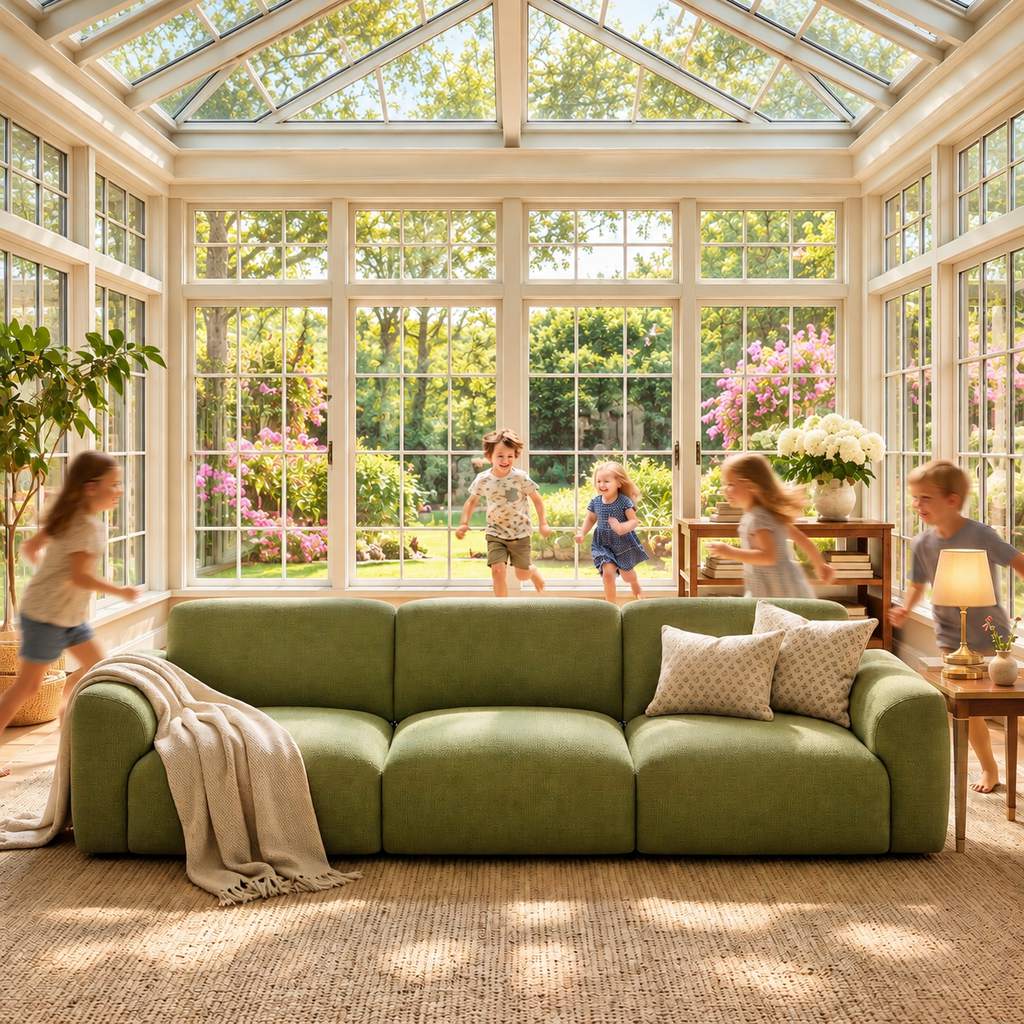
How to Plan Furniture Around Sunlight, Temperature, and Room Layout
Before choosing a sofa or chair, consider the conditions that determine where furniture can stay comfortable. In a four-season room, window exposure, HVAC vents, door swings, electrical outlets, and walking paths all affect the layout. Plan around these fixed features first, then choose seating that supports the activities you want the room to accommodate.
Position Upholstered Furniture Around Natural Light
Large windows are one of the main attractions of a four-season room, but they also create challenges for upholstered furniture. Direct sunlight can cause fabric to fade or deteriorate over time, even when the room is climate-controlled.
Observe how sunlight moves across the room throughout the day before deciding where to place a sofa or reading chair. A seat positioned perpendicular to a window can receive natural light without sitting directly in the strongest sunlight.
Consider these placement adjustments:
- Use curtains, solar shades, or blinds to control direct sunlight.
- Keep upholstered furniture away from windows with prolonged afternoon exposure.
- Position reading seats where daylight comes from the side rather than directly into your eyes.
- Avoid placing furniture directly over heating vents or air-conditioning outlets.
Water-resistant upholstery does not automatically provide UV protection, so check the manufacturer’s care instructions before placing a sofa near a sunny window.
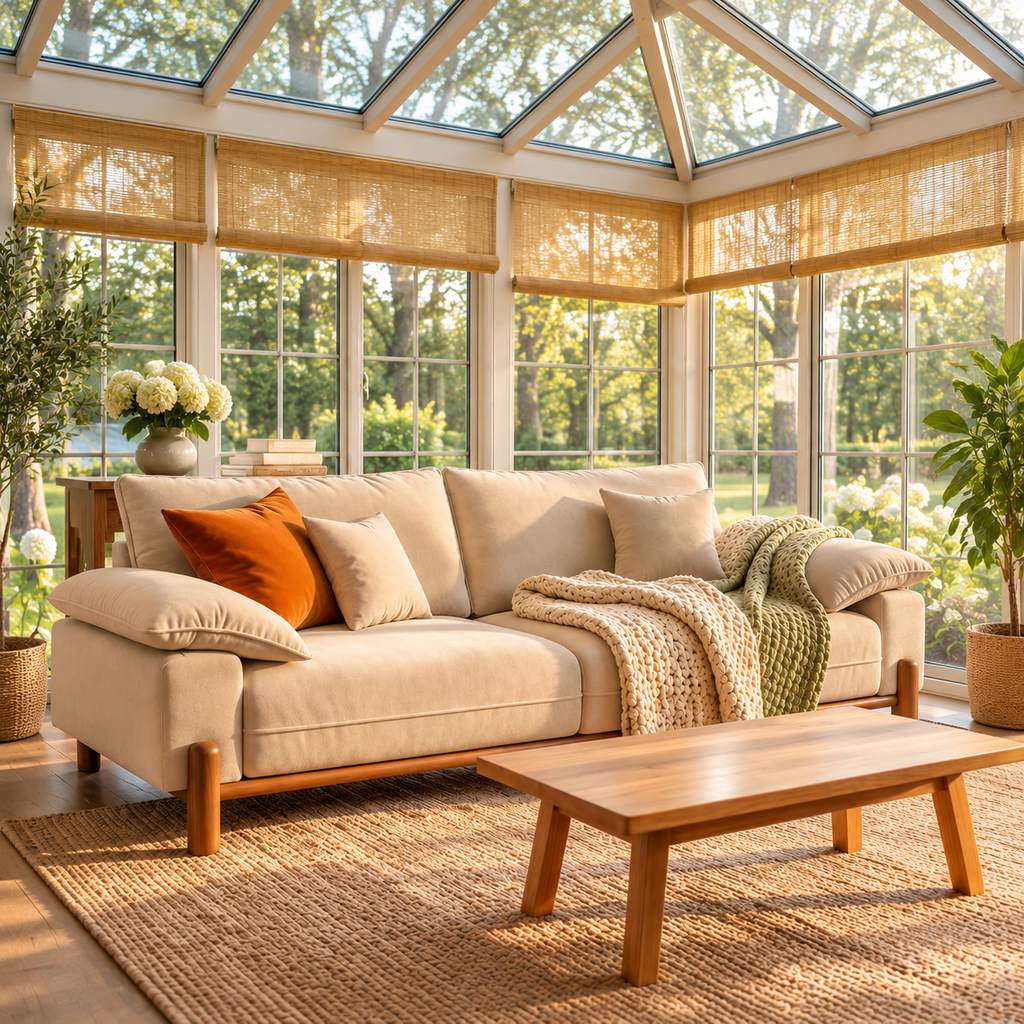
Keep Doors, Vents, and Walkways Clear
A four-season room should feel connected to the rest of the home and the outdoor view. Avoid placing a large sectional across the main entrance or arranging chairs where they obstruct sliding doors.
Leave a clear route between the entrance, seating area, and windows. If the room has multiple doors, arrange the main seating group toward the center or along one wall rather than filling every available corner.
Measure Furniture in Every Position
Furniture measurements should reflect how you actually use each piece. A regular sofa may fit comfortably against a wall, but a reclining seat or extendable sofa bed needs additional floor space when adjusted.
Measure:
- The sofa’s full width and depth.
- The distance available in front of an extended seat.
- Space needed to open nearby doors and windows.
- Clearance between the coffee table and seating.
- Access to outlets for powered furniture.
The following table provides a starting point for different four-season room layouts.
| Room goal | Suggested furniture arrangement | Main consideration |
| Everyday lounging | Sofa bed + coffee table | Extended seat clearance |
| Reading corner | Accent chair + side table | Side lighting and reach |
| Conversation area | Sofa + two accent chairs | Seating distance and access |
| Small sunroom | Loveseat + compact table | Open floor space |
| Family relaxation | Deep sofa + coffee table | Seating capacity and circulation |
| Evening retreat | Sofa + reading chair + lamps | Layered lighting |
6 Four-Season Room Ideas for Year-Round Comfort
The following four season sunroom ideas focus on how furniture can support different activities without making the room feel overcrowded. Some layouts prioritize flexible seating, while others create dedicated areas for reading, family time, or entertaining. Choose one primary purpose for the room and add secondary functions only when the available space allows.
1. Create a Flexible Lounge with a Sofa Bed
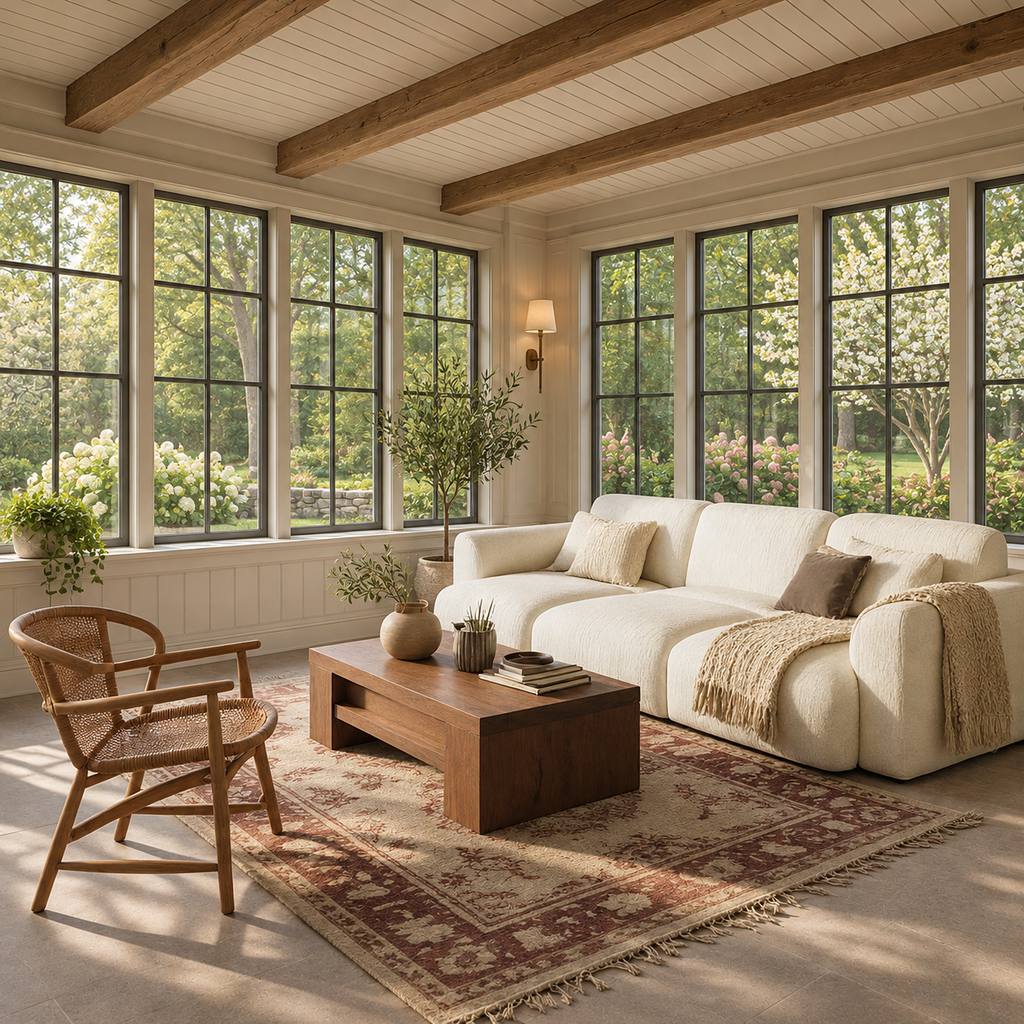
A sofa bed is useful when the four-season room needs to function as an everyday sitting area but also provide extra room for resting. Instead of adding a separate daybed or guest bed, choose seating that can adapt to different positions.
For households that use the room for morning coffee, afternoon reading, and occasional naps, a powered design can make those transitions easier. A traditional pull-out sleeper is not the only option; power sofa beds for everyday lounging and occasional sleep offer another way to combine everyday seating with a more flexible resting surface.
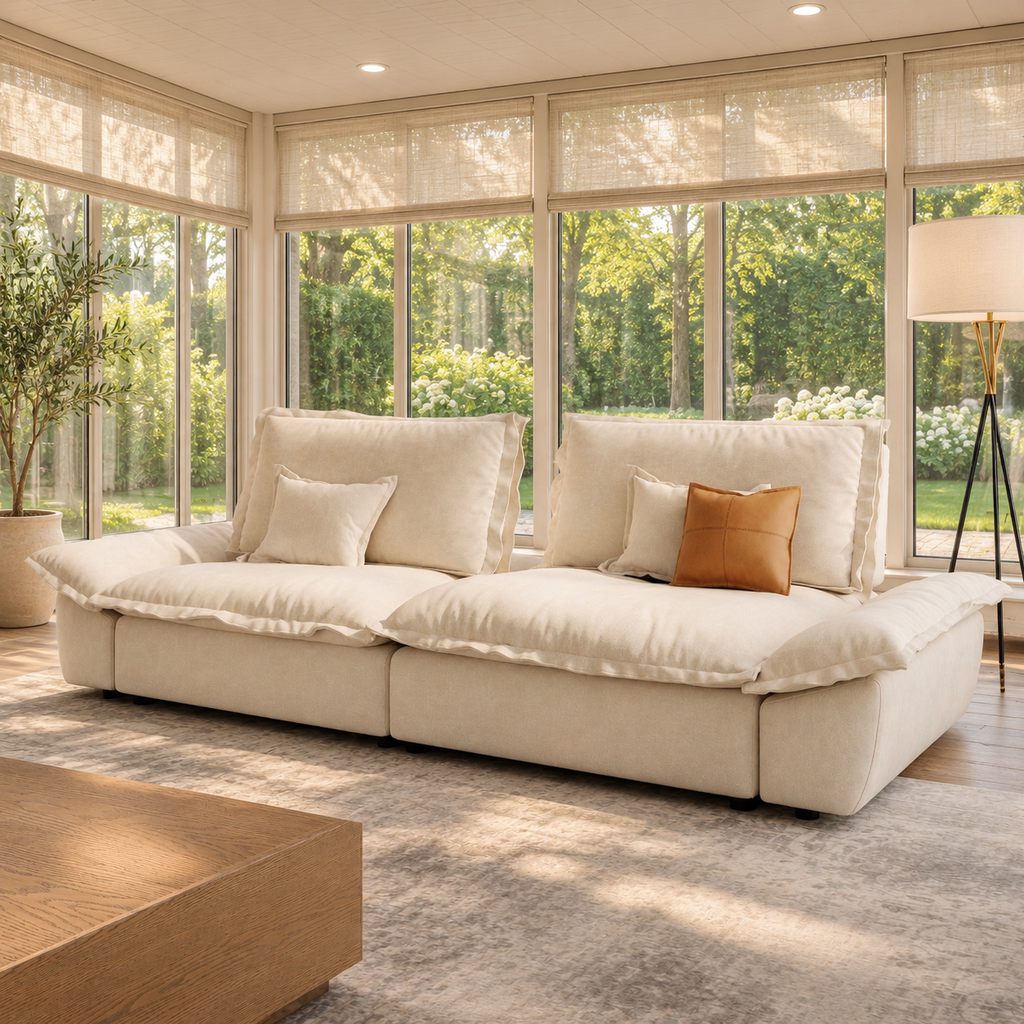
The Povison Aurora Power Sofa Bed suits this setup because its seat adjusts from 27 to 45.5 inches deep. One-touch controls switch between lounge, recline, and sleep modes, allowing the room to accommodate different activities without manually unfolding a separate mattress. We recommend it for a multipurpose lounge where flexible seating matters more than a permanently dedicated guest bed.
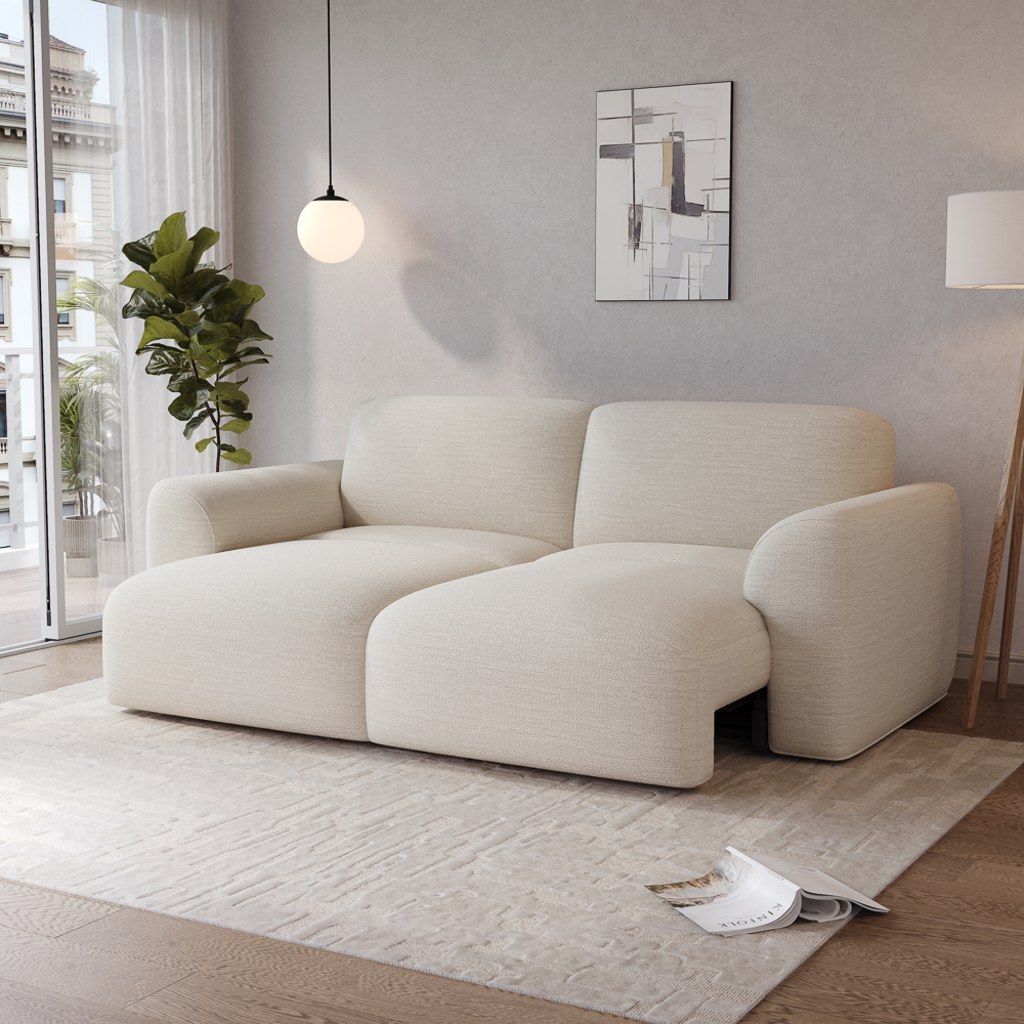
Aurora Power Sofa Bed
Powered seating for everyday lounging and deeper rest without separate guest furniture.
👍 Best for: Flexible everyday lounge spaces
✨ 27–45.5-inch adjustable seat depth
✨ One-touch lounge, recline, and sleep modes
✨ Water- and scratch-resistant chenille
2. Set Up a Reading Corner by the Window
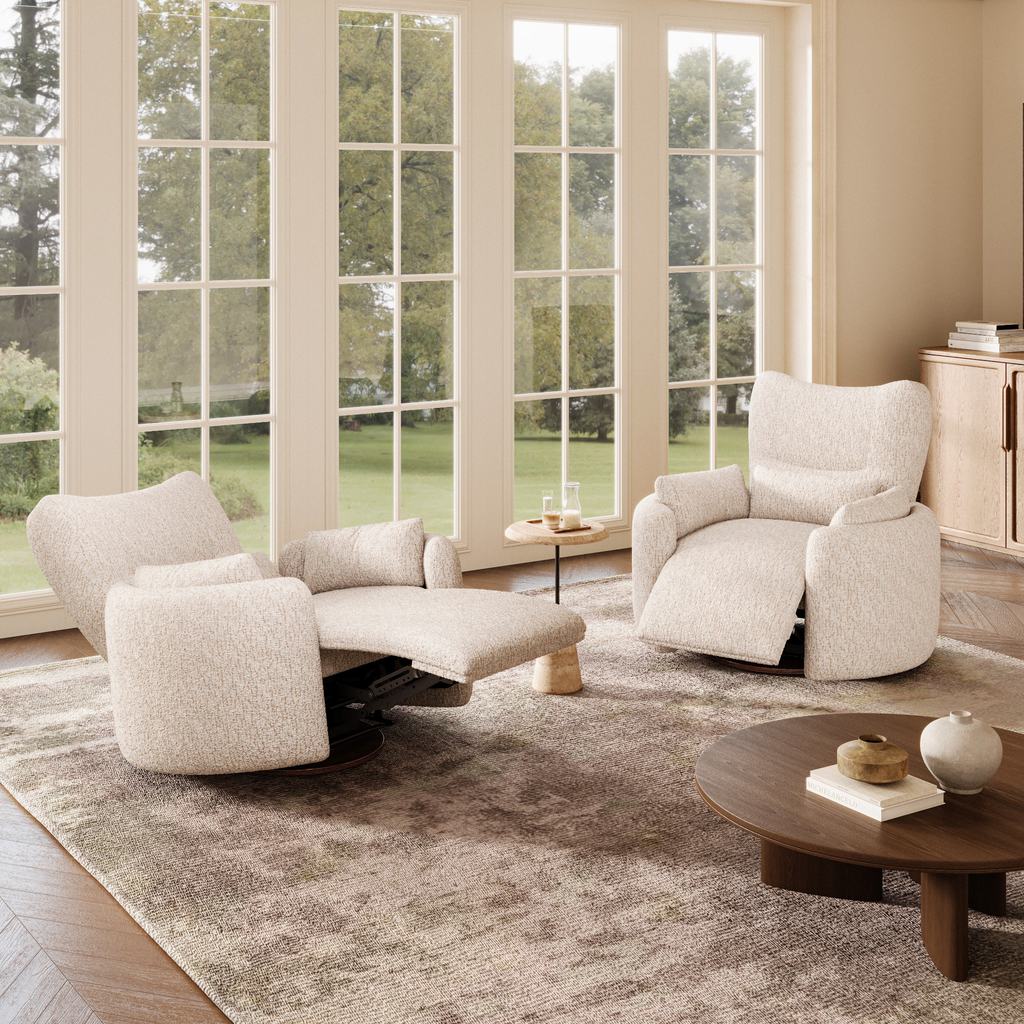
A reading corner gives the room a quieter purpose without requiring a complete second seating arrangement. Place one accent chair near a window where daylight falls from the side, then add a small side table for books, coffee, or a reading lamp.
Choose a chair with enough back support for longer reading sessions. A swivel design can also make it easier to turn toward the garden during the day or toward the rest of the room when someone joins you.
Keep the arrangement compact. One comfortable chair, one reachable surface, and focused lighting are usually enough. If the corner also serves as a place to relax after work, a recliner can provide more flexibility than a fixed accent chair.
3. Arrange Seating for Conversation
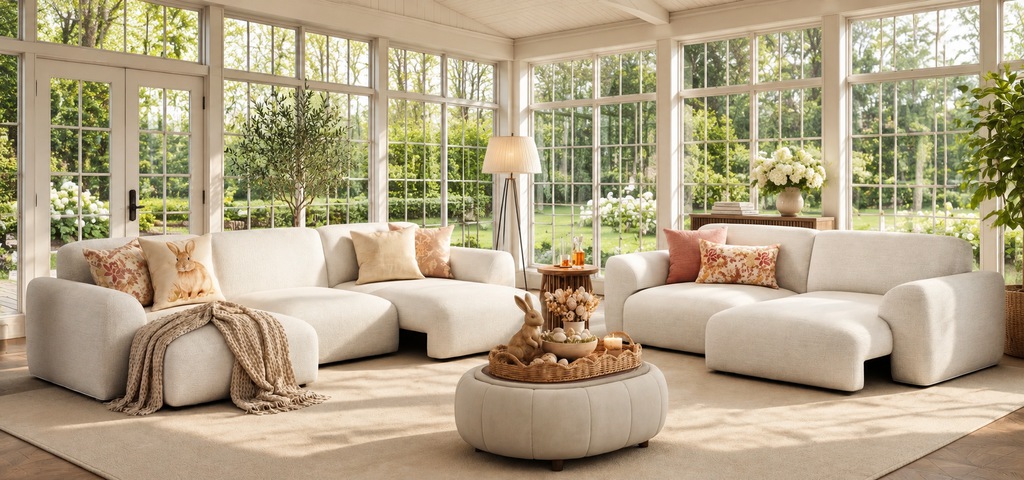
If you frequently have family or friends over, arrange the four-season room around face-to-face conversation rather than pointing every seat toward the windows. A sofa with two accent chairs creates a natural gathering area while allowing people to enjoy the outdoor view from different angles.
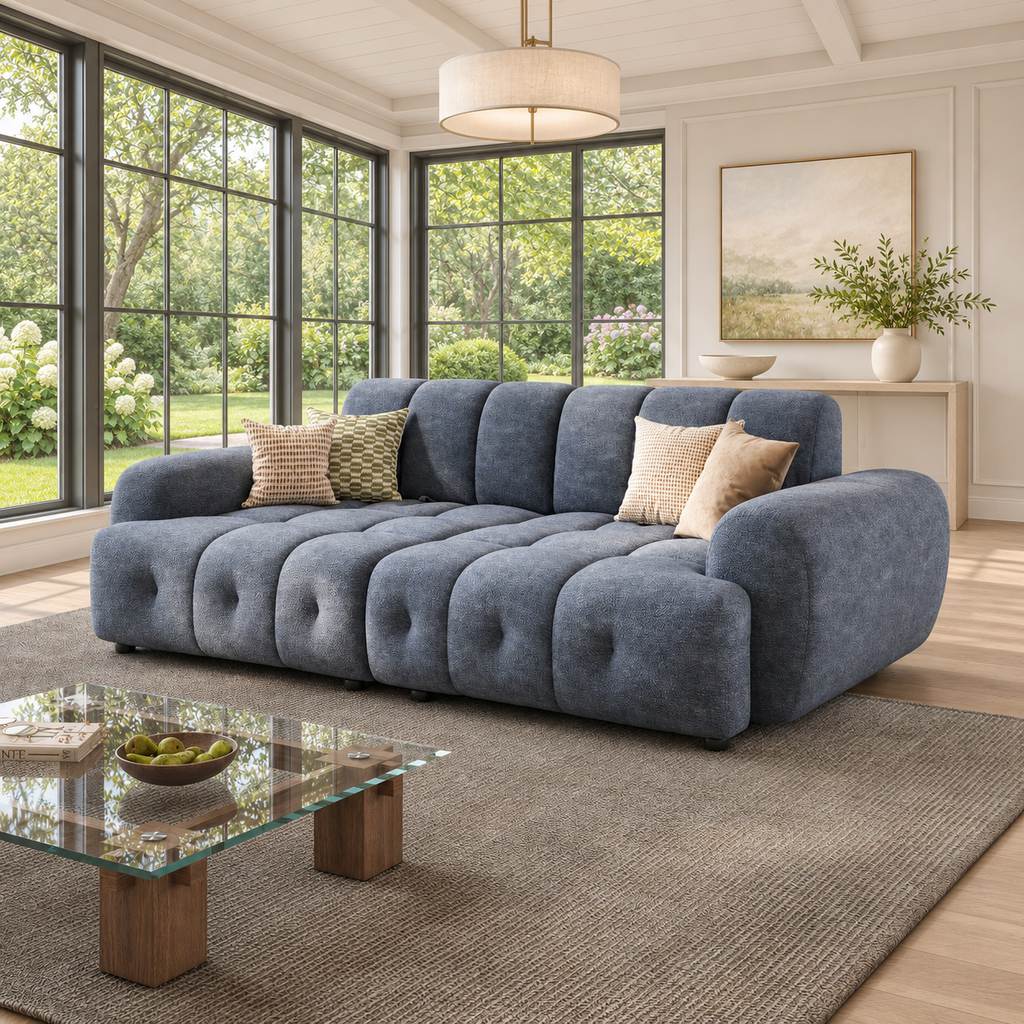
For larger rooms, the Povison Hudson Sailboat Deep Sofa offers an adjustable backrest that changes the seat depth from 22.83 to 33.46 inches. Its 104.33-inch width provides generous shared seating, while the water-resistant, pet-friendly upholstery suits everyday family use. We recommend it for spacious conversation areas where multiple people need room to sit and relax together.
Hudson Sailboat Deep Sofa
An adjustable deep seat gives shared lounging more range in spacious sunrooms.
👍 Best for: Large conversation-focused sunrooms
✨ 22.83–33.46-inch adjustable seat depth
✨ 104.33-inch overall width
✨ Water-resistant pet-friendly upholstery
4. Make a Small Four-Season Room Feel More Spacious
A smaller four-season room does not need a large sectional to feel comfortable. A compact loveseat, one movable accent chair, and a small round table can provide enough seating without taking over the floor.
Place the loveseat along the longest uninterrupted wall, then keep the center of the room open. Round tables are useful in tighter layouts because they have no sharp corners to navigate around. Avoid adding multiple occasional chairs unless the room regularly needs the extra seats.
If the room also serves as a guest-ready multipurpose lounge, prioritize furniture that supports its everyday purpose first. Occasional guest use should not make the room difficult to enjoy the rest of the year.
5. Create a Shared Family Relaxation Area
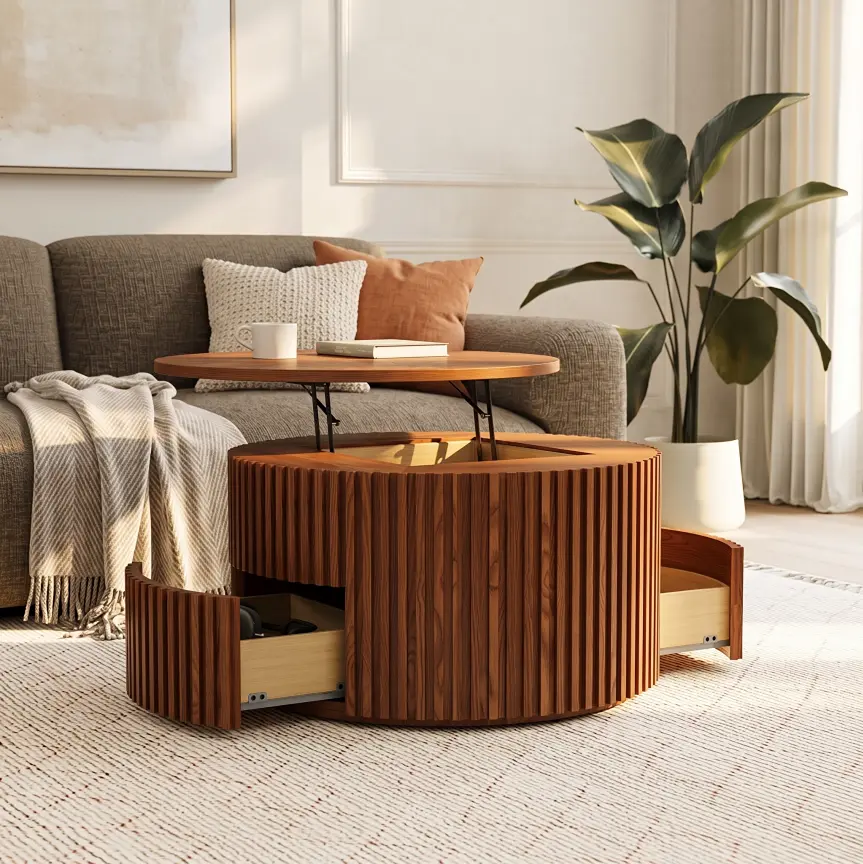
For a family that uses the four-season room throughout the day, prioritize seating that accommodates different activities. A deeper sofa can support shared lounging, while a coffee table provides a central surface for drinks, books, board games, or snacks.
Choose the coffee table based on the sofa’s dimensions and the amount of walking space available. A large rectangular table may work in a spacious room with a wide sofa, while a smaller round table can make a compact seating group easier to navigate.
Storage drawers can also help keep everyday items organized, especially if children use the room for games or reading. Avoid filling every corner with furniture; leaving some open floor space makes the room more adaptable.
6. Plan for Comfortable Evenings After Sunset
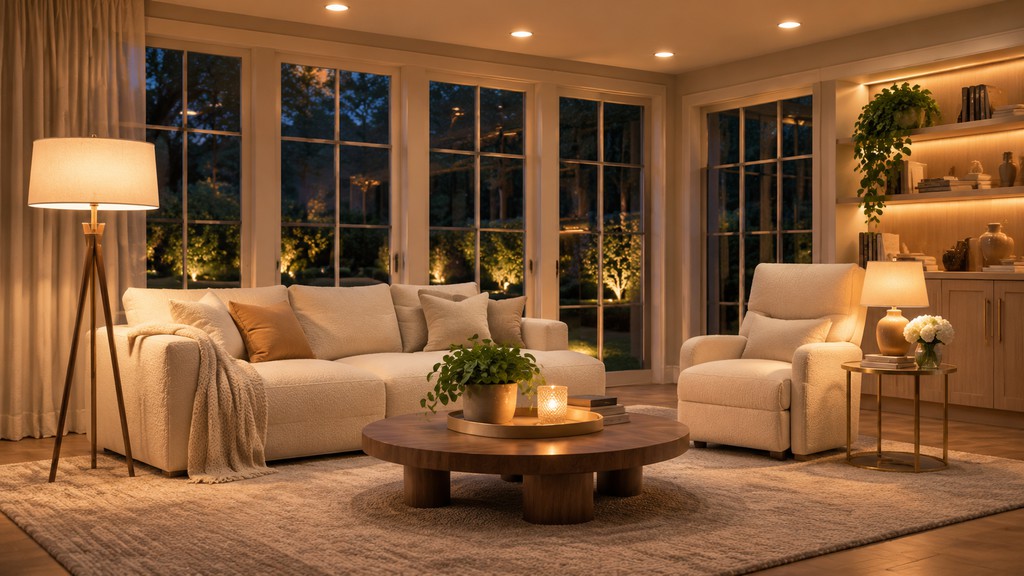
A room that feels bright and inviting during the day may become less functional after sunset if it relies entirely on natural light. Add layered lighting so different parts of the room remain useful after dark.
A floor lamp beside the sofa can provide general ambient light, while a table lamp near a reading chair offers more focused illumination. Dimmable overhead lighting can support family gatherings without making the room feel overly bright.
For more specific layered lighting ideas for different living room zones, consider how each seat will be used at night rather than choosing fixtures based on appearance alone.
How to Choose Furniture for a Four-Season Room
The most practical four season room furniture ideas begin with the room’s actual conditions, not a particular decorating style. Before buying, compare each piece against four important factors:
- Room dimensions: Measure the furniture’s complete footprint, including extended or reclined positions. A sofa bed should fit both its everyday seating configuration and its deepest setting.
- Sun exposure: Choose upholstery according to the manufacturer’s care instructions. Use window coverings to reduce direct sunlight rather than assuming indoor performance fabric is UV-resistant.
- Seating needs: Consider whether the room needs one deep sofa, several individual chairs, or a combination. Match seat depth and back support to the activities people perform most often.
- Power and access: Powered sofas and recliners need a suitable outlet and a clear route for their moving sections. Keep cords away from doorways and walking paths.
Also consider the room’s temperature and humidity. Even a four-season room can experience temperature fluctuations near large windows, so avoid placing upholstered furniture directly against heat sources or in areas exposed to persistent moisture.
The goal is to choose fewer, more functional pieces that make the room comfortable throughout the year.
Conclusion
The strongest four season room ideas balance natural light, comfortable seating, and practical furniture layouts. A flexible sofa bed can support everyday lounging and occasional rest, while accent chairs, adjustable sofas, and well-placed tables help create dedicated areas for reading and conversation. Start with the room’s dimensions, window exposure, and daily activities before choosing individual pieces. With the right arrangement, a four-season room can function as a comfortable indoor retreat throughout the year without becoming crowded or difficult to use.
Find the Right Furniture for Your Four-Season Room
Explore sofas, accent chairs, and tables for comfortable lounging, reading, and gathering throughout the year.
Frequently Asked Questions
Can a four-season room double as a guest room?
Yes, if the room has adequate privacy, climate control, and enough space for overnight use. A sofa bed can provide occasional sleeping space without dedicating the entire room to a bedroom. For frequent guests, also consider window coverings, nearby bathroom access, and storage for bedding.
What window treatments help protect furniture in a sunroom?
Solar shades, lined curtains, and UV-filtering window film can help reduce direct sunlight reaching upholstered furniture. Choose the level of coverage based on window orientation and afternoon exposure. You can also rotate removable cushions periodically to reduce uneven exposure.
Does a four-season room need an area rug?
Not necessarily, but a rug can visually connect a sofa, chairs, and coffee table into one seating area. Choose a size that allows the front legs of the main seating pieces to rest on it. In rooms prone to condensation or moisture, select an easy-to-clean rug with a suitable backing.
How much clearance does a power sofa bed need?
Check the manufacturer’s maximum extended dimensions rather than estimating from the closed sofa. Measure the distance from the back wall to the front edge when fully extended, then account for the walking path and nearby furniture. Keep the power cord accessible and away from moving components.
Can indoor furniture work in a sunroom without heating or cooling?
It depends on how much the temperature and humidity fluctuate. A room exposed to excessive heat, condensation, or moisture may require more weather-resistant materials. Before choosing indoor upholstery, confirm the room’s environmental conditions and follow the furniture manufacturer’s placement and care recommendations.


[…] who will use the room, what they will do there, and how often. Then study the space. A bright room near the entrance may suit conversation or reading. A darker room that can be closed off may work better for movies. A space beside the kitchen […]
[…] A sectional is useful when the room needs one strong lounging area for several people. Two sofas work well when conversation matters more than reclining. A sofa plus accent chairs can feel lighter in rooms with large windows, tall ceilings, or an open view. […]