 By Charles
I used to be a velvet skeptic. The look pulled me in every time — that soft sheen, those rich jewel tones, the way it makes a room feel like you actually live there. But every time I got close to clicking “add to cart,” the same questions stopped me cold. Won’t it stain the second a kid sneezes on it? Won’t it look like a hairy mess after two weeks with the dog? And that green velvet sofa everyone’s posting — won’t it look painfully dated by 2028?
So I dug in. I ordered swatches in three different velvet types, talked to two upholsterers, and lived with a velvet sectional in my own house for the better part of a year. What I learned is that velvet is neither the disaster nor the luxury fantasy the internet sells you. It’s a fabric with specific strengths, specific limits, and a few honest deal-breakers nobody mentions until you’ve already paid for delivery.
Here’s the real guide for 2026 — the one I wish I’d had a year ago.
Why Buyers Like Velvet Couches
Let’s be honest about the appeal first. Velvet does three things almost no other upholstery fabric does at the same time:
It changes color depending on the light. Velvet has a directional pile, so light bounces off it differently as you walk past. A deep emerald velvet sofa looks forest-green by the window and inkier near the lamp at night. Linen doesn’t do that. Polyester weaves don’t do that. It’s why velvet photographs so well — and why it makes a room feel layered without you having to add a single throw pillow.
It feels expensive without necessarily being expensive. A short-pile polyester velvet at $1,400 has more visual weight than a $2,200 flat-weave linen sofa. If you’re trying to make a small living room feel intentional, velvet does a lot of work for you.
It absorbs sound. That plush pile actually muffles room echo. In an open-plan layout with hard floors, this is the kind of thing you don’t notice until it’s gone — my living room got noticeably quieter when the velvet sectional moved in.
What buyers don’t always realize: those same properties — the pile, the directionality, the softness — are exactly what creates the cleaning and wear questions you’re worried about. The trade-offs are baked in.
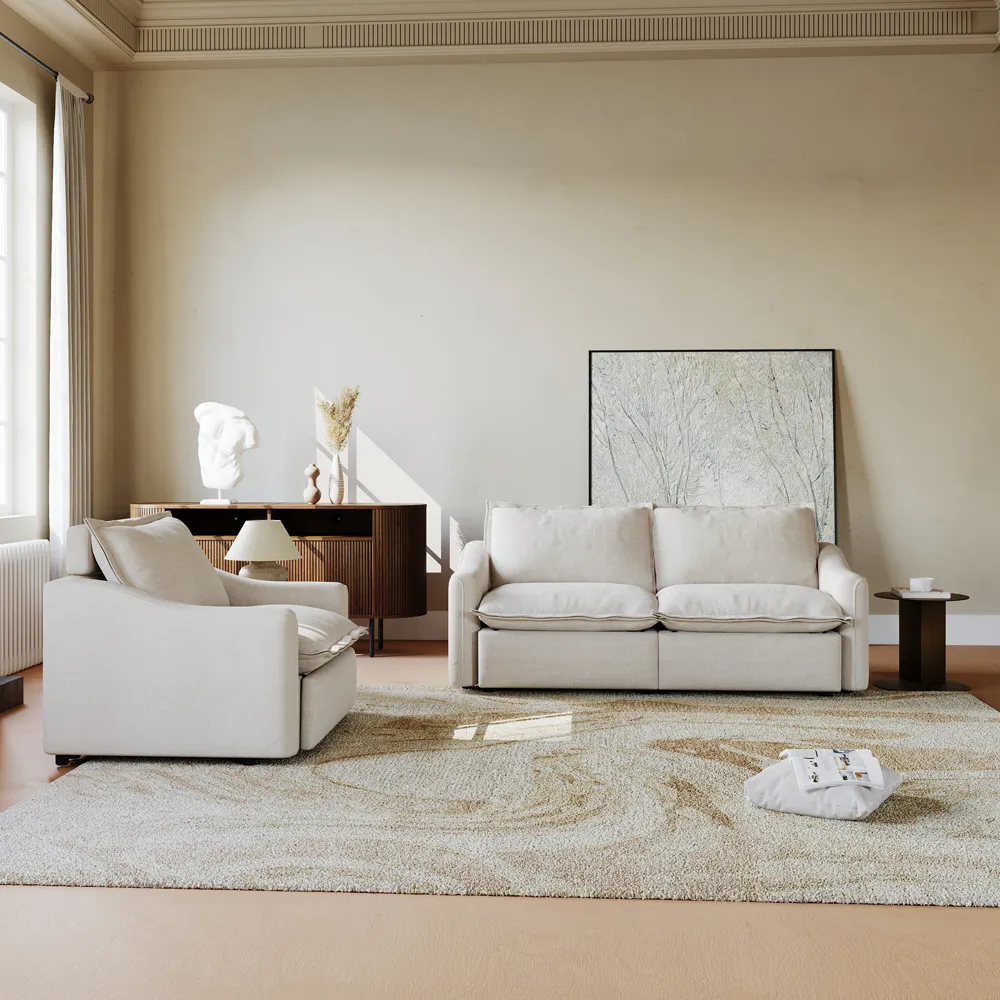
Best Rooms for Velvet Seating
Here’s where I’m going to push back on the way most velvet guides are written. Velvet is not a universal answer. It has a sweet spot, and it has rooms where it genuinely shouldn’t go. Let me break it down honestly.
Low-Traffic Lounge Spaces
A formal sitting room. A reading nook off the bedroom. A guest-suite lounge in a home you bought specifically for entertaining. These are velvet’s natural habitat. You sit there twice a week. The dog doesn’t sleep there. Snacks happen at the kitchen island, not on the cushion. Wear stays minimal, the pile stays uniform, and the sofa looks the same after five years as it did the day it arrived.
If this is your scenario, you can buy almost any velvet — cotton velvet, viscose velvet, even a slightly delicate silk-blend — and you’ll be fine. Pick the color you actually want and stop worrying.
Statement Living Rooms With Controlled Use
This is where most velvet couches end up — the main living room of a 30-something professional or couple, design-conscious, maybe a small dog or older kids, lots of guests but mostly adults. Velvet can absolutely work here, but only if you pick a performance velvet and accept some maintenance rhythm. We’re talking weekly soft-brush passes, lint-roller for pet hair, and an immediate response when something spills.
The room where I’d genuinely steer you away from velvet: the high-frequency family living room with two kids under 8, a shedding dog, and snack-on-the-couch culture. Not because velvet can’t survive it — performance velvets can — but because the daily maintenance becomes a small but constant tax on your weekends. There are easier fabrics for that life. If that’s your house, look at performance polyester or short-pile flannelette options instead — they handle pet hair and spills with less ceremony.
The honest rule: if you’re going to eat dinner on it three nights a week, velvet probably isn’t the right fabric.
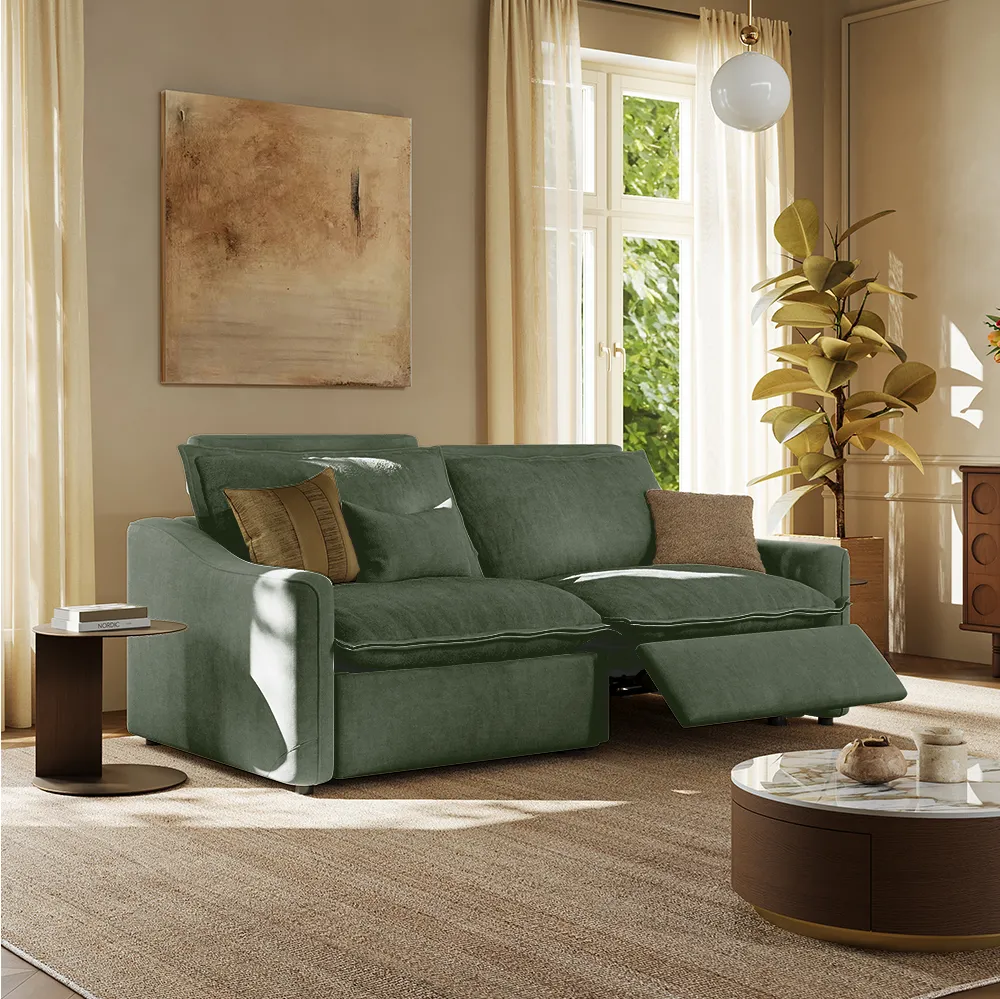
Velvet Sofa vs Velvet Sectional
This decision matters more than people realize, because the two pieces age very differently.
A velvet sofa has one continuous seat surface. The pile direction is uniform across the whole piece, which means crushing and shading happen evenly and your eye reads it as “this is just how velvet looks.” A three-seater velvet sofa at 84″–90″ wide is the easiest velvet purchase you can make — it fits through standard 32″ doorways per the International Residential Code, arrives in one piece, and maintains its look longer because there are no seams to draw your eye to wear patterns.
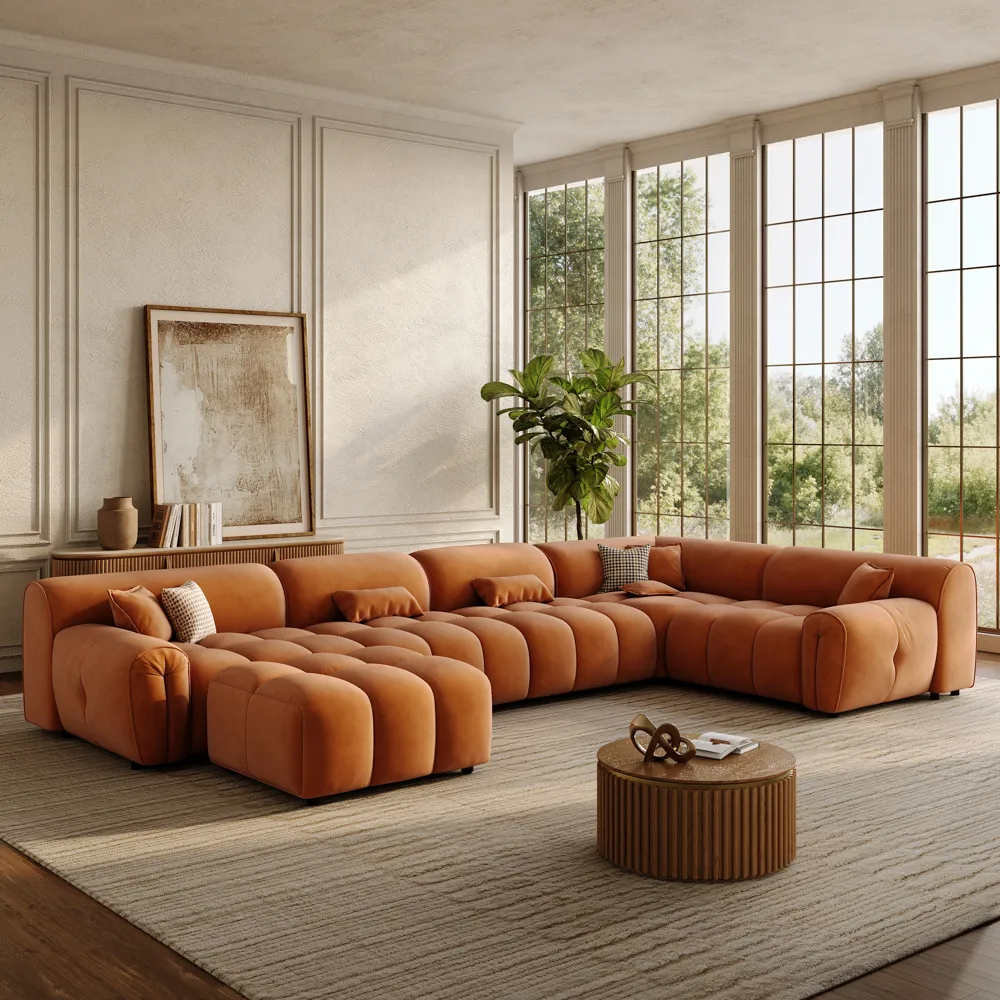
A velvet sectional is trickier. You’re combining multiple pieces, each with its own pile direction, and the seam line between modules can become a visual catch-point for crushed pile and shading differences over time. The L-shape chaise often shows wear first because that’s where people lounge with feet up. If you’re set on a velvet sectional, three things matter more than they would on a regular sofa:
- Modular pieces that connect tightly so the seam shading stays consistent
- Rotatable cushions so you can swap front-to-back when pile starts crushing
- A pile direction you can see in the product photos — ask the brand which way the pile runs on each module
My honest take: for first-time velvet buyers, start with a sofa, not a sectional. You learn how the fabric ages without committing to a $3,000 piece that’s harder to live with than you expected.
Cleaning, Pet Hair, and Wear Trade-Offs
This is the section most velvet guides get wrong. They either tell you velvet is “surprisingly easy to clean” (overselling it) or paint it as a constant chore (overcorrecting). Reality is more boring and more useful.
Two velvet types, two different cleaning realities. Cotton velvet is plush and warm but absorbs water-based spills fast — a glass of red wine on cotton velvet is a real problem. Polyester or performance velvet has tightly woven synthetic fibers that resist water and oil; spills bead up if you blot them within 30 seconds. If you’re shopping for a real-use sofa, polyester or performance velvet is the only category I’d recommend. Cotton velvet belongs in formal rooms where spills basically don’t happen.
For abrasion resistance, look for fabrics that meet upholstery-grade abrasion ratings. The ASTM D4966 Martindale test is the industry standard, and reputable manufacturers publish their results. General contract upholstery typically tests at 15,000 cycles; heavy-duty upholstery hits 30,000 cycles. A performance velvet rated for 30,000+ Martindale cycles will outlast most non-performance velvets by years. If a velvet sofa product page doesn’t mention any abrasion rating, that’s a yellow flag — not necessarily a deal-breaker, but worth a customer service email before you buy.
Pet hair on velvet — the surprise. Velvet actually handles pet hair better than boucle or chunky weaves. The directional pile lets you brush hair off in one direction with a rubber pet brush or a slightly damp microfiber cloth. I’ve tested this myself with a heavy-shedding golden retriever: 30 seconds of brushing in the pile direction removes about 90% of surface hair. The hair that does embed sits on top of the pile rather than weaving deep into the fibers like it does with looped fabrics. This was the single biggest surprise of my year with velvet — I’d genuinely braced for a fur nightmare and got something far more manageable than my old chenille couch.
What velvet won’t tolerate:
- Rubbing a spill instead of blotting (this crushes the pile and embeds the stain)
- Hot steam directly on cotton or silk velvet (use it only on polyester velvet)
- Cushions left un-rotated for months (the side you sit on will compress and shade differently)
- Direct sunlight for 6+ hours daily (fade and dry-out)
Realistic time investment: about 5 minutes a week of brushing and lint-rolling on a regularly-used velvet sofa. That’s it. Not zero. Not a part-time job. Five minutes.
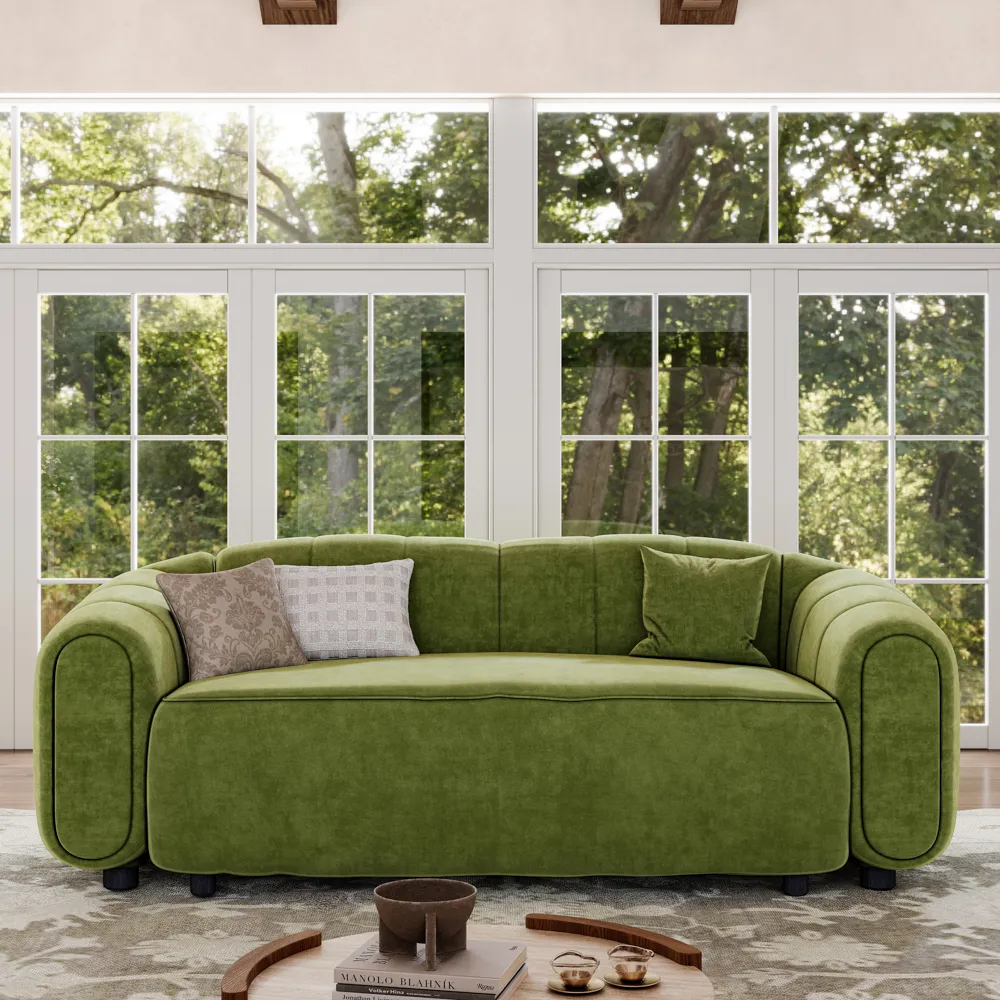
What to Check Before Buying Online
Buying velvet online without seeing it in person is the part that most stresses people out, and it’s where the wrong purchase happens. Here’s the checklist I’d run before clicking order.
- Order a swatch first. Almost every reputable brand will send fabric swatches free or for a small refundable fee. Tape it to your wall, in the actual room, and live with it for 5–7 days in morning, evening, and lamp light. Velvet shifts color more than any other upholstery fabric — a green velvet that looks emerald online might read olive in a north-facing apartment. This is Charles’s rule for any color decision: tape it up, look at it for a week, then decide.
- Confirm the velvet type and weave. Look for product copy that names the fabric specifically — “100% polyester performance velvet” or “polyester-cotton blend short-pile velvet.” Vague language like “premium velvet upholstery” without composition or pile-length detail is a red flag.
- Check the fire-safety label. All upholstered furniture sold in the U.S. must comply with CPSC 16 CFR Part 1640, which adopts California’s TB 117-2013 smolder-resistance standard. The label should read “Complies with U.S. CPSC requirements for upholstered furniture flammability.” If a velvet sofa doesn’t reference compliance, ask before buying.
- Verify pre-assembly status. A 150-lb velvet sectional that arrives in flat-pack pieces is a setup nightmare — every fumbled screw means the fabric collects more dust and lint. POVISON’s velvet sofas ship 100% pre-assembled, which for velvet specifically matters: the piece arrives, gets placed, and that’s it. Saves the fabric, saves your back, saves your afternoon.
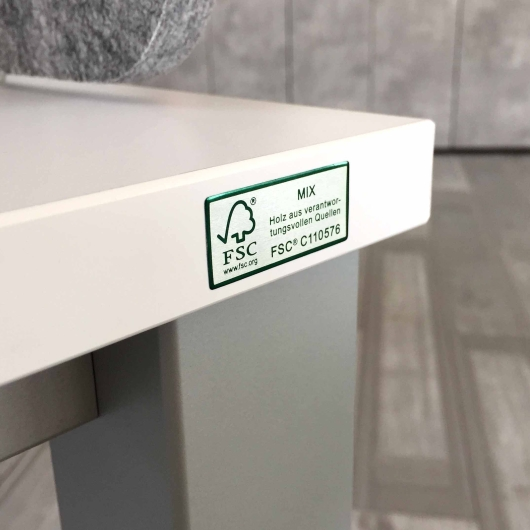
- Check the frame and foam underneath. A beautiful velvet cover sitting on a particle-board frame is going to disappoint you in three years. Look for kiln-dried hardwood frames, high-density foam fill (1.8 lb/ft³ or higher), and ideally FSC-certified wood for responsible sourcing. These details matter more on a long-life piece than the color you choose.
- Read the delivery terms carefully. A pre-assembled velvet sofa weighs 120–180 lbs depending on size. You want white-glove delivery — in-room placement, floor protection during the haul, and packaging removal — not curbside drop-off. Damage during delivery is the most common velvet sofa complaint I see in reviews, and white-glove service prevents almost all of it.
FAQ
Is a velvet couch actually hard to clean in everyday use?
For polyester or performance velvet, no — it’s roughly the same difficulty as caring for a chenille or microfiber sofa. Weekly brushing in the pile direction (30 seconds with a soft brush), immediate blotting on spills, and a monthly lint-roller pass handles 95% of daily life. Cotton velvet and silk velvet are harder and absorb water-based spills quickly, which is why I steer most people toward performance velvet for any real-use room.
Is velvet a good sofa choice for families with kids?
It depends on the kids and the room. If you have toddlers who eat on the couch and a high-frequency family living room, velvet will need more vigilance than you probably want — performance polyester or chenille is a lower-stress fabric for that house. If your kids are 8+ and you have one designated snack room separate from the velvet sofa, performance velvet handles family life fine. The honest filter: ask yourself how often someone will eat dinner on the cushion. If the answer is twice a week or more, pick a different fabric.
Does velvet show pet hair and is it easy to remove?
Velvet shows pet hair more than dark patterned fabrics but less than boucle or open weaves — and crucially, it’s easier to remove than most people expect. A rubber pet brush or slightly damp microfiber cloth, drawn in the pile direction, lifts about 90% of surface hair in 30 seconds. Dark-fur pets on dark velvet barely show; light fur on dark velvet is visible but removes quickly. The fur doesn’t weave into the fibers the way it does on textured weaves, which is the real reason velvet outperforms its reputation here.
Is a green velvet couch too trendy or will it date quickly?
Honest answer: emerald and forest greens have been in the design vocabulary since the 1970s and have cycled in and out of trend rotation roughly every decade. They’re not a one-season color the way bright millennial pink was. That doesn’t mean green is “out”; it means the loudest design conversation is moving elsewhere, which actually gives jewel-toned velvets some breathing room from over-saturation. The hedge: if you genuinely love green, buy it. If you’re chasing the trend, pick a darker, more neutral green (deep forest, olive, sage) rather than a vivid emerald — it’ll feel current longer.
Conclusion
A velvet couch in 2026 is a smarter purchase than it was five years ago, mostly because performance velvets have closed the gap between looks expensive and lives well. The trade-offs are real — the pile crushes if you ignore it, the cleaning protocol matters, and high-frequency family rooms are still better served by other fabrics — but the catastrophic-velvet-disaster stories are mostly tied to cotton or silk velvets, not the performance options most reputable brands sell today.
If you want one, buy a performance velvet, in a color you’ve lived with as a swatch for a week, on a kiln-dried hardwood frame with FSC-certified materials, delivered pre-assembled with white-glove service. That single sentence is the entire buying guide compressed. Everything else — the trend colors, the influencer photos, the showroom drama — is noise.
For shoppers ready to see what this checklist looks like in real options, browse POVISON’s modular sectional sofa collection for pre-assembled performance-fabric pieces with FSC-certified hardwood frames and CPSC-compliant materials — useful as a reference point for what the buying checklist above looks like in practice.
The right velvet sofa shouldn’t cost your weekend or your sanity. Pick the fabric your real life can handle, not the one Instagram tells you to want.
Related Reading:


