 By Kelvin
Introduction
Mid-century modern house designs are for people who love clean lines, warm wood tones, low-profile furniture, and a home that feels stylish without looking overdone. This style keeps the warmth and function of classic mid-century design, then adapts it for today’s living rooms, open layouts, TV areas, and everyday routines. Instead of creating a museum-like retro space, the goal is to build a home that feels warm, functional, and current. With the right furniture, colors, and mid-century modern decor, the look can feel timeless and easy to live with.
Table of Contents
What Defines Mid-Century Modern House Designs?
Mid-century modern house designs are built around simplicity, function, and warmth. The look usually includes clean furniture lines, low profiles, tapered legs, organic shapes, natural wood tones, and open, uncluttered layouts. It is not only about using vintage pieces. A modern version of the style can also include softer fabrics, practical storage, neutral colors, and updated furniture proportions.
This comparison shows why mid-century modern house designs work so well for today’s homes. They keep the warmth, low profiles, and character of classic mid-century style, but they do not need to feel like a strict period recreation. Compared with contemporary interiors, they feel warmer; compared with Scandinavian or Japandi rooms, they have stronger furniture shapes; compared with modern farmhouse spaces, they feel cleaner and less rustic.
They also give homeowners more freedom. A sofa, media console, coffee table, or accent chair can establish the look without requiring a full matching set or too many vintage accessories. With neutral textiles, practical storage, and one or two warm accents, the space feels intentional, current, and easy to live in. For readers still learning the foundation, the key traits of mid-century modern style explain why this design language remains recognizable: simple lines, honest materials, and everyday function.
Why Do Mid-Century Modern House Designs Stand Out?
Mid-century modern house designs are worth considering because they solve a common design problem: many modern rooms look clean but cold, while many retro-inspired rooms look warm but dated. This style sits in the middle. To see why it works so well for modern homes, it helps to compare it with classic mid-century and other popular interior styles.
| Design Element | Mid Century Modern House Designs | Classic Mid-Century | Contemporary | Modern Farmhouse |
| Overall feel | Warm, clean, functional, timeless | Retro, nostalgic, era-specific | Sleek, current, flexible | Casual, rustic, family-friendly |
| Why it works | Balances character, comfort, and daily function | Strong vintage personality | Easy to update and customize | Feels welcoming and familiar |
| Color palette | Walnut, cream, camel, rust, muted green | Mustard, orange, olive, dark brown | White, gray, black, beige, bold accents | White, cream, black, weathered wood |
| Furniture lines | Low profiles, clean lines, updated comfort, practical scale | Vintage silhouettes, tapered legs, sculptural forms | Smooth shapes, simple profiles, fewer decorative details | Larger relaxed pieces with rustic details |
| Visual weight | Lighter footprint with raised legs, slim bases, and open profiles | Light to medium, but can feel period-specific | Clean, but sometimes too minimal | Heavier, especially with large wood pieces |
| Materials | Wood, leather, stone, glass, metal, performance fabric | Walnut, teak, leather, fiberglass | Glass, metal, stone, lacquer, mixed materials | Reclaimed wood, iron, linen, rattan |
| Living room function | Works well with sofas, media consoles, storage, and TV areas | Better for statement furniture and vintage character | Strong for clean layouts, but can feel cold | Good for cozy family rooms |
| Styling approach | One or two warm accents, cleaner surfaces, practical storage | Bold patterns, vintage decor, iconic statement pieces | Minimal accessories, polished finishes | Layered textiles, baskets, rustic decor |
| Best for | Apartments, open-plan living rooms, and modern homes that need warmth and flexibility | Homes with a strong retro design direction | Homes that want a clean, current look | Larger spaces that can handle rustic visual weight |
| Key risk | Can feel too plain without warmth, texture, or one strong anchor piece | Can feel like a 1950s set | Can feel cold or impersonal | Can feel heavy or overly rustic |
This comparison shows why mid-century modern house designs work so well for today’s homes. They keep the warmth, low profiles, and character of classic mid-century style, but they do not need to feel like a strict period recreation. Compared with contemporary interiors, they feel warmer; compared with modern farmhouse spaces, they feel cleaner and less rustic.
They also give homeowners more freedom. A sofa, media console, coffee table, or accent chair can establish the look without requiring a full matching set or too many vintage accessories. With neutral textiles, practical storage, and one or two warm accents, the space feels intentional, current, and easy to live in. For readers still learning the foundation, the key traits of mid-century modern style explain why this design language remains recognizable: simple lines, honest materials, and everyday function.accessories would have. The space felt intentional, not staged.
How to Create a Mid-Century Modern Living Room
A mid-century modern living room should feel relaxed, open, and useful. The goal is not to fill the room with vintage references. It is to create a space where the main furniture pieces carry the style, while the surrounding details keep the room breathable.
Start with a Clean-Lined Anchor Piece
Begin with the largest piece in the room, usually the sofa. Look for a low or medium-low profile, structured arms, simple lines, and a shape that feels grounded without looking heavy.
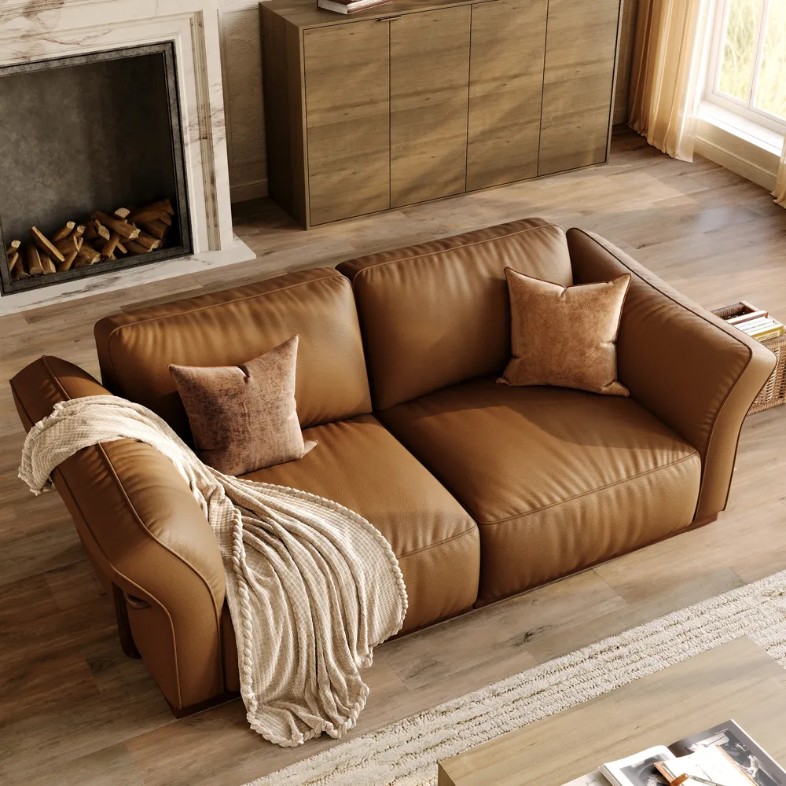
The Cronus-Brown Genuine Leather Modular Sofa fits naturally into a mid-century modern living room because its modular shape gives the room a modern sense of flexibility, while the clean silhouette keeps the space calm. It works especially well when paired with a wood table, a soft neutral rug, and one warm accent color instead of a busy mix of patterns.
Mix Warm Wood with Modern Materials
Wood is what gives mid-century modern house designs their warmth. Walnut, oak, and teak-inspired finishes all work well, but the room should not be all wood. Add contrast with stone, glass, metal, leather, or textured fabric.
The easiest formula is simple: use wood for warmth, fabric for softness, and metal or stone for a cleaner contemporary edge. This keeps the room from feeling too retro or too flat.
Keep the TV Area Simple
Many design guides focus on sofas and accent chairs, but real living rooms usually need a TV area. A bulky TV setup can quickly make the room feel less intentional, so the media console matters.
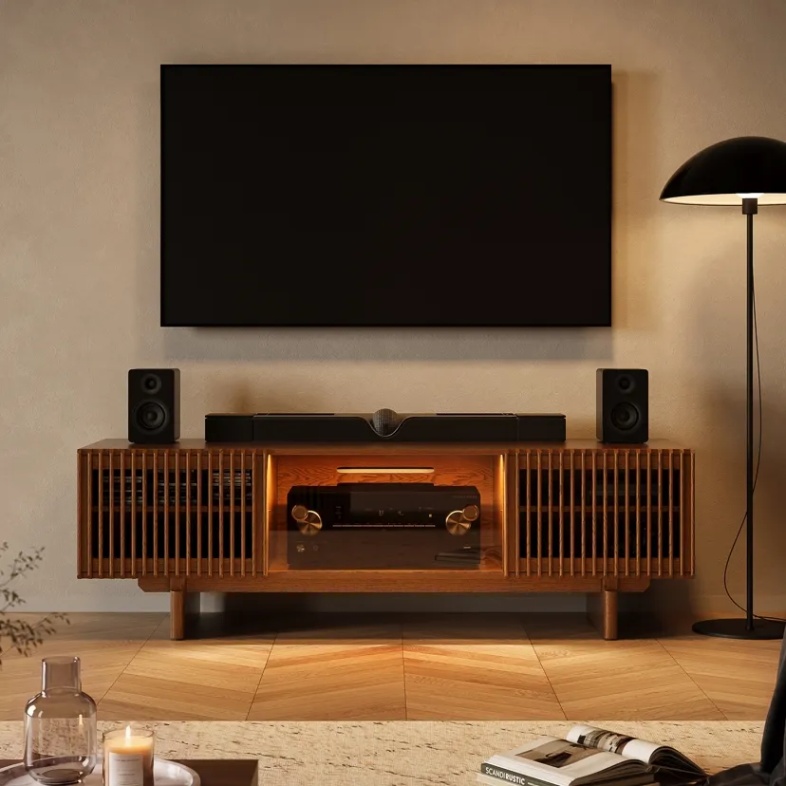
A low-profile console like the Arboren-71” Mid-Century Modern TV Stand with storage helps keep the sightline clean while adding storage for devices, remotes, and small living room clutter. Its wood tone and horizontal shape fit the mid-century language, while the practical storage supports a more current way of living.
For layout decisions, a modern TV stand guide can help connect the console size, TV width, and room scale without making the wall feel too busy.
Add One Retro Accent, Not Ten
A mid-century modern living room should have personality, but too many retro accents can make it look like a set. Choose one or two strong details: a geometric rug, a sculptural lamp, a mustard pillow, an olive chair, or a vintage-inspired artwork.
If the sofa and media console already carry the mid-century mood, let the rest of the room breathe.
What Furniture Fits Mid-Century Modern House Designs?
Furniture is the easiest way to make mid-century modern house designs feel intentional. The right pieces should have simple shapes, comfortable proportions, and enough visual lightness to keep the room from feeling crowded. Instead of choosing every item from the same era, focus on a few strong furniture forms that support the overall layout.
Key furniture pieces include:
- Sofa: Clean arms, structured shape, comfortable depth, and a low or balanced profile.
- Coffee table: Rounded corners, wood tones, stone tops, slim legs, or storage that does not look bulky.
- Media console: Low profile, hidden storage, cable holes, wood finish, or subtle fluted details.
- Dining table: Slim base, rounded edges, warm wood, or a sculptural shape.
- Accent chair: Tapered legs, curved back, leather, textured fabric, or wood frame.
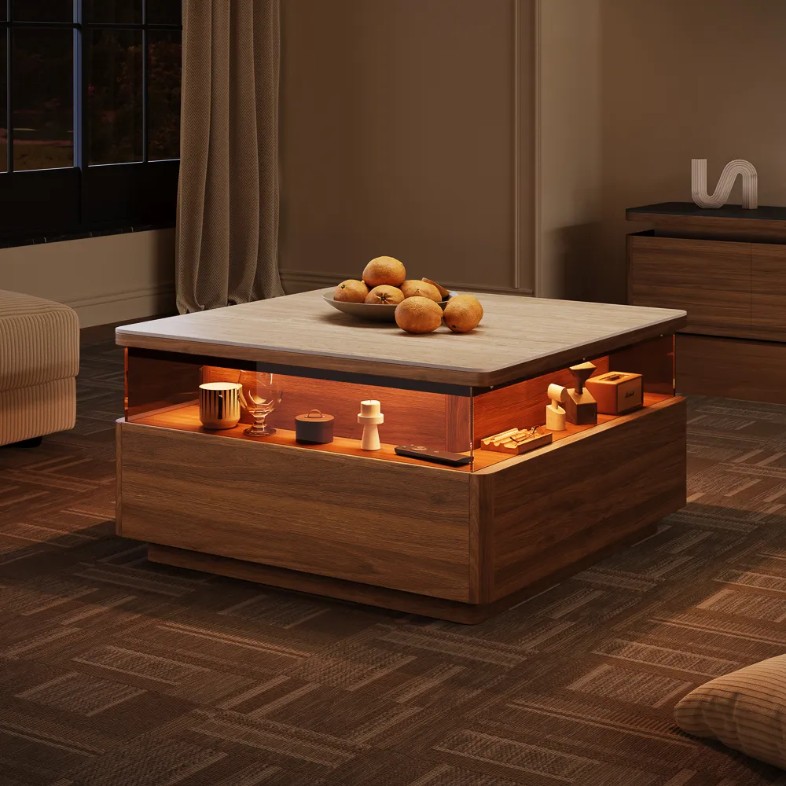
A square coffee table can also work if the material feels modern. The Aether-31″ Square LED Coffee Table with Storage adds a more current layer with its sintered stone top, built-in storage, and adjustable lighting. In a mid-century modern living room, that mix of function and visual structure helps the space feel less purely vintage.
After a long workday, this is the kind of table that makes sense in real life: the remote goes into a drawer, the soft light stays low, and the living room feels ready for one quiet episode before bed.
What Colors and Materials Work for Mid-Century Modern Decor?
Mid-century modern decor works best when the room feels warm but not overly retro. Instead of using every bold color from the period, start with a calm base and add character through wood, texture, lighting, and one or two accent shades.
| Design Goal | Use These Colors | Use These Materials | Why It Works |
| Keep it light | Warm white, cream, soft gray | Bouclé, linen, light oak | Prevents the room from feeling heavy |
| Add warmth | Walnut, camel, rust, olive | Wood, leather, woven textiles | Brings in the mid-century mood |
| Make it modern | Black, stone gray, taupe | Metal, glass, sintered stone | Adds contrast and a current edge |
| Add personality | Mustard, terracotta, deep green | Patterned pillows, art, rugs | Gives the room character without clutter |
| Control visual weight | Neutral base with one bold accent | Mixed textures | Keeps the design balanced |
The same idea applies to smaller furniture. A coffee table with storage can support the clean look by hiding remotes, chargers, books, or daily items that would otherwise break the calm surface of the room.
What Mistakes Should You Avoid in Mid-Century Modern Decor?
A mid-century modern home should feel collected, not copied. The biggest mistakes usually happen when people lean too far into the retro side or forget how the room needs to function.
Avoid these common issues:
- Buying everything in the same wood tone. Mixed wood can feel layered; matching wood can feel flat.
- Using too many statement pieces. One strong sofa, chair, or lamp is enough.
- Ignoring comfort. A beautiful sofa still needs to support daily sitting, lounging, and entertaining.
- Forgetting storage. Open surfaces look better when everyday clutter has a place to go.
- Overusing retro colors. Mustard, orange, olive, and rust work best as accents, not the whole palette.
- Making the room too dark. Balance walnut or brown leather with lighter walls, rugs, or upholstery.
The safest approach is to start with clean furniture, add warmth through wood and texture, then finish with one or two vintage-inspired accents.
Conclusion
Mid-century modern house designs work because they combine style, comfort, and daily function. The look keeps the clean lines, warm wood, organic shapes, and practical spirit of mid-century design, but it can still feel fresh in today’s homes. The best approach is not to redesign the whole house at once. Start with one strong furniture piece, add a balanced color palette, and use mid-century modern decor carefully so the space feels personal, current, and easy to enjoy.
Q&A
Does modern mid-century work with open-concept spaces?
Yes. Its low profiles, clean lines, and warm materials make it especially useful in open-concept homes. Use a sofa, rug, or media console to define the living area, then repeat one wood tone or accent color in the dining space to create flow without making both areas match exactly.
What wall art fits a mid-century modern living room?
Abstract prints, simple line drawings, geometric shapes, and warm-toned photography work well. Choose art that adds shape or color without overwhelming the furniture. One large piece above a sofa usually feels more current than a crowded gallery wall filled with small retro prints.
Can renters create this look without changing the room?
Yes. Focus on furniture, lighting, rugs, and removable decor. A low sofa, wood coffee table, warm floor lamp, neutral rug, and one bold accent pillow can shift the whole mood. Peel-and-stick art rails or removable wall hooks can also help without damaging walls.
Should mid-century modern decor use curtains or blinds?
Both can work, but keep the window treatment simple. Linen curtains, warm white panels, woven shades, or slim blinds fit the style best. Avoid heavy, ornate drapes because they can make the room feel more traditional than contemporary.
Can mid-century modern homes work with smart home devices?
Yes. Choose smart devices in simple finishes like black, white, wood-tone, or metal so they blend into the room. Hide wires where possible and place speakers, chargers, or hubs on closed storage pieces. The goal is to keep the technology useful but visually quiet.


