 By Charles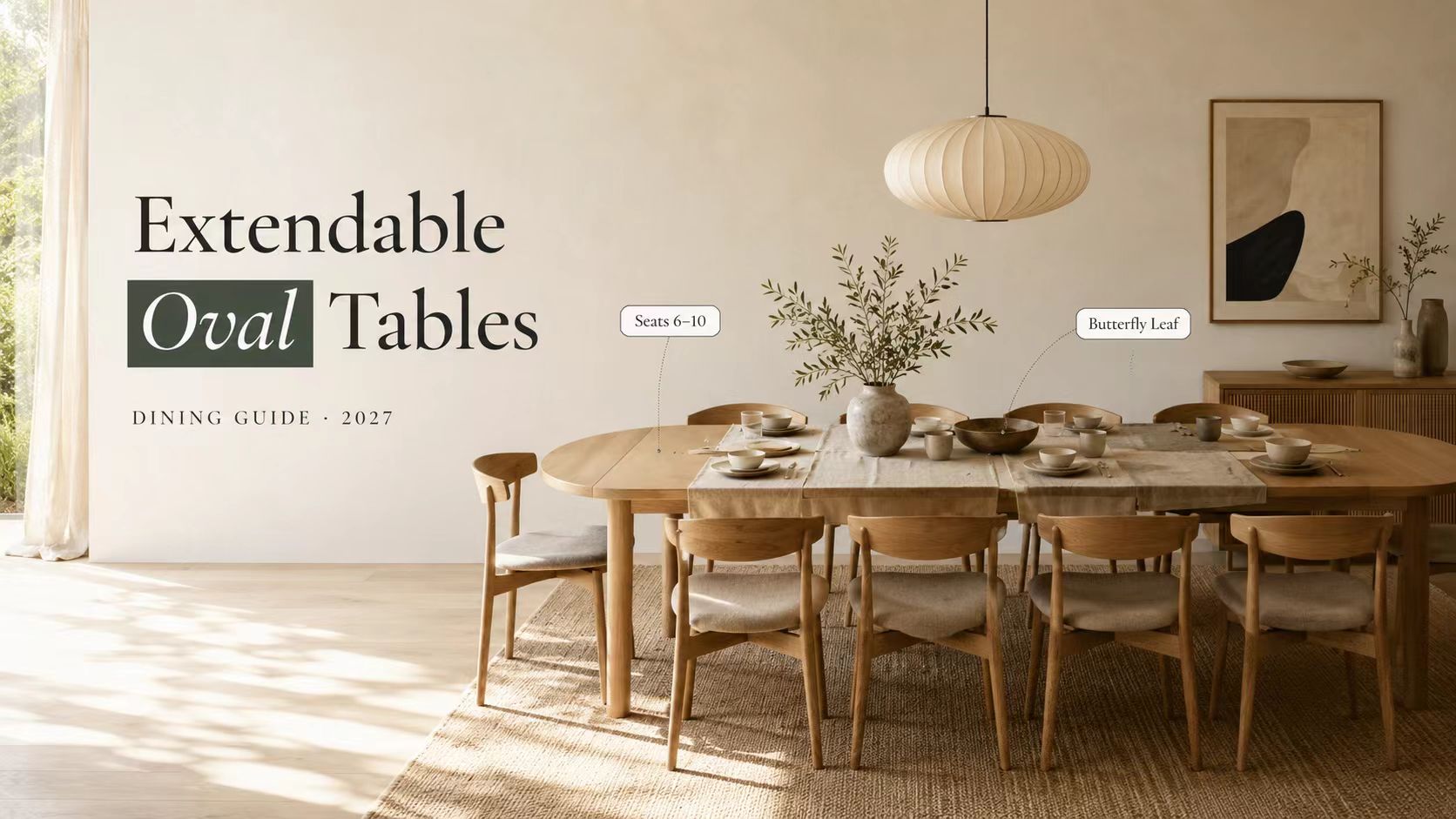
An oval extendable dining table is usually the table people want after they have already ruled out two extremes: a round table that feels too small for hosting, and a rectangular table that turns a narrow dining area into a hallway with chairs.
I get the appeal. An oval table softens the corners, keeps the room moving, and can stretch for guests when the weekend gets loud. But I would not buy one for style first. In a narrow dining area, room fit comes before the finish, the base, and the pretty dinner-party photo.
The real question is simple: can the table stay compact for daily meals, extend when guests arrive, and still leave enough space for chairs, doors, sideboards, and actual humans carrying plates?
Why Oval Tables Work in Narrow Dining Areas
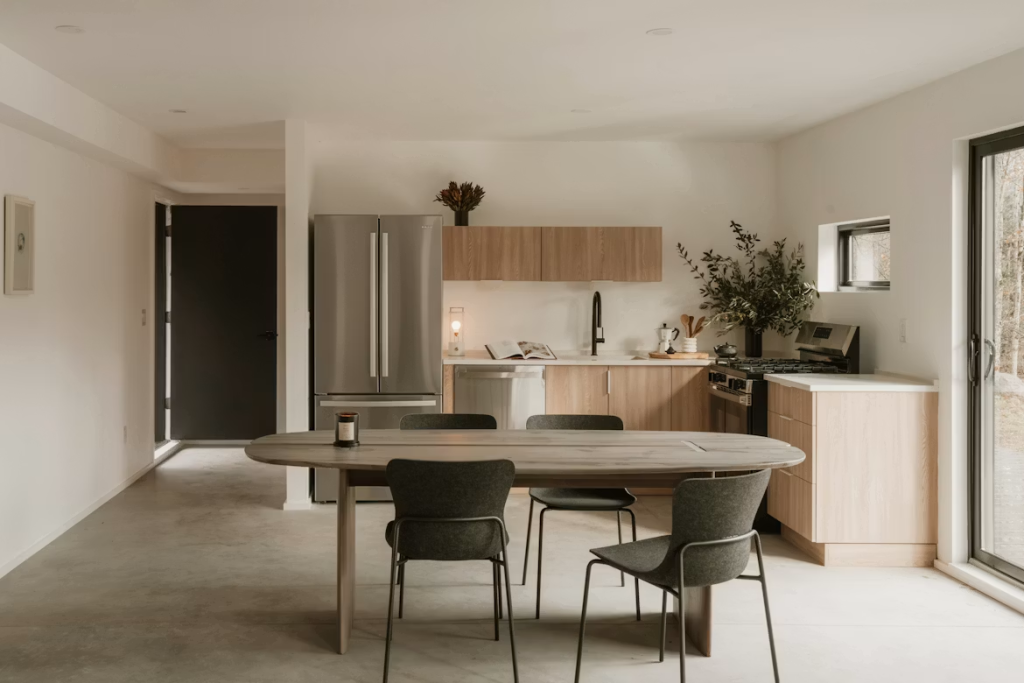
Oval extendable dining tables work because they borrow the best parts of round and rectangular tables. You get softer ends and smoother traffic flow, but more usable length than a compact round table. For narrow dining areas, that can be the difference between “this room works” and “everyone has to stand up when one person leaves.”
An oval shape is especially useful when the room is longer than it is wide. The table follows the room instead of fighting it.
Softer corners and easier circulation
Corners matter more than people think. In a narrow dining area, sharp rectangular corners often sit right where hips, chair backs, and kids’ shoulders want to pass. An oval table removes that hard corner, which makes circulation feel less tense.
I still use a hard number as my sanity check: the U.S. Access Board’s accessible route guidance uses 36 inches as a minimum clear width for accessible routes. Your dining room is not a public building, but 36 inches is a useful home-planning benchmark. If you have less than that behind pulled-out chairs, guests may still pass, but they will do the sideways shuffle.
Oval tables help because the ends taper. That makes the walkway feel softer near doorways, kitchen paths, and sideboards.
Everyday compactness with hosting flexibility
The best oval extendable dining table has two honest modes. Closed, it should support daily meals without swallowing the room. Open, it should add hosting capacity without blocking the main walkway.
POVISON’s current Hector-Oval Glossy Sintered Stone Extendable Dining Table is a useful verified example. The product page lists a 47.24″ x 47.24″ closed size and a 62.99″ x 47.24″ extended size, with seating shown as 2 minimum and 4-6 maximum. That is a compact-to-hosting table, not a fixed promise that every oval extendable table seats the same number of people.
That is the mindset I like: verify the actual closed length, open length, seat count, base structure, package weight, and assembly notes before building your dining plan around it.
How to Measure for an Oval Extendable Table
For narrow rooms, do not start with “How many people can it seat?” Start with “Can this room still move when the table is open?”
I tape three things on the floor: the closed table, the extended table, and the chair pull-back zone. Then I open the nearest door, pull out a chair, and walk the kitchen-to-table path. It is not glamorous. It works.
Closed length, open length, and chair pull-back
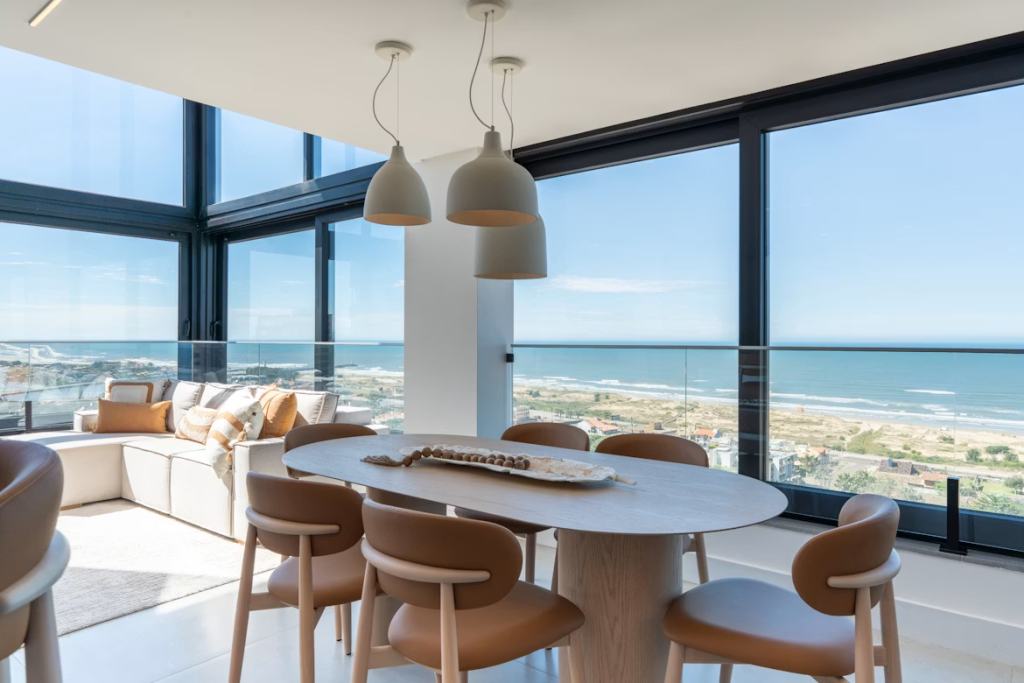
Closed length tells you how the room behaves Monday through Friday. Open length tells you whether hosting will feel calm or crowded. Chair pull-back tells you whether people can sit down without negotiating with the wall.
For an 8-foot-wide dining area, the math gets tight fast. An 8-foot width is 96 inches. If the table is about 47 inches wide, that leaves 49 inches total, or about 24.5 inches per side before chairs. That can work against a wall or banquette-style layout, but it is tight for full chair pull-back on both sides.
Here is my quick table-fit check:
| Measurement | What I Want to Know |
| Closed length | Does daily dining feel easy? |
| Open length | Does hosting block the route? |
| Table width | Can chairs fit on both sides? |
| Chair depth | Can people sit and stand? |
| End clearance | Can someone pass around the oval end? |
For actual shopping, POVISON’s dining category currently lets buyers filter by oval, extendable, seats 4, seats 6, seats 8, seats 10, base type, tabletop material, and assembly requirement on its dining tables page. I would use those filters to shortlist, then trust only the product page for final dimensions.
Sideboard, doorway, and walkway spacing
Sideboards are sneaky. They look harmless until the table is extended and a cabinet door needs to open behind a chair. Same with patio doors, kitchen islands, and swing doors.
In a narrow dining area, measure from the extended table edge to:
- Wall
- Sideboard face
- Cabinet handles
- Door swing
- Kitchen island
- Patio or balcony door
- Main walking path
If the dining table is heavy or ships in multiple cartons, also measure the delivery path. The Hector-Oval product page lists two packages: one carton at 53.04 x 49.53 x 11.31 inches and 182.04 lbs, plus another at 32.37 x 19.5 x 7.41 inches and 36.63 lbs. That is not a casual “carry it upstairs after dinner” item.
Before ordering, check the current ZIP-code estimate and freight notes on the POVISON shipping and delivery page. POVISON notes that larger items shipped by freight may involve delivery scheduling, multiple tracking numbers, and estimates updated on the product page. The FTC Mail, Internet, or Telephone Order Merchandise Rule is also a good buyer reminder: online shipping claims should be based on reasonable timing, not wishful thinking.
Seating and Hosting Scenarios
Seat count is not fixed by shape alone. It depends on open length, chair width, base position, legroom, and how much elbow room your family considers civilized.
I know listings love clean numbers. Seats 4. Seats 6. Seats 8. Real dinner is messier. A 6-seat table with slim armless chairs may feel fine. The same table with wide upholstered chairs may feel like a family meeting in economy class.
Daily family meals
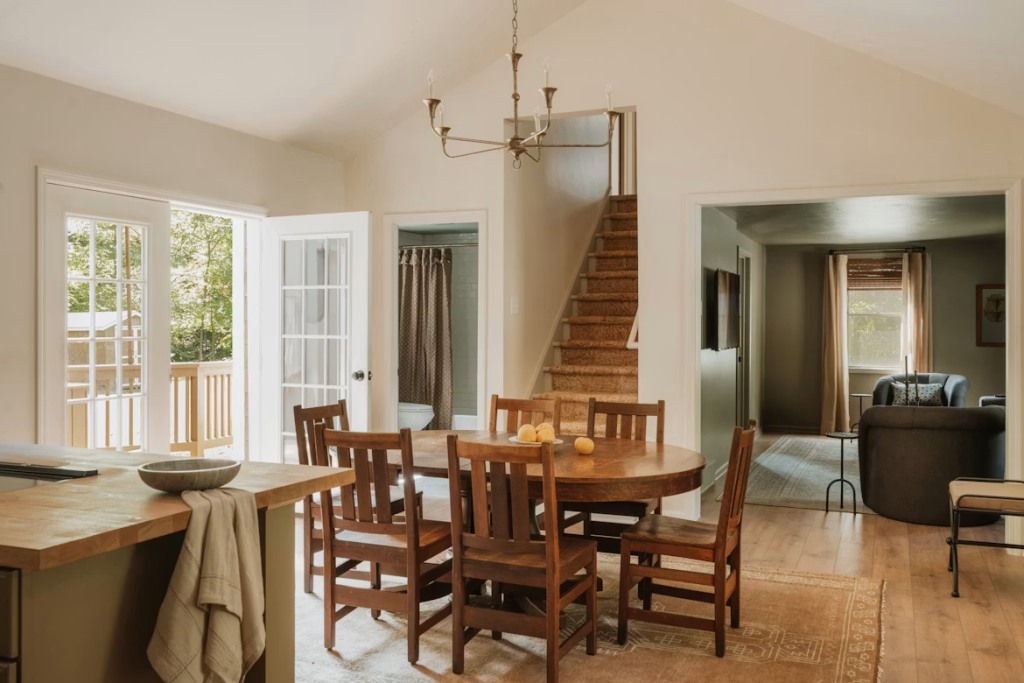
For daily family meals, I care most about comfort and movement. Can everyone pull out a chair? Can someone stand up without making two other people move? Can plates, glasses, and a serving dish sit on the table without crowding laptops, homework, or mail?
A compact oval extendable table works well for daily 3-4 person meals when the closed size keeps the room open. The soft ends also help if the table sits near a kitchen walkway.
If the family eats at the table every day, I would not chase maximum capacity. I would choose the closed size that feels natural, then treat the extension as a hosting feature.
Holiday or weekend guests
For holiday or weekend guests, the open length matters more. This is when the oval shape earns its keep: it gives you more table edge than a small round table while keeping the end circulation friendlier than a rectangular table.
But be realistic. A table that seats 4-6 is not secretly a comfortable 8-person table because two people are related and polite. If you host 8 often, look for a larger oval or rectangular extendable table and verify the exact open dimensions.
My hosting rule:
| Hosting Pattern | Better Fit |
| Daily 2-4, occasional 6 | Compact oval extendable |
| Daily 4, frequent 6 | Oval with stable extension |
| Frequent 8 | Larger oval or rectangular |
| Narrow room under 8 feet wide | Test chair clearance before size |
| Main walkway beside table | Favor tapered ends and slim chairs |
For a narrow dining area, you are not only seating people. You are preserving the path around them.
Materials and Visual Weight
Oval tables can look lighter than rectangular ones because the ends are soft. Material and base design can either help that lightness or undo it.
A thick top, dark finish, and bulky base can make a narrow room feel packed even when the measurements technically work. A slimmer top, lighter surface, or open base can feel easier in the same footprint.
Wood, pedestal bases, and modern silhouettes
Wood brings warmth, especially in a narrow room that risks feeling like a corridor. If you are buying wood, look for clear species, veneer or solid construction notes, and responsible sourcing claims. If a brand mentions FSC, check the official meaning through FSC certification, which traces wood products from responsibly managed forests through the supply chain.
Pedestal bases can improve legroom because there are no corner legs. That is useful on oval tables, especially at the ends. But pedestal does not automatically mean perfect comfort. The base footprint still matters. A wide pedestal can bump feet. A narrow pedestal can raise stability questions. A cross-leg base may offer support but can affect where chairs tuck in.
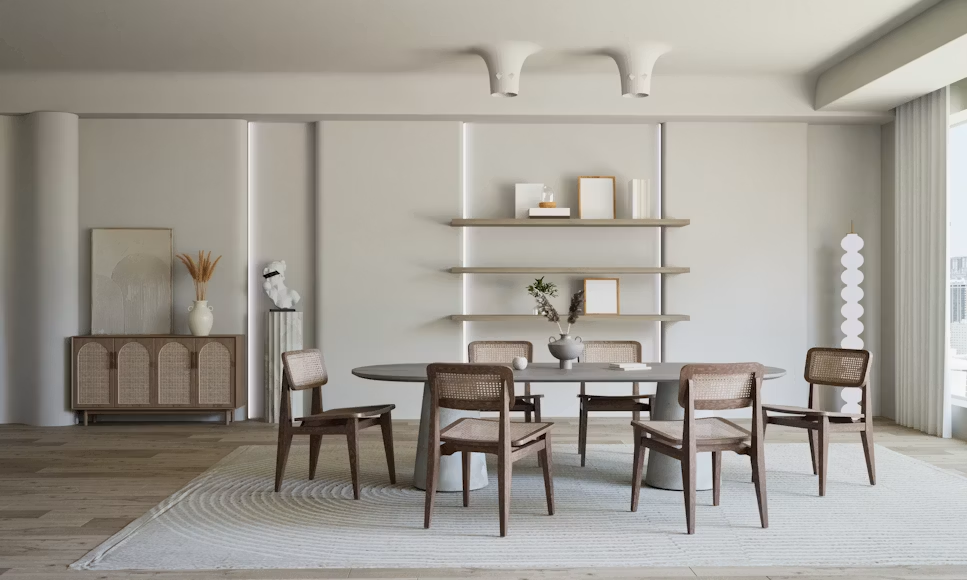
The verified POVISON Hector-Oval example uses a glossy sintered stone and glass tabletop with bronze carbon steel legs, not a pedestal base. The product page lists a 350-lb weight capacity, partial assembly required, all tools included, two people recommended, and about 30 minutes for assembly. It also describes a self-storing butterfly leaf, which matters because you do not need a closet for a separate extension leaf.
Before checkout, read both the POVISON returns and exchanges policy and the POVISON warranty policy. POVISON’s current return page says eligible new, unused items may be returned within 30 days, but non-defective returns may carry a 20% return shipping fee and a $59 repackaging fee if original packaging is missing. The current warranty page lists a two-year limited warranty on materials, frame, workmanship, and non-lighting electronic components for qualifying orders placed on or after July 1, 2025, but it also excludes issues such as misuse, improper care, and normal wear.
That is the boring paragraph I would read twice before buying a heavy dining table.
Limits and Trade-Offs
An oval extendable table is not automatically the best shape for every narrow dining area. It is a compromise: softer than rectangular, more host-friendly than round, but sometimes less efficient than either.
The win is circulation and flexibility. The trade-off is that the extended length can still block a narrow path, and the curved ends may reduce the “straight edge” efficiency you get from a rectangular table.
When round or rectangular tables make more sense
A round table makes more sense when the room is square, compact, or mainly used by 2-4 people. Round tables are great for conversation and often feel lighter in small breakfast corners. But they do not stretch as naturally in one direction unless they convert to oval.
A rectangular table makes more sense when the room is truly long, when you host 8 often, or when you need benches. Rectangular tables also fit against walls more predictably and give you a strong serving line down the center.
Choose oval extendable if:
- Your dining area is narrow but not tiny
- You need daily compactness with occasional expansion
- You dislike sharp table corners in traffic paths
- You host 6 sometimes, not 10 every weekend
- You want softer visual weight than a rectangle
Choose round if the room is square and daily meals are small. Choose rectangular if capacity matters more than softness. Choose oval when the room needs both movement and flexibility.
FAQ
What is the best dining table shape for a narrow room?
The best dining table shape for a narrow room is often oval or rectangular. Oval works well when you want softer corners and easier circulation. Rectangular works better when the room is long and you need maximum seating. Round is better for square rooms or small breakfast spaces.
My dining area is about 8 feet wide. Will it block the walkway when extended?
An 8-foot-wide dining area can work with an oval extendable table, but the table width, chair depth, and walkway location decide the result. A roughly 47-inch-wide table leaves limited side clearance, so slim chairs, one wall-side bench, or an offset layout may be needed.
How many chairs can I realistically fit without people feeling cramped?
You can realistically fit chairs only after checking chair width, table length, and base position. For many compact oval extendable tables, 4 seats feel comfortable daily and 6 can work for hosting. Do not assume 8 unless the open length and room clearance support it.
Do extension leaves usually match the main table finish well over time?
Extension leaves can match well if they are self-storing or protected from sunlight, humidity, and scratches. Separate leaves stored in closets or garages may age differently. If finish matching matters, a self-storing butterfly leaf is safer than a loose leaf that lives somewhere else for months.
Will a pedestal base actually give more legroom at the ends compared to four legs?
A pedestal base can give more legroom at the ends because there are no corner legs, but the pedestal footprint still matters. A bulky center base can crowd feet, while a cross-leg or sculptural base may affect where chairs tuck in. Always check base photos from multiple angles.
Conclusion
Oval extendable dining tables are a smart choice for narrow dining areas when you need daily comfort and occasional hosting without sharp corners taking over the walkway. They are not magic. The closed size, open size, chair pull-back, sideboard clearance, base shape, material weight, delivery path, return terms, and warranty all matter.
My practical advice: solve room fit first, style second. Tape the closed and extended footprint, test the chair path, check the current POVISON product specs, and read the shipping, return, and warranty pages before checkout. A good oval extendable table should make a narrow dining area feel more usable, not make everyone move like they are solving a puzzle at dinner.
Related Reading:


