 By Charles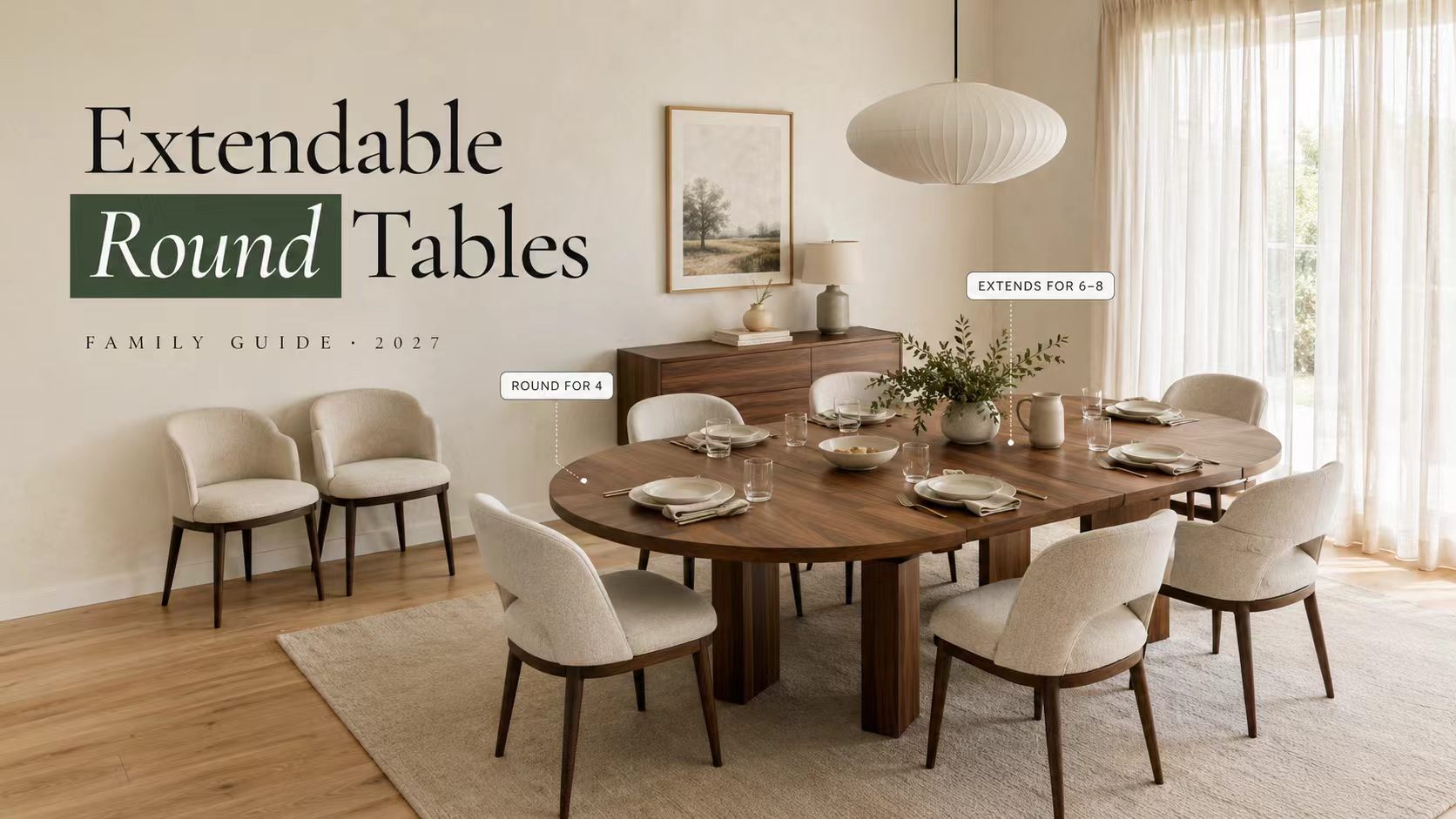
An extendable round dining table sounds like the civilized answer to family hosting: small enough for Tuesday dinner, big enough when everyone suddenly brings a partner, a kid, or a casserole dish the size of a snow tire.
I like the idea. I also think this is one of those furniture categories where the photo can make you overconfident. A table that “seats 8” in a staged room may feel very different once you add real chairs, elbows, serving plates, a high chair, a dog underfoot, and one uncle who refuses to scoot in.
For 2027 family gatherings, I would shop for an extendable round dining table by asking four plain questions: how does it work every day, how many people can it seat without misery, how hard is the extension to set up, and what happens after the gravy spill?
Why Round Extendable Tables Work for Hosting
A round extendable dining table works best when your home needs two modes: an everyday meal setup for 4 to 6 people and an expanded hosting setup for occasional family gatherings. The round shape helps conversation. The extension feature helps capacity. The catch is that both modes need to fit the room.
That is the whole game. Closed size matters Monday through Friday. Expanded size matters on holidays. If one mode fails, the table will annoy you.
Conversation flow and shared serving
Round tables are naturally social because no one gets stuck at the far end. Everyone can see everyone else, which helps when dinner is half meal, half family status meeting.
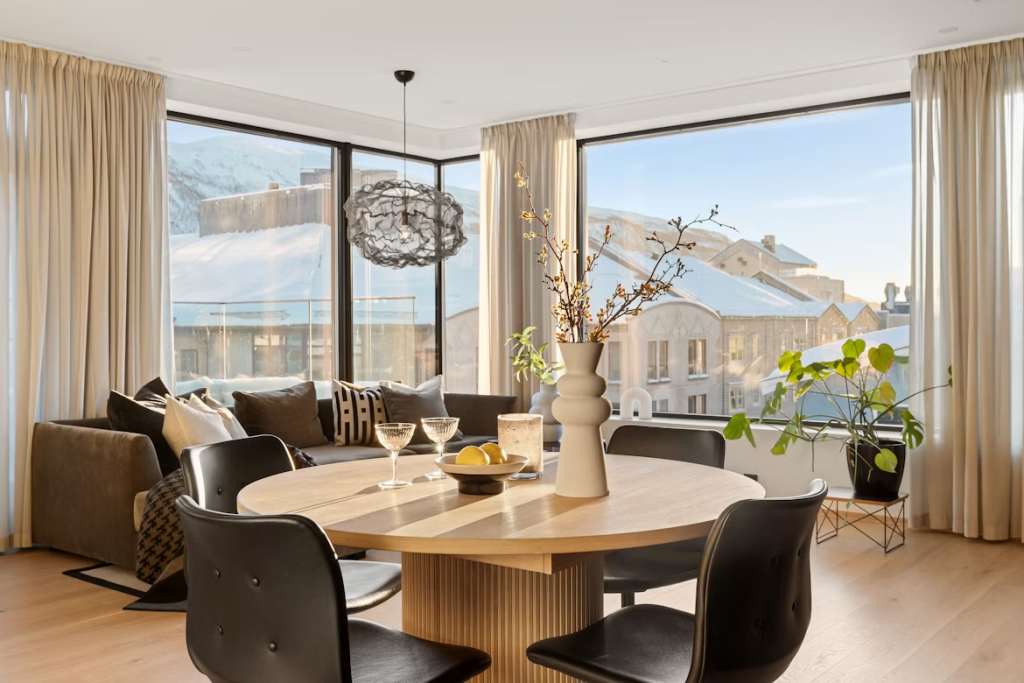
They also work beautifully with shared serving. A center platter, hot pot setup, or Lazy Susan makes sense because the table shape already pulls attention toward the middle. A Lazy Susan is simply a rotating tray used to distribute food around a table, and that small detail can change the mood of a dinner. Fewer “can you pass that?” interruptions. Less leaning across candles. Less sauce danger. I call that a win.
If you are shopping POVISON, this is where I would check current dining table and Lazy Susan dining options carefully. POVISON has long used Lazy Susan dining as a brand scene, but you still need to verify the exact model, size, material, and whether any specific table is extendable before writing it into your room plan.
Everyday size versus guest capacity
The best round extendable table is not the biggest one you can afford. It is the one that feels right 340 days a year and expands cleanly for the other 25.
For daily meals, a 47- to 54-inch round table can often feel comfortable for 4 people, depending on chair width and base design. For 6, many rooms need closer to 54 to 60 inches or an oval extension. The Spruce’s standard dining table measurements also use 24 inches of width per seated person as a practical comfort baseline.
Here is the practical split:
| Household Pattern | Better Table Priority |
| Daily 2-4 people, rare guests | Smaller closed size |
| Daily 4-6 people, monthly hosting | Smooth extension mechanism |
| Frequent 8-person dinners | Larger expanded size and strong base |
| Holiday 10-person meals | Room clearance matters as much as table size |
| Kids at meals daily | Finish durability and easy cleaning |
If you host 8 to 10 people twice a year, do not buy as if you host 10 every night. But do not pretend a tight 6-person table becomes comfortable for 10 just because the listing says “extra seating.”
Seating Capacity and Room Fit
Seating capacity is not only table diameter. It is chair width, chair arms, base shape, apron depth, legroom, table edge shape, and the distance from chair backs to walls.
I like 24 inches of table edge per person as a realistic starting point for dining chairs. If your chairs are wide, padded, or have arms, plan closer to 26 to 30 inches. Kids can squeeze. Adults remember.
What to measure before choosing seats 6, 8, or 10
Before choosing a table that seats 6, 8, or 10, measure the room in its least flattering condition: chairs pulled out, people walking behind them, and sideboard doors opening.
Measure these:
- Room length and width
- Closed table diameter or length
- Expanded table length and width
- Chair width at the widest point
- Chair depth when occupied
- Distance to sideboards, walls, islands, and door swings
- Path from kitchen to table
- Space for serving dishes or a Lazy Susan
Here is my rough planning guide:
| Seating Goal | What I Would Check First |
| Seats 6 | Can 6 chairs fit without touching? |
| Seats 8 | Does the expanded table still leave walkways? |
| Seats 10 | Can people get in and out without moving the whole room? |
The National Kitchen & Bath Association-inspired guidance summarized by Better Homes & Gardens recommends 28 to 30 inches of space per diner and 36 inches behind chairs or stools when seating backs into a wall or obstacle. That tracks with real life. Less than that and people start doing the sideways chair shuffle.
Clearance around chairs and walkways
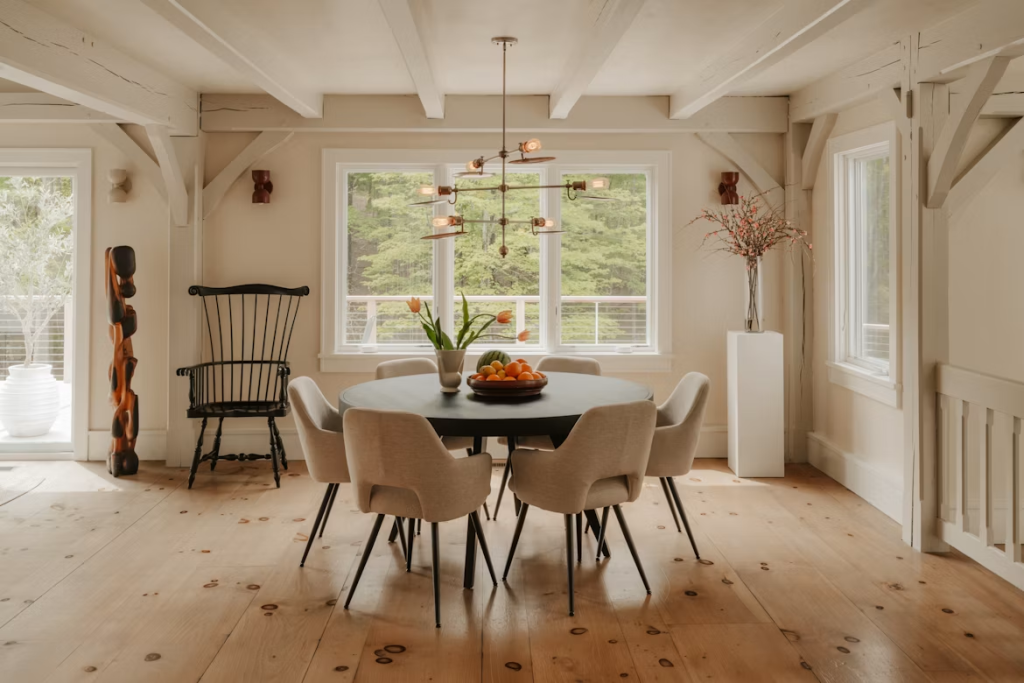
Clearance is where family gatherings either feel relaxed or vaguely athletic. You need space for the chair, the seated person, and the person walking behind them with a hot dish.
The U.S. Access Board uses 36 inches as a minimum clear width for accessible walking surfaces. Your dining room is not a public corridor, but I like that number as a sanity check. If you can leave 36 inches from the chair back to the wall or cabinet, the room breathes. If you have only 24 inches, people will still move, but not gracefully.
My tape test is simple: tape the table closed. Tape it expanded. Add chair footprints. Then walk the route from kitchen to seat with an imaginary roasting pan. If your hip hits the sideboard in the imaginary version, the real version will not improve.
Extension Mechanisms to Compare
The extension mechanism matters because this table has to change shape under dinner pressure. If setting it up takes three people, two tools, and a marriage counselor, you will stop using the feature.
An extendable round dining table may use drop-in leaves, butterfly leaves, self-storing leaves, perimeter expansion, or a synchronized slide system. Each has a trade-off.
Leaf storage and ease of setup
Leaf storage is boring until the day you need the leaf and it has a scratch across the top because it spent six months leaning against a garage wall.
Ask these before buying:
| Question | Why It Matters |
| Are leaves self-storing? | Saves closet space and protects the finish |
| How many leaves are included? | Affects size and setup time |
| Can one adult extend it? | Matters for weeknight hosting |
| Does the top need lifting? | Heavy stone-look tops may need help |
| Are tools required? | Tools reduce spontaneous use |
| Do leaves lock in place? | Reduces gaps and movement |
If the leaves are separate, plan storage now. Under a bed, inside a padded closet, behind a sideboard, or in the original protective sleeve can work. A leaf is part of the table, not a random board. Treat it like furniture.
Stability after extension
A table that looks strong closed can feel different when fully extended. The center seam, support rails, pedestal base, and locking mechanism matter.
I check three things: does the middle dip, does the expanded top shift when someone leans on it, and do plates rattle when someone cuts food at the extension seam? A small amount of movement is not shocking in an extendable table, but wobble should not be part of dinner.
For large gatherings, pedestal bases can offer great legroom, but they need enough weight and engineering to support the expanded top. Four-leg designs may feel familiar but can crowd knees after extension. A trestle or central support can help on longer shapes, but it changes chair placement. There is no free lunch. Fittingly.
Before ordering, check the live ZIP-code estimate and freight notes on the POVISON shipping and delivery page. The FTC Mail, Internet, or Telephone Order Merchandise Rule is also a useful reminder that delivery claims should be based on reasonable shipping expectations, not hopeful timing.
Materials, Style, and Maintenance
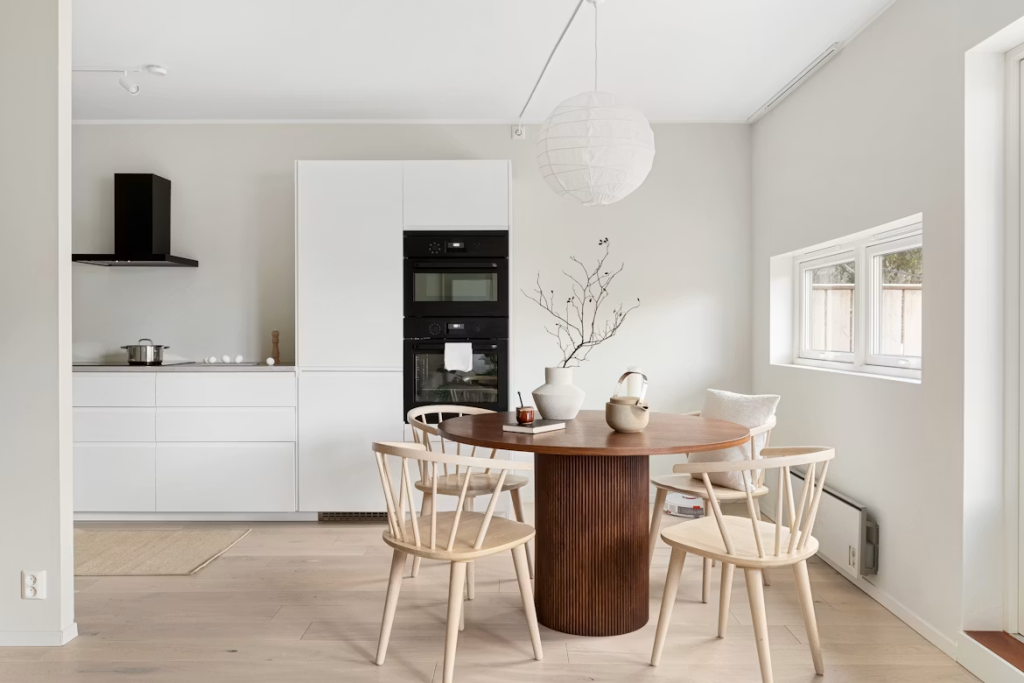
For family dining, material choice is not just a style decision. It decides how careful you have to be with hot dishes, water rings, kids’ forks, red sauce, craft projects, and the one guest who thinks coasters are decorative.
POVISON’s broader dining positioning often leans into modern materials, Lazy Susan dining, and ready-to-live-in convenience, but for this article you should verify each current product page before naming a specific table. Check whether the table is listed as fully assembled, partially assembled, or assembly-required; confirm carton count, delivery method, and whether stairs or elevators create restrictions.
Wood, stone-look, and mixed-material options
Wood feels warm and forgiving. It works well for daily meals, homework, and family rooms that do not want to feel too formal. The trade-off is finish care. Water, heat, and scratches depend on the seal, veneer or solid construction, and the cleaning rules.
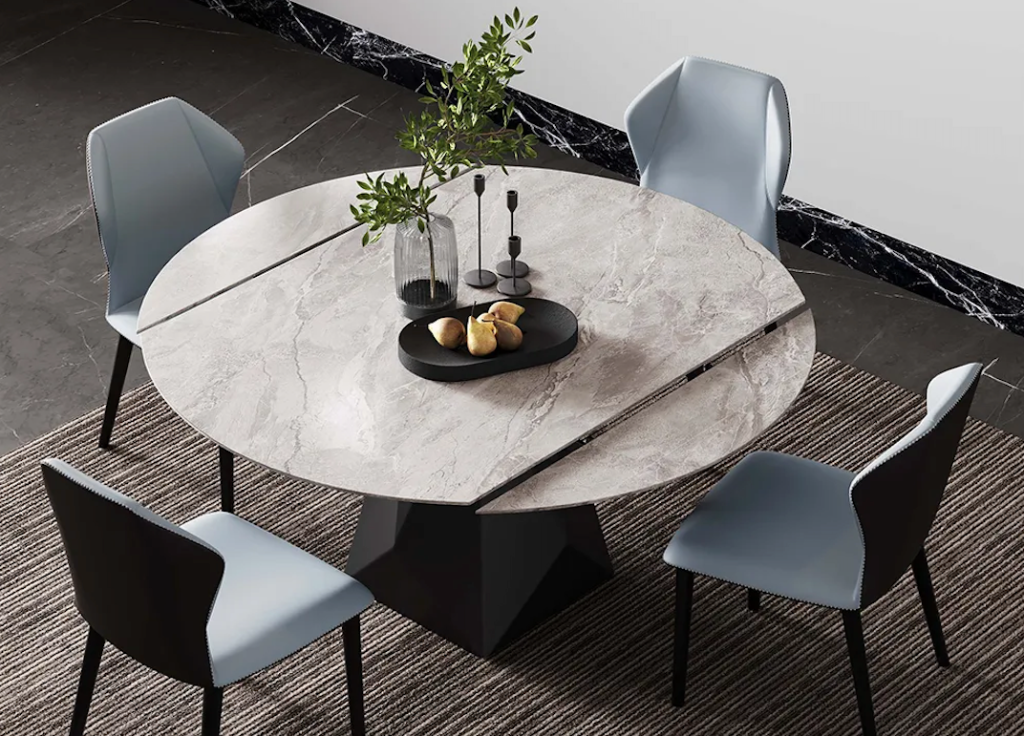
Stone-look and sintered-stone-style tops can feel more modern and easier to wipe, especially after sauces and oily dishes. But they can be heavy, and weight affects delivery, setup, and extension handling. Mixed-material tables often combine a stone-look top with wood or metal bases, which can look polished but needs careful checking at seams, edges, and connection points.
If a product page uses terms like sintered stone, MDF, veneer, solid wood, stainless steel, or carbon steel, do not skim past them. Those words affect weight, cleaning, repair, and the feel of the table under daily use.
Finish durability for daily meals
Daily meals are harder on a table than dinner parties. Dinner parties are occasional. Breakfast is relentless.
For finish durability, I look for:
- Heat guidance
- Water-resistance claims
- Cleaning instructions
- Edge construction
- Scratch warnings
- Whether placemats are recommended
- Warranty exclusions for wear, stains, or misuse
POVISON’s current Hector-Oval Glossy Sintered Stone Extendable Dining Table is a useful verified example: the product page lists 47.24″ x 47.24″ closed, 62.99″ x 47.24″ extended, seating for 4-6, partial assembly required, and a white sintered stone and glass tabletop with a bronze carbon steel base.
For ownership risk, read both the POVISON returns and exchanges policy and the POVISON warranty policy before checkout. A heavy extendable dining table is not something you want to return after discovering the expanded footprint blocks the kitchen path.
Cleaning difficulty after family gatherings
Cleaning is where the romance of a dining table meets rice grains, candle wax, sticky juice, and someone’s excellent but dangerous chili oil.
Round tables with a Lazy Susan can make serving easier, but the center mechanism or rotating tray adds another cleaning surface. Extension seams can catch crumbs. Textured wood grain can hold residue. Stone-look tops may wipe quickly, but edges and joints still need attention.
My family-gathering cleanup test:
| Feature | Cleaning Question |
| Extension seam | Do crumbs collect in the gap? |
| Lazy Susan | Can it lift off or rotate smoothly for wiping? |
| Pedestal base | Can you sweep around it easily? |
| Table edge | Is it rounded or crumb-catching? |
| Finish | Does it need special cleaners? |
If the table needs a special cleaner every time someone spills soup, be honest about your household. I know mine. We are not living that carefully on a Wednesday.
Limits and Trade-Offs
An extendable round table solves a real hosting problem, but it does not solve every dining room problem. It gives you flexibility, conversation flow, and a softer footprint. It can also create storage questions, seam maintenance, and a larger expanded shape than your room can comfortably handle.
The best table is not the one with the most dramatic transformation. It is the one you will expand without sighing.
When a rectangular extendable table is better
A rectangular extendable table is better when your room is long and narrow, when you often seat 8 to 10 people, or when serving dishes need a long center line. Rectangular tables also pair more easily with benches, which can help families fit kids along one side.
Choose rectangular if:
- The room is long rather than square
- You host 8+ people often
- You need a bench on one side
- You want clear head-of-table seats
- You use a sideboard or buffet along one wall
- The round expanded footprint blocks walkways
Choose round extendable if:
- You host in a square or open dining space
- Conversation matters more than formal seating
- Daily meals are 4 to 6 people
- Shared serving is part of your meal style
- You want the room to feel softer when closed
One is not smarter than the other. The room picks sides if you measure honestly.
FAQ
What is an extendable dining table and is it worth it?
An extendable dining table is a table that changes size with leaves, panels, or a built-in expansion mechanism. It is worth it if your daily group is smaller than your hosting group. It is less worth it if you never use the extension or have nowhere safe to store the leaves.
We usually have 4 or 5 people for daily meals but sometimes host 8 to 10. Is one round extendable table realistic for both?
One round extendable table can be realistic for daily 4 or 5 and occasional 8-person meals if the room has enough expanded clearance. For 10 people, be more careful. The table may fit bodies on paper, but chair comfort, elbow room, and walkways decide whether dinner feels relaxed.
Can one person easily set up and put away the extension leaves without help?
One person can set up some extension leaves, but not all. It depends on leaf weight, storage design, slide mechanism, tabletop material, and whether the table needs lifting or aligning. If the top is stone-look or the leaves are large, I would assume two adults until the product page or demo proves otherwise.
Does the table stay stable in the middle when fully extended, or does it tend to wobble?
A well-built extendable table should stay stable when fully extended, but stability depends on rails, locks, base design, and the weight of the top. Before buying, look for product videos, close-up photos of the mechanism, customer reviews mentioning wobble, and warranty language covering frame or workmanship.
Where do most people store the extra leaves so they don’t get damaged or take up too much space?
Most people store separate leaves in a closet, under a bed, behind a sideboard, or in the original protective packaging. The safest storage is flat or well-supported, dry, and away from heat. If you host often, self-storing leaves are worth considering because they reduce damage and lost-leaf drama.
Conclusion
An extendable round dining table is a smart 2027 hosting choice when your daily life is 4 to 6 people but your family gatherings sometimes grow to 8 or more. It keeps conversation natural, supports shared serving, and lets the room stay more open between events.
But do the boring homework first. Measure the closed size, expanded size, chair clearance, walkways, leaf storage, delivery path, material care, and warranty coverage. Then check the current POVISON product page for exact dimensions, material, assembly status, package weight, freight delivery details, return terms, and whether the model is truly extendable. A good family table should make dinner easier. It should not turn every holiday into a furniture setup drill.
Related Reading:


