 By Charles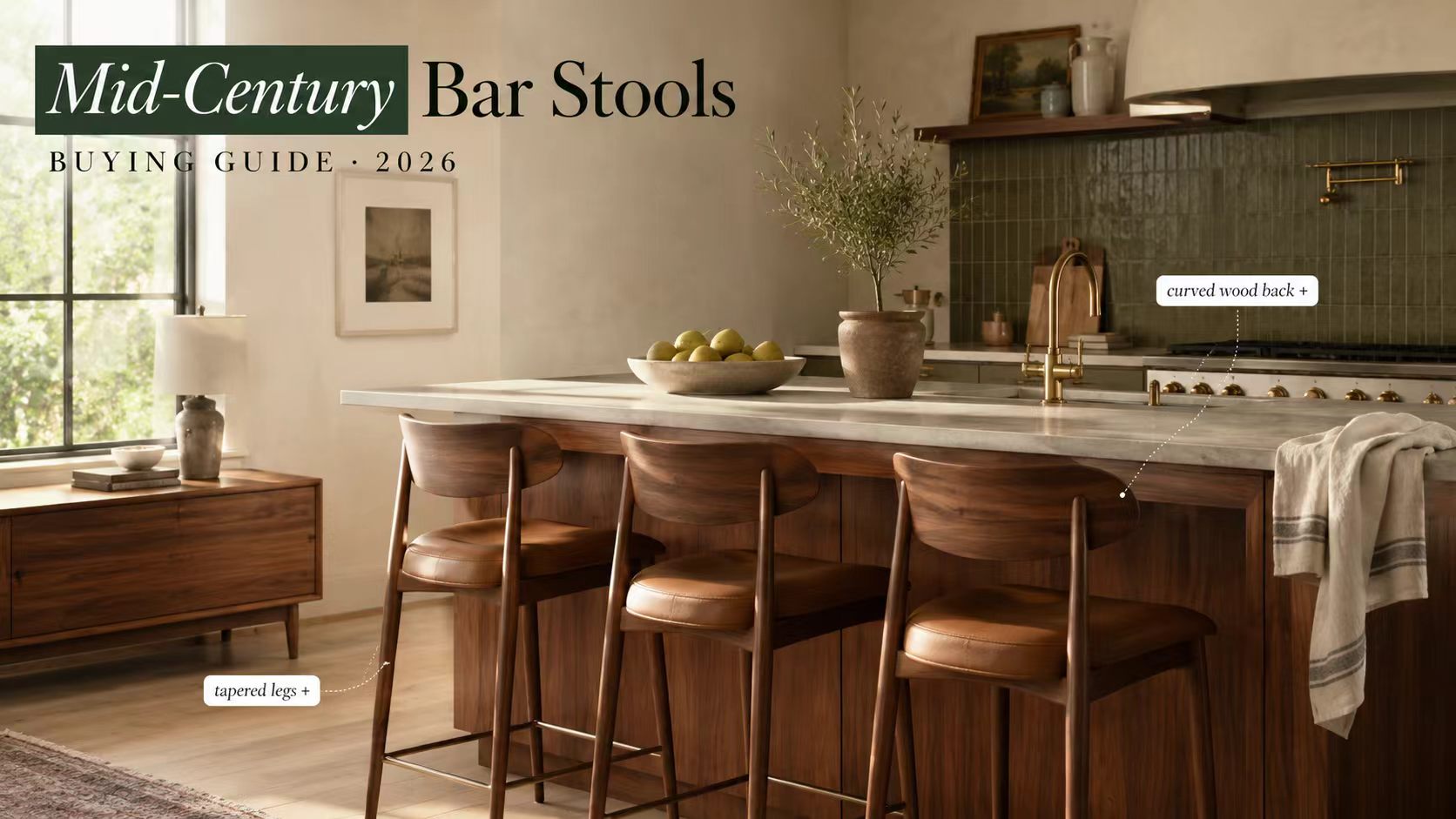
I almost bought the wrong mid-century bar stools last spring.
The photos looked perfect: tapered legs, warm walnut, low backs, that clean “I have my life together” silhouette. Then I measured my kitchen island and realized the seats would have left my knees jammed under the counter like I was sitting in an airplane exit row.
That’s the trap with mid century bar stools. They’re easy to love in a product photo. They’re harder to choose for real mornings, real coffee, real kids, real guests, and the occasional laptop-at-the-island work session.
So this guide is not a design history lecture. You don’t need 1,500 words on 1950s interiors to buy a stool. You need to know what makes the style work, which rooms can handle it, how walnut bar stools match other wood tones, and what to check before buying online.
What Makes Bar Stools Mid-Century Modern?
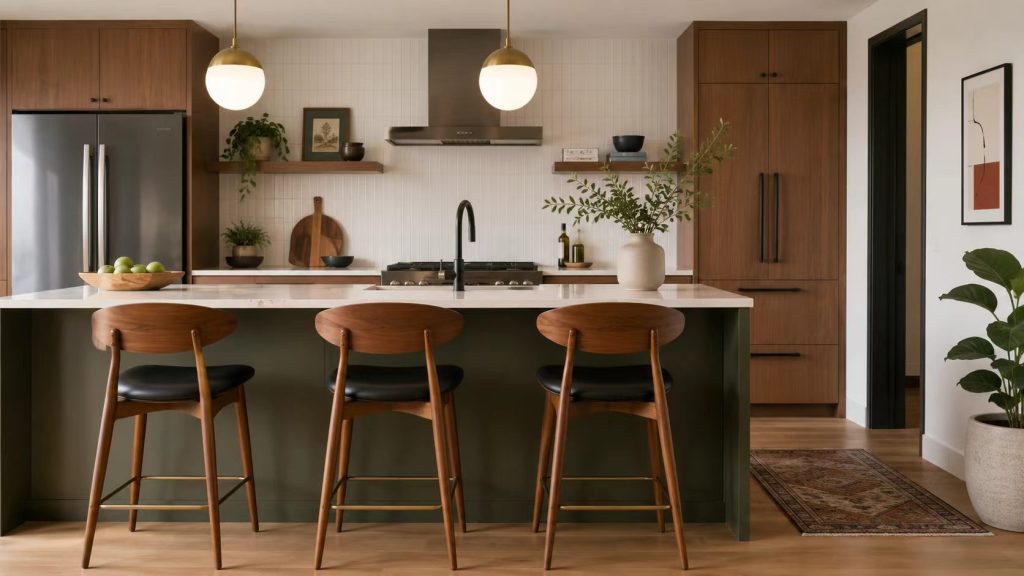
Mid-century bar stools usually combine simple lines, warm wood tones, slim legs, modest curves, and low visual weight. The best ones feel clean without feeling cold. They bring shape and warmth to a kitchen island without turning the room into a retro theme set.
Here’s the practical checklist I use:
- Tapered or splayed legs that angle slightly outward
- Low or gently curved backs instead of tall, bulky frames
- Warm wood tones, especially walnut, oak, or wood-look finishes
- Simple upholstery in cream, tan, black, gray, or muted fabric
- Slim silhouettes that leave visual breathing room around the island
- Footrests that look minimal but still support daily use
The Vitra Design Museum’s furniture archive is a good reminder that modern furniture design has always been about proportion, material, and function working together, not just a shape copied from another decade.
Quick reality check: if a stool has angled wooden legs but a giant chrome pedestal base, it may be “mid-century inspired,” not truly mid-century modern. That’s not a crime. It just changes the mood.
For a 2026 kitchen, I’d rather have a stool that borrows the best mid-century traits than one that tries too hard to look vintage.
Best Rooms for Mid-Century Bar Stools
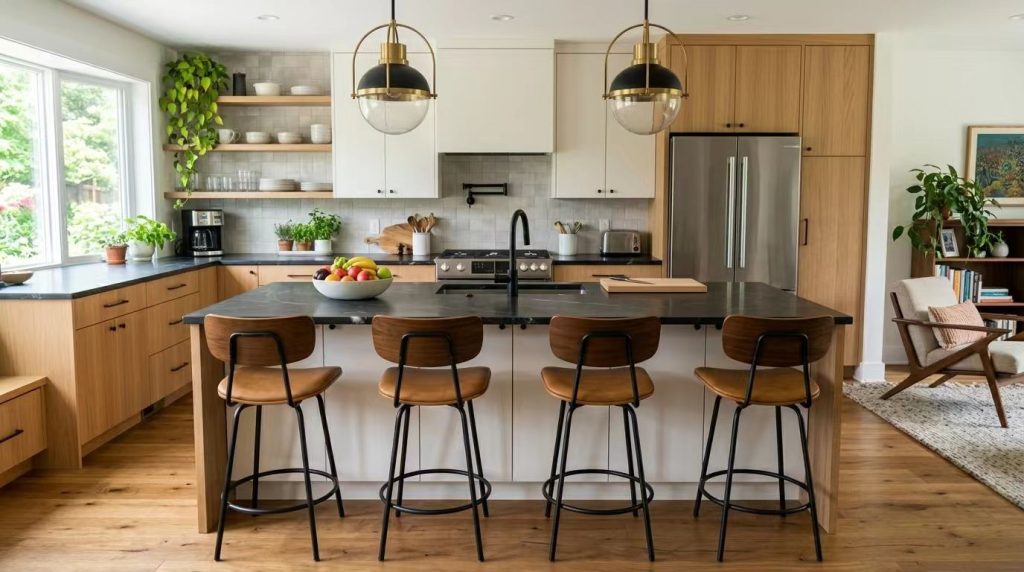
Mid-century bar stools work best in rooms where the furniture needs to look warm, light, and intentional. They’re especially strong in open kitchens, dining corners, breakfast bars, and small homes where heavy seating would make the room feel crowded.
Warm Modern Kitchens
This is the natural home for mid-century bar stools.
Think white oak cabinets, stone countertops, matte black lighting, cream walls, and a kitchen island that doubles as breakfast zone, homework zone, and “why is my laptop here again?” zone.
Mid-century stools soften modern kitchens because wood legs and curved backs break up all the straight lines. If your kitchen already has flat-panel cabinets, waterfall counters, or black hardware, a stool with walnut legs and a padded seat can make the space feel less showroom and more lived-in.
My rule: if the kitchen has cool surfaces, add warmth through the stool. If the kitchen already has a lot of warm wood, use upholstery or black accents to keep it from becoming one big brown rectangle.
This is also where POVISON fits naturally. If you’re comparing shapes, finishes, and counter-height options, the POVISON bar stools and counter stools collection is a useful place to start because you can look at silhouettes, seat colors, base finishes, and ready-to-place styles together instead of hopping across six different sites.
That matters. Design cohesion is not about matching every object perfectly. It’s about making sure the pieces speak the same language.
Dining Corners With Wood Accents
A small dining corner can handle mid-century bar stools when the space connects visually to the kitchen.
I like this setup for apartments, breakfast nooks, and open-plan rooms where a full dining set would feel too formal. A counter-height table with two or three stools can create a casual eating zone without blocking the sightline across the room.
Wood accents are the bridge. If you have a walnut sideboard, oak dining table, fluted cabinet, wood picture frames, or a warm-toned floor, mid-century stools can echo those tones and make the corner feel planned.
One warning: don’t overdo the legs.
If every piece in the room has skinny angled legs, the whole space can start to feel nervous. Mix in one grounded piece, like a solid dining table, storage cabinet, or upholstered bench, so the room has balance.
Walnut Bar Stools and Wood Tone Matching
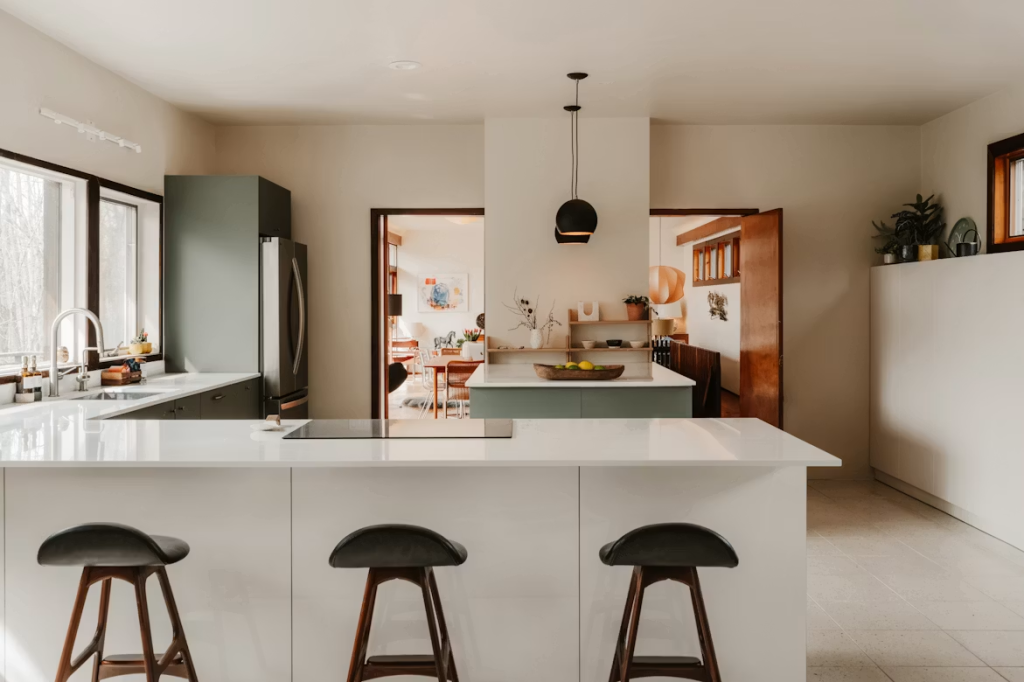
Walnut bar stools are popular for a reason. Walnut adds depth without feeling heavy, and its brown tone works with cream, black, brass, stone, and muted upholstery. It also gives mid-century silhouettes that classic warm-modern look.
But walnut matching can get weird fast.
I’ve seen people reject a stool because the walnut was not an exact match for their dining table. That’s usually the wrong standard. Real homes are not furniture showrooms. Exact wood matching is hard, and even when you pull it off, it can feel flat.
Use this instead:
| Existing Kitchen Finish | Best Stool Direction | What to Avoid |
| White cabinets + light counters | Walnut legs with cream or tan seats | Too much black if the kitchen is already stark |
| Oak cabinets | Medium walnut or black-framed stools | Orange-toned wood that clashes with oak |
| Dark cabinets | Walnut seats with lighter upholstery | All-dark stools that disappear visually |
| Black island | Walnut frame with soft fabric | Chrome bases that fight the warm-modern mood |
| Mixed wood room | Repeat one undertone, not the exact color | Three unrelated wood temperatures |
The word “walnut” can also mean different things online: solid walnut, walnut veneer, walnut finish, walnut-colored rubberwood, or engineered wood with a walnut stain. None of those are automatically bad. They are just different.
If sustainability matters to you, look for clear material language and certification claims. The Forest Stewardship Council explains how FSC-certified wood supports responsible wood sourcing in furniture supply chains. Still, check the specific product page. Don’t assume every wood stool from any brand carries the same certification.
My practical test: place the stool finish next to your floor, cabinets, and nearest dining piece. If two of the three feel connected, you’re usually safe.
Comfort, Seat Height, and Daily Use Trade-Offs
Mid-century bar stools can be comfortable, but the style has trade-offs. Low backs look elegant. Backless stools tuck away cleanly. Slim seats keep the kitchen airy. The catch is that each of those choices affects how long someone actually wants to sit.
Before buying, separate the question into two parts:
How long will people sit? For five-minute coffee, a simple low-back stool may be fine. For family breakfast, homework, wine with friends, or remote work, you’ll probably want padding, a footrest, and at least some back support.
Where will their legs go? Seat height is where people mess up. Counter stools and bar stools are not the same thing. Counter stools are made for kitchen counters and islands. Bar stools are made for taller bar-height surfaces. Always check the listed seat height against the underside of your counter, not just the total stool height.
The NKBA kitchen planning guidelines are useful here because kitchen comfort depends on clearance, walkways, and access around the seating zone, not just the stool itself.
Here’s my tape-out method. It takes 10 minutes and can save you a return.
Mark the width of each stool on the floor with painter’s tape. Then sit at the island with any chair you already own. Pretend you’re getting in, turning sideways, setting down a plate, and letting someone walk behind you.
Awkward? Believe the tape.
If your island is tight, choose fewer stools with better spacing. Three cramped stools are worse than two stools people actually use.
What to Check Before Buying Online
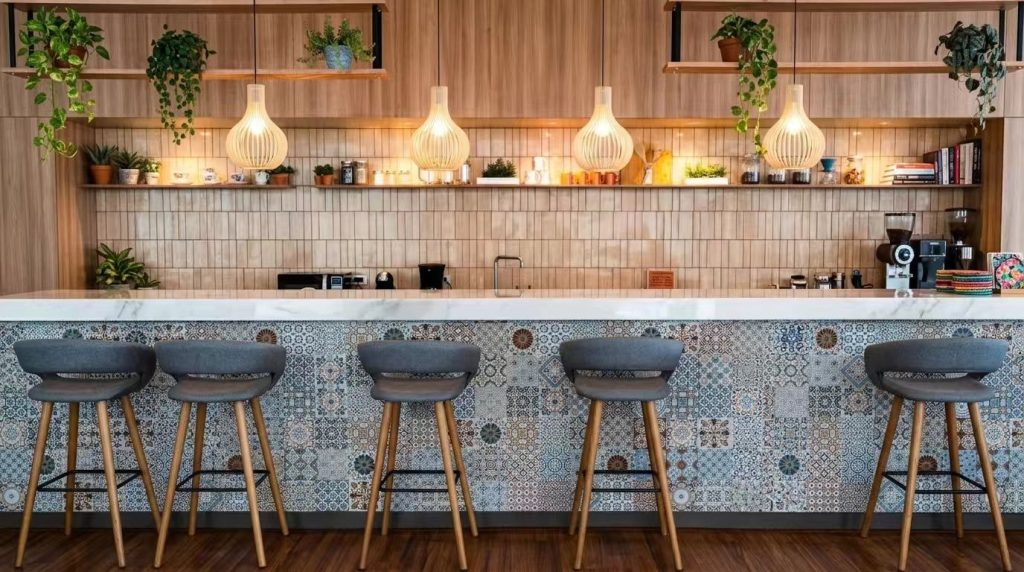
Online stool shopping rewards people who read the boring details. Sorry. It’s true.
Before you fall for the product photos, check these items:
- Seat height: Confirm counter height or bar height.
- Overall height: A tall back can block sightlines across an island.
- Seat width and depth: Slim looks nice, but narrow seats can feel temporary.
- Back style: Backless, low-back, curved-back, and full-back all sit differently.
- Footrest position: A beautiful stool without a useful footrest gets annoying.
- Material wording: Solid wood, veneer, engineered wood, metal, fabric, leatherette, finish.
- Weight capacity: Look for a clearly listed number on the product page.
- Assembly status: Fully assembled, partial assembly, or full assembly required.
- Delivery scope: Doorstep, room-of-choice, white-glove, or other service levels.
- Return rules: Check packaging, fees, pickup process, and time window.
ANSI/BIFMA standards are mostly discussed in commercial and office furniture contexts, but the principle is still useful for shoppers: seating should be judged by safety, performance, and durability language, not just style photos. BIFMA describes its role in maintaining ANSI/BIFMA seating standards for furniture safety and performance.
For POVISON specifically, check the latest official product page for current assembly status, shipping details, materials, finishes, and return policy. Product details can change, and I don’t like guessing on things that affect your doorway, your budget, or your Saturday.
Who should skip mid-century bar stools? If you need thick lounge-chair comfort, adjustable office-chair support, or seating for people who struggle to climb onto elevated seats, this style may not be the best first choice. A lower dining chair or upholstered counter chair may serve your home better.
No shame in that. The right furniture is the furniture your household will use.
FAQ
What makes bar stools mid-century modern?
Bar stools feel mid-century modern when they use clean lines, warm wood tones, tapered legs, gentle curves, and minimal ornamentation. The style should feel light and functional, not overly decorative. For today’s kitchens, the best versions mix vintage-inspired proportions with practical comfort.
Do mid-century bar stools work in modern kitchens?
Mid-century bar stools work in modern kitchens when they add warmth, shape, and contrast to clean cabinetry and stone surfaces. They are especially useful in kitchens that feel too cold or too flat. Choose finishes that connect with your cabinets, lighting, or nearby dining furniture.
Are walnut bar stools durable for daily use?
Walnut bar stools can be durable for daily use when the frame, joinery, finish, and seat construction are suited to frequent sitting. Always check the specific product material, care instructions, and weight rating. “Walnut” may describe solid wood, veneer, or a walnut-colored finish.
Are mid-century bar stools comfortable for kitchen islands?
Mid-century bar stools can be comfortable for kitchen islands if the seat height fits the counter, the footrest lands naturally, and the back support matches how long you sit. Low-back and backless stools look cleaner, while padded seats and curved backs usually feel better for daily meals.
Conclusion
Mid-century bar stools are not just a style choice. They’re a daily-use decision hiding inside a design decision.
The right stool should make your kitchen warmer, not tighter. It should support breakfast, not just product photography. It should match your wood tones without forcing a perfect showroom set. And it should arrive with clear details about seat height, materials, finish, assembly, and delivery.
My bottom line: start with proportion, then comfort, then wood tone. In that order.
If the stool fits your counter, gives people a natural place to rest their feet, and connects visually with your kitchen, you’re already ahead of most online shoppers. If it also arrives ready to place, even better. That’s the Ready To Live In version of the decision: less measuring twice after the return label arrives, more sitting down with coffee while the kitchen finally feels finished.
Related Reading:


