 By Charles
Hey guys. For your information, I’ve spent the last two months sitting on cloud couches. Not scrolling Instagram pictures of them — actually sitting on them. Five different ones, in five different living rooms, over six weekends. Two friends’ homes, one showroom, one rental I pet-sat at, and one I dragged my partner to “just to test the seat depth.” (She has questions about how I spend my time.)
Here’s what I want to say upfront, because I owe it to you before we go any further: the cloud couch is one of the most context-dependent purchases in modern furniture. It is genuinely fantastic for some homes and a genuinely bad idea for others. The trend doesn’t tell you which is which. This article will.
If you’re searching “is a cloud couch worth it” in 2026, you’ve already sensed that something is off about how it’s marketed. Good instinct. Let’s get into it.
Why the Cloud Couch Trend Took Off
The original cloud couch wasn’t born on TikTok — though you’d be forgiven for thinking so. It was designed by British designer Timothy Oulton around the early 2010s for Restoration Hardware (now RH), launched in their galleries by 2015, and characterized by oversized cushions, low arms, and a sink-in down-feather feel. RH’s Cloud Modular 3-Piece Sofa starts around $4,685 for members and goes well above $6,200 for non-members, with larger configurations climbing into five figures.
So why did it explode now? A few things converged:
- Post-pandemic homebody culture. People stopped dressing up their living rooms for guests and started dressing them for themselves. The cloud couch reads as “I live here, and I’m not sorry.”
- The rise of lounge-first design. Open kitchens, no formal dining, smaller dedicated TV rooms — the sofa has to do more than seat people upright.
- Pinterest and reels. That low, billowy silhouette photographs beautifully. Almost too beautifully — which is part of the problem we’ll get into.
The dupe wave followed almost immediately. Wayfair, Amazon, and direct-to-consumer brands rolled out “cloud-style” couches in the $900–$2,500 range. Some are good. Most are not. The visual gap between a $950 dupe and a $10,000 original looks invisible in a photo and very visible in person after six months.
That last sentence is where the rest of this article lives.
What Buyers Usually Mean by Cloud Couch Comfort
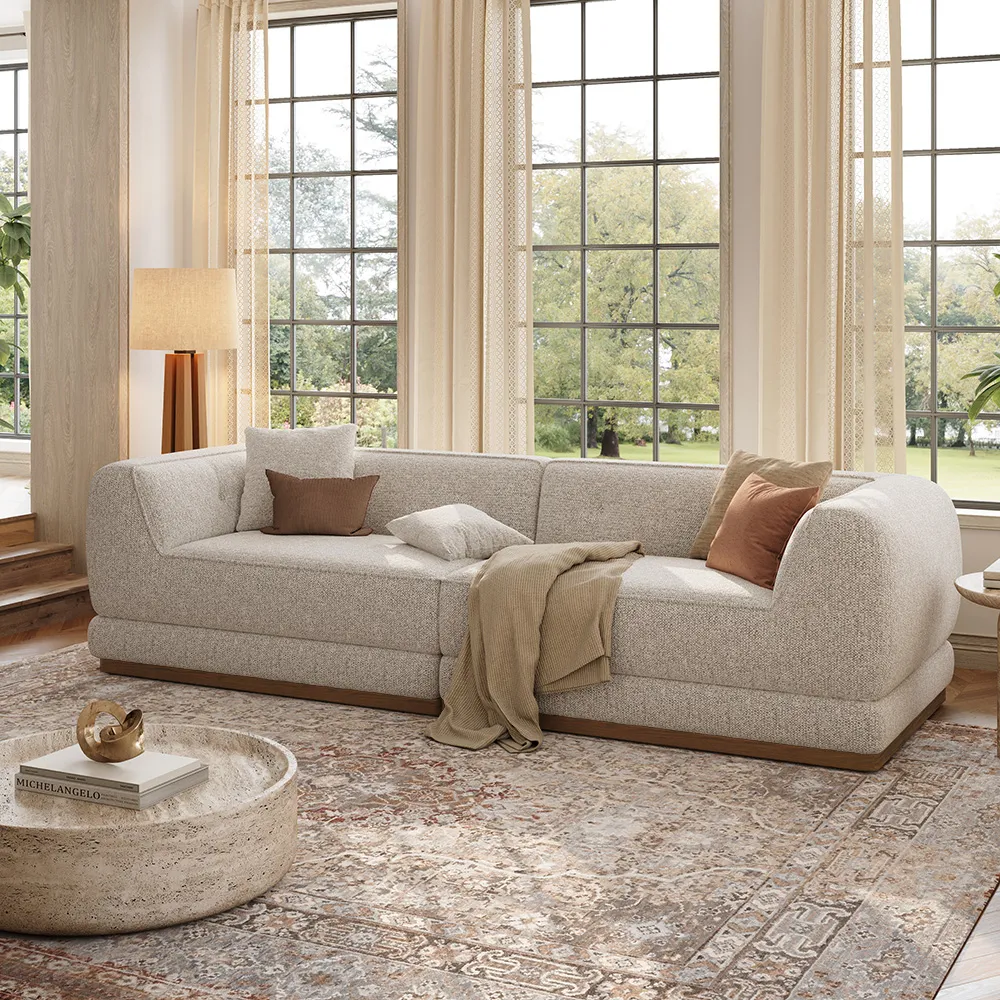
When someone says “I want that cloud couch comfort,” they almost always mean one specific thing: the sink-in moment. That first sit, where the cushion gives, your shoulders drop, and the whole couch feels like it’s hugging you. It’s the bean-bag-meets-bed sensation. It’s a real thing. It’s lovely.
Here’s what that comfort actually requires under the upholstery:
- A deep seat. Most cloud couches run 36–48 inches in seat depth. For comparison, a standard sofa sits at 21–23 inches. That’s not a small gap — it changes how you have to use the couch entirely. Standard sofa depth is around 36–40 inches, for what counts as “deep” everyday lounging, with seat heights typically running 18–20 inches off the floor.
- A soft fill. Most originals use down-feather cushions. Most dupes use polyurethane foam at 1.8–2.5 lb/cu.ft density. Down feels cloudier on day one. Foam holds its shape better at year three. Both have real trade-offs.
- Low arms and a low back. Part of why it looks like a cloud is that nothing rises above the cushion line by much. Visually low-slung. Functionally also low-slung.
So when you ask “is it comfortable?” — comfortable for what? Comfortable for a Sunday afternoon movie marathon? Yes, probably. Comfortable for upright dinner conversation with your in-laws? Hmm. Comfortable for working on a laptop for six hours? Absolutely not, and we’ll get to why.
Who It Works Best For
Two living-room types, in my testing, where a cloud couch actively earns its place.
Lounge-First Living Rooms
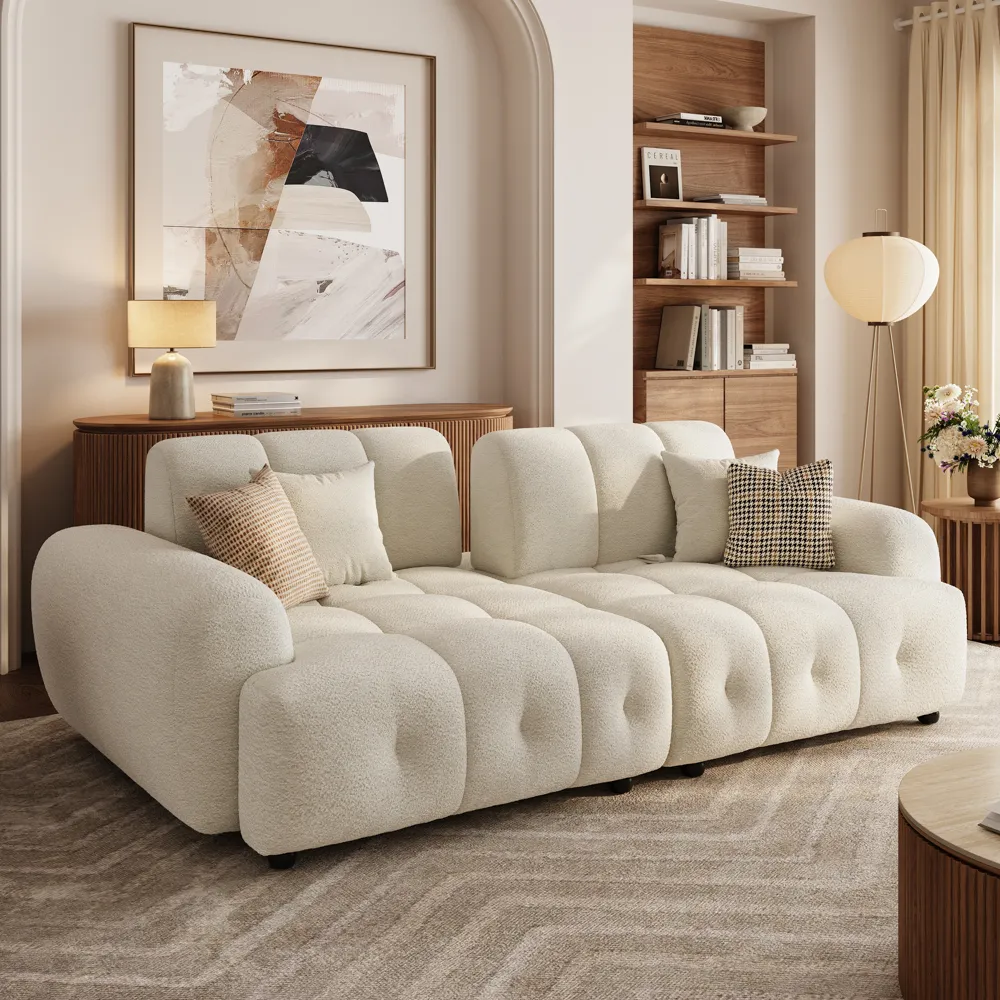
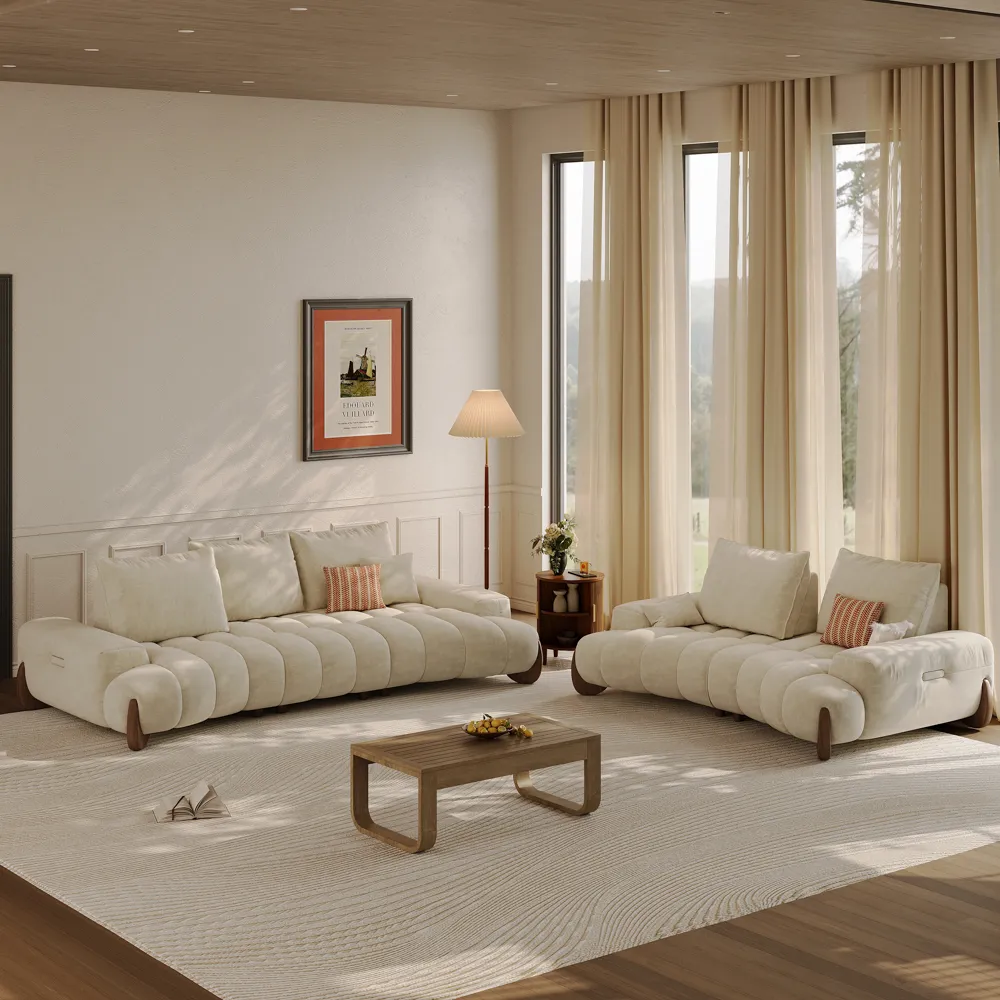
If your living room exists primarily to lounge — TV, movies, reading, weekend napping, occasional family pile-ons — and you have at least 12 feet of wall to dedicate to the sofa, this is the sweet spot. A typical cloud couch runs 105–132 inches wide. That’s longer than the average sofa wall in a 1,200 sq ft apartment.
In one friend’s Brooklyn brownstone, a 120-inch cloud sectional anchored a 14-foot wall and immediately turned the room into the most-used space in the house. Three adults, one toddler, one greyhound — all on the couch at once, no complaints. That’s the dream scenario.
Family Spaces With Casual Use
If your household actively uses the couch — kids fort-building, dogs napping, popcorn nights, the occasional sleepover — and you choose performance fabric with removable, washable covers, the cloud couch holds up surprisingly well. Key word: if you choose those features. Linen looks beautiful in the showroom and is a stain magnet for real life.
So the formula for “works in a real family” is: cloud silhouette + performance fabric (polyester blend, crypton, or stain-resistant chenille) + removable slipcovers. Not cloud silhouette + Instagram-favorite cream linen.
Where the Trend Can Fall Short
Now the part most cloud couch articles skip. I’m going to be specific.
Support degrades faster than you think. Down-feather fill compresses with every sit and doesn’t fully bounce back without daily fluffing — sometimes twice daily. Foam fills below 2.5 lb/cu.ft density develop permanent dips within 4–12 months in high-use spots. A documented first-person 6-month review of a sub-$1,000 Amazon dupe recorded a 1.2-inch permanent indentation appearing at month four, with foam loft dropping roughly 15% by month twelve in high-traffic zones. That matters. It means the “cloud” you bought is not the cloud you’ll have in a year.
It’s hard for older family members to get out of. This is a real and underdiscussed issue. Cloud couches sit low — often 14–17 inches off the floor at the seat. Combined with the soft fill, getting up takes core engagement most people over 65 don’t want to deploy every evening. As one design review put it, the deep, low cloud sofa is “comparable to a bean bag chair, sits very low to the ground and is very hard to get out of” — particularly for older relatives. If your parents visit often, or if anyone in the household has knee, hip, or back issues, sit-test before you buy. I cannot stress this enough.
It is genuinely not a work-from-home couch. I tried. Three days, four hours each, laptop balanced on my legs. By day three my lower back was making noises I didn’t recognize. The seat depth that feels luxurious for movies is a structural disaster for upright laptop work. If your living room doubles as your office during back-to-back Zoom days, you need either a separate desk chair or a structured sofa — not a cloud.
Linen and white look amazing for about two months. Then the kid spills grape juice. Or the dog jumps up after a muddy walk. Or you just sit on it 600 times and the fabric depresses where your body weight concentrates. Wrinkles in linen on a deep, soft cushion don’t recover. They’re permanent, and they show up in every photo you take of the room afterward.
The fill question is murkier than brands admit. Polyurethane foam — the most common cloud-couch fill in the under-$3,000 range — has a complicated environmental and indoor-air history. The flexible foam industry voluntarily phased out PBDE flame retardants starting in 2005, which was a meaningful step forward. But quality varies wildly. If you’re sensitive to off-gassing or have young children, look for CertiPUR-US certified foam specifically. And know that all upholstered furniture sold in the U.S. since 2021 must comply with the federal CPSC flammability standard for upholstered furniture (16 CFR Part 1640), which adopts California Technical Bulletin 117-2013. That label is worth checking before you buy.
None of this means “don’t buy a cloud couch.” It means buy one with your eyes open.
What to Check Before Buying Online
Buying a 100+ inch sofa you’ve never sat on is a leap. Here’s the checklist I now use, in order. Five minutes of due diligence saves you from an $800 mistake or a $4,000 regret.
- Tape out the footprint on your floor. Painter’s tape, full dimensions — width, depth, and the swing radius for any modular pieces. Walk around it for two days. If you keep banging your shins on the imaginary couch, the real one will feel worse.
- Confirm the seat depth in writing. Ask the brand directly if it’s not on the product page. 36 inches is “deep.” 40+ inches is “you live on it now.” 48 inches is “you bought a daybed with arms.” Each is fine — you just need to know which you’re getting.
- Verify the fill type and density. “Foam” is not a spec. You want either down-feather (with maintenance honesty) or high-resilience foam at 2.0+ lb/cu.ft. Anything labeled “high-density foam” without a number is marketing.
- Check whether covers are removable and washable. This single feature determines whether your couch survives kids, pets, or one bad red wine night. Non-removable covers on a deep, light-colored sofa is a five-figure regret waiting to happen.
- Read the delivery and return terms — twice. A 132-inch sofa is not an “easy return.” Some brands charge restocking fees of 10–25%. Some require professional pickup. Some ship in modular pieces that assemble in 10 minutes; others arrive flat-pack and take a full afternoon and two adults. This is exactly the friction point where POVISON’s fully-assembled sofa sets genuinely matter — when the sofa is the size of a small car, “no assembly required” stops being a marketing line and starts being practical relief.
- Look at the actual flammability and material labels. Per federal law, every upholstered sofa sold in the U.S. needs to bear a CPSC compliance label. CertiPUR-US for foam, FSC for any wood frame, and the EWG’s healthy home guidance covers fabrics. Those three are the ones I personally check. If a brand can’t tell you what’s in their cushions, that’s the answer.
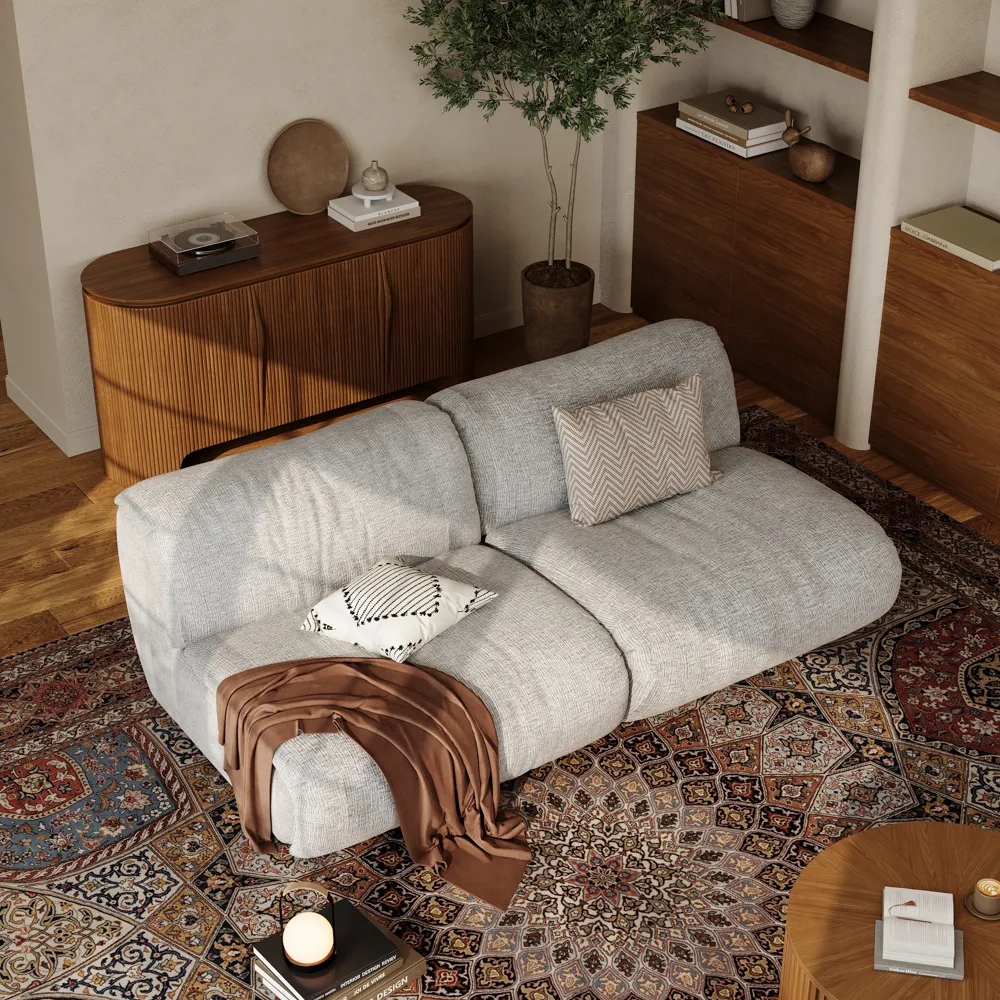
If you’ve made it this far and your living room is genuinely lounge-first — long wall, casual use, real family or pet traffic — it’s worth looking at deep-seat options that come with washable covers and verified fill specs. POVISON’s modern modular sectional sofas ship 100% pre-assembled (no flat-pack wrestling for a 100-inch couch), with kiln-dried solid pine frames and performance fabric options designed for water resistance and pet households. That’s the version of the cloud-couch idea that’s been stripped of the maintenance landmines.
FAQ
Is a cloud couch actually comfortable for everyday use?
A cloud couch is comfortable for lounging, movie nights, and casual reading, but it’s a poor fit for upright tasks. The 40+ inch seat depth that creates the “sink-in” feeling makes laptop work, dinner conversation, and helping older relatives stand up significantly harder. If your living room is a lounge zone, yes. If it doubles as a home office or hosts family members with mobility limitations, sit-test before you commit.
Does a cloud couch work in a small living room?
Most cloud couches run 105–132 inches wide and 36–48 inches deep — meaning they need at least a 12-foot wall and a room layout that lets you walk around them with at least 30 inches of clearance. In a 10×12 foot living room, a true cloud couch will dominate everything else. Smaller “cloud-inspired” loveseats or 2-seat modules exist (POVISON, for example, sells loveseat configurations measuring 48–72 inches wide), and those are the realistic version for apartments under 1,000 sq ft.
Is a cloud couch hard to keep looking neat?
Yes, particularly in linen, white, or cream. Soft, deep cushions don’t bounce back from body impressions, and natural fibers like linen wrinkle permanently after compression. The two best defenses: choose a performance fabric (polyester blend, chenille, or PFAS-free stain-resistant weaves), and choose a model with removable, machine-washable covers. Without those two features, a cloud couch in a real home looks rumpled within 30 days and stays that way.
What should I know before buying a cloud sofa online?
Six things, in order: tape out the footprint, confirm the exact seat depth, verify fill type and density (CertiPUR-US foam or down-feather with stated weight), check that covers are removable and washable, read the return policy carefully (this is a freight item, not a standard package), and confirm the sofa carries the federal CPSC flammability compliance label plus any material certifications you care about (FSC for wood frames, OEKO-TEX for fabrics). If a brand answers every one of those questions clearly on the product page, you’re probably safe. If three or more are vague, walk away.
Conclusion
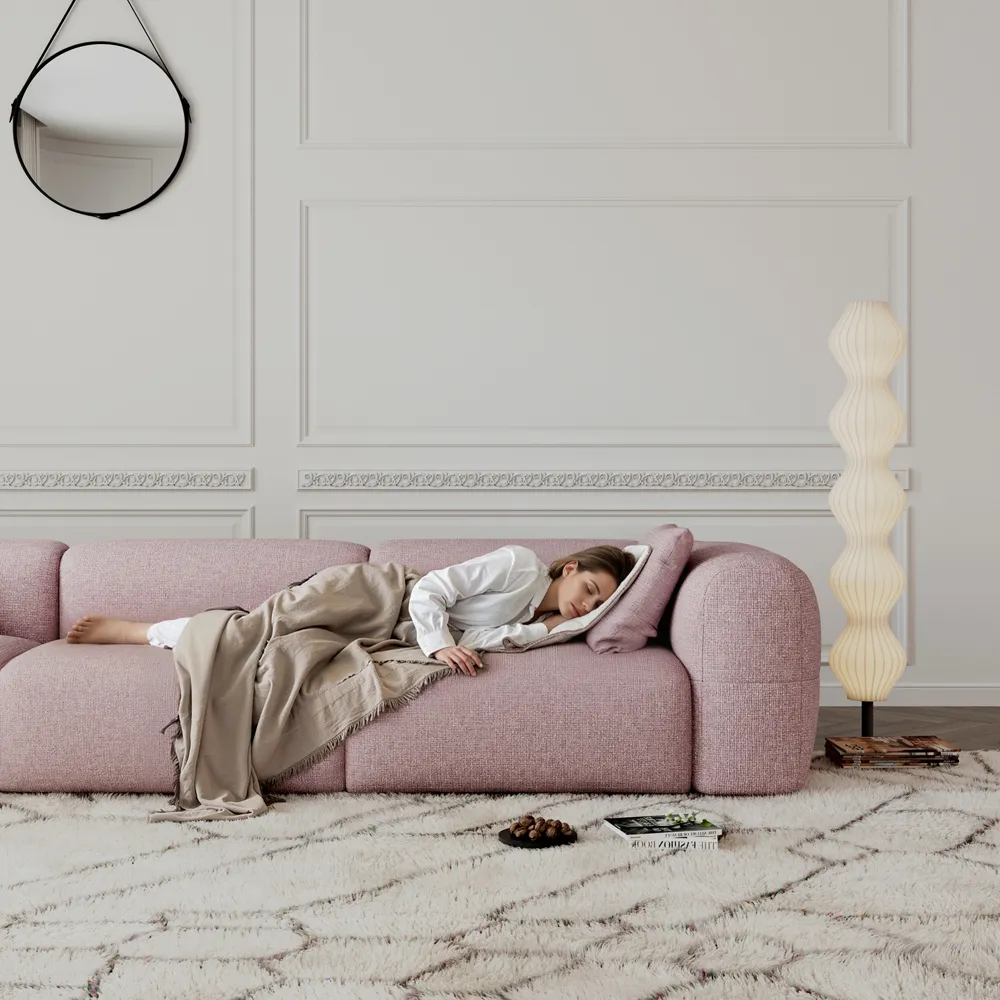
The cloud couch trend is real, and it’s not a fad — the underlying shift toward lounge-first, casual living rooms is a genuine generational change. But the trend has been marketed in a way that flattens out who it actually serves. If you have a long-walled living room, a household that actually uses the sofa, and the willingness to choose performance fabric over Instagram-perfect linen, a deep cloud-style sectional can be one of the best furniture investments you make this decade.
If you’re looking for a couch that handles laptop work, supports older family members, fits a small apartment, or stays photographically pristine for years — this is not your couch. Don’t let the trend gaslight you into thinking it should be.
The honest answer to “is a cloud couch worth it in 2026?” is: it’s worth it for the right room, the right family, and the right fabric. Get those three things right and it’s spectacular. Get any one of them wrong and you’ve spent four figures on a beautiful regret.
Tape it out. Sit-test if you can. Ask the boring questions about fill density and washability. Then decide.
That’s the whole game.
Related Reading:


