 By Jenny Smith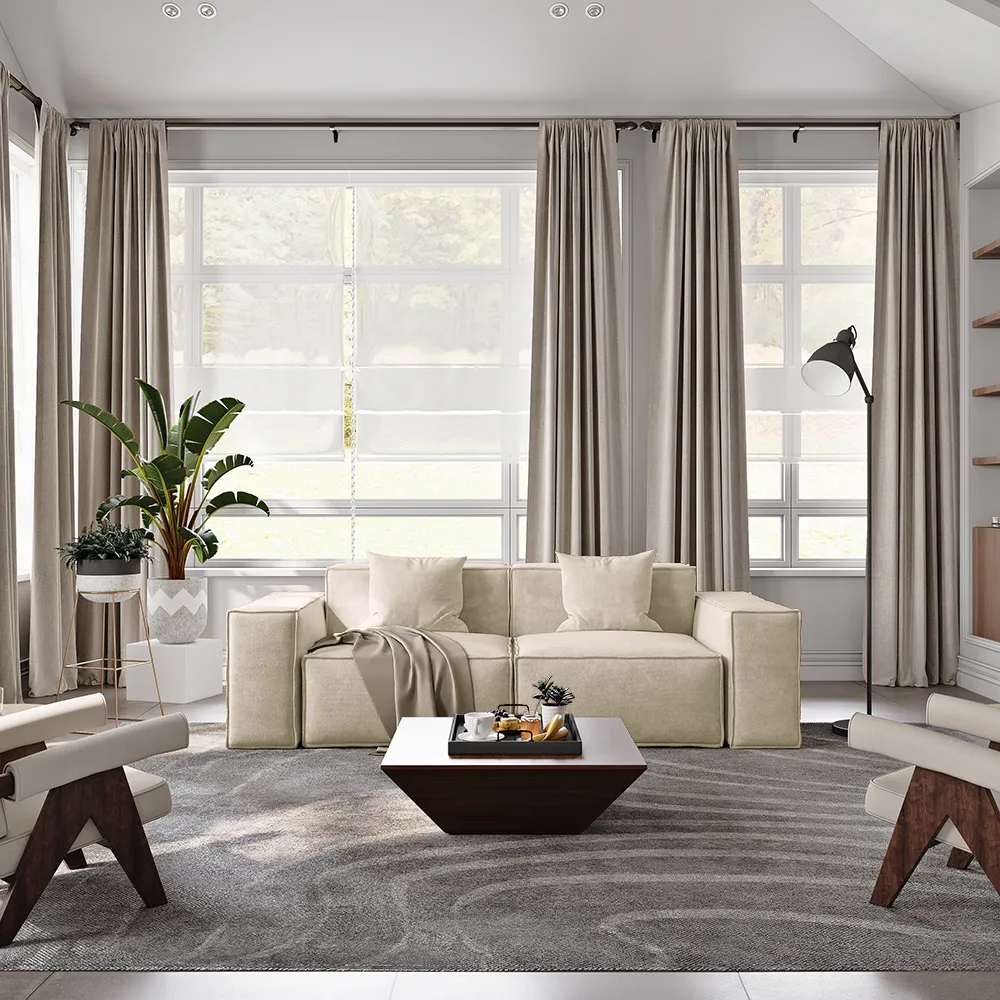
A minimalist couch is a sofa with clean lines, simple silhouettes, and low visual noise. It’s designed to calm your eyes and your mind, which is why minimalist furniture is booming; the global minimalist furniture market is projected to grow from about USD 50.2 billion in 2023 to USD 104.4 billion by 2033 (data from a Market.us 2024 report).
This guide goes beyond “Instagram pretty.” You’ll learn how a modern minimalist couch actually feels, how to pick the right fabric and size, and how to make it work with kids, pets, and movie nights. We’ll also touch on sustainable, low-VOC options and highlight the best minimalist couch configurations for different lifestyles, from tiny apartments to open-plan homes.
What Is a Minimalist Couch & Is It Right for You?
A minimalist couch focuses on “just enough”: enough comfort, enough support, enough detail. If you love a calm, uncluttered living room where the eye can rest, a minimalist couch is ideal. If you prefer lots of color, ornament, and plush curves everywhere, it may feel a bit restrained. But for many design-conscious households, a minimalist couch is the backbone of a flexible, grown-up space that’s easy to style up or down.
Core Design Features of a Minimalist Couch
Most minimalist couches share a few traits: clean lines, simple blocky or gently rounded silhouettes, and little to no decorative trim. Legs are often slim or hidden, and the color palette leans neutral—think warm white, greige, charcoal, or soft camel—with texture doing the talking. A white minimalist couch in a chunky boucle, for example, feels cozy instead of sterile.
These choices reduce visual clutter so your living room feels larger and calmer. A minimalist sectional couch with low arms and a single bench seat lets the eye sweep across the room, which is especially helpful in small apartments or open-plan spaces where you don’t want the sofa to dominate.
Minimalist Couch vs “Plain” or “Boring” Sofas
Minimalist doesn’t mean boring, and it definitely doesn’t mean uncomfortable. A plain sofa might be boxy with no design intention; a modern minimalist couch is carefully edited. Designers use details like contrast piping, subtle tufting, slim metal or wood legs, and fabric texture to keep things interesting without adding noise.
Current minimalist couch ideas include cloud-style sofas with deep, sink-in cushions; slim-armed bench-seat designs that feel tailored and hotel-like; and modular minimalist couch sets you can rearrange as your life changes. The difference is in the proportions and finishes: everything feels deliberate and cohesive.

Comfort Basics – How a Minimalist Couch Actually Feels
A minimalist silhouette can hide a surprisingly cozy interior. Comfort comes from measurements and materials, not how “puffy” the couch looks. When you understand seat height, depth, cushion firmness, frames, and support systems, you can confidently choose the best minimalist couch for long Netflix nights and upright conversation.
Seat Height, Depth & Cushion Firmness (Finding Your Sweet Spot)
Seat height on most couches ranges from about 16–19 inches. If you’re under 5’5″ and prefer feet flat on the floor, aim for 16–17 inches; taller users or those who like a more formal sit often prefer around 18–19 inches. Seat depth is crucial: 20–22 inches works for upright sitting, while 23–25 inches feels better for lounging or a chaise-style modern minimalist couch.
Soft cushions feel plush but may require more fluffing; firmer cushions provide better long-term support and keep a minimalist couch design looking crisp. A quick rule: when you sit, your knees should be close to a 90-degree angle and your feet flat (the “90-degree rule”). If your legs dangle or your knees are much higher than your hips (“leg test”), it may not be your best fit.
Frames, Support Systems & Foam Types That Matter
Underneath a couch minimalist shell, the frame and support system do the heavy lifting. Solid hardwood frames tend to last longest; engineered wood can be fine when properly constructed; metal frames are durable but may feel colder visually. For support, look for webbing plus sinuous springs or pocket springs, which offer a more even, resilient feel than cheap webbing alone.
High-density foam (usually 1.8–2.5 lb density and up) keeps its shape better. Memory foam adds contouring but can feel warmer. Down or feather blends give that “cloud” feel but require regular fluffing and may not be ideal for allergy sufferers. I once tested a minimalist sectional couch with a feather-blend top and firm foam core—perfect for sinking in with a book but still supportive enough for hours of hosting.
Testing Comfort When You’re Buying Online
Online furniture shopping keeps growing; online furniture sales jumped from USD 33 billion in 2017 to USD 57 billion in 2022 (based on a Statista 2022 figure cited by ShipperHQ). To judge comfort from your screen, study product photos from multiple angles, especially side views that show seat depth and cushion thickness.
Check key specs: overall depth, seat depth, seat height, cushion fill, and frame materials. Scan reviews for words like “supportive,” “too firm,” “great for napping,” or “runs small.” Customer photos reveal real-life scale. Also note return policies and trial periods; generous windows and low return fees reduce risk, especially for a large minimalist sectional couch that’s harder to ship back.
Fabric & Material Guide for Minimalist Couches 2026
In 2026, fabric choices are just as important as silhouette. Designers and homeowners are leaning into performance materials and sustainable options. A 2022 designer survey found that 78% of designers named stain-resistant, easy-to-clean performance fabrics as the top upholstery trend (Apartment Therapy 2022). That matters a lot if your minimalist couch needs to survive pets, kids, and red wine.
Popular Minimalist Couch Fabrics (Linen, Cotton, Performance, Leather)
Here’s how common minimalist-friendly fabrics compare:
| Fabric | Feel & Look | Durability | Care Difficulty |
| Linen blend | Airy, textured, casual elegance | Medium | Medium (wrinkles, spot clean) |
| Cotton or cotton blend | Soft, familiar, matte finish | Medium | Medium |
| Performance polyester/olefin | Smooth or textured, many neutrals | High | Easy (stain-resistant) |
| Genuine leather | Sleek, ages with patina | High | Easy–Medium (conditioning) |
| Vegan leather | Smooth, consistent, modern | Medium–High | Easy (wipeable) |
*Relative ranges, not exact prices.
Choose natural fibers like linen or cotton when you want softness and breathability, especially on a white minimalist couch where subtle texture keeps it from looking flat. Performance fabrics and some synthetics are smarter for high-traffic homes because they resist stains and fading. Genuine leather brings a luxurious, minimalist leather couch vibe; vegan leather is a lower-maintenance, often more affordable alternative.
Durability, Cleanability & Pet/Kid-Friendly Choices
Look for rub count (often listed as Martindale or Wyzenbeek); higher numbers mean better abrasion resistance for everyday use. Check for mentions of pilling resistance and stain protection. Performance fabrics are engineered to repel spills and resist wear, making them ideal for a cheap minimalist couch that still needs to last several years.
For homes with pets, choose tight weaves, mid-to-darker neutrals, and avoid super-loopy boucles that can snag claws. Features like removable, machine-washable cushion covers and slightly higher legs make cleaning easier—you can slide a vacuum or robot underneath instead of dragging the couch around the room.
Sustainable, Low-VOC & Non-Toxic Materials Checklist
Sustainability is rapidly moving from “nice to have” to “must have.” A 2023 survey from Deloitte found that 55% of consumers actively seek sustainable products across categories, up from 34% just five years earlier (Deloitte 2023). For a minimalist modern couch, that can mean FSC-certified wood frames, water-based or low-VOC finishes, and foam that’s CertiPUR-US® certified or similar.
When browsing product pages, scan for keywords like “FSC-certified,” “low VOC,” “CARB-compliant,” and “recycled fibers.” A minimalist couch made with these materials supports healthier indoor air—especially important for kids, allergy sufferers, or anyone sensitive to chemical smells—while aligning with the calm, conscious ethos of minimalist living.

Size, Layout & Proportion – Matching Your Couch to the Room
A minimalist couch looks best when it’s in proportion to your room, doors, and walkways. Because the design is so clean, the wrong size stands out immediately. The goal is to make circulation easy, balance visual weight, and keep the room feeling open.
How to Measure Your Room, Doorways & Walkways Correctly
Start with the room: measure length and width, then note where doors, windows, and radiators sit. Measure the wall your couch will sit against, including any alcoves or obstacles. Next, measure all entry points—doorways, hallways, elevator interiors, and tight stair turns. Compare these to the boxed dimensions of the minimalist couch set you’re considering, not just its assembled size.
Plan for at least 30 inches (about 75 cm) of clear walkway behind or beside the sofa so people can pass without turning sideways. A quick sketch in your phone notes app with dimensions labeled is usually enough to keep you from falling in love with a couch that can’t actually get into your living room.
Picking the Right Configuration for Your Space
Loveseats (around 60 inches) suit small studios or home offices. A standard 3-seater (78–86 inches) works in most living rooms. Choose a minimalist sectional couch or chaise sofa for open-plan areas where you want to define a “zone” or seat more people. Modular designs let you start with a 3-piece and add extra seats later as your household grows.
Low-back minimalist couches keep sightlines open and can make low-ceiling rooms feel taller. High-back options work well in media rooms where you want more head support. When I lived in a narrow 450-square-foot apartment, a low-profile modular minimalist couch with a single chaise became the all-in-one lounge, guest bed, and reading nook without dominating the space.
Visual Balance: Couch Height, Rug Size & Coffee Table Proportions
Couch height affects how airy the room feels. Lower couches (26–30 inches high) pair beautifully with minimalist couch design and make ceilings feel higher. To avoid your sofa “floating,” choose a rug that lets at least the front legs of the couch sit on it; in small living rooms, a 5′ x 8′ often works, while larger or open-plan rooms usually need 8′ x 10′ or 9′ x 12′.
As a rough guide, aim for a coffee table that’s about two-thirds the length of your couch and roughly the same height as the seat or slightly lower. For a long, narrow room, try a slim minimalist modern couch along one wall with a narrow rectangular coffee table; in open-plan spaces, a generous minimalist sectional couch plus a round coffee table keeps traffic flowing around the corners.
Style & Function – Making a Modern Minimalist Couch Work in Real Life
Minimalist doesn’t mean museum-like. The right colors, textures, and companion pieces make a modern minimalist couch the most inviting seat in your home, even with kids, pets, and snacks in the picture.
Color Palettes & Textures That Keep the Room Calm (Not Cold)
To keep a minimalist living room from feeling sterile, blend warm and cool neutrals. Soft whites, beiges, and greiges are forgiving bases; charcoals and deep browns ground the space. A white minimalist couch warms up instantly with oatmeal linen pillows, a wool throw, and a nearby wood coffee table. In darker rooms, try a light beige or stone-colored minimalist couch with black metal accents for contrast.
Texture is your best friend: linen, boucle, brushed cotton, wool rugs, and nubby cushions create depth without clutter. One or two accent colors—soft rust, muted olive, inky blue—are usually enough; let them repeat in art, pillows, or a single ceramic vase instead of splashing them everywhere.
Pairing Your Minimalist Couch with Other Living Room Pieces
Think of your minimalist couch as the anchor of a curated set rather than a standalone object. Pair it with a simple, low TV stand, a clean-lined coffee table, and streamlined storage pieces in similar tones. Closed cabinets or sideboards hide visual clutter, reinforcing the minimalist feel.
Fully assembled pieces with slim legs and integrated storage are especially helpful in small spaces: a TV stand with drawers, a coffee table with a shelf, or nesting side tables. Choose 2–3 finishes max—perhaps light wood, white, and black metal—so the whole room feels cohesive, not like a random collection of furniture.
Daily Life Scenarios: Movie Nights, Hosting, Kids & Pets
For movie lovers, prioritize depth and a chaise or L-shape so everyone can stretch out; a minimalist sectional couch with 23–25 inch seat depth and softer top cushions is perfect for long lounging yet still looks clean and modern. For family living, use trays on the coffee table for remotes and snacks, lidded baskets under a console for toys, and a machine-washable throw to protect the main seating area. I once styled a living room with a white minimalist couch in performance fabric for a family with a golden retriever—muddy paw prints wiped off with a damp cloth after park days, so the space stayed crisp but truly lived-in.

Buying Checklist, Delivery & Common Mistakes to Avoid
A minimalist couch is a big purchase, so a quick pre-buy ritual saves time, money, and headaches. Treat it like buying a mattress: specs and logistics matter just as much as looks.
Final Pre-Purchase Checklist (Size, Fabric, Comfort, Budget)
Before you click “buy,” run through this list once. Screenshot it if that’s easier:
- Space & access: Room dimensions, wall length, doorways, hallways, elevator/stair clearances.
- Configuration: Loveseat, 3-seater, chaise, minimalist sectional, or modular set—does it fit your layout?
- Comfort specs: Seat height, seat depth, cushion firmness, frame material, support system.
- Fabric & color: Material (natural, performance, leather), cleanability, pet/kid suitability, color swatches if possible.
- Sustainability: Any FSC, low-VOC, or foam certifications that matter to you.
- Policies: Warranty length, return window, fees, repackaging rules, delivery type, total cost with taxes/shipping.
Delivery, Assembly & Returns – Questions to Ask Before You Pay
Check whether your minimalist couch arrives fully assembled or in sections. Fully assembled is easier but requires more clearance in doorways; modular pieces are simpler to maneuver but may need some light assembly. Delivery options range from curbside (dropped at the street) to threshold (inside your door) to white-glove service where it’s brought in, unboxed, and packaging removed.
Read the fine print: How long is the return window? Are returns free, flat-fee, or based on distance? Do you need to keep original packaging to send the couch back? Knowing this up front turns “What if it doesn’t work?” from a panic into a plan.
Conclusion – Feel Confident About Your Minimalist Couch Choice
A great minimalist couch balances calm looks with everyday comfort. When you understand the basics—seat height and depth, cushion firmness, frame and support choices, fabric performance, and room proportions—you can choose confidently instead of guessing from pretty photos. Combine a well-chosen modern minimalist couch with thoughtful textures, smart storage, and realistic delivery and return plans, and your living room becomes exactly what minimalist design promises: a space that’s ready for real life, not just for the camera.
FAQ – Minimalist Couch Questions Answered
Are Minimalist Couches Actually Comfortable for Long Lounging?
Yes—if you choose the right depth and cushions. For all-evening comfort, look for a seat depth of 23–25 inches, a chaise or sectional layout, and medium or medium-soft cushions with resilient foam cores. Add a couple of lumbar pillows so guests can customize their support without ruining the clean minimalist look.
How Do I Keep My Minimalist Couch Looking Clean and Uncluttered?
Build simple habits: keep a tray on the coffee table for remotes, use a lidded basket near the sofa for blankets and toys, and reset pillows quickly each evening. Choose fabrics with removable covers or performance properties, vacuum weekly with an upholstery attachment, and spot-clean spills right away to avoid stains on light-colored minimalist couches.
What’s the Difference Between a Modern Minimalist Couch and a Mid-Century Sofa?
A modern minimalist couch usually has simpler, more block-like forms, low visual detail, and a very restrained color palette. Mid-century sofas often show tapered wood legs, button tufting, and more visible seams, with warmer or more saturated colors like mustard or teal. Both can be streamlined, but minimalist designs push further toward quiet, pared-back silhouettes.


