 By Jenny Smith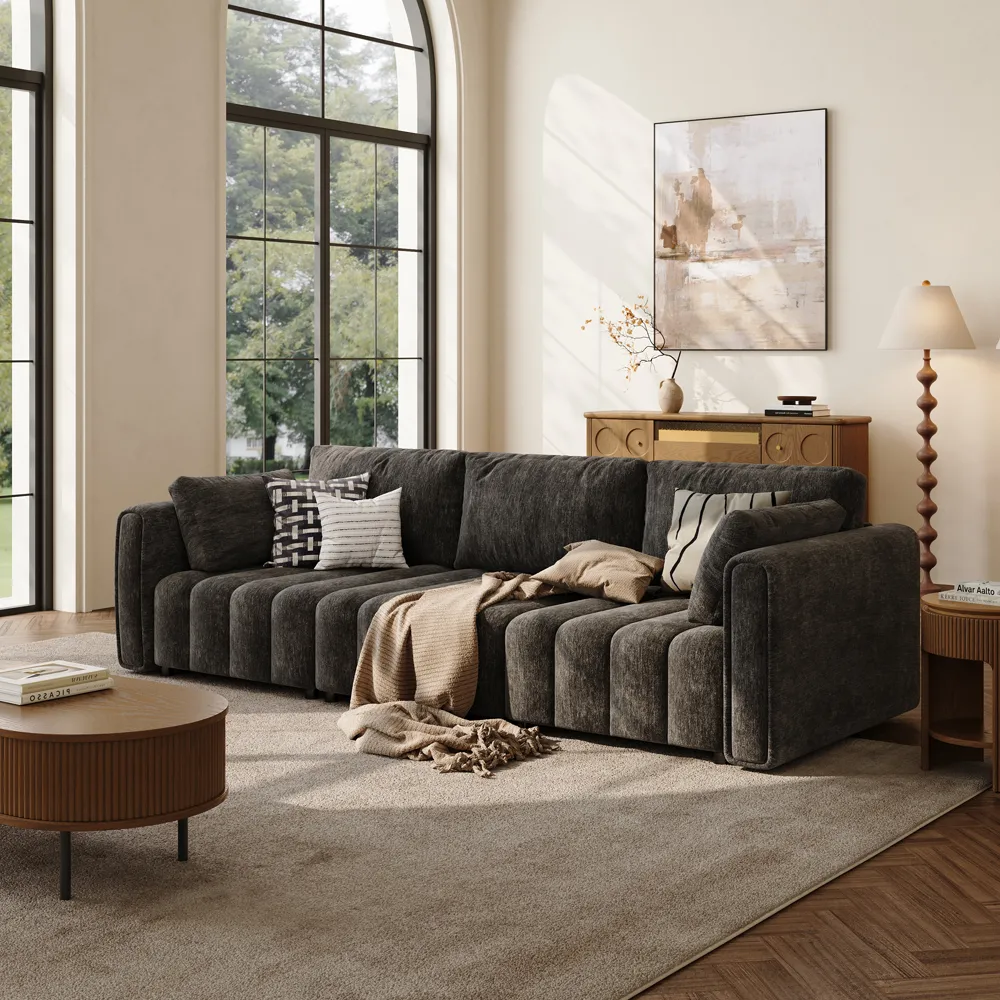
If you are trying to figure out what to put behind reclining sofa setups without making the room feel tighter, the answer starts with function, not decor. A reclining sofa needs room to move, but that does not mean the space behind it has to stay awkward or wasted. The best solution depends on your clearance, traffic flow, and what you want from the room: storage, style, softness, or all three. Once you look at the space this way, the choices get much easier.
How Much Space Do You Need Behind a Reclining Sofa?
Before you style anything, you need to know how your sofa actually moves. This is the step most people skip, and it is usually why a beautiful setup becomes annoying in daily life. Measure first, then decorate around the real footprint of the sofa instead of the upright shape alone.
How much clearance does a standard reclining sofa need?
Most standard reclining sofas need breathing room behind them. A common rule is to leave at least a few inches, then test the full reclining position so the back does not hit the wall, a console, or art that hangs too low. If you are placing a sofa with recliners on each end, check both sides separately because they do not always open the same way.
A quick way to test it:
- Put the sofa where you want it
- Open every seat fully
- Mark the farthest point it reaches
- Add a small safety buffer for daily use
- Check the walkway behind and in front
What if you have a wall-hugger or zero-wall model?
If you have ever asked, what is a wall recliner, it is simply a recliner designed to move forward as it opens so the back can stay closer to the wall. A wall hugger recliner or wall hugging reclining sofa is usually much easier to place in tighter rooms, and these designs can sit closer to the wall while still extending fully. That makes them especially useful in apartments and for small wall hugger recliners where every inch matters.
That same logic shows up in many best reclining sofas for small spaces discussions, where compact layouts depend on wall-hugging motion rather than deep rear clearance.
What Can You Put Behind a Reclining Sofa?
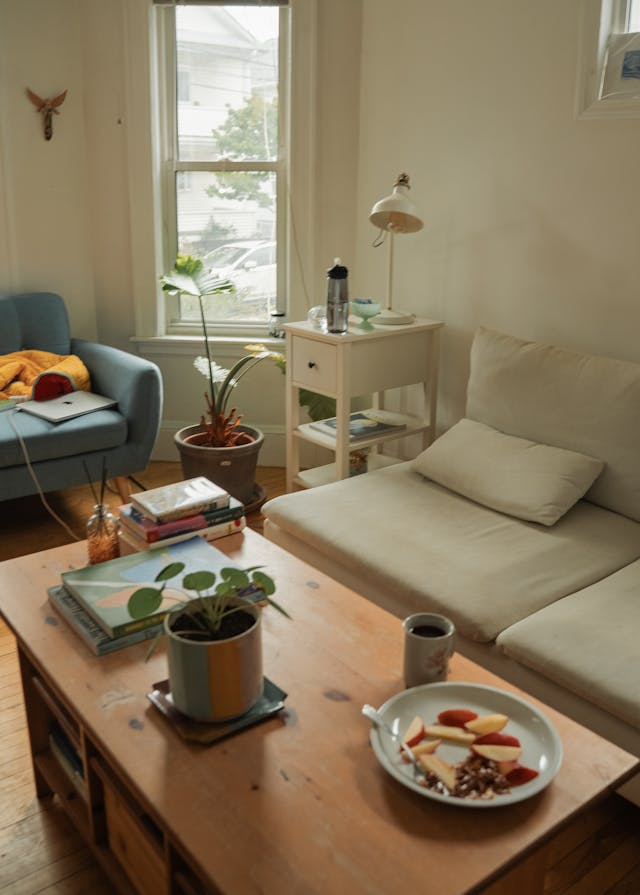
Once you know the clearance, the question becomes more practical: what do you want this space to do? In most rooms, the best behind-sofa piece either adds storage, softens the look, or gives the sofa a more finished backdrop. Aim for low-profile choices that help the room without fighting the mechanism.
What works best if you want storage?
A slim console table is still the most useful answer for most homes. It gives you a place for remotes, chargers, a candle, a drink, or a folded throw without taking over the room. A low bookshelf can also work if your clearance is generous and the walkway stays open.
I once mocked up a narrow family room with painter’s tape before buying anything. The console looked almost too slim on paper, but after a week of movie nights, it became the spot for remotes, water glasses, and the blanket everyone kept stealing.
What works best if you want a cleaner look?
If your room already has enough storage, use the wall instead of the floor. A gallery wall, one oversized art piece, or a mirror keeps the area visually active without eating into movement space. This works especially well when you are collecting recliner sofa living room ideas that feel lighter and more finished instead of bulky.
In rooms where the sofa feels visually heavy, some of the most effective ideas come from how to decorate with reclining sofa in a stylish way: lighten the visual weight, keep accents slimmer, and avoid clutter near moving parts.
What works best if you want warmth and texture?
Plants, soft lighting, and one styled surface can make a reclining sofa feel much more relaxed. A tall plant in the corner, a lamp on a narrow table, or even one sculptural vase can soften the practical feel of a recliner without crowding it.
| Option | Best for | Space needed | Main benefit |
| Slim console table | Storage + daily use | Low to medium | Holds essentials without looking bulky |
| Gallery wall or large art | Tight clearance | Very low | Adds style without using floor space |
| Mirror | Small rooms | Very low | Reflects light and makes the room feel bigger |
| Tall plant | Softening a bulky sofa | Low | Adds height and texture |
| Low bookshelf | Extra storage | Medium to high | Works as display and storage together |
Why Is a Slim Console Table Usually the Best Option?
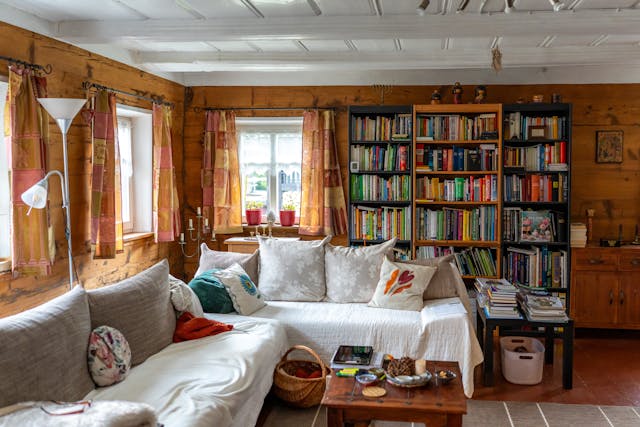
Of all the choices, a slim console table usually gives the best balance of usefulness and style. It does not ask much from the room, but it solves several problems at once: empty space, missing storage, and the “floating sofa” look that can make a layout feel unfinished.
What size and shape works best?
Choose a table that is shallow, visually light, and slightly lower than the sofa back. That keeps it from feeling crowded and makes the line behind the sofa look intentional. Skip chunky legs, deep cabinets, and anything that forces you to squeeze through the room. This is also where ideas from best console table decor and wall ideas can help, because styling a narrow surface is very different from styling a deep storage piece.
Why does this work especially well with POVISON wall-hugger recliners?
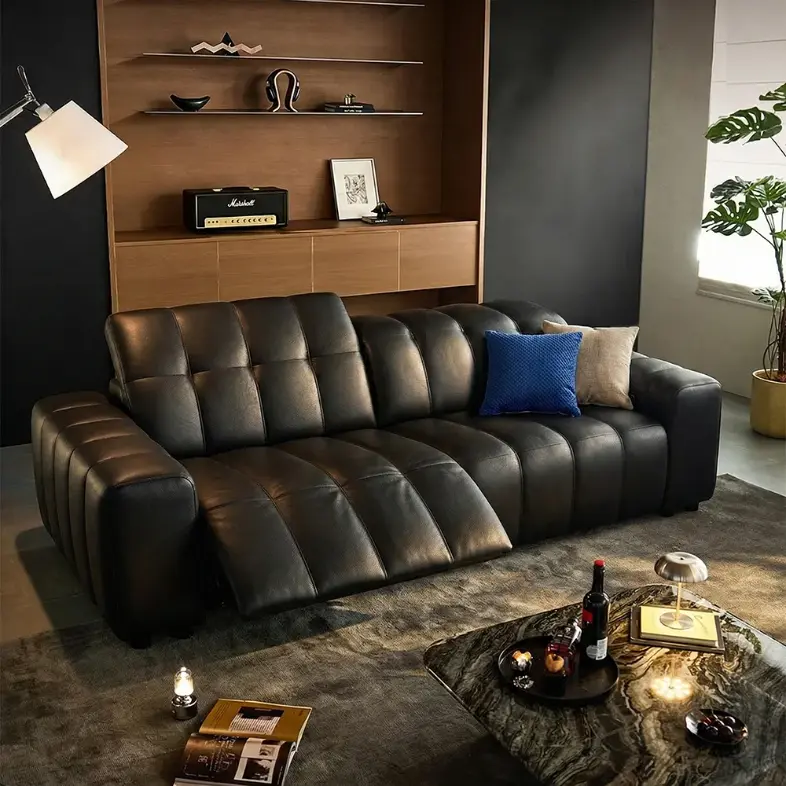
One of the biggest advantages of a wall-hugger reclining sofa is that it gives you more freedom behind the sofa. Because it reclines with minimal rear clearance, you can use that space for a slim console table or light decor without making the setup feel crowded. The Dual Power Leather Recliner Sofa is a good example, combining a zero-wall design with adjustable headrest and footrest support, plus built-in USB charging for everyday comfort.
What Should You Avoid Putting Behind a Reclining Sofa?
This is where many rooms go wrong. The wrong piece behind a recliner usually fails in one of two ways: it blocks motion, or it makes the room harder to walk through.
Avoid these:
- Deep console tables that turn one useful strip into a traffic jam
- Bulky cabinets that look heavy and cut off the room
- Fragile decor that can get bumped when the sofa opens
- Low-hanging art or shelves that sit in the motion path
- Oversized baskets that stick into the walkway
A good rule is simple: if it makes reclining harder or the room tighter, it is the wrong choice. Standard recliners still need movement room, and even wall-hugging models need the area behind them to stay practical and easy to use.
When Is It Better to Leave the Space Empty?
Sometimes the smartest move is doing less. If your clearance is very tight, the walkway is narrow, or the room already has enough furniture, leaving the floor behind the sofa open can make the whole space work better. In that case, style the wall, not the gap. One mirror, one large print, or side lighting often looks better than forcing in furniture just because the space exists.
This is also a good answer when you are trying to balance a matching couch and recliner in the same room. Leaving one area lighter can stop the space from feeling over-furnished.
Conclusion
The best answer to what to put behind reclining sofa layouts is not “whatever fits.” It is the piece that supports the way the sofa actually reclines and the way the room actually works. Start by testing the full movement, then choose one low-profile solution that adds storage, style, or warmth without crowding the layout. In many rooms, that will be a slim console table. In tighter rooms, it may be art, a mirror, or nothing at all. Good design here feels easy because it removes friction, not because it fills space.
FAQ
Is a sofa with recliners on each end harder to place?
Yes, usually a little. You need to test both end seats fully open, because each side needs its own motion zone. That matters even more if a side table, wall outlet, or lamp sits close to one arm.
Can a matching couch and recliner make a room feel too heavy?
It can, especially with dark upholstery and oversized arms. Break up the weight with slimmer tables, open-leg accent pieces, lighter rugs, and one tall element like a plant or floor lamp so the room keeps some vertical lift.
Do small wall hugger recliners still need front clearance?
Yes. They save space behind the sofa, not in front of it. You still need room for the footrest and enough walkway so knees, coffee tables, and ottomans are not fighting for the same zone.
Is leather or fabric better behind a busy family sofa?
For the piece behind the sofa, the bigger concern is shape, not material. For the sofa itself, leather is easier to wipe, while fabric often feels softer and warmer. Choose based on pets, spills, and how often the room is used.


