 By Jenny Smith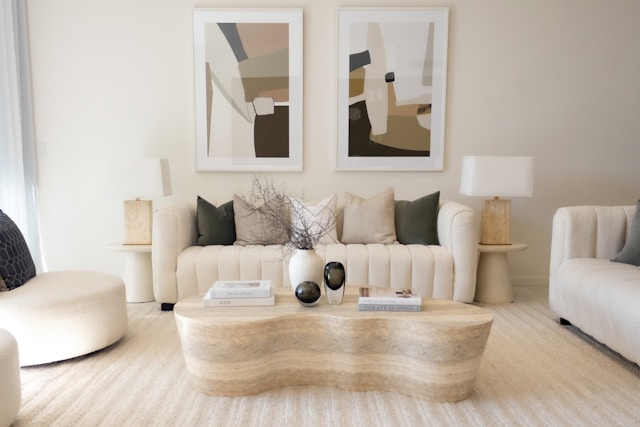
Introduction: Why Your Sofa Sets the Mood of the Whole Room
Walk into any living room and your eyes almost always land on the sofa first. A minimalist sofa doesn’t just give you a place to lounge; it sets the tone for the entire space—calm, cluttered, or somewhere in between. As demand for pared-back, soothing interiors grows, minimalist home decor is forecast to reach about $95 billion by 2032, with steady 7.7% annual growth (Stratistics MRC, 2026). A well-chosen minimalist sofa becomes the quiet anchor of a clean, calm room—no renovation required.
What Makes a Sofa “Minimalist”? Core Principles for a Calm Look
Minimalist Sofa 101: Less but Better
A minimalist sofa is all about less but better. Think simple silhouette, clean lines, slim or integrated arms, and very little visible “visual noise” like tufting, frills, or chunky hardware. Negative space around and under the sofa matters too: raised legs or a light plinth base let light flow, so theer than heavy.
Minimalist doesn’t mean cold or uncomfortable; it means intentional. When I swapped a saggy, overstuffed couch for a modern minimalist sofa with firm cushions, the room instantly felt wider and my shoulders literally dropped every time I sat down. Growing interest in this kind of calming simplicity is one reason minimalist furniture is projected to grow from $52.6 billion in 2024 to $81.1 billion by 2030 (Grand View Research, 2024).
Minimalist Sofa vs. Simple Sofa vs. Modern Sofa vs. Contemporary Couch
These terms overlap, but they’re not identical. Use this quick comparison when you’re shopping:
| Type | Typical Shape & Detailing | Colors | How It Makes a Room Feel |
| Minimalist sofa | Straight or gently curved lines, little ornament, minimal seams | Mostly neutrals | Quiet, calm, spacious |
| Simple sofa | Unfussy but may have rolled arms or visible seams | Any color | Cays “designer” |
| Modern sofa | Often mid-century inspired, tapered legs, bolder geometry | Neutrals plus strong accent shades | Design-forward, sometimes playful |
| Contemporary couch | Follows current trends (bouclé, curves, bold hues) | Trend-driven palette | Fashionable now, may date faster |
A sofa minimalist in style will prioritize restraint and long-term calm over whatever’s viral this season.
Rule 1: Get the Proportions and Lines of Your Minimalist Sofa Right
Clean Lines, Low Visual Noise
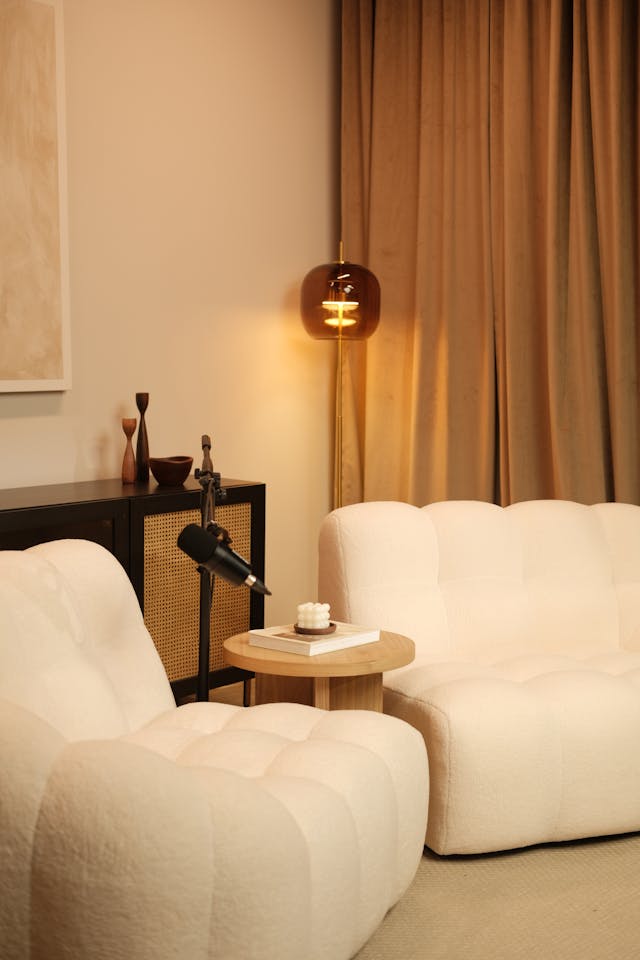
For a truly minimalist sofa, look for straight or softly rounded profiles, slim arms, and simple seat/back cushions. Avoid bulky rolled arms, heavy skirted bases, deep button tufting, or carved legs—those details add “visual noise” that fights the clean look. A modern minimalist sofa with three seat cushions, tight upholstery, and slim metal or wood legs will immediately feel lighter than a traditional, overstuffed couch of the same size.
If you like curves, choose one gentle curve in the frame or seat rather than lots of swoops and scrolls. This also makes a minimalist sectional sofa feel streamlined.
Scale & Proportion: Matching Your Room
A minimalist sofa that’s the wrong size will never look calm, no matter how simple the design is. As a rule of thumb, let the sofa span about two-thirds of the wall behind it so it reads as grounded but not crammed. Leave 14–18 inches (35–45 cm) between the front edge and the coffee table so you can walk and stretch your legs comfortably.
In small rooms, choose a minimalist modular sofa or compact 2.5-seater instead of a huge sectional; in tall rooms, slightly higher backs balance lofty ceilings. Exposed legs make a sofa feel lighter, while a solid plinth base adds visual weight but can look beautifully sculptural in larger spaces.
Comfort Without Bulk
Minimalist doesn’t mean stiff. Aim for seat depth around 21–24 inches (53–61 cm) for everyday lounging, and look for high-resilience foam or pocket springs wrapped in a thin fiber layer so the cushions hold shape without looking puffy. Hidden comfort features—quality suspension, solid frames, ergonomic back angles—beat giant overstuffed arms every time.
One client with a compact loft replaced a reclining monster sofa with a slim minimalist sleeper sofa. The new piece still handled movie nights, but we gained almost three feet of walking space and the room finally felt breathable.
Rule 2: Use a Quiet Color Palette That Calms the Space
Go Neutral, But Not Boring
Minimalist sofas shine in soft whites, beiges, warm grays, and greige because these shades recede and let form and texture do the talking. Designers are also predicting softer “emotional neutrals” like mauve and clay as the new calm tones for 2026, sitting between stark white and loud color explosions (House Beautiful, 2026).
Choose undertones carefully: warm beiges and creams make a room feel cozy and relaxed; cooler grays and greige feel airy and architectural. If your light is harsh and bright, warmer neutrals soften it; in darker rooms, creamy off-white on a minimalist sofa bed can bounce what light you have.
When a Dark Minimalist Sofa Makes Sense
Dark minimalist sofas in charcoal, deep brown, or muted green are great for high-traffic living rooms or households with kids and pets. The key is keeping the shape clean: a low-slung, boxy dark minimalist sofa still feels light if the legs are slim and the surrounding room is bright. Balance a dark sofa with pale walls, a light rug, and reflective surfaces so it reads as a grounding anchor, not a black hole. A Scandinavian minimalist sofa set in charcoal wool with pale oak legs, paired with white walls and linen curtains, can look both cozy and crisp.
Limiting Your Palette Around the Sofa
To protect the calm mood, stick to one main sofa color plus one or two supporting tones in your rug, cushions, and throws. Think soft beige sofa + warm sand rug + a touch of olive in two big cushions; or light gray minimalist sectional sofa + oatmeal rug + muted blue throw. If you want ready-made color recipes and full-room examples, you can dive deeper into palettes and seating combos in Povison’s guide to living room makeovers for 2026.
Rule 3: Materials, Texture & Details That Add Warmth
Fabric Choices: Soft, Durable, and Minimal
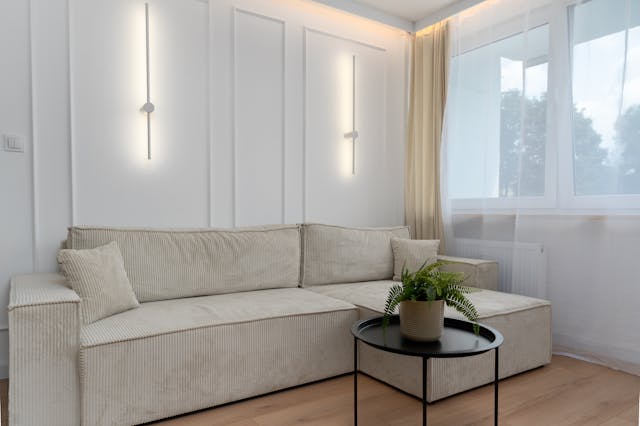
For a minimalist sofa, you want fabrics that look calm but can handle real life. Linen and cotton blends feel breathable and relaxed; performance fabrics and microfiber resist stains and fading; leather adds depth and patina over time. Textured weaves—bouclé, slubbed linen, chenille—are your friend because they add visual interest without extra patterns. If you’re considering a minimalist sleeper sofa or minimalist sofa bed for guests, prioritize tightly woven, mid-tone fabrics that hide minor marks and we after a night’s sleep.
Frames, Legs & Stitching: The “Small Things” That Matter
Minimalist sofas rely on tiny details to look premium. Slim, straight wood or metal legs create a floating effect; block legs feel more grounded and architectural; a recessed plinth base gives a monolithic, gallery-like vibe. Look for tonal stitching, discrete seams, and slim piping rather than contrast welting or decorative buttons. These details become even more important in a minimalist sofa set or Scandinavian minimalist sofa set where several pieces share the same visual language—clean, quiet, and clearly intentional.
Styling a Minimalist Sofa: Layouts, Decor & Real-Life Scenarios
Layout Basics: Give Your Minimalist Sofa Room to Breathe
Even the best minimalist sofa will look awkward if it’s pressed flat against the wall. In a medium room, pulling the sofa 4–8 inches (10–20 cm) off the wall instantly feels more considered. Leave about 6–9 feet (1.8–2.7 m) between the sofa and TV for comfortable viewing, and keep main walkways at least 30 inches (76 cm) wide.
For detailed spacing rules and sample floor plans, pair this guide with Povison’s step-by-step article on how to layout furniture in your living room.
Styling Around the Sofa: “One Statement, Then Edit”
Let your minimalist sofa be the star. Choose one strong coffee table (stone, wood, or glass), a soft but simple rug, and one or two sculptural lamps. Go for fewer, larger cushions in solid or subtly textured fabrics instead of a pile of small prints.
I once styled a minimalist modular sofa in a busy family room using just a wool rug, oak coffee table, and one linen throw. The homeowners were surprised that guests suddenly commented on how “peaceful” the space felt, even with toys tucked into low cabinets nearby. For more real-life layout and styling ideas, explore Povison’s best minimalist sofas for 2026.
How to Choose the Right Minimalist Sofa for Your Home (Step-by-Step)
Measure, Then Shortlist: The Non-Negotiables
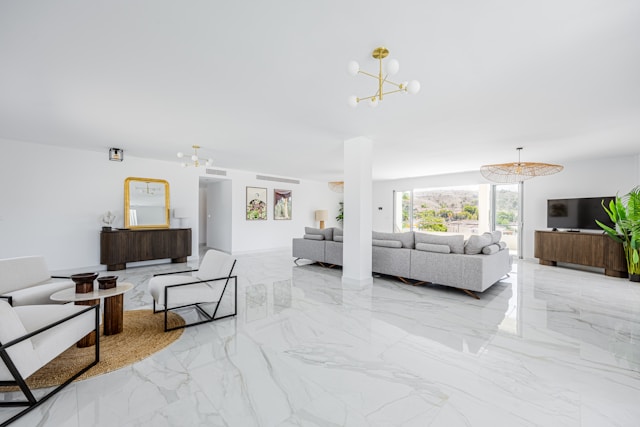
Before you fall in love with a minimalist sofa online, grab a tape measure. Note your room’s length and width, ceiling height, and the width of doorways, stairwells, or elevators the sofa must pass through. Decide your maximum sofa length and depth, then choose a configuration—2-seater, 3-seater, chaise, minimalist sectional sofa, or minimalist modular sofa—based on how many people sit there most days, not just on holidays. Masking-tape the footprint on the floor to test walking paths and coffee-table spacing.
Match the Sofa to Your Lifestyle & Budget
Your lifestyle should choose between a simple sofa and a truly minimalist sofa. If you move often, a minimalist modular sofa or compact minimalist sleeper sofa is easier to adapt than a huge one-piece sectional. Families with pets or kids should prioritize performance fabrics and sturdy frames over ultra-delicate upholstery.If you want a deeper dive into fabrics, seat depths, and price tiers, bookmark Povison’s detailed minimalist couch buying guide.
Conclusion: Let Your Sofa Do More with Less
A minimalist sofa is more than a stylish seat; it’s a design tool that quietly organizes the whole room. By choosing clean lines, right-sized proportions, a calm color palette, and tactile but simple materials, you can turn even a busy family living room into a space that feels clear and breathable. In a world full of visual noise, letting your sofa “do more with less” might be the easiest way to reclaim a little everyday calm at home.
Common Questions About Minimalist Sofas (FAQ)
Is a minimalist sofa comfortable enough for everyday use?
Yes—if you prioritize ergonomics over extra padding. Look for supportive cushions (high-density or multi-layer foam), a slight recline in the back, and a seat depth that matches your height. When you sit, your feet should rest flat on the floor and your lower back should feel supported without needing six extra pillows.
How do I keep a light-colored minimalist sofa clean?
Choose removable, washable covers or performance fabric that resists stains. Vacuum weekly with a soft brush, blot spills immediately with a damp cloth, and rotate cushions to distribute wear. In homes with kids or pets, keep a lightweight throw on the “favorite” seat so the sofa’s main fabric sees less daily friction and fur.
Can I mix a minimalist sofa with non-minimalist decor?
Absolutely. A minimalist sofa can act as a calming anchor in eclectic rooms. Pair it with a vintage rug, bold art, or sculptural lighting—but keep the number of large accents low so the space doesn’t feel chaotic. If a full makeover isn’t in the budget, start by upgrading the sofa and rug, then edit accessories slowly over time.


