 By Charles
This tv stand height guide is for you if you’ve ever finished a show with a stiff neck and thought, “Something about this setup feels off.” The truth is, your TV’s height matters just as much as screen size or picture quality. When the screen is too high or too low, your neck, eyes, and even your kids’ posture pay the price. The good news: with a few quick measurements and a little math (don’t worry, it’s simple), you can dial in a comfortable, family-friendly viewing height that works for your sofa, your room, and your real life.
Why Does Incorrect TV Stand Height Cause Neck Strain?
When your TV is too high or too low, your body quietly compensates. You tilt your head, crane your neck, or slump into strange positions just to see the screen. Do that for a whole season of a show, and your neck, shoulders, and upper back start complaining.
Aligning Screen Center with Your Eye Level
The golden rule for TV stand height is to align the center of your screen with your seated eye level, typically 40–42 inches from the floor for average adults.
You can use a TV height calculator to determine the precise mounting height based on your specific seating arrangement.
If the TV’s center is much higher, you tilt your head up. Too low, and you angle your head down or slump. Either way, that constant angle creates muscle strain, especially over long viewing sessions.
A quick check: sit where you normally watch TV, look straight ahead, and imagine a line from your eyes to the wall. The center of the TV should sit right on that invisible line, or within about 5 inches above or below.
Viewing Angle Impacts on Kids and Pets
Kids usually sit lower than adults, and often closer to the TV. If you base height only on your eye level, your kids may end up looking too far up, especially with tall consoles.
For younger kids sitting on floor cushions or play mats, aim for the TV center around 36–40 inches from the floor. That keeps their necks in a safer, more neutral position.
Pets add a different issue: safety and distractions. A very low TV on a short stand can tempt dogs’ tails or curious cats. A very high TV can mean wobbly, narrow furniture trying to compensate. Finding a mid-range, stable height protects both the screen and the creatures wandering in front of it.
How to Calculate the Perfect TV Stand Height: A Step-by-Step Guide
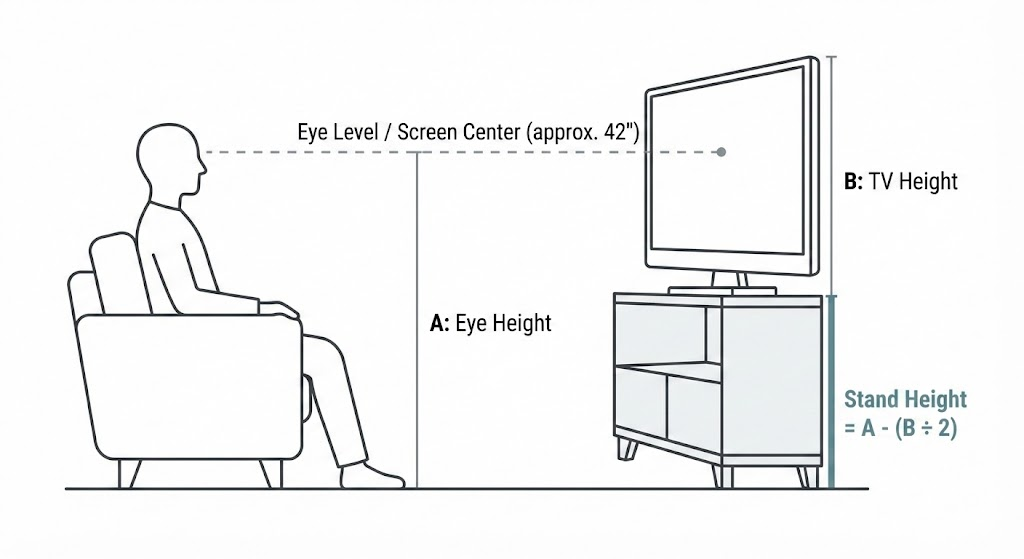
You don’t need a design degree to get this right. You just need your seating height, your TV size, and your typical viewing distance.
Is the 42-Inch Industry Standard Right for You?
You often see 42 inches recommended as the “ideal” height for a TV center. That’s a starting point, not a rule. It assumes:
- Average adult seated eye level of 40–42 inches
- Standard sofa height of 18 inches from floor to seat
If your sofa is higher, your eyes are higher. If you like slouching down with your feet up, your eyes drop a bit. Use 42 inches as a baseline, then adjust 2–4 inches up or down based on how you actually sit.
What Is the Math Behind Distance and Screen Size?
Distance matters because it changes how your neck and eyes track the screen. A simple approach:
- Measure the distance from your eyes to the TV wall in inches.
- Divide that number by 2–2.5 to find an ideal screen size.
For example, if you sit 96 inches (8 feet) away, a 40–48 inch TV is comfortable.
Once you know screen size, place the TV so the center is at your eye level. For a TV stand size guide, the screen height is about 27 inches for a 55-inch TV. If you want the center at 42 inches, the bottom of the screen should sit around 28–30 inches from the floor. That tells you the ideal stand height.
Best TV Stand Heights for Low vs. High Sofas
Your sofa height quietly controls your TV stand height. A low lounge sofa or bean bags need very different stands than a higher, more formal setup.
12-Inch Low Profile Stands for Bean Bags
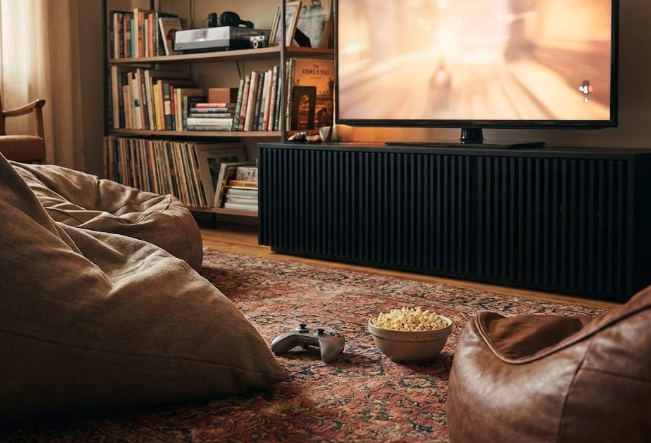
If you use floor cushions, bean bags, or a very low modern sofa (seat height around 14–16 inches), your eye level might be closer to 34–36 inches. In that case, a tall console will force you to stare up.
A 12–18 inch low-profile TV stand usually works best here. With a 50–55 inch TV, that keeps the screen center close to your lower eye line and avoids that “movie theater front row” neck crank.
Don’t strain your neck. See our curated list of Low-Profile Stands designed specifically for floor seating and bean bags.
30-Inch Consoles for Formal Seating
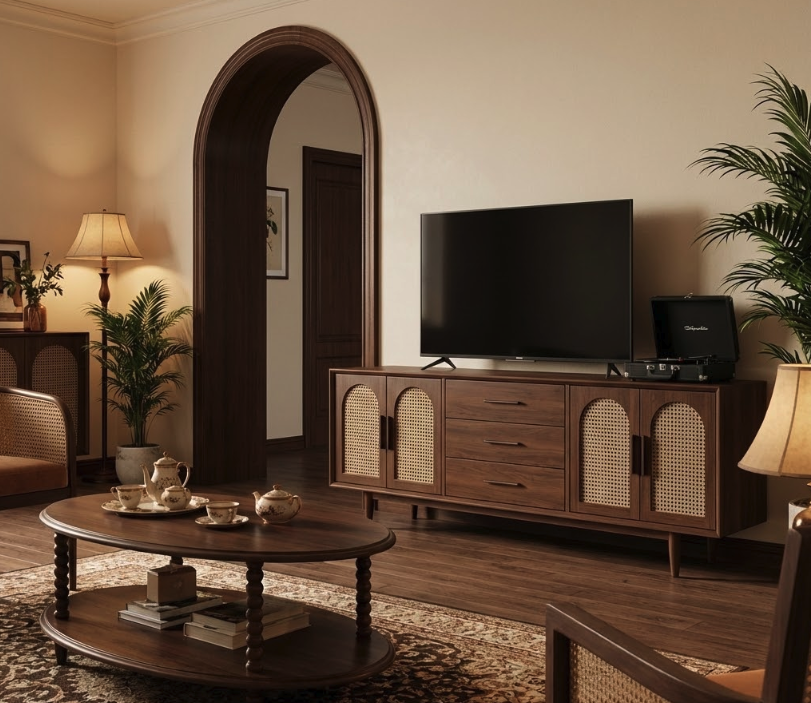
For more traditional sofas and armchairs (seat height around 18–20 inches), your eye level often lands in the 40–44 inch range when you sit upright.
Here, a TV stand between 24–30 inches tall usually hits the sweet spot. With a 55-inch TV on a 28–30 inch console, the center of the screen sits right around that comfortable eye level.
If your sofa is extra tall or you sit bolt upright, lean toward the higher end (30 inches). If you recline a lot or have deep, loungy seating, stay closer to 24–26 inches.
Skip the assembly time. Shop the #1 Rated 30-Inch Console that arrives fully built and fits standard sofas perfectly.
Sofa Height → Recommended TV Stand Height
| Sofa Seat Height | Seated Eye Level | TV Stand Height (43-50″) | TV Stand Height (55-65″) | TV Stand Height (75″+) |
| 14-16″ (Low/Bean Bags) | 36-38″ | 24-26″ | 22-24″ | 18-20″ |
| 17-19″ (Standard Sofa) | 40-42″ | 28-30″ | 26-28″ | 22-24″ |
| 20-22″ (High/Formal) | 43-45″ | 31-33″ | 29-31″ | 25-27″ |
| Floor Cushions | 32-34″ | 20-22″ | 18-20″ | 14-16″ |
All measurements in inches from floor
What Are Critical Mistakes Parents Often Make?
When kids and pets join the mix, your TV setup has to think beyond just comfort. Safety and habits suddenly matter just as much as angles.
Who Should Avoid TV Stands Taller Than 30 Inches?
If you have kids under 8, very tall TV stands can create two problems:
- Kids looking up at a steep angle for long periods
- Temptation to climb or pull on the unit for a better view
Keeping the TV stand at 30 inches or lower usually gives a better viewing angle for both you and your kids, especially in family rooms where they sit on the floor, ottomans, or play mats.
Do Tipping Risks Increase with Narrow Consoles?
Yes. Tipping risk goes up when your TV stand is tall, narrow, and lightweight, especially with a large screen on top. According to child safety research, kids pulling on drawers or leaning on the front can create a forward pull.
To reduce risk, look for:
- At least 15–18 inches of depth for stability
- Anti-tip straps to secure the TV or console to the wall
- A stand width wider than your TV by a few inches on each side
These details matter more than you’d think when little hands and big energy are in the house.
How Can You Fix Wrong Height Without Buying New?
If your current setup is too high or too low, you’re not stuck living with neck strain. You have a few smart, budget-friendly fixes that can nudge your TV into the right zone.
Is a Universal VESA Stand Worth the Extra $30?
A universal VESA stand lets you raise or lower the TV relative to your console without replacing the furniture. You attach it to the TV’s mounting holes, then set the height.
If your console is a little too low or high by 4–8 inches, a $30–$60 adjustable stand can bring the screen center right to eye level. It’s especially useful when you love your media cabinet but not the current viewing angle.
Can Wall Mounting Solve the Pet Safety Issue?
Wall mounting is one of the best solutions for both height and safety. When comparing floating TV stand vs floor TV stand options, wall mounting allows you to:
- Set the TV center exactly at your measured eye level
- Keep the screen out of reach of wagging tails and jumping pets
- Use a tilt mount if the TV has to go slightly higher over a fireplace or cabinet
Just be sure to measure from the floor to your desired TV center line before drilling. That way, you place the mount to match your ideal height instead of guessing once it’s on the wall.
TV Stand Height Guide: Frequently Asked Questions
What is the ideal TV stand height?
The ideal TV stand height positions the center of your TV screen exactly at your seated eye level. For most adults on a standard sofa, this eye level is typically 40–42 inches from the floor. A variation of 3–5 inches up or down from that center line is generally acceptable for comfortable viewing.
How do I calculate the right TV stand height for my room?
To calculate the correct TV stand height, follow these simple steps:
- Measure eye level: Sit on your sofa and measure the distance from the floor to your eyes (usually around 42 inches).
- Find screen center: Measure total height of your TV screen and divide by two.
- Calculate stand height: Subtract that half-screen measurement from your eye level height. The final number is the ideal height for your media console.
What TV stand height works best with low sofas or bean bags?
For low seating like bean bags, floor cushions, or modern low-profile sofas, your seated eye level is likely lower, around 34–36 inches. A low-profile TV stand between 12–18 inches tall is best for these setups to keep the screen center at a comfortable viewing angle.
Is a 42-inch TV center height always the rule?
No, the 42-inch standard is just a baseline starting point based on average adult height and posture. You should adjust the TV center height up or down by 2–4 inches depending on your specific sofa height and whether you typically slouch or recline while watching.
What is the safest TV stand height for kids and pets?
For households with young kids (under 8) or active pets, aim for a TV console height of 30 inches or lower to prevent neck strain and reduce climbing temptations. Crucially, ensure stability by choosing a stand that is at least 15–18 inches deep and always secure the TV with anti-tip straps.


[…] often works with a lower console, while upright chairs may support a slightly higher setup. A TV stand height guide for comfortable viewing is more useful than a showroom photo because it starts with your actual seat and […]
[…] viewing height around the seated position first. TV stand height for comfortable viewing can help establish the baseline before you choose a fixed or adjustable wall position. The mount […]