 By Charles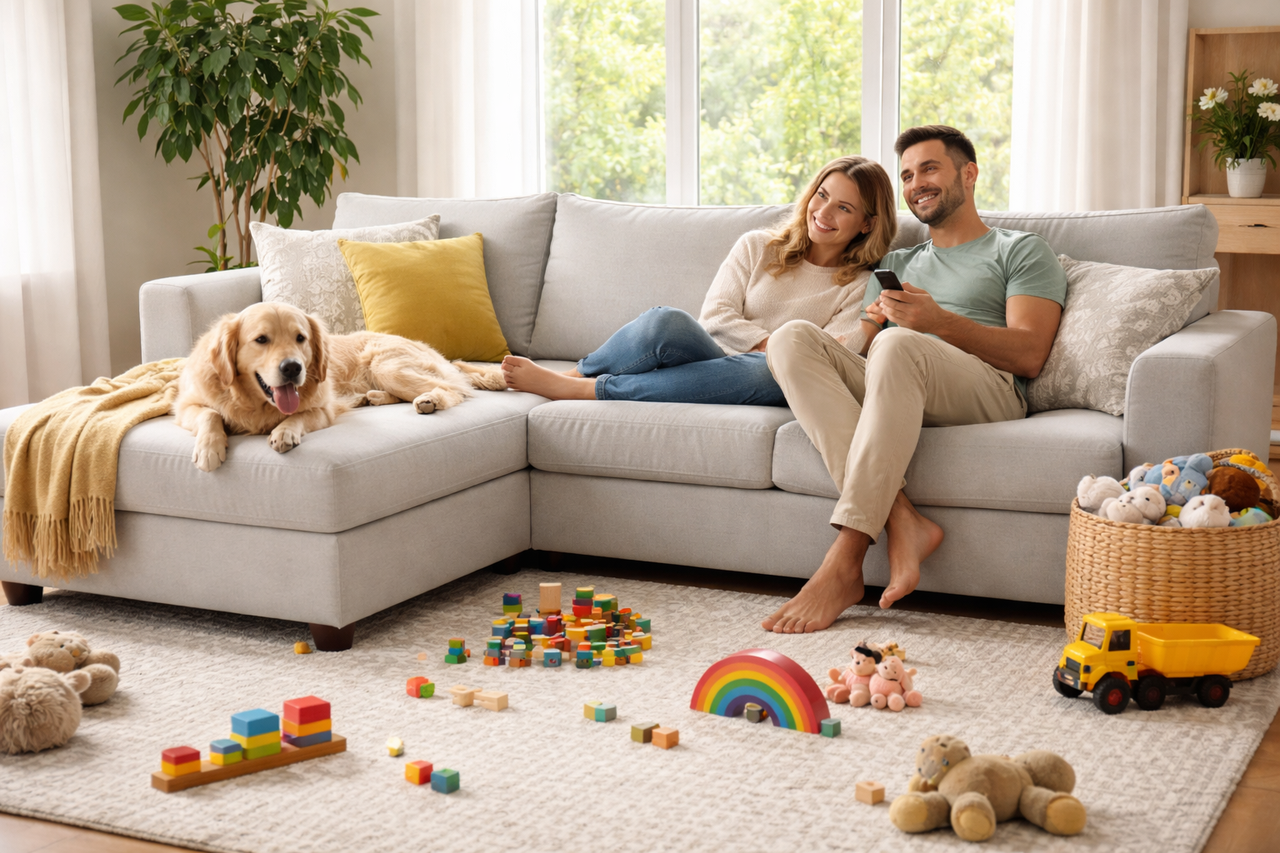
Picture this: You finally order that perfect-looking sectional, spend your entire Saturday assembling it, step back to admire your work… and realize it’s completely wrong for your actual space. Too small. Too big. Blocking the hallway. Sound familiar? When you’re trying to pick the best sectional couches for a busy home, it’s not just about the pretty photos. It’s about juice spills, dog zoomies, movie nights, and the fact that you’d really like to keep your weekends free.
You don’t need a designer’s eye to choose the right sectional, you just need a simple checklist that fits your space, your family, and your patience level. Let’s walk through it step by step so you can skip the guesswork (and hopefully the Allen wrench).
How to Choose a Sectional (Decision Tree)
Before you fall in love with a couch on Instagram, run it through this quick decision tree:
- Start with your room, not the sofa.
- Grab painter’s tape and mark out the size you think you want.
- Can you still walk comfortably? Open drawers and doors? If not, size down.
- Decide your main job for the sectional.
- Mostly TV/movies? You want a chaise or deep seats.
- Hosting? Prioritize more seats over depth.
- Playroom crossover? Look for tough fabrics and low arms (safer for tumble-prone kids).
- Assembly tolerance check.
- If your weekends are already packed, look for pre-assembled sections or “tool-free” connectors.
- If you actually like building things, you can open up more budget options.
- Fabric vs lifestyle.
- Kids/pets: performance fabric or tightly woven synthetics.
- No kids/pets & you’re tidy: linen or boucle can work if you’re realistic about maintenance.
If you want more help visualizing your room layout, you can also see how to arrange a sectional with a family coffee table to avoid stubbed toes and traffic jams.
Best Sectionals by Room Size
You can love the look, but if it overwhelms your room, it’ll drive you nuts. Use these rough size guidelines.
Small Rooms (Under 200 sq ft)
You’re aiming for compact L-shapes or loveseat + chaise styles.
- Length on the long side: ~80–95″
- Depth: 35–38″ (don’t go super deep: you’ll lose floor space)
- Look for open bases (legs you can see under) so the room feels airier.
- Skip the bulky arms and high backs: slim arms = more seating in less space.
If you’re also trying to squeeze in a dining area, check out space-saving tables for small living rooms so your sectional doesn’t have to do all the work.
Medium Rooms (200–350 sq ft)
This is the sweet spot where a lot of the best sectional couches live.
- Long side: 95–115″
- Short side: 60–75″
- You can handle a chaise, maybe even a modest U-shape if your room isn’t chopped up by doors.
Aim to leave at least 30–36″ of walking space behind or in front of the sectional.
Large Rooms (350+ sq ft)
Big room? Great, and also trickier.
- U-shapes and modular sectionals shine here.
- Don’t be afraid of 120″+ length if the room is open-plan.
- Use the sectional to define zones: TV area vs. kids’ play area vs. reading corner.
Best Sectionals for Families
If your living room doubles as a trampoline park, this section’s for you.
Kid-Friendly Fabrics
You want tight weaves and performance finishes.
- Polyester or poly-blend performance fabric: soft but tough.
- Microfiber: not trendy, but nearly bulletproof against stains.
- Leather: great for older kids, but watch out for sharp toys and pens.
Avoid loose-weave linens, they snag and stain easily.
Stain Resistance Ratings
When brands list “30,000+ double rubs” (a durability test) and stain-resistant finishes, that’s good news for you.
- Look for fabrics that mention water- or oil-based stain resistance.
- Ask if the cushions have zip-off covers, huge for cleaning.
You can also dig into our guide to kid-proof tables and fabrics if you’re building a whole durable setup.
Cushion Durability
Cushions are where cheap sofas give up first.
- High-density foam (1.8+ lb/ft³) = better long-term support.
- Foam + fiber wrap feels softer but may need more fluffing.
- If you hate constant pillow karate, choose attached back cushions so they stay put.
Best Sectionals for Pets
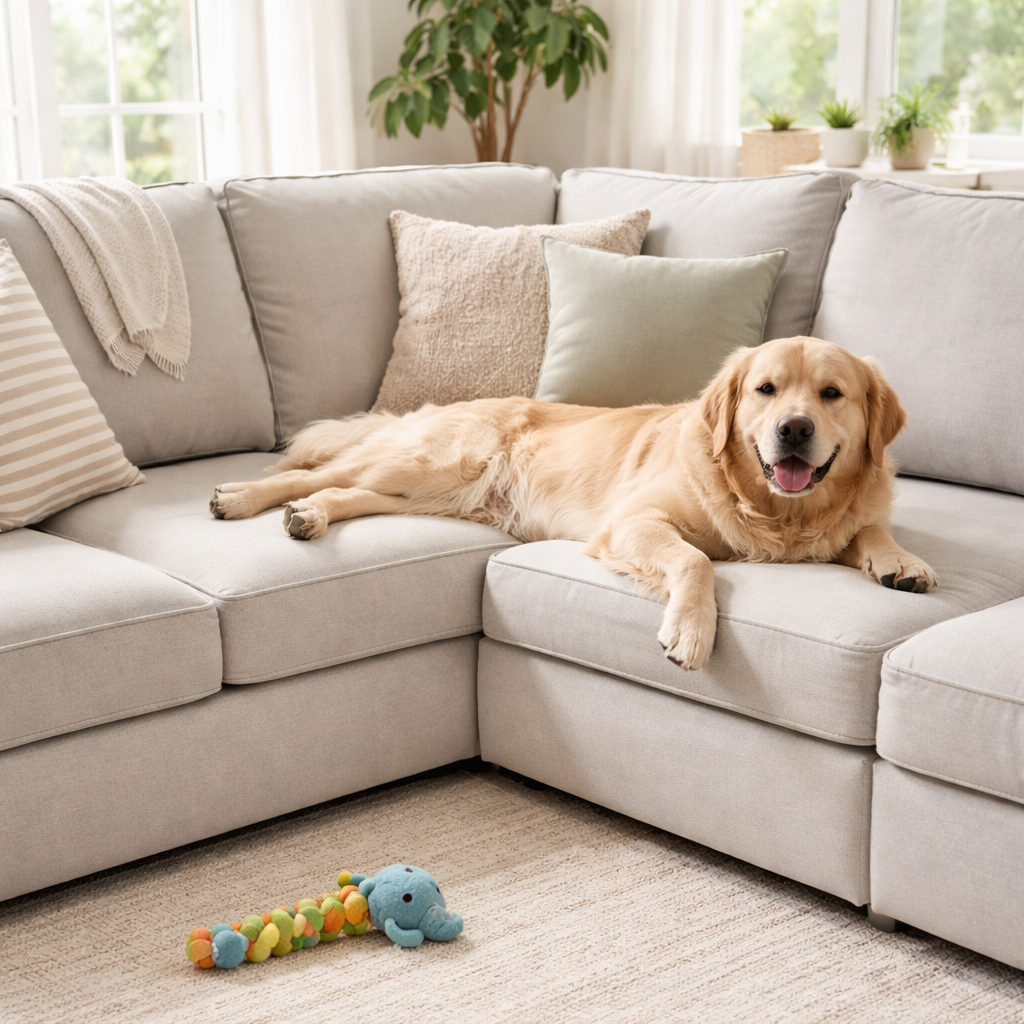
You love your furry roommate, but your couch shouldn’t look like it survived a shredder. For homes with pets, a pet-friendly modular sectional with anti-scratch fabric isn’t just a purchase—it’s a shield for your sanity.
Scratch-Resistant Materials
- Tight-weave performance fabric: claws have a harder time catching.
- Faux leather: easier to wipe, but deep scratches will show, good for calm pets, less so for chaos goblins.
- Avoid boucle and open-weave fabrics: they’re basically cat toys.
Dark, patterned, or heathered fabrics hide fur and minor snags better than solid light colors.
Easy-Clean Covers
Life-changing features to look for:
- Removable, machine-washable covers on seat and back cushions.
- Spare slipcovers you can rotate while one set washes.
- Legs high enough for a quick vacuum pass underneath.
If your pets basically own the place, you might also want to match your sectional with a pet-friendly coffee table that won’t scratch at the first zoomie.
Sectional Configurations Explained
Don’t let the shapes confuse you—or the assembly manual scare you. The best configuration is the one you don’t have to build. Check out these fully assembled sectional sofas that arrive ready for lounging, so you can skip the hex wrench entirely.
L-Shape vs U-Shape vs Chaise
L-Shape
- Great for corners and smaller rooms.
- Seats 3–5 people comfortably.
- Works well facing a TV with a single main walkway.
U-Shape
- Best for big rooms and families that host a lot.
- Seats 5–8 people.
- Creates a cozy conversation zone, but you need more open floor.
Chaise Sectional
- Standard sofa with one extended lounge seat.
- Perfect if you like to stretch your legs, but don’t want a full U-shape.
- Watch which side the chaise is on so it doesn’t block a doorway.
Seat Depth: Standard vs Deep
Seat depth quietly decides if your sectional is a “sit up and chat” couch or a “sink in and binge an entire season” couch.
- Standard depth (20–22″):
- Easier for shorter folks and anyone with cranky backs.
- Better if you mainly sit upright or use the sofa for guests.
- Deep seat (23–26″+):
- Awesome for lounging, napping, or piling with pillows.
- Can feel too big if your feet don’t touch the floor.
If you’re torn between sizes, look for designs that forgive you for changing your mind. Modular sofa options act like grown-up Lego blocks—letting you adjust the layout instantly without any tools, protecting you from buyer’s remorse.
Top Picks Comparison Table
Here’s a simple way to compare options when you’re scrolling.
| Type | Best For | Pros | Cons |
| Compact L-Shape | Small living rooms | Saves space, seats 3–4 | Less lounge room |
| Medium Chaise Sectional | Most family rooms | Great for TV, easy to place | Chaise side must fit your layout |
| Large U-Shape Modular | Big, open rooms | Tons of seating, flexible layout | Needs lots of floor space |
| Performance-Fabric Sofa | Kids & pets | Stain-resistant, durable | Can feel a bit “fabric-y”/synthetic |
| Deep-Seat Lounge Sectional | Movie lovers, tall people | Super comfy for naps and binging | Harder for shorter guests to sit upright |
Use this as a checklist as you compare the best sectional couches online so you’re not just swayed by the photos. Design experts at publications like Elle Decor’s 2025 couch trends guide and Architectural Digest’s sectional reviews consistently emphasize the importance of matching form with function.
Common Sizing Mistakes
You can dodge a lot of frustration by avoiding a few classic traps:
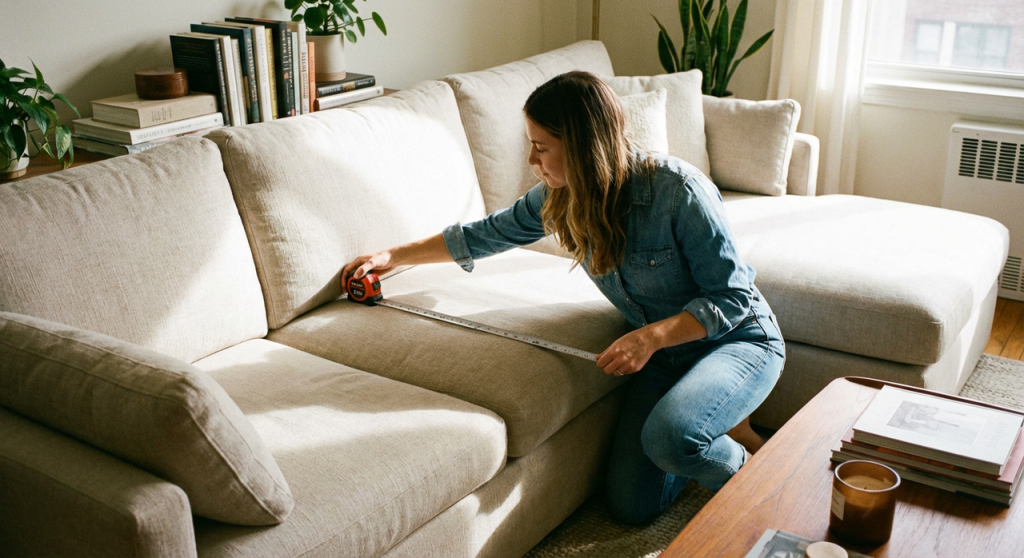
- Measuring the couch, not the path.
Measure doorways, stair turns, elevators, and hallways. A great sectional is useless if it can’t get into your home.
- Forgetting rugs and tables.
Your sectional shouldn’t cover your entire rug: aim for the front feet on the rug with space for a coffee table in front.
- Pushing it flush against every wall.
Sometimes pulling a sectional 6–12″ off the wall actually makes the room feel bigger and more intentional.
- Ignoring ceiling height.
Very low ceilings + super tall backs can feel cramped: in that case, choose lower-profile pieces.
If you keep these in mind, you’ll land on one of the best sectional couches for your actual life, not just for a staged photo. Take the time to measure once, check your fabric and depth twice, and you’ll end up with a sectional that survives kids, pets, and movie marathons without stealing your precious weekends.
Frequently Asked Questions
How do I choose the best sectional couches size for my living room?
Start with your room, not the sofa. Use painter’s tape to mark the dimensions you’re considering, then check if you can still walk comfortably and open doors and drawers. For most rooms, leave at least 30–36 inches of clear walking space around the sectional.
What are the best sectional couches for small spaces?
For rooms under 200 square feet, look for compact L-shape or loveseat-and-chaise sectionals. Aim for about 80–95 inches on the long side and 35–38 inches deep. Choose slim arms, visible legs, and lower backs to keep the room feeling open and avoid overwhelming the space.
Which fabrics are best for sectional couches with kids and pets?
For busy homes, tight-weave performance fabrics, polyester blends, or microfiber are top choices because they resist stains and wear. Look for high durability ratings (like 30,000+ double rubs), water- or oil-resistant finishes, and zip-off cushion covers. Avoid loose-weave linens and boucle, which snag and stain easily.
What’s the difference between an L-shape, U-shape, and chaise sectional?
L-shape sectionals fit corners and smaller rooms and seat about 3–5 people. U-shapes work best in large rooms and hosting setups, seating 5–8. Chaise sectionals are standard sofas with one extended lounge seat, ideal for stretching out without committing to a full U-shape footprint.
Are modular sectionals a good idea if I move often?
Modular sectionals can be a smart choice if you move frequently because they break into smaller pieces that are easier to carry and reconfigure in new layouts. Look for designs with simple connectors, durable frames, and separate components you can rearrange as your room sizes and needs change.
Past Review:


