 By Jenny Smith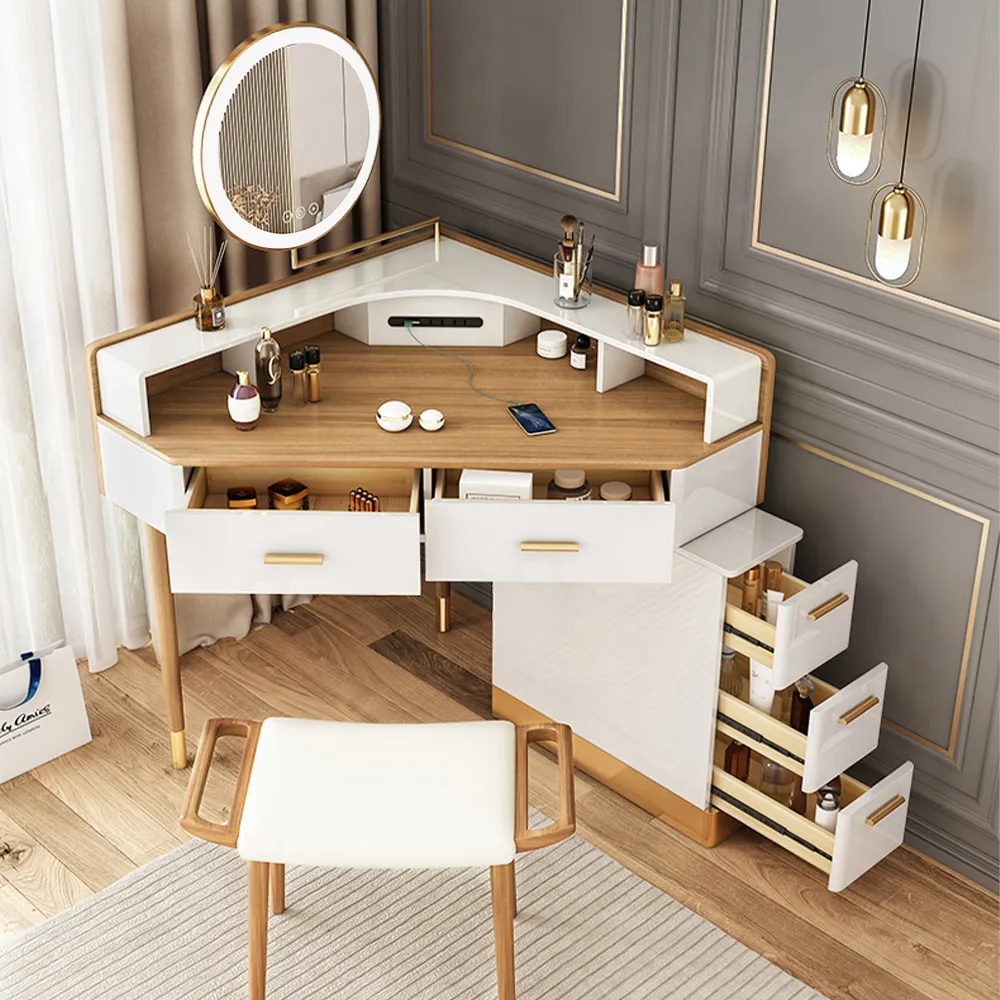
Introduction
A corner vanity is a furniture piece made to fit snugly into the corner of a space, transforming unused corners into useable beauty stations or wash areas. Corner space is commonly squandered as crucial wall space is squeezed in compact bedrooms, studio apartments, and small bathrooms. You can reclaim dead space without losing storage or walking room by designing a corner vanity. Whether you need a location for makeup application or a bathroom sink solution, corner vanities offer sensible design that keeps floors open and routines structured.
What Is a Corner Vanity? Types for Bedrooms and Bathrooms
Corner vanities come in two main categories depending on their purpose and room placement. Understanding the distinction helps you choose the right unit for your needs and ensures proper installation in your small space.
Corner Bathroom Vanity vs. Corner Makeup Vanity
A corner bathroom vanity features plumbing connections, a sink basin, and moisture-resistant cabinetry built to endure humidity and splashes. These units are permanent installations that are usually found in bathrooms and powder rooms since they need access to drainage and water supply lines. In contrast, a corner makeup vanity requires no plumbing and is a dry piece of furniture with a mirror, a seating space, and drawers for cosmetics and accessories.
The bathroom variant includes integrated washing amenities but required professional installation and careful waterproofing. The makeup vanity enables flexible installation anywhere in a bedroom or dressing area, quick DIY assembly, and the ability to transfer when you move
| Aspect / Feature | Corner Bathroom Vanity (with sink) | Corner Makeup Vanity (no plumbing) |
| Typical location | Bathroom or powder room | Bedroom, dressing area, or walk-in closet |
| Main function | Handwashing, brushing teeth, basic storage for toiletries | Makeup, skincare, hair styling, jewelry and accessories |
| Plumbing required | Yes – needs water supply and drain lines | No – completely “dry” furniture piece |
| Installation | Usually fixed in place and professionally installed; not easy to move | Often DIY assembly; easy to move or reposition when you redecorate or relocate |
| Space benefit | Uses an awkward corner to fit a sink and storage without enlarging the bathroom | Uses bedroom corner so you don’t sacrifice a full wall for a vanity or desk |
| Storage style | Under-sink cabinet, drawers, and sometimes a medicine cabinet above | Drawers, shallow trays, cubbies, and tabletop organizers for daily beauty items |
| Comfort & experience | Functional, but lighting and ventilation depend on the bathroom setup | Often more comfortable, with a dedicated stool, softer lighting, and a calmer atmosphere |
| Best for | Tiny bathrooms or powder rooms that need a compact sink + storage solution | People who want a dedicated beauty station outside the bathroom in a small bedroom or studio |
Common Corner Vanity Configurations
Corner vanities often come in three shapes: triangular units that hug the exact corner angle, L-shaped designs that span along two walls, and diagonal versions that cut over the corner at a 45-degree angle. Compact basins are frequently located in the center of the countertop of triangle and diagonal corner bathroom vanities with sinks, maximizing the usable area while keeping plumbing centralized. Pull-out jewelry trays, side storage that encircles the corner walls, and attached mirrors are examples of corner makeup vanity installations. Some corner vanity desk hybrids merge workplace with beauty storage, offering laptop space on one side and a flip-up mirror on the other—ideal for studio apartments where every piece must multitask.
How to Plan Your Corner Vanity Layout in a Small Space?
Measuring Your Corner and Circulation Space
Start by measuring the length of each wall extending from the corner, noting any baseboards, outlets, or trim that might interfere with the vanity’s footprint. Measure the available depth from the corner into the room to know how far your corner vanity can protrude without blocking a door or passageway. For comfortable use, provide at least 30–36 inches (approximately 76–91 cm) of unobstructed space in front so you can access doors and drawers and pull a stool in and out.
In compact bedrooms and micro-apartments, observe how the vanity interacts with the bed, closet doors, and windows. A corner vanity placed beneath a window might feel light and airy, but avoid positioning it where open drawers will contact the bed frame, or where the stool becomes a tripping danger in the night. Before making a purchase, mark the footprint on the floor with painter’s tape.
Plumbing, Power, and Lighting Considerations
Existing or new plumbing rough-ins must be placed inside the vanity’s footprint in order to install a corner bathroom vanity with sink; have a plumber confirm that the locations of the supply and drain lines correspond with the unit you have selected. Electrical outlets should be put at least 12 inches away from any water source to meet code, ideally along the surrounding walls rather than inside the corner itself. In order to power lit mirrors, hair tools, and chargers, corner vanity desks and cosmetic vanities need have at least one outlet close by.
Space-Saving Corner Vanity Ideas for Small Bedrooms
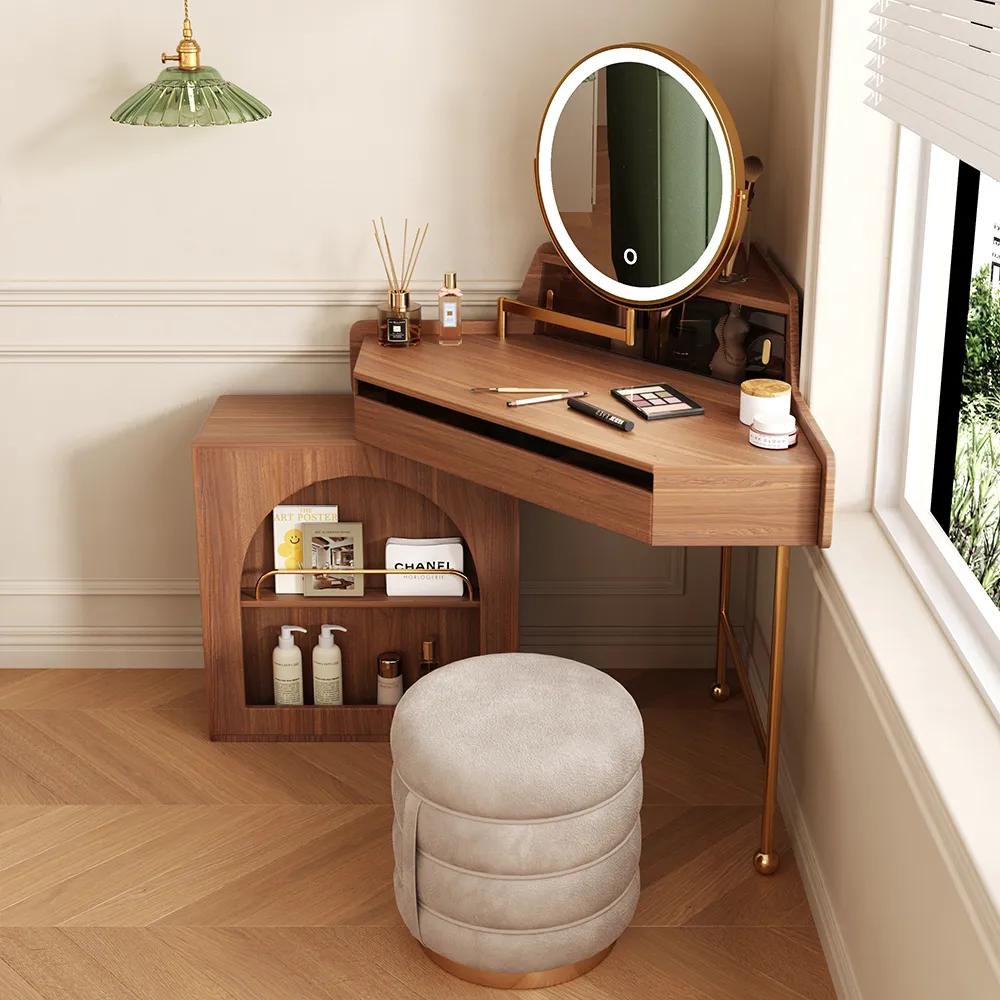
In a small bedroom, a corner makeup vanity with mirror and storage can work as both a grooming station and little office. Floating corner vanities that mount to the wall leave the floor clear, making the space feel lighter and simplifying cleaning. If you want a narrow floor-standing unit, consider tall legs and a slender design so the room doesn’t feel cramped.
To conceal clutter, use organizers, cubbies, and drawers. Built-in trays, dividers, and shallow drawers keep daily cosmetics, skincare, and jewelry simple to reach but off the surface. A little ottoman with secret storage under the seat gives even more space for hair equipment or baggage. To create a dual-purpose corner desk with vanity function, pair a laptop-friendly depth (around 18–20 inches) with a tilting mirror or a freestanding lighted mirror you can move aside during work hours.
Corner Bathroom Vanity Ideas for Tiny Bathrooms and Powder Rooms
Tiny bathrooms and powder rooms often struggle to fit a standard vanity without sacrificing elbow room. Corner solutions provide essential sink and storage functions while preserving precious walking space.
Corner Bathroom Vanity with Sink for Tight Floor Plans
Typically measuring 24 to 30 inches along each wall, corner sink vanity units for small bathrooms fit neatly into areas where a full-width vanity would obstruct the shower or entrance. Look for corner bathroom vanity with sink models that include offset basins—placing the bowl slightly forward increases countertop surface behind it for amenities and hand soap. Corner vanities are perfect for satisfying the National Kitchen & Bath Association’s (NKBA) requirement that powder rooms have a minimum of 21 inches of space in front of fixtures for comfortable use without increasing the room’s footprint. Although you will forfeit storage, pedestal corner vanities save even more space by removing large cabinets below. To make up for this, install floating shelves above or a thin cabinet on a nearby wall.
Floating Corner Vanity Bathroom Designs
Floating corner vanities for bathrooms mount directly to wall studs, leaving the floor open and generating an illusion of additional square footage. This style facilitates mopping and decreases visual clutter, especially important in bathrooms with dramatic tile patterns or dark hues. When picking countertop materials for a floating corner vanity bathroom, match finishes with existing fixtures: pair matte black faucets with concrete or soapstone counters, or choose white quartz and chrome taps for a bright, harmonious design.
Styling and Organizing Your Corner Vanity for Maximum Function
Vertical Storage, Shelves, and Hidden Organizers
When floor space is tight, think vertical. Add narrow shelves above your corner vanity to accommodate jars, perfume, or baskets. Skincare products, hair tools, and décor can be arranged in a bedroom without taking up more space with a small bookcase or wall ladder next to your corner makeup vanity. In a bathroom, utilize closed cupboards or opaque doors to hide visual clutter so the room feels quiet.
Inside the vanity, utilize stackable bins, drawer dividers, and lazy Susans to make use of deep corners. Under-sink organizers that pull out or wrap around plumbing allow a small corner bathroom vanity perform like a full-size cabinet. The objective is straightforward: your everyday necessities should be accessible without being strewn all over the place.
How to Make the Room Feel Bigger?
A well-chosen mirror may double the perceived size of a space. Oversized or tall corner vanity mirrors bounce light around and draw the attention upward. A tri-fold mirror that slightly wraps onto each wall in a bedroom can provide the illusion of a comfortable, well-lit alcove in the corner. In bathrooms, a frameless or thin-framed mirror keeps the look clean and open.
To prevent harsh shadows, combine overhead lighting with an LED strip or sconce close to face level. Soft, warm-white bulbs are flattering for skin tones and provide a welcome vibe. Don’t overdo the decor; a framed picture, a scented candle, or a tiny plant will do. Too many artifacts will make a tiny location feel crammed rather than curated.
How to Choose the Right Corner Vanity? (Size, Material, and Budget)
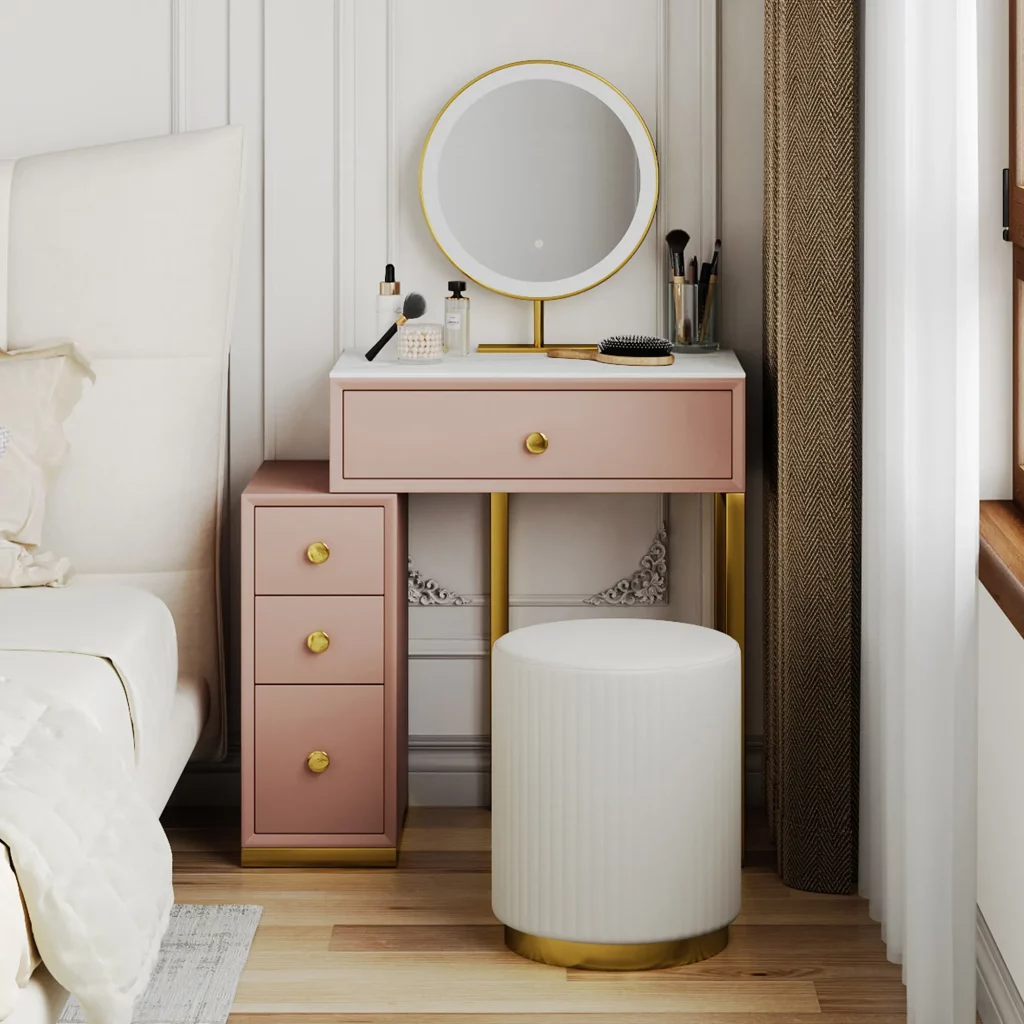
Selecting the best corner vanity entails balancing spatial limits, aesthetic preferences, and budget. Start by carefully measuring the corner space you have available, making sure there is enough clearance—at least 30 inches in front for makeup vanities and 24 inches for bathroom models. For corner bathroom vanity options, prioritize moisture-resistant materials like solid wood with waterproof coatings, marine-grade plywood, or engineered materials suitable for humid conditions. Avoid unsealed particleboard or MDF, as they swell and decay quickly in humid circumstances.
The average cost of mass-produced stock bathroom vanities is between $200 and $800, according to CostHelper’s 2024 statistics, whereas custom-built vanities cost between $500 and $2,800 for construction alone, plus an additional $200 to $1,000 for installation. More material options are available for corner vanity desks and cosmetics vanities, ranging from high-quality hardwood to inexpensive laminate. While custom work justifies its premium in weirdly slanted or highly tight places where conventional solutions just won’t fit, a well-chosen ready-made item frequently fits standard corners flawlessly at cheaper expense.
Common Mistakes to Avoid with Corner Vanities in Small Spaces
A few design missteps can cancel out the benefits of a corner vanity. Watch out for:
- Oversized units that block doors, windows, or walking paths, making the room feel cramped and hard to navigate.
- Pretty countertops with almost no storage, which quickly become cluttered and frustrating to use.
- Ignoring lighting, leaving your corner dark even with a mirror installed.
- Choosing delicate finishes for wet bathrooms, where steam and splashes can warp or stain poor-quality materials.
Conclusion
Corner vanities for bedrooms and bathrooms represent one of the smartest design decisions for small spaces, turning overlooked angles into hardworking zones that help your daily activities. Whether you install a streamlined corner bathroom vanity with sink, a lovely corner cosmetics vanity with mirror, or a multitasking corner vanity desk, you’ll recover important floor space while getting organized storage and a dedicated grooming area. Treat your nook as a mini sanctuary: keep it well-lit, intelligently organized, and adapted to your personal needs—proof that even the smallest rooms can give both flair and substance.
FAQ about Corner Vanities in Small Bedrooms and Apartments
What size corner vanity is best for a small bedroom or studio apartment?
For most small bedrooms and studios, a corner vanity measuring 24 to 32 inches along each wall provides ample surface and storage without overwhelming the space. Ensure at least 30 inches of clearance in front for comfortable sitting and movement.
How can I turn my existing corner desk into a functional corner vanity desk?
Add a tabletop or wall-mounted mirror at seated eye level, install desk organizers or drawer dividers for beauty products, and ensure adequate task lighting from a desk lamp or clip-on LED lights. This creates a dual-purpose workspace and grooming station.
Can I install a corner vanity myself, or do I need professional help?
Corner makeup vanities and corner vanity desks are typically DIY-friendly, requiring only basic tools for assembly and wall mounting. If you want to skip installation entirely, consider pre-assembled corner vanities from brands like Povison that arrive fully built and ready to use in bedrooms—just unpack and position. However, corner bathroom vanities with plumbing should be installed by a licensed plumber to ensure proper water connections, drainage, and code compliance.
How do I choose between a triangular corner vanity and an L-shaped corner vanity?
Triangular units fit true corner angles and save maximum floor space, ideal for very tight rooms. L-shaped corner vanities extend along two walls, offering more countertop and storage but requiring more wall length—choose based on your corner’s available dimensions and whether you prioritize compactness or work surface area.


