 By Stephanie
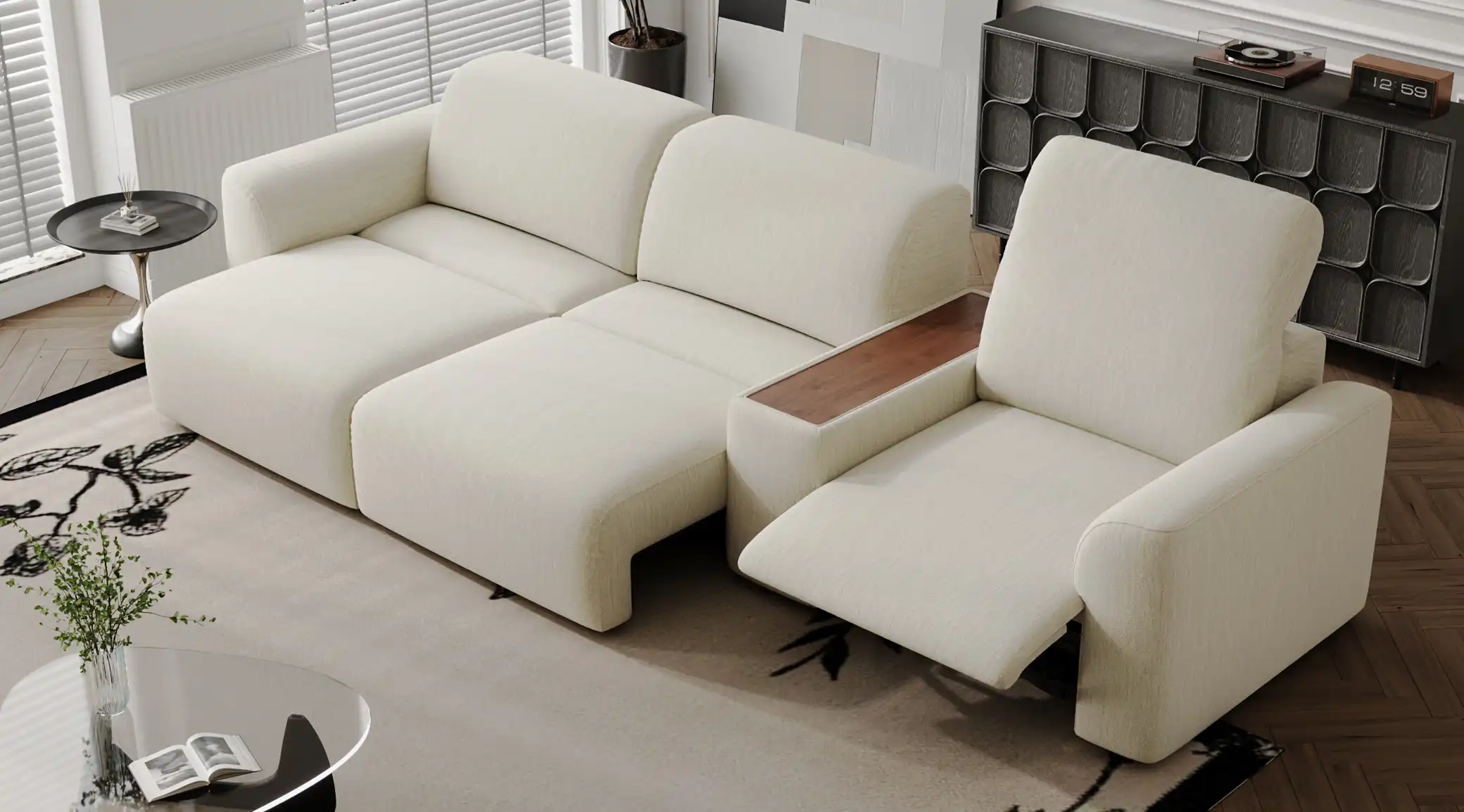
If your futon won’t stay up, first determine whether the backrest never locks or slips after it seems engaged. The cause may be an incorrect operating sequence, an obstruction, or a damaged locking part. This guide walks you through the checks in order, from identifying your frame type to deciding whether repair is practical. It also explains which signs point to a structural problem that requires professional attention, so you can avoid unnecessary part replacements and know when to stop using the furniture.
Table of Contents
Why Won’t My Futon Stay Up?
When a futon won’t lock in upright position, first note whether the backrest never catches or locks briefly and then releases. A backrest that never catches points toward the reset sequence or locking engagement; one that slips after catching calls for a closer look at alignment and locking hardware. Use the symptoms below to choose the next check rather than replacing parts by guesswork.
| What you notice | Possible cause | What to check first |
| The backrest will not lock upright | Incorrect operating sequence or a stuck locking mechanism | Confirm the frame type and reset instructions |
| You hear a click, but the backrest falls again | Worn, misaligned, or damaged locking parts | Look for uneven engagement or visible damage |
| One side sits lower than the other | A loose connection, damaged pin, or misaligned hinge | Compare both sides without forcing the frame |
| The futon stops halfway through conversion | An obstruction, blocked roller, or misaligned mechanism | Clear loose bedding and inspect accessible areas |
| The backrest drops when someone sits down | A locking or structural failure may be present | Stop using the futon and arrange an inspection |
These symptoms can overlap, so treat the table as a starting point rather than a definitive diagnosis. A click does not automatically mean the mechanism is secure, and a backrest that moves freely is not necessarily broken. The key distinction is whether the frame follows its intended movement and locks as the manufacturer specifies.
How to Reset a Futon Backrest That Won’t Lock
Before inspecting individual parts, rule out an operating mistake. Futon frames use different conversion mechanisms, so a click-clack reset method may not work on a bifold or trifold frame. Use the following checks in order, and stop if the frame twists, movement feels forced, or a locking component appears damaged.
Identify the Futon Frame Type First
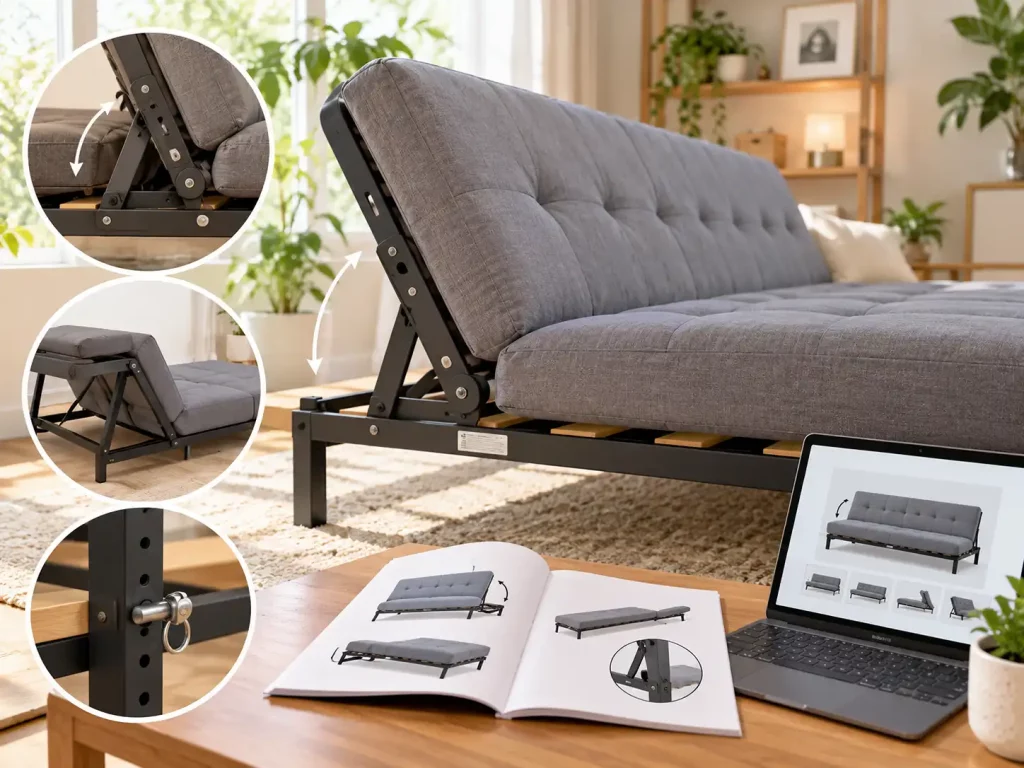
Check the product manual, manufacturer label, or original product listing to identify the frame design. A click-clack futon often uses a jointed backrest that moves through set positions. Other models use folding sections, pins, or different support arrangements.
Do not assume that every futon locks with the same forward-and-back movement. If you cannot identify the mechanism, look for the manufacturer’s instructions before trying to reset it.
Clear the Conversion Path
A blanket trapped between the seat and frame can prevent the mechanism from moving fully. Pillows, thick bedding, and nearby furniture can also interfere with conversion.
Remove loose bedding and check the visible movement path. If the futon sits close to a wall, make sure the frame has the clearance required by its instructions. Do not pull the furniture away by its backrest or arms if those parts are not designed for lifting.
Follow the Correct Locking Sequence
For some click-clack designs, the correct sequence involves moving the backrest forward to release the locking position, then lifting or repositioning the frame until it engages again. Simply pushing the backrest backward may not activate the mechanism.
Follow the sequence specified for your model. Keep fingers away from moving joints, and never force a lever or hinge that resists movement. If the frame still will not lock after the correct reset, stop repeating the motion and inspect the accessible components.
Check the Engagement Before Using It
Once the backrest appears upright, look at the frame from both sides. The sections should sit in the intended position without obvious twisting, loose connections, or a visibly disengaged locking part.
Do not test the result by dropping your weight onto the seat. If the backrest slips during ordinary, unloaded movement or the locking position looks uneven, the mechanism needs further inspection before the futon is used again.
What Should You Inspect If the Futon Still Falls?
If the backrest still slips after the correct reset, move from operation to inspection. Focus on parts that are visible and accessible without dismantling the load-bearing frame. The aim is to identify signs of a loose connection, obstruction, or damage—not to prove that a questionable futon is safe by putting weight on it.
Check the Hinge Pins and Locking Parts
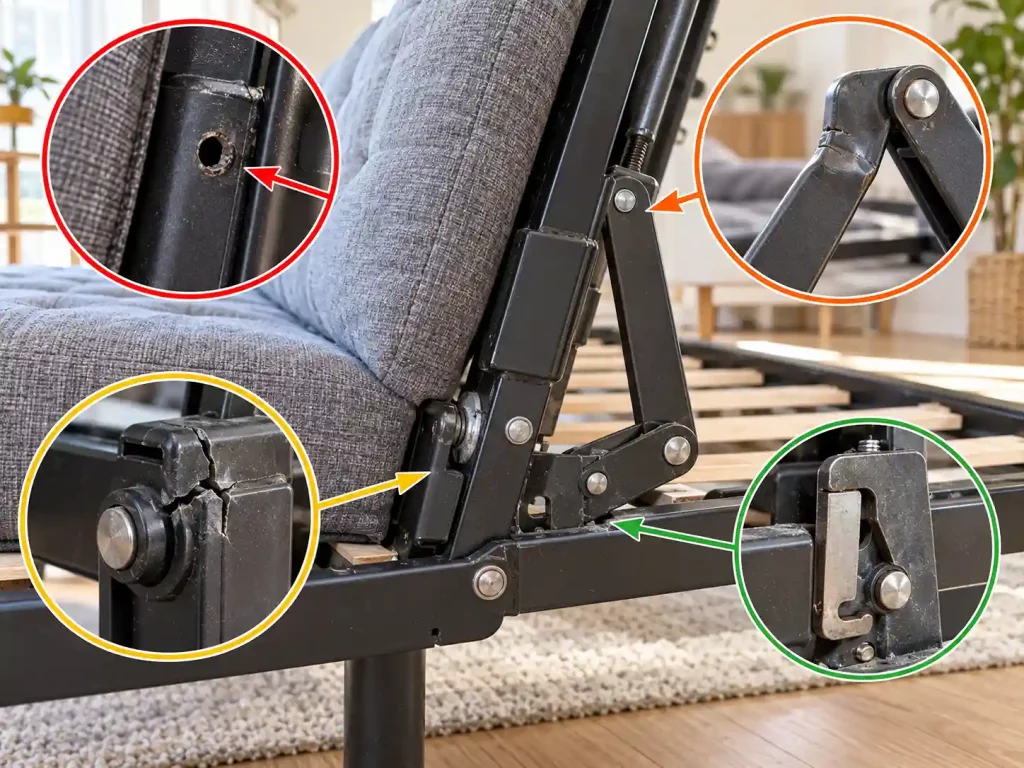
Look for missing pins, visibly bent metal, damaged plastic housings, or a locking component that sits differently on one side. These parts help hold the backrest in position, so damage can prevent it from engaging securely.
Do not substitute a random bolt or nail for a missing pin. Replacement hardware must match the mechanism’s dimensions and intended load requirements. If a locking part is bent, cracked, or inaccessible without disassembly, contact the manufacturer or a qualified furniture repair professional.
Look for Loose Hardware or Blocked Rollers
Inspect accessible bolts, nuts, mounting points, and roller tracks. A loose connection can allow the frame to shift, while debris or trapped fabric may interfere with movement.
Only tighten hardware when the manufacturer’s instructions permit it and you can identify the correct fastener. Avoid dismantling spring-loaded or load-bearing components without the required instructions and tools. Lubricate moving parts only when the manufacturer recommends it, using the specified product and application method.
Inspect the Frame for Structural Damage
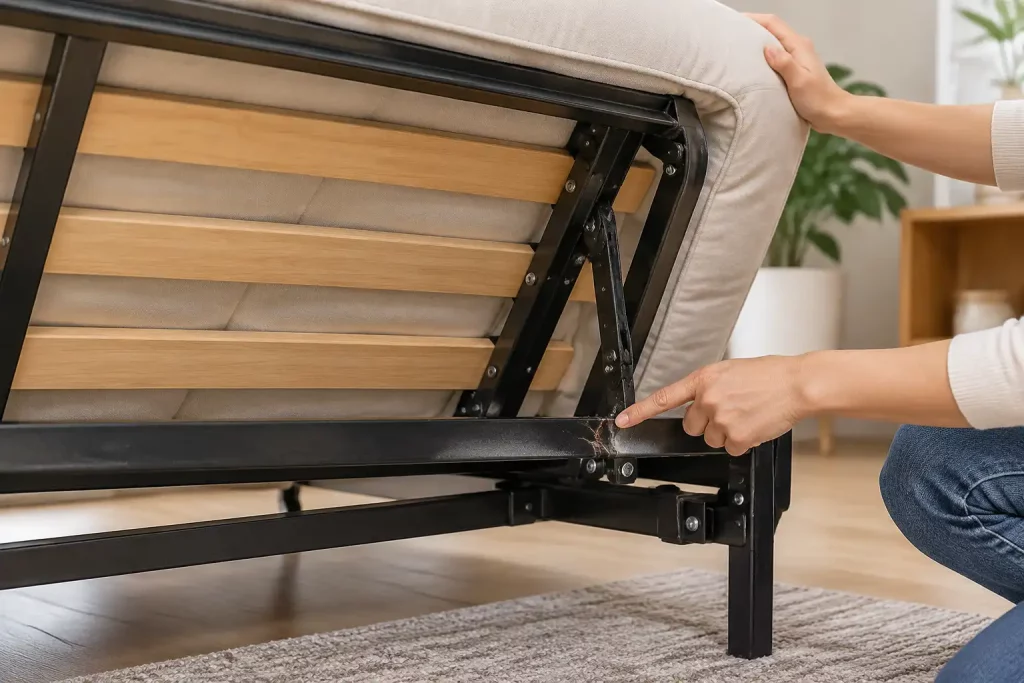
Check for cracked wood, bent metal, broken welds, or a frame that appears twisted. These problems are more serious than an ordinary loose connection because they can affect the furniture’s ability to support its intended load.
For example, if one side of the backrest sits lower after a family member has moved the futon to clean beneath it, a shifted connection may be worth checking. If the metal is visibly bent or the wood has split, do not attempt to straighten or reinforce it while the futon remains in use.
Check Mattress Specifications Only When Relevant
A mattress that exceeds the frame’s specified thickness or weight may interfere with conversion on some models. However, replacing the mattress should not be the first response to a backrest that will not lock.
Confirm the recommended mattress dimensions and weight for your particular futon. If the mattress meets those requirements and the backrest still slips, return to the locking mechanism and frame rather than assuming the mattress is responsible.
If an inspection confirms the frame is beyond repair, decide whether you still need one piece of furniture for both everyday seating and guest sleeping. A broader comparison of futon alternatives for sitting and sleeping can help you weigh convertible seating against separate guest-bed options.
When Is a Futon Frame Safe to Repair—and When Should You Stop?
The right next step depends on what the inspection reveals. A minor issue that the manufacturer identifies as user-serviceable is different from a failed locking assembly or a damaged support frame. If your futon won’t stay up after the correct operating sequence and basic checks, use the condition of the structure—not how easily you can push it upright—to guide the decision.
| Condition | Recommended action |
| Bedding or debris obstructs movement | Clear the obstruction and follow the correct reset instructions |
| An accessible fastener is loose and the manual permits adjustment | Tighten it as instructed, then inspect the surrounding connection |
| A locking pin or hinge is damaged | Confirm the correct replacement part or arrange professional repair |
| The frame is cracked, bent, or visibly misaligned | Stop using the futon until the structure has been assessed |
| The backrest drops under weight or the fault repeatedly returns | Stop using it and arrange a proper inspection |
A futon that suddenly collapses while someone is sitting down can cause a fall or trap fingers in the moving frame. Do not use straps, improvised supports, or unapproved brackets as a substitute for repairing a structural problem.
When Is a Power Sofa Bed a Better Alternative to a Manual Futon?
When a manual futon becomes difficult to operate, a power sofa bed offers a simpler way to adjust your seating. Unlike traditional futons that require manual repositioning or pull-out sofas that unfold a separate bed frame, it extends the seat at the touch of a button for deeper lounging or sleeping. Understanding how different sofa bed mechanisms work can help you decide which design better fits your daily routine.
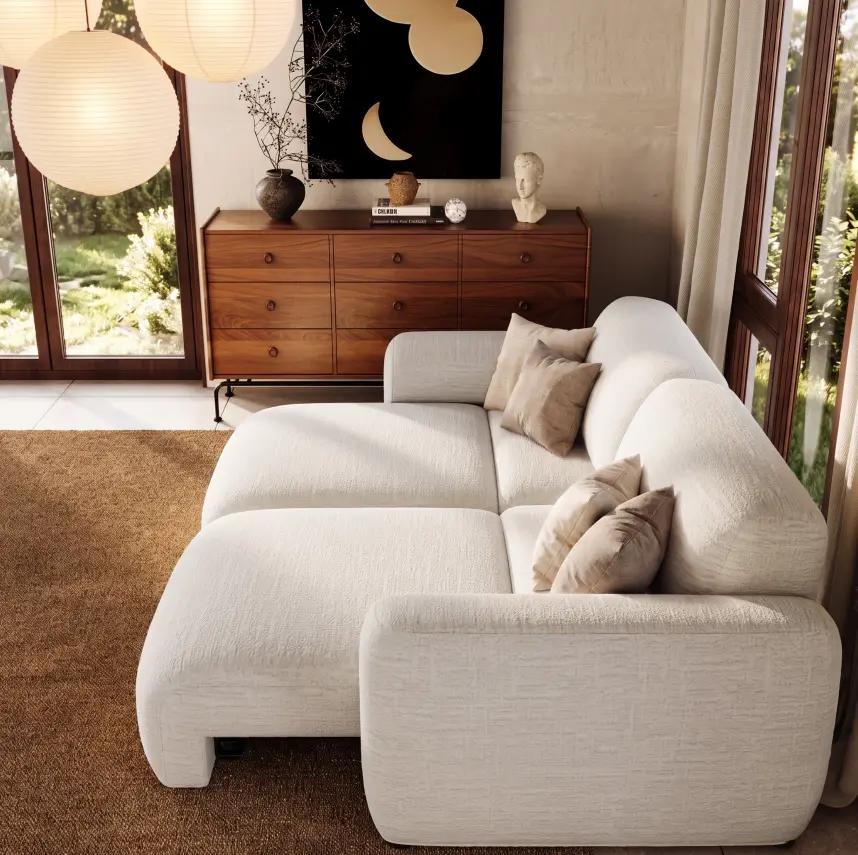
Aurora Modern Sofa Bed: For Easier Everyday Adjustments
If your futon’s manual conversion has become a recurring hassle, the Aurora Modern Sofa Bed offers a different way to adjust your seating. Its one-touch powered extension moves the seat depth from 27 to 45.5 inches, letting you switch from everyday sitting to a deeper lounging position without repeatedly folding and resetting a futon frame. Water-resistant, scratch-resistant chenille also suits living rooms used throughout the day.
POVISON Aurora Modern Sofa Bed
A practical upgrade for households tired of repeatedly resetting a manual futon.
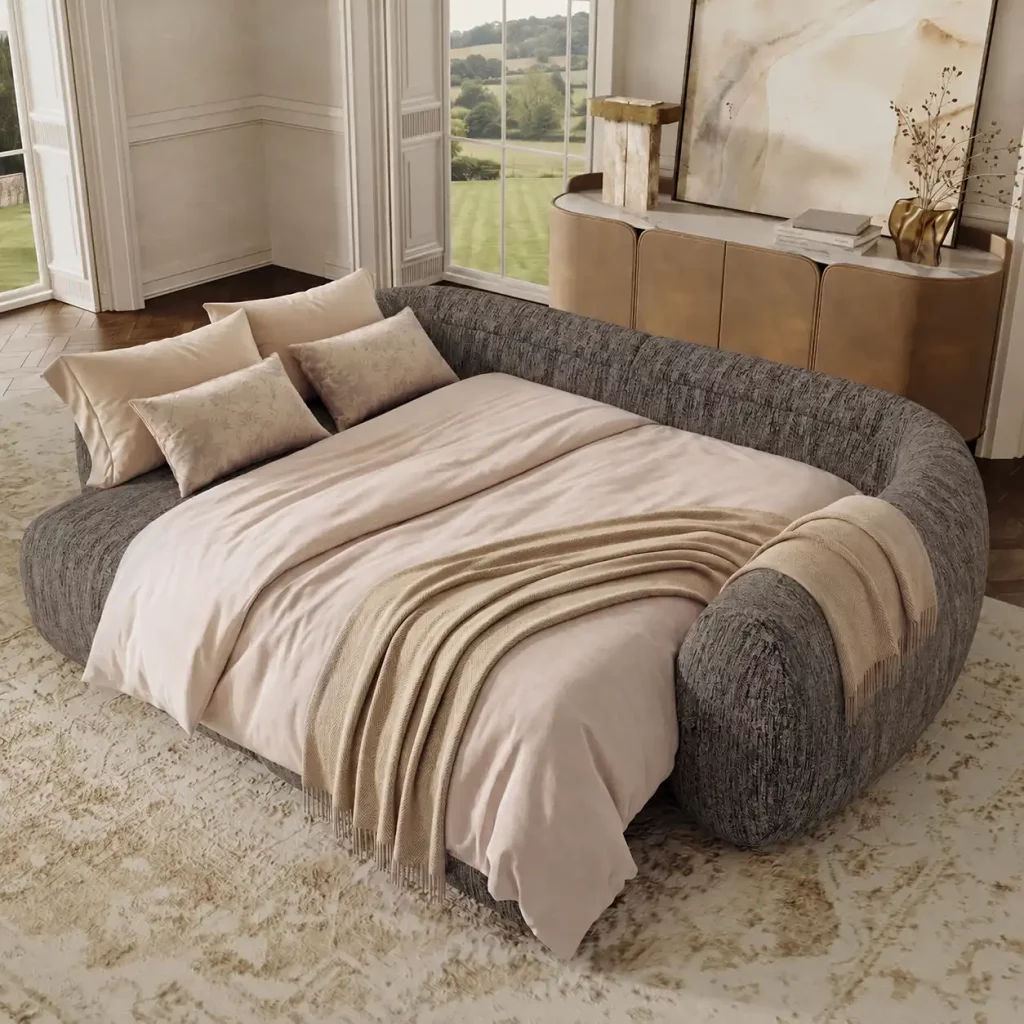
Mila Power Sleeper Sofa: For Different Seating Needs in One Living Room
If several people share a living room but prefer different ways to relax, the Mila Power Sleeper Sofa offers independently adjustable seating sections. One person can extend their side to stretch out while another keeps a more upright seating position. With a seat depth that extends from 32 to 59 inches and a powered backrest angle of 105°–180°, Mila accommodates different lounging preferences without requiring everyone to use the same position.
Neither is a repair for a damaged futon; both are alternative designs to consider when replacing a frame that no longer meets your needs.
POVISON Mila Power Sleeper Sofa
A flexible fit for shared living rooms where everyone has a different way to unwind.
Conclusion
The right fix depends on why the backrest is falling: an incorrect sequence calls for a model-specific reset, while loose or damaged hardware needs careful inspection and possibly replacement. Identify the frame type first, clear the conversion path, and inspect visible locking parts without forcing the mechanism. If the frame bends, cracks, or collapses under weight, stop using it. When a futon won’t stay up despite correct operation, let the condition of the frame—not another attempt to push it upright—guide your next step.

When It’s Time to Replace Your Futon
Explore power sofa beds with adjustable seating for easier everyday lounging and a different way to relax.
FAQ
Can I Keep Using My Futon in Bed Mode If the Backrest Won’t Stay Up?
Not automatically. A failed upright lock does not prove that the flat position is unsafe, but it also does not establish that the frame is sound. If a pin, hinge, or support component is damaged, stop using the futon in both positions until the manufacturer or a qualified repair professional confirms it is safe.
Is a Power Sofa Bed Worth It If I Rarely Host Overnight Guests?
A power sofa bed may still be worthwhile if you use its adjustable seating every day, even when overnight guests are rare. If you mainly need an occasional guest bed and rarely adjust your seating, compare the purchase cost and everyday functionality with simpler alternatives before deciding.
What Should I Check Before Buying a Power Sofa Bed to Replace a Futon?
Check the fully extended dimensions, access to a suitable power outlet, control placement, upholstery care requirements, and warranty coverage. If you plan to use the bed function regularly, also confirm that the sleeping surface suits your guests and that the operating instructions and service support meet your needs.
Can I Use a Futon If Only One Side Locks?
No. If one side locks but the other remains loose or disengaged, stop using the futon in both sofa and bed positions until the problem is assessed. Uneven engagement can indicate a damaged pin, misalignment, or a failed locking component. Do not force the loose side or test it by sitting on the frame.
What Should I Record Before Contacting a Futon Repair Service?
Note the brand and model number, photograph the locking mechanism from both sides, and describe whether the backrest never catches or clicks before slipping. Include any visible missing pin, bent part, or uneven alignment without dismantling the frame. These details help a repair professional identify the mechanism and check compatible replacement parts before the appointment.


