 By Stephanie
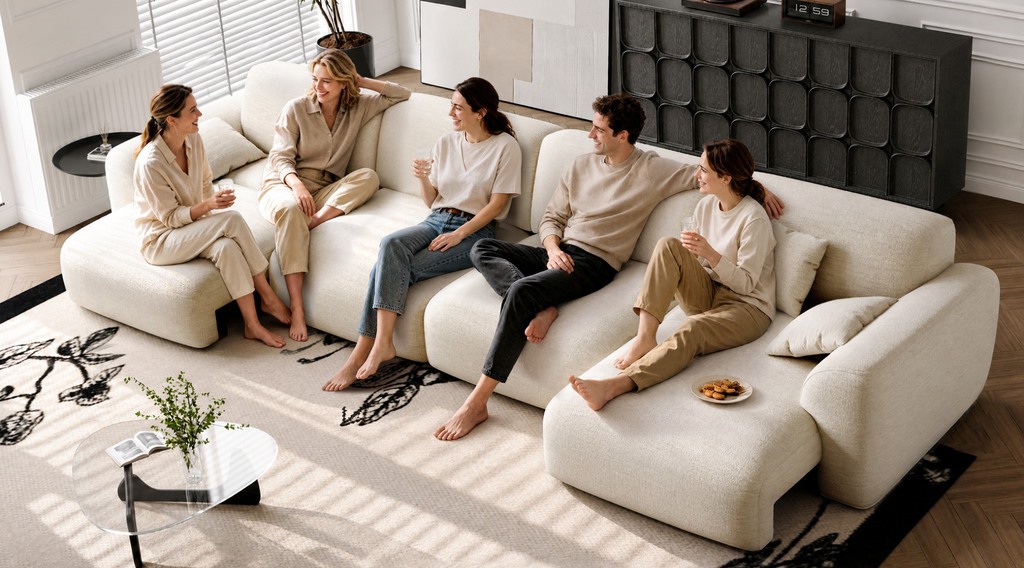
Knowing how to sit on a couch comfortably starts with more than keeping your back straight. Your seat depth, backrest, foot support, and viewing position all affect how naturally you can sit, read, or relax. If you regularly slide forward, curl up to reach the back cushion, or turn your neck to watch TV, your seating setup may need a few adjustments. This guide explains how to find a comfortable sitting position, adapt your couch for everyday activities, and recognize when the furniture itself may be limiting your comfort.
Table of Contents
How to Sit on a Couch for Better Posture
If you’re wondering how to sit on a couch with good posture, start by sitting back against the cushion, keeping your feet supported, relaxing your shoulders, and facing the activity in front of you. Use a lumbar pillow or footrest only when needed. You do not need to hold one rigid position; the goal is to stay comfortably supported while allowing your posture to change naturally.
Position Your Hips and Back First
Sit with your hips toward the back of the seat rather than perching on the front edge. Let your back rest against the back cushion, and notice whether there is a gap between your lower back and the sofa. If the gap feels uncomfortable, place a firm, appropriately sized lumbar pillow behind your lower back.
The pillow should fill the gap without pushing your torso too far forward or exaggerating the arch in your lower back.
A simple check is to sit back, relax your shoulders, and see whether you can remain comfortable without constantly tightening your abdominal or back muscles to hold yourself in place.
Give Your Feet and Arms Stable Support
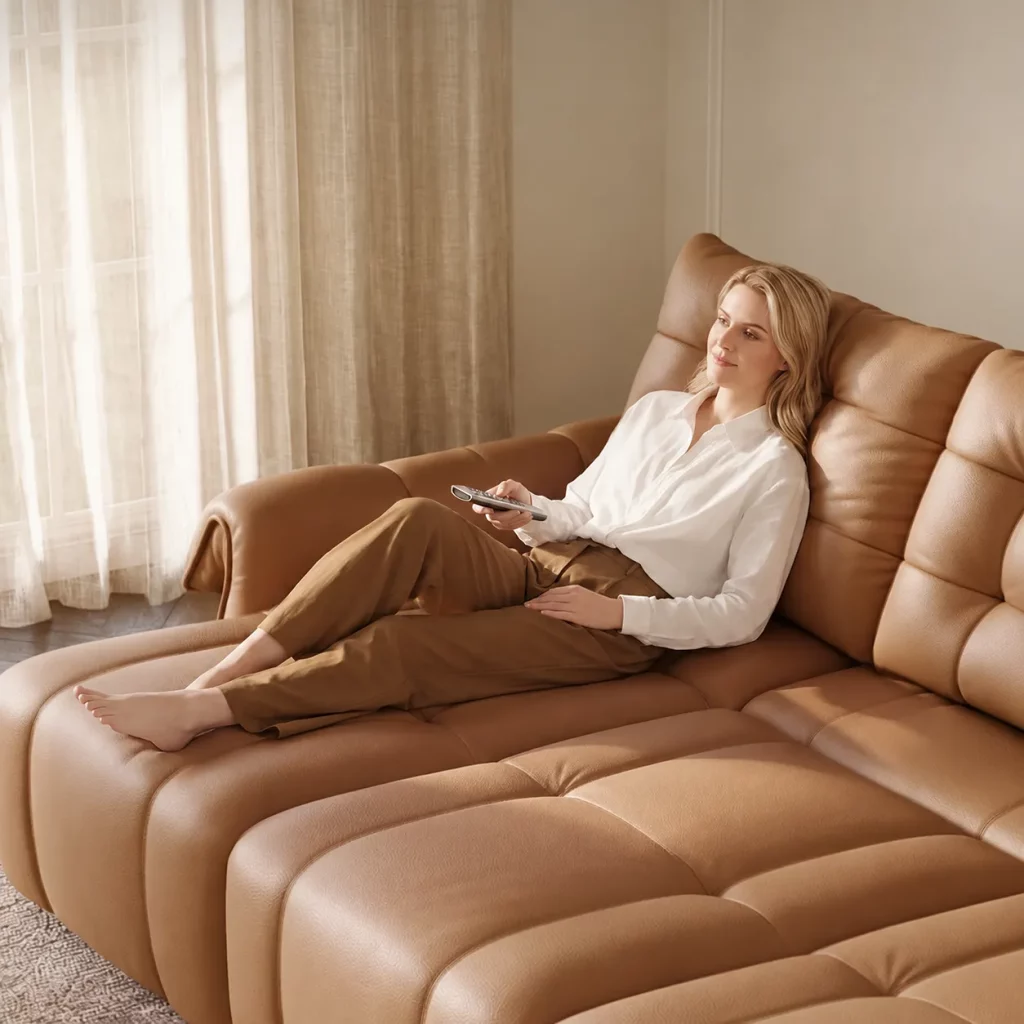
When sitting upright, place both feet on the floor if your height and the sofa’s seat height allow it. Your knees should bend comfortably, without the seat edge pressing firmly into the backs of your legs. If your feet do not reach the floor, a stable footrest can provide support.
Use the armrests when available so your shoulders can relax instead of staying lifted to support your arms.
Do not force your knees to form an exact 90-degree angle. Body proportions differ, and a relaxed, supported position matters more than matching a single measurement.
Keep Your Head Aligned With Your Activity
Keep your head balanced over your torso rather than jutting forward or tilting to one side. Your neck should feel relaxed, with the backrest supporting your upper body naturally. Let your shoulders stay level instead of holding one side higher to compensate for uneven support.
If you repeatedly need to lean, twist, or scoot forward to feel comfortable, your seating position or sofa seat depth may need adjustment.
How to Sit on a Couch for Different Activities
Your best sitting position depends partly on what you are doing. A position that works for a short conversation may not be comfortable for reading a full chapter or stretching out during a long show. Instead of trying to maintain one posture all evening, adjust your support and the way you use the sofa to match each activity.
Watching TV or Streaming
Keep your hips against the back cushion as you recline instead of sliding forward to gain legroom. If the backrest does not reach your head, add a small pillow only if it supports your head without pushing your chin forward. If you keep shifting to get comfortable, adjust your reclining position rather than holding an awkward lean.
Keep your main seat facing the screen so you can watch without repeatedly turning your head or leaning to one side. If the viewing angle feels awkward, adjust the sofa or screen position before trying to correct your posture.

Reading a Book or E-Reader
Bring your book or e-reader closer to eye level. If you find yourself bending your neck to see the page, raise the reading material rather than leaning your whole torso forward. Good lighting also helps you read without moving closer to the page or straining to see the text.
For a heavy book or a longer reading session, rest it on a lap pillow or book stand to reduce the effort of holding it up. Change positions when you begin to feel stiff or your arms start to tire.
Relaxing With Your Legs Up
When you extend your legs, check whether the footrest puts pressure behind your knees or changes your lower-back position. If it does, lower or reposition it while keeping your back supported. Place an ottoman close enough to rest your feet without sliding forward, and leave room to move around it. If the ottoman keeps shifting, how to keep an ottoman from sliding in daily use can help you choose a suitable grip for your floor and ottoman base.
At natural pauses—finishing a chapter, pausing a show, or getting up for a drink—change positions or stand briefly rather than remaining in one position all evening.
When Your Sofa’s Fit Is the Real Problem
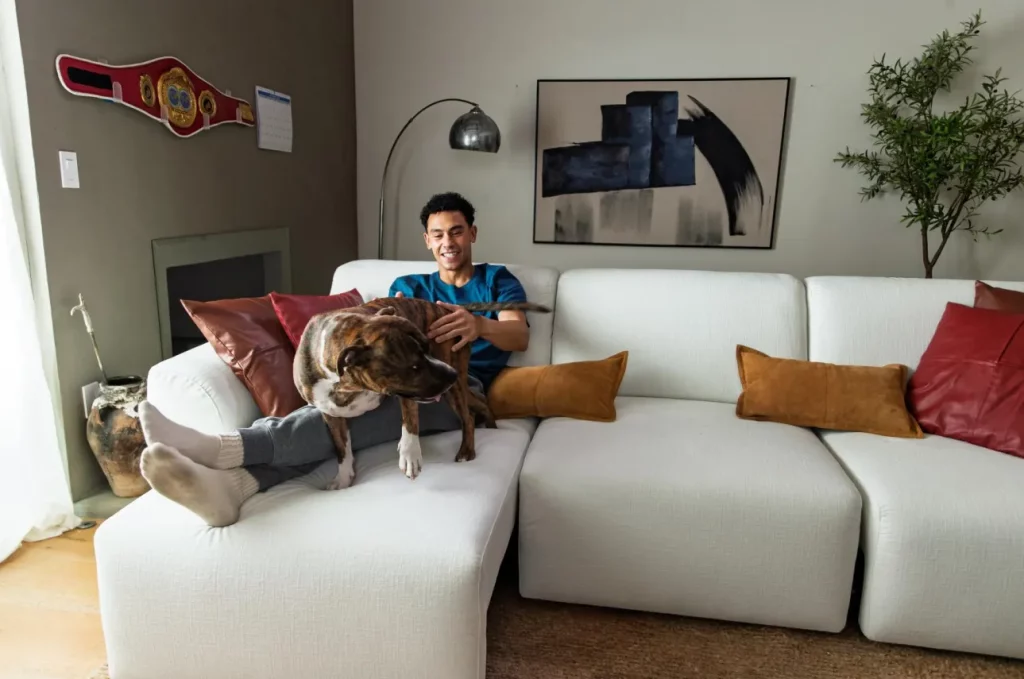
Use the pattern of discomfort as a clue. A problem tied to one activity may come from its setup, while repeated difficulty across different activities may warrant a closer look at the sofa itself.
| What you notice | What to consider next |
| You lean or twist only when watching TV | Adjust the screen or seating position. |
| You need to change your position only when reading | Raise the reading material and support your arms. |
| You repeatedly rearrange cushions to get comfortable | Consider whether the seat and backrest suit your preferred sitting position. |
| Your needs change between sitting and stretching out | Look for seating that can accommodate both activities. |
If seat depth appears to be the issue, how sofa seat depth affects upright sitting explains how the usable seat depth affects the way your body fits against the backrest.
Power Sofa Beds: A Solution for Switching Between Sitting and Lounging
When one fixed seating position does not suit every activity, a power sofa bed offers another option. Unlike many traditional pull-out sofa beds that require you to unfold a separate mattress frame, it can extend its seating surface for lounging or sleeping without a separate bed setup.
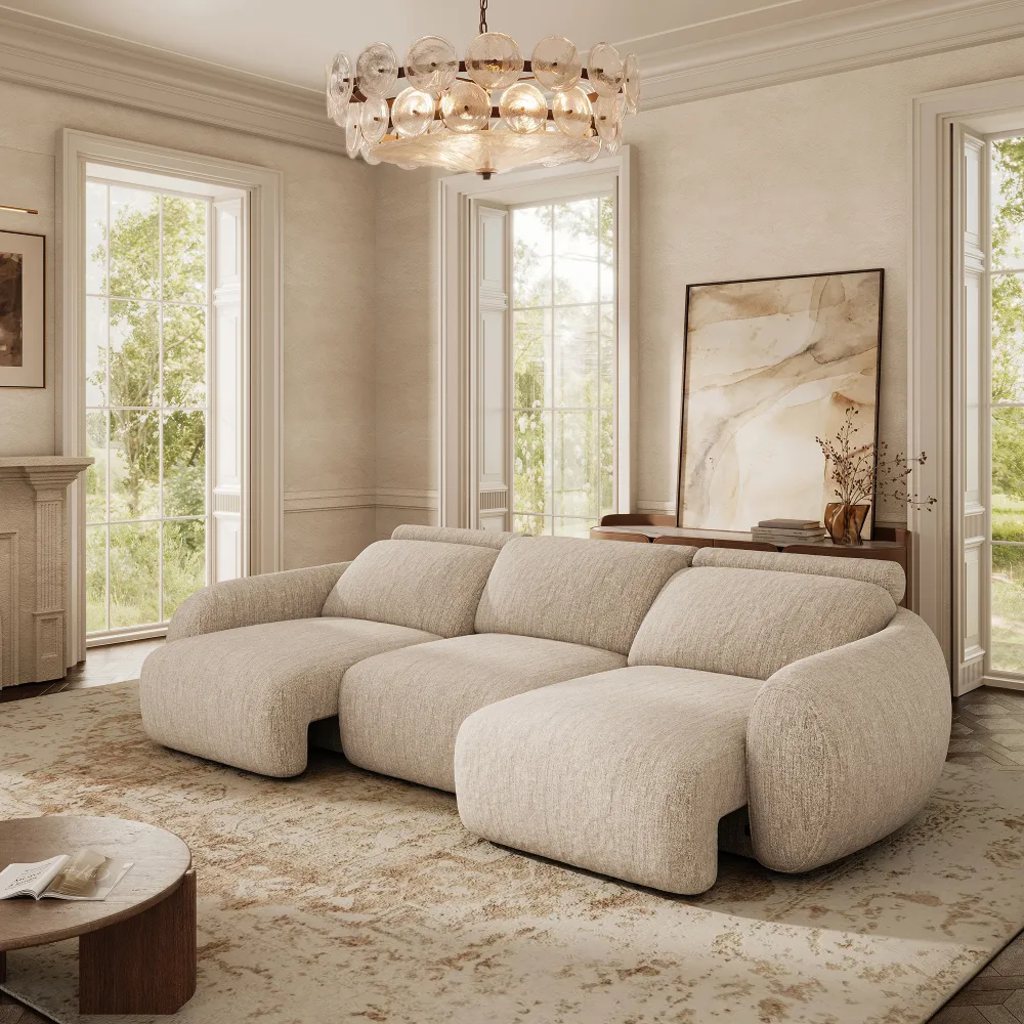
The Aurora Comfortable Power Sofa Bed adjusts its seat depth from 27 to 45.5 inches with motorized control. This lets you choose a more compact seating position for everyday activities or extend the seat when you want more room to stretch out. Its high-resilience foam cushions provide supportive comfort as you move between sitting and lounging.
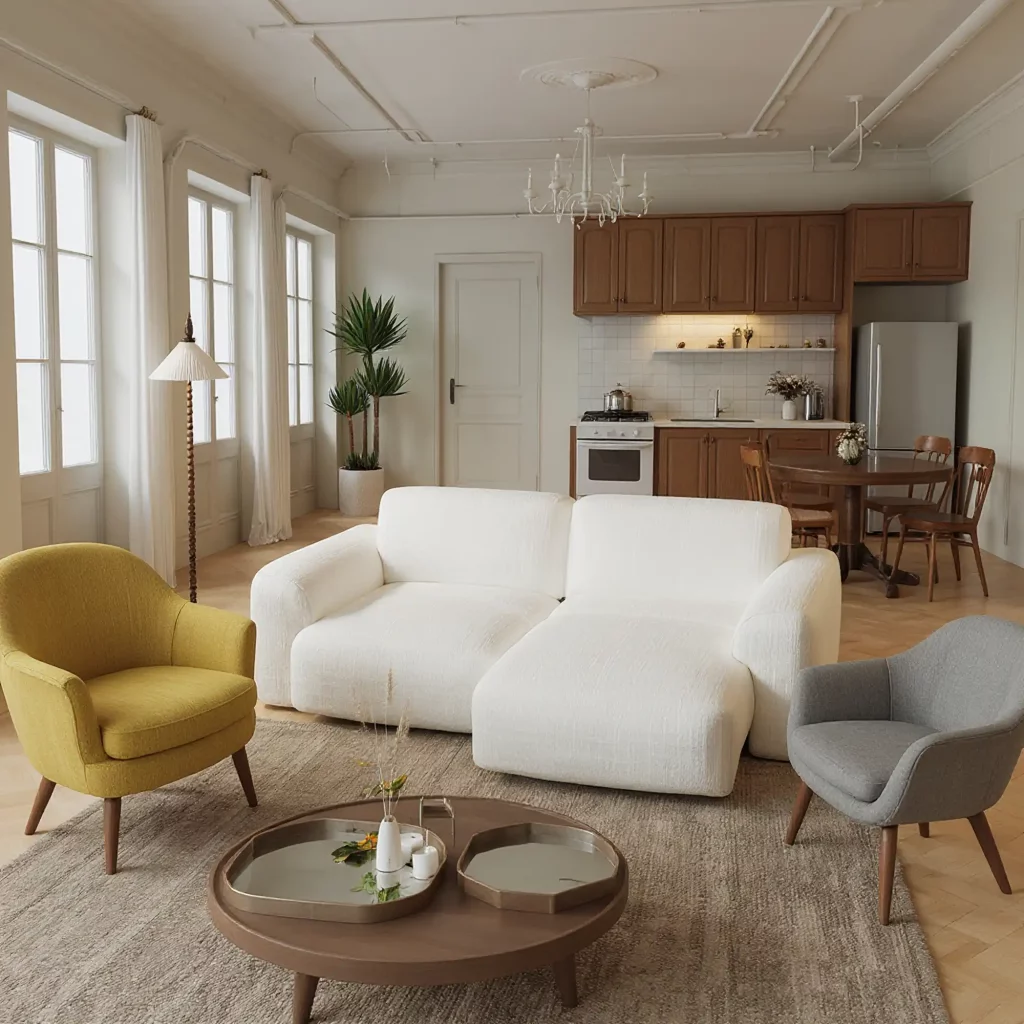
POVISON Aurora Comfortable Sofa Bed
Worth considering if you often shift around on a fixed-depth sofa to find a comfortable sitting position.
Conclusion
Start with the adjustment most closely tied to the problem: change the screen angle for TV, raise the reading material, or reposition the footrest. If you keep shifting or rearranging cushions across different activities, reassess the sofa’s fit. If your living room also needs to accommodate overnight guests, compare seating options that can support everyday use and sleeping.
Find a Sofa That Fits the Way You Sit
Explore sofa beds designed for everyday sitting, relaxed lounging, and occasional overnight guests.
Q&A
Is It Bad to Sit Cross-Legged on a Couch?
Not necessarily. Sitting cross-legged can be a comfortable resting position for some people, especially when the seat gives them enough room. The key is to avoid staying in one position for too long or ignoring discomfort. If your hips, knees, or back start to feel strained, uncross your legs and change positions.
What Should I Check Before Buying a Sofa Bed for Everyday Sitting?
Test the sofa in its everyday sitting position, not just when fully extended. Sit back with your feet supported and check whether you can use the backrest naturally without piling on cushions. If possible, try both sitting and lounging modes to see whether the seat adjustment suits your routine.
Can I Work on a Laptop While Sitting on a Couch?
For short laptop sessions, use a stable lap desk and keep the screen high enough to avoid prolonged neck bending. Because a laptop’s screen and keyboard move together, a couch setup rarely provides the flexibility needed for a full workday. Use a properly arranged desk and chair for extended work.
How Much Clearance Does a Power Sofa Bed Need When Extended?
Measure the sofa in both its retracted and fully extended positions, then check the space to coffee tables, side tables, doors, and the main walkway. Use the extended dimensions rather than the closed footprint alone. The seat should extend without blocking the route through the room or making nearby furniture difficult to use.
What If I Still Feel Uncomfortable After Adjusting My Posture?
If discomfort persists despite reasonable adjustments, or comes with numbness or weakness, consult a qualified healthcare professional. Posture changes and furniture adjustments may improve comfort, but they should not be used to explain away persistent or worsening symptoms.


