 By Kelvin
A family living room needs to handle snack spills, scattered toys, and active kids without losing the style adults enjoy. The right furniture and layout can make everyday life easier while keeping the space comfortable and inviting. These kid friendly living room ideas focus on practical changes, from choosing easy-clean upholstery and functional storage to arranging furniture around daily activities. Whether you’re updating an existing room or furnishing a new home, the goal is to create a space that works for everyone without making it look like a playroom.
Table of Contents
1. How Can You Make a Living Room Kid-Friendly Without Losing Style?
Start with furniture and colors you would choose even if you didn’t have children. A neutral sofa, warm wood finishes, and simple silhouettes create a cohesive foundation. Then introduce personality through washable pillow covers, framed artwork, and other accents that can change without replacing major furniture.
Among the most practical family friendly living room ideas is keeping permanent furniture relatively timeless while making smaller decorative elements flexible. A beige sofa with muted green cushions, for example, can feel sophisticated while accommodating colorful books and a few favorite toys.
Choose a limited color palette rather than matching every item. Two or three complementary tones can help children’s belongings blend into the room without making everything look identical.
The goal isn’t to hide every sign of family life. It’s to create a living room where children’s activities fit naturally alongside adult furniture and decor.
2. Choose Comfortable Seating for the Whole Family
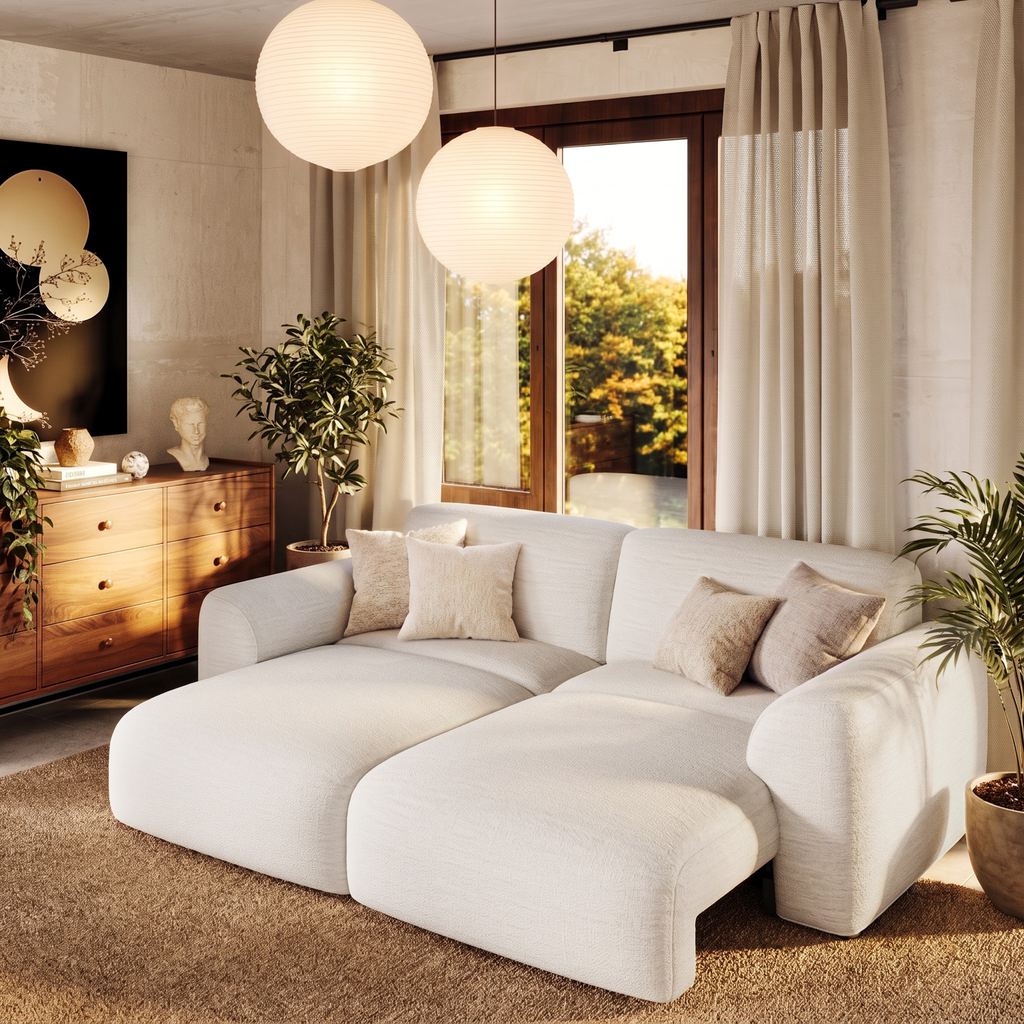
A family sofa needs to accommodate different activities throughout the day. Parents may prefer supportive upright seating for conversation, while movie nights call for more room to stretch out. Children also need enough space to sit comfortably without constantly rearranging furniture.
When comparing kid friendly living room furniture, look beyond softness. Seat depth, cushion support, upholstery care, and the sofa’s overall footprint all affect everyday comfort.
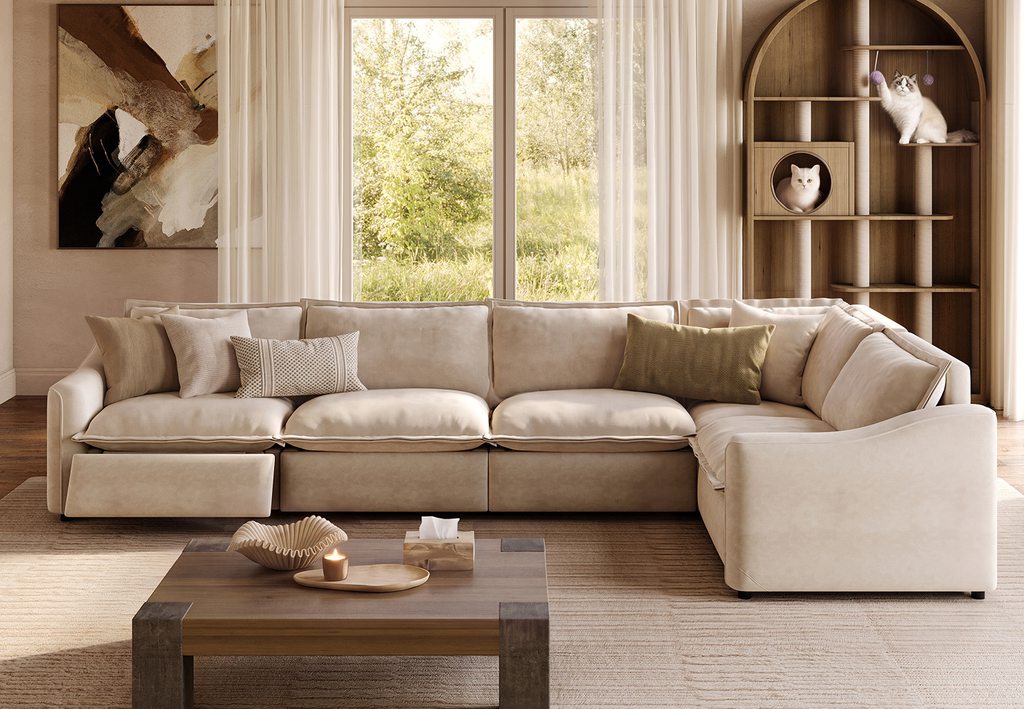
A compact sofa with supportive cushions may suit a smaller household. Larger rooms can accommodate sectionals, while adjustable seating works for families who want different lounging positions without maintaining separate seating areas.
For a living room that shifts between daytime activities and evening relaxation, the Aurora Power Sofa Bed offers motorized seat-depth adjustment. Its soft, textured chenille upholstery suits a modern family setting, while the extendable seats give adults more room to recline during movie nights. Allow enough clearance for extension, and keep children away from moving sections during operation.
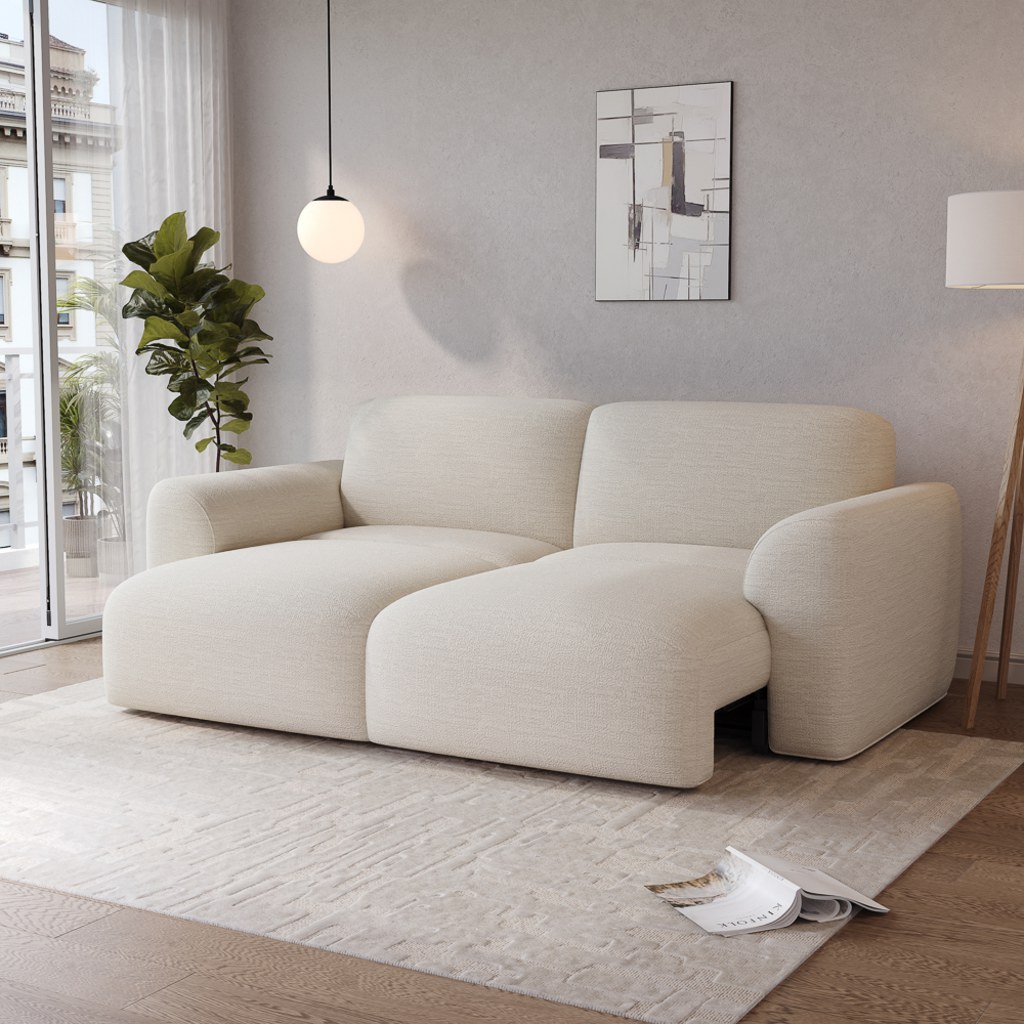
Aurora Power Sofa Bed
Flexible adult lounging for households sharing one stylish, hardworking family sofa.
👍 Best for: Family movie nights and relaxation
✨ Adjustable seat depth
✨ Soft, textured chenille upholstery
✨ Remote-controlled motorized extension
3. Choose Easy-to-Clean Materials That Still Look Good
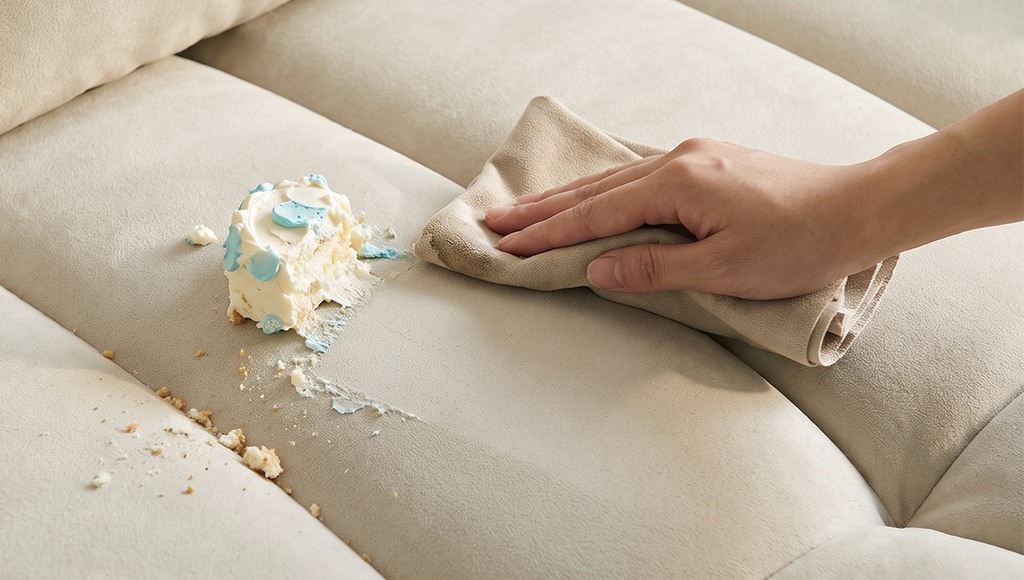
A sofa that looks beautiful in a showroom may be less appealing after repeated juice spills and sticky fingerprints. When selecting easy to clean living room furniture, consider how each material handles the messes your household actually encounters.
Performance upholstery can help with everyday maintenance, but not all fabrics offer the same protection. Water-resistant finishes may slow liquid absorption, while removable covers are useful only if their care instructions allow the cleaning method you need.
Before choosing upholstery, consider three practical details:
- Cleaning method: Can you spot-clean spills, or does the material require professional care?
- Texture: Will crumbs, pet hair, or dust be difficult to remove?
- Color and pattern: Will occasional marks remain noticeable between cleanings?
The same thinking applies to rugs. A low-pile, washable rug may be easier to maintain in a frequently used family room than a thick shag rug that traps crumbs.
Families comparing different upholstery options should also consider how sofa fabric for homes with kids and pets performs under everyday use rather than relying on stain-resistant labels alone.
4. Make Low Furniture More Practical for Kids
Coffee tables often sit directly along the routes children use to move around a living room. Choosing rounded shapes can reduce exposed corner concerns, but the table’s stability, base, and moving parts matter just as much.
For toddlers learning to walk, an upholstered ottoman or temporarily removing the central table may provide more useful floor space. Families with school-age children may prefer a sturdy tabletop for puzzles, snacks, and board games.
A round coffee table is worth considering when the family needs a proper surface but wants fewer projecting corners. However, wood remains hard, and lift-top mechanisms introduce moving parts that require adult attention.
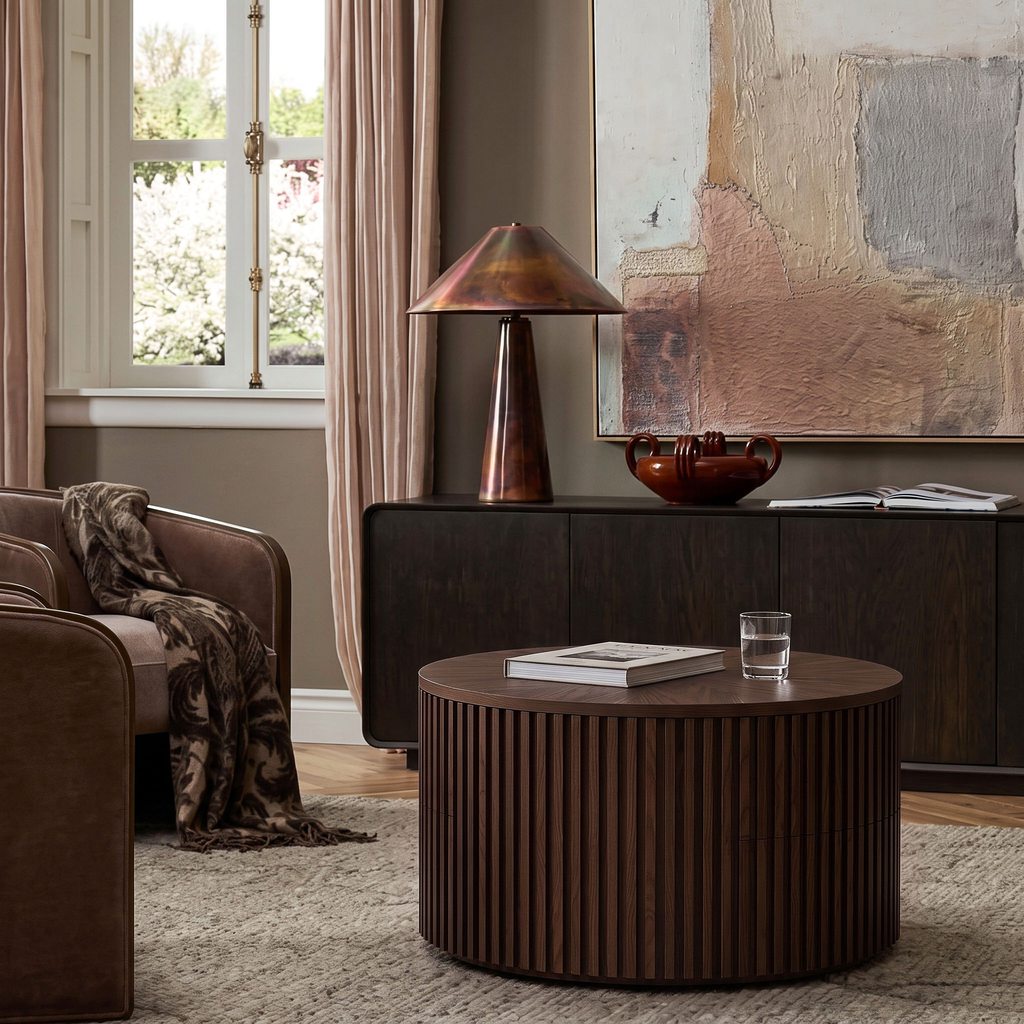
For households using the living room for homework, snacks, and everyday storage, the Silva Lifting Top Round Coffee Table combines a curved tabletop with concealed storage and two drawers. Its walnut finish complements neutral upholstery without looking like children’s furniture. Adults should operate the lifting mechanism and keep little hands clear of hinges and closing gaps.
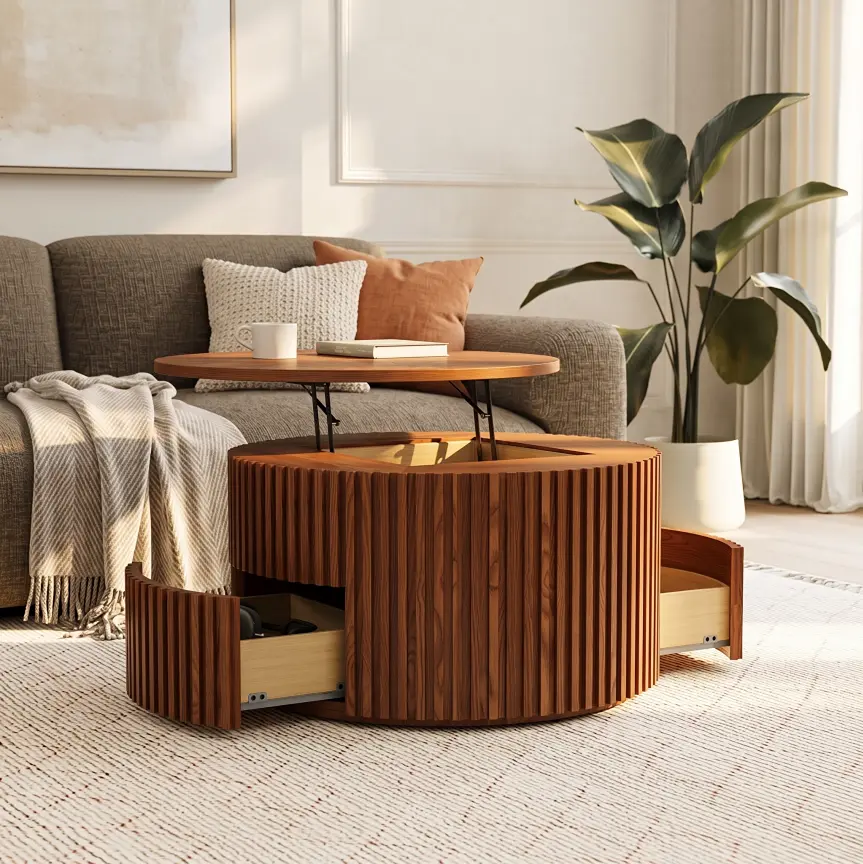
Silva Lifting Top Round Coffee Table
A compact living room surface that conceals everyday clutter between activities.
👍 Best for: Shared family living and storage
✨ Rounded wood tabletop
✨ Two built-in drawers
✨ Adjustable lift-top work surface
For families deciding between curved tables, upholstered ottomans, and lift-top designs, choosing a kid-friendly coffee table for everyday use also involves checking stability, clearance, and how children interact with the furniture.
5. Hide Everyday Clutter Without Losing the Design
A family living room feels easier to manage when frequently used items have predictable storage locations. Instead of filling the room with open bins, combine accessible storage for everyday toys with enclosed cabinets for electronics, remotes, and adult belongings.
A low media console can keep entertainment equipment organized without adding another tall storage unit. Choose cabinet compartments that accommodate your equipment, and plan cable routes before positioning the furniture.
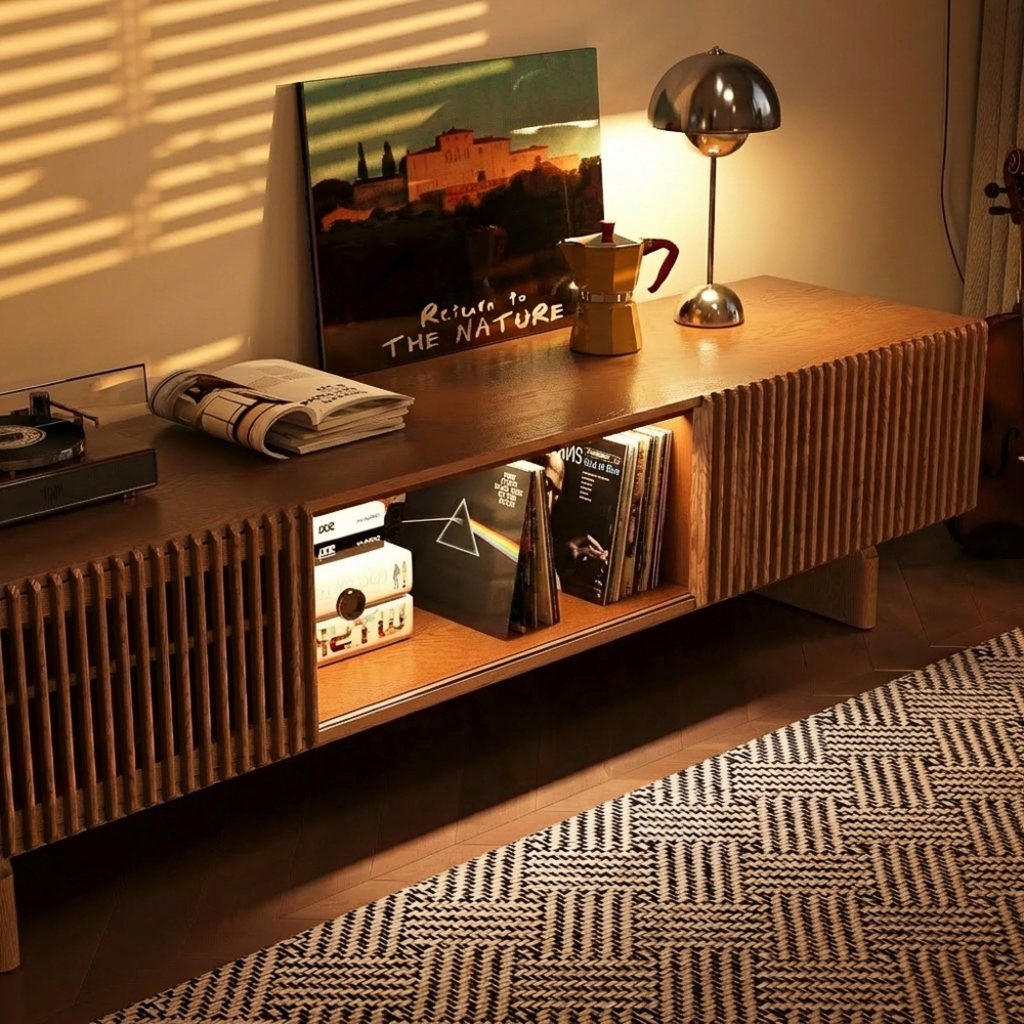
The Delven Verse Mid-Century Modern TV Stand fits family entertainment areas where consoles, streaming devices, and cables need dedicated storage. Its three cabinet sections and built-in cable openings keep equipment organized, while ventilated slatted doors support AV equipment use. Follow the manufacturer’s anchoring instructions for the console and television; enclosed doors are not childproof locks.
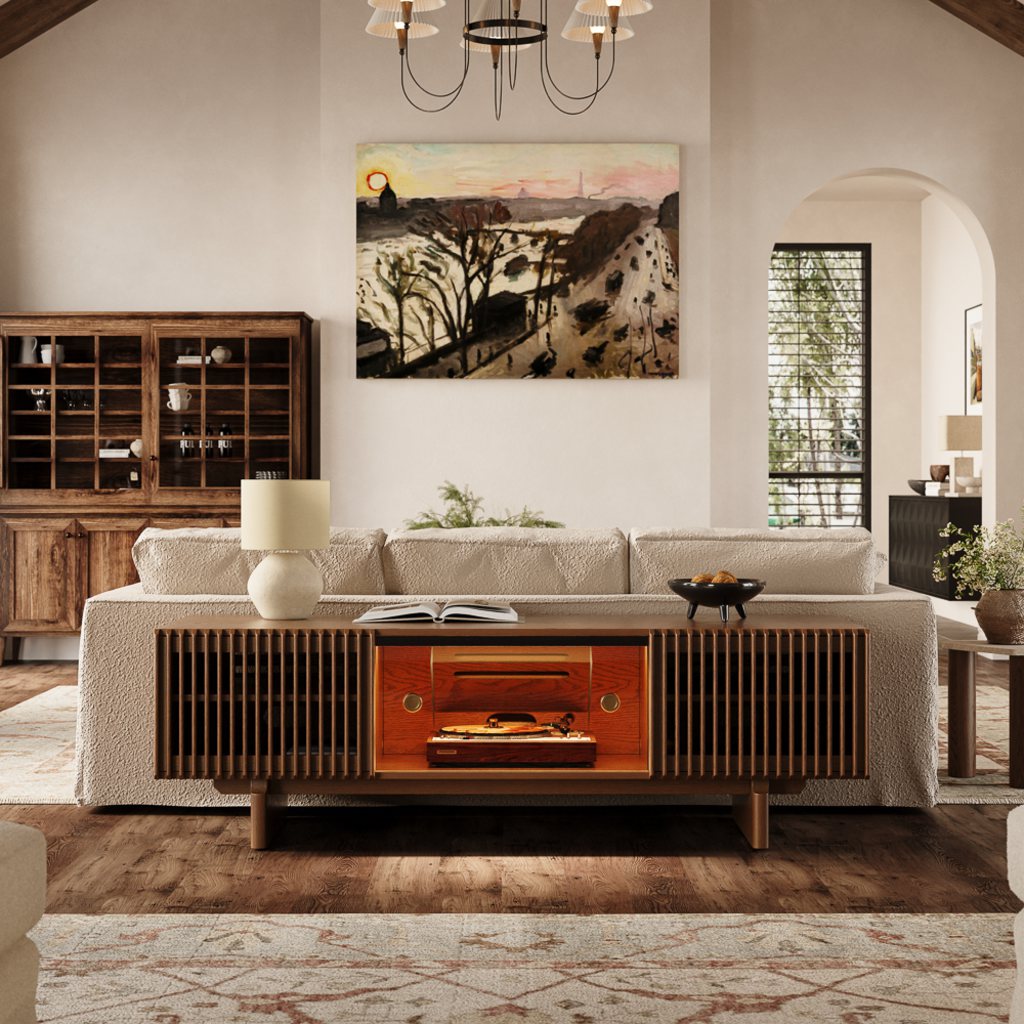
Delven Verse Mid-Century Modern TV Stand
Clean-lined media storage keeps cables and shared-room essentials discreetly tucked away.
👍 Best for: Organized family entertainment areas
✨ Three enclosed cabinet sections
✨ Built-in cable management openings
✨ Ventilated slatted cabinet doors
For added safety, the U.S. Consumer Product Safety Commission recommends securing televisions and furniture that can tip, following the relevant installation instructions.
Storage should also match how children use the room. Keep appropriate everyday toys in easy-to-reach containers, while placing breakable objects, batteries, and potentially hazardous items in secured storage beyond children’s reach.
6. Keep the Floor Comfortable and the Walkways Open
Even attractive furniture becomes frustrating when people must squeeze between pieces to cross the room. A good family friendly living room design should allow adults to stand up, children to move between activities, and everyone to reach the doorway without navigating obstacles.
Before buying another chair, ottoman, or larger coffee table, test the arrangement:
- Mark furniture footprints. Use painter’s tape to outline the sofa, table, and other large pieces.
- Walk the usual routes. Check the paths between the entrance, sofa, and nearby rooms, including space for carrying laundry or a toy basket.
- Test furniture in use. Allow for opened drawers, raised tabletops, and fully extended seating.
For comfortable circulation, roughly 30–36 inches is a useful starting target for a main walkway where space permits. Smaller rooms may require tighter arrangements, making actual movement patterns more important than forcing every piece into a standard layout.
A non-slip rug pad also helps prevent a rug from shifting across hard flooring. Make sure rug edges lie flat instead of creating a tripping point.
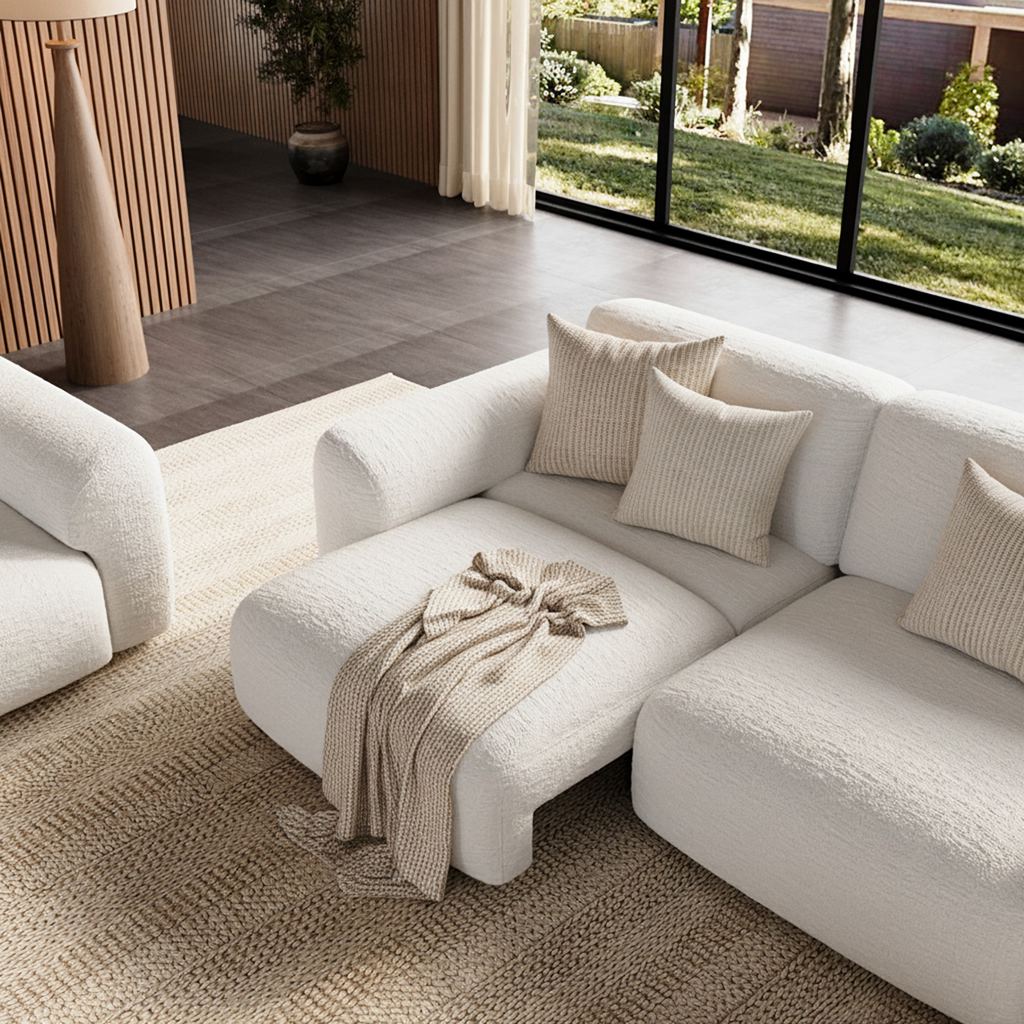
Families considering power sofa beds for flexible living spaces should measure both the regular seating footprint and the fully extended configuration before purchasing.
7. What Should You Change First as Your Kids Grow?
Not every child-friendly improvement requires replacing furniture. Start by identifying anything that presents a risk, then address the features that interfere most with everyday activities.
As children begin crawling, pulling themselves up, and moving independently, the furniture they can reach changes. Later, school-age children may need more seating, accessible books, or a stable surface for games.
Use this table to decide what deserves attention first.
| Priority | What to Check | Recommended Action |
| First: Safety | Unsecured TVs, tip-prone furniture, accessible cords, unsafe moving parts | Secure or address hazards before decorating |
| Next: Daily movement | Protruding corners, slippery rugs, crowded walking routes | Adjust furniture placement or remove unnecessary pieces |
| Then: Maintenance | Difficult-to-clean upholstery, overflowing storage | Improve cleaning routines or storage accessibility |
| Finally: Long-term comfort | Insufficient seating, worn cushions, changing activities | Consider furniture upgrades when existing pieces no longer meet your needs |
For example, a family with a newly walking toddler might temporarily move the coffee table away from the center of the room. A few years later, that same table could become useful for puzzles and family board games.
Choose furniture based on what your household needs now, while leaving room for those needs to change. Durable, adaptable pieces can often remain useful across several stages of family life.
Conclusion
The most useful kid friendly living room ideas balance everyday practicality with a style the whole family can enjoy. Comfortable seating, manageable materials, thoughtful storage, and clear walking routes can make a meaningful difference without requiring a complete redesign. Start by addressing furniture safety and the problems that affect your household most often. Then choose pieces that support your family’s routines and can remain useful as children grow. A well-planned living room should feel comfortable for adults, welcoming to children, and manageable through the everyday messes of family life.
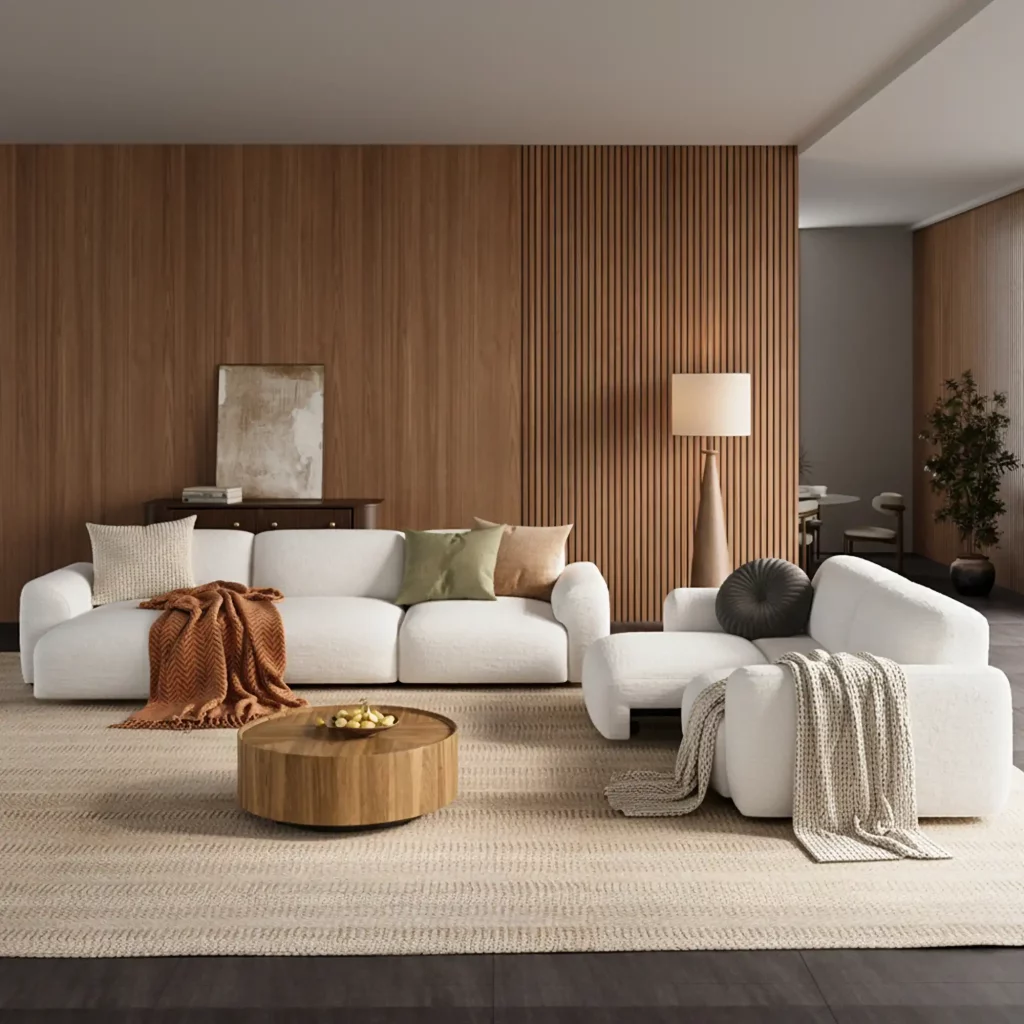
Create a Living Room That Works for Everyone
Explore stylish, functional furniture designed for everyday comfort, family gatherings, and the moments you share at home.
Frequently Asked Questions
Can You Have a Light-Colored Sofa in a Home With Kids?
Yes. Light upholstery can work in family living rooms when the material and cleaning requirements fit your routine. Look for clearly documented stain or water resistance, and check whether the fabric permits spot cleaning. Request a fabric sample when available to evaluate texture and how visible everyday marks may be.
Are Removable Sofa Cushion Covers Always Machine-Washable?
No. Removable covers may still require dry cleaning or professional care. Machine washing an unsuitable cover can cause shrinking, discoloration, or difficulty refitting it over the cushion. Check the manufacturer’s care label before purchasing, especially if frequent washing is important to your household.
Can a Power Sofa Bed Work in a Home With Young Children?
Yes, provided adults control the motorized mechanism and follow the manufacturer’s instructions. Keep children, toys, and loose objects away from moving sections during adjustment. Secure the power cord, store the remote out of reach, and check the full extension area before operating the sofa.
What If You Rent and Cannot Drill Into the Walls?
Ask your landlord whether approved furniture anchors or TV mounting hardware can be installed. If permission is unavailable, avoid tall or top-heavy furniture that requires anchoring, particularly where young children may climb. A low profile alone does not guarantee stability, so follow product-specific safety instructions.
How Can a Living Room Work for Both Toddlers and Older Adults?
Combine clear walking routes with supportive seating that is comfortable to enter and exit. Older adults may prefer firmer cushions and sturdy armrests rather than very low, deep sofas. Keep frequently used items accessible, secure rugs against slipping, and avoid placing low furniture along essential walking paths.


[…] family life. A well-planned living room playroom combo can give children their own activity area without turning the entire room into a playroom. The key is working around your existing furniture, keeping walkways clear, and choosing a layout […]
[…] Parenthood changes how you view your space, but it doesn’t mean giving up on design. With a little planning, your TV stand can be a secure, stylish centerpiece of a family-friendly living room. […]
[…] Q6: How do I create a kid-friendly yet stylish furniture layout? […]