 By Kelvin
If you are asking are sofa beds bad for your back, the useful answer is not a simple yes or no. A sofa bed can feel uncomfortable when its sleep surface sags, shifts, presses a hard frame point into the body, or leaves too little room to rest naturally. This guide helps you identify which part of the setup is causing the problem, decide whether a topper or support fix is enough, and know what to check before replacing the sleeper. It also separates surface comfort from structural support, since they need different solutions.
Table of Contents
Are Sofa Beds Bad for Your Back?
So, are sofa beds bad for your back in general? Not inherently. The bigger issue is how a specific sleeper supports the body once it is opened. A thin mattress over a folding frame can create pressure over crossbars or hinges. An older mattress can develop a center dip. An integrated sleeper can avoid those particular parts but still feel uneven if its sections do not stay aligned.
Firmness alone is not a reliable shortcut. A 2026 orthopedic literature review covering 47 mattress studies found that medium-firm mattresses were more consistently favored than very firm or very soft surfaces, while also noting substantial differences across study designs. That research is about mattresses, not sofa beds, so it should not be used to claim that a certain sleeper prevents back pain. It does show why “harder is always better” is too simple.
How often the sleeper is used also changes the standard. An occasional guest bed may only need to feel supportive for a night or two, while a sofa bed used several times a week needs a much more repeatable sleep surface.
What Can Make a Sofa Bed Uncomfortable for Your Back?
Instead of blaming the whole category, separate the problem into three furniture-level checks: whether the surface stays even, whether a hard structural point sits under the body, and whether there is enough supported room to sleep without curling or twisting. Those checks lead to different fixes.
Uneven or Sagging Support
A surface can feel soft and still provide poor support. Look for a permanent dip in the center, compressed foam near the seat transition, or one section that sinks lower than the rest when weight is applied. If the same low spot is visible even when no one is lying down, the issue is more likely wear or structure than simple firmness.
A common mistake is adding softer layers to a surface that has already collapsed. That can reduce the feel of a ridge, but it does not restore the level underneath.
Bars, Hinges, Seams, and Hard Pressure Points
Traditional pull-out sleepers often place a thin mattress over a folding deck, rails, hinges, or crossbars. If soreness appears directly over the same point where a bar or hinge sits, inspect that area before changing pillows or bedding.
When the frame is stable and the mattress is still sound, using a sleeper sofa support board for crossbar pressure can bridge a mild unsupported span. It cannot straighten a bent rail or reverse foam that has permanently broken down.
Too Little Usable Sleeping Space
Overall sofa width is not the same as usable sleep space. Measure the flat, supported area from head to foot and side to side. Tall sleepers may end up bending their knees; two adults may crowd each other toward edges or seams; a narrow surface can make someone stay in one position all night.
A guest may technically fit on the sofa bed by its size label but still spend the night sleeping diagonally to avoid a hinge line. That is a fit problem, not a mattress-softness problem.
How Can You Tell If the Sofa Bed Is the Problem?
Start with repeatable evidence, not one rough night. Compare when the discomfort appears, inspect the open surface, and separate the mattress from the support structure when the manufacturer allows it. The goal is to identify which layer changes the experience before you buy an accessory or replace the whole sleeper.
Check 1: Notice When the Discomfort Appears
Ask whether the problem happens only after this sofa bed or also on other sleep surfaces. Then note where it appears. If a sore spot lines up with a seam, ridge, or low area, that gives you a useful place to inspect. If the discomfort is unrelated to this sleeper, furniture changes may not be the answer.
Check 2: Inspect the Surface While It Is Open
Open the sleeper fully and look across it from the side. Press several areas with your hand. You are checking for dips, raised transitions, unstable sections, or one spot that compresses far more than the rest.
Check 3: Separate Mattress and Support Problems
On a traditional pull-out, remove the mattress only if the manufacturer permits it and place it on a clean, flat surface. If a pronounced dip remains, the mattress itself is likely worn. If it looks level away from the frame but sinks over the same span after reinstalling, the underlying support deserves attention.
Check 4: Measure the Space You Actually Use
Measure the supported length and width, not only the advertised “Full,” “Queen,” or “King” label. Check where your shoulders and hips land, whether your feet stay on the supported area, and whether a partner still has enough room to turn.
| What You Notice | Check First | Likely Issue | Practical Next Step |
| Hard ridge under the body | Bar, hinge, or seam location | Structural pressure point | Inspect support layer |
| Center dip | Mattress on and off frame | Sagging or weak support | Identify failing layer |
| Level but too firm | Surface cushioning | Comfort issue | Consider a topper |
| Need to curl or sleep diagonally | Usable supported area | Size or fit issue | Measure before replacing |
| Rocking or uneven extension | Frame or powered mechanism | Stability issue | Stop use and inspect |
Should You Add Support, Use a Topper, or Replace It?
Use the fix that matches the layer causing the problem. If the surface is level and stable but simply feels too firm, advice on how to make a sofa bed more comfortable without replacing it is more relevant than structural repair. A topper can change surface feel; it cannot repair a broken frame or restore permanently collapsed foam.
Use this order:
- Too firm but level: Add a modest comfort layer.
- Crossbar pressure with a stable frame: Inspect support under the mattress.
- Mattress stays sagged off the frame: Consider mattress replacement.
- Frame bends, rocks, or will not stay level: Repair or replace the structure.
- Sleep surface is fundamentally too short or narrow: Accessories cannot fix the dimensions.
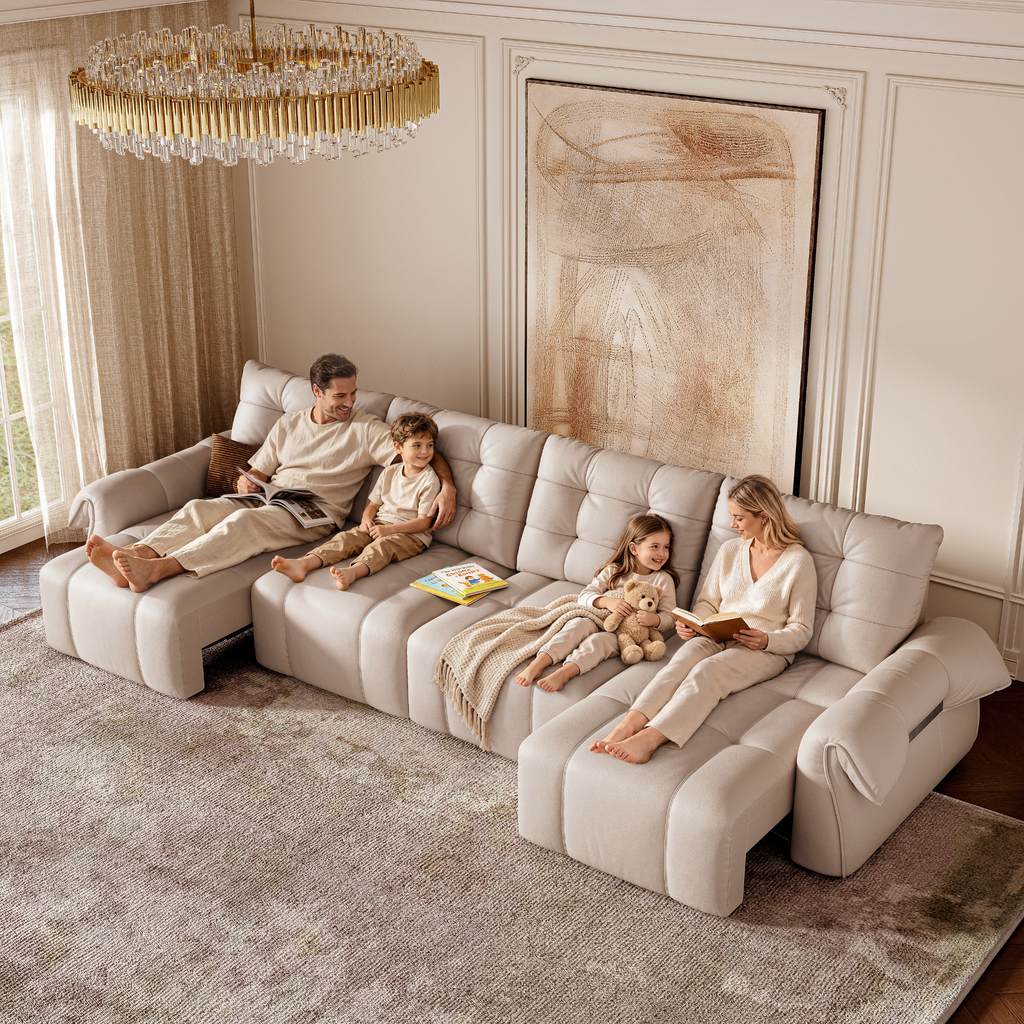
If your current sleeper has a permanent dip or a frame problem that accessories cannot solve, replacement becomes the more practical question. The Povison Cygnus Power Sofa Bed uses a powered sit-lounge-sleep mechanism rather than a separate fold-out mattress, with high-density resilient foam, a reinforced frame, and top-grain leather. It suits households trying to move away from a thin mattress over a folding metal frame.
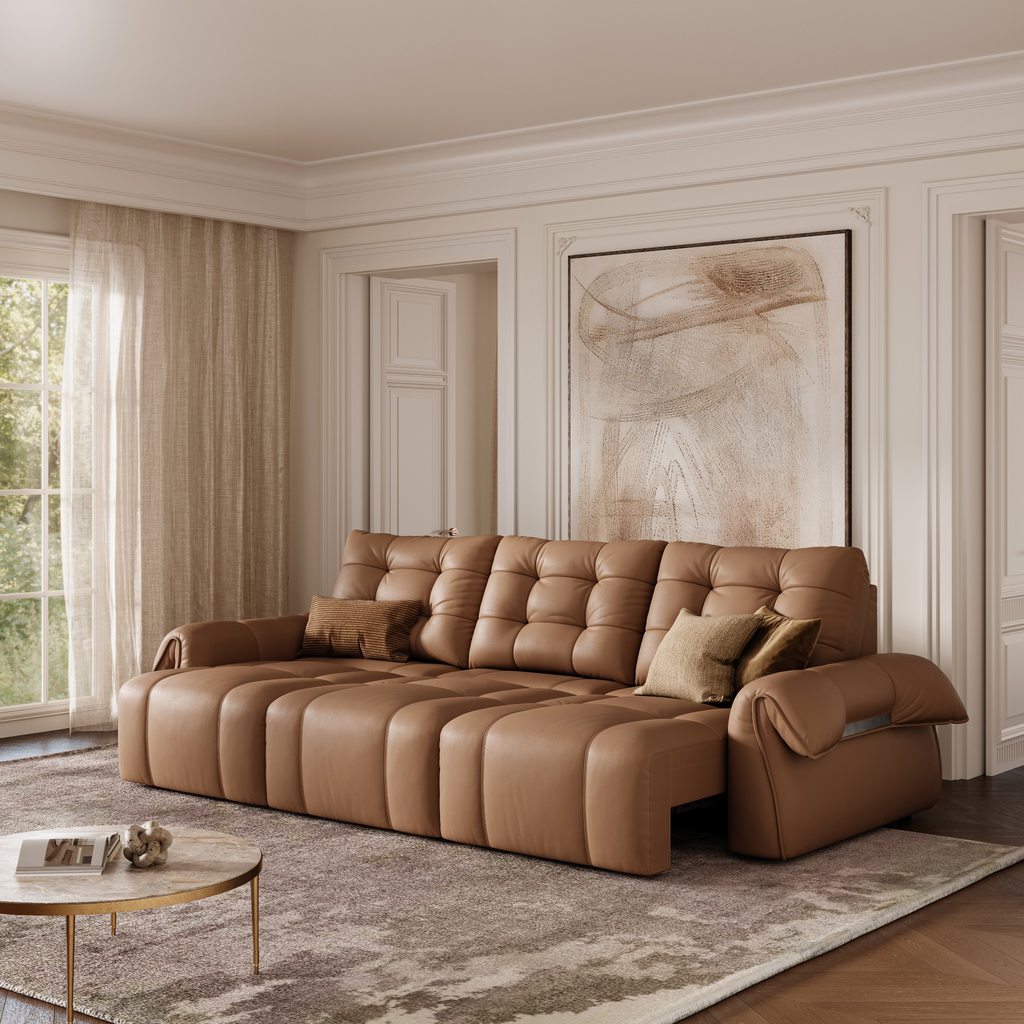
Cygnus Power Sofa Bed
Power-adjustable leather sleeper for homes replacing a sagging traditional pull-out.
👍 Best for: Replacing a worn pull-out
✨ High-density resilient foam
✨ Reinforced support frame
✨ One-touch sleep adjustment
What Should You Check Before Buying Another Sofa Bed?
When replacement makes more sense than another fix, judge the open sleeper rather than the closed sofa. Start with how the sleeping surface is created. A traditional pull-out asks you to inspect mattress thickness, deck support, bar location, and fold points. An integrated or power sleeper shifts the checks to cushion consistency, extension stability, transitions between sections, and usable depth.
Also confirm the manufacturer’s stated weight capacity and the intended frequency of use. If the sofa will become a bed regularly, the decision standard should be stricter; the question of whether you can sleep on a sofa bed every night depends as much on repeatable setup and surface consistency as on first-night comfort.
For a room where two people may actually share the sleeper, usable depth matters more than the sofa’s marketing size alone. The Povison Mila Power Sofa Bed extends from 32 to 59 inches and adjusts from 105° to 180°, creating a near-king sleep platform instead of relying on a folded insert. That extra room is most relevant when cramped sleeping space is part of the problem.

Mila Power Sofa Bed
Deep power sleeper that gives two adults more usable resting space.
👍 Best for: Shared overnight sleeping space
✨ 32–59-inch adjustable depth
✨ 105°–180° power adjustment
✨ Near-king sleep platform
Conclusion
When you ask are sofa beds bad for your back, judge the specific sleep surface rather than the category. A level, stable sleeper with enough usable room is a different experience from a thin mattress over a hard bar or a worn center dip. Match the fix to the cause: adjust surface comfort, address support problems, or replace a design that no longer fits the user or routine. That approach gives you a more useful answer than assuming every sofa bed is either good or bad.

Find the Right Sofa Bed
Explore designs for different room sizes, layouts, and everyday needs.
FAQs
Is one night on a sofa bed bad for your back?
One uncomfortable night does not mean a sofa bed is inherently harmful. Look for a repeatable pattern instead. If the same sleeper repeatedly leaves you sore, inspect its sagging, hard points, and usable space. Persistent or worsening pain deserves medical attention rather than repeated furniture adjustments.
How can you assess a bar-free sofa bed online?
Look beyond the phrase “bar-free.” Check product photos or specifications for how the sleeping surface extends, where sections meet, and whether the manufacturer lists weight capacity. A bar-free design removes one pressure point, but unclear transitions or unsupported sections can still affect how level the sleeper feels.
Should couples rely on a Queen or King size label?
Not by itself. Check the actual flat sleeping width and whether both sides are fully supported when the sleeper opens. Cushions, armrests, seams, or tapered edges can reduce usable space. Couples should also compare their combined weight with the manufacturer’s stated capacity.
Do armrests count toward sofa bed sleeping length?
Usually, no. Measure only the flat, supported surface your body can actually use. Raised armrests, fixed back cushions, gaps, and sloped edges should not count toward sleeping length. This is especially important for taller sleepers comparing two sofa beds with similar overall dimensions.
Is a sofa bed suitable for someone with chronic back pain?
It depends on the person and the sleeper. Prioritize a level, stable surface with enough room to change position, but do not treat furniture specifications as medical treatment. Someone with ongoing or diagnosed back pain should use their clinician’s advice when deciding what sleep surface is appropriate.


[…] both modes? A well-designed model can be, but a sofa that feels relaxing for two hours of sitting may still create pressure points overnight. Likewise, a flat sleep surface does not guarantee the seat depth and back support will feel […]
[…] sofa beds feel uncomfortable for the same few reasons. The mattress is often thin, the frame underneath creates pressure points, and the surface may dip, gap, or shift when someone turns over. A pull out bed couch can also feel […]