 By Kelvin
Introduction
A recliner that shifts every time you sit down, stand up, or extend the footrest usually has a friction problem between the chair base and the floor. Learning how to keep recliner from sliding starts with checking both the floor surface and the parts of the chair that actually touch it. Rubber grippers may work well under individual feet on hardwood, while carpet or a wide circular base may need a larger gripping surface. The goal is to stop unwanted base movement without damaging the floor or interfering with the reclining mechanism.
Table of Contents
Why Does Your Recliner Keep Sliding?
Before adding pads or mats, identify when the movement happens and whether the entire chair is actually changing position. Reclining redistributes weight, but floor type, base design, and worn contact points determine whether that normal motion turns into unwanted sliding.
Reclining Shifts the Chair’s Weight
Sitting down, pushing yourself up, and extending the footrest can all create horizontal force. A chair that feels stable when empty may gradually creep backward after repeated use because the floor cannot provide enough resistance against that movement.
The Base Does Not Create Enough Friction
Smooth plastic, metal, or finished wooden contact points can move easily across hardwood, laminate, or tile. On carpet, a narrow or smooth base may compress the pile and slowly work across it instead of staying fixed.
The Floor Changes How the Chair Moves
Hard floors generally make friction the main issue. Carpet adds another variable: pile height and compression. A small pad that grips a flat hardwood floor may sink into a plush carpet without giving a broad recliner base enough stability.
Worn or Uneven Feet Make Movement Worse
Before buying grippers, inspect the underside. A missing glide, uneven foot, loose rail, or worn base can make one side move more than the other.
A simple check helps: place painter’s tape beside the base, operate the recliner several times, and see whether the entire base crosses the mark. Internal seat or back movement can be normal; the base itself changing location is the sliding problem.

What Should You Put Under a Recliner to Stop Sliding?
If you are deciding how to keep recliner from sliding, match the solution to the chair’s floor-contact pattern first. Four small pads are useful only when four defined feet actually carry the load. A rail, ring, or broad base needs more continuous contact.
| Recliner Setup | Better Starting Fix | Why It Helps | Main Watch-Out |
| Individual feet on hard floor | Rubber or silicone grippers | Adds friction at each contact point | Match pad size to each foot |
| Defined feet or casters | Furniture cups | Holds each contact point inside a grippy recess | Cups must fit securely |
| Long rails or frame | Rail-style grip strips | Covers more of the load-bearing surface | Tiny square pads may shift |
| Circular or broad base | Full-base non-slip mat | Supports continuous contact | Keep clear of moving hardware |
| Recliner on an area rug | Rug plus suitable rug pad | Helps keep chair and rug from moving together | Check floor-finish compatibility |
Clean both the floor and the chair’s contact points before installation. Dust, pet hair, or grit can reduce grip and may scratch a finished floor when trapped underneath a pad.
Start with the least permanent solution that gives full contact. Adhesive should not be the default when a removable gripper or mat can do the job.
How Do You Stop Sliding on Carpet vs. Wood Floors?
Floor type changes both the source of the movement and the safest fix. Carpet can compress under a heavy chair, while finished wood provides a smooth surface where the wrong pad may either slide or leave marks. Treat them as separate use cases rather than using the same accessory everywhere.
How to Keep Recliner From Sliding on Carpet
If you are working out how to keep recliner from sliding on carpet, first look at pile height and base shape. Individual feet on low-pile carpet may work with carpet-compatible grippers, while rails, ring bases, or plush carpeting usually benefit from a wider anti-slip surface.
A common real-life pattern is a recliner that looks perfectly positioned in the morning but has moved several inches backward after repeated sitting, reclining, and standing by the end of the day. In that case, test the fix through all three movements rather than judging stability while the chair is empty.
For thicker carpet, avoid very small pads that disappear into the pile. A larger mat can distribute pressure across more of the base and reduce gradual creeping.
How to Keep a Recliner From Sliding on Wood or Hardwood Floors
When deciding how to keep a recliner from sliding on wood floor surfaces, use non-marking rubber or silicone designed for the exact flooring finish. Hardwood needs grip, but floor protection matters just as much.
Sweep under the chair before installing pads, and check them periodically for trapped grit. On finished wood, the same habits that protect hardwood floors from furniture also reduce the chance that a gripper becomes a source of scratches.
The same logic applies when working out how to stop a recliner from sliding on laminate floor surfaces: check the flooring manufacturer’s care guidance before using rubber compounds or adhesives. A rug can help, but a loose rug without a suitable rug pad may simply move with the recliner.
Does the Recliner Base Change the Best Fix?
Yes. Base design is one of the most useful details to check before buying an anti-slip accessory. A standard four-foot chair, a recliner resting on long metal rails, and a swivel model with a wide circular base present very different contact surfaces.
Individual Feet
Use fitted grippers or cups large enough to support the whole foot. A pad that contacts only an edge can fold, rotate, or work loose.
Rails or Long Frames
Use longer grip strips that support the rail rather than placing small squares at random points. The load should stay evenly supported.
Circular or Swivel Bases
A ring or broad swivel base often works better with a continuous mat. Do not block the swivel mechanism simply to gain more friction.
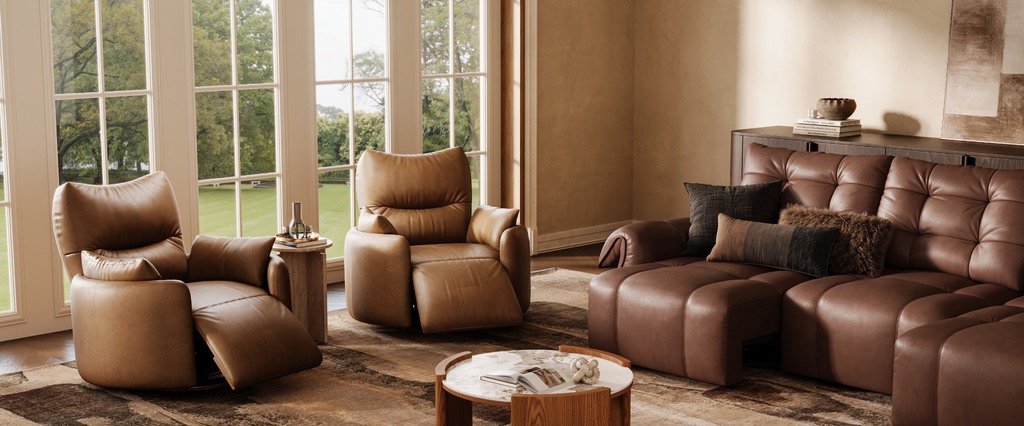
In an open-plan room where seating regularly turns between the TV and conversation area, dragging the whole chair is unnecessary when rotation is built in. The Swayford Plush Power Recliner combines a 270° swivel with gentle rocking and 90°–130° power recline, so direction and lounging position can change through the mechanism rather than repeated manual scooting.
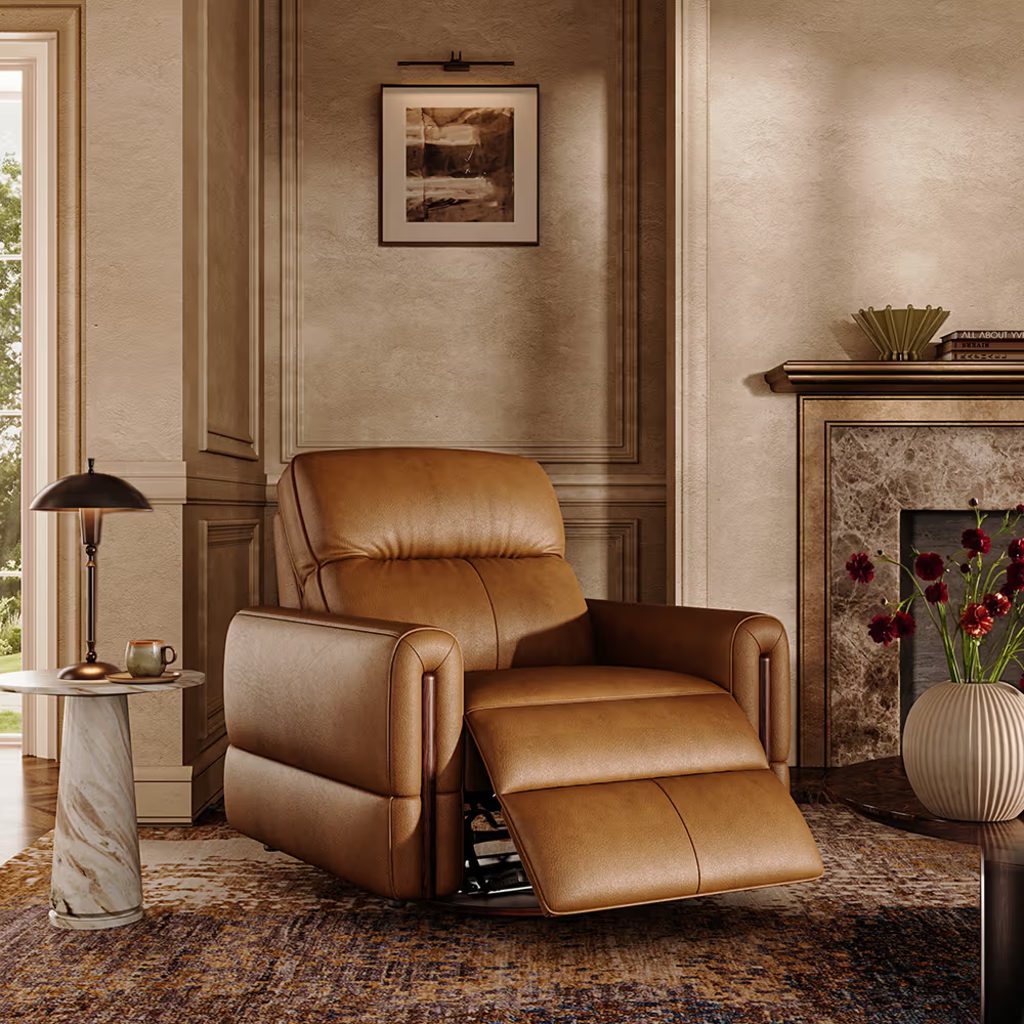
Swayford Plush Power Recliner
Built-in swivel motion reduces the need to drag seating between zones.
👍 Best for: Multi-direction living room seating
✨ 270° swivel with rocking
✨ 90°–130° power recline
✨ No assembly required
Power and Wall-Hugger Mechanisms
Do not place mats where they can catch moving linkages, footrests, or electrical cords. Good recliner placement in living room planning also accounts for the chair’s full movement path before the base is stabilized.
A wall-hugger seat moving forward during recline is not automatically sliding. Watch the floor-contact base itself.
Which Anti-Slip Fixes Should You Avoid?
More friction is not always better. Avoid fixes that create a new floor or mechanism problem while solving the original movement.
- Permanent adhesives: Residue may be difficult to remove from finished flooring.
- Double-sided tape: It can shift under repeated reclining forces and may affect the floor finish.
- Screws or floor anchors: These are excessive for normal residential recliner movement and permanently alter the floor.
- A loose rug alone: The recliner may stop moving relative to the rug while the entire rug slides.
- Tiny pads under a broad base: Partial support can make the setup less stable rather than more stable.
Also remember that a product labeled “floor protector” is not automatically designed to prevent movement. Protection and high-friction grip are different jobs.
When Is Sliding a Recliner Problem, Not a Floor Problem?
Stop adding grippers if the chair rocks while upright, one side does not sit flat, a rail looks bent, a foot is missing, or the base feels loose. Sudden movement that did not occur before can also point to wear rather than a change in floor friction.
Check the hardware and mechanism first. A non-slip mat should stabilize a sound chair; it should not compensate for a damaged structure.
If a worn base or mechanism makes replacement more sensible than another pad, the Ergopals Power Recliner suits wall-side rooms where repeated manual repositioning is the bigger frustration. A 0-inch wall-hugging design reclines close to the wall, while 90°–145° power adjustment and washable pet-friendly covers support practical everyday use.
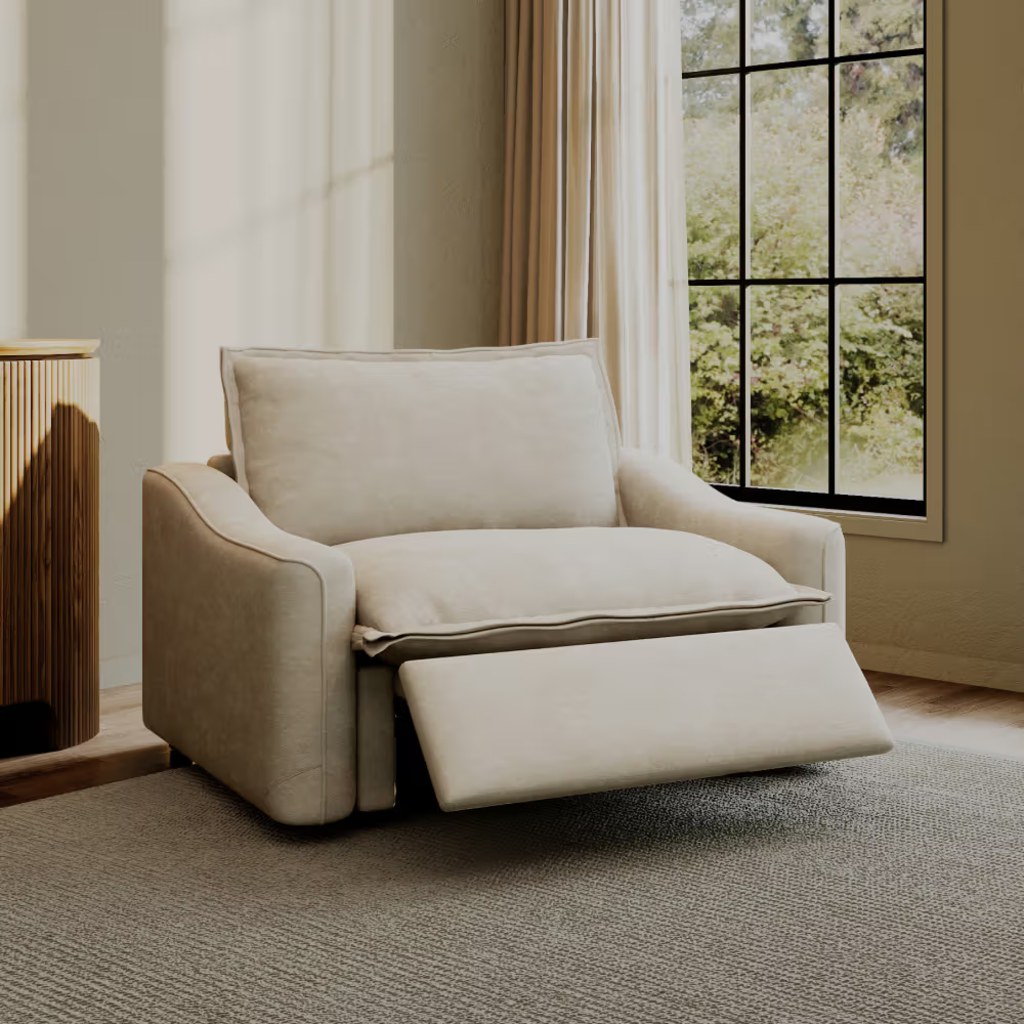
Ergopals Modern Oversized Power Reclining Sofa
Wall-hugging power motion keeps reclining practical in tighter wall-side layouts.
👍 Best for: Wall-side power reclining
✨ 0″ wall-hugging clearance
✨ 90°–145° power recline
✨ Washable pet-friendly covers
Conclusion
Knowing how to keep recliner from sliding comes down to four checks: confirm that the entire base is moving, identify the floor surface, inspect the chair’s contact points, and choose a floor-safe grip that supports the whole load-bearing area. Carpet, hardwood, rails, individual feet, and swivel bases should not automatically receive the same fix. After installation, test the chair while sitting down, standing up, and fully reclining. If movement continues alongside rocking or uneven contact, inspect the recliner itself instead of adding more pads.
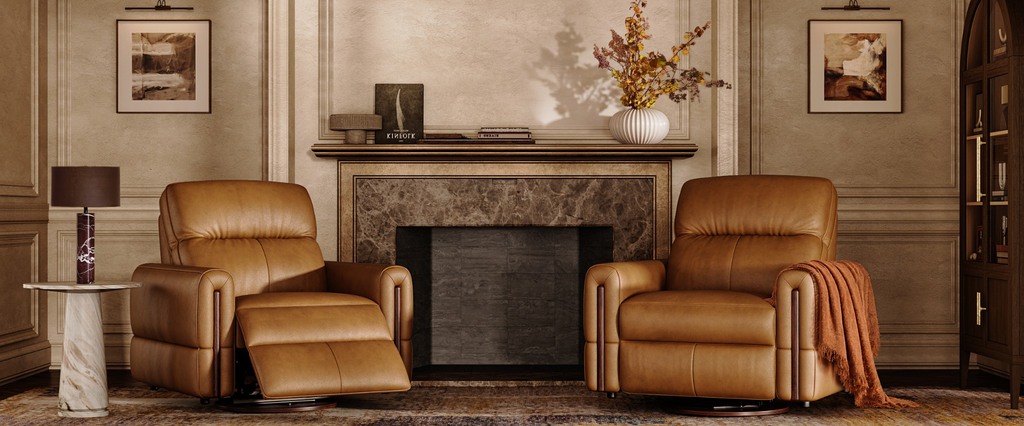
Find the Right Recliner
Explore designs for different room sizes, layouts, and everyday needs.
Q&A
Can felt pads work with anti-slip recliner grippers?
Yes, but they should serve different purposes. Felt can protect exposed floor contact points, while a separate high-friction surface provides stability. Do not stack layers if doing so makes the chair uneven or raises one side. For a recliner, keeping all load-bearing points at the same height matters more than adding extra materials.
Should you choose adhesive or non-adhesive recliner grippers?
Start with non-adhesive grippers when the chair’s weight can hold them securely in place. Adhesive versions may help on narrow feet that repeatedly shift off loose pads, but check floor and furniture-finish compatibility first. Avoid permanent adhesive when you rent, move furniture often, or expect to change the recliner position.
How big should a recliner anti-slip mat be?
Measure the outermost points where the recliner actually bears weight on the floor. The mat should fully support those feet, rails, or ring-base contact areas with a small margin around them. It does not need to match the chair’s upholstered width, and it should never extend into the path of moving hardware.
Why does my recliner slide again after gripper pads worked at first?
Check for compressed pads, worn grip surfaces, shifted placement, or dust building up underneath. Carpet-compatible pads may also lose effectiveness as the pile compresses. If movement returns after weeks or months rather than immediately, inspect the grippers for wear before assuming the recliner base or floor has developed a new problem.
How often should recliner grippers or anti-slip mats be checked?
Inspect them whenever you clean under the chair and after moving the recliner. Replace a gripper if it becomes hard, cracked, permanently flattened, curled at the edges, or no longer stays aligned beneath the base. Homes with frequent reclining use, pets, or high-pile carpet may need more frequent checks.


[…] the rug edge directly under the footrest movement area. The rug can sit under the front legs if the sofa base holds it securely, but the extending section should not drag across a raised edge. For a power sofa bed, test the […]