 By Kelvin
Introduction
If your rug looks slightly off, the problem is usually not the color. It is the way the rug relates to the furniture around it. This guide explains how to lay rugs so they feel connected to sofas, beds, dining tables, TV walls, and walkways instead of floating in the middle of the room. Rather than repeating a standard rug size chart, we will focus on placement decisions you make after the rug is in the room: where to align it, what furniture should touch it, and how to fix it when it will not lay flat.
Table of Contents
Start With the Furniture Anchor, Not the Room
The easiest way to decide how to lay rugs is to stop starting with the empty room. Start with the furniture group that the rug needs to support. A living room rug should connect the seating area. A bedroom rug should support the bed. A dining rug should work with the table and chairs together.
| Room or Zone | Main Furniture Anchor | How the Rug Should Work | What to Avoid |
| Living Room | Sofa, sectional, coffee table | Connect the seating pieces so the rug feels like part of the conversation area | Centering the rug in the room while the sofa sits off to one side |
| Bedroom | Bed and bedside walking area | Extend beyond the sides or foot of the bed so your feet land on a soft surface | Placing the rug only at the foot where it feels decorative but not useful |
| Dining Room | Dining table and chairs | Stay large enough for chairs to remain stable when pulled back | Letting chair legs catch on the rug edge |
| Entryway | Door swing and walking path | Sit flat in the walking path without blocking the door | Choosing a rug too thick for the door clearance |
| Home Office | Desk and desk chair | Support the chair path so the chair does not roll off the edge | Placing the back edge exactly where the chair moves |
| Open-Plan Space | Functional zone | Define one area, such as seating or dining, without trying to cover the whole room | Using one rug to connect unrelated zones |
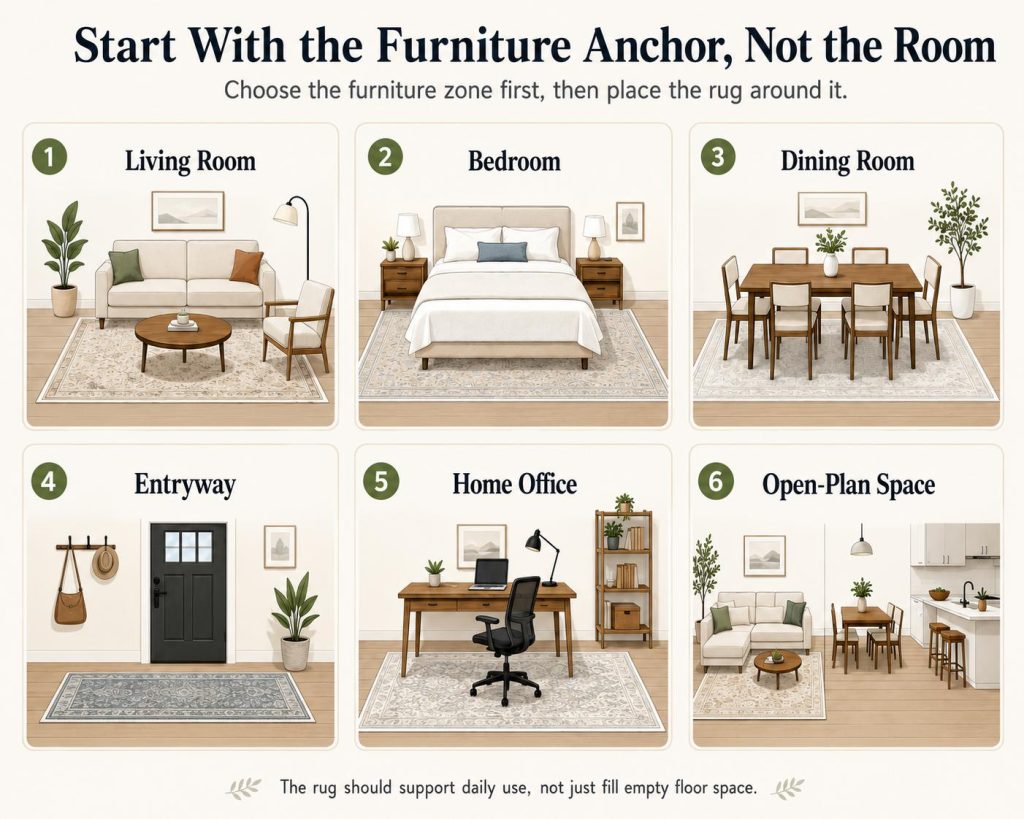
This approach keeps the rug tied to daily use instead of treating it as a loose decoration. It also helps prevent the most common mistake: choosing a rug that looks centered on the floor but disconnected from the furniture people actually use.
If you are still deciding whether the rug is large enough before placement, understanding the right area of rug can help you compare coverage by room, furniture zone, and daily movement before you start laying it out.
How Do You Lay Rugs Around Furniture?
Once you know the furniture anchor, place the rug in a clear order: align it with the main piece first, decide which furniture legs should touch it, then check moving parts and walkways. This sequence keeps the rug useful, not just visually balanced.
Step 1: Align the Rug With the Main Furniture Piece
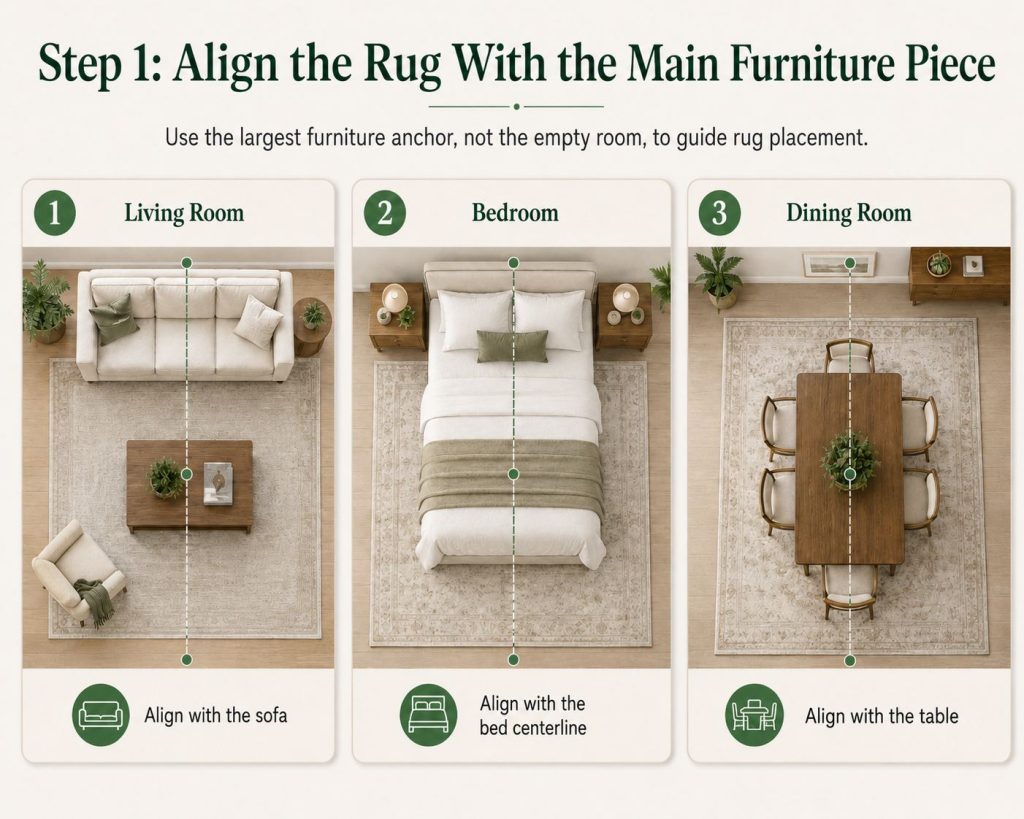
In a living room, align the rug with the sofa or sectional before the TV wall. In a bedroom, align it with the bed centerline. In a dining room, align it with the table, not the chandelier or the room’s empty floor space.
For most seating areas, the rug should run parallel to the longest sofa line. This makes the room feel calmer and more intentional. If the sofa sits against a wall, the rug can slide under the front legs. If the sofa floats in the room, the rug usually needs to sit farther back so the seating area feels complete from all sides.
A practical way to test this is to stand at the room entrance. If the rug looks balanced from the doorway and connected to the largest furniture piece, the placement is usually working.
Step 2: Decide Which Furniture Legs Should Touch the Rug
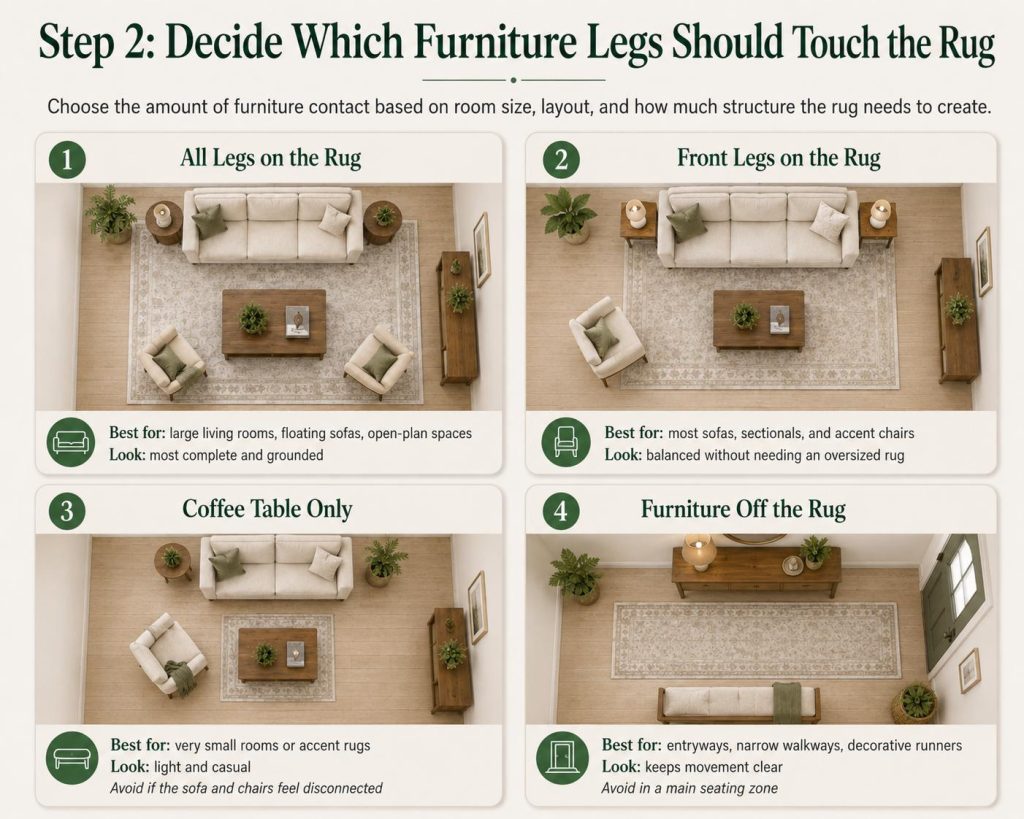
Not every layout needs all furniture legs on the rug. The right choice depends on room size, furniture scale, and how much of the seating zone the rug needs to define.
| Furniture Contact | Best For | How It Looks | When to Avoid |
| All legs on the rug | Large living rooms, floating sofas, open-plan spaces | Most complete and grounded | When the rug becomes too close to the walls |
| Front legs on the rug | Most sofas, sectionals, and accent chairs | Balanced without needing an oversized rug | When the rug barely touches the furniture |
| Coffee table only | Very small rooms or accent rugs | Light and casual | When the sofa and chairs feel disconnected |
| Furniture off the rug | Entryways, narrow walkways, decorative runners | Keeps movement clear | In a main seating zone that needs structure |
For living rooms, front legs on the rug is usually the safest option. It connects the seating area without forcing the rug to cover too much floor. If the room is small, this method also leaves more visible floor around the edges, which can make the space feel less crowded.
The same logic applies when planning a living room furniture layout: place the largest furniture first, keep walkways open, then use the rug to visually connect the pieces that belong together.
Step 3: Check Recliners, Sofa Beds, and Moving Chairs
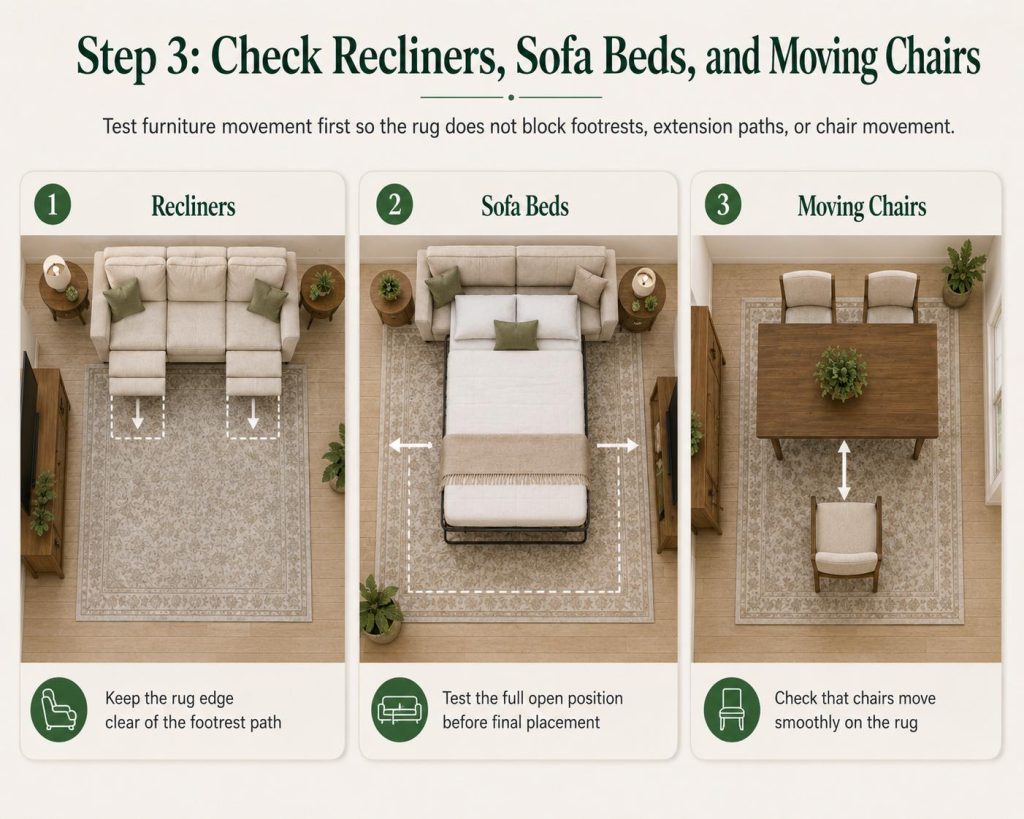
Moving furniture needs extra clearance. A rug may look correct when the furniture is closed, but it can become a problem when a recliner opens, a sofa bed extends, or a dining chair slides back.
For reclining sofas, avoid placing the rug edge directly under the footrest movement area. The rug can sit under the front legs if the sofa base holds it securely, but the extending section should not drag across a raised edge. For a power sofa bed, test the full open position before final placement. The rug should not bunch, curl, or block the sofa’s extension path.
Dining chairs and desk chairs need the same kind of testing. Pull the chair back as you normally would. If the chair legs fall off the rug edge, catch, or wobble, the placement will be annoying in daily use. Low-pile or flatweave rugs usually work better under chairs because they allow smoother movement.
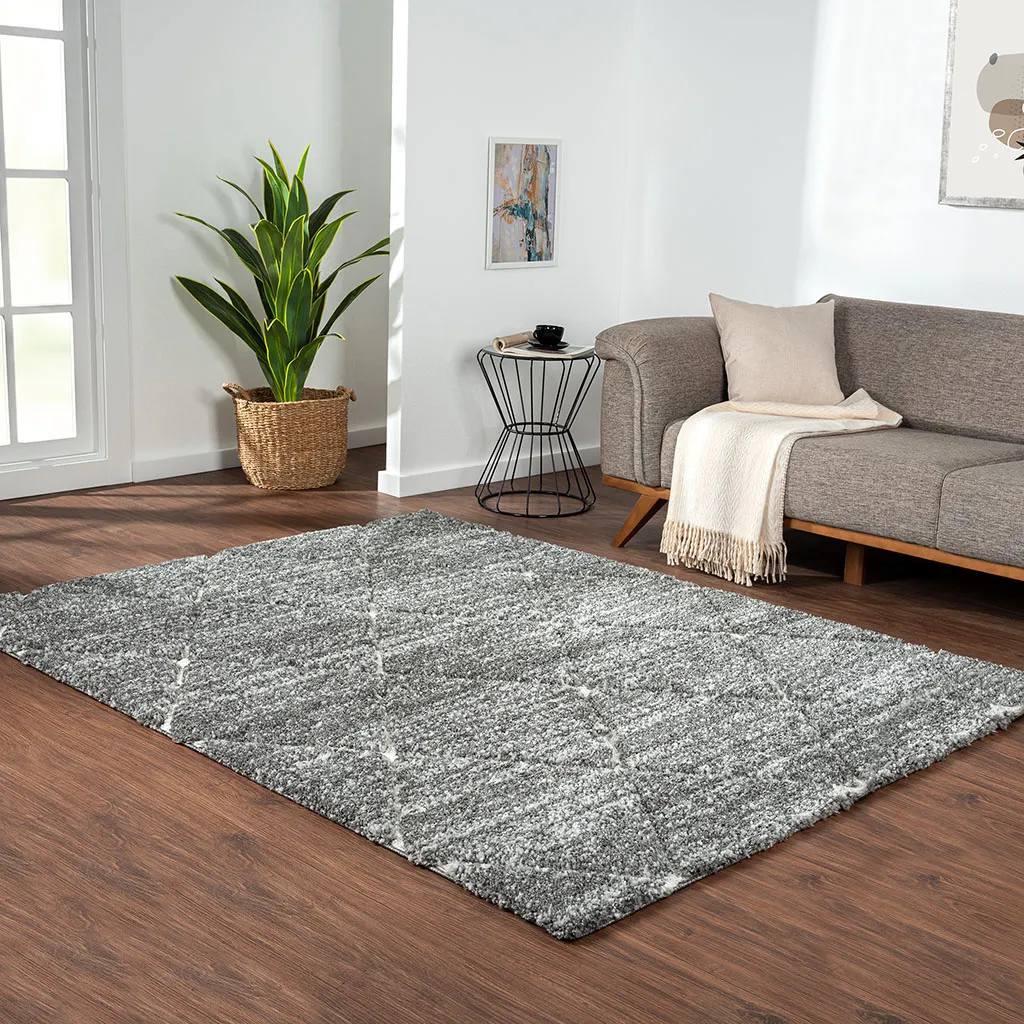
A gray and cream rug with a clear but subtle pattern can help define this flexible seating zone without adding visual noise. The 8′ x 10′ Modern Minimalist Diamond Shaped Rug uses polyester, a 120 x 96 x 0.75 inch profile, and a neutral diamond design, making it suitable for a sofa-and-coffee-table group, bedroom seating corner, or dining area where the rug needs to anchor furniture without overpowering it.
Step 4: Keep Rug Edges Away From Walkways
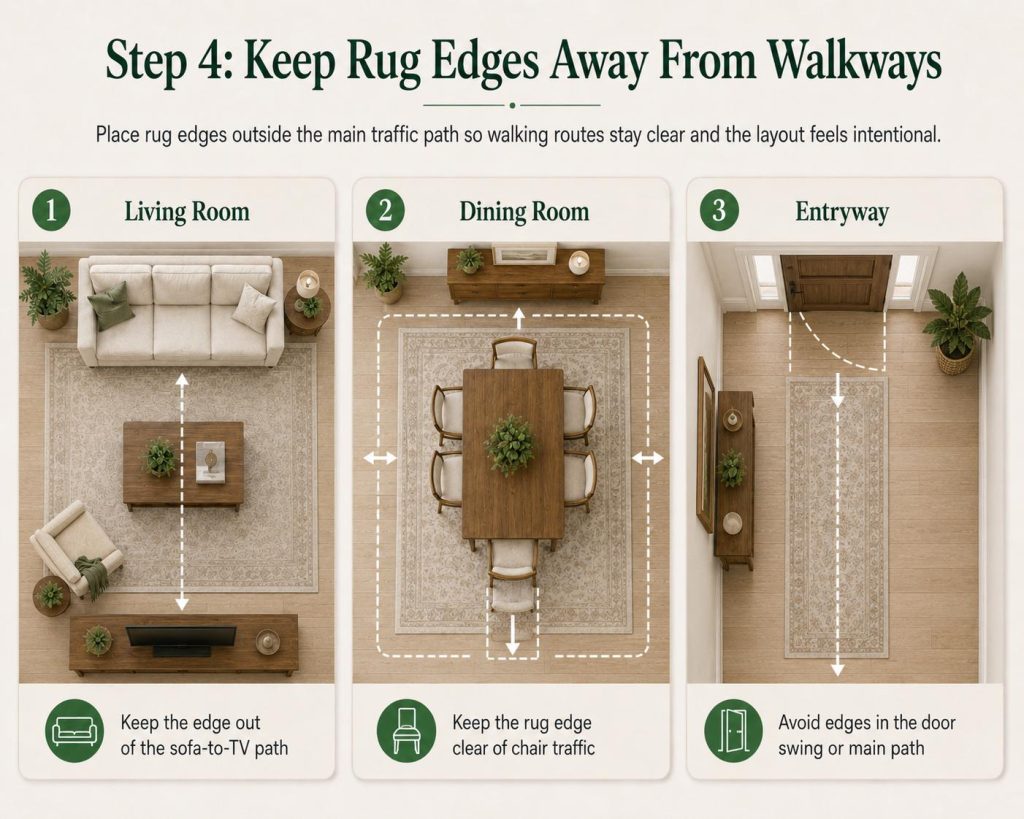
A rug edge should not sit exactly where people step most often. In a compact living room, this often happens between the sofa and TV stand. In a dining room, it happens where chairs are pulled back. In an entryway, it happens near the door swing.
If the rug cuts through a traffic path, shift it fully into the furniture zone or fully out of the walkway. A rug that is slightly smaller but placed clearly often works better than a larger rug that creates awkward edges.
This is especially important in small rooms. In many small living room layout ideas, clear walking space matters as much as furniture size. The rug should support movement, not interrupt it.
What If the Rug Looks Wrong After You Place It?
A rug can be the right style and still feel awkward. Before replacing it, check whether the problem is position, scale, direction, or daily function. Small adjustments often make the layout feel more intentional.
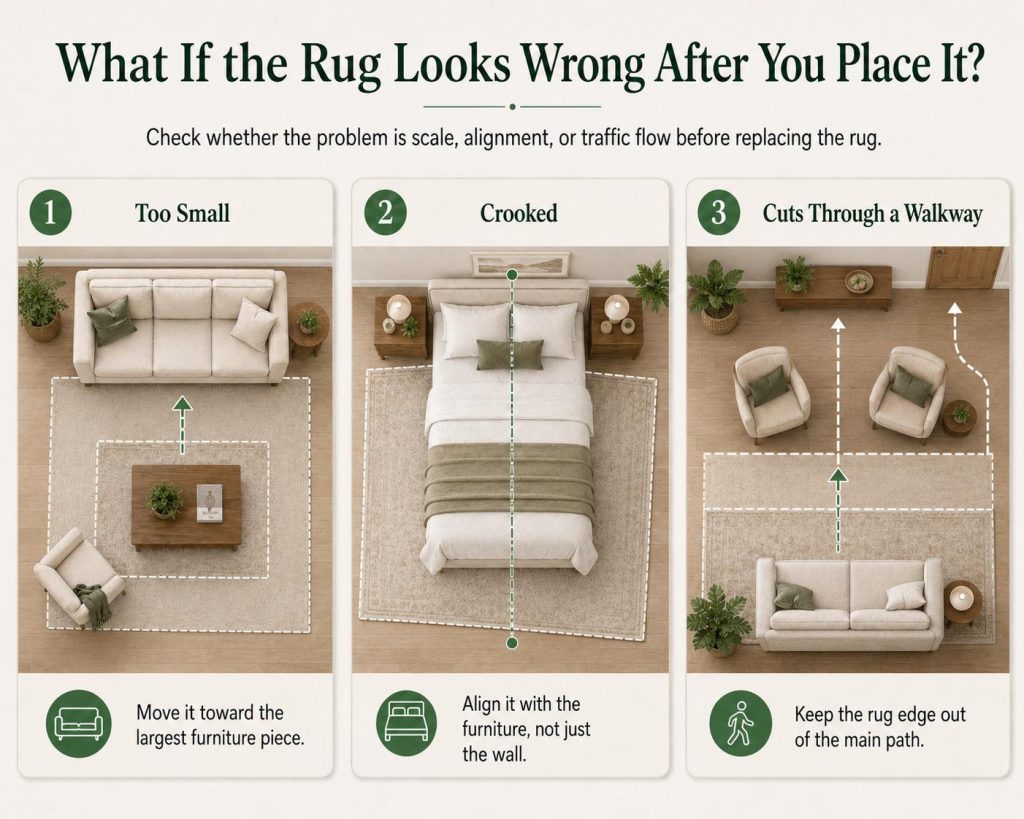
The Rug Looks Too Small
If the rug looks too small, move it toward the largest furniture piece instead of centering it in the empty floor space. In a living room, slide it under the sofa front legs. In a bedroom, pull it farther under the bed so it extends to both sides. In a reading corner, place one chair leg or small table leg on the rug to create a connection.
If the rug is far too small for the main furniture group, use it as an accent rug instead of forcing it to anchor the room.
The Rug Looks Crooked
A rug often looks crooked because it is aligned with the wall while the furniture is slightly angled, or the furniture is aligned with the TV while the rug is aligned with the room. Pick one visual reference. In most spaces, furniture matters more than the wall.
Use the sofa front edge, bed centerline, or dining table centerline as your guide. Then check from the room entrance, not just from above. The view from the doorway is often where crooked placement becomes obvious.
The Rug Cuts Through a Walkway
A rug edge should not sit exactly where people step most often. In a small apartment, a rug that slices through the main walkway can curl, shift, or make the room feel tighter.
If traffic passes between the sofa and TV stand, adjust the rug so the edge is either clearly inside the seating zone or clearly outside the walking path.
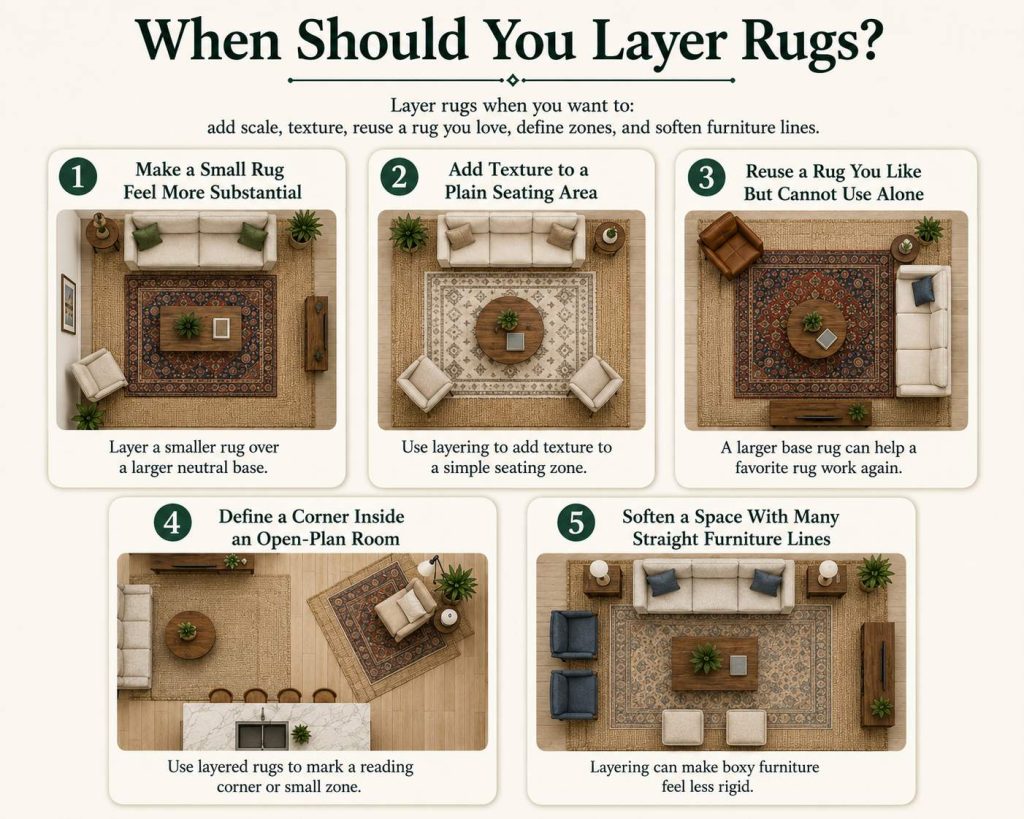
When Should You Layer Rugs?
Layering rugs is not the same as making a rug lay flat. Layering is a design and scale solution. It helps when a rug is beautiful but too small, too plain, or not strong enough to define a zone on its own.
The safest way to layer rugs is to use a larger, quiet base rug and place a smaller accent rug on top. The base rug creates structure, while the top rug adds texture, pattern, or color. This works especially well in neutral living rooms, bedrooms, and reading corners.
Layer rugs when you want to:
- make a smaller rug feel more substantial;
- add texture to a plain seating area;
- reuse a rug you like but cannot use alone;
- define a corner inside an open-plan room;
- soften a space with many straight furniture lines.
Avoid layering in places where furniture needs to move often. Dining rooms and home offices are usually less forgiving because chairs can catch on layered edges. Also avoid layering two thick rugs, since the height can create uneven footing or a tripping point.
For a main living room seating area, keep the bottom rug aligned with the sofa. If you angle the top rug, do it only in a smaller accent zone, such as under a lounge chair, near the foot of a bed, or beside a reading corner.
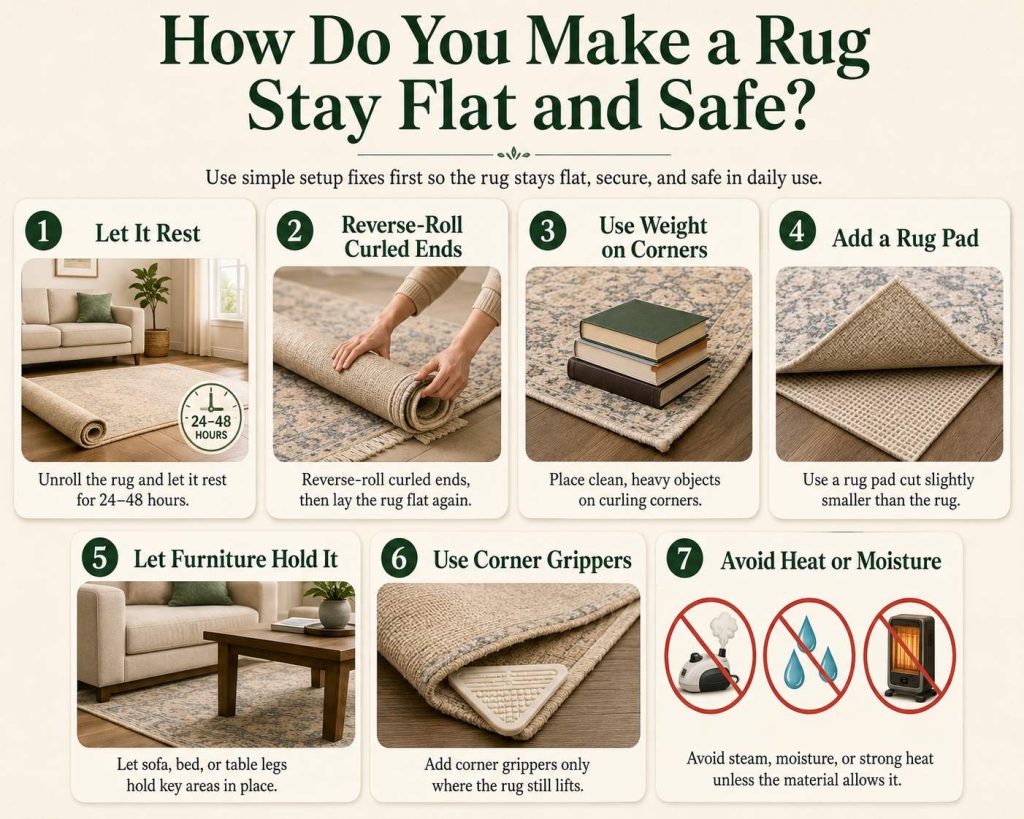
How Do You Make a Rug Stay Flat and Safe?
This section is about installation, not style. Even a well-placed rug can look unfinished if the corners curl, the surface ripples, or the rug slides whenever someone walks across it. Knowing how to get a rug to lay flat helps the placement hold up after the first day.
Start with gentle fixes before using adhesives or heat:
- Unroll the rug in the correct direction and let it rest for 24–48 hours.
- Reverse-roll curled ends for a short time, then lay the rug flat again.
- Place clean, heavy objects on curled corners.
- Use a rug pad cut slightly smaller than the rug.
- Let sofa, bed, or table legs hold key areas in place.
- Add corner grippers only where the rug still lifts.
- Avoid steam, moisture, or strong heat unless the material allows it.
If the rug sits under heavy furniture, position the rug first and then lower the furniture into place. Dragging a sofa, bed, or dining table across the rug can pull it off-center or create wrinkles. For dining rooms and home offices, check the rug again after a few days. Chair movement often reveals shifting that was not obvious during setup.
Conclusion
Once you know how to lay rugs, the goal is not to follow one fixed rule in every room. The goal is to make the rug support the furniture, movement, and daily habits around it. Align the rug with the main furniture anchor, keep edges away from active walkways, test moving pieces before final placement, and fix curling or sliding before judging the look. A rug that sits well will make the room feel more connected, even when the furniture and floor plan are simple.
FAQ
How do I know if a rug is the wrong size after delivery?
A rug is likely the wrong size if it cannot touch the main furniture anchor, leaves the seating area disconnected, or creates awkward gaps around the coffee table. Before returning it, test one adjustment: slide it closer to the sofa, bed, or dining table. If it still cannot support the furniture zone, a larger rug may be more practical.
What rug works best in a room with pets or kids?
Choose a low-pile, easy-clean rug that stays flat under daily movement. Busy patterns can hide small marks better than solid light colors, while a rug pad helps reduce sliding when kids run or pets move around furniture. Avoid thick, loose rugs in high-traffic family areas because they can curl, bunch, or trap more debris.
What rug pile works best under moving chairs?
Low-pile or flatweave rugs usually work best under moving chairs. Dining chairs and desk chairs need a smooth surface so the legs or wheels do not catch. A thick, high-pile rug may feel soft, but it can make chairs harder to move and create uneven pressure marks.
Why does my rug keep sliding?
A rug usually slides because it does not have enough grip, furniture weight, or proper backing. Use a rug pad made for your floor type and trim it slightly smaller than the rug. In high-traffic areas, place at least one stable furniture piece on the rug to reduce movement.
How should I choose a rug for furniture I may move later?
Choose a rug that supports the largest furniture layout you are likely to use, not only the current setup. If you may add a sectional, larger coffee table, or extra accent chair later, leave enough rug coverage for front legs to connect. Neutral patterns and medium tones also make future furniture changes easier.
How do I know if my rug is too close to the wall?
Your rug is too close to the wall if it starts to look like wall-to-wall carpet instead of an area rug. Leave a visible floor border when possible. In small rooms, the border can be narrow, but the rug should still feel intentionally placed around the furniture zone.


