 By Kelvin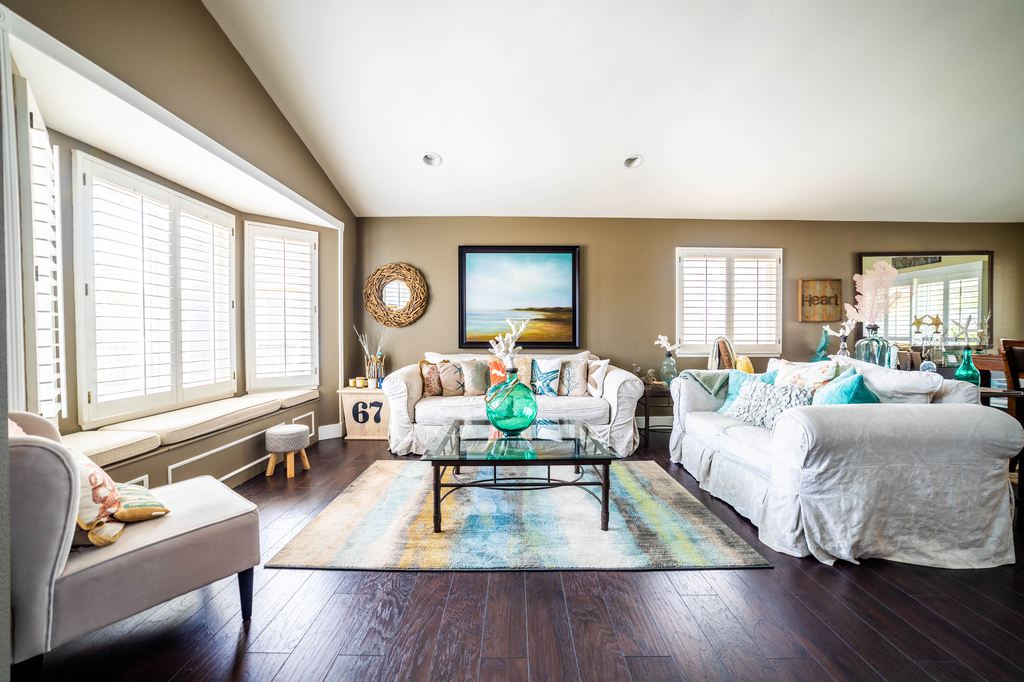
Introduction
Choosing a sofa color for dark wood floors is mainly about balancing contrast, undertone, and room light. Cream, beige, light gray, muted green, caramel, blue, and selected darker neutrals can all work, but they do not suit the same rooms. A small living room with espresso flooring usually benefits from a lighter sofa, while a bright room with pale walls can handle navy or brown. This guide helps you narrow the choice based on the floor you already have, rather than treating every dark wood floor the same.
Table of Contents
What Sofa Colors Work Best With Dark Wood Floors?
The best sofa color for dark wood floors depends on how much contrast the room needs. Lighter upholstery is the lowest-risk choice because it separates the sofa from a visually heavy floor. Mid-tone and dark colors can still work when daylight, wall color, and a rug provide enough relief. When comparing couch colors for dark wood floors, use the table as a starting point rather than a fixed rule.
| Sofa Color | Best When | Watch Out For |
| Cream / Ivory | The room is small, dim, or already has dark finishes | Stains and pet marks show more easily |
| Beige / Greige | The floor is warm or neutral brown | Too little contrast if sofa and floor are similar in value |
| Light Gray | The floor reads cool, gray-brown, or near-black | Blue-gray can clash with reddish wood |
| Muted Green | The floor is walnut, espresso, or warm brown | Very deep green can add visual weight |
| Caramel / Cognac | You want a warm, tonal palette | A near-match with the floor can look flat |
| Dusty Blue / Navy | The room has good daylight and lighter finishes | Navy can darken a low-light room |
| Dark Brown / Charcoal | The room is large, bright, and intentionally moody | Needs visible separation from the floor |
Cream and Ivory — Safest Overall
Cream and ivory create clear separation from espresso, walnut, and deep brown floors without the sharp contrast of bright white. They are especially useful when daylight is limited or the walls are not very light.
A cream sofa is especially useful in a north-facing apartment with espresso flooring, where it can brighten the room while keeping the contrast softer and warmer than pure white. A charcoal sofa in the same setting may feel noticeably heavier. In compact spaces, the same reasoning behind the best sofa colors for a small living room is useful: lighter upholstery keeps one large furniture surface from adding unnecessary visual weight.
Beige and Greige — Best Warm Neutral
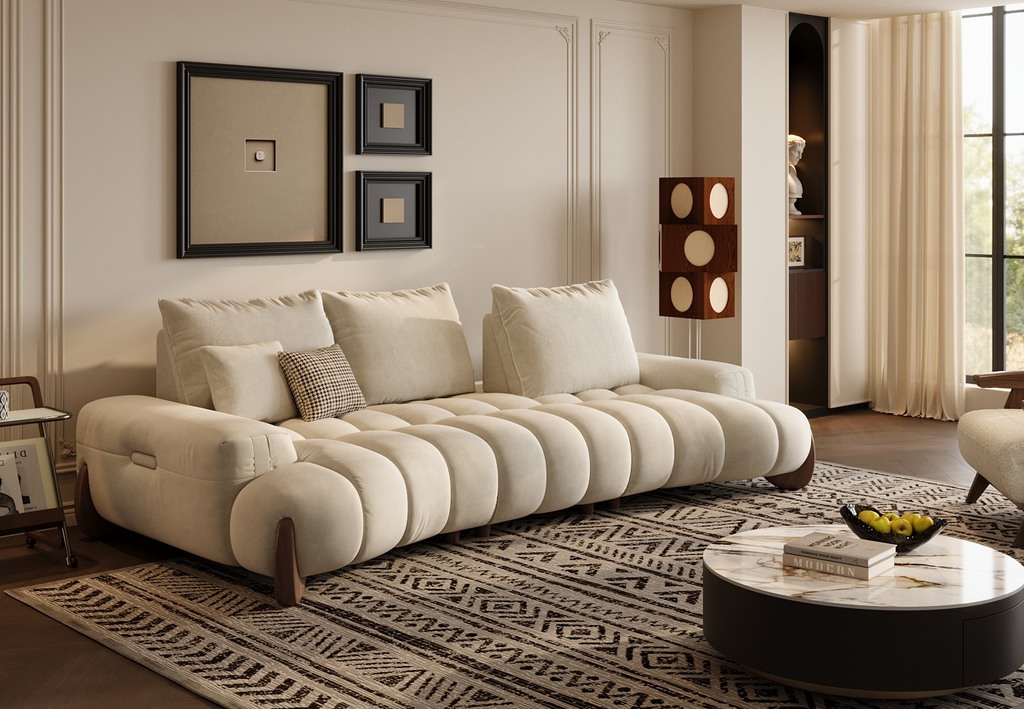
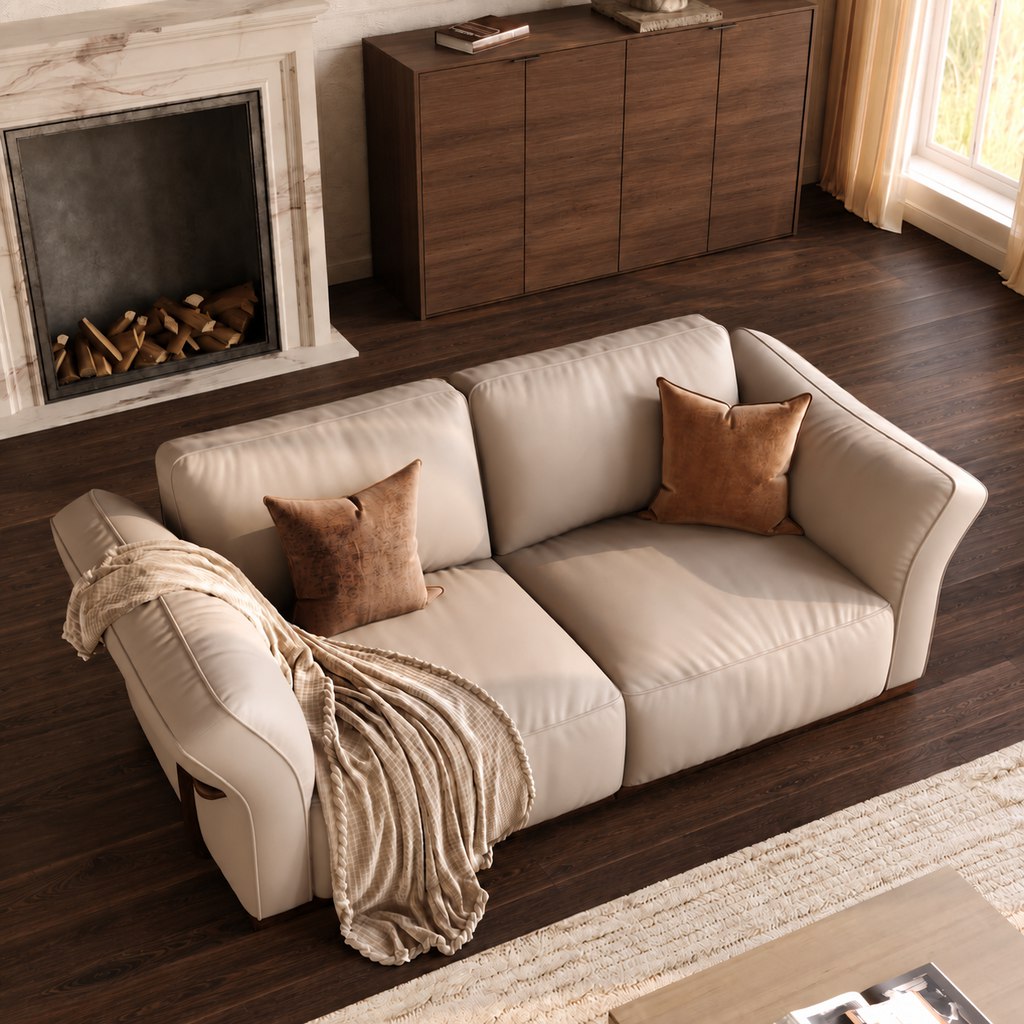
Beige is a practical middle ground when white feels too stark. Warm beige works well with espresso and reddish-brown floors, while greige is easier with neutral walnut.
A beige sofa pairs naturally with dark wood floors, adding warmth while keeping enough contrast to prevent the room from feeling too heavy.
The main risk is choosing a sofa almost the same brown value as the floor. A lighter rug, black legs, or clearly different upholstery texture can restore separation.
Light Gray — Best for Cooler Dark Floors
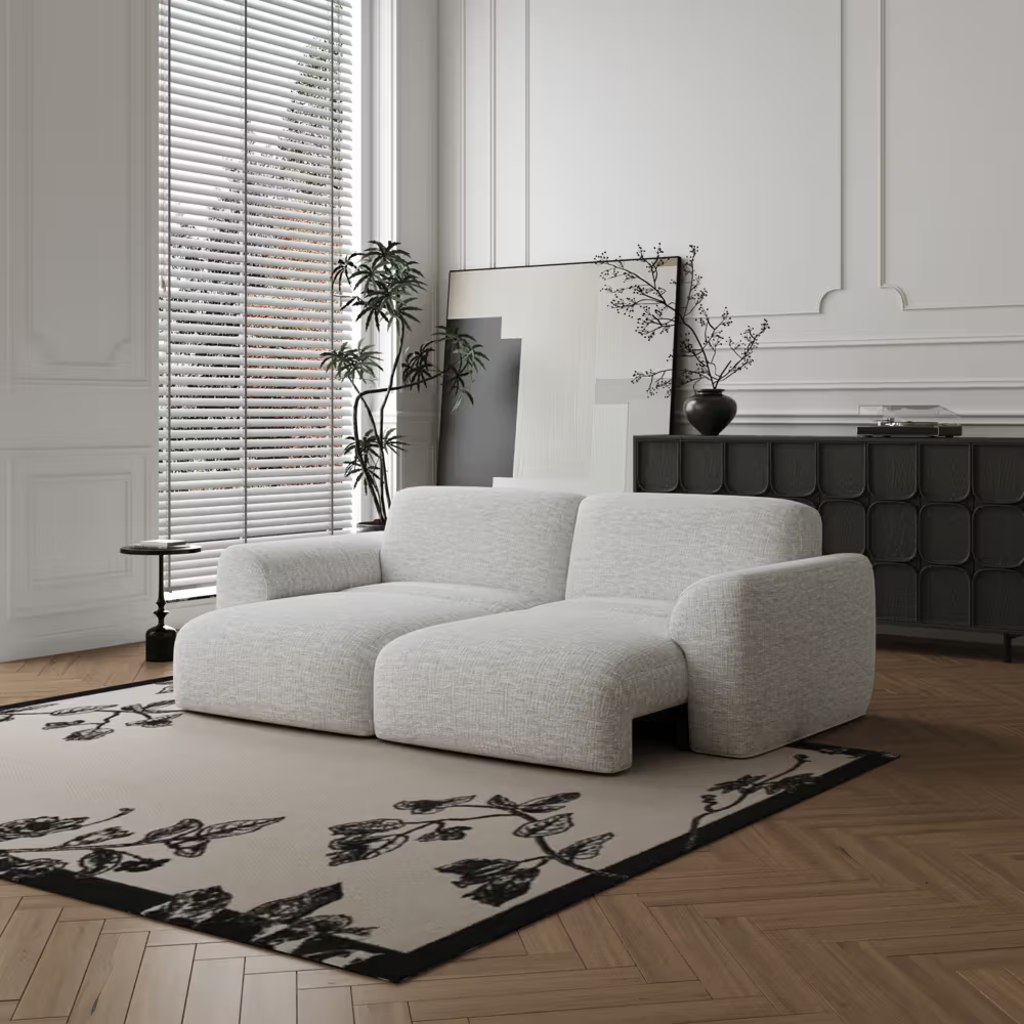
Light gray sofas work best when the flooring has a cooler cast, such as charcoal-brown, gray-stained wood, or near-black finishes. It provides contrast without adding as much warmth as beige.
Avoid assuming every gray is neutral. A blue-gray sofa beside red or amber-toned wood can make both colors look more extreme; warmer greige is often easier there.
Muted Green — Best Natural Contrast
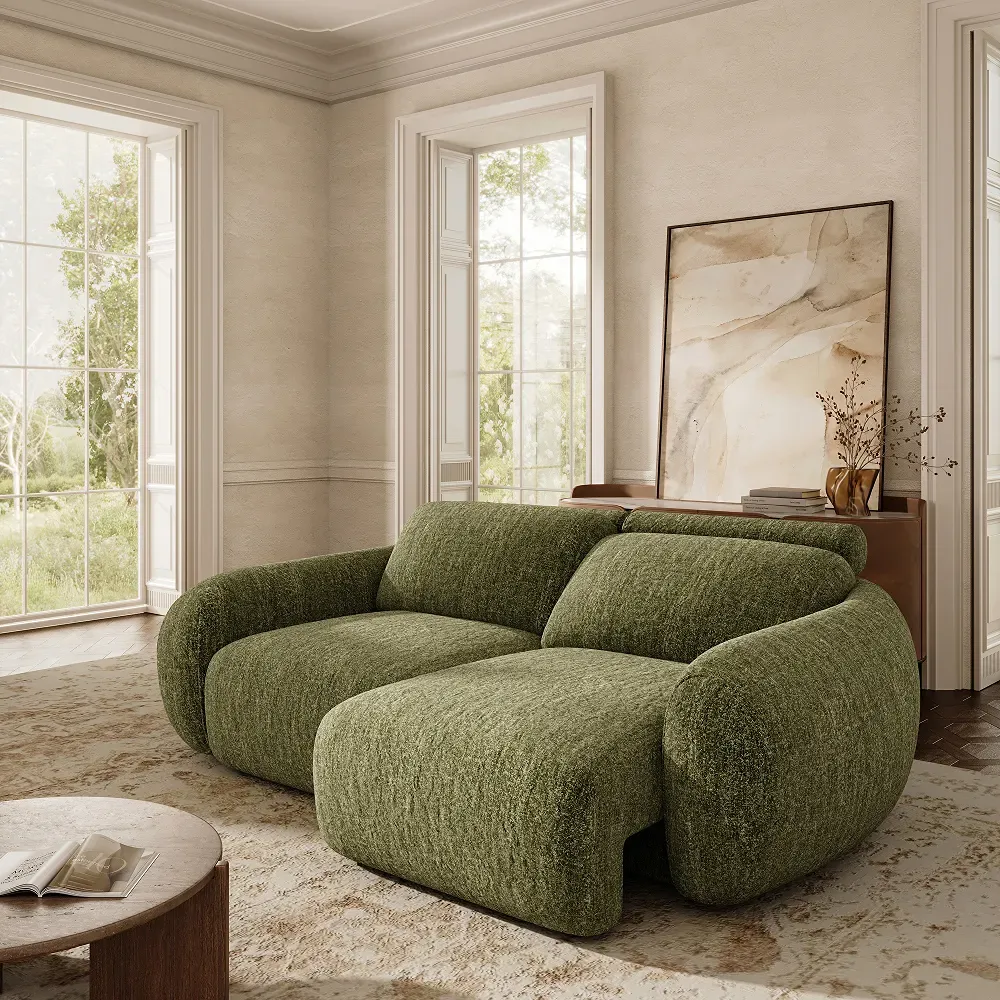
Olive, sage, and other muted greens add color without fighting the warmth of dark wood. They work especially well with walnut and espresso because green creates clear color separation while remaining subdued enough for a large sofa.
In average light, choose a dusty green rather than a deep forest shade that can visually merge with the floor. Green sofas can soften the visual weight of dark wood floors while keeping the room grounded and natural.
Caramel and Cognac — Best Tonal Pairing
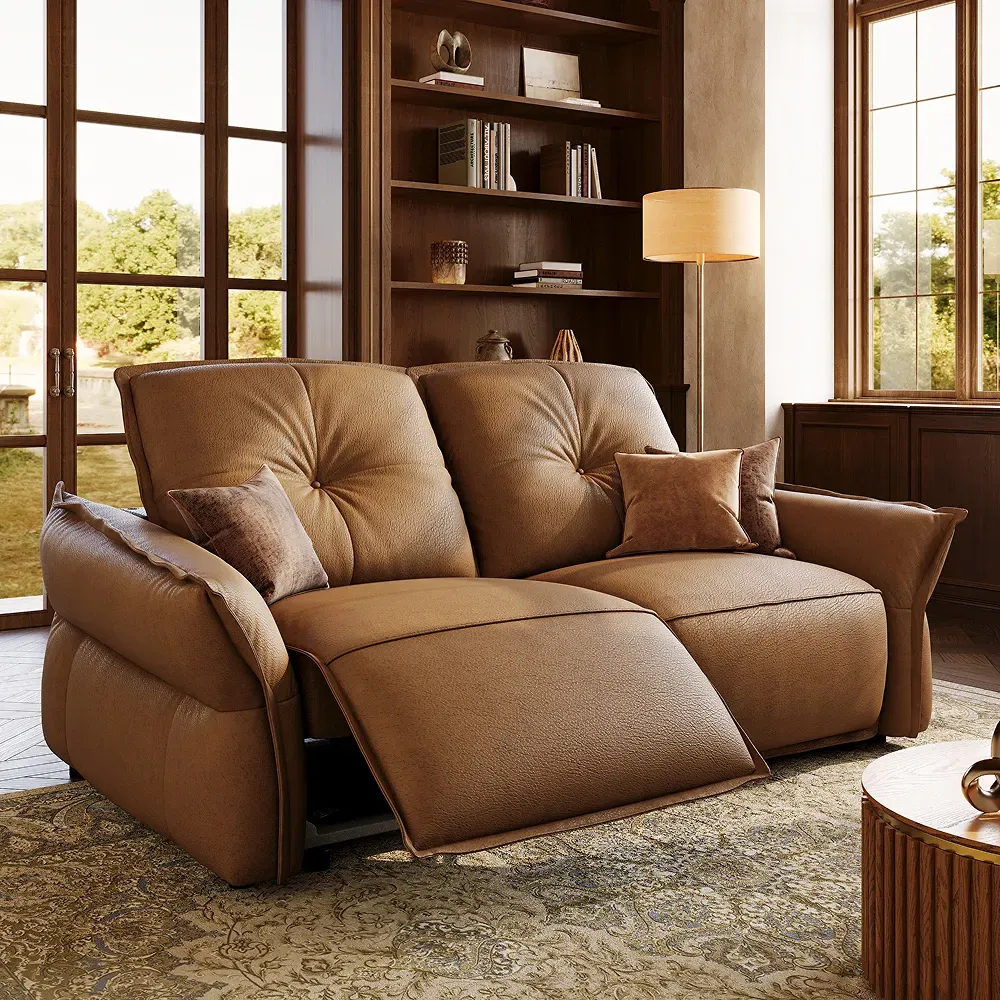
Caramel or cognac proves dark floors do not always need pale upholstery. Warm brown can create a layered palette when the sofa is visibly lighter than the floor.
Texture helps too. Leather, chenille, boucle, and visible wood grain reflect light differently, allowing two warm browns to remain distinct.
Blue — Best Controlled Statement
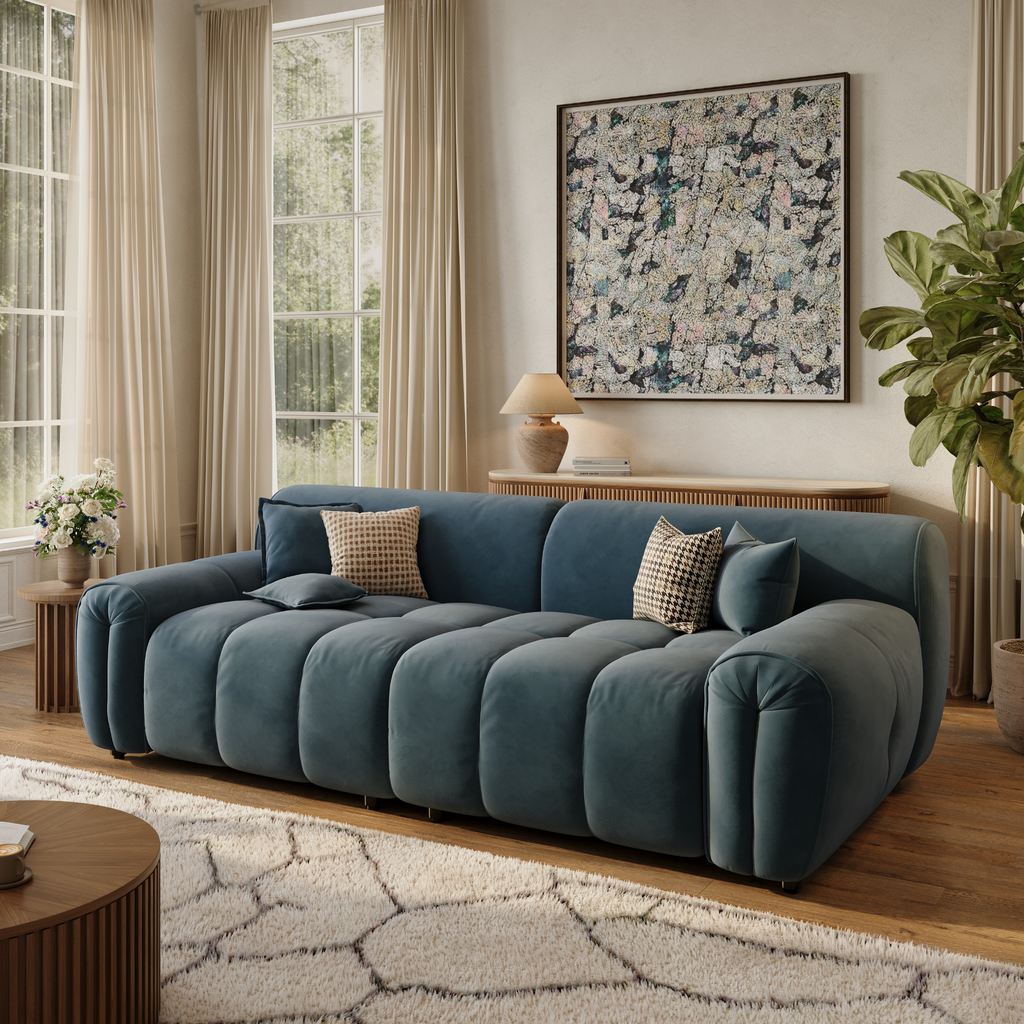
Dusty blue is easier than navy because it adds color while staying relatively light. Navy can also work with neutral walnut or cooler floors, but it needs help from the room.
Use navy blue sofas when walls are light, daylight is good, and a pale or medium-light rug breaks up the floor. In dim rooms, softer blue sofa is safer.
Dark Brown or Charcoal — Best for a Moody Room
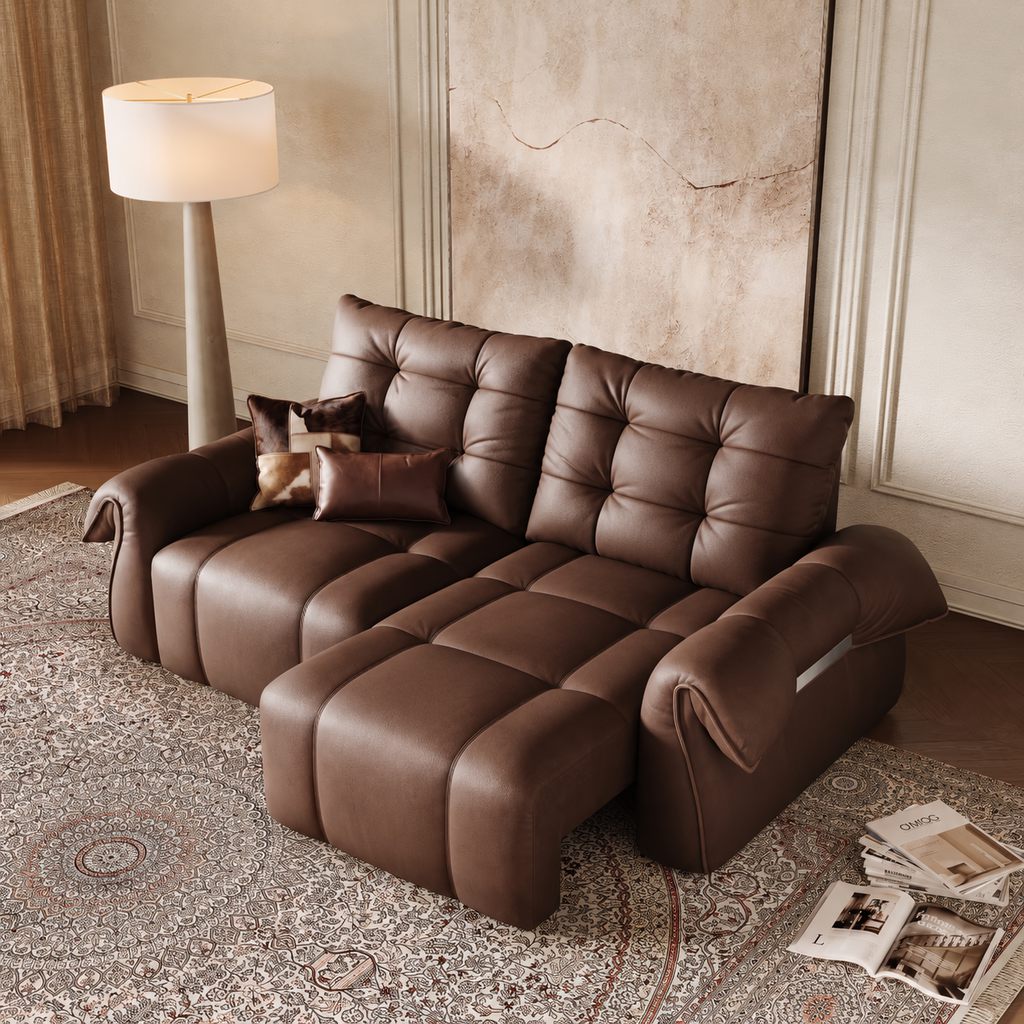
Dark-on-dark is not automatically a mistake. It simply leaves less margin for weak lighting or poor contrast.
A charcoal or dark brown sofa can work with light walls, generous windows, and a rug extending beyond the sofa front. It is less reliable when the floor, walls, curtains, and sofa are all mid-to-dark.
How Do You Match Sofa Color to Dark Wood Undertones?
Dark wood is not one color. Before choosing upholstery, look at the floor in daylight and decide whether it leans warm, cool, or neutral.
Warm floors show red, amber, orange, or golden notes. Start with cream, warm beige, olive, caramel, or soft greige. Cool floors look more charcoal, gray-brown, or almost black; off-white, light gray, dusty blue, and neutral greige usually sit more comfortably beside them. Neutral walnut can handle either direction.
Do not try to make every finish match exactly. If wood furniture is also part of the room, learning how to mix wood tones in a living room is more useful than chasing an identical brown. Repeating related undertones while varying material and value usually looks intentional.
A simple check is to hold plain white paper near the floor in daylight. Red or gold becomes easier to spot beside white, while gray or purple-brown notes point cooler.
Should Your Sofa Be Lighter Than Dark Wood Floors?
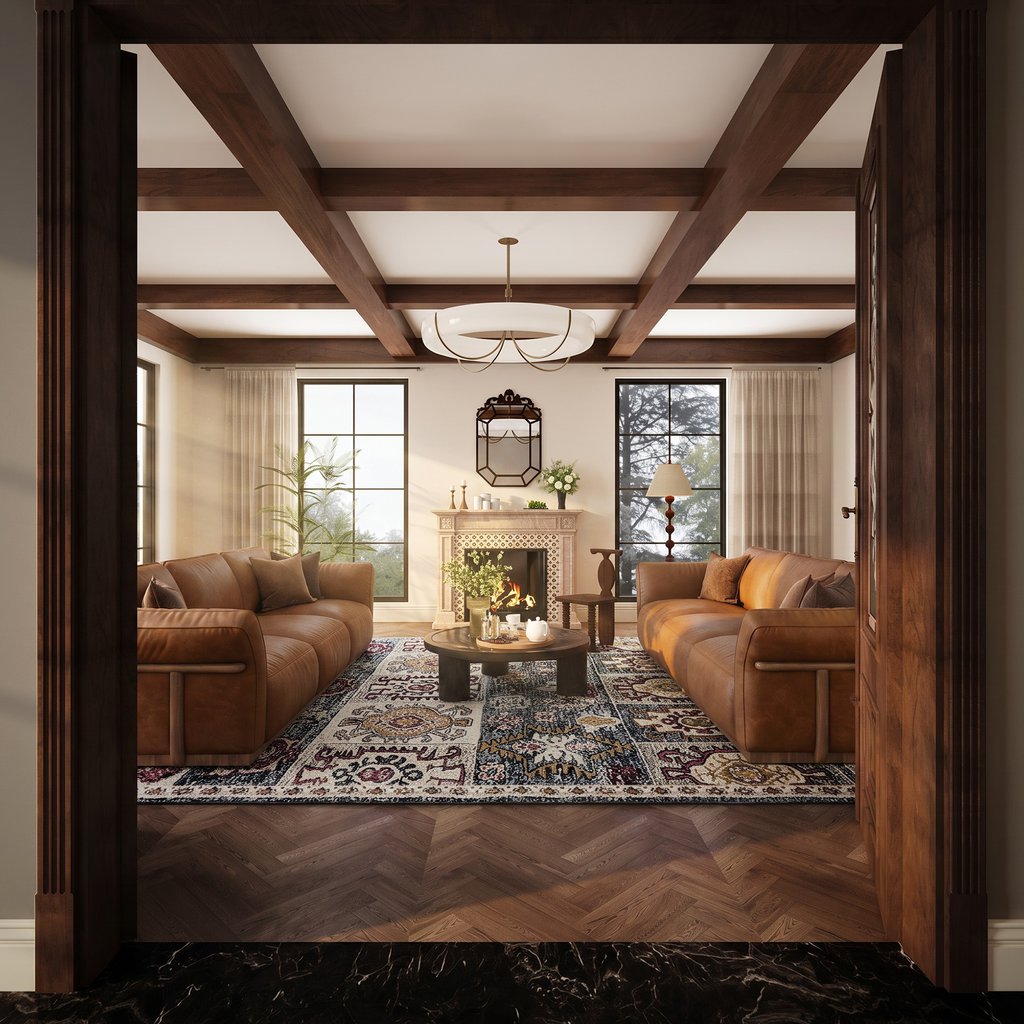
Usually, yes—but it is not a rule. A lighter sofa is safest when the room is small, natural light is limited, the walls are medium or dark, or most of the floor remains exposed.
Choose a darker sofa when the room already has contrast elsewhere. A navy sofa with dark wood floors can look balanced against pale walls and a light rug in a room with large windows. The same sofa may feel much heavier beside dark curtains with no rug.
Use a quick visual test: if the sofa and floor read as one dark block from the doorway, add separation through upholstery value, a rug, wall color, or visible floor space.
What Should You Check Before Buying a Sofa Color?
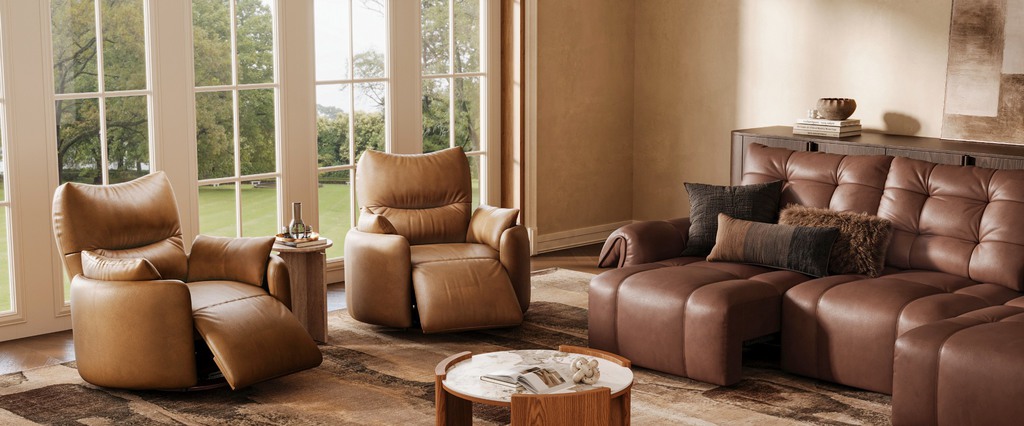
Color samples should be judged in the same conditions where the sofa will live. Before ordering, make four checks:
- View the floor in daylight. Artificial bulbs can exaggerate red, yellow, or gray undertones.
- Account for the walls and rug. If both are light, the sofa can be deeper. If both are dark, keep the sofa lighter.
- Compare upholstery near floor level. A swatch against a white screen can look very different beside dark flooring.
- Consider daily maintenance. Cream and ivory brighten a room but show muddy paws, denim transfer, and food marks more readily than beige, greige, or muted green.
A family room with dark walnut flooring, two kids, and a dog may be better served by warm beige than pure ivory even if both colors suit the room. The practical choice has to work after the styling photos are finished.
What Sofa Color Mistakes Make Dark Floors Feel Heavier?
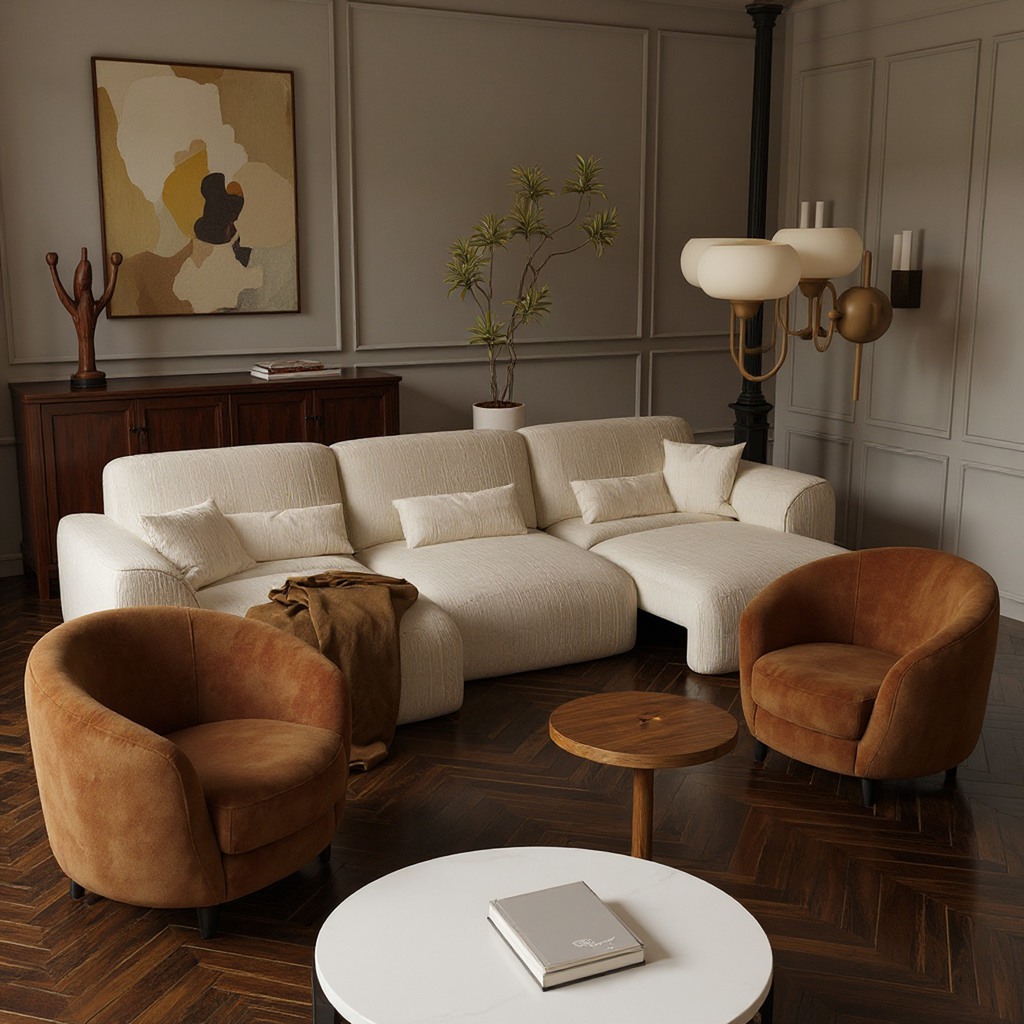
Most problems come from losing separation, not from choosing a supposedly “wrong” color.
Matching darkness instead of undertone. A sofa can be lighter than the floor and still clash if cold blue-gray sits beside strongly red wood.
Using dark-on-dark without a break. A dark sofa directly on dark flooring often needs a lighter rug, pale wall, or open leg profile to keep the surfaces distinct.
Choosing from a swatch alone. Upholstery changes with daylight, lamp temperature, and surrounding colors. Compare it against the actual floor whenever possible.
If the room already contains several dark pieces, the broader principles behind how to decorate with dark furniture can help you decide where contrast should come from instead of adding another light color at random.
Conclusion
The right sofa color for dark wood floors depends less on one universal shade than on three things: floor undertone, available light, and visual separation. Cream and beige are reliable when a room needs brightness, while green, caramel, blue, and darker neutrals work when their conditions are right. Read the floor in daylight, then check the walls and rug before judging upholstery. A sofa should relate to the floor without disappearing into it, and the most practical choice should still suit everyday wear.
Find the Right Sofa
Explore designs for different room sizes, layouts, and everyday needs.
Q&A
Do Sofa Legs Need to Match Dark Wood Floors?
No. Sofa legs do not need to match the floor exactly. With wooden legs, choose a finish with a compatible warm or cool undertone rather than chasing the same brown. Black metal or painted legs can create a deliberate break. Avoid near-matching wood finishes that differ slightly enough to look accidental.
What Rug Color Works Under a Dark Sofa?
With a dark sofa and dark wood floor, start with ivory, oatmeal, light beige, or a pale pattern. The rug should create visible separation around the sofa rather than disappear beneath it. If the walls are already very light, a medium neutral rug can also work without adding too much visual weight.
Is Caramel or Espresso Leather Better With Dark Floors?
Caramel leather is usually the safer choice because it creates more visible separation from espresso or dark walnut flooring. Espresso leather works better in bright rooms with pale walls or a light rug. When both the sofa and floor are very dark, compare them together before buying to make sure they do not visually merge.
What Sofa Works With Gray Walls and Dark Floors?
With warm gray walls, start with cream, beige, greige, caramel, or muted green. Cool gray walls can also support off-white or dusty blue. Avoid choosing a gray sofa automatically; if the walls, sofa, and floor all sit in similar mid-to-dark values, the room can look flat rather than coordinated.
Does Sofa Size Affect Color Choice on Dark Floors?
Yes. A large sectional covers more visual area, so dark upholstery can feel heavier over dark flooring than the same color on a compact loveseat. For oversized sofas in smaller rooms, lighter or mid-tone upholstery is usually safer. A smaller sofa can handle navy, charcoal, or deeper brown with less visual weight.


[…] the furniture: If a dark sofa blends into walnut or dark hardwood flooring, use a lighter or softly patterned rug to create a visible boundary around the seating […]