 By Stephanie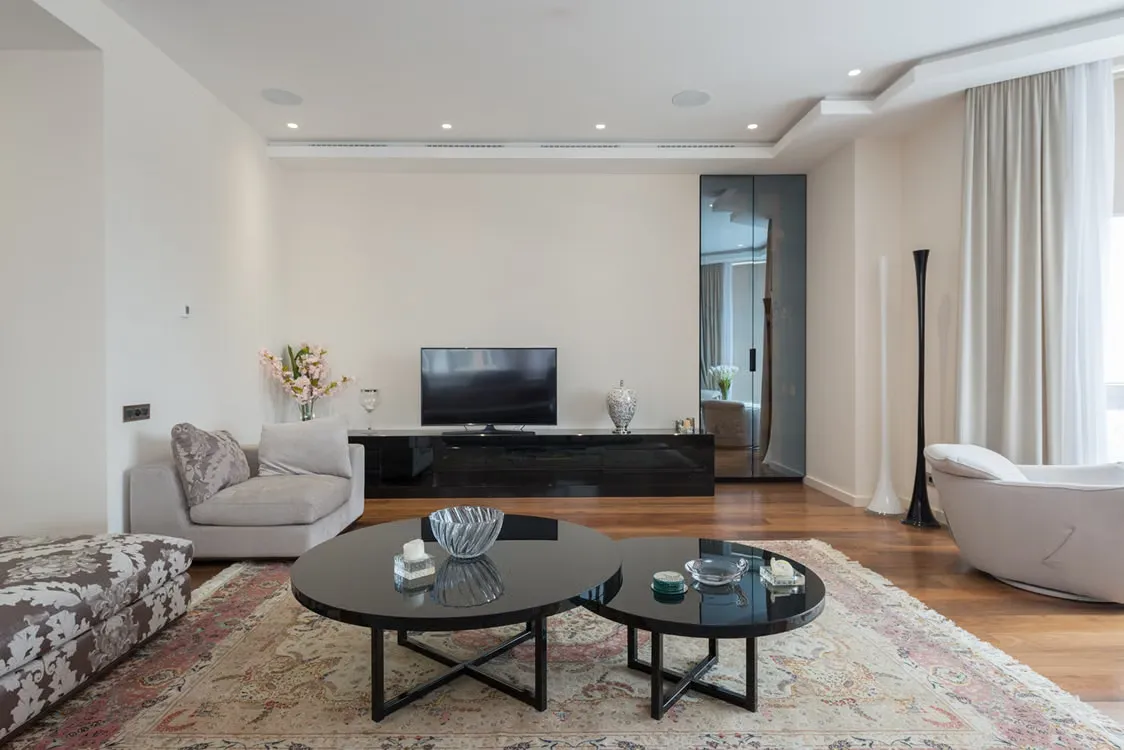
A low back sofa can make a living room feel more open, keep a window view in sight, and give larger furniture a cleaner horizontal line. The harder part is finding one that still feels comfortable after the first few minutes. Back height works together with seat depth, seat height, cushion structure, and the way you naturally sit. These eight low back sofas take different approaches to that balance, from adjustable head support and hidden storage to deep lounging, modular layouts, and a sleeper function, so the right choice depends as much on daily use as on silhouette.
Table of Contents
What Makes a Low Back Sofa Comfortable for Everyday Use?
A lower silhouette works best when its proportions still match the way you sit. Four details matter most:
- Back contact: A low back should still meet the part of your torso you rely on for support. Adjustable headrests and loose cushions can extend that support when needed.
- Seat depth: Deeper seats encourage curling up and relaxed lounging; moderate depths make it easier to sit with your back against the cushion and feet on the floor.
- Seat height: A visually low sofa does not have to sit extremely close to the floor. Seat height matters for leg position and how easily you stand up.
- Function: A fixed sofa, modular sectional, power recliner, and sofa bed can all keep a relatively low profile, but they place very different demands on floor space and sitting posture.
For a broader look at sofas defined by their entire low-slung silhouette rather than the backrest specifically, see the Best Low Profile Couch guide.
Quick Summary: 8 Low Back Sofas at a Glance
| Product | Best For | Dimensions | Upholstery | Standout Function | Price |
|---|---|---|---|---|---|
| Povison Benjamin Power Reclining Loveseat | Adjustable upper-body support | 28.5″ H × 17.51″ Seat H × 22.44″ Seat D | Microfiber performance leather | Power recline + adjustable headrest | $2,299 |
| Povison Bunelle Organic Modern Lounge Storage Sofa | Family rooms needing hidden storage | 89.37″ W × 41.73″ D × 33.27″ H | Chenille + eco-leather | 70L hidden storage | $2,709 |
| Article Abisko 91″ Sofa | Apartment access | 28″ H × 17.5″ Seat H × 25″ Seat D | Linen-blend performance fabric | Two-piece frame for easier moving | $1,199 |
| Povison Modern Pet-Friendly Fabric Sofa | Pet-friendly deep lounging | 86.6″ W × 44.9″ D × 36.2″ H | Pet-friendly polyester | Splash-resistant, easy-clean upholstery | $2,079 ($1,919 with coupon) |
| Povison Retro Hand-Tufted Green Chenille Sofa | Wide conversation rooms | 106.3″ W × 37.8″ D × 34.25″ H | Chenille | Extra-wide fixed lounge seating | $2,189 |
| Floyd Two-Piece Form Sectional | Changing modular layouts | 27.4″ H × 14.5″ Seat H × 26.5″ Seat D | Performance fabric | Reconfigurable sections | $2,340 ($1,872 member price) |
| CB2 Forte 81″ Channeled Saddle Leather Sofa | Firm leather lounging | 81″ W × 38.75″ D × 26.5″ H | Aniline leather | Deep low-profile leather seating | $2,099 (sale) |
| IKEA SÖDERHAMN Sofa | Casual low seating | 32⅝” H × 15¾” Seat H × 18⅞” Seat D | Polyester | Removable covers + modular system | $819 |
Prices can vary by region, configuration, availability, and promotion.
8 Best Low Back Sofas for Different Rooms and Sitting Styles
🥇1. Povison Benjamin Power Reclining Loveseat
💲 Price: $2,299
👍 Best For: Low sightlines with adjustable head and neck support
📐 Dimensions: 28.5″ H × 17.51″ Seat H × 22.44″ Seat D
✨ Highlights
- 28.5-inch overall height
- 17.51-inch seat height and 22.44-inch seat depth
- Power recline up to 135°
- Manually adjustable headrests
- Water- and stain-resistant microfiber performance leather
- USB and USB-C charging
‼️ Limitations
- Headrests are adjusted manually rather than electronically
- Microfiber performance leather is not genuine leather
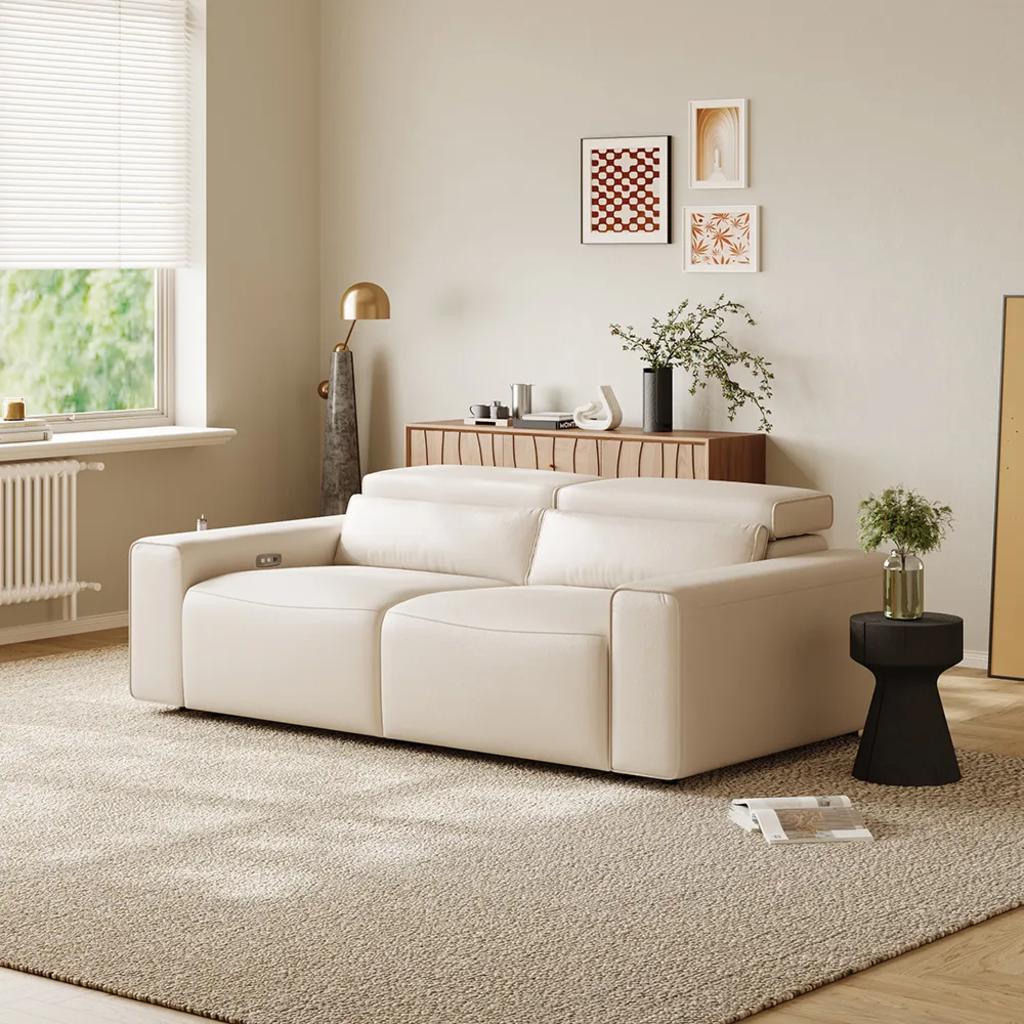
🎯 Why It Works: The Povison Benjamin Power Reclining Loveseat addresses one of the harder compromises of a low back sofa: keeping the room visually open without giving up upper-body support when you want it. With the headrests folded down, its 28.5-inch profile stays remarkably low. Raise them for longer TV viewing or reading. In a room with windows behind the sofa, that flexibility preserves the sightline during the day while adding support when it matters.
Its combination of power recline, adjustable head support, and an easy-clean surface also gives it a stronger everyday-use case than many low-profile sofas that rely almost entirely on silhouette.
🗨️ Buyer review:“The couches look sleek, they are comfortable and they adjust to just about every position that you could need for comfort.” — Johnathon
🥈2. Povison Bunelle Organic Modern Lounge Storage Sofa
💲 Price: $2,709
👍 Best For: Family rooms where seating also needs hidden storage
📐 Dimensions: 89.37″ W × 41.73″ D × 33.27″ H
✨ Highlights
- 33.27-inch overall height
- 70L integrated hidden storage
- Seat and storage lid lift together
- Carbon-steel gas strut rated for approximately 50,000 lift cycles
- Splash-resistant upholstery
- Pet-friendly eco-leather details
‼️ Limitations
- The 89.37-inch width needs a reasonably long wall or open seating zone
- Partial assembly is required, with two adults recommended for moving
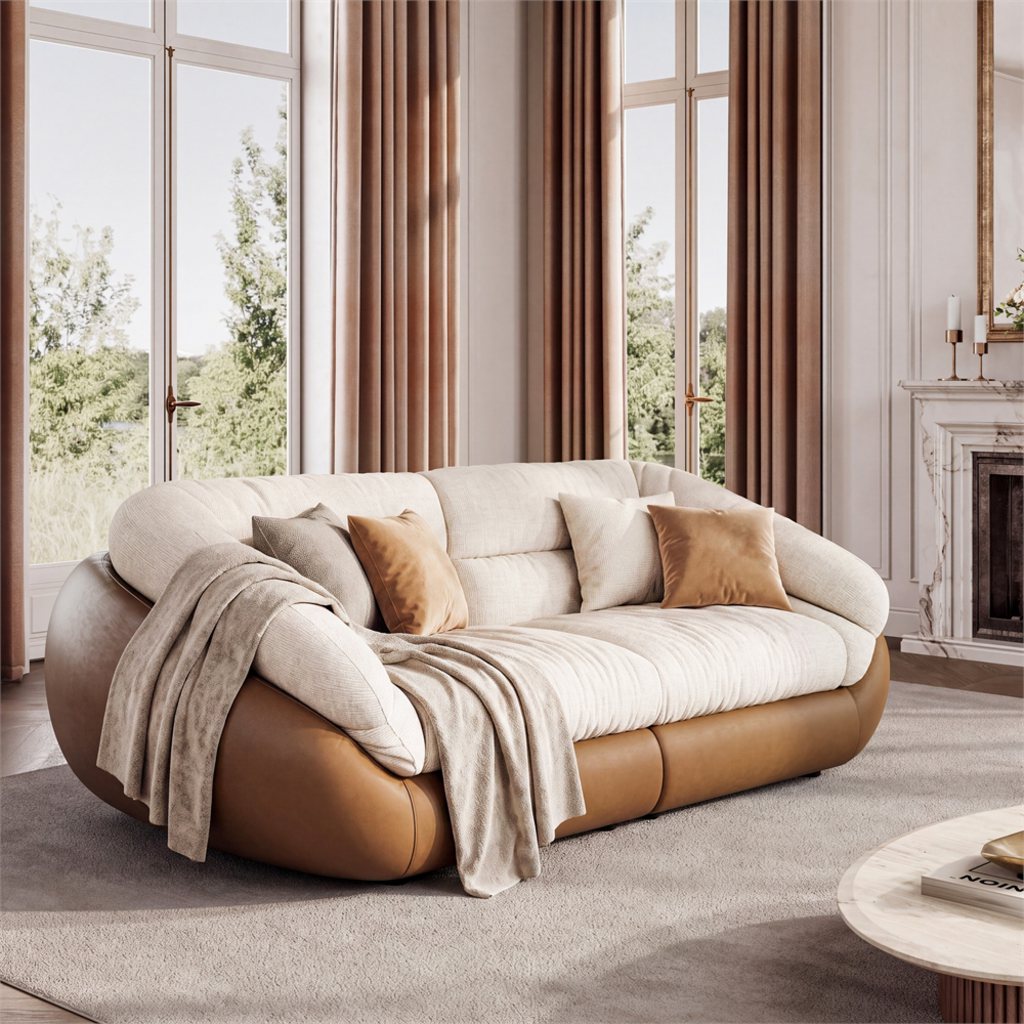
🎯 Why It Works: Bunelle adds practical storage without turning the sofa into a visibly bulky storage piece. The seat lifts as one section to reveal 70 liters of space for throws, pillows, toys, or other living-room extras. Its 33.27-inch height keeps the silhouette relatively contained, while splash-resistant fabric and pet-friendly eco-leather make the design easier to live with in a shared family room.
🗨️ Buyer review:“The storage is seriously bigger than I expected!” — Jeremy
🥉3. Article Abisko 91″ Sofa
💲 Price: $1,199
👍 Best For: Apartments with narrow stairs or difficult doorways
📐 Dimensions: 28″ H × 17.5″ Seat H × 25″ Seat D
✨ Highlights
- Genuine 28-inch overall height
- 17.5-inch seat height
- 25-inch seat depth
- Fixed foam-padded seat and back
- Sofa separates into two parts for moving
- Stain-repellent performance fabric
- Two pillows included
‼️ Limitations
- At 91 inches wide, it still needs substantial wall space
- Fixed seat and back cushions offer less positioning flexibility
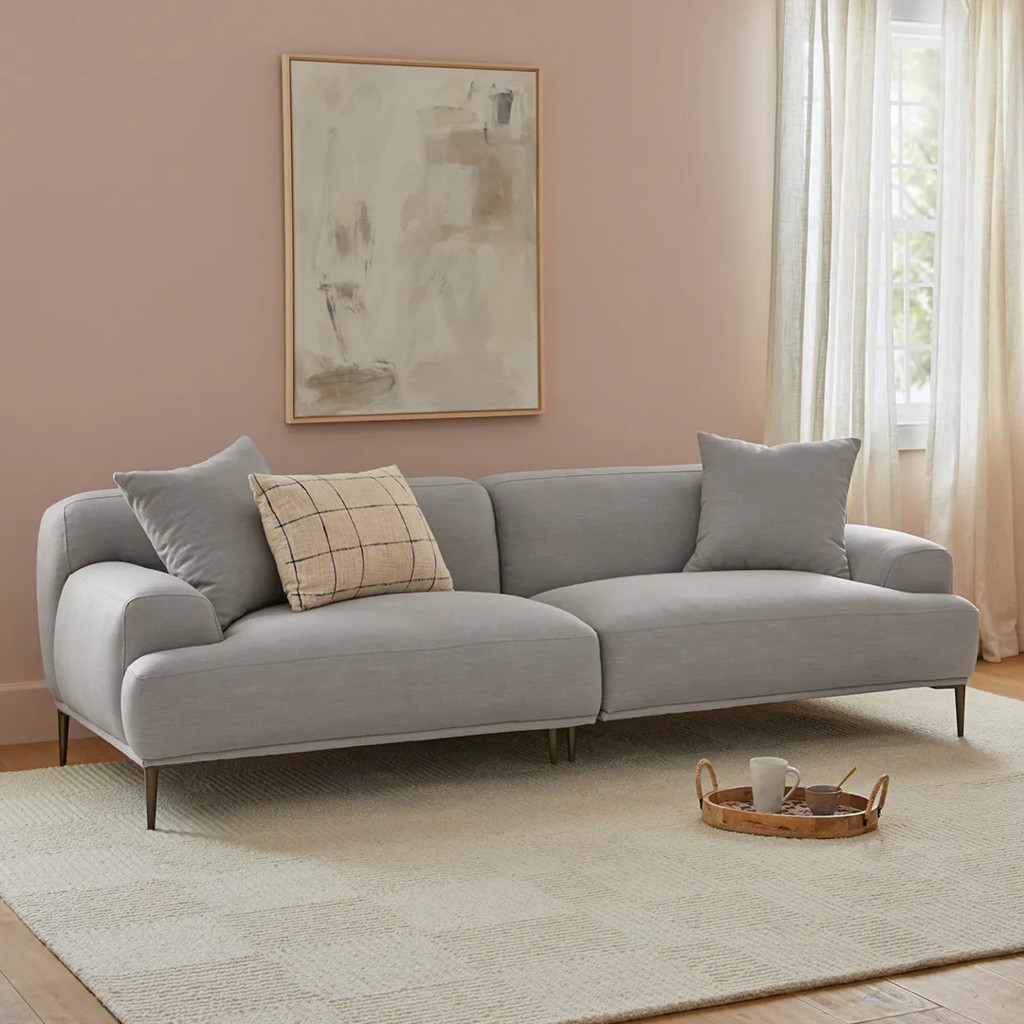
🎯 Why It Works: Abisko combines a genuinely low 28-inch profile with a 25-inch seat depth that leans toward relaxed lounging without dropping the seat unusually close to the floor. Its more distinctive practical advantage is delivery: the sofa separates into two pieces, making the 91-inch frame easier to maneuver through narrow doors, stairs, and apartment hallways. That makes access part of the design rather than an afterthought.
4. Povison Modern Pet-Friendly Fabric Sofa
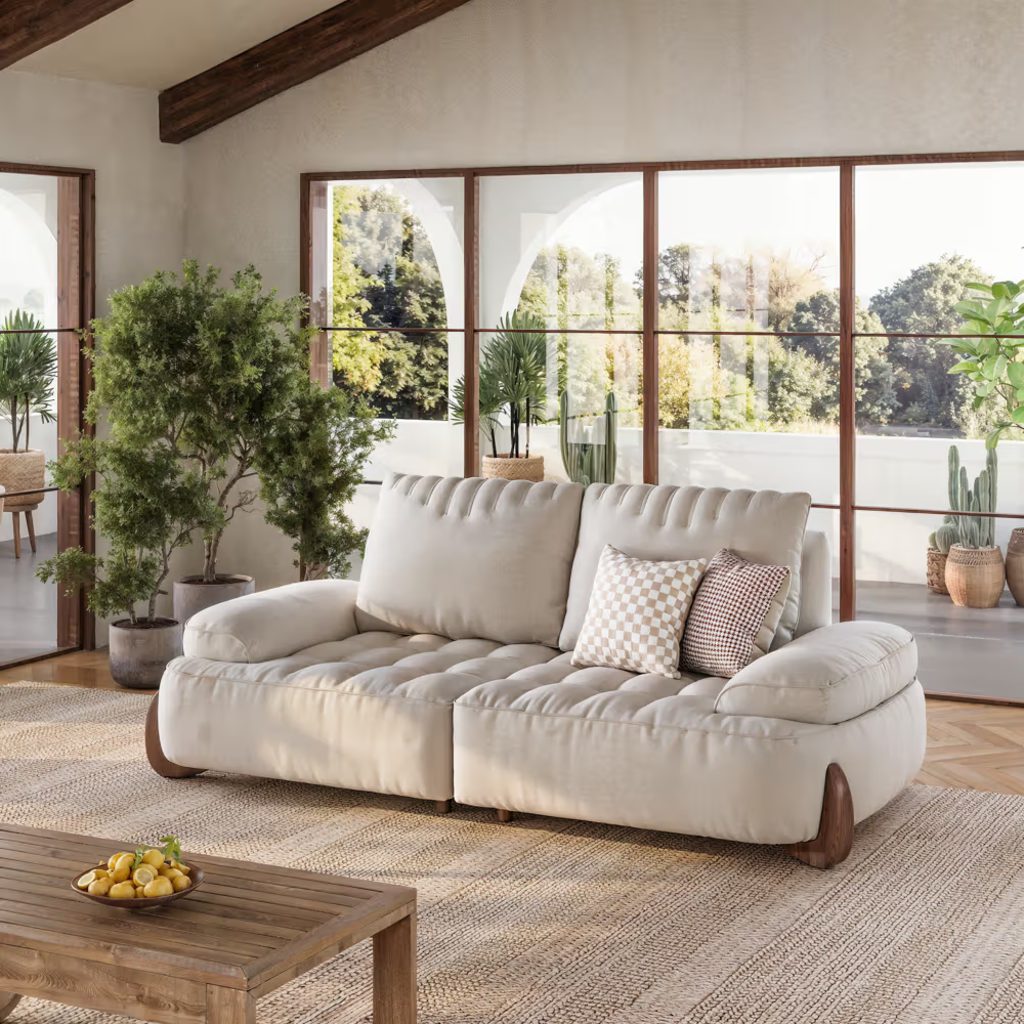
💲 Price: $2,079 ($1,919 with coupon)
👍 Best For: Pet owners who prefer deep, relaxed lounging
📐 Dimensions: 86.6″ W × 44.9″ D × 36.2″ H
✨ Highlights
- Extra-deep 44.9-inch overall footprint for relaxed lounging
- Soft short-pile 100% polyester upholstery
- Splash-resistant surface for everyday spills
- Scratch-resistant fabric designed to handle dog claws
- Anti-static upholstery helps reduce clinging pet hair
- Removable back cushions allow more flexible lounging positions
- 2–3-person seating capacity
‼️ Limitations
- The 44.9-inch depth takes up considerably more floor space than a conventional sofa
- Partial assembly is required, and two adults are recommended for moving
🎯 Why It Works:The Povison Modern Pet-Friendly Fabric Sofa is less about achieving the absolute lowest back and more about creating a relaxed, grounded seating position that works in a pet-friendly household. Its generous depth gives people room to curl up or lounge, while removable back cushions make the support easier to adjust. The short-pile fabric also addresses practical concerns that matter in daily use: spills can be cleaned quickly, pet hair is easier to vacuum or wipe away, and the surface is designed to resist everyday scuffs.
For a household where the sofa is shared with a dog, that combination matters more than shaving another few inches off the overall height. The tradeoff is floor space: at nearly 45 inches deep, this is better suited to a roomy living area than a narrow apartment layout.
🗨️ Buyer review: “The couch is very firm … and it’s low to the ground with very fun feet.” — Kimm
5. Povison Retro Hand-Tufted Green Chenille Sofa
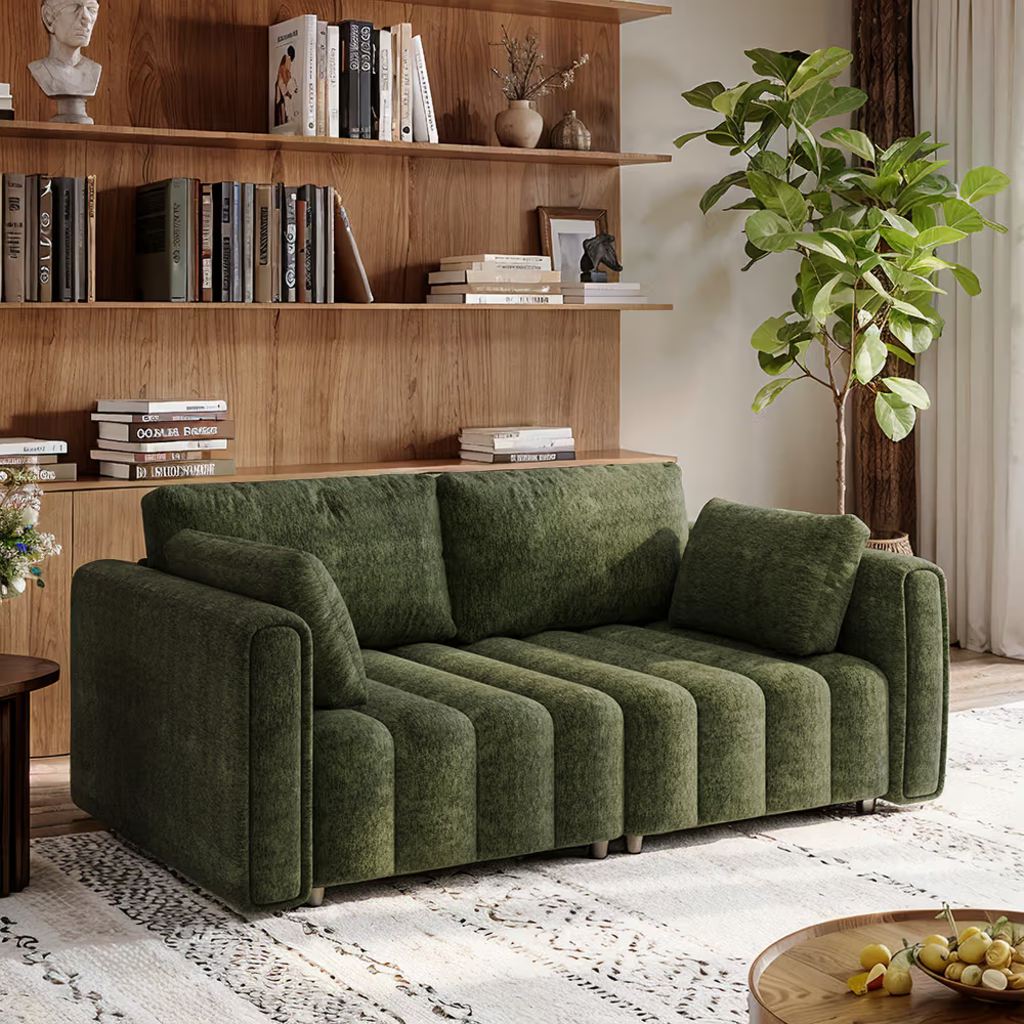
💲 Price: $2,189
👍 Best For: Large conversation rooms with a wide horizontal layout
📐 Dimensions: 106.3″ W × 37.8″ D × 34.25″ H
✨ Highlights
- 106.3-inch width
- 34.25-inch overall height
- Seating for approximately three to four people
- Hand-tufted detailing
- Soft chenille upholstery
- Two loose pillows included
- 1.96-inch legs keep the sofa visually grounded
‼️ Limitations
- The 106.3-inch width is unsuitable for most compact living rooms
- No adjustable headrest or reclining support
- Chenille should be kept away from prolonged direct sunlight and heat
🎯 Why It Works: The Retro sofa uses width rather than height to create presence. Its 106.3-inch span gives several people room to sit while the 34.25-inch overall height and nearly hidden legs keep the design strongly horizontal. Hand tufting adds definition without turning the back into a tall visual barrier, making this a better fit for broad conversation areas and open living rooms than narrow apartment layouts.
🗨️ Buyer review:“The durable material used here really stands out and makes this purchase worthwhile.” — Christopher
6. Floyd Two-Piece Form Sectional
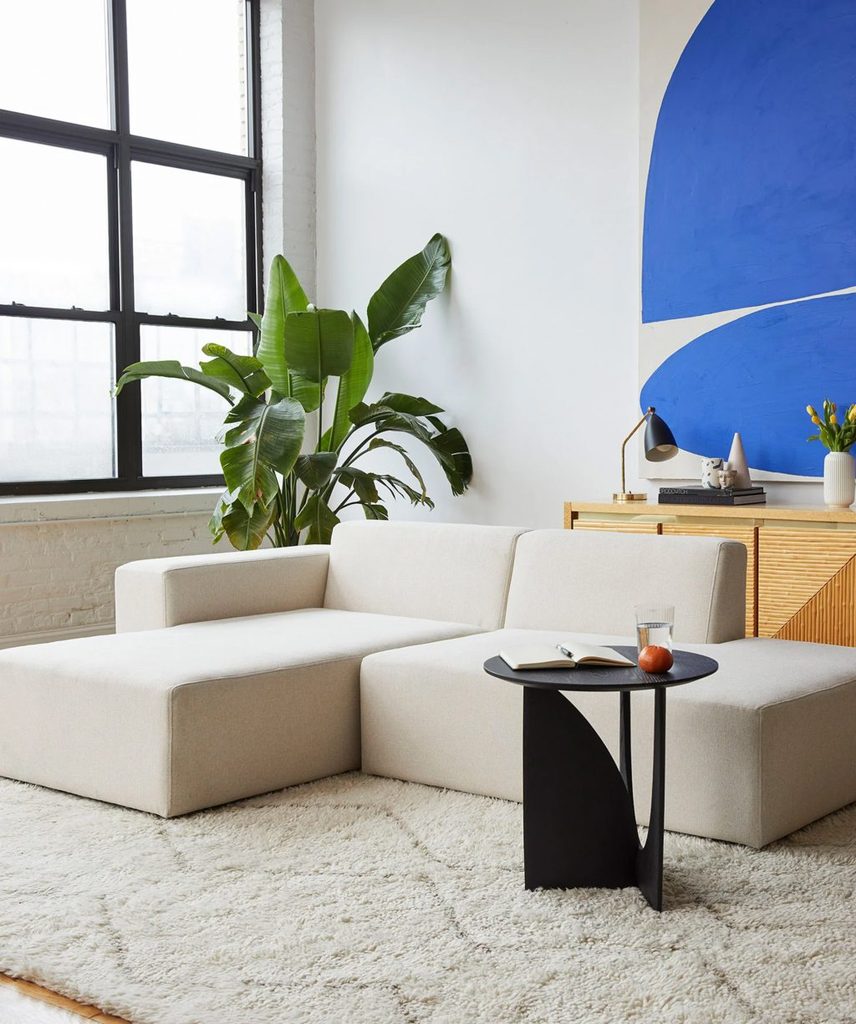
💲 Price: $2,340 ($1,872 member price)
👍 Best For: Renters and layouts likely to change over time
📐 Dimensions: 27.4″ H × 14.5″ Seat H × 26.5″ Seat D
✨ Highlights
- 27.4-inch overall height
- Very low 14.5-inch seat height
- 26.5-inch seat depth
- Modular sections connect with heavy-duty metal clips
- Stain-resistant performance fabric
- Additional seats or tables can be added later
‼️ Limitations
- The 14.5-inch seat is notably lower than conventional sofa seating
- The two-piece configuration is still 90 inches wide
- The item is made to order
- Its very low sitting position will not suit everyone
🎯 Why It Works: At 27.4 inches high, the Form Sectional has one of the clearest low-slung profiles here. Its 26.5-inch seat depth reinforces the relaxed posture, while heavy-duty connectors allow sections to be rearranged as the room changes. That flexibility suits renters and households expecting future moves. The main tradeoff is the 14.5-inch seat height: visually it opens the room beautifully, but physically it creates a distinctly low sitting position.
7. CB2 Forte 81″ Channeled Saddle Leather Sofa
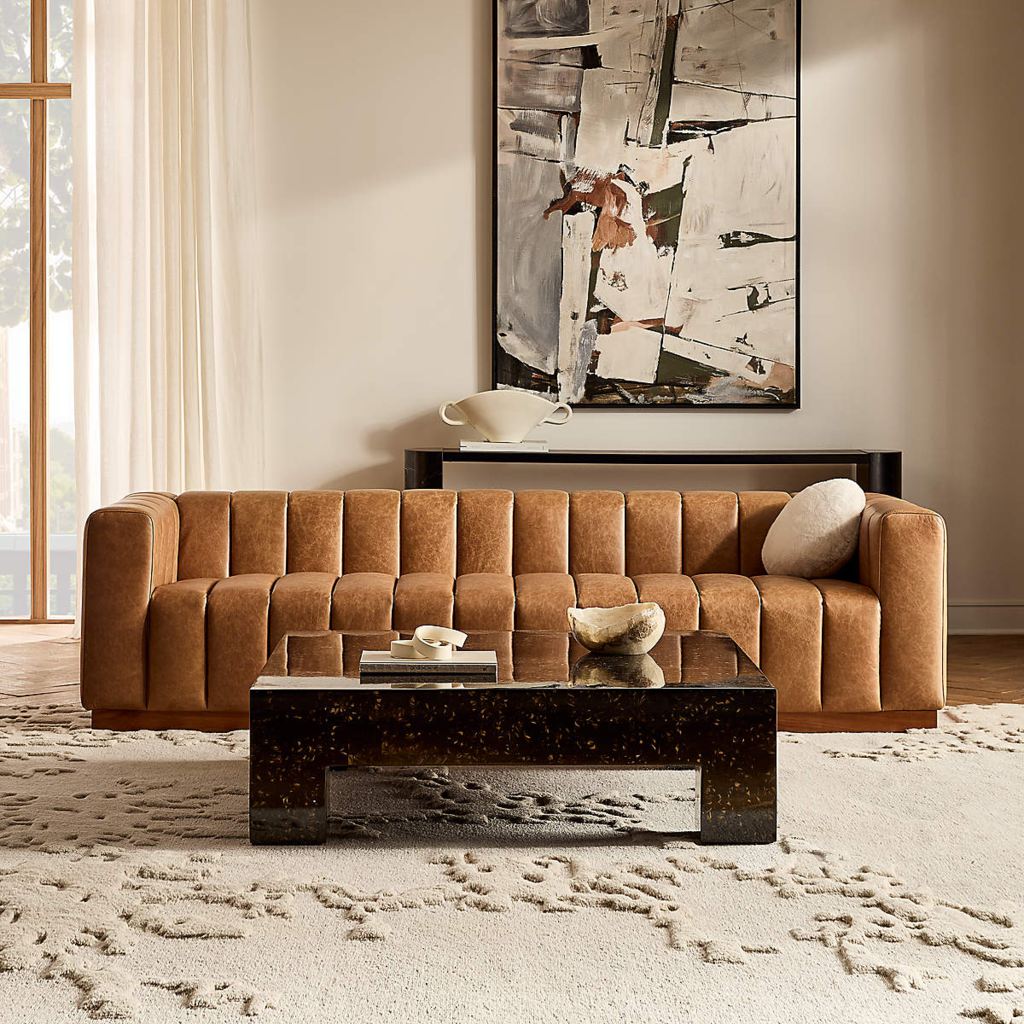
💲 Price: $2,099 (sale; $2,799 regular)
👍 Best For: Leather buyers who prefer a firmer lounge seat
📐 Dimensions: 81″ W × 38.75″ D × 26.5″ H
✨ Highlights
- 26.5-inch overall height
- 81-inch width
- Deep 38.75-inch overall footprint
- Buffalo aniline-dyed leather
- Channeled cushioning
- Low walnut-finished wood base
- Leather softens and develops character with age
‼️ Limitations
- CB2 describes the sit as being on the firmer side
- Aniline leather develops natural color and marking variation
- Spills should be blotted promptly
- Direct sunlight can fade the leather
🎯 Why It Works: Forte makes one of the strongest purely visual low-back statements in the group. The sofa rises only 26.5 inches, yet the 38.75-inch overall depth leaves enough room to stretch out rather than turning the design into shallow occasional seating. Buffalo aniline leather is central to its appeal: the surface is designed to soften and develop variation with age, making it best suited to buyers who appreciate natural leather character and accept the added care that comes with it.
8. IKEA SÖDERHAMN Sofa
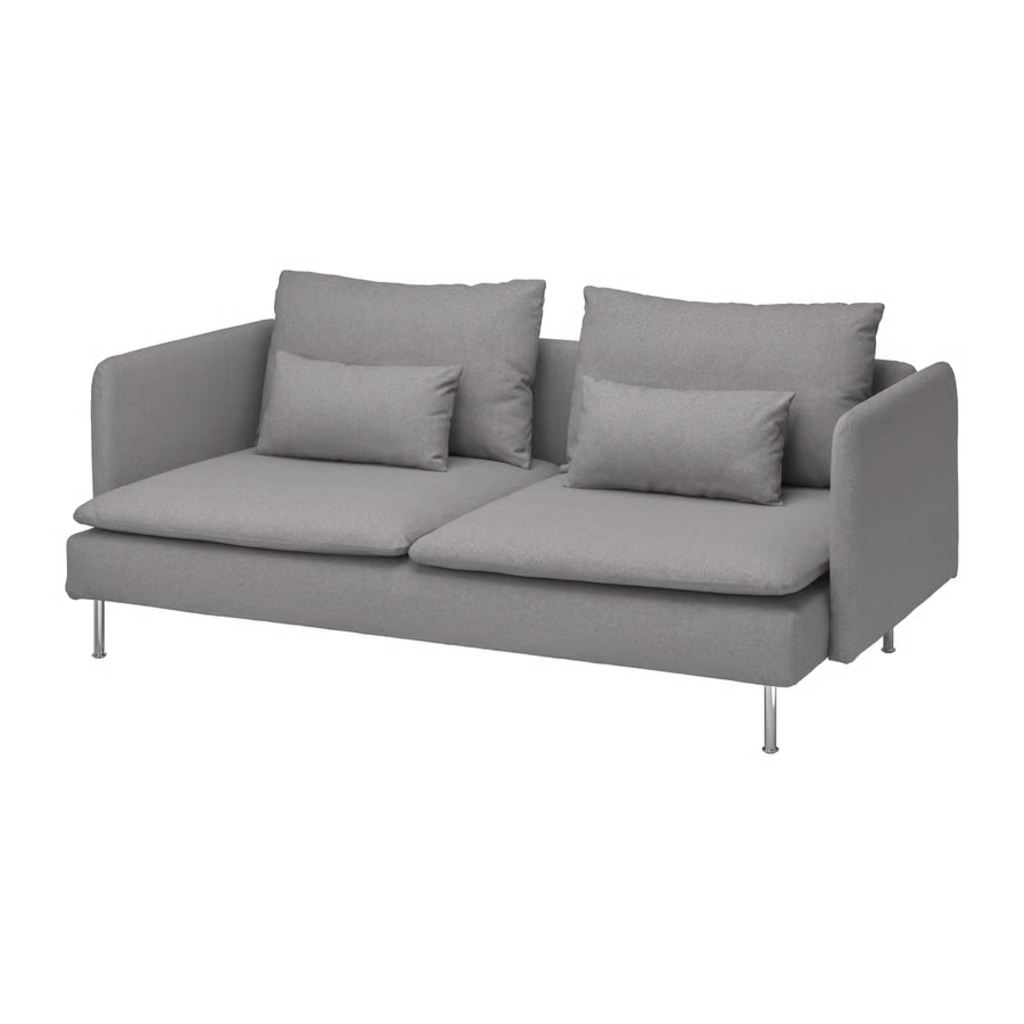
💲 Price: $819
👍 Best For: Budget-friendly casual lounging with washable covers
📐 Dimensions: 32⅝” H × 15¾” Seat H × 18⅞” Seat D
✨ Highlights
- 32⅝-inch height including back cushions
- 27⅛-inch structural backrest height
- 15¾-inch seat height
- 18⅞-inch seat depth
- Removable back cushions
- Removable covers
- Modular SÖDERHAMN system
‼️ Limitations
- The 15¾-inch seat is lower than many conventional sofas
- Some long-term reviews report back cushions losing shape over time
- Replacement back cushions are not sold separately
- The Tonerud gray configuration is currently marked “Last chance”
🎯 Why It Works: SÖDERHAMN offers an accessible route into an airy, lower sofa while keeping maintenance relatively straightforward. Loose back cushions can be repositioned for different sitting positions, and removable covers simplify routine cleaning. Its relatively low seat reinforces the casual lounging posture, although that same dimension makes it less appealing for anyone who prefers a chair-like sitting height or easier rise.
How Do You Know Whether a Low Back Sofa Will Support You?
Back height alone does not tell you whether a sofa will feel supportive. Check these details together:
- Notice where the back actually meets your body. Lower- and mid-back contact may be enough for conversation or relaxed sitting; regular shoulder and head support usually calls for taller cushions or an adjustable headrest.
- Match seat depth to posture. Deep seats favor curling up and lounging, while a shallower effective depth helps you reach the back cushion without sliding forward.
- Treat seat height separately. A sofa can have a low back without an unusually low seat. This matters if getting up from low furniture feels awkward.
- Decide how long you normally sit. Fixed low backs make more sense for relaxed social seating; adjustable support adds flexibility for reading and longer TV sessions.
- Check the cushions, not just the frame. Loose back cushions can raise the usable support point even when the structural frame stays low.
The sofa seat depth and height comfort guide goes deeper into how those measurements affect different sitting positions.
When Does a Low Back Sofa Work Better Than a High Back?
| Buying Question | Choose a Low Back Sofa When… | Choose a High Back Sofa When… |
| Room openness | You want one seating zone to flow visually into another | You want the sofa to create a stronger visual boundary |
| Windows and views | The sofa sits in front of windows or a view worth keeping open | There is no important sightline behind the sofa |
| Sitting posture | You lounge, sit sideways, or rely mainly on lower-back support | You regularly sit upright and want shoulder or head support |
| Furniture scale | Other pieces are low, horizontal, or visually light | The room has taller, more substantial furniture |
| Multiple users | Similar sitting preferences make one lower support line workable | Household members need very different upper-body support |
| Long sessions | Loose cushions or adjustable headrests can fill the support gap | You want built-in high support without making adjustments |
Neither style is automatically more comfortable. The better choice comes from matching the sofa’s support point to your posture while checking how its height affects the room around it.
Conclusion
A good low back sofa should do more than make a room look open. Seat height, depth, cushion support, and the way the back meets your body determine whether that clean silhouette also works for everyday life. A fixed low sofa can create a relaxed conversation space, while modular, reclining, storage, or sleeper designs add function without necessarily adding visual bulk. The strongest choice is the one that makes the room feel lighter while still giving you a comfortable place to settle in.
Find the Right Low Back Sofa
Explore designs for different room sizes, layouts, and everyday needs.
FAQ
How do you measure a low back sofa for delivery?
Measure the sofa’s packaged dimensions as well as its assembled width, depth, and height. Then check the narrowest doorway, hallway turn, stair landing, and elevator along the delivery route. A low overall height helps, but a long one-piece frame can still be difficult to maneuver. Removable legs, arms, or separate modules can make delivery easier in apartments and older homes.
What seat height works best for easier standing?
A higher seat with a supportive cushion is generally easier to rise from than an ultra-low lounge seat. Instead of choosing by appearance alone, compare the sofa’s seat height with a chair you already use comfortably at home. Firmness and arm placement matter too: a very soft cushion can make an otherwise reasonable seat height feel lower once compressed.
Which upholstery is easiest with pets and spills?
Performance fabrics with clear stain-cleaning instructions are usually the easiest option for busy households. Removable washable covers add another advantage when pet hair, muddy paws, or food spills are routine. Natural aniline leather develops character beautifully but requires quicker spill cleanup and more care around scratches and sunlight, so maintenance preference should influence the material choice.
How much clearance does a reclining low back sofa need?
Use the sofa’s fully reclined or extended measurement, not its closed depth, to plan clearance. Mark that footprint on the floor and check whether the coffee table, walkway, or wall blocks the moving section. Power sleepers also need a practical route to an outlet. A compact closed profile does not guarantee that the furniture remains compact once its mechanism is open.
Is a modular low back sofa good for renters?
Yes, especially when individual sections can pass through doorways and be rearranged after a move. Before buying, check the dimensions and weight of each module rather than only the completed sofa. Secure connectors are also important because lightweight sections that are easy to move can become frustrating if they separate during everyday use. Expansion options can add value when the next home has a different layout.
How do you style a very low sofa?
Keep nearby furniture visually proportional rather than surrounding a low sofa with very tall pieces. A coffee table that sits reasonably close to the seat level, lower side tables, and artwork positioned with the sofa’s horizontal line in mind usually create a more intentional composition. Floor lamps, plants, or taller decor can then add vertical contrast without making the sofa itself look undersized.


