 By Kelvin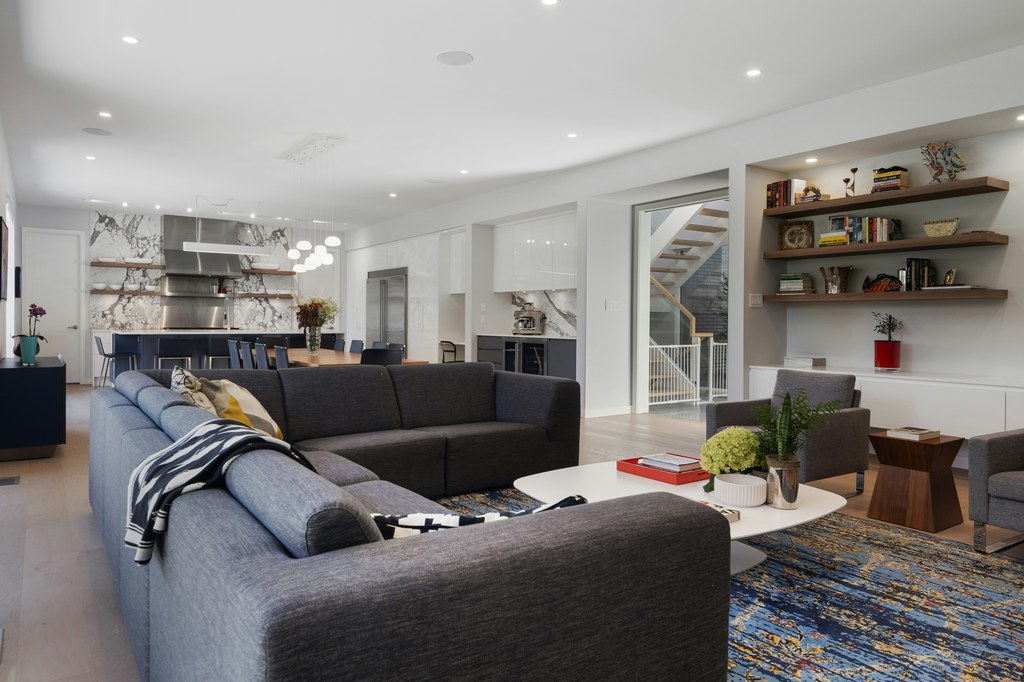
Introduction
Mixing a modern sofa with a vintage table or pairing a traditional cabinet with contemporary seating can work when the pieces share a clear relationship. This guide explains how to mix furniture styles by checking function, scale, visual weight, color temperature, and shape before you buy. It is designed for anyone keeping existing furniture while adding something new. You will learn what should coordinate, what can contrast, which combinations are easier to manage, and how to test a new piece before it enters the room.
Table of Contents
How Do You Mix Furniture Styles Without Clashing?
A useful way to understand how to mix furniture styles is to begin with the furniture that is staying, establish one dominant direction, and give each new piece at least one clear connection to the room. This sequence is more reliable than buying several individually attractive pieces and trying to unite them later with pillows or rugs.
Start With the Furniture You Plan to Keep
Identify the largest, most expensive, or hardest-to-replace piece. In a living room, that is often the sofa; in a dining room, it may be the table. Its size, comfort, material, and silhouette should influence what comes next. A deep, relaxed sofa, for example, will rarely feel balanced beside two tiny formal chairs.
Choose One Dominant Direction
Let one style control most of the room’s visual weight. The familiar 80/20 rule can help, but do not count pieces mechanically. One oversized traditional cabinet may have more influence than three small modern tables. Use the secondary style selectively through an accent chair, coffee table, or media console.
Give the New Piece One Clear Connection
Different furniture styles do not need to match in every detail. Connect a new piece through at least one strong quality:
- Similar scale or visual weight
- A repeated warm or cool color direction
- A shared material or finish
- Related curves or straight lines
- A similar level of formality
The connection should be visible in the furniture itself, not created only by accessories.
What Should Match—and What Can Be Different?
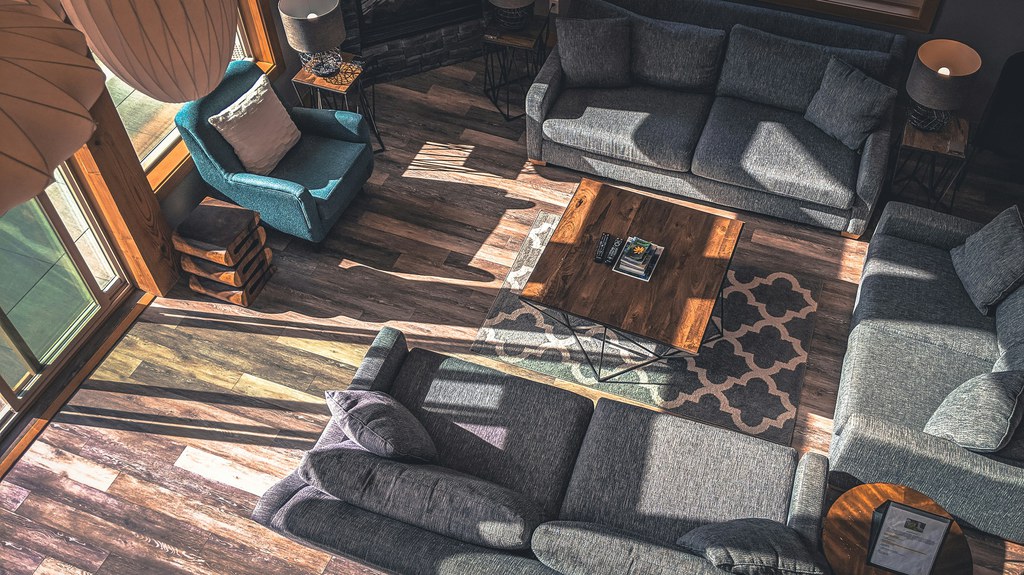
Successful mixing depends on separating structural compatibility from decorative variety. Features that affect sitting, reach, movement, and balance should usually coordinate. Style labels, exact materials, and furniture eras can differ more freely because they add character without necessarily reducing comfort or function.
| Should Coordinate | Can Be Different |
| Scale and visual weight | Exact style label |
| Functional heights | Furniture era |
| Walkway and opening clearance | Upholstery material |
| Warm or cool color direction | Light and dark values |
| Level of formality | Curved and straight shapes |
| Daily-use function | Leg and base design |
Match the Qualities That Affect Use
Compare sofa and chair seat heights. Check whether a coffee table is easy to reach, dining-chair arms fit beneath the tabletop, and cabinet doors or reclining seats can fully open.
These relationships matter more than whether both descriptions say “modern.” When mixing leather and fabric furniture, check comfort, scale, maintenance, and color undertones before treating the material contrast as a style feature.
Contrast One or Two Decorative Qualities
A fabric sofa can work with a leather chair, and a curved chair with an angular table. Keep scale, color direction, or formality connected while one or two decorative qualities differ.
Avoid an almost-match. Two slightly different walnut finishes can look accidental, while walnut paired with black oak or pale ash reads as deliberate contrast.
How Do Scale and Visual Weight Keep the Room Balanced?
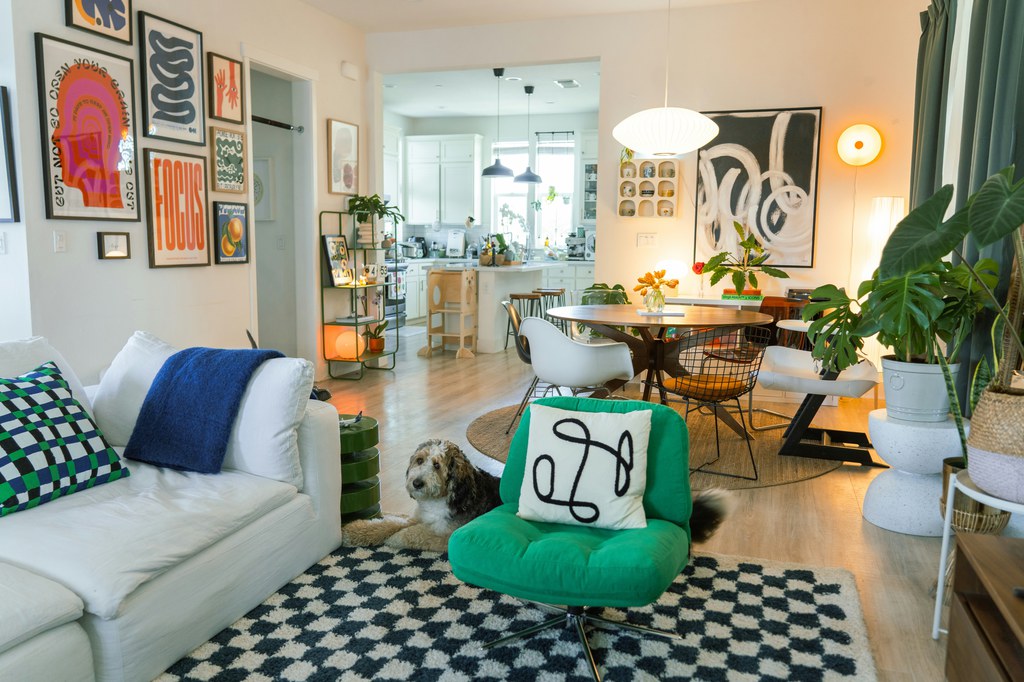
Dimensions show how much floor space a piece occupies, while visual weight describes how large or heavy it appears. Dark color, thick arms, solid bases, and tall backs increase visual weight. Glass, open legs, pale upholstery, and slim frames reduce it. Both matter when combining furniture.
Compare More Than Overall Width
Check back and arm height, cushion depth, base thickness, and visible floor. A bulky sofa can support a substantial coffee table, but a tiny wire-frame table may look temporary beside it. A tall traditional chair can also overpower a low-profile sofa.
Distribute Heavy and Light Pieces
Do not place every dark, tall, or solid piece on one side. Balance a large sofa with two lighter chairs, a long media console, or a cabinet across the room. Pairing two different sofas in one living room also becomes easier when their seat heights and visual presence feel comparable, even if their materials differ.
Which Furniture Style Combinations Are Easier to Mix?
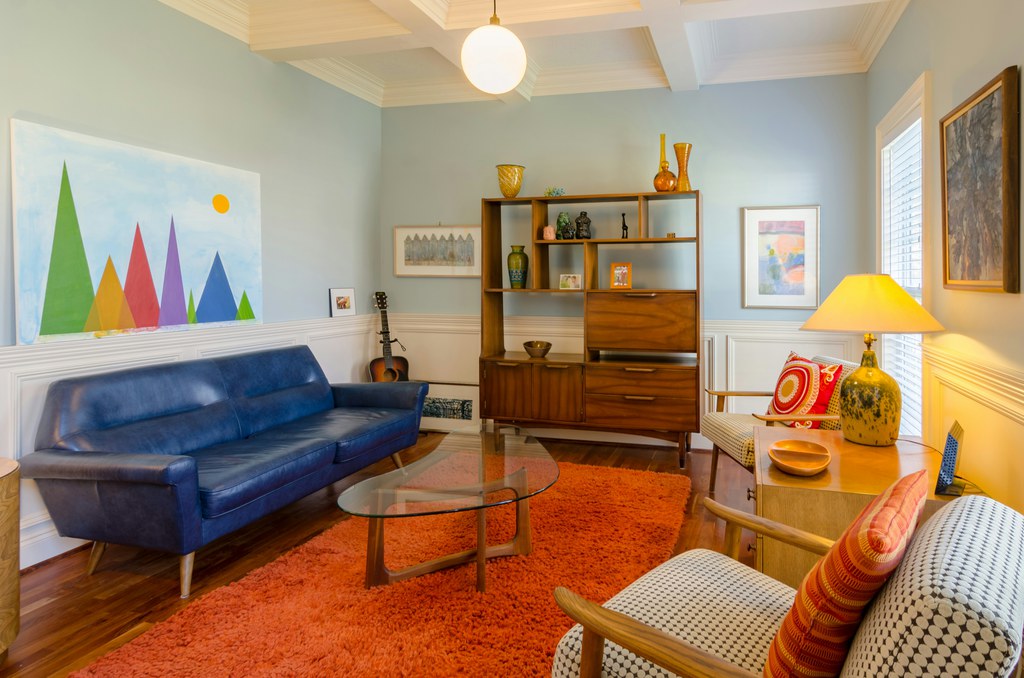
Some pairings share enough structure or material language to work with less adjustment. The goal is not to copy a preset room, but to understand what connects each combination and where it can go wrong.
| Style Combination | Why It Works | Main Risk |
| Modern + Mid-Century Modern | Clean lines and limited ornament make warm wood easy to bridge. | Too many thin legs can feel sparse or overly retro. |
| Modern + Traditional | Simple forms balance carved wood, curves, or classic upholstery. | Two large statement pieces may compete. |
| Scandinavian + Organic Modern | Both use natural materials, soft neutrals, and restrained shapes. | An all-pale palette can lack depth. |
| Contemporary + Art Deco Accents | A quiet base gives metal, curves, and gloss a clear role. | Repeating shine and bold geometry can feel theatrical. |
| Minimalist + Postmodern Accents | Open space lets one sculptural piece become a focal point. | Several unusual pieces can remove the calm. |
Modern and mid-century modern are easiest when the modern piece stays simple and the mid-century element supplies warm wood or tapered legs. Modern and traditional work better when only one large piece carries ornate detail. Scandinavian and organic modern rooms often need a darker accent for contrast.
When you mix wood tones in a living room, related undertones usually matter more than matching the exact species or stain.
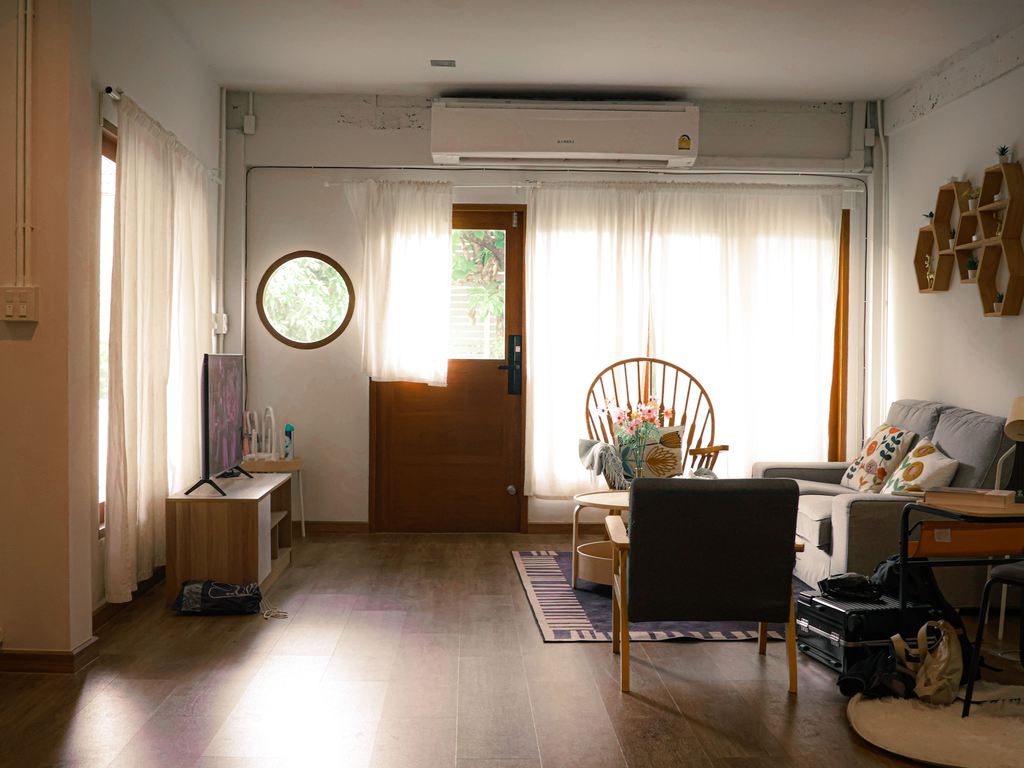
How Can You Test Furniture Compatibility Before Buying?
Product photography can hide differences in height, depth, finish, and visual weight. A useful test combines measurements with side-by-side comparison. It should also account for doors, drawers, reclining motion, and everyday household movement rather than judging the new item alone.
Check the Dimensions That Affect the Pairing
Record the furniture you own, then compare:
- Sofa and chair seat heights
- Coffee-table height and length
- Dining-chair height, width, and arm clearance
- Space between dining-table legs
- Cabinet, recliner, and walkway clearance
Use painter’s tape to mark the footprint. It quickly reveals whether the item crowds a walkway, blocks storage, or leaves room to pull out a chair.
Compare the Pieces Side by Side
Place straight-on product images on the same page. Compare leg height, thick versus slim bases, curved versus angular forms, warm versus cool finishes, and competing focal points.
This is a practical way to learn how to mix different styles of furniture online, where scale is harder to judge than it is in a showroom.
Use the Furniture-Only Test
Temporarily ignore the rug, pillows, plants, and artwork. Ask whether the main pieces still look balanced. Accessories can strengthen a relationship, but they cannot fix a table that is too small, a chair that sits too high, or a recliner that blocks the main walkway.
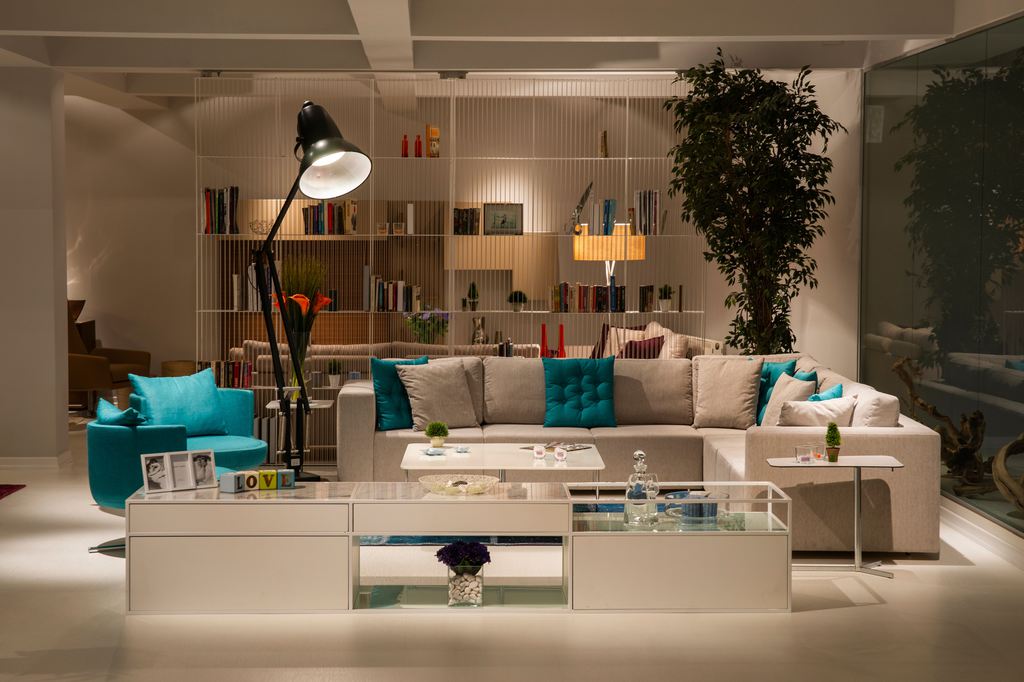
Which Furniture Pairings Need the Most Care?
Some pairings create more problems because their heights, functions, and visual roles are closely connected. Check these combinations before selecting a new style. The goal is not to make them match, but to prevent contrast from interfering with comfort, movement, storage, or the room’s main focal point.
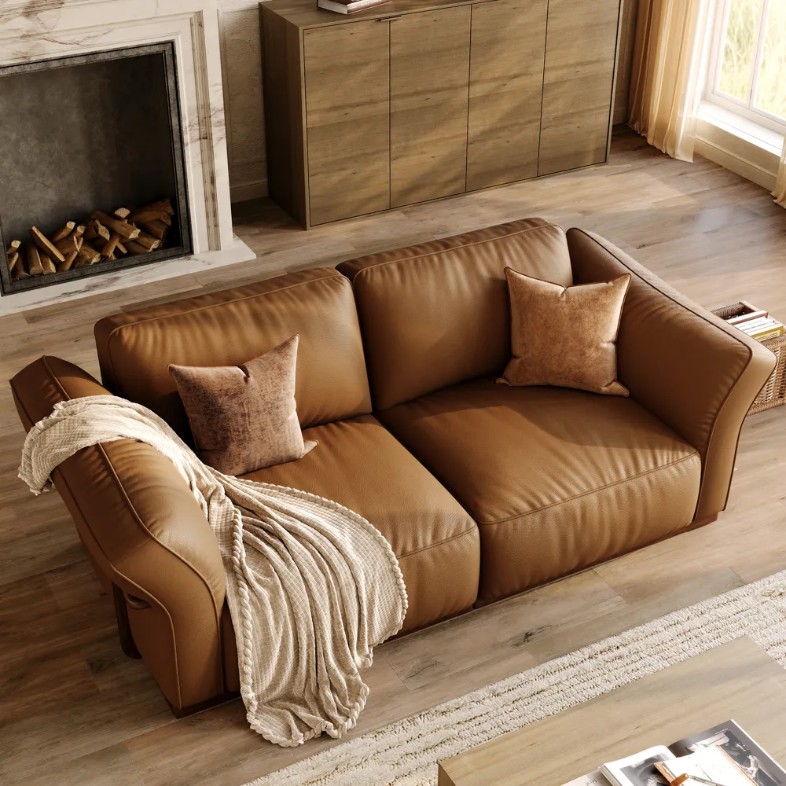
Sofa and Accent Chair
For a living room that combines a substantial leather sofa with lighter accent seating, the Cronus-Brown Genuine Leather Modular Sofa creates a clear visual anchor without requiring every piece to share the same style. Its matte brown top-grain leather adds warmth, while the modular design suits flexible seating arrangements. Pair it with a slimmer fabric or wood-framed chair to balance its visual weight.
Sofa and Coffee Table
Check reach, table height, length, and base weight. A sculptural table can contrast with a simple sofa, but it still needs enough surface area and presence to serve the seating group.
Sofa and Media Console
These are often the room’s two longest pieces, so both should not demand equal attention. Compare length, height, wood temperature, and base design. A quiet media console can support a bold sofa; a sculptural console suits restrained seating.
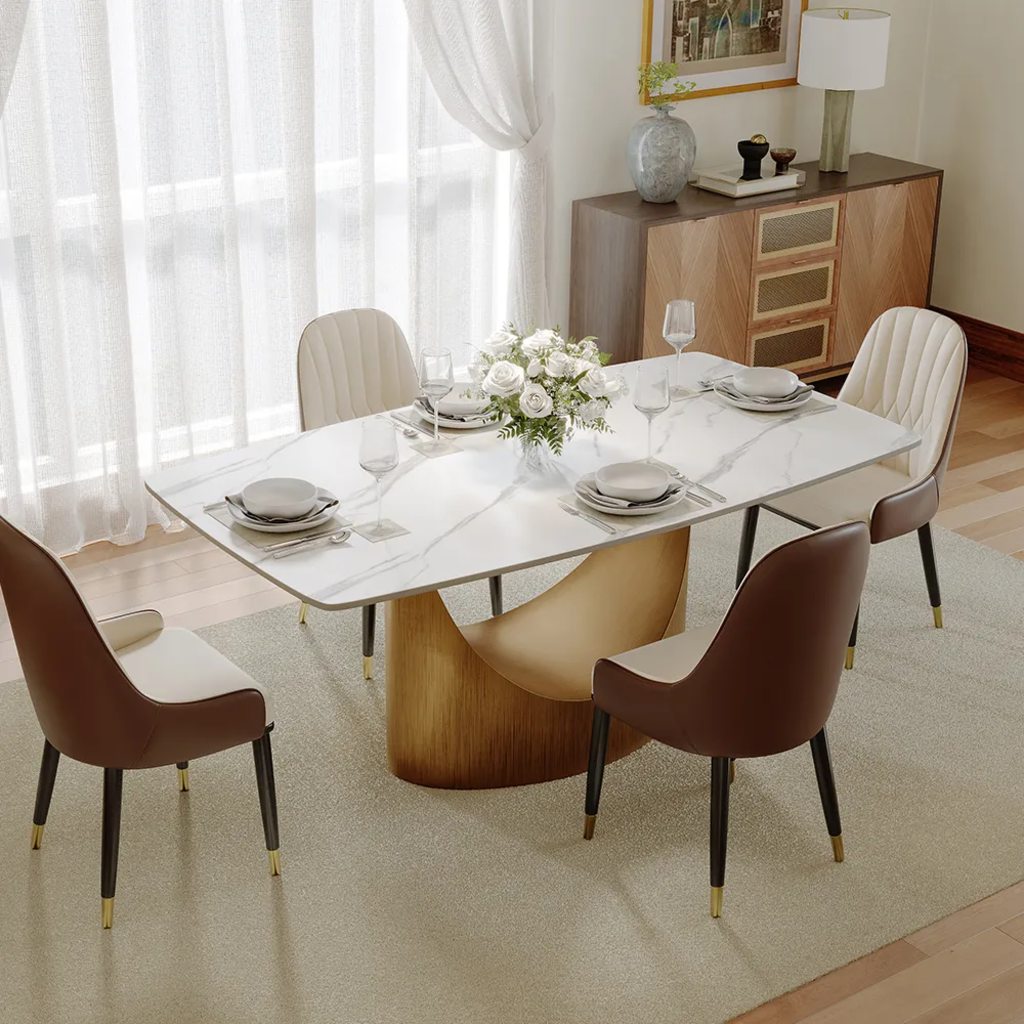
Dining Table and Dining Chairs
Chairs may differ from the table in material or era, but seat height, arm clearance, width, and leg placement must work together. Also check the table apron and supports.
When you want the dining area to act as a steady anchor while mixing styles elsewhere, the Hobart-63″Modern Dining Table Sets keeps the main seating group visually connected. Its matte sintered stone surface, metal base, and PU leather chairs create a restrained modern foundation, leaving room for a warmer sideboard, sculptural lighting, or a contrasting rug.
What Makes Mixed Furniture Look Accidental?
A room usually looks mismatched when each piece introduces a new idea without connecting to what is already present. Watch for these warning signs:
- Several large pieces compete as focal points.
- Furniture heights interfere with use.
- Similar finishes are close but not matched.
- All dark or solid furniture sits on one side.
- A third style is added without solving a functional need.
- Drawers, recliners, or walkways lose clearance.
- Pillows and rugs are doing all the connecting work.
A new item should improve seating, storage, surface space, or movement while repeating one recognizable quality already in the room.
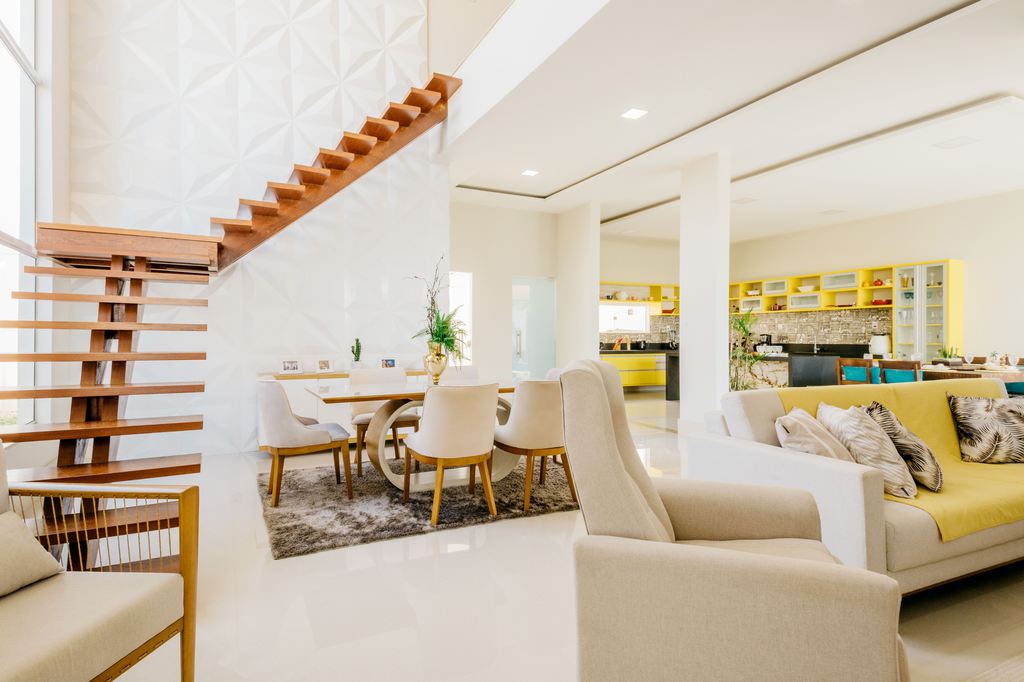
Conclusion
Learning how to mix furniture styles is less about following a fixed formula and more about checking relationships. Start with the furniture you will keep, let one style dominate, and coordinate function, scale, height, and visual weight before varying material or era. Clear contrast usually looks better than an almost-match. Before purchasing, compare product images, mark the footprint, and confirm every moving part has space. The right addition should make the room easier to use while creating one visible connection to what is already there.
Frequently Asked Questions
Can Adjacent Rooms Use Different Furniture Styles?
Yes. Enclosed rooms can have more independent identities. In an open layout, repeat one wood tone, upholstery color, metal finish, or shape across both areas. Shared flooring helps, but the connecting element should also be visible from the main sightline.
Can a Small Living Room Mix Three Furniture Styles?
Yes, when the third style appears in only one small accent piece rather than another full-size seat or cabinet. Keep the main seating group visually consistent, preserve open floor space, and remove the third style if it requires extra decor to make the combination feel intentional.
How Can I Break Up an Old Matching Furniture Set?
Keep the piece that is most comfortable, useful, or expensive to replace. Move one matching item elsewhere, then replace a smaller piece such as the coffee table, accent chair, or nightstand. Choose a clearly different shape or material instead of a near-match.
Can a Power Recliner Work With Non-Reclining Furniture?
Yes, if the seat height, back height, upholstery weight, and overall scale relate to the fixed seating. Leave room for the full reclining path and plan the power-cord route. A repeated upholstery color can help the mechanical piece feel integrated.
Do All Metal Finishes Need to Match?
No. Select one dominant finish and repeat it at least once, then use a second finish as deliberate contrast. Black with brass is often clearer than two slightly different gold finishes. Give large metal bases more visual weight than small handles or decorative details.


[…] furniture styles are already present, the same principle extends beyond color. Understanding how to mix furniture styles without looking mismatched helps keep scale, shape, and visual weight connected even when the sofa, […]
[…] the room works well, use a few repeated details to make it feel intentional. Learning how to mix furniture styles does not mean combining random pieces. Choose one or two elements to repeat across the room, such […]