 By Kelvin
Introduction
A white ring, dark patch, raised grain, or swollen edge does not call for the same repair. If you are searching for how to fix water damage on wood coffee table surfaces, start by identifying whether the moisture affected only the finish, reached the wood or veneer, or damaged the panel underneath. This guide gives you a safe first response, a symptom-based repair plan, and clear signs that the table needs full refinishing or replacement instead of another home remedy.
Table of Contents
What Type of Water Damage Does Your Coffee Table Have?
The safest way to approach how to fix water damage on wood coffee table tops is to diagnose the visible symptom before choosing a tool. Wood can swell as it absorbs moisture and shrink as it dries, while bonded wood panels may respond differently from solid wood. A quick inspection helps separate a finish problem from deeper material damage.
| What You See | Likely Damage | Safest Next Step |
| White or cloudy ring | Moisture trapped in or beneath the finish | Let it dry, then test a gentle finish-level treatment |
| Dark brown or black mark | Moisture has reached the wood | Consider localized refinishing or professional treatment |
| Rough, slightly raised grain | Wood fibers absorbed moisture | Dry fully, then smooth only if the material permits |
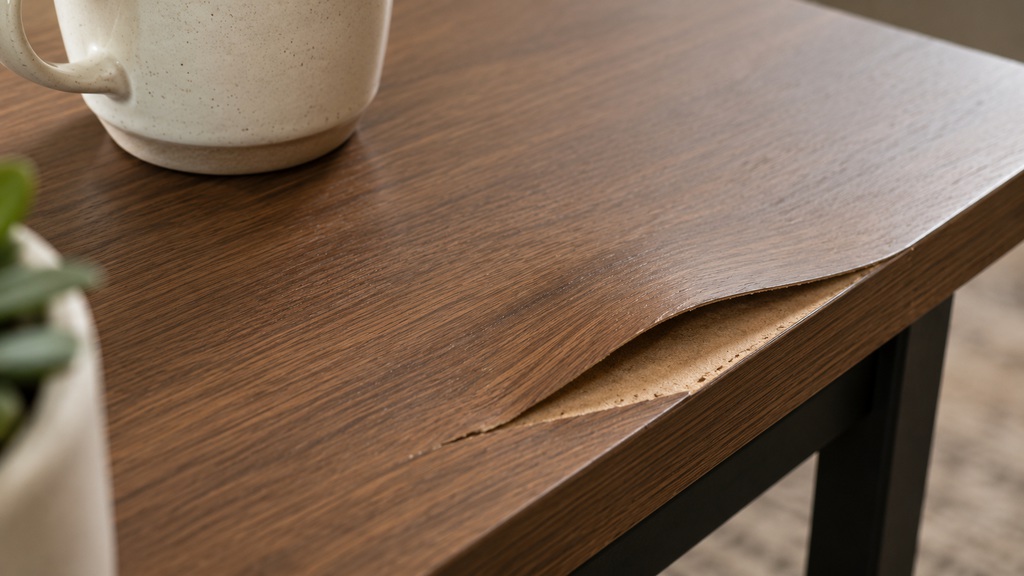
| Bubble or lifted skin | Finish failure or veneer separation | Identify the layer before pressing, gluing, or sanding |
| Soft, swollen edge | MDF or particleboard core damage | Check stability, especially near screws and hardware |
| Warped tabletop | Deeper dimensional change | Assess whether full refinishing or replacement is practical |
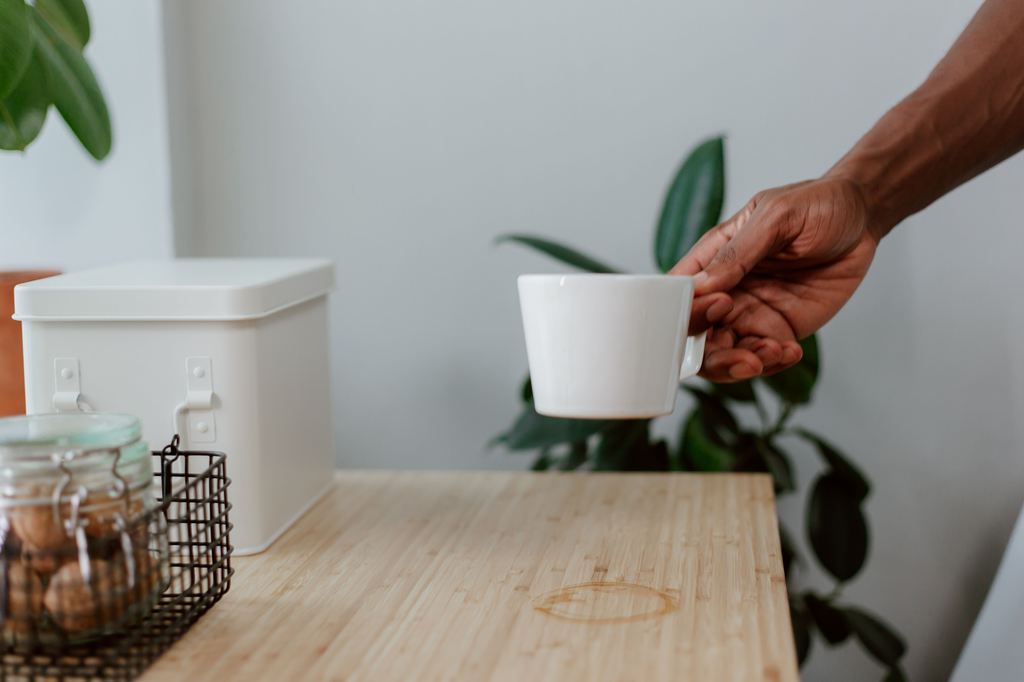
A water stain on wood table surfaces is usually easier to judge in indirect daylight. Look from a low angle, run a dry fingertip across the area, and press very lightly near the edge. Do not pry at a bubble or scratch the finish to “see what is underneath.”
What Should You Do Before Trying a Repair?
Move quickly after a fresh spill, but do not rush into sanding or heating. The first goal is to remove standing liquid and let the table stabilize without adding more moisture, oil, or finish.
- Blot the spill with an absorbent cloth instead of rubbing it across the grain.
- Remove books, trays, coasters, and plant pots so hidden moisture can escape.
- Open drawers or lift-top storage and inspect seams, underside edges, and hardware.
- Improve room airflow and let the table dry gradually away from strong direct heat.
- Check the product description or an unfinished underside to identify solid wood, veneer, laminate, MDF, or particleboard.
- Test any treatment in a hidden area before touching the visible mark.
Material identification matters because a solid wood top may tolerate limited sanding, while thin veneer can be sanded through. A soft engineered-wood core may look better after filling and touch-up, but cosmetic work cannot restore a weakened screw connection. The same diagnosis-first rule applies when you repair wood furniture by damage type.
How Do You Fix Water Damage by Damage Type?
Choose the least invasive method that matches what you can actually see. A surface-level white mark may need controlled warmth, while a dark stain or lifted veneer requires a different plan. Stop when the finish becomes sticky, dull, soft, or more uneven; continuing through several home remedies often creates a second problem.
White or Cloudy Water Rings
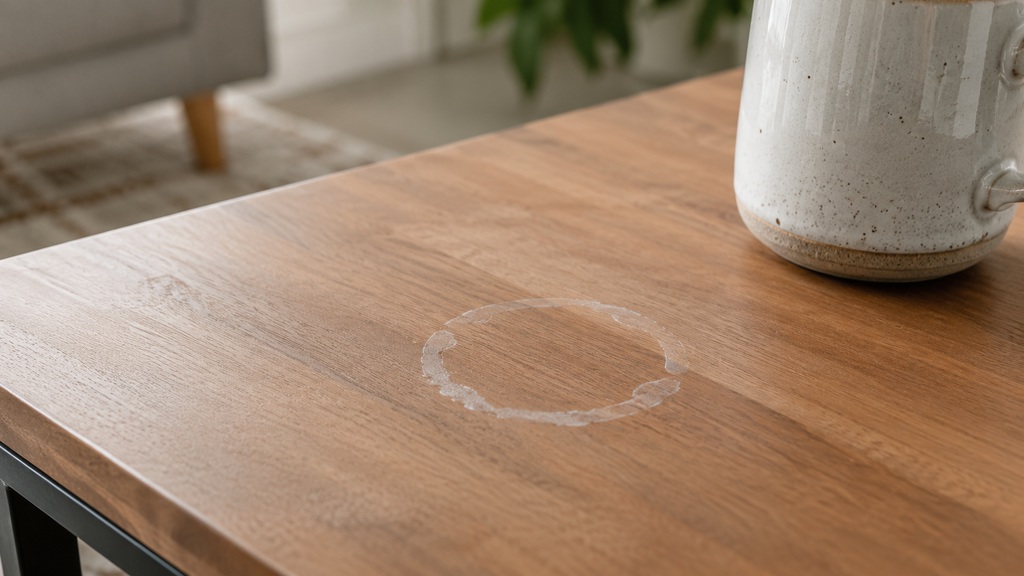
A white ring usually means moisture is trapped in or immediately beneath a clear finish rather than deep in the wood. Let the area dry first. Then place a clean, dry cotton cloth over the mark and apply a low-heat, no-steam iron for only a few seconds at a time. Lift the cloth and check after every pass.
Readers trying to remove water rings from a wooden dining table should follow the same restraint on a coffee table: use low heat, keep the iron moving, and stop if the surface softens or changes sheen. Do not use this method on bubbled veneer, painted finishes, or an unknown heat-sensitive coating.
Dark Brown or Black Water Stains
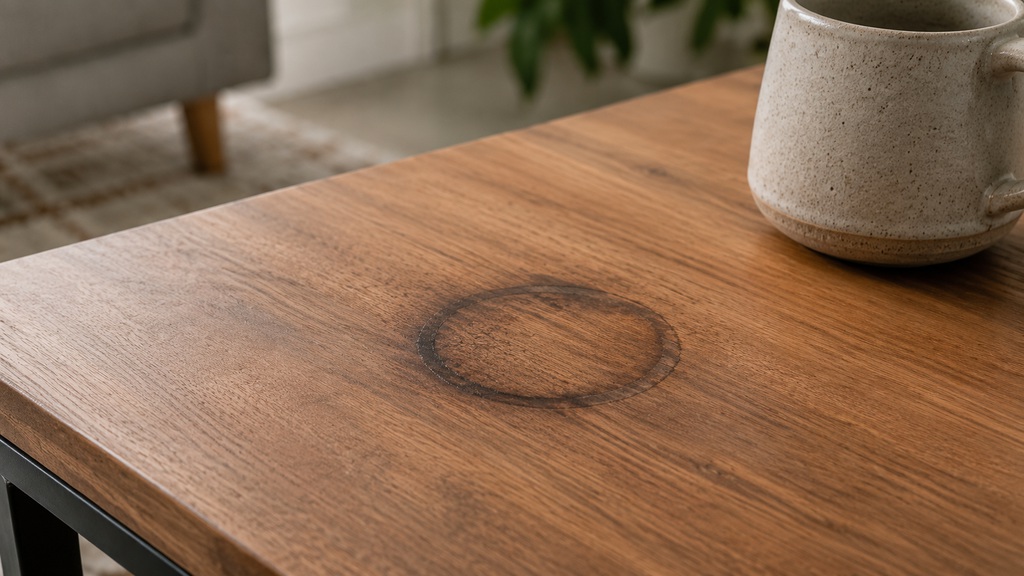
A dark mark usually indicates that moisture has passed through the protective finish and changed the wood below. Surface polishing will not remove it. Once the table is completely dry, a small solid-wood area may be stripped or sanded locally, recolored, and resealed. Veneer requires much lighter treatment because the real-wood layer may be very thin.
If the stain sits in the center of the tabletop, crosses several grain lines, or remains sharply visible after a small test repair, refinishing the entire top often produces a more even color and sheen. Valuable, antique, or unfamiliar finishes are better assessed by a furniture restorer.
Raised Grain or Peeling Finish
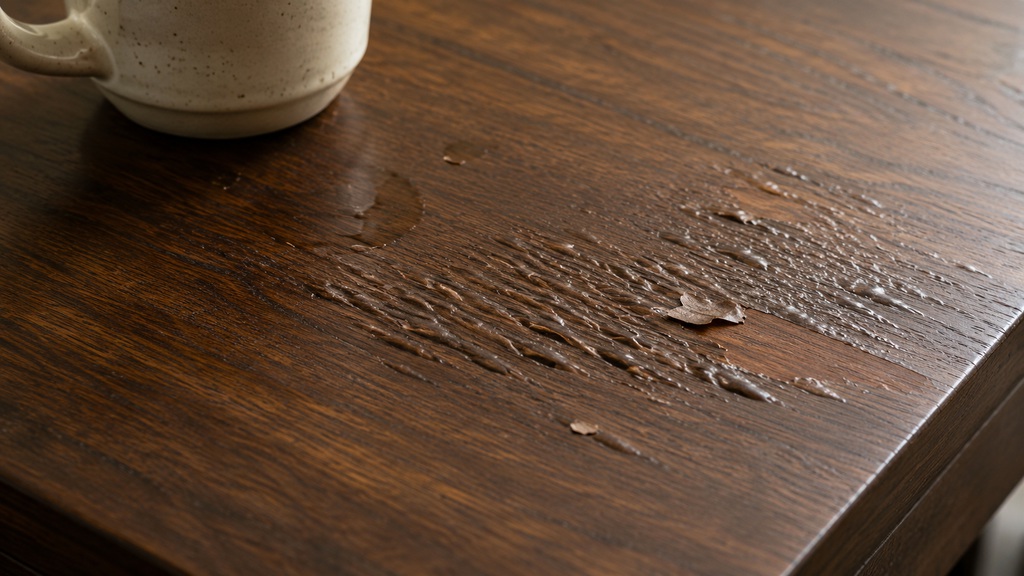
When wood fibers feel rough but the top remains firm and flat, allow more drying time before deciding whether material must be removed. On confirmed solid wood, smooth the affected area gently with fine-grit sandpaper in the direction of the grain. Remove the dust, blend the color if needed, and apply a compatible protective finish.
Do not treat stain and topcoat as interchangeable. Stain changes color; the clear finish provides the final sheen and surface protection. If the surrounding coating is already cracked, peeling, or cloudy across a broad area, a small patch may remain obvious.
Lifted Veneer or Swollen Engineered Wood
A lifted bubble may be veneer separating from its substrate, not solid wood swelling. If the veneer is intact and the panel underneath remains firm, a furniture professional may be able to re-adhere it with controlled pressure. Do not cut the bubble open or sand it flat before confirming what lifted.
MDF and particleboard behave differently. Once an edge feels soft, crumbly, or permanently enlarged, filler can improve appearance but may not restore the original bond or holding strength. Research on wood composites notes that moisture-related thickness swelling can be irreversible and can reduce panel performance after wetting. This becomes especially important around lift-top hinges, drawer slides, leg plates, and other fastened areas.
When Should You Repair, Refinish, or Replace the Tabletop?
The decision depends on damage depth, location, material, and how visible a patch will be during everyday use.
| Condition | More Practical Direction |
| One small white ring with a stable finish | Spot treatment |
| Minor raised grain on confirmed solid wood | Dry, smooth, color-blend, and reseal |
| Large dark stain or several damaged areas | Refinish the full tabletop |
| Lifted veneer over a firm panel | Careful re-adhesion or professional repair |
| Soft board around screws, hinges, or leg mounts | Stop using the mechanism and assess replacement |
| Severe warping, persistent odor, mold, or rotten wood | Professional evaluation or replacement |
A repair may be technically possible but still look distracting if it sits in the center of a glossy top. Check the table from the sofa, from the side, and under evening lamps before deciding that a small color match is acceptable. Solid wood often allows more restoration options than badly saturated veneer or composite panels, but the final decision should also account for labor, finish matching, and furniture value.

What Repair Mistakes Can Make Water Damage Worse?
Most failed wood table water damage repair attempts use the right tool at the wrong stage or on the wrong material. Avoid these common mistakes:
- Sealing, staining, or gluing a surface that still feels damp or cool.
- Using high heat to dry the entire tabletop quickly.
- Sanding veneer as aggressively as solid wood.
- Puncturing a bubble before identifying whether it is finish, veneer, or swollen board.
- Mixing oily, acidic, abrasive, and heat-based remedies on the same mark.
- Continuing to operate a lift top when screws loosen or the mounting panel feels soft.
- Matching the stain color but ignoring the original matte, satin, or gloss level.
A family may discover a pale ring after an iced drink sits on the table during movie night. That is a reasonable case for patient finish-level treatment. A planter that leaked unnoticed for a week and left a soft, raised edge is a different problem; polishing the top will not address the weakened material underneath.
How Can You Protect the Coffee Table After Repair?
Wait until the repaired finish has fully cured before returning trays, books, or drinks. Then use absorbent coasters for cold glasses, waterproof saucers under plants, and a stable tray for items that may drip. Wipe spills promptly and dry the surface rather than letting a damp cloth sit on it.
Match future care to the finish. Practical wood coffee table cleaning and maintenance tips should preserve the existing coating instead of repeatedly adding oil, wax, or polish that may not be compatible.
Conclusion
Knowing how to fix water damage on wood coffee table surfaces begins with identifying the damaged layer, not choosing a popular remedy. A stable white ring may respond to careful finish-level treatment, while dark staining, raised veneer, soft MDF, or movement around hardware requires more restraint. Let the table dry, confirm its material, test in a hidden area, and preserve intact finish whenever possible. When swelling affects structure or a patch cannot blend naturally, full refinishing or replacement may be the safer and more practical next step.
Frequently Asked Questions
What should I do if the white mark comes back after treatment?
If a white mark returns after briefly fading, moisture may still be trapped in the finish or the coating may already be compromised. Stop repeating heat treatments, allow several more days of airflow, and inspect nearby seams and the underside. A mark that returns after full drying may require localized refinishing.
What if swelling is near a lift-top hinge or drawer slide?
Stop operating the mechanism until the mounting area is checked. Warning signs include screws that spin without tightening, widening gaps, rubbing drawers, or panels that compress under light pressure. Cosmetic filler cannot restore a weakened connection; the hardware may require reinforcement, relocation, panel replacement, or professional repair.
Can water damage on a laminate coffee table be repaired?
Minor surface cloudiness may improve after careful drying, but laminate cannot be sanded and restained like solid wood. If water entered through an edge or seam and caused the core to swell, pressing the surface flat will not rebuild the panel. Small edge damage may be repairable, while widespread swelling usually favors replacement.
Should I add a glass or acrylic protector after repairing the table?
A glass or acrylic panel can reduce direct contact with future spills, but install it only after the repaired finish has fully cured. Use small clear bumpers to create airflow and prevent trapped moisture. This solution may suit homes with frequent drinks, although it changes the tabletop’s appearance, weight, and cleaning routine.
How long should the repaired table cure before normal use?
Follow the label for the exact stain, oil, wax, adhesive, or clear coat used. A surface that feels dry may still be curing underneath. Keep cold glasses, plant pots, trays, and heavy objects off the repair until the full cure period has passed, and avoid coverings that restrict airflow.


