 By Stephanie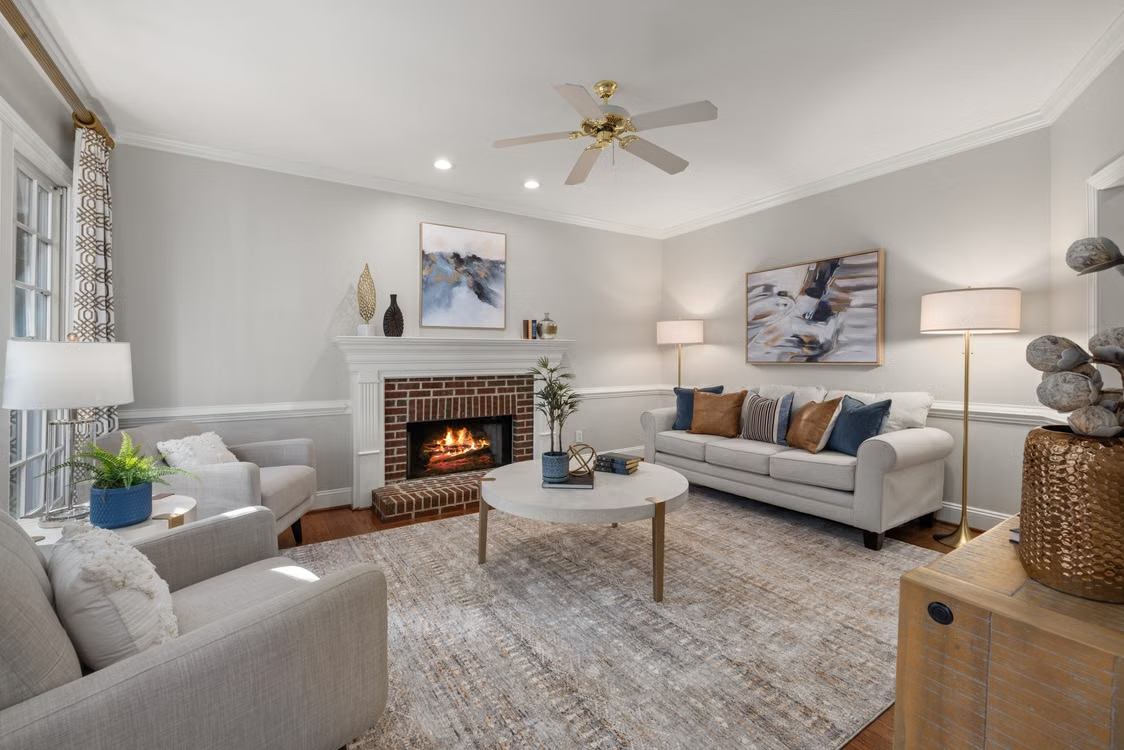
Choosing where to put TV in living room is not only about finding an empty wall. The right spot should feel comfortable on an ordinary weeknight, stay watchable when daylight fills the room, and give guests a clear view during a World Cup match night. Start with how people sit, gather, and use the space throughout the day. Then choose the wall, furniture, and storage that support those routines instead of making the entire room revolve around the television.
Table of Contents
The Best TV Position Begins With Seating
A television looks most natural when it supports the room’s main seating area instead of competing with it. Before considering wall mounts, media consoles, or decorative panels, decide where people will actually sit most often. That choice gives you a clearer, more comfortable starting point than simply choosing the largest blank wall.
Start With the Main Sofa
In most homes, the best location is the wall directly across from the main sofa. This gives the primary seats a straight viewing angle and keeps people from twisting their necks during a full game, movie, or weekend binge-watch.
Use this as your default layout:
- Put the TV opposite the main sofa whenever possible.
- Keep the TV aligned with the main seating area.
- Angle accent chairs slightly toward the TV instead of forcing them to face straight ahead.
- Leave enough open space for people to move around the seating group comfortably.
A well-planned living room with TV should still feel inviting when the screen is off. The sofa, rug, coffee table, and chairs should create a conversation area first, with the TV naturally supporting that arrangement instead of turning every seat into a front-row viewing chair.
Choose the Right TV Zone for Your Room
Not every living room has one perfect television wall. A fireplace, large windows, open floor plan, or narrow shape may require a different approach. Use this comparison before committing to a mount or console.
| TV Position | Best For | Main Benefit | Avoid It When |
| Full wall opposite the sofa | Rectangular living rooms | Straight viewing angle for most seats | The wall faces strong afternoon sun |
| Side wall near a fireplace | Fireplace-centered rooms | Keeps the TV lower and easier to watch | The sofa would need to face away from the room |
| TV in corner of living room | Open plans, awkward layouts, rooms with many windows | Saves wall space and reduces glare | Fixed seating creates extreme side angles |
| Built-in or media wall | Rooms needing storage | Hides devices, cables, and visual clutter | The niche is too shallow for ventilation |
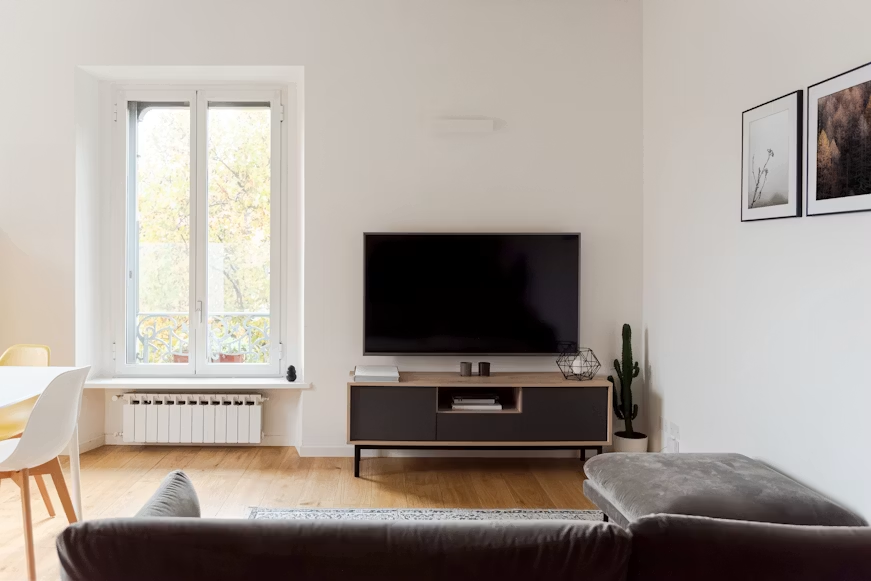
A corner setup works especially well when an open living room also connects to the kitchen or dining area. It gives the screen a defined home without blocking the best wall for artwork, windows, or a fireplace.
Choose a TV Wall That Works for Daytime Matches
Daytime matches expose problems that a quick evening test can hide. A wall that looks fine after dark can throw glare across the screen, interrupt access to the kitchen, or leave no workable space for a console. Check the room’s fixed features before choosing hardware.
Map the Non-Negotiables First
Walk around the room with a tape measure and identify the features that cannot move. These details decide whether a wall is practical, not just attractive.
Mark:
- Doors, patio access, and kitchen entrances
- Windows and the direction of strong daylight
- Fireplace openings, radiators, and air vents
- Existing electrical outlets and cable access
- The sofa, primary chairs, and likely guest seating
- Cabinets, drawers, and doors that need room to open
A wall may look ideal until you notice that it sits beside the kitchen entrance, blocks a cabinet door, or leaves no practical place for a console. Mapping those fixed features early helps you rule out walls that only work on paper.
In smaller or doorway-heavy rooms, a small living room layout that plans the TV wall around storage and clear movement makes it easier to see how the sofa, media zone, and everyday access points need to work together before you commit to a mount or console.
Test the Wall With Painter’s Tape
Before ordering furniture or calling an installer, tape the TV’s outline onto each possible wall. This takes ten minutes and reveals problems that are easy to miss on a floor plan.
Test each wall this way:
- Tape the screen’s full width and height at the proposed position.
- Sit in the main sofa and every secondary chair.
- Check the outline during daylight and after dark.
- Walk through the room as you normally would when coming in, serving food, or moving between the kitchen and seating area.
- Open nearby cabinet doors, windows, and drawers.
- Check whether the taped outline creates an awkward interruption in the room.
During a Saturday afternoon match, one couple found that their beautiful window-wall setup made the score almost invisible by 4 p.m. Moving the screen to the adjacent wall solved the glare without forcing them to close the shades for the entire game.
Plan Around Fireplaces, Windows, and Awkward Layouts
Some living rooms do not have an obvious TV wall. A fireplace may dominate the room, large windows can wash out the screen, and an open floor plan may leave little uninterrupted wall space. In these rooms, do not chase perfect symmetry. Choose the location that gives the main seating area a clear view and allows the room to keep its natural balance when the TV is off.
A fireplace does not automatically need a TV above it. That position often places the screen too high and too close to heat, so check the wall beside the fireplace or the wall opposite it first. Mount the TV over the mantel only when the setup does not force an uncomfortable upward viewing angle, the fireplace manufacturer permits nearby electronics, the wall remains within safe temperature limits during use, and a tilt or pull-down mount can reduce strain. When the fireplace is the room’s strongest feature, placing the TV on a lower console nearby usually creates a better balance than stacking both focal points on one wall.
Windows and unusual room shapes call for the same practical approach. Avoid placing the TV directly across from large windows, since daylight can wash out the picture during afternoon games and darker movie scenes. A wall perpendicular to the strongest light is usually the better choice. In a room with several windows, a TV in corner of living room can be the most effective solution, especially with a swivel mount that improves views from the sofa and dining area. In long, narrow rooms, place the TV on the shorter wall; in small rooms, use a low-profile console; and in open-plan spaces, allow the TV to sit slightly off-center when that keeps the main pathway clear.
Set TV Height, Distance, and Sightlines for Group Viewing
Once you have selected the wall, refine the viewing position. A screen can be on the right wall and still feel uncomfortable if it sits too high, too far away, or too far off-center from the main sofa. These measurements should guide your final placement before you install anything permanent.
Set the Screen Height From Your Sofa
Do not mount the TV based on the middle of the wall. Mount it based on the people sitting below it.
Sit in the main sofa and measure from the floor to your eye level. Mark that height on the wall. The center of the television should sit close to that mark. This keeps your neck in a neutral position during long viewing sessions.
Avoid these common mistakes:
- Hanging the TV close to the ceiling because the wall is tall.
- Mounting the screen above a mantel without checking the viewing angle.
- Using bar-height seating as the only reference point when the sofa is the main seat.
- Choosing a tall console that pushes the TV above comfortable eye level.
Check Viewing Distance and Every Seat Before a Big Match
Distance should feel immersive, not overwhelming. A larger TV can work beautifully in a small room when the wall, sofa, and traffic flow still have enough space to breathe.
The Society of Motion Picture and Television Engineers is commonly cited for using a minimum 30-degree field of view as a useful baseline for mixed viewing. That supports a practical rule: choose a screen size based on where people sit, not on how much empty wall you have.
Test the setup from every likely seat. A chair that feels fine for a 20-minute show may become uncomfortable during a full match or movie. Swivel chairs, lightly angled accent chairs, and a sectional with one open end can improve side views without making the room feel like a theater.
Arrange Your Living Room for a World Cup Watch Party
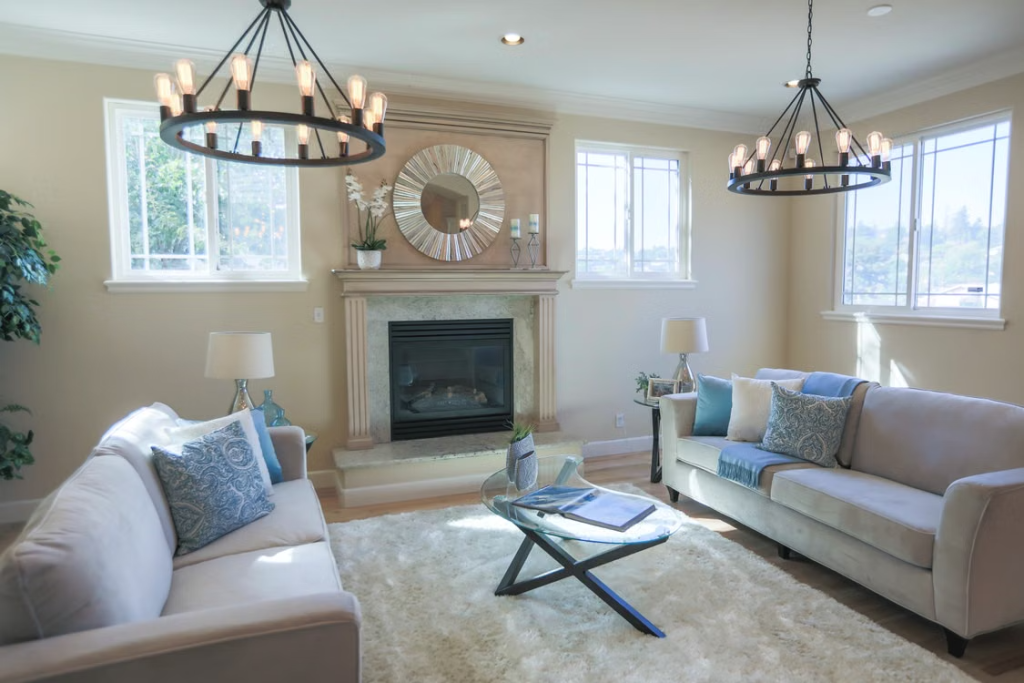
A World Cup watch party should feel easy to host, not like a temporary furniture shuffle. The best arrangement gives guests a clear view, keeps drinks and snacks within reach, and leaves a simple route between the kitchen and seating area. It should also be easy to reset once the final whistle blows.
Create a Comfortable Watch-Party Layout
Start with the sofa facing the TV, then place one or two chairs at an angle. This creates better sightlines without making guests feel like they are sitting in a waiting room.
For a comfortable World Cup watch night:
- Keep the coffee table reachable from the sofa.
- Keep one open route between the kitchen and the seating area for drinks, snacks, and late arrivals.
- Add side tables so guests have a place for drinks without reaching across the coffee table.
- Avoid placing an ottoman or extra chair where it blocks access to the main sofa.
- Store remotes, chargers, and game controllers close to the screen.
- Add a floor lamp or dimmable lighting behind the seating area to reduce harsh contrast.
The best furniture arrangement for watching TV keeps the coffee table within reach while leaving enough room for people to move through the space comfortably.
Let Storage Support the Room
Media storage should handle the real items that collect around a television: streaming boxes, consoles, routers, remotes, extra controllers, board games, and charging cables. Closed storage helps the space reset quickly after a busy evening.
After a busy evening, sliding doors make it easy to tuck away game controllers, extra remotes, charging cords, and snack trays in a few seconds. The room can look settled again without asking anyone to reorganize every shelf before bed.
Wall Mount vs. Media Console: Choose the Right Base
A wall mount and a media console solve different problems. The better option depends on your room size, storage needs, cable setup, and whether you want the TV area to feel light and architectural or warm and grounded. Once the wall and seating plan are settled, choosing between them becomes much easier.
When a Wall Mount Makes Sense
A wall mount works best when floor space is limited or when you need flexibility in an open layout. It can also keep the room visually lighter when you have a small sofa, narrow rug, or compact walkway.
Choose a wall mount when:
- You need to free up floor space.
- You can safely hide or manage the cables.
- You want a swivel or tilt feature.
- The TV wall has enough width for balanced placement.
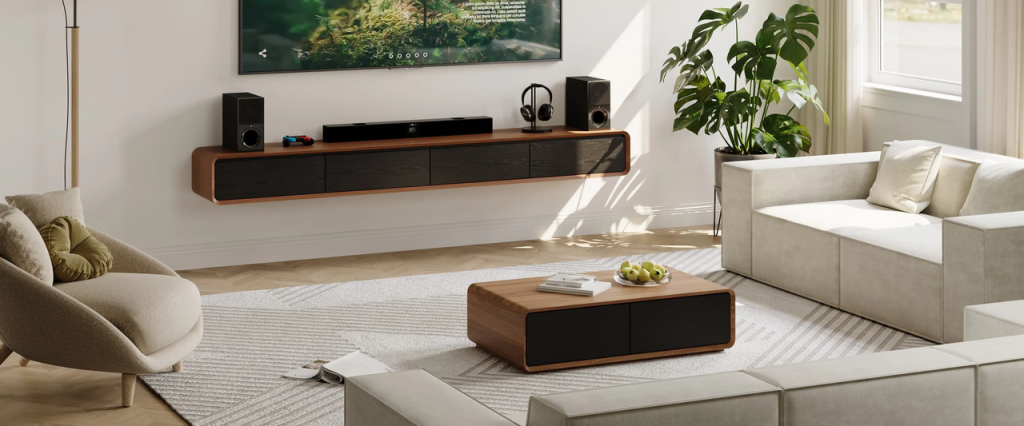
A mount still needs furniture below it. A low cabinet, floating shelf, or storage bench can keep devices, sound equipment, and daily clutter from spreading across the floor.
That open floor is especially valuable in a narrow room, where a standard console can make the space between the sofa and kitchen feel tight. A Merrin floating TV stand with three enclosed cabinets gives streaming devices, remotes, and small accessories a discreet place to live while keeping the area below clear for easier cleaning and a more open feel. Its adjustable mounting height also makes it easier to coordinate the cabinet with the wall layout you have already planned.
Before installation, confirm that your wall type matches the product’s mounting guidance. This floating design is not recommended for hollow gypsum board or standard drywall.
When a Media Console Is Better
A media console is the practical choice when you need enclosed storage, prefer not to drill into walls, or want the TV zone to feel warmer and more complete. It also makes future furniture changes easier because the TV can move with the layout.
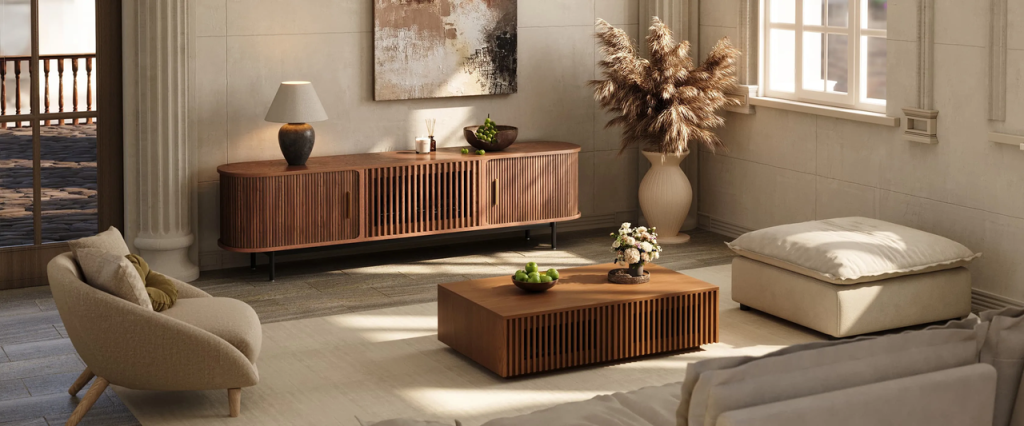
Once the room needs more storage or you want the freedom to shift the TV later, a freestanding media console becomes the easier choice. The Eos Tambour Door TV Stand with hidden media storage has three cabinets, two interior shelves, and cable openings for the devices that tend to collect around the screen. Its rolling ash tambour doors keep visual clutter out of sight while still allowing remote signals through, and its 70.87-inch-wide, 21.25-inch-high profile gives a larger TV a grounded base without making the wall feel crowded.
When guests arrive, controllers, charging cords, and everyday clutter can disappear behind the doors instead of collecting on the coffee table. Once the evening is over, the TV area still looks considered rather than temporarily set up.
A modern TV stand with a minimal cable setup can keep media devices accessible while helping the wall look finished rather than cluttered.
Conclusion
The best television position is the one that works in real life: a bright Saturday match, a quiet weeknight, a child racing through the room, and friends arriving with drinks. Start with the people who use the space, not the largest blank wall. Test the wall before installing anything, then build the seating, storage, and lighting around the way your home actually functions. When those pieces work together, the result is more than a living room with TV—it is a comfortable, Ready To Live In space for everyday rituals and memorable match nights.
FAQs About TV Placement in a Living Room
How Much Wider Should a TV Console Be Than the TV?
Choose a console that is wider than the TV, ideally leaving visible space on both sides. This makes the screen look visually grounded and gives you room for a soundbar, a small lamp, or simple decor. Avoid a stand that is narrower than the television’s outer edges.
Can an 85-Inch TV Work in a Small Living Room?
Yes, provided the viewing distance, pathway, and wall proportions still work. The question is not whether the screen physically fits. Check whether the sofa has enough distance, whether the TV blocks windows or storage, and whether people can walk through the room without brushing past it.
Where Should a Soundbar Go in a TV Setup?
Place the soundbar directly below the TV, centered with the screen. Keep its front edge clear so sound is not blocked by cabinet doors or decor. If it sits inside a console, make sure the compartment is open enough for airflow and sound to travel freely.
Should a TV Face the Front Door?
Usually, no. A TV facing the front door can make the screen the first thing people see when entering and may create glare from exterior light. It can work in a small apartment, but only when the entrance path stays clear and the screen does not dominate the room.


