 By Stephanie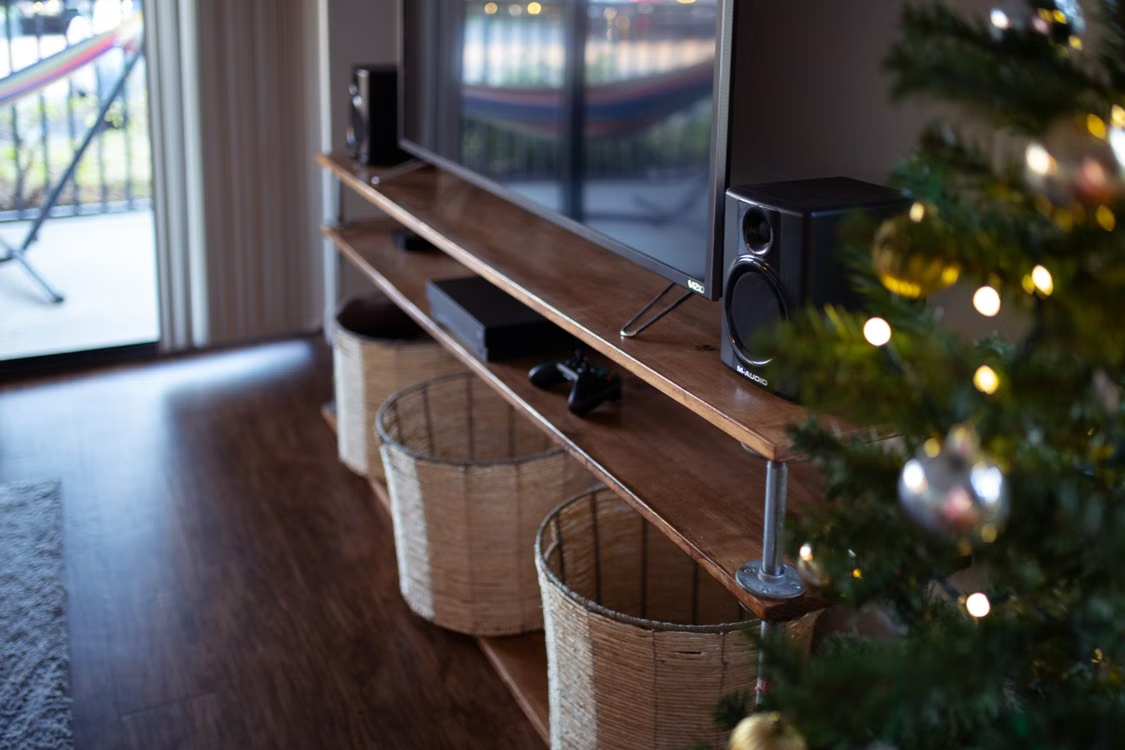
Choosing living room furniture gets easier when you stop shopping by category and start planning around real life. Your room may need to handle quiet mornings, a pet taking over the sofa, a summer World Cup watch party, or an overnight guest. The best choices support those moments without blocking the kitchen route or crowding the room too soon. This guide explains how to choose living room furniture in a practical order: find daily friction points, buy the essentials first, build a connected core trio, and confirm the fit before delivery.
Table of Contents
Start With a Daily Friction Audit
Before comparing colors, fabrics, or furniture styles, notice what does not work in your current routine. Maybe someone has nowhere to put a drink during TV time. Maybe blankets, toys, and chargers collect on the sofa. Maybe guests end up standing because the room has only enough seating for two.
Write down the answers to four questions before you shop:
- Daily users: How many people use the room on a normal evening?
- Main routine: Is the room mostly for TV, conversation, reading, work, or family downtime?
- Repeat problem: What regularly ends up on the floor, sofa arms, or dining table?
- Movement: Which route must stay open—from the entry to the kitchen, patio, hallway, or windows?
A living room furniture layout that protects clear walkways begins with the same principle: furniture should make daily life easier before it makes a room look finished.
Picture a 12-by-15-foot family room where friends visit twice a month. Two nesting stools may solve the occasional seating shortage better than a large accent chair that narrows the route to the kitchen every day.
Buy the Right Furniture in the Right Order
An empty living room can make every furniture category seem essential. That is how overbuying starts. Begin with the pieces that support everyday comfort, easy reach, and necessary storage. Then give the room time to show you what it still needs.
Start with what the room needs on a normal evening, then let repeated habits determine what you add later.
| Buy First | Choose It When | Add Later If Needed |
| Main sofa, sectional, or sofa bed | It provides daily seating and sets the room’s overall scale. | Accent chairs, when regular seating still falls short. |
| Coffee table, ottoman, or side-table pair | People need a reachable place for drinks, remotes, books, or snacks. | Extra end tables, when one or more regular seats still lack a useful surface. |
| TV stand or media console | A TV, game console, router, soundbar, or cables need an organized home. | Bookcases, display cabinets, or decorative storage, once actual storage needs are clear. |
A wall-mounted TV may not need a media console, and two movable side tables can work better than a large coffee table in a smaller room. The goal is not to buy every kind of living room furniture. It is to make the room work well on an ordinary evening.
Wait a week or two before adding a large chair, second cabinet, or oversized ottoman. Repeated habits will tell you what to buy next. Drinks on the floor point to a missing surface. Throws and toys on the sofa point to a storage problem. Regularly crowded seating points to a need for flexible extra seats.
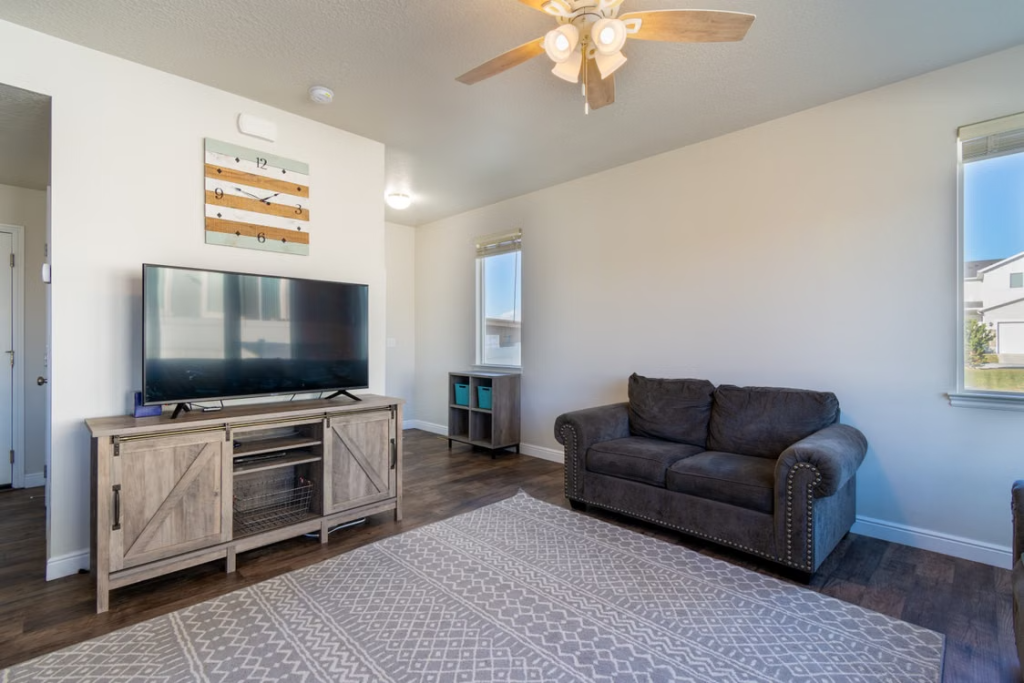
Build Your Living Room Core Trio as One System
Once you know which pieces belong in your first purchase phase, choose the sofa, coffee table, and TV stand as a connected system rather than three separate purchases. The three pieces affect one another every day. Use the sequence below to make sure one choice does not create a problem for the next.
| Core Trio Step | Decide This First | Then Check This |
| Seat | How many people need to sit, stretch out, or sleep here? | Will the sofa’s size or extended position limit the table and walkway? |
| Reach | What needs to stay within arm’s reach during daily use? | Does the coffee table leave enough room to stand up, pass through, and open nearby storage? |
| Store | Which devices, cords, remotes, and everyday items need a permanent home? | Can the TV stand hold them with enough depth, airflow, and door clearance? |
Start With Seating for Your Longest Use Sessions
The sofa sets the scale for everything around it. Decide how people will use it for the longest stretches of time. A compact, upright sofa can work for conversation or reading. A room built around movies, weekend lounging, or shared TV time usually needs a deeper seat and more room to stretch out.
Check three things before choosing the sofa:
- Who uses it most often: one person, a couple, a family, or frequent visitors?
- How do people sit: upright, curled up, reclined, or stretched out?
- Does it need to handle pets, children, naps, or overnight guests?
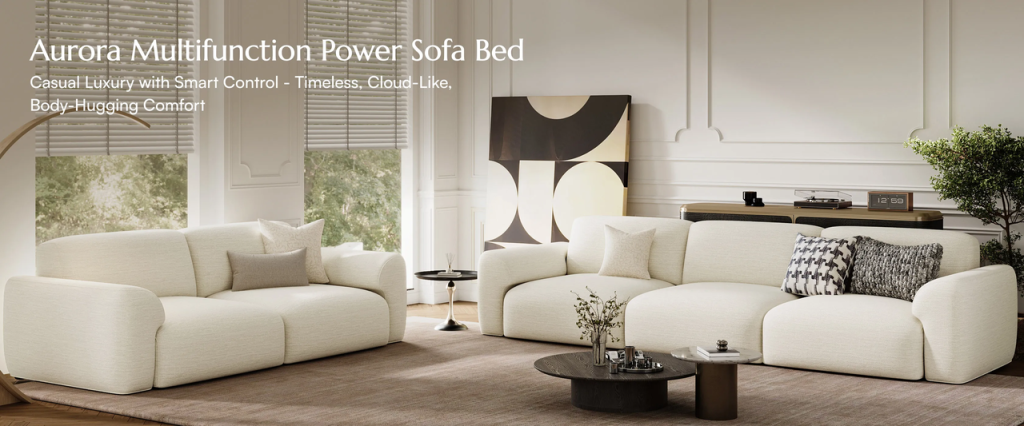
If one sofa needs to cover weeknight TV, deep lounging, and the occasional guest, a multifunctional design can keep you from buying a separate sleeper or a bulky extra chair. The Aurora Power Sofa Bed moves by remote into lounge, recline, or sleep mode. Its water- and scratch-resistant white chenille is practical where pets, children, and everyday spills make the sofa the hardest-working seat in the room.
Add a Surface That Works From Every Regular Seat
Choose the coffee table after you understand how people will use the sofa most often. The right table should give people a place for drinks, remotes, snacks, or a laptop without becoming an obstacle in the middle of the room.
Use the room’s routine to guide the shape:
- Choose round or oval when people often pass between the sofa and kitchen.
- Choose rectangular when several people regularly share snacks, games, or drinks.
- Choose lift-top or storage designs when the room also handles casual meals, laptop use, chargers, or children’s supplies.
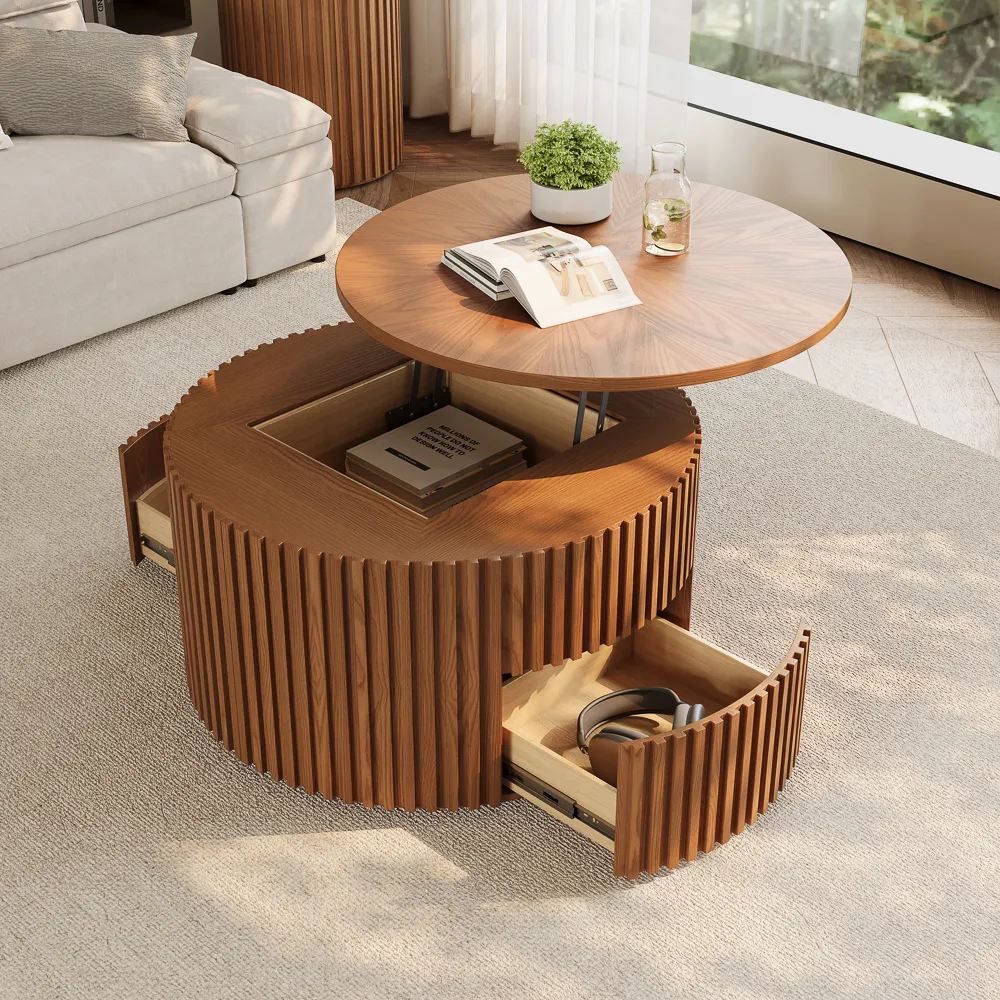
Once the sofa’s open footprint is clear, the next question is whether the center table helps the routine or gets in the way. The Silva Lift-Top Round Coffee Table keeps a compact 31.5-inch round profile for tighter paths, then lifts from 16.9 to 23.2 inches for laptop use or casual meals. Hidden storage and two drawers keep remotes, chargers, and coasters from taking over the surface.
Treat the TV Stand as a Media Control Center
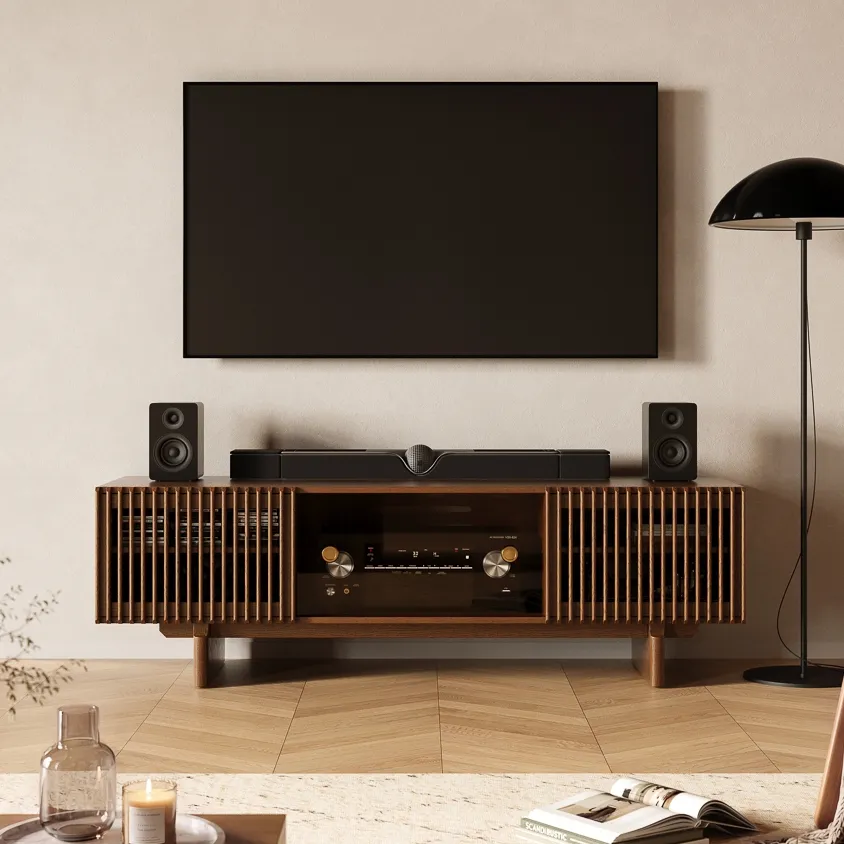
A TV stand should do more than support a screen. In many homes, it also needs to hold a soundbar, router, game console, streaming device, receiver, chargers, controllers, and the cords that connect them. Choose the console around the equipment that needs to live inside it, not only around the width of the TV.
Before choosing one, check:
- Device depth, including rear plugs and cable bends
- Airflow needs for receivers and consoles
- Storage for remotes, games, and visible clutter
- Clearance for cabinet doors and drawers
When the TV wall also needs to support a soundbar, receiver, router, or game console, the Arboren Media Console gives larger components the space they need. Its 18.3-inch internal depth, adjustable bays, rear ventilation, and cable openings help keep equipment protected, connected, and out of sight without turning the media wall into a tangle of wires.
Test the Trio During a Busy Evening
Before committing to finishes or decorative pieces, imagine the room at its busiest. Someone is getting drinks, someone is charging a phone, someone is looking for the remote, and another person is trying to cross the room without stepping around furniture.
Ask these questions:
- Can each regular seat reach a usable surface?
- Can the sofa extend without competing with the table for legroom?
- Can cabinet doors open while the room is in use?
- Can someone walk through the room without asking others to move?
In one apartment living room, an extendable sofa looked perfect until guests gathered for a summer match night. Moving the coffee table slightly toward the rug’s center created a clear route to the kitchen while keeping drinks within reach from every seat.
Adapt the Core Trio to Your Daily Routine
The sofa, coffee table, and TV stand should not work the same way in every home. A room used for nightly TV, a family room shared with children, and a small apartment that hosts overnight guests may all need the same three core pieces, but they need them to perform different jobs. Adjust seating, surface space, and storage around the routines that create the most pressure in your home. Once those needs are covered, it becomes much easier to make the room feel polished without adding unnecessary furniture.
Homes Built Around TV, Sports, and Movie Nights
For a room built around TV time, comfort and reach matter more than decorative extras. Choose seating that supports longer sessions, whether that means a deeper sofa, a chaise, or a power design that lets people stretch out without taking over the entire room. Your table should keep drinks, snacks, remotes, and phones within easy reach from the main seats. The media console should also have enough enclosed storage for consoles, sound equipment, controllers, and cables.
For a summer World Cup watch party, the room does not need permanent stadium-style seating. Flexible stools, poufs, or lightweight side chairs can come out when friends arrive, then move aside afterward. The best setup keeps the TV wall organized, gives everyone somewhere to set a drink, and leaves a clear route to the kitchen during halftime.
Homes With Pets or Children
In a busy family room, the furniture that gets touched most should be chosen for real wear, not just appearance. Start with upholstery that can handle frequent use, tables with softened or rounded edges, and closed storage that keeps toys, blankets, pet supplies, and chargers from taking over every visible surface. A room feels calmer when the storage does some of the work before anyone starts tidying.
Think about where mess naturally collects. If children build on the floor, avoid a sharp-edged table that takes up too much open space. If a dog always claims one side of the sofa, choose a fabric that suits regular contact and easy upkeep. Keep more delicate materials for lower-contact pieces, such as lamps, artwork, or decorative accessories, rather than putting them in the busiest part of the room.
Small Spaces and Guest-Ready Rooms
A smaller living room does not need less function. It needs furniture that can serve more than one purpose without making the floor feel crowded. An extendable sofa can support everyday lounging and give an overnight guest a place to sleep. A storage ottoman can act as a footrest, an extra seat, and a home for throws. A lift-top coffee table can make laptop use or casual meals more comfortable without requiring a separate desk.
The key is to avoid buying a dedicated piece for every possible situation. Instead of adding a permanent guest chair, choose stools that tuck under a console. Instead of using both a bulky coffee table and multiple end tables, use one flexible surface that works from the seats people use most. In a compact room, clear walkways often create more comfort than one more piece of furniture.
Make the Look Cohesive Without Buying a Matching Set
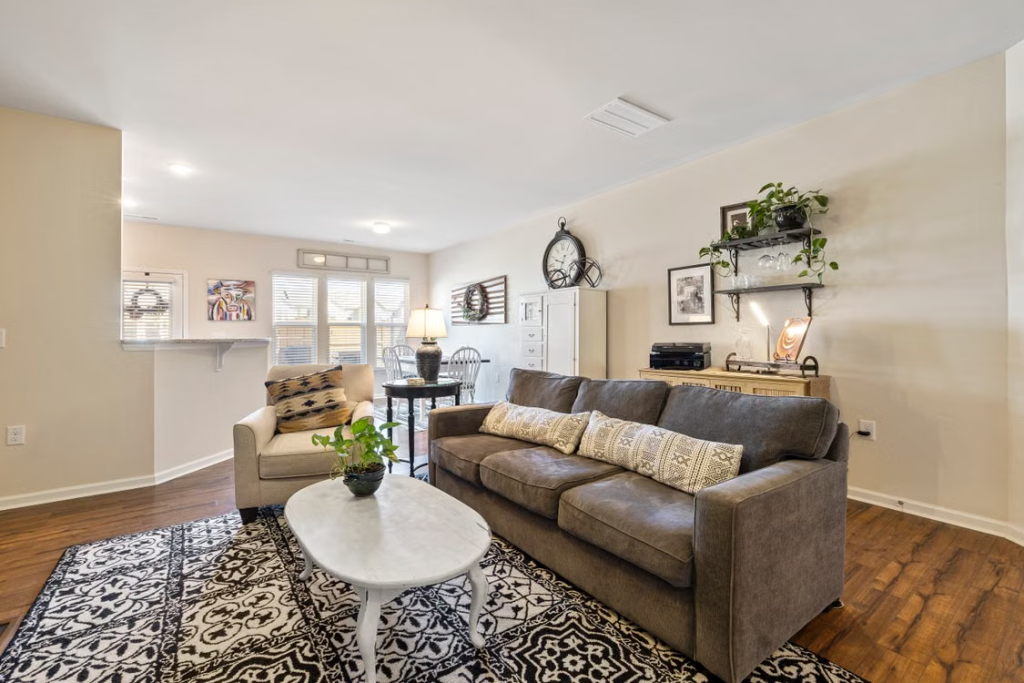
Once the room works well, use a few repeated details to make it feel intentional. Learning how to mix furniture styles does not mean combining random pieces. Choose one or two elements to repeat across the room, such as warm walnut wood, soft black metal, curved silhouettes, or creamy upholstery. Then allow one piece to add contrast.
A neutral sofa, a walnut media console, and a lighter round coffee table can feel connected when they share similar warmth and proportion. This is where living room furniture ideas become more personal than a showroom set. The goal is not to make every piece identical. It is to make the room feel collected, balanced, and easy to live in.
Measure the Real Footprint Before You Order
The final check should happen before checkout, not after delivery. Product dimensions can tell you whether a piece may fit inside the room, but they cannot show what happens when the sofa extends, a cabinet door opens, or someone crosses the space carrying drinks or laundry.
Use painter’s tape to mark the sofa, coffee table, and TV stand on the floor. Mark the sofa’s fully open depth if it reclines, extends, or converts for sleeping. Then sit where you would watch TV, open nearby drawers or cabinet doors, and walk from the entry to the kitchen, hallway, or patio.
As a planning starting point, leave about 16 to 18 inches between the sofa and coffee table, plus roughly 30 inches for a main walkway. These are comfort guidelines, not building-code rules. The point is simple: people should be able to sit down, stand up, and pass through without bumping knees or changing their route.
Finally, measure the narrowest point from the curb to the living room: the front door, hallway, elevator, stair turn, interior doors, and tight corners. Compare those measurements with the carton dimensions and package weight, not the assembled size alone.
Before placing the order, confirm:
- Whether delivery includes room-of-choice placement
- Whether the item arrives assembled, needs light setup, or requires assembly
- Whether cabinet doors, drawers, and sofa extensions have enough clearance
- Whether the carton can pass through the narrowest doorway or stair turn
A piece that fits on a floor plan is not always a piece that fits through the front door. Checking both the room footprint and delivery route makes the buying decision far more reliable.
Conclusion
The right living room is not the one with the most furniture. It is the one that makes ordinary life easier: a sofa that supports the way you relax, a table that is useful from every regular seat, storage that keeps daily clutter contained, and walkways that stay open. Start with the friction points in your routine, buy the essentials in order, and test the sofa, table, and TV stand as one system. Then add personality with confidence and create a space that feels ready to live in from day one.
FAQs
Is It Better to Buy a Living Room Set or Individual Pieces?
A set can simplify the process when you are furnishing an empty room and want a consistent look quickly. Individual pieces work better when you already own a favorite sofa, need a specific storage solution, or want more flexibility for a future move. Let function determine the choice first.
What Furniture Should You Prioritize if You Expect to Move Again Soon?
Choose versatile pieces that can work in more than one room shape. A standard sofa, movable side tables, compact coffee table, and low media console are often easier to reuse than oversized sectionals or built-ins. Keep delivery measurements and product dimensions saved for your next home.
Should You Choose a Coffee Table or an Ottoman?
Choose a coffee table when drinks, remotes, shared snacks, or laptop use are part of daily life. Choose an ottoman when you need softer edges, an extra seat, or a footrest. A storage ottoman works well when blankets and toys need a hidden home.
Can One Accent Chair Replace a Loveseat?
Yes, when one additional seat solves the real need and the room benefits from lighter visual weight. A swivel or movable chair can support both TV viewing and conversation. Choose a loveseat only when two people regularly need to sit together in the same spot.


