 By Charles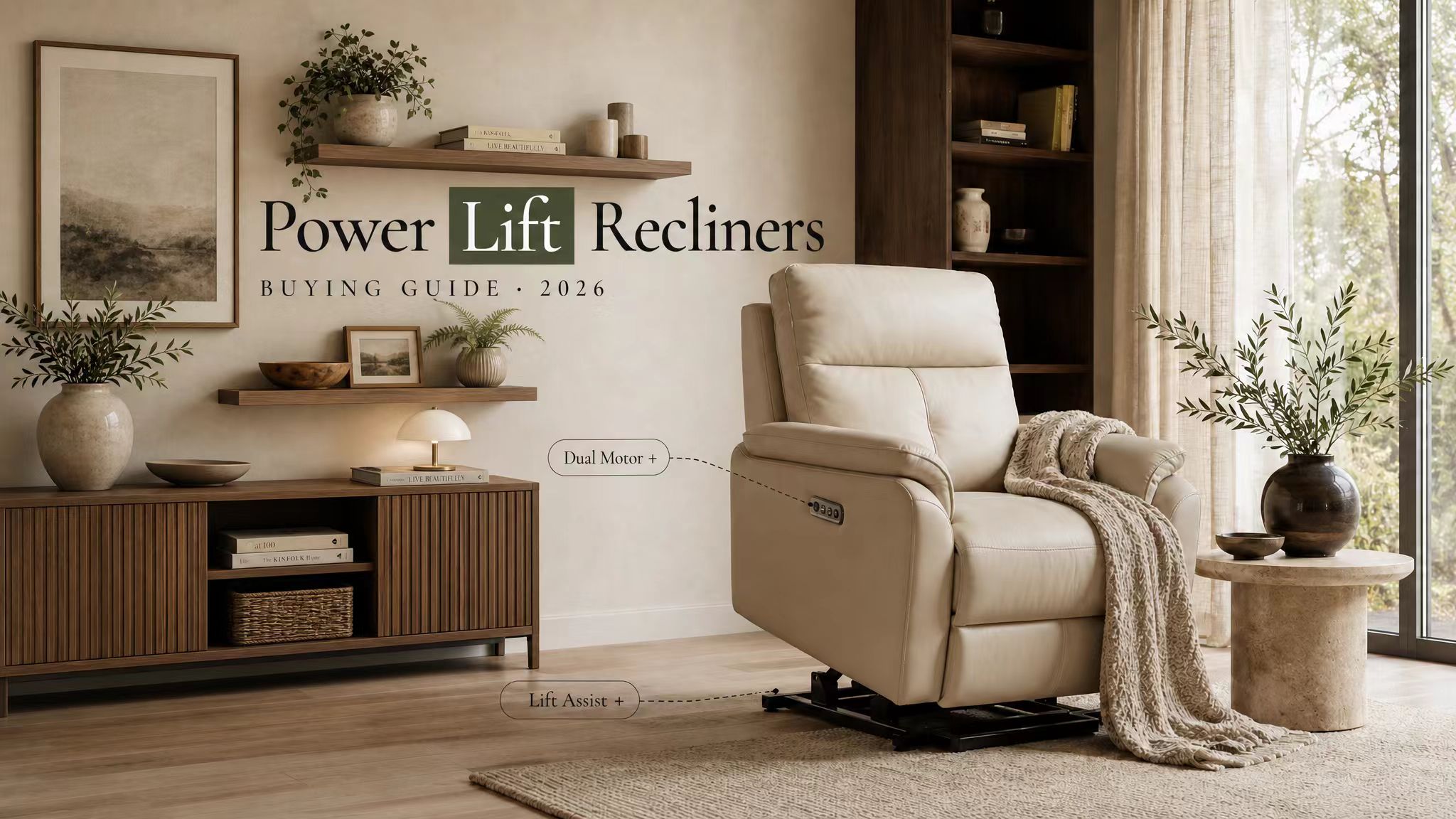
My mother-in-law called me last spring after she’d finally had enough of using her old recliner’s armrests as grab bars every time she stood up. “I think I need one of those chairs,” she said. She didn’t mean a hospital bed or anything medical — she meant the kind that tilts the whole seat forward so getting up doesn’t turn into a small wrestling match. That’s a power lift recliner. And it’s a more specific product than the category name makes it sound.
So before you order one online — or pick one out for a parent, a partner, or yourself — here’s what I wish she and I had known before that first conversation. Honest version. No medical promises, no “transforms your life” copy, just the buying decisions that actually matter.
What a Power Lift Recliner Actually Does
A power lift recliner is a recliner that, in addition to reclining backward, can tilt the entire chair forward and upward to a near-standing position. The motor lifts the seat under you and angles you forward so your legs do less of the work of getting up. Most models you’ll see online use one of three configurations:
- 2-position: reclines to about 45°, plus the lift function. Simpler mechanism, fewer parts to break.
- 3-position: reclines to nearly flat (roughly 165°), plus the lift. The most common middle-ground choice.
- Infinite-position: separate motors for backrest and footrest, fully flat sleep-style recline, plus lift. More features, more cost, more wiring.
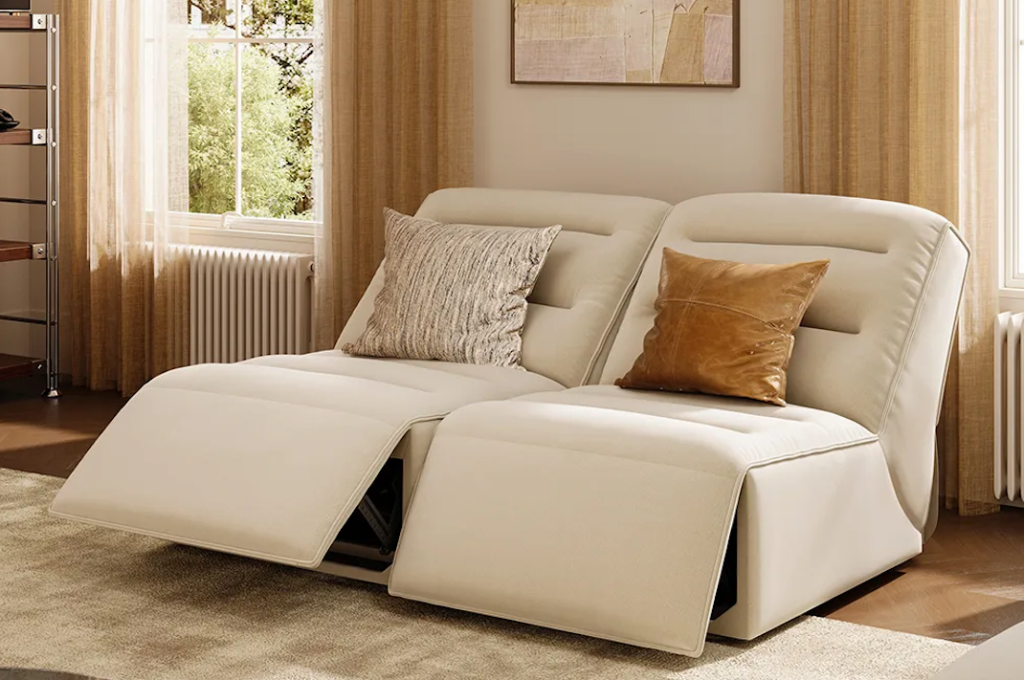
This is comfort equipment with a stand-assist feature built in. It belongs to the same product family as a standard power recliner — you’ll see the related terms power recliner lift, recliner with power lift, and power lift chair recliner used almost interchangeably across product pages — but the mechanism inside is doing more work than a regular recliner’s, and the buying checks reflect that.
Who Should Consider a Power Lift Recliner
Everyday Comfort and Easier Standing
The most common reason people buy one isn’t drama. It’s friction. You stand up dozens of times a day, and if every single one involves grunting and pushing off the arms, that builds up. A power lift recliner takes the load off the standing motion specifically. The buyers I hear from most often:
- Anyone whose knees complain after 20 minutes in a regular recliner
- People with hips that feel locked after a long movie or a deep nap
- Pregnant household members in the late stages, when deep recliners become hard to escape
- A taller partner and a shorter one sharing one chair with very different floor-reach
- Anyone who’s just tired of using armrests as gym equipment
If you sometimes have to push hard off the arms just to get to your feet, and you don’t love that feeling, a lift function is doing useful work even before any health context enters the picture.
When to Seek Professional Advice First
Some buying decisions sit outside a furniture article. If the reason you’re shopping is recovery from a recent surgery, a fall risk that’s been flagged by a doctor, or a condition affecting balance, strength, or coordination, the right next step is a conversation with an occupational therapist, physical therapist, or your physician — not a buying guide. They can tell you whether a power lift recliner is the right tool or whether something else (a transfer aid, a different bed setup, home modifications) does the job better.
I’m a furniture writer. I’d rather lose the sale than steer you wrong on this one.
Power Lift Chair Recliner vs Standard Power Recliner
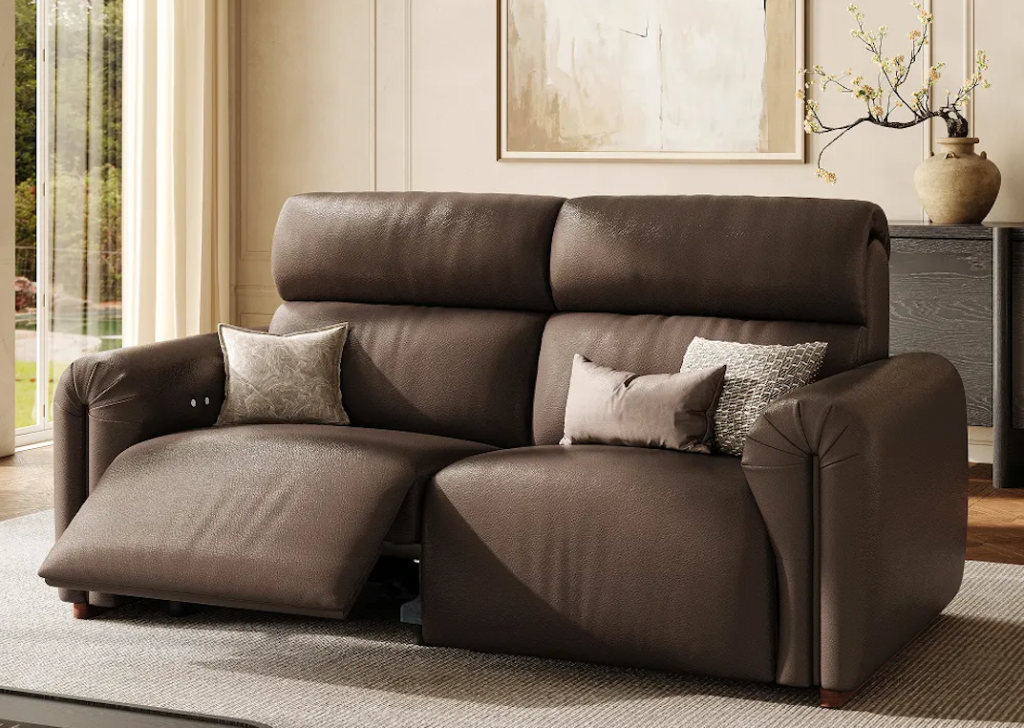
Easy to conflate, very different to buy. A power recliner and lift chair share the same family tree but aren’t the same product.
A standard power recliner reclines via motor and stays put when you stand. The motor work happens behind your back and under your legs. POVISON’s Power Reclining Sofa & Recliner collection lists weight, dimensions, and clearance for each model — pull those exact numbers for whatever you’re considering, here or anywhere else, before you decide.
A power lift recliner adds something on top: the entire chair tilts forward, raising the front of the seat to ease you into a near-standing posture. That’s a different mechanism, often with reinforced framing and a heftier transformer to handle higher load. It’s why lift recliners typically weigh more (often 90 to 150 lbs) and cost roughly $200–500 more than a similarly upholstered non-lift version.
How to choose between them:
- If the goal is smoother recline and one-touch comfort, a standard power recliner does it well — no reason to pay for lift you won’t use.
- If the goal is genuinely needing help getting up, lift function is the differentiator. Everything else (upholstery, charging ports, console cup-holders) becomes secondary to whether that lift mechanism works reliably year after year.
Both share the same delivery realities, though: motors, control wands, a power cord, heavy crates, and the same hard truth that “fully assembled” matters far more here than it does for a static sofa.
Motor, Controls, Clearance, and Delivery Checks
This is the section most online buying guides skip and where most regret happens.
Motor and electrical. A power lift recliner typically uses a low-voltage DC motor powered through a transformer brick connected to a wall outlet; many recliner power supplies are in the 24–29V DC range. (The exact voltage and electrical setup can vary by product. Check the product detail page or confirm with customer service before buying.) Because POVISON power lift recliners are designed for plug-in use, place the chair near a reliable wall outlet and keep the cord path clear, especially if you rely on the lift function every day. UL 962 is the recognized U.S. standard for motorized household furniture, and the UL Solutions explainer on how electrical safety is evaluated for motorized chairs is worth a five-minute read if you want to understand what a “UL listed” mark on a recliner is actually telling you.
Controls. Most lift recliners use a wired hand wand. Some use buttons embedded in the arm or a small wireless remote. I prefer the wired wand for one reason: it doesn’t disappear into the cushions. Whichever you choose, check button size and tactility — small flat buttons frustrate anyone with arthritis or weakened fine-motor control, which is often exactly who’s buying this chair.
Frame and weight rating. A power lift recliner that lifts you upward is also taking strain in directions a static chair never sees. Look for kiln-dried hardwood frame plus steel reinforcement at the lift mechanism. Published residential weight ratings typically run 275 to 375 lbs. Commercial-grade lounge seating tested to the ANSI/BIFMA X5.4 public and lounge seating standard goes higher, but residential ratings should still be posted clearly on the spec sheet, not buried in footnotes.
Clearance. This is the one most buyers miss until delivery day. A power lift recliner needs:
- About 12–18 inches of clear space in front of the chair so the seat can tilt forward without slamming into a coffee table.
- 4–8 inches behind the chair so the backrest doesn’t hit the wall in full recline (less for wall-hugger designs, more for traditional ones).
- An outlet within reach that doesn’t force the cord across a walkway.
Before you order, mark the chair’s full upright footprint on the floor with painter’s tape, then add another 18 inches of tape in front of where the front edge will sit. Stand in the taped area. Walk past it. That’s the real footprint, not the showroom one.
Delivery and assembly. Even a standard recliner ships at 90+ lbs, and lift mechanisms add weight on top of that. If you live alone, in an upstairs unit, or anywhere a 100+ lb crate isn’t a casual move, white-glove delivery (where the carrier brings the chair into the room and removes packaging) earns its keep. POVISON’s powered seating ships fully assembled with white-glove delivery available — meaning the motor, transformer, and lift mechanism are pre-installed and tested at the factory, not handed to you in a box with a diagram and a hex key. Confirm what’s included on the product page before ordering, here or anywhere else; “free shipping” sometimes ends at the curb.
FAQ
Do power lift recliners make noise when they lift or recline?
Yes, but less than people expect. A power lift recliner produces a low electric hum for the few seconds the motor is actually running — about the volume of a quiet desk fan. The chair is silent when stationary. Volume depends on motor quality and how it’s mounted to the frame; cheaper units can buzz or whine, better-built ones produce a smooth low tone. If you’re noise-sensitive, scan reviews specifically for motor noise rather than the overall star rating.
What usually happens if the lift mechanism stops working after a couple of years?
The first thing to check is whether it’s actually the mechanism. Most “broken” power chairs turn out to be unplugged, have a tripped reset on the transformer brick, or have a loose connector where the wand plugs into the chair body. If it’s truly the motor, residential lift recliner motors are normally replaceable parts rather than a full chair write-off — but how that’s handled depends entirely on the brand’s warranty. POVISON publishes its current terms in the help center warranty page; always read the warranty before ordering, not after something stops working.
Can you still use a power lift recliner comfortably if you do not actually need the lift function?
Yes. A power lift recliner functions as a normal recliner when the lift isn’t engaged — you sit, recline, watch a movie, nap. The lift just sits unused. The honest cost question is whether you’d benefit from the option later (aging, knee surgery recovery, a visiting parent who’d use it) or whether you’d rather put that $200–500 premium toward better upholstery, charging ports, or a bigger frame. If lift function is nice-to-have but isn’t the reason you’re shopping, a standard power recliner usually makes more sense.
How difficult is it to return a power lift recliner if it does not work out after delivery?
Returns of heavy motorized furniture aren’t like returning a coffee table. The chair has to be repackaged, picked up, and the policy varies a lot from one retailer to another. Some include free return pickup. Some apply a restocking fee covering the white-glove run back. POVISON’s current return terms are listed in the same help center linked above and update from time to time, so confirm them before you order. Federal protections from the FTC’s Mail, Internet, or Telephone Order Merchandise Rule cover late shipping, refunds for orders never shipped, and unauthorized substitutions — but they don’t cover “I changed my mind” returns. Those live between you and the seller.
Are power lift recliners easy to clean around the base and motor area?
The seating surface is the same as any upholstered recliner — wipe-clean performance fabric, leather, or eco-leather, depending on what you ordered. The base area is the tricky bit. The motor and transformer sit under the seat with the lift mechanism, and most designs leave the underside partially open to vent heat. Dust collects there. Plan on a soft brush or low-suction vacuum attachment every few months. Don’t use damp cloths near the transformer or the wand plug — water and low-voltage DC don’t mix well. If a model markets itself as “fully enclosed base,” ask whether the bottom panel is removable for service; sealed bottoms look tidier but make warranty repairs harder.
Conclusion
A power lift recliner is comfort equipment with a stand-assist function. It’s not a medical device, and it doesn’t replace professional advice if mobility itself is the question you’re trying to answer. What it does well — and the only reason worth buying it for — is take the friction out of standing up, when standing up has gotten harder than you’d like.
Buy it for that reason or don’t buy it. Check the motor specs, the frame weight rating, and the clearance numbers before you order. Confirm white-glove delivery is included if you can’t carry 100+ lbs through your own house alone. Read the warranty before, not after.
Related Reading:


