 By Kelvin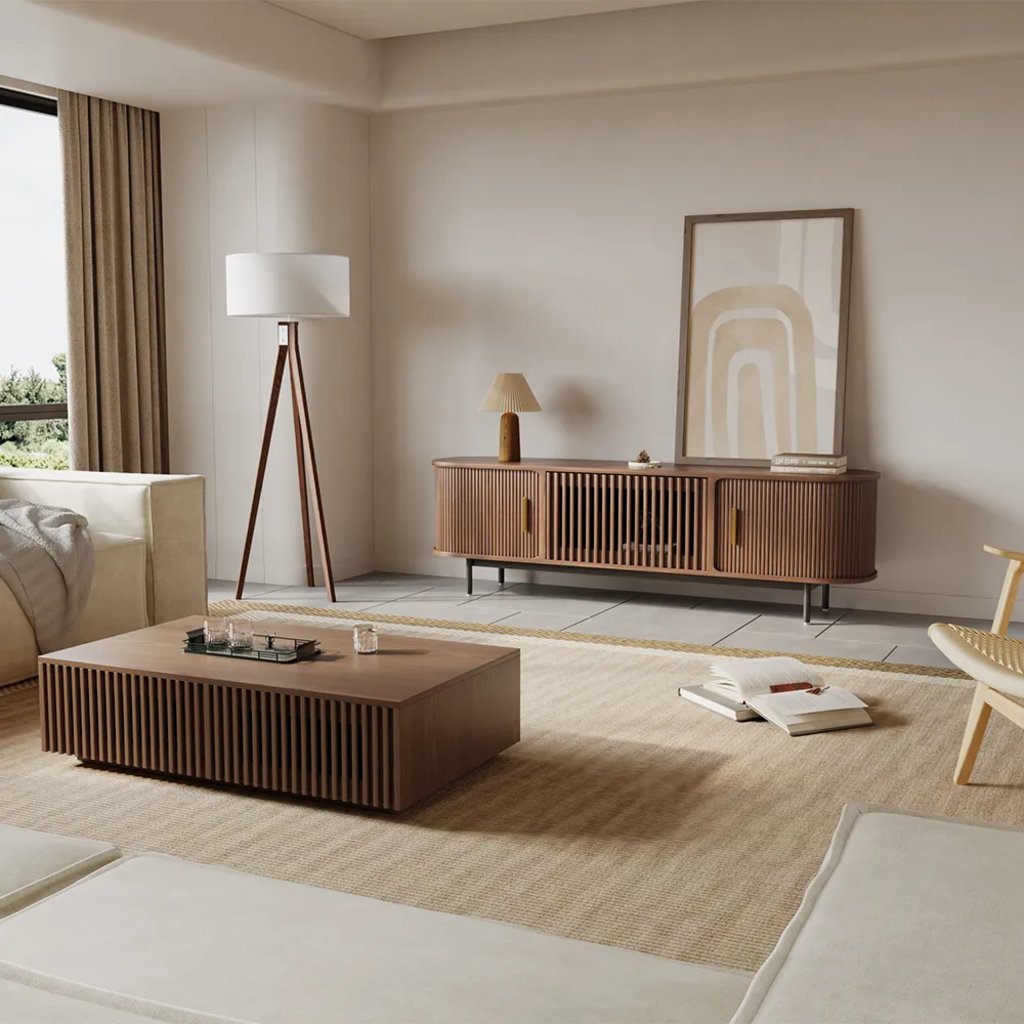
Introduction
When you search what is a tambour door, you are probably trying to figure out whether you are looking at a real space-saving cabinet door or simply a textured wood front. The difference matters. A true tambour door moves along a track instead of swinging into the room, which can make a TV stand, sideboard, or compact storage cabinet easier to use in a tight layout. This guide explains how tambour doors work, how they differ from similar-looking designs, and what to check before bringing one home.
Table of Contents
What Is a Tambour Door and How Does It Work?
The clear answer to what is a tambour door is that it is a flexible door made from narrow connected strips, usually wood or a wood-look material, that move along a track. Instead of opening outward like a standard cabinet door, the strips bend around a curve or slide into a concealed channel inside the furniture.
Think of the cover on a classic roll-top desk. The door stays connected as it moves, but it does not need a wide swing area in front of the cabinet. Depending on the design, a tambour door may roll upward, travel downward, or slide sideways into a pocket at the side of the case.
Three features make a tambour door different from a standard door:
- It has multiple narrow strips rather than one rigid panel.
- Those strips are connected to create a flexible moving surface.
- The door follows a track and disappears into part of the furniture when open.
That structure is why tambour doors are often used where a hinged door could bump into a coffee table, dining chair, or nearby walkway.
How Is a Tambour Door Different From a Fluted or Slatted Door?
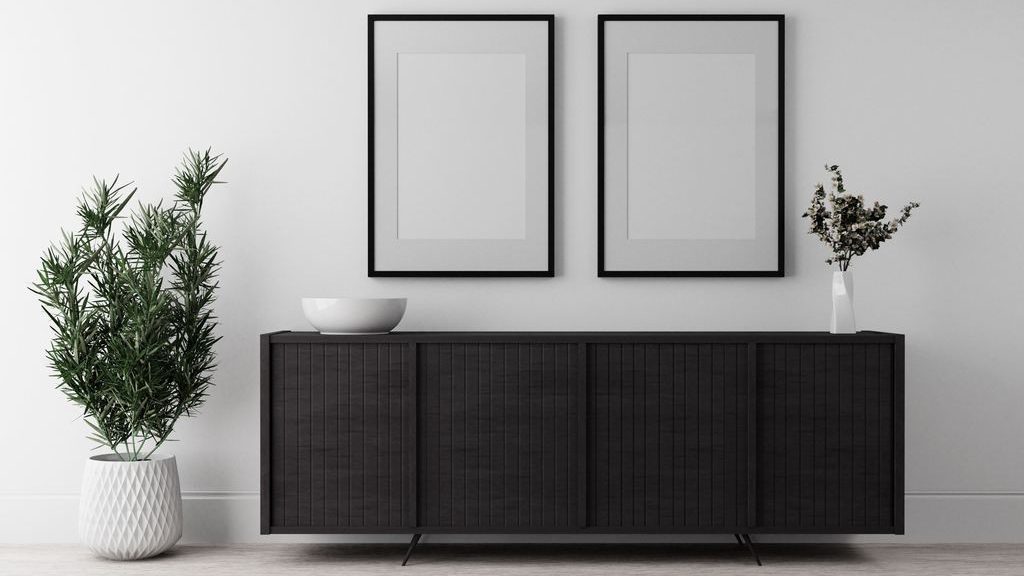
Tambour, fluted, and slatted doors can all bring vertical lines and wood texture to a room, but they are not interchangeable terms. A tambour door describes how the door functions. Fluted and slatted usually describe how the surface looks.
| Door Type | What It Is | How It Opens | Best Use |
| Tambour door | Connected narrow strips on a flexible backing | Rolls or slides through a track | Tight paths and concealed storage |
| Fluted door | A rigid door with grooves or raised ridges | Usually hinged or standard sliding hardware | Decorative texture |
| Slatted sliding door | A rigid panel with visible slats | Slides across the cabinet front | Simple access with a textured look |
| Hinged door | A single rigid cabinet panel | Swings outward | Full access where clearance is available |
A fluted door may look similar from across the room, but it does not necessarily bend or retract. The same is true of many slatted fronts. A slatted TV stand can still add warmth and hide media clutter, but it should not be called a tambour door unless its connected strips actually move through a track.
This distinction is useful when shopping online. Look for photos of the door open, not only a front-facing image. Product descriptions should explain whether the door rolls, slides into a pocket, or simply moves as one solid panel.
Why Does a Tambour Door Work Well in a Living Room?
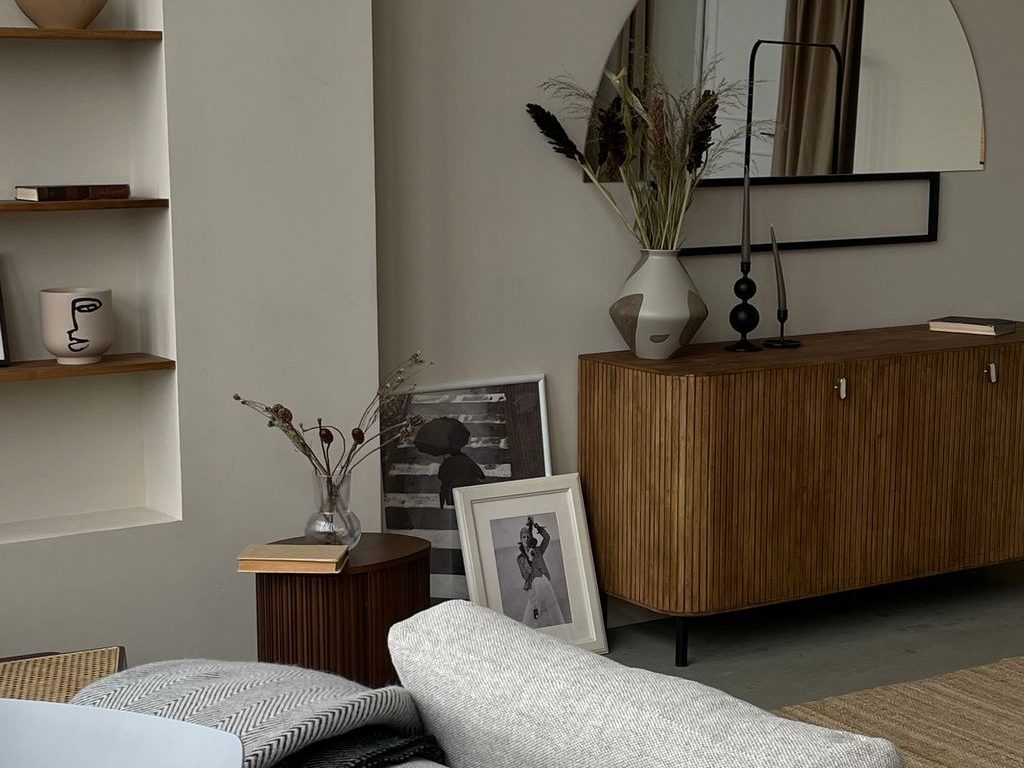
A tambour door is most useful when the room needs both closed storage and clear movement around the furniture. Its value is not only visual. It solves specific everyday problems that come up around a TV wall, a dining path, or a compact apartment layout.
Keep the TV Wall Easier to Use
A hinged media cabinet can be inconvenient when the sofa, coffee table, or main walkway sits close to the TV stand. Opening a door outward may force someone to step aside before grabbing a controller, remote, or charging cable.
A tambour door avoids that swing path. This can make a narrow living room feel less interrupted, especially when the TV stand sits opposite a sectional or along the route between the kitchen and seating area. The cabinet still gives you enclosed storage, but it does not create another obstacle when the room is busy.
Hide Media Clutter Without Making the Room Feel Heavy
Tambour doors are helpful when the TV wall needs to store more than decor. Remotes, charging cords, games, streaming accessories, and small speakers can quickly make an open console feel unfinished.
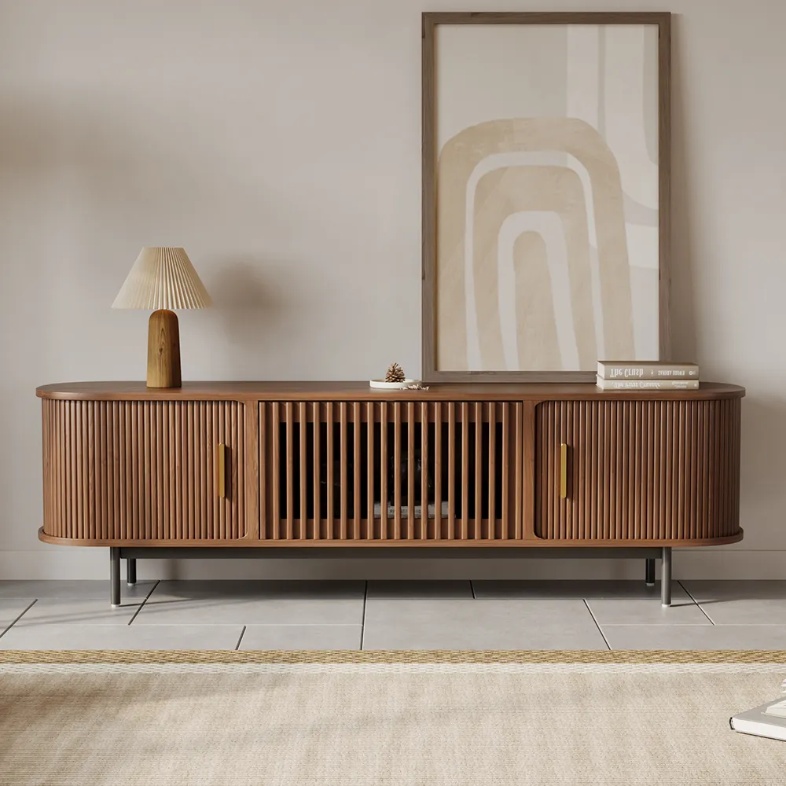
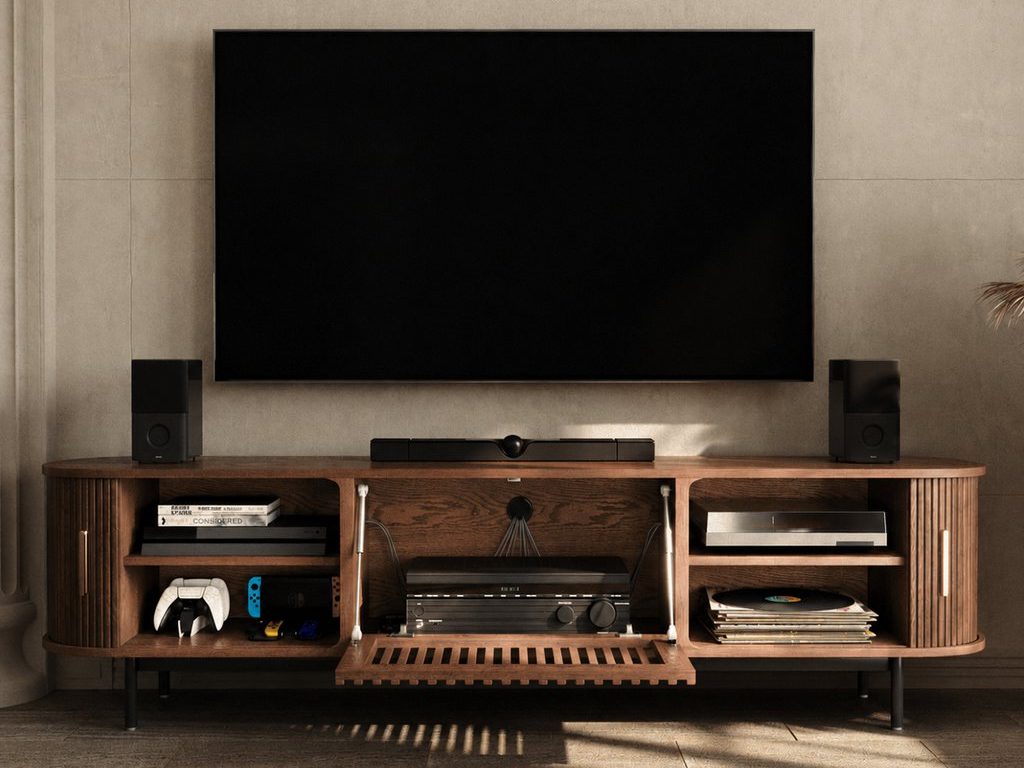
The POVISON Eos-71″ Mid-Century Modern Tambour Door TV Stand suits a living room that needs warm wood texture without a bulky media wall. Its ash rolling door and walnut-color cabinet front conceal three storage areas, while internal and rear cable holes give cords a more organized route. Its 15.75-inch depth works well for slimmer media setups, but deeper AV receivers should be measured first.
Add Texture Without Adding More Decor
A tambour door already creates a rhythm across the furniture front, so it can bring interest to a plain TV wall without relying on bold wallpaper or multiple decorative objects. In a room with smooth walls, neutral upholstery, and a simple rug, the repeated wood strips can give the media area more depth.
That visual texture works especially well with mid-century modern, Japandi, transitional, and warm minimalist interiors. The key is to let the cabinet do one job well. A heavily fluted wall panel, striped rug, slatted room divider, and tambour TV stand all in the same sightline can start to feel busy.
How to Style a Tambour Door TV Stand in a Real Living Room
Styling should support the door’s texture rather than compete with it. Use the tambour front as the main patterned element on the TV wall, then keep the surrounding surfaces quieter and more functional. This approach helps the cabinet feel intentional without turning the entertainment area into a display shelf.
Let the Cabinet Be the Textured Layer
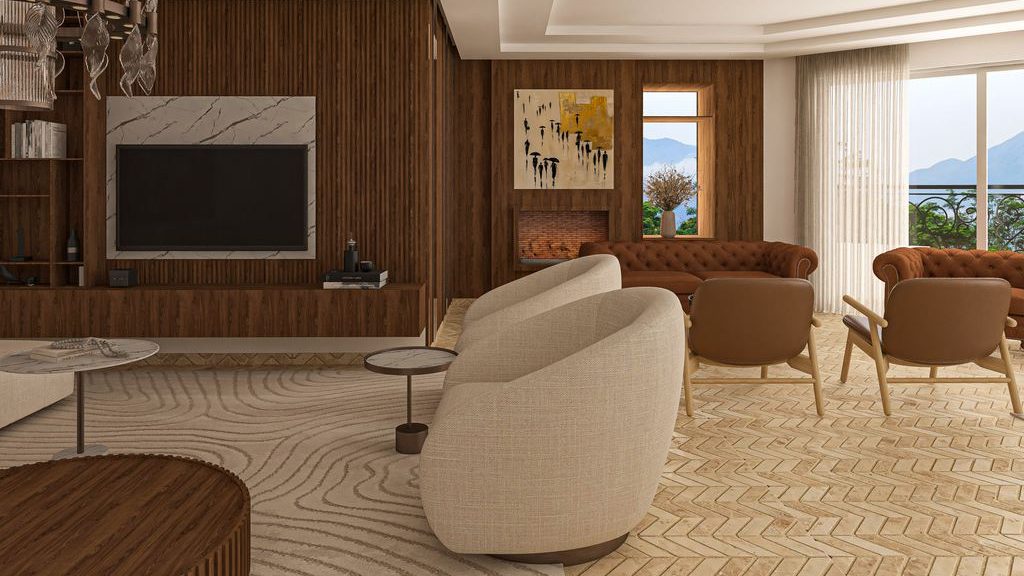
Choose a smoother wall treatment behind the TV stand whenever possible. A painted wall, subtle plaster finish, or simple framed art gives the repeating wood lines room to stand out. If you already have paneled walls or strong architectural texture, select a cleaner cabinet finish and reduce the amount of decor on top.
The same restraint helps when styling a mid-century modern cabinet in an open-plan room, where one piece may be visible from both the living and dining sides.
Keep the Top Surface Useful, Not Crowded
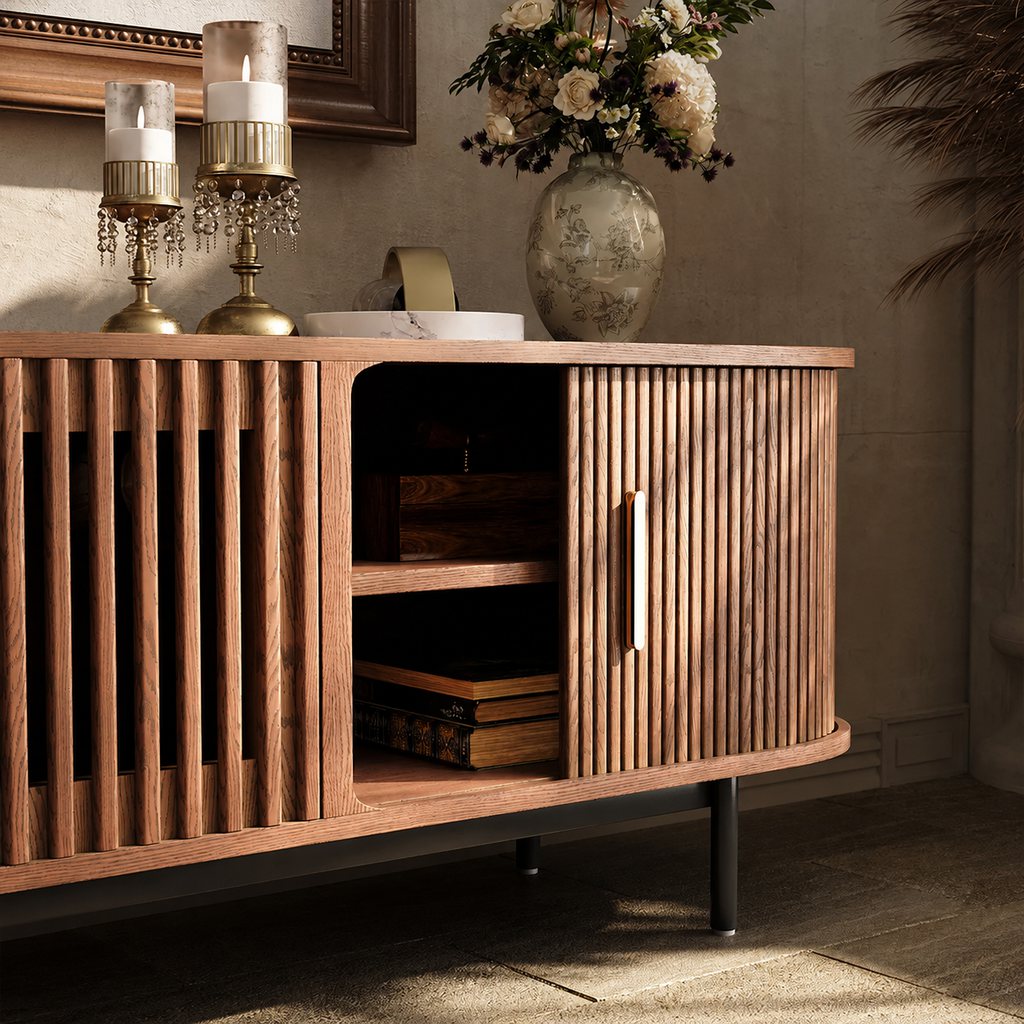
A TV stand top needs open space around the screen. Start with the practical items that need to live there, such as a soundbar or compact speaker. Then add only one or two lower decorative pieces.
A balanced arrangement might include a small lamp or vase on one end and a short stack of books on the other. Avoid placing every object along the back edge in a straight row. Staggering the pieces slightly creates depth while keeping the middle area clear for the TV.
Balance What Stays Visible and What Goes Behind the Door
Tambour storage works best when it supports a quick reset. Keep the things you use every day within easy reach, then store the things you do not want to see all the time behind the door.
For example, a family may leave a few favorite books or a small ceramic bowl visible on an open shelf, while controllers, spare cords, board-game pieces, and streaming accessories go inside. After movie night, the room can look settled again without moving items to another room.
What Should You Check Before Buying a Tambour Door TV Stand?
Tambour doors save exterior clearance, but that does not automatically mean every tambour cabinet is right for every room. The door needs space to travel inside the furniture, so the most useful question is not simply whether the front looks good. It is whether the door movement, internal storage, and media setup all work together.
Use this checklist before you decide:
- Confirm that the front is a true tambour mechanism, not only a fluted or slatted finish.
- Check whether the door rolls upward, slides sideways, or disappears into an interior pocket.
- Look at open-door photos to see whether every shelf remains easy to reach.
- Consider whether the door’s internal path reduces usable space for tall items.
- Measure your gaming console, router, soundbar accessories, or AV receiver before assuming they will fit.
- Check for rear cable holes, removable panels, or ventilation details if electronics will live inside.
- Make sure the stand is wide enough for the TV and leaves a comfortable visual balance on both sides.
- Test whether dusting the grooves and reaching the track will be manageable in your layout.
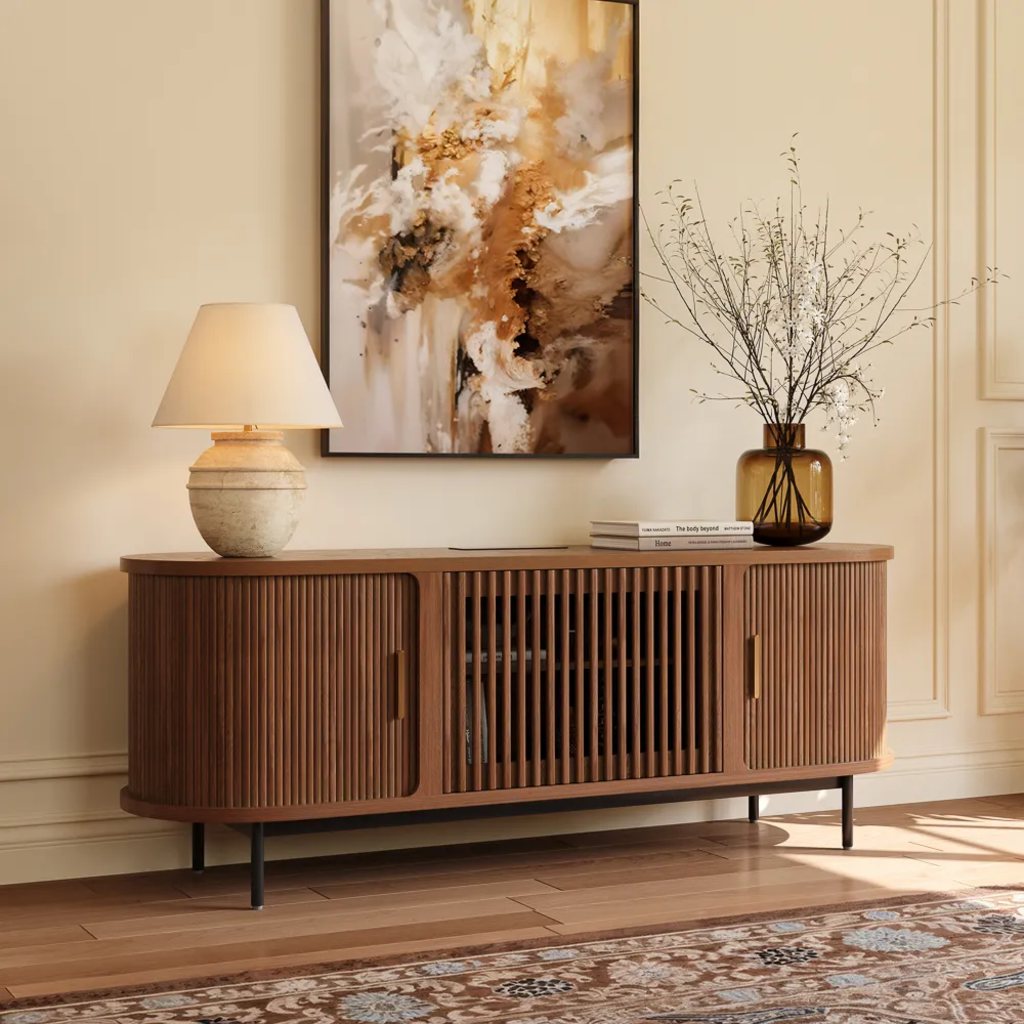
A tambour door TV stand is often a better fit than a hinged cabinet when traffic passes close to the media wall. It may be less useful when you need to access one large, deep component several times a day or need the entire cabinet opening fully exposed at once.
Conclusion
A tambour door is more than a decorative row of wood strips. It is a flexible cabinet door designed to move through a track, which can keep a TV wall or compact storage area easier to use. The next time you ask, what is a tambour door, look beyond the texture. Check how the door travels, how much interior room remains, and whether the cabinet supports your actual devices and daily routine. When those details line up, tambour storage can make a room feel calmer without adding more furniture.
Q&A
Will a closed tambour door block my TV remote signal?
It can, especially when your remote uses infrared and the device sits fully behind a solid wood door. Bluetooth, radio-frequency, and app-based controls may still work, but do not assume they will. Check how your devices connect before choosing closed media storage, or plan to open the door when using an infrared-controlled component.
Can a tambour door be left partly open?
Yes, a tambour door can usually stay partly open during normal use if it moves smoothly in its track. This can be useful when you need temporary access to a cable box, router, or game console. Do not wedge it in place or leave loose objects near the track, since they can cause uneven movement.
Will opening a tambour door affect a turntable on top?
It should not when the cabinet is stable and the door moves smoothly, but a turntable works best on a level surface with minimal vibration. Avoid pulling the door sharply while a record is playing. If your setup is especially sensitive, keep the turntable on a separate stand or use vibration-damping feet.
Can I repaint or refinish a tambour door?
Only when the door material and finish are suitable for refinishing. Solid wood tambour doors may be refinished by a professional, but veneer, laminate, printed wood-look surfaces, and mixed-material doors may not respond well to sanding or paint. Check the manufacturer’s care guidance before changing the finish.
What should I do if a tambour door feels uneven or noisy after delivery?
First, remove any packaging material or loose object that may be obstructing the track. If the movement still feels uneven, take photos or a short video before making adjustments. A properly functioning tambour door should move consistently, so repeated scraping, catching, or misalignment is worth raising with the seller.


