 By Stephanie
Introduction
A cream sofa looks perfect in a showroom—until you picture coffee spills, muddy paws, sticky fingers, and everyday lounging. So, what is performance fabric, and does it really make a sofa easier to live with? The term usually describes upholstery designed or treated to resist stains, wear, fading, or moisture. However, it is not a universal guarantee of quality. This guide explains how performance fabric works, its benefits and limitations, and what to compare before paying more for your next sofa.
Table of Contents
What Is Performance Fabric?
Performance fabric is not one specific material. It is a category of upholstery designed to provide one or more practical benefits, such as stain release, abrasion resistance, or colorfastness. It can be made from polyester, acrylic, olefin, nylon, natural fibers, or blends. The key is to look beyond the label and verify which performance claims apply to the exact fabric.
Key Features of Performance Fabric
Depending on the product, the term may refer to one or several qualities:
- Stain resistance
- Abrasion resistance
- Water or moisture resistance
- Fade or pilling resistance
- Easier spot cleaning
It does not mean every fabric has every benefit. A sunroom textile may focus on fading, while family-room upholstery may prioritize spills and friction. That distinction also matters when choosing the best sofa fabric for durability and comfort.
Performance Fabric vs. Regular Upholstery
| Feature | Performance fabric | Regular upholstery |
| Main goal | Appearance plus stated function | Mainly appearance, feel, and price |
| Spill handling | Often slows absorption or releases stains more easily | Varies widely |
| Test information | May include abrasion, pilling, or fade results | Often limited |
| Care | Frequently designed for simpler routine care | May require solvent or professional cleaning |
| Price | Often carries a premium | Broader price range |
Fiber content, weave, finish, cleaning requirements, and warranty coverage provide a more accurate picture of how the upholstery will perform in daily use.

How Performance Fabric Works
Two fabrics can make similar stain-resistant claims while achieving them in different ways. One may build performance into the yarn itself; another may rely on a finish applied after weaving. Understanding that difference helps you ask better questions about cleaning, longevity, and what happens after years of rubbing and spot treatment.
Inherent Performance vs. Applied Treatments
Inherent performance comes from the fiber, dye process, yarn construction, or weave. In solution-dyed fabric, pigment goes through the fiber instead of sitting only near its surface. Tight weaves and short piles can also reduce snagging and make debris easier to remove.
Applied performance comes from a topical treatment added to the finished textile. It may help liquid bead or prevent a stain from bonding quickly, but its effectiveness can change with wear or cleaning.
Some stain-resistant finishes use PFAS. Before buying, look for a clear PFAS-free statement in the product specifications and check what type of treatment the fabric uses. The term “performance fabric” alone does not tell you how the material was treated.
Stain Resistance, Water Resistance, and Waterproofing
Performance fabric is rarely fully waterproof. Most indoor upholstery is designed to resist stains or slow moisture absorption rather than block liquid completely. These terms describe different levels of protection:
- Stain-resistant: A mess may release more easily during cleaning.
- Water-resistant: Liquid may bead temporarily instead of soaking in immediately.
- Waterproof: Water is not expected to pass through the fabric, backing, and seams under specified test conditions.
Most indoor sofa fabrics fall into the first two groups. Seams, cushion inserts, worn areas, and delayed cleanup can still allow liquid through. Treat “life-proof” as marketing language unless the seller explains the exact test and its limitations.
Benefits and Drawbacks of Performance Fabric
Performance upholstery is most valuable when it solves a problem your household actually has. A busy sectional faces different demands than a formal accent chair. Weighing the benefits against the limitations will help you decide whether the upgrade is worth paying for.
Main Benefits
Performance fabric may:
- Give you more time to blot spills
- Handle repeated sitting better than delicate textiles
- Make light-colored upholstery easier to live with
- Simplify fur, crumb, and dirt removal on tight, low-pile surfaces
- Resist fading when that feature has been specifically tested
- Reduce the need for frequent professional cleaning
Picture a Friday movie night with pizza, a shedding dog, and two kids sharing the chaise. In that setting, quick blotting and easy vacuuming matter more than a showroom-perfect texture.
Limits Buyers Should Know
Performance does not mean indestructible. Cat claws can catch on exposed loops, oily stains may require solvent-based cleaning, and strong sunlight can still fade upholstery without a documented lightfastness rating. “Pet-friendly” does not mean claw-proof, just as “easy-clean” does not mean machine washable. Always check the fabric construction and care code behind the marketing claim.
How to Choose the Best Performance Fabric for Your Sofa
Start with your room, not the marketing tag. The best upholstery for a sunny apartment with a cat may differ from the best choice for a basement media room with toddlers. Use the specification, care instructions, and a physical swatch together, then decide whether the added performance matches your real risks.
Match the Fabric to Your Household
Prioritize the following features by use case:
- Kids and frequent spills: A clear W or WS care code and stain resistance
- Dogs and shedding: A tight weave, low pile, and a color that does not highlight every strand of fur
- Cats: Smooth, dense construction with few catch points
- Sunny rooms: Documented lightfastness or solution-dyed fibers
- White sofas: Clear stain-release information and a testable swatch
- Formal rooms: Comfort and appearance over unnecessary maximum ratings
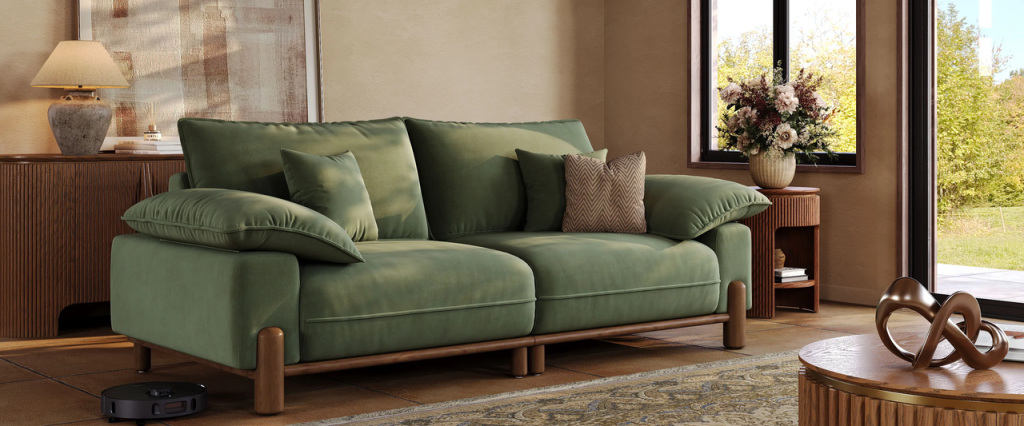
For pet-owning households, a smooth, short-pile surface is usually easier to vacuum than a loose or heavily textured weave. This soft low-pile sofa uses 100% polyester that gives fur and crumbs fewer places to collect. The fabric requires spot cleaning, so buyers should still review the care instructions before treating stains.
Specifications to Check Before Buying
Ask the seller or manufacturer for:
- Fiber composition and weave or pile description
- Whether the performance is inherent, topical, or both
- W, S, WS, or X cleaning code
- Abrasion, pilling, and lightfastness results
- PFAS-free or other finish information
- Warranty terms and exclusions
- A fabric sample you can test at home
If the sofa will see heavy daily use, frequent cleaning, or strong sunlight, fabric with performance built into the fiber is usually the better choice. An applied finish can still work well, but check how long the treatment lasts, which cleaners are allowed, and whether the warranty covers reduced stain resistance.
For a sofa used every day, a rating of about 30,000 Wyzenbeek double rubs or more is a useful starting point. Still, a higher number does not automatically mean a better fabric. Compare pilling resistance, fade resistance, care instructions, and warranty coverage before making a decision.
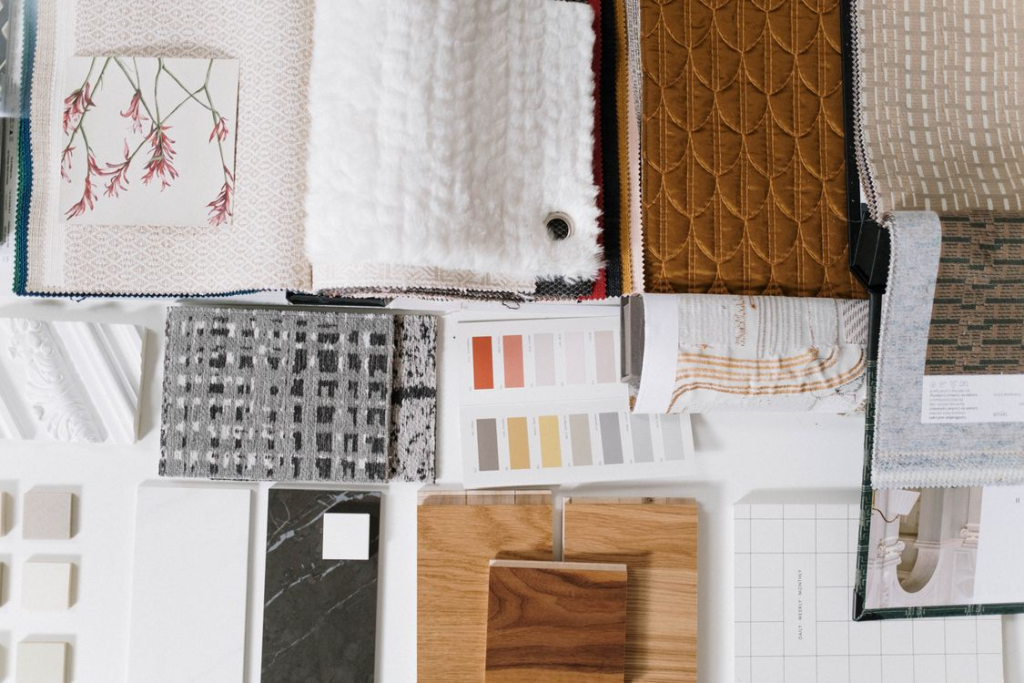
Try a Simple Swatch Test
When comparing two swatches, bend and rub the edges instead of judging only the surface. Loose fibers and potential snagging often show up along the edges first.
Then:
- Check the sample in morning and evening light
- Press a fingernail lightly across the weave
- Add a few drops of water and note how quickly they soak in
- Test only an approved cleaner on one corner
- Let it dry before checking for rings, color changes, or stiffness
The better swatch should hold liquid at the surface long enough to blot, dry without leaving a ring, and keep its original color and texture. Before buying, confirm the approved cleaning method—especially for a sofa that will face food spills, pets, or heavy daily use.
Performance Fabric Cleaning and Maintenance
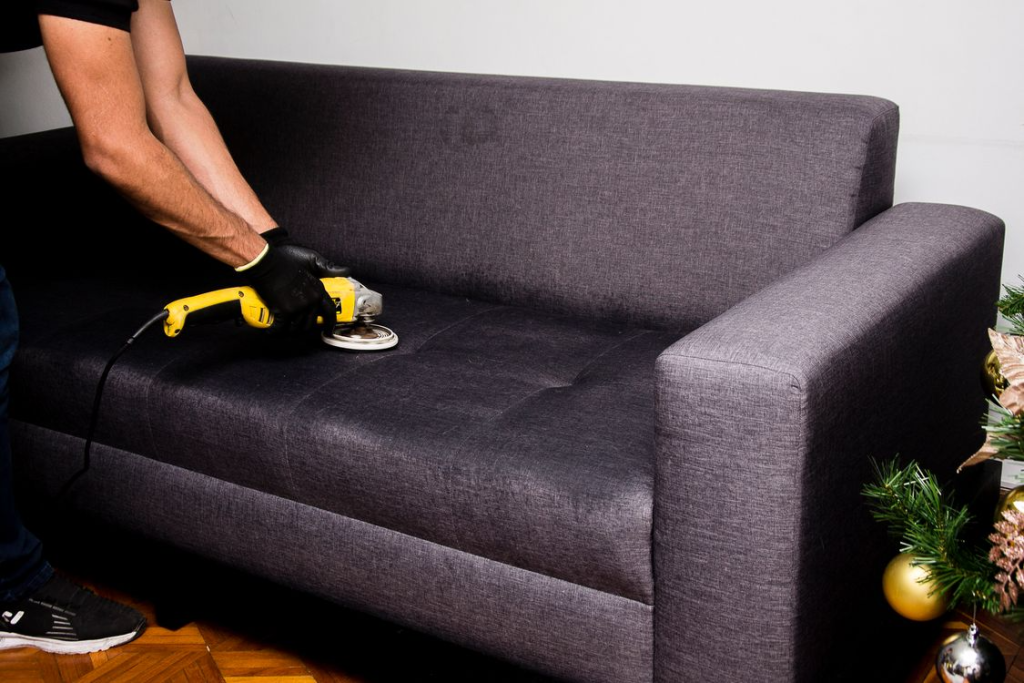
Easy-care fabric still needs the correct method. Before using water, solvent, steam, or a stain remover, find the manufacturer’s care code and instructions. A gentle routine protects the finish, pile, color, and cushion beneath the upholstery better than aggressive scrubbing after dirt has built up.
What Should You Do When a Spill Happens?
Follow this simple sequence:
- Lift solids with a spoon or dull edge.
- Blot liquid with a clean white cloth; do not rub.
- Apply only the cleaner allowed by the care code.
- Work from the stain’s edge toward its center.
- Let the area air-dry completely.
For stubborn marks, follow a low-moisture method for cleaning a fabric sofa rather than saturating the cushion. Spot-testing in a hidden area can reveal water rings, color transfer, or texture changes before they affect a visible section.
Routine Care for Long-Lasting Upholstery
Vacuum seats, seams, and crevices with an upholstery attachment. Rotate loose cushions so one spot does not take all the friction. Limit intense direct sunlight unless the fabric has an appropriate fade-resistance claim.
Do not use bleach, alcohol, steam, or household cleaners unless the manufacturer permits them. Even durable upholstery can develop rings, flattened piles, sticky residue, or warranty issues when treated with the wrong product.
When Performance Fabric Is Worth the Extra Cost
For an everyday sofa, performance fabric is often worth the added cost when the manufacturer provides clear care instructions, useful test data, and meaningful warranty coverage. It offers the most practical value in homes with children, pets, frequent guests, or light-colored seating that receives daily use.
The upgrade may offer less value on a rarely used accent chair or formal-room sofa. A tight weave with a clear cleaning code and reliable warranty is a safer choice than an unverified fabric promoted mainly through an unusually high abrasion rating. Choose documented performance over broad promises such as “family-proof” or “life-proof.”
Conclusion
Performance fabric can make an everyday sofa easier to maintain, but the label should never replace careful comparison. Focus on the features that match your household, whether that means stain release, fade resistance, a pet-friendly surface, or simpler cleaning. Review the care instructions, request a swatch, and confirm any performance claims before buying. The best upholstery is not necessarily the fabric with the highest rating. It is the one that feels comfortable, fits your routine, and can handle the way the room is actually used.
FAQs
Is Performance Fabric the Same as Microfiber?
No. Microfiber describes extremely fine synthetic fibers and the dense surface they create. Performance fabric describes a functional category. Microfiber may qualify when it meets stain, wear, or cleaning standards, but performance upholstery can also be acrylic, olefin, polyester, nylon, a blend, or a treated natural fiber.
Does Performance Fabric Feel Hot or Plastic-Like?
Not necessarily. Feel depends on the fiber, yarn, weave, pile, backing, and finish. Modern performance upholstery can resemble linen, velvet, chenille, or brushed cloth. A dense synthetic fabric may feel warmer than an open natural weave, so sit on the sofa or request a swatch instead of judging comfort from the label.
Can You Add Fabric Protector Spray?
Only when the furniture or textile manufacturer approves it. An aftermarket spray may change the fabric’s color, feel, breathability, or cleaning behavior. It can also interfere with an existing treatment or warranty. Product-specific approval matters more than a spray bottle’s general claim that it is safe for upholstery.
Can Indoor Performance Fabric Be Used Outdoors?
Only when it is specifically rated for outdoor exposure. Indoor stain resistance does not guarantee protection from rain, strong UV light, mold, mildew, or temperature changes. Outdoor upholstery should include relevant moisture, fade, and microbial performance information, plus instructions for drying cushions and storing them during harsh weather.


