 By Stephanie
Summer can be hard on a couch. Between kids home from school, damp pool towels, visiting relatives, and crowded World Cup watch parties, the sofa often becomes the busiest seat in the house. Most crumbs, spills, and everyday grime only require routine cleaning, but illness or direct contamination may call for an extra step. This guide explains how to disinfect a couch after cleaning without fading the fabric, drying out leather, or leaving moisture inside the cushions—and how to tell when disinfection is actually necessary.
Table of Contents
When Couch Disinfection Is Necessary During Summer
Summer makes a couch busier, but “heavily used” does not always mean “needs disinfecting.” First, decide whether you are dealing with crumbs, sweat, sunscreen, moisture, or genuine illness exposure. That distinction protects upholstery from unnecessary chemicals while helping you respond properly when the risk is real.
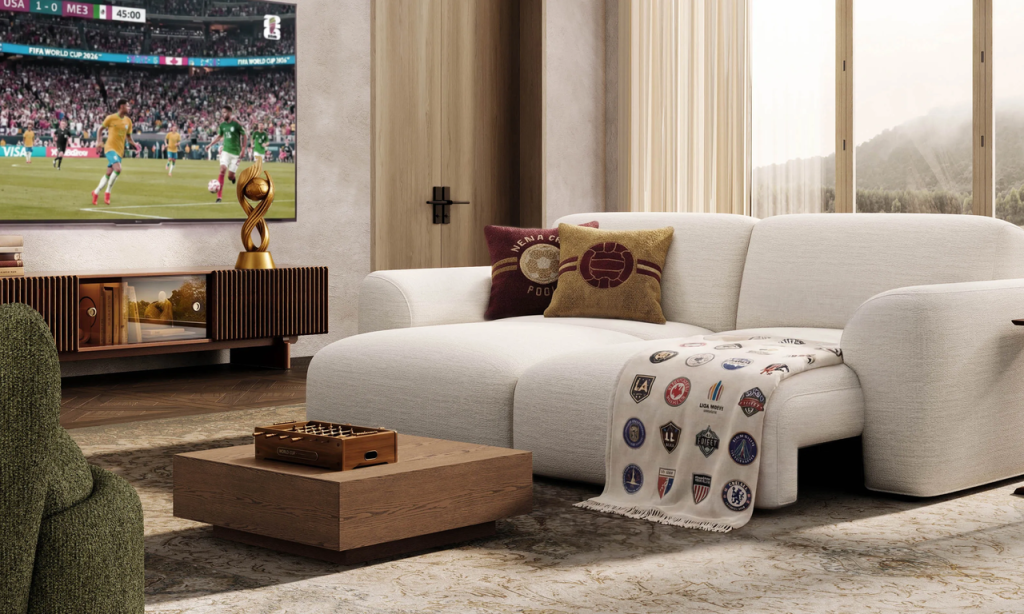
After a World Cup Watch Party
A packed living room during a summer World Cup match can leave the couch covered in crumbs, drink rings, greasy fingerprints, and shared blankets. Those messes usually need cleaning rather than disinfection.
Disinfect the affected area only if a guest was sick or bodily fluids came into contact with the upholstery. Focus on the areas people actually touched:
- Armrests, reclining controls, and cup holders
- The most-used seat and headrest
- Shared throws and decorative pillows
- Remotes and nearby tables
- A sleeper section used by an overnight guest
The stain-by-stain approach in how to clean a sofa after a World Cup party works for food and drink residue. Disinfection should remain a separate, risk-based step after the visible mess is gone.
After Camp, Sleepovers, or Summer Illness
After camp days or sleepovers, wash shared blankets, wipe sticky touchpoints, and treat visible spills as soon as possible. Disinfection may be appropriate after a known illness, vomiting, or direct contact with bodily fluids.
The CDC says routine cleaning is usually sufficient in most homes, while additional disinfection is more relevant when someone is sick or has a weakened immune system.
If a spill or body fluid reaches the cushion filling, a surface spray may not solve the problem. Keep the affected seat out of use and contact the manufacturer or an upholstery professional.
After Pool Days and Backyard Gatherings
Remove wet swimsuits and pool towels immediately, clean sunscreen or other visible residue with an upholstery-safe product, and increase airflow around the cushions.
A musty odor that returns after the couch appears dry may indicate moisture inside the foam. Adding disinfectant can make the filling wetter without addressing the real issue.
Use this summer rule of thumb:
| Summer situation | Clean | Disinfect | Main concern |
| World Cup snacks and drink spills | Yes | Usually no | Grease, sugar, and stains |
| A sick guest watched from one seat | Yes | Yes, if the upholstery allows it | High-contact seat and headrest |
| Kids returning from camp | Yes | After known illness or contamination | Shared blankets and touchpoints |
| Wet swimsuits or pool towels | Yes | Usually no | Trapped moisture |
| Vomit, blood, or other body fluids | Yes | Yes | Upholstery and cushion filling |
How to Disinfect a Couch Step by Step
A careful sequence matters more than using the strongest cleaner. Gather a vacuum with upholstery and crevice attachments, two white microfiber cloths, gloves if the product requires them, and a manufacturer-approved cleaner or disinfectant. Then work through the couch in small sections instead of treating the entire surface at once.
Step 1: Identify the Exposure Zone
Do not spray the entire couch by default. Focus on the areas that touched hands, faces, bare legs, damp clothing, bedding, or used tissues.
After a World Cup gathering, that may include the center seat, armrests, cup holders, reclining controls, and shared pillows. After illness, focus on the exact seat, headrest, and nearby surfaces the person used.
Before applying anything, check the W, S, WS, or X care code and the manufacturer’s instructions:
- W: Generally allows water-based cleaning
- S: Usually requires a solvent-based method
- WS: May allow either method
- X: Usually limited to vacuuming or professional care
These codes do not automatically approve steam, alcohol, bleach, or a particular disinfectant.
Step 2: Remove Washable Layers
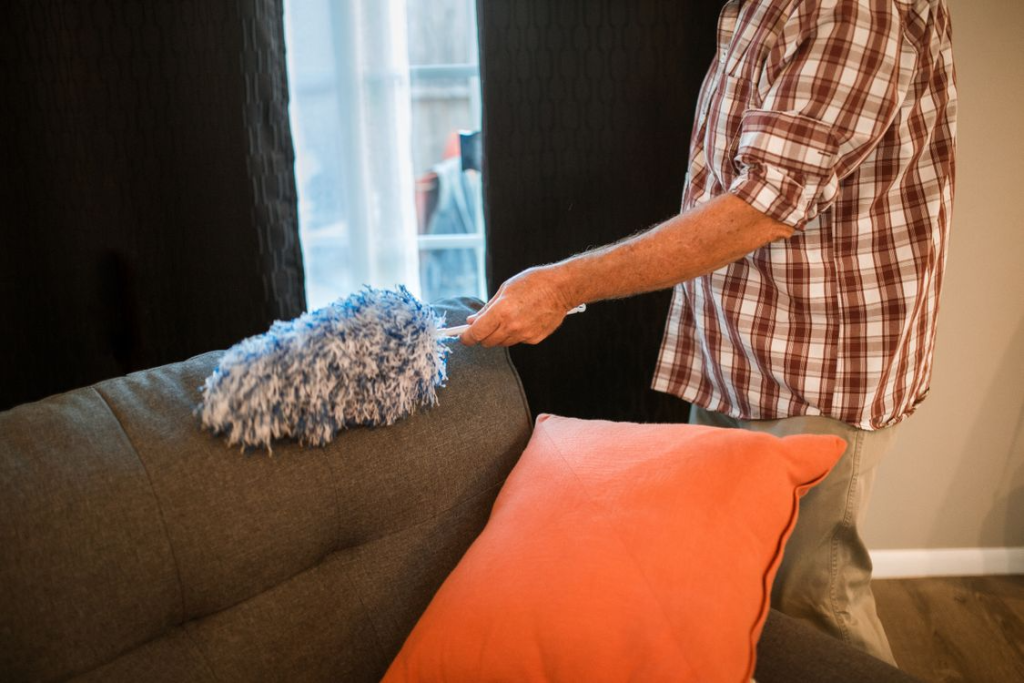
Take off throws, pillowcases, slipcovers, and removable cushion covers. Follow each item’s care label and dry it completely before returning it to the couch.
Thick foam can remain damp after a cover feels dry, so the same caution applies when learning how to clean sofa cushions without damage. If contamination reached the filling, professional treatment may be safer than repeatedly spraying the surface.
Step 3: Choose a True Soft-Surface Disinfectant
When choosing a disinfectant spray for couch use, read the directions panel rather than relying on the claims printed across the front. The product must specifically list fabric, upholstery, or soft surfaces as an approved use.
Confirm:
- The approved surface type
- The target germ
- The required wet contact time
- Whether wiping or rinsing is required
- Ventilation instructions
- Restrictions involving children or pets
A sanitizing claim is not the same as a disinfecting claim. A product approved only for tile, counters, or other hard surfaces should not be assumed safe or effective on upholstery.
Avoid homemade combinations involving bleach, vinegar, ammonia, peroxide, alcohol, or essential oils. Never mix cleaning or disinfecting products unless the label specifically instructs you to do so.
Step 4: Test the Product and Let It Dry
Apply a small amount behind the couch or to the back of a cushion. Let the test area dry completely before checking for:
- Dye transfer
- Water rings
- Stiffness
- Fading
- Tackiness
- A change in texture or sheen
Do not judge the result while the fabric is damp. A pale cushion may look unchanged at first and develop a darker outline later.
Step 5: Apply Lightly and Follow the Contact Time
Apply an even layer to the selected contact zones without soaking seams, tufting, zipper channels, or cushion filling. More liquid does not create stronger disinfection.
Contact time is the period the surface must remain visibly wet for the product to work as claimed. Follow the exact time printed on the label rather than spraying and immediately wiping.
Keep these two periods separate:
- Contact time: How long the product must remain wet
- Drying time: How long the couch needs before it can be used again
The surface may need to stay wet for several minutes, depending on the product and the germ listed on the label. After that period ends, follow any wiping or rinsing directions and allow the upholstery to dry fully.
Step 6: Adjust Drying for Summer Humidity
Open windows only when the outdoor air is reasonably dry. On humid days, air conditioning, a dehumidifier, or a fan may be more effective than bringing warm, damp air indoors.
Separate and rotate loose cushions so air reaches both sides. Check:
- Cushion undersides
- Piping and seams
- Zipper edges
- Tufted areas
- Sleeper-sofa folds
On a muggy July evening, the top of a cushion may feel dry while its shaded underside remains cool and damp the next morning. Do not replace blankets or allow anyone to sit down until every layer is dry.
How Should Summer Disinfection Change by Couch Material?
The summer situation tells you whether disinfection may help; the upholstery determines whether it is safe to do at home. Heat, direct sunlight, air conditioning, and humidity can all affect drying time and material performance. Follow the furniture manufacturer whenever its instructions are more restrictive than the disinfectant label.
| Upholstery | Summer concern | Safer starting point | Avoid unless approved |
| W or WS fabric | Humidity slows drying | Soft-surface product with minimal moisture | Heavy spraying |
| Microfiber | Water rings or stiff nap | Complete hidden-area test | Generic water-based mixtures |
| Genuine leather | Heat, sunlight, and conditioned air | Dry or leather-approved care | Steam, bleach, strong alcohol |
| Faux leather | Surface coating may dry or crack | Finish-specific product | High heat and harsh chemicals |
| Velvet, suede, or X-code | Permanent texture changes | Professional advice | DIY sprays and steam |
Fabric and Microfiber Couches
For W or WS upholstery, use as little moisture as possible and apply the product evenly. Uneven spraying can leave rings or darker patches, especially on light-colored fabric. Microfiber needs extra care because some types tolerate water-based products while others may develop water marks or a stiff, uneven nap.
Stop if a white test cloth picks up dye or the fabric looks or feels different after drying. If the nap becomes flattened, gently brush it with a clean, soft upholstery brush once the area is completely dry. Synthetic, polyester, or pet-friendly upholstery still requires material-specific care, so these labels should not be treated as proof that disinfectant spray or steam is safe.
Genuine and Faux Leather Couches
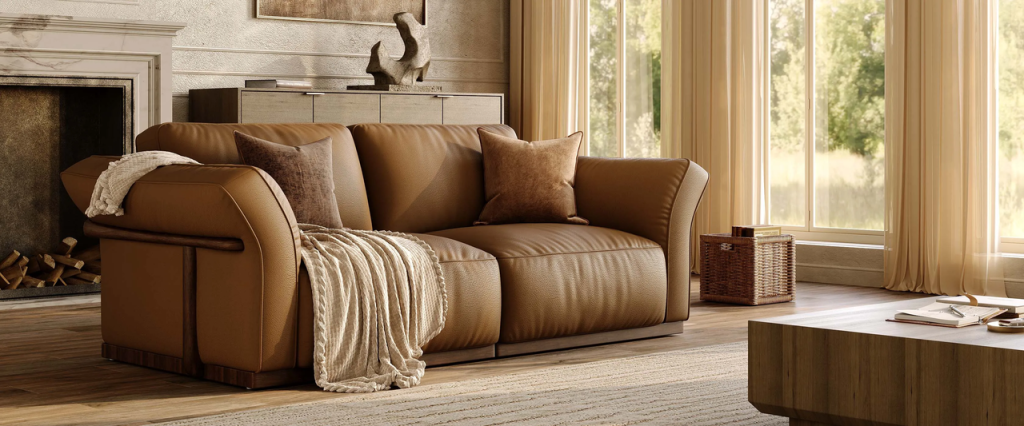
Genuine leather should not be treated like washable fabric. Start by removing dust with a soft, dry cloth, use as little moisture as possible, and check the manufacturer’s care instructions before applying any cleaner, disinfectant, or steam.
The sofa’s specific leather finish determines what it can safely tolerate. The Cronus Top-Grain Leather Modular Sofa uses imported genuine leather with a fine pebble grain, refined matte finish, and smooth feel that softens and develops natural luster over time. Its care directions call for dry dusting, immediate spill blotting, and protection from direct sunlight, heat, and air conditioning. During summer, those limits make professional leather care safer than experimenting with household disinfectants.
Faux leather requires similar caution, but for a different reason. Its appearance comes from a manufactured surface coating that strong chemicals, excess moisture, and high heat may dull, weaken, or crack. If the manufacturer does not approve a disinfecting method for home use, stick with routine material-safe cleaning or consult an upholstery professional.
Velvet, Suede, and X-Code Upholstery
Vacuum velvet and suede gently with an upholstery attachment. Excess moisture can flatten the pile, change the fabric’s appearance, or leave water marks. X-code upholstery should generally be limited to vacuuming or professional cleaning unless the manufacturer provides other instructions.
Water-resistant does not mean disinfectant-safe. The Pet-Friendly Velvet Sofa Set is upholstered in 100% polyester velvet with a soft, delicate texture and a rich sheen. Although the fabric is water-resistant, its care instructions still call for spot cleaning, note that it is dry-clean safe, and recommend keeping the sofa away from direct sunlight and heat. Avoid applying disinfectant spray or steam unless the method is specifically approved for the upholstery.

Couch Disinfection Mistakes to Avoid
Summer heat can dry the visible surface too quickly, while humid air keeps seams and foam damp. This makes it easy to misjudge both contact time and readiness. Most damage comes from the wrong product, too much liquid, or too much heat—not from skipping a stronger chemical.
Avoid:
- Treating every World Cup spill as a disinfection problem
- Spraying before checking the care code
- Using a hard-surface disinfectant on upholstery
- Applying disinfectant over sunscreen, grease, or sticky residue
- Wiping before the required contact time ends
- Soaking foam in an attempt to “reach deeper”
- Mixing bleach, vinegar, ammonia, or other cleaners
- Steaming leather, suede, velvet, or X-code fabric
- Opening windows when the outdoor air is more humid than the room
- Assuming the cushion is dry because the top feels warm
When steam is permitted, moisture control matters more than making repeated passes. Knowing how to steam clean a sofa without soaking the cushions can help prevent dampness from settling into foam, seams, and sleeper-sofa folds.
How Can You Keep the Couch Ready All Summer?
Washable barriers make post-party and post-illness care much easier. The goal is not to maintain a sterile living room. It is to keep sweat, spills, food, and damp items from reaching fixed upholstery during camp days, pool afternoons, overnight visits, and World Cup matches.
- Place washable throws on the most-used seats
- Give overnight guests removable pillowcases
- Keep wet towels and swimsuits off the couch
- Put drinks on trays or side tables
- Set out napkins before kickoff
- Wash shared covers after illness
- Let cushions dry before replacing blankets
- Store disinfectants where children cannot reach them
Conclusion
Knowing how to disinfect a couch during a busy summer starts with knowing when not to do it. Chips, sunscreen, pet hair, and pool-day moisture usually need cleaning and drying, while illness or body-fluid exposure may call for a true disinfecting step. Treat only the affected area, use a product labeled for the upholstery, follow the full contact time, and allow extra drying time in humid weather. For leather, velvet, suede, X-code fabric, or soaked cushion filling, manufacturer or professional guidance is safer than reaching for a stronger spray.
FAQs About Disinfecting a Couch
Can I Run the Air Conditioner While the Couch Dries?
Yes, as long as you follow the product’s ventilation directions. Air conditioning can reduce indoor humidity and support drying. Avoid directing a cold vent at genuine leather for long periods, since constant conditioned airflow may contribute to dryness.
Can Sunlight Help Disinfect the Couch?
Sunlight and fresh air may help reduce dampness and stale odors, but they are not substitutes for an approved disinfecting method. Strong direct sunlight can fade fabric and dry leather, so use controlled airflow instead.
Can I Use the Same Disinfectant on Patio Cushions?
Not automatically. Outdoor fabric may resist water and sunlight without tolerating the same disinfectant as indoor upholstery. Check both the cushion label and the product directions. Removable outdoor covers may be easier to launder than spray.
Does Sunscreen Affect Disinfection?
Yes. Greasy sunscreen residue can prevent a product from contacting the upholstery evenly. Remove it with a material-safe cleaner first, then disinfect only when the situation calls for it. Avoid scrubbing oils deeper into the fabric.
When Can Children and Pets Sit on the Couch Again?
Wait until the full contact time and all label-required steps are complete. Then check that seams, piping, and cushion undersides are completely dry. Follow any longer re-entry period stated on the product label.


